
In short
Whether a negotiated peace between Russia and Ukraine is possible, given proposed US-Russia talks involving Vladimir Putin and Donald Trump, and Fiona Hill’s assessment of both leaders’ incentives.
Guest
Fiona Hill, senior fellow at the Brookings Institution (Washington, D.C.); former Trump National Security Council staffer (2017–2019) focused on Russia; long career studying Russia; co-authored a 2013 book on Vladimir Putin.
Key claims
Putin stages negotiations to control narratives and respond viscerally to challenges; US engagement must be consistent and firm, not “pandering” or flattering. Trump’s Helsinki approach prioritized a personal deal and Putin’s approval over strategic patience, and Trump misunderstands Putin’s willingness to pay any price for control of Ukraine. A bilateral Trump-Putin deal would likely force Ukraine into capitulation, proxy rule, and demilitarization.
Notable examples
Hill’s first meeting with Putin after the 2004 Beslan hostage crisis; Putin’s 2007 Munich speech; Russia’s 2014 annexation of Crimea; 2018 Helsinki summit dynamics; Chechnya resolved via proxy Ramzan Kadyrov.
Written by AI. May contain mistakes. Listen to the episode to check what was said.
Chapters
Tap a time to open that second in VOFiona Hill's Background and Insights
1:38 to 4:12
Discover Fiona Hill's experiences and expertise regarding Putin and Trump.
“If you're familiar with Fiona Hill, there's a good chance it's because of her testimony during the 2019 impeachment hearings of Donald Trump.”
First Encounter with Putin
4:12 to 6:22
Explore Fiona Hill's first meeting with Putin and the tense atmosphere surrounding it.
“He responds in a kind of visceral way to challenges.”
Putin's Assertive Munich Speech
6:22 to 7:42
Understand the implications of Putin's speech at the Munich Security Conference in 2007.
“I mean, Putin's feeling more confident about his ability to keep Russia together internally.”
The Annexation of Crimea
7:42 to 8:34
Analyze the factors leading to Russia's annexation of Crimea and its aftermath.
“Russian troops spreading out throughout the strategic Crimean peninsula.”
Interpreting Putin's Strategy
8:34 to 10:56
Learn how to approach negotiations with Putin and the importance of clarity and firmness.
“In 2008, of course, Putin pushed back against the NATO summit in Bucharest in Romania, in which an open door was given to Ukraine and Georgia about joining NATO.”
Fiona Hill's Role in Trump Administration
10:56 to 13:13
Understand Fiona Hill's motivations for joining the Trump administration's National Security Council.
“Transcription by CastingWords brand new episode every weekday.”
The Helsinki Summit: Preparations and Challenges
13:13 to 14:00
Examine the difficulties faced while preparing President Trump for the summit with Putin.
“The possibilities of doing something to change the trajectory, the very dangerous trajectory of U.S.-Russian relations.”
Challenges in Preparing Trump for Meetings
14:00 to 18:04
Learn about the difficulties in preparing President Trump for his meetings with Putin and the unconventional methods used.
“Well, first of all, it's extremely difficult to prep President Trump.”
Trump's Personal Relationship with Putin
18:04 to 20:56
Explore how Trump's desire for a personal connection with Putin impacted U.S. foreign policy and negotiations.
“opinions, is you can never really tell because the margins were so small in the election.”
The Intractable Problem of Ukraine
20:56 to 23:18
Discuss the complexities of the Ukraine conflict and Trump's approach to resolving it amidst ongoing warfare.
“So what President Trump is trying to do is get Ukraine out of the way.”
Show all 11 chapters
Understanding Putin and Trump
23:18 to 26:00
Analyze the contrasting understandings of Trump and Putin regarding their political strategies and goals.
“and maybe not even feasible by the United States.”
Transcript
Automatic transcript. May contain errors.0:00This BBC podcast is supported by ads outside the UK.
0:30Just tap into iHeart to start watching. And we hope you enjoy the show.
0:38We're doing something a bit unusual on our show this week. We're going to do two back-to-back episodes about Ukraine because the war has now entered its fifth year. Yesterday, we focused on life on the ground inside Ukraine. Today, a very different conversation. We hear from someone who sat down with both Vladimir Putin and Donald Trump. Two key players in the negotiations to end the war, which frankly can sometimes feel like they're on repeat. After just two hours, peace talks between Ukraine and Russia ended in Geneva on Wednesday. Both sides describe discussions as constructive, but still no real progress.
1:16We're working very hard to end the ninth war. The killing and slaughter between Russia and Ukraine were 25 ,000 soldiers. Coming up, we sit down with someone who can help us understand what might happen next.
1:28Fiona Hill:I mean, I actually do think it will stop at some point. I do have more optimism, but I think we have to really work at it. From the BBC, I'm Asma Khalid in Washington, D.C. And today on The Global Story, is a negotiated peace between Russia and Ukraine even possible?
1:52If you're familiar with Fiona Hill, there's a good chance it's because of her testimony during the 2019 impeachment hearings of Donald Trump. Hill served in the Trump White House from 2017 to 2019 in the National Security Council, focusing on Russia. After her time in the White House, Hill returned to the Brookings Institution. It's a think tank here in Washington. She spent her career studying Russia. In fact, in 2013, she co-authored a comprehensive book about Vladimir Putin. And so I wanted to hear her understanding of both Donald Trump and Vladimir Putin. When she first met Putin, it was 2004, just a few years after he had taken power.
2:33At the time, he was fighting a war in a part of Russia called Chechnya. Separatists wanted to break away. Putin wanted to stop them. And that September... An armed gang is continuing to hold up to 400 hostages in a school in southern Russia. Chechen extremists took a school hostage. The hostage takers threatened to blow up the school at Baslan in northern Ossetia. Putin sent in a rescue operation. By noon, the battle to save the child hostages was underway. Very soon, the first of the children were free. But while many were saved, the battle at the school went on. And yet, despite Putin's efforts...
3:11It seems that hundreds of people were either killed or injured... In total, more than 300 people died. And it was only a few days after that national tragedy that Fiona Hill met Vladimir Putin for the first time over a cup of tea.
3:27Fiona Hill:I was in Russia at the time and we had a planned meeting with Putin. It was in his stature, in his personal residence in Novogorjeva outside of Moscow. There was all kinds of people invited who were experts on Russia, journalists, former politicians. I was one of this group. And to be honest, we were quite surprised that Putin still decided to meet with the group. Given just what happened in the country. Because, I mean, it wasn't exactly, I mean, a great success for the Russian security services. But at the same time, Putin intended to use this for every opportunity to pass on messages. And the messages was one of, you know, of hostility.
4:07Fiona Hill:And what you get from that kind of impression is this. Did you feel that in the room? Yes, you did. It was very tense. It was personal. He responds in a kind of visceral way to challenges. He used the occasion to say that this is what happens when people try to tear off juicy morsels from Russian territory. And for the journalists and others who were there at the time, it was all very striking. But this was also a lesson in how Putin stages an event. So we were waiting for hours, which is, again, a very classic part of Putin's shtick here with anybody. I mean, the more you wait, you know, the more you get that kind of sense that he doesn't respect the people that he's meeting with, that this is part of the whole process.
4:49Fiona Hill:People are getting applied not just with tea, but also with alcohol. So let's just say that, you know, a lot of people felt quite uncomfortable by the time that Putin arrived because they wanted to go to the bathroom. And they don't want to run out and go to the bathroom and miss him coming because, you know, they might not be let back into the room. This is sort of short of torture. It's kind of bathroom torture. And I mean, this may seem somewhat humorous, but it was all kind of part of that atmosphere of you're waiting for the man to arrive. This was somebody who was controlling the situation.
5:18I want to ask you about Putin and his ambitions. A few years after 2004, we're at the Munich Security Conference. Putin gave this really assertive speech. He really was signaling that Russia was upset with U.S. foreign policy. We are seeing a greater and greater disdain for the basic principles of international law. One state, and of course, first and foremost, the United States, has overstepped its national borders in every way. And I mean, just for listeners who may not be familiar, the Munich Security Conference is this big get together of leaders and diplomats from around the globe. And so to me, it is notable that he made this speech in this setting.
5:58And what did you think at the time, and why was he signaling this approach at that time period?
6:03Fiona Hill:This was in February 2007. So it's three years, give or take, after the incidents and the episode in Beslan that we've just talked about. What Putin was basically saying was that Russia had reached a watershed moment. By this point, the war in Chechnya is not resolved, but the Russian special services have got this in hand in a pretty brutal fashion. I mean, Putin's feeling more confident about his ability to keep Russia together internally. And it's also significant that Russia had been pretty much bankrupt. And Putin has actually successively paid off Russian debts. And the Russian economy is starting to pick up because you have oil prices starting to pick up.
6:48Fiona Hill:Putin feels that he can actually speak out more now. So that's exactly it. He starts to chastise the United States for thinking it's the lone superpower. This is visible in the economic, political, cultural and educational policies it imposes on other nations. Well, who likes this? Who is happy about this? Because, of course, after the collapse of the Soviet Union, after the end of the Cold War, the United States basically enjoys this unipolar moment. The whole idea that everything is converging together and the United States is riding high. And Putin is basically saying, hang on a minute, that is not the case.
7:22No one feels safe, because no one can feel that international law is like a stone wall. that will protect them. Of course, such a policy stimulates an arms race.
7:31Fiona Hill:Putin is basically saying, Russia is coming back.
7:39And so that's his message in 2007. If we then fast forward to 2014. Russian troops spreading out throughout the strategic Crimean peninsula. After protesters in Ukraine overthrew a pro-Russian president, Putin goes on to annex Crimea. The Russians appear to have won this round, taking control of their prize, Crimea. And there was a push within some in the federal government at that point in time to arm Ukraine with powerful javelins, javelin missiles. And you openly opposed that position at that time. What about Putin's mindset made you think that that could backfire?
8:21Fiona Hill:Well, there's a number of factors here. You see, we're talking about this as if it's the US and Russia all in a vacuum. But there were so many other factors at play all the way along there. And in the case of Ukraine at this point in 2014 and, you know, kind of what happens in the run-up to the decision to annex Crimea, the real drama is about Europe. In 2008, of course, Putin pushed back against the NATO summit in Bucharest in Romania, in which an open door was given to Ukraine and Georgia about joining NATO. This is the period when the Russians basically intervene in Georgia after a military exchange between the Georgians and one of their own separatist regions.
9:07Fiona Hill:Were you concerned about the repercussions? Yes, of course the repercussions. What repercussions were you concerned about? What I was concerned about was, in fact, our assumption at the time was that the Russians would take some kind of military action or certainly forceful action in response, as it in fact turned out that they did against Georgia in August of 2008. And so that if we were going to make any kind of undertaking to bring Ukraine closer to NATO, then we would have to factor all of these things in. And we weren't saying that you necessarily should not pursue closer relationships. We'd have to factor in that Russia was going to react in a certain way.
9:51And so understanding Putin as a whole, do you feel like you have a theory about how best to approach him and when it merits and how you push back?
10:03Fiona Hill:You have to be always consistent and clear, and you have to be prepared for a very forceful reaction from him. So you have to have thought it through.
10:14Fiona Hill:And you always have to be prepared to stand up and confront Putin, because he will respond, he will react, he will react. And so unless we're prepared to push back, then, you know, we shouldn't go down a course of action in the first place. That's really basically the fundamental point that I'm trying to get across here. And when we're engaging with Russia, we have to be firm and we have to be very clear and we have to be consistent. And we have to be able to defend ourselves in whatever fashion that merits. Pandering to Putin, trying to bribe Putin, trying to flatter Putin, trying to incentivize Putin.
10:54Fiona Hill:That is just not going to work. That's not who Putin is.
11:29Transcription by CastingWords brand new episode every weekday. Just tap into iHeart to start watching. And we hope you enjoy the show.
11:44Let's pivot now to President Trump, the other part of some sort of peace negotiation settlement. We've seen him certainly believe that you can sit down and try to negotiate this all with Putin. And I want to begin with your period working with him in his first administration. In 2017, you joined the White House, the National Security Council. Can you walk us through that decision? Why did you decide to join?
12:08Fiona Hill:It wasn't an easy decision. But look, I was asked because I'd already been in this role in the National Intelligence Council. People knew me as non-partisan, not ideological, and that, you know, I was steeped in what was going on in Russia. And, you know, a lot of people said to me, look, I won't forgive you for doing this because you'll be making yourself complicit in whatever happens next. And I did think about that. I never stopped thinking about it. But I thought it was worth the effort. There was a feeling, you know, after the Russian intervention, everything that had been happening, that our house was on fire.
12:36Fiona Hill:And if you're standing there, you know, just watching things burn down, you don't feel that you can do something. You know, I used to joke, save the goldfish, or kind of run in and grab the cattle. After Russia intervention, just to be clear, you're referring to... I'm going back, you know, to the intervention in the elections in 2016. After 2016. I mean, it was obvious that we were in a very dangerous period, and that's basically how, you know, I came in, at least to give an honest appraisal of where the Russians were coming from. And look, if there ever is an opening, if there ever is a moment where basically somebody wants to stop or change direction, you've got to be ready.
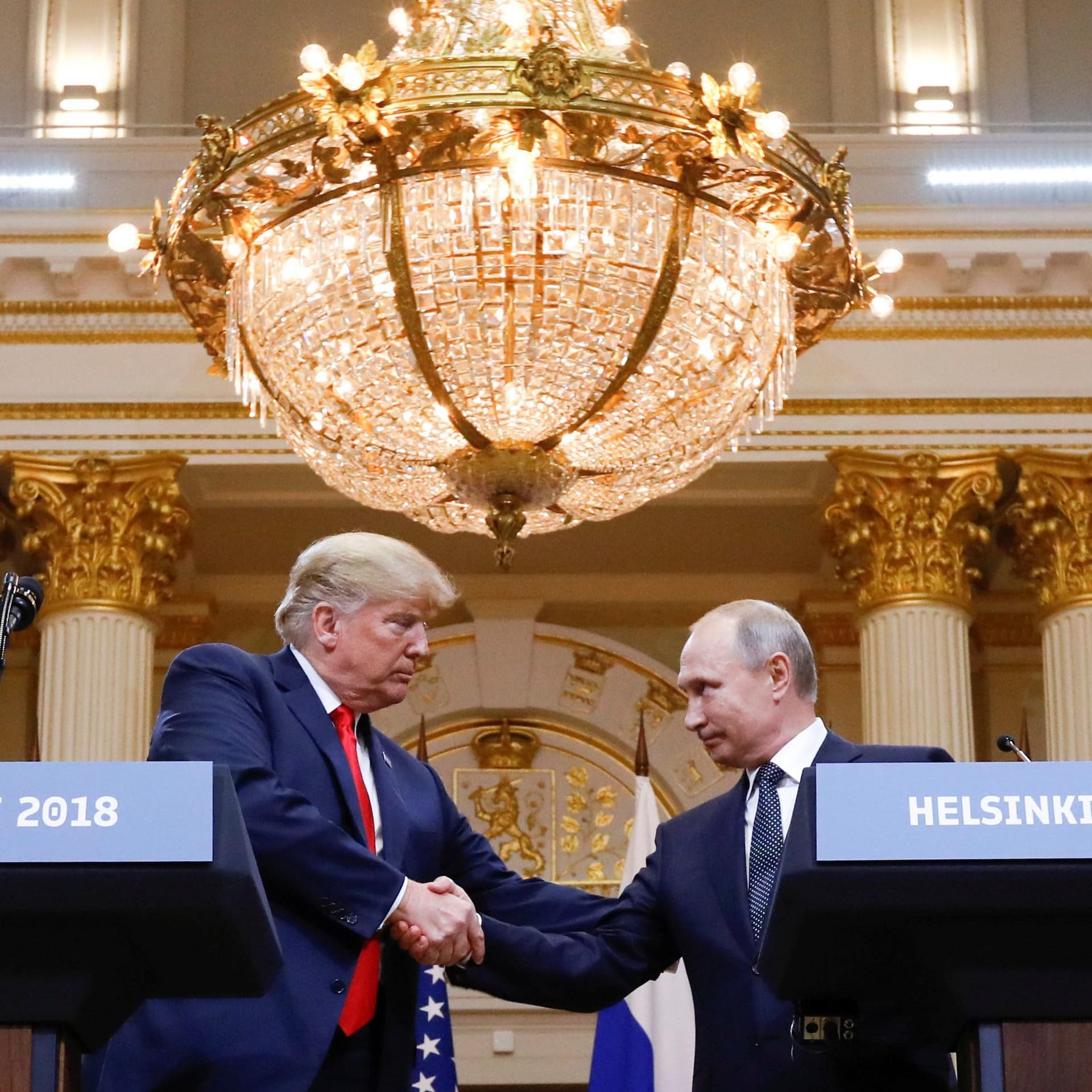
13:08Fiona Hill:And so that was certainly my belief. And that was my purpose in going in. The possibilities of doing something to change the trajectory, the very dangerous trajectory of U.S.-Russian relations. You mentioned this idea of being a part of negotiations and understanding what makes a person tick. So let's actually talk more about what makes President Trump tick. And I want to jump ahead to what I believe was kind of around the middle of your time in the administration. There is this moment in 2018. Welcome to Helsinki, the Finnish capital in the Baltic Sea, which has for decades now been a bridge between East and West.
13:44It was the headline-grabbing news summit between Putin and Trump in Helsinki. And I want to zero in on this scene because I think it says a little bit about both men. And I'd like to have you walk us through specifically the angle here with President Trump. What was it like to prep him? What was the goal going into the summit?
14:02Fiona Hill:Well, first of all, it's extremely difficult to prep President Trump. He's just not interested in it. And that's part of the whole dilemma. Putin is very well prepared. He was also trained in the KGB. He's trained how to manipulate people. He's very good at it. President Trump thinks that just his entire life story just prepares him for these kinds of meetings. So did he prep ahead of Helsinki? He did not prep. He just wants to make a deal. Did you try to prep? We tried to prep, we, writ large, tried to prep him in many different ways. We flew out the ambassador at the time, John Huntsman, to DC.
14:33Fiona Hill:He just didn't bother to engage. We had all kinds of different briefing. I mean, he did listen to his CIA briefers and the head of the CIA at different points, but nobody's really prepping for what it was going to be like to meet with Putin. And the person who ended up prepping him was actually the president of Finland because we were there in Helsinki. He had met with Putin more times than enough. And in The Breakfast, where they're supposed to be talking about Finnish-US relationships, we'd asked the Finns, I mean, out of somewhat of desperation, we had very good relations with them, would President Anista of Finland be willing to talk about what it's like meeting with Putin?
15:09Fiona Hill:That is a wild story. And that is exactly what we did. We asked the Finns to do it. To brief the president. on what it was like to engage with Putin. Exactly right. And of course, in Finland, just like in Iceland and Geneva and many other kind of places that had been in the past, these summits, these really momentous summits between US and Soviet leaders and later Russian leaders to talk about arms control. And that's really what President Trump wanted to do. He wanted to sit down with President Putin and make a big arms control deal. But President Trump didn't have the patience, the strategic patience and the focus to actually take forward the issues that he really wanted to work on.
15:53Fiona Hill:Because he was too much thinking all the time about the hyper-personalized nature of the relationship that he wanted to have with Putin. Well, first of all, Mr. President, I'd like to congratulate you on a really great World Cup, one of the best ever, from what everybody tells me, one of the best ever. And also for your team— He wanted Putin to like him. He wanted Putin to respect him. He wanted to have his moment with Putin, because for him, Putin is another great world leader. Trump does not think of many people out there as his peers. Putin was one of them at the time. I think the moment that so many of us here in the United States recall from that press conference was when President Trump was asked about interference in the 2016 election.
16:36It was one of the most extraordinary moments between an American president and a Russian leader. Would you now, with the whole world watching, tell President Putin, would you denounce what happened in 2016 and would you warn him to never do it again? And he said, I have President Putin. He just said it's not Russia. I will say this. I don't see any reason why it would be. And this was after he acknowledged that his own director of national intelligence had said it was Russia. I have great confidence in my intelligence people. But I will tell you that President Putin was extremely strong and powerful in his denial today.
17:19So, I mean, what was going through your mind? Is the meeting wrapped up? Is that press conference wrapped up? And you flew home.
17:24Fiona Hill:Well, it was an absolute mess, an absolute debacle. And I, like everybody else in the team around Trump, just wanted it to end because that just sets off everything in a completely and utterly different direction. I mean, we were not going to stabilize the relationship then. For Trump, he's only thinking about his personal relationship with Vladimir Putin. And he feels all the time that he's been totally thwarted by the media and everybody else's scrutiny on the election. He also doesn't want to admit to himself that maybe he might have not really won the election by fair means. I don't think we ever had any evidence that the election had been tipped by Putin.
18:03Fiona Hill:But the point of the Russian interference, particularly in trying to shape people's opinions, is you can never really tell because the margins were so small in the election. in the Electoral College. All of this is going on in Trump's... Did it shape how you worked, interacted with the president or what you thought of how to interact with him? It made us, you know, start to really kind of think here that we were going to have to try to be much more creative in the way that we shaped Trump's views because he's not listening to anybody. And we need to find ways of getting across to him. And you trusted Putin.
18:37Fiona Hill:It was clear to you. Oh, of course you trusted Putin because Putin is his peer. So the real problem is, how do you get the president, you know, to trust everyone else? And I think, you know, we failed miserably at that. Because Trump does not trust the intelligence services because he thinks they're out to get him. He doesn't trust anybody who is not personally loyal to him. You know, and it became very clear, you know, in that period after that, that we were going to have a really high bar. It was going to be extraordinarily difficult to change Trump's mind. I mean, for me personally, I mean, I'd never really got much traction with him.
19:15Fiona Hill:I wasn't to him, you know, the kind of person he wanted to listen to. I mean, he didn't even listen, you know, to Rex Tillerson, who was the Secretary of State, or General Mattis, the Secretary of Defense. Trump is something of an outlier in the way that he looks at Putin. He sees Putin as just another guy, just as another, you know, kind of perhaps ruthless business person that he can deal with. But Putin is a lot more than that. So let's skip now to the present time period. We're having this conversation in the context of it now being four years since Russia launched its full-scale invasion of Ukraine.
Read the full transcript
19:52We have seen the West, we've seen the United States impose a lot of sanctions. We've also seen them offer military aid to Ukraine, and yet the war has continued on and on. We've also now seen President Trump in his second term initiate these talks to end the war. He had said that he could solve it very quickly, that he would do it within, I believe, 24 hours, essentially a day of returning to the White House. And yet it has proved much more intractable of a problem for him to resolve. And so this, I think, leads me to the really overarching question I've had throughout our conversation, Fiona, which is in understanding both of these men, is a negotiated peace possible?
20:33Fiona Hill:Well, the two of them are negotiating about their own relationship. Let me just be very clear. We are not really talking about here a negotiated peace in Ukraine, because President Trump still wants to have a personal relationship with Putin, and he wants to change the nature of the bilateral US-Russia relationship, which is what he was also trying to do at Helsinki, and Ukraine is in the way. So what President Trump is trying to do is get Ukraine out of the way. And again, as I also said, we're not operating in a vacuum here. Ukraine is a critical issue for the future of European security. And the Europeans are just a kind of Greek chorus, you know, occasionally called up mostly by Zelensky, President Zelensky of Ukraine, when he feels desperate.
21:17Fiona Hill:But President Trump doesn't view them as any, as relevant at all. Most also the same for Putin. Putin wants this to be a bilateral, high-level, skip everybody else discussion with the United States. And while that all happens, the war will continue. And if we look at Chechnya, which we started off talking about, it was resolved because Putin found a proxy to run Chechnya, Ramzan Kadyrov. And Putin's preference for resolving Ukraine is the same thing, to put in his own proxy. And that's what he intended to do when invaded Ukraine four years ago. He had a proxy in mind, maybe several, a succession of proxies in mind.
21:59Fiona Hill:He wanted to get rid of Zelensky. It was supposed to be a special military operation, and instead it's turned out to be the largest land war in Europe since World War II. So you don't sound optimistic. I'm not optimistic in the way that we are talking about this right now. And what Putin is negotiating now or trying to negotiate is President Trump handing over Ukraine to him, forcing Ukraine to capitulate, forcing there to be new elections in Ukraine, even perhaps prior to a peace settlement, and having a new leader, which becomes a kind of a proxy and basically demilitarizing, neutralizing and neutering Ukraine so that Ukraine doesn't really exist as the country that it is now and turns it into essentially Belarus, which is a country that is heavily dependent on Russia and in a union arrangement with Russia.
22:49Fiona Hill:That's the kind of, you know, the sort of the best scenario. And that is not in the interest of the Ukrainians right now. That's not what they want to negotiate. So how does this ultimately resolve? It resolves when Putin is blocked from being able to go any further in terms of taking territory and realizes that he can't fight anymore. And when he has some other incentives to stop, and that might be negative incentives rather than positive incentives, he's not going to stop because he thinks he's going to have a trillion, which is one of the latest things, you know, trillions of dollars of investment, which are highly unlikely and very improbable and maybe not even feasible by the United States.
23:22Fiona Hill:And he's not going to stop because he likes President Trump. I mean, I actually do think it will stop at some point. I do have more optimism, but I think we have to really work at it and we can't just leave it. How so? Because the scenarios you outlined. We have to expand it beyond just this thinking about Putin and Trump. Putin won't like it, Trump won't like it, but they are not the only two. actors in this universe. And it will not end by any kind of bilateral agreement between Russia and the United States. Neither of them can bring this to the end that this very complex war requires. And so who do you see stepping up?
23:57Fiona Hill:I see this as having to be a much more well thought through collective effort at peacemaking involving Europeans. It doesn't have to be all of Europe. It doesn't have to be the EU specifically, but there are many European countries that have vested interests here. The administration really sees Europe in that vein, though, of power. No, they do not. And that is the problem. That is the problem. That's the thing I find really strange to compute about the Trump administration's strategy here, because you say that he wants to cut Ukraine out of the equation, essentially just negotiate this agreement with Putin.
24:29You know, he did promise to end the war very quickly. And while he has met with Putin, you know, one-on-one, famously himself there in Alaska, right, to try to negotiate the end of this war, he has also at times, at least on social media, publicly criticized Putin's actions, called on him to stop bombing. I think at one point he called Putin absolutely crazy for this barrage of strikes on Ukraine. He has been publicly critical of the Russian leader at times.
24:57Fiona Hill:I mean, what it is, is he doesn't understand Putin. He proves over and over again that he doesn't understand him because this is not crazy from Putin's point of view. It's only crazy from Trump's point of view.
25:15Fiona Hill:Because for Putin, he's willing to pay any price to get control, full control of Ukraine. And he'll get it one way or another, he thinks. So you think it's proof to you that Trump does not understand Putin's operation? No, Trump does not understand him. He doesn't understand his thought process. And to his credit, he doesn't understand why anybody would preside over this mass slaughter of his own people, not just over Ukrainians. But that's what Putin is prepared to do. And do you think Putin understands Trump's thinking? I think Putin understands Trump extremely well. Which is what? What is Trump thinking?
25:46Fiona Hill:Because Putin knows that Trump wants the credit for solving this for himself, and Putin's not going to give him that. Trump has been unbelievably transparent. He wants the Nobel Peace Prize. He wants the credit for solving the problem, solving the war in Ukraine. He doesn't want to give the credit to anyone else. I don't care who solves this, in my view. and I'm sure that most Ukrainians don't either, but they want a just ending to this war that doesn't leave them at risk of further predatory action from Russia. Even if they lose territory, they want to have the ability to feel secure within whatever borders they have left and to be able to rebuild their own state.
26:31Fiona Hill:And that's not what Trump is trying to negotiate at this particular moment. He says he is, but that's actually not what he's doing.
26:45Well, thank you very much for taking the time. Really appreciate it. Thank you so much, Asma. Thank you for having me. Thank you.
26:57That was Fiona Hill, a senior fellow at the Brookings Institution in Washington, D.C. And a quick recommendation before we go. If you are looking for a way to catch up on the latest news from around the world, then check out our sister show, The Global News Podcast. You can find it wherever you listen. Also, we here at The Global Story, we love hearing from listeners. So if you have any suggestions, story ideas, questions for us, you can email us at theglobalstory at bbc.com. Today's show was produced by Chris Benderev and Valerio Esposito. It was edited by James Shield and mixed by Travis Evans.
27:33Our senior news editor is Chyna Collins. And I'm Asma Khaled. Thanks, as always, for tuning in. And we'll talk to you again tomorrow.
28:09Transcription by CastingWords every brand new episode every weekday. Just tap into iHeart to start watching. And we hope you enjoy the show.
From the publisher
As the war in Ukraine enters its fifth year, the prospect of peace feels as distant as ever. President Trump hasn’t yet succeeded in striking a deal, and negotiations between the US, Russia and Ukraine have yet to produce a breakthrough.
Fiona Hill is one of the foremost authorities on Vladimir Putin and a former White House advisor on Russia during Trump’s first term. Over the course of her career, she has sat across the table from the Russian president and helped shape US policy at the highest level.
She tells us what it is really like to be in the room Putin and Trump, and whether a durable peace in Ukraine is still within reach.
Producers: Chris Benderev and Valerio Esposito
Executive producer: James Shield
Sound engineer: Travis Evans
Senior news editor: China Collins
(Photo: Donald Trump and President Vladimir Putin together. Credit: Kevin Lamarque/Reuters)