In short
Whether China is “winning” the Iran war it isn’t fighting, and how the conflict affects China’s diplomacy, economy, and long-term strategy ahead of a likely Trump visit.
Guests
Laura Bicker, BBC China correspondent (reported on China’s foreign policy posture and traveled to China’s Canton Fair to assess economic impacts).
Key claims
China benefits indirectly by positioning itself as a stable alternative and backing peace efforts, but it also faces risks because it needs Strait of Hormuz access and global demand. China’s alliances are “transactional,” not mutual-defense. Beijing is cautious not to provoke Washington and wants a trade deal with Trump. The war raises oil prices and shipping costs, threatening China’s export-driven economy.
Notable examples
Xi’s Beijing military parade with Iran’s president present; China backing Pakistan’s peace plan; Canton Fair traders reporting ~20% cost increases, doubled/tripled shipping, and inability to ship some goods (e.g., electric vehicles) to the Middle East.
Written by AI. May contain mistakes. Listen to the episode to check what was said.
Chapters
Tap a time to open that second in VOThe Narrative of China Winning
0:30 to 1:30
Discussion on the narrative suggesting China benefits from the Iran war.
“The other day, I got a newsletter from Foreign Affairs magazine.”
Exploring China's Relationship with Iran
1:30 to 3:00
Analysis of China's strategic partnership and oil dependency on Iran.
“And today on The Global Story, is China winning a war that it isn't actually fighting?”
Military Displays and Alliances
3:00 to 5:00
Discussion on a military parade in Beijing and its implications for alliances.
“So there's this idea that China and Iran are really close.”
China's Position on the Iran War
5:00 to 8:00
Insights into China's cautious stance and its response to the Iran conflict.
“I would love to understand what that parade tells us about the Chinese-Iran relationship pre-war.”
Economic Considerations in the Conflict
8:00 to 10:00
Exploration of the economic impact of the Iran war on China's economy.
“Right from the outset, the foreign ministry have criticised slowly, carefully, built up to it.”
Regional Security Dynamics
10:00 to 13:00
Discussion on how US actions in the Middle East affect regional security and alliances.
“It's one way to look at it in the sense of, you know, China doesn't really have to do anything right now.”
Trade Fair Insights Amid Conflict
13:00 to 14:00
Reporting on the economic impact of the war as observed at an international trade fair.
“more money on weaponry and on defence systems.”
Canton Fair Insights
14:00 to 16:49
Discover the impact of the Iran war on traders at the Canton Fair.
“It could take days to walk through it all.”
China's Economic Struggles
16:50 to 19:19
Learn how rising oil prices and global issues are affecting China's economy.
“You're saying this 20 percent is new that they're seeing because of the war in Iran.”
Perceptions of Donald Trump in China
19:20 to 23:20
Explore how Chinese traders view Donald Trump's influence and actions.
“Are you going to go and buy an extra air fryer?”
Show all 11 chapters
China's Non-interference Policy
23:21 to 26:36
Understand why China avoids military involvement in the Iran war.
“And I think that is a real concern for China because it will not want to hear that from the ground workers in its main factory heartland.”
Transcript
Automatic transcript. May contain errors.0:00This BBC podcast is supported by ads outside the UK.
0:30learns how to invest and manage money. Learn more at schwab.com. The other day, I got a newsletter from Foreign Affairs magazine. The subject read, The Iran War is a win for China. Provocative, sure, but it's a narrative I keep hearing. The cover of The Economist magazine earlier this month featured a photo of China's leader Xi Jinping with the headline, Never Interrupt Your Enemy When He's Making a Mistake. As the war in Iran grinds on, one big idea we keep hearing is that somehow the real winner in this all is China. That the U.S.'s main rival is quietly boosting its diplomatic and military standing as America gets bogged down in yet another Middle East war.
1:17But is that really the full story? And what does this war mean for China's long-term aspirations, especially ahead of a highly anticipated visit from President Trump next month? From the BBC, I'm Asma Khalil. And today on The Global Story, is China winning a war that it isn't actually fighting?
1:47Beijing, Beijing, this is London. Good evening. Good evening. Good evening, Beijing. To make sense of how the Iran war is playing out in China, my co-host Tristan Redman and I called up the BBC's very own China correspondent, Laura Bicker. Laura, I mean, we're so happy to have you here today. You are the right person at the right moment to tell us about this, because one of our listeners, Sonia, got in touch with us and she asked us, Hi, Asma and Tristan. I've been enjoying listening to your podcast since I found it on Spotify and Jen. Thank you for the work you do to get the public more informed on such varied topics.
2:26I'm curious to know how this Iran war is impacting China and how China's role in this world might change as a result of it. And in the Global Story team, you know, we've been thinking about this question of how all of this is affecting China, and we haven't had a chance to actually make an episode about it yet. So for many of us in the West, at least, China is kind of seen as an ally of Iran. Is that right? And is it as simple as that? Where does it all start for you? Ah, Tristan, it's really not that simple. So there's this idea that China and Iran are really close. And they are. They have been good friends and allies for many years.
3:10Back in 2016, for instance, President Xi visited and then deepened the relationship.
3:20They've signed this so-called 25-year strategic partnership. China has really promised$400 billion of investment in Iran and in return asked for the oil to keep flowing towards China. In reality, it's really not sure how much of that money's made it to Iran. However, the oil has obviously kept flowing. And that's the relationship China has with Iran. It does need Iranian oil. So it gets about 13 % to 14 % of its oil from Iran. Now, that's about 80 to 90 percent of Iran's total oil exports. So really, it does need Iran in that way. But it gets much more from other areas of the Gulf. For instance, 14 to 15 percent from Saudi Arabia.
4:13In total, it gets about 40 percent from the Middle East region. And most of that goes through, as we all know now, the Strait of Hormuz. So Laura, I remember back in September, there was this grand military parade in Beijing.
4:32And there was this family photo of Xi Jinping in the center. I think on his right was the Russian leader, Vladimir Putin. To his left, you saw the North Korean leader, Kim Jong-un. And behind him, looking over his shoulder, which I will confess at the time didn't really register to me as a big deal, is Iran's president. And notably, you know, you didn't have people like my American president, Donald Trump, was not there. You didn't see many other Western leaders were not there.
5:02I would love to understand what that parade tells us about the Chinese-Iran relationship pre-war. Because in that moment, it looked like China was displaying its military power, its military strength, and Iran was there. So I think they're called frenemies or the axis of upheaval. There are so many names for this grouping of Iran, North Korea, Russia and China. Now, the truth is the one thing that they really all have in common is that they don't want the US to be at the centre of a world order. And what you were seeing on display there with those huge missiles being paraded through the centre of Beijing, you're seeing a display from President Xi to say, look, I do have this support around me, not just the military in front of me.
5:50I do have these countries who are my allies around me. The truth of the matter is when it comes to alliances, China's alliances, that doesn't have the same kind of mutual defence treaty, doesn't have the same we've got your back treaty as the likes of US alliances. So for instance, let's just take the US and in Japan. If something happens militarily to Japan, the US is duty bound to defend it. That doesn't happen with China and its alliances. China's alliances are transactional. They'll do a business deal, but they're not going to rush to your aid anytime soon. When the war first broke out at the end of February, it didn't seem like we heard a whole lot from China about this all.
6:31And I'm really unclear as to what China's sort of public position is on the war. And in fact, To that point, our listener Sonia again asked, is this crisis or how is this crisis an opportunity for the CCP? And could they also be supporting or discouraging their ally Pakistan during these peace negotiations? I mean, if you're you're a longtime, let's say not arch enemy, but rival in the United States is out there spending money, political capital, fighting a war. Is this a crisis or an opportunity for the CCP? It is both. It is both a crisis and an opportunity for the Chinese Communist Party. Let's look at the opportunity first.
7:17I mean, earlier I talked about this parade of world leaders making their way to Beijing. It stands in such a huge juxtaposition when it comes to China's view and what China's doing compared to Donald Trump. And that's where it comes to the point where President Xi is trying to portray this kind of image on stage, where he's looking at the world stage and saying, look, here we are able to do business. We are a stable economic partner. We are a stable power in the world and we're offering you an alternative. But I think when it comes to the criticism that has come from the foreign ministry here and from President Xi has been very cautious.
8:00Right from the outset, the foreign ministry have criticised slowly, carefully, built up to it. The real kind of pivotal point for China came when the Pakistani foreign minister arrived in Beijing and there were these talks between the two and we wondered what was going on until eventually China announced that it was backing Pakistan's peace plan. Now that put some weight behind it because it meant that Iran could say, look, China's on board here, one of our main allies wants us to get to the negotiating table. So that changed things considerably. And then after that, after the US and Donald Trump announced the blockade, they stepped it up a notch and described US actions as dangerous.
8:50So that was the highest they've gone. Now, there's a reason for this. There's a reason they're not provoking Washington. And that is because even though they want the Strait of Hormuz open. They don't want to poke or provoke Donald Trump. And that is because Donald Trump is expected to come here next month. They want a trade deal with the United States. And that's really in the minds of Beijing leaders right now.
9:21Can I propose an alternative theory, Laura? And I've actually slightly stolen this because The Economist ran a very striking front cover a little bit earlier in April. It was a picture of Xi Jinping. And the headline on this front cover was taken from a thing which is attributed to Napoleon. Now, I'm a bit of a Napoleon geek. And this is one of my favorite things which is attributed to him. Never interrupt your enemy when he is making a mistake. And the suggestion was that this might be what Xi Jinping was doing in the case of the United States intervention in Iran. What do you make of that? I think it's quite right in many ways.
10:02It's one way to look at it in the sense of, you know, China doesn't really have to do anything right now. It just has to kind of make sure that it's talking about a ceasefire, that it hopes for peace in the Middle East. But there is another side to this, because when it comes to the reopening of the Strait of Hormuz, something China really needs. Why? Because of the global economy. China's entire economy really is heavily dependent on exports. And if you're exporting right across the world, it's not just about the Strait of Hormuz. They will be worried that this war will cause a global recession.
10:43Now, that would reduce countries' capacity to buy. And that's something that China really doesn't want to see. And that is where President Xi, although he's standing there, and as you say, don't interrupt your enemy when they're making a mistake, perhaps that's where he will feel he's strong. But where this country will feel it's weak is when it comes to its economy, it needs a stable world. That's fascinating, because the conventional wisdom has largely been that China would seem to gain politically from this war. But you're describing a situation in which the picture is a lot more complicated if we incorporate the economics of this all and how much China relies on exports for its economy.
11:24And then that makes me wonder if ultimately the strongest words we've seen from China's leadership is when we saw the blocking of the Strait of Hormuz, not just from Iran, but also then from the United States saying that they're going to block Iranian ports. Was that the impetus for when we started to see China be more vocal in its criticism of the United States? that's exactly right i think there's another reason i mean i think i've spoken to several analysts on this over the last few weeks and i think the prevailing thought obviously is oh look stable beacon of stability when it comes to the world stage but i think if you look deeper if for instance the united states is embroiled in a war in the middle east if it's moved all its assets there if it's using up all its tomahawk missiles that may look good but it's also taking away assets from this region.
12:16Now, you've got the missile defence system THAAD in South Korea. Part of that has been used and taken away to the Middle East. Now, China does not want a US that's at the centre of the international world order. But does it really want a US that is that unstable? Because what will happen now, and is already happening, is you're going to get the likes of South Korea and Japan looking at one another and go, well, can we really rely on the United States anymore? If they're taking assets away from us, if they're concentrating in the Middle East, should we now look at building up our own nuclear arms, our own weaponry?
12:58And you're already saying that with the likes of South Korea looking into nuclear submarines, Japan is also spending a lot more money on weaponry and on defence systems. So I think when it comes to what China wants, It doesn't want a US at the centre of the world order, but it may not want this US that is so unpredictable that it might struggle to deal with it.
13:32Well, Laura, this is all, you know, very macro. These are the machinations of great powers and world leaders. but you've also been doing the micro-reporting. You've been out there looking at the economic impact of the conflict, at the trade fair. Can you tell us more about what you've found? We've been to the world's largest international trade fair. Now, you can't comprehend the size of this. It's over 217 football fields in size. It could take days to walk through it all. And each exhibition hall has on sale everything from, you know, your daily household appliances, brand new air fryers, gadgets, vacuum cleaners that can suck up oil in seconds.
14:20They had things to make your hair curl beautifully. In one hall, there were, and I think you'd love this, Asma, singing and dancing robots. This is normally a place where people are talking about the future in a hopeful sense. Look, looking for the best negotiation, looking for the best bargain. I was there last year and the big conversation was around Donald Trump's tariffs. This year, it was the war in Iran and the impact on prices. And many of those traders were telling us that their prices, their costs have gone up, in some cases around 20%. We met one buyer who was from Oman. How are you?
15:03I'm fine, how are you? Good, good. Why are you here at the Canton Fair? We are delegation from Oman Chamber to visit the Canton Fair to find a cooperate with the Chinese company. How does the war in the Middle East complicate things for you? It's hard, but inshallah I hope that this is finished. The business is going well, I think so. And he says business is going well and he was doing a deal behind the scenes with a tradeswoman, Alyssa, who was really keen to make sure she was getting a deal. And she was telling us, actually, our shipments can't really get through to the Middle East right now.
15:37Are your shipments able to get through right now? That's a big challenge for me. Everyone now is waiting to hope the war will finish soon. We heard that from many people selling especially electric cars. But away from the bright spotlights of the Canton Fair and just outside in the textile area. Now, this is where you get the world's largest textile traders. These fabrics are used to make clothes that go to the likes of Zara, Sheehan, Timu, all major fashion houses. I mean, it's such an incredible place to be because these streets are like arteries where you've got trucks moving, these multicoloured rolls of fabric.
16:20Some of them are piled on motorbikes. because you've no idea how they balance. And sometimes it looks like wings on the motorbikes as they're flying around corners. And we went in and out and in and out of each of the stores just to talk to some of these traders. And every single one told us the same story. And that is they are struggling with price increases, again, around 20%. 20 % price increases. And that is because they're already operating on really slim margins. And that's not because of the tariffs, Because I know that the tariffs that the Trump administration has put on China have been an ongoing economic issue.
16:55You're saying this 20 percent is new that they're seeing because of the war in Iran. That's totally right. China has managed to diversify its trade with the tariffs. It's managed to sell elsewhere to parts of South Asia, right across to Africa, South America. It's found other markets, but there's no getting away from the fact that the price of oil has gone up. You have to pay that to get your material made. I just want to make sure I understand and can connect the dots between how an increase in the price of oil is affecting trade and exports in China. Because it sounds like you're saying this isn't just about shipping the exports out of China.
17:33This is about actually making the products themselves in China. There are three main ways this is affecting China. Oil is needed in the form of petrochemicals to make the likes of plastic and to make textiles. OK. Now, China is the factory of the world. Everything we buy, there's usually a component or perhaps a Chinese link. If you kind of look in your shop, there's usually some hairdryer or air fryer or piece of clothing in the shop that's made in China. Now, if you are the factory of the world, you need costs to be stable because you've made all these deals. And if, for instance, you're now going to get your textiles or your plastic and it's 20 % more, you're either going to have to turn to your buyer and go, by the way, you have to pay that, or you're stuck with your product.
18:19So that's where it's affecting the tradesmen on the ground. So the second reason is obviously about getting shipping to the Middle East. And if they have to go the long way, shipping costs have doubled and tripled. And those we spoke to at the fair said that was the case. And then there are those who just cannot get their product like electric vehicles to the Middle East at all. Then there's a third kind of bigger picture reason. And that is the global economy. China's economy is heavily reliant on exports. It's really struggling domestically with kind of low house prices, unemployment. There are various issues, economic challenges within the country.
19:01So it's heavily reliant on those exports to prop up a stuttering economy. And so far, it's been doing quite well, even through all the tariffs that we've seen. But if you're looking at a world that's looking around and going, should we really be buying anything? Because we've got this recession and prices are going up. I can't afford to run my car today. Are you going to go and buy an extra air fryer? We're talking a lot about air fryers in this episode. It's very interesting to me. I've been hearing a lot about them. They are the kitchen appliance you need. My producer and I are obsessed. I need to try one.
19:39Yeah. I mean, there were some really fancy ones there and they're all brightly coloured. But I think, are you going to go or are you going to make do? Are you going to buy a fancy Hoover? Are you going to go and buy? So that's part of the problem. If prices are going up around the world, if you're seeing the cost of petrol going up, then you're looking at the possibility of a global recession. And we're hearing economists already talking about that. That's a nightmare scenario for China because it needs to sell all of these goods abroad. So those are the main three reasons why this crisis in the Gulf would affect China's economy.
20:13What do people at the trade fair in China tell you about how they perceive Donald Trump? Because as Asma just mentioned, there's been quite a lot of upheaval for them in the last 18 months because of him. When it comes to talk of Donald Trump, now you've got to remember I'm in China. nobody likes to talk about politics in China and that's because really it gets you into trouble you don't really want to openly give your political views but I have spoken to a number of traders in the past when it comes to Donald Trump and a couple of them will just turn around and go he's crazy some of them see him as hilarious because they'll mimic his dance but I think even those who perhaps saw him as hilarious in the past are now saying hang on a second, this is a Donald Trump that we were not prepared for.
21:04I think social media is a very good place to go and have a look, because right now on social media, there's this video circulating, and it's an AI video. And it portrays the Americans as this eagle. And then on the other side, it's got this Persian cat, and it's a warmongering eagle. And they fight in kung fu style in the CGI cartoon.
21:31And so that's a not so subtle swipe at Donald Trump. And I think that's where you kind of get your view. And that's been circulating and it actually even went viral in China. Fascinating. So, Laura, I mean, it feels like the consensus in all this, all the hot takes would suggest that China is doing well out of the Iran war. But from what you're saying, it does sound a bit more like they're threading quite a lot of small needles with quite a lot of small threads. Is that a fair assessment? If you'd asked me before I headed out to the lakes of Guangzhou and Foshan, I would have told you that China was one of the winners in this war for all the reasons we've talked about.
22:21because I've been sitting here and watching President Xi shake hands with leaders from all over the world, look like this stable partner. I mean, we're looking at Sir Keir Starmer. Mark Carney even came here from Canada and talked about a new world order. You heard it from Germany. You heard it from others. They're even repeating the same words that China have spoken for a long time. China has been saying, you know, they need to be part of a multi-polar world order. And in many ways, I was thinking, well, hang on a second, this is exactly what China is getting. But having been on the ground, having seen what I saw at the Canton Fair and then in the streets, for the first time, there was real tone of resignation.
23:10Workers are beginning to grumble about wages. Workers are beginning to wonder whether or not they will have jobs. And it's not just the war in Iran. The war on Iran is almost like a last straw. And I think that is a real concern for China because it will not want to hear that from the ground workers in its main factory heartland. You've alluded to Donald Trump's visit to China that is expected to occur in just the next few weeks in May. And I am curious how the expectation of that visit is factoring into China's desire to wrap things up here or to not say very much about this war. Is it, you know, you've got the president of the United States coming in a very high profile visit to your country?
23:57This is a very high profile visit and it's one that China really wants to happen. and they will put on a grand show even after this war in Iran. And that is because they want a deal. They want this trade war to end and they see their best hope of a deal in Donald Trump. And that is why when it comes to Beijing's actions, when it comes to Beijing's words, they are being cautious about what they say and what they do. They don't want to provoke Washington in that way. And also, I think in terms of getting involved There's a limit to how much they can get involved. This is a country that is not going to send warships to the Strait of Hormuz.
24:39Why would it not militarily be involved? Because it doesn't have a history of wanting to do that? Because it economically doesn't find it prudent to do this? It would never get involved for several reasons. The first is that China has a long history of non-interference in other countries' affairs. That is what they keep saying, and that's their persistent line. Secondly, the last war that China was involved with was Vietnam. So if you're looking at how much experience it has, it really doesn't have that much experience on the ground, despite the fact it has these massive military... Yeah, I was going to say, in the West, I feel like China is often perceived in the United States as this boogeyman and this potential military power that could really threaten American supremacy in the world and in particular the Asia-Pacific.
25:26And growing up a country that has been at war for most of my life, it's really just mind-boggling to think that China hasn't been involved, you're saying, in a war during my entire life. No, during your lifetime, China has not been involved in a war. It has been involved in skirmishes in the South China Sea, and it has been involved in skirmishes at its border with India. But these are what China would say are its sovereignty issues. The idea that it would send ships all the way to the Strait of Hormuz, where they would risk military confrontation with the United States, where they could not plan, they could not strategize exactly what would happen, it's not in Beijing's interest.
26:13Beijing likes to carefully plan everything ahead. It likes stability. And that is China's main interest. China's main interest is securing its own borders. is very much China first, the rest of the world next.
Read the full transcript
26:34Well, thank you, Laura. Thanks for bringing your reporting and your analysis to the show. We always appreciate it. Thank you so much, Laura. Anytime. That was the BBC's China correspondent, Laura Bicker. And that's it for our show today. If you enjoyed it, we've got a favour to ask. Could you take a minute and rate us wherever you listen? It really helps other people find us. And as always, we love hearing from you all. So if you've got any questions, ideas, even complaints, you can send it all to us. Email us at theglobalstory at bbc.com. And a quick reminder that we here at The Global Story go deep every day on one big story at the intersection of where America and the world meet.
27:16But if you're looking for a way to catch up on the latest news from around the world, then you should also check out The Global News Podcast. Today's episode was produced by Arun Keller and Sam Chantaracic. It was edited by Chyna Collins and mixed by Travis Evans. Our video producer is Matt Pintis, and our senior news editor is Chyna Collins. Thanks, as always, for tuning in, and we'll talk to you again tomorrow.
From the publisher
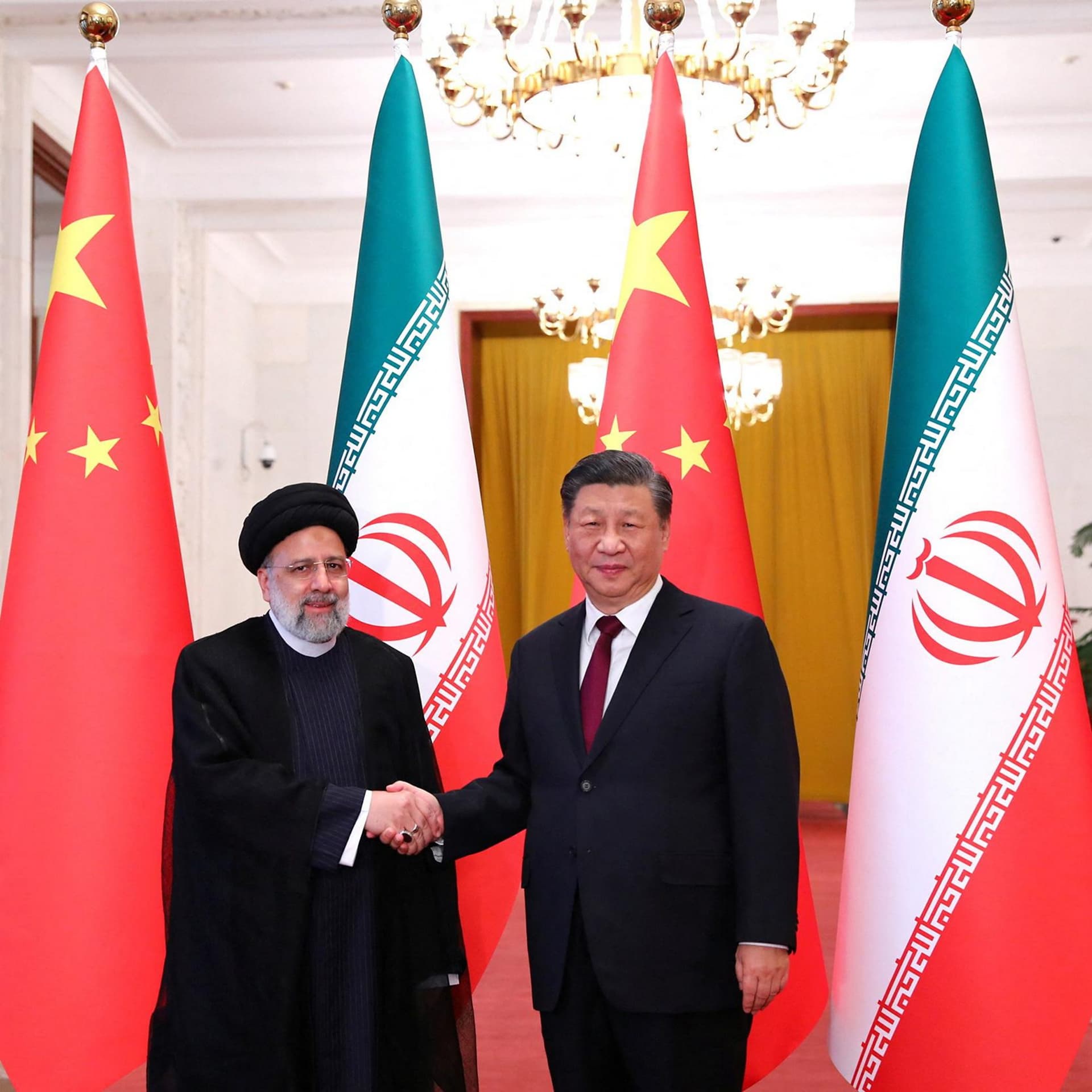
As the US-Israel war with Iran reaches a diplomatic stalemate - one idea seems to be taking hold: that China is the real winner. Some have argued that the US’s biggest rival is quietly boosting its international standing, leverage and reputation as a reliable partner. Yet beneath the surface the economic situation in China looks far less triumphant. We speak to the BBC China Correspondent Laura Bicker who has been reporting from inside China’s factories and trading hubs to explore whether the potential political gains China may be accruing from the Iran war are being offset by the acute economic cost - and what this means for China’s long-term geopolitical ambitions. Producers: Aron Keller and Sam Chantarasak Digital producer: Matt Pintus Sound engineer: Travis Evans Senior news editor: China Collins (Photo: Former Iranian President Ebrahim Raisi shakes hands with Chinese President Xi Jinping in Beijing, 14 February, 2023. Credit: WANA/Reuters)