
In short
Whether Meta (Facebook) is “dying,” framed by youth decline, legal/ethical scrutiny over teen harm, and Meta’s repeated bets that fail (Metaverse) or shift to new tech (generative AI).
Guests
Jeff Horwitz, Reuters tech reporter; previously worked at the Wall Street Journal and helped break the “Facebook files” (2021 investigative reports). He collaborated with whistleblower Francis Haugen (played in the film by Mikey Madison).
Key claims
Meta optimized for engagement and ad revenue, which boosted virality and harmful content, and repeatedly chose growth over healthier discourse. Internal documents showed Facebook was “desperately uncool” to younger users, while usage didn’t drop much. Meta knowingly designed addictive features and, per Horwitz, rolled out chatbot policies allowing romantic/sensual conversations with children; Meta denies wrongdoing.
Notable examples
Cambridge Analytica-linked data misuse (2016 election); teen well-being settlement (Meta paid $17B; limits on notifications and teen time); former safety executive Artur Abahar’s testimony about harassment/grooming on Instagram; Metaverse losses (tens of billions).
Written by AI. May contain mistakes. Listen to the episode to check what was said.
Chapters
Tap a time to open that second in VOInterview with Jeff Horwitz
0:00 to 1:08
Hear from journalist Jeff Horwitz about Meta's controversies.
“This BBC podcast is supported by ads outside the UK.”
Interview with Jeff Horwitz
2:24 to 4:23
Hear from journalist Jeff Horwitz about Meta's controversies.
“that partly inspired the new film, and we'll be asking him, how did it all get so messy for Meta?”
The Social Reckoning Film
4:23 to 6:30
Discuss the film depicting Meta's fall and its implications.
“And started building a relationship because this person had serious concerns about how the company was building its products and hiding information potentially about relevant societal effects of those products.”
Evolution of Facebook's Platform
6:30 to 10:46
Understand how Facebook's platform changed over the years.
“I think it's useful to think about the platform that existed at that time, right?”
Public Sentiment and Meta
10:46 to 13:16
Examine shifting public perceptions of Meta over time.
“And what's very well demonstrated is the company has, when push comes to shove, consistently chosen growth.”
Meta's Legal Troubles
13:16 to 14:00
Explore the lawsuits and allegations facing Meta today.
“It was maybe a problem for executives on an annoyance basis.”
Meta's Struggles with Teen Engagement
14:00 to 19:30
Explore the declining interest of teenagers in Facebook and the lawsuits against Meta.
“When was the last time you logged on to Facebook?”
Future Challenges for Meta
19:50 to 26:59
Discuss how recent settlements and changes may impact Meta's future and strategies.
“Is this enough to stem the bleeding as far as the company is concerned?”
Transcript
Automatic transcript. May contain errors.0:00This BBC podcast is supported by ads outside the UK.
0:30Listen to Choiceology at schwab.com slash podcast or wherever you listen.
1:00It's everything your business needs in one place, saving you time, headaches, and serious money. Stop paying for missing pieces. Go to odoo.com. That's O-D-O-O dot com to learn more.
1:15Remember when Facebook was the place to be? It was all teenagers tagging each other in photos and poking each other. the company used words like share and connect and community a lot. More than 20 years after Facebook was founded, the company, now known as Meta, is in an existential funk. Young people say Facebook couldn't be less cool. They're leaving it in droves. The company's virtual reality experiment known as the Metaverse was canned after tens of billions of dollars of losses. If you remember the movie The Social Network about the early days of the company, now there's a sort of a sequel.
2:01The movie's out next week. It charts Meta's fall from grace and a journalist's investigation of allegations that the company's social media platforms were harming children. So, are these desperate times for Meta? From the BBC, I'm Tristan Redmond in London and this is The Global Story. Today on the show, we'll be speaking with the journalist that partly inspired the new film, and we'll be asking him, how did it all get so messy for Meta?
2:38Jeff Horwitz doesn't feel that comfortable being near the centre of the story. He's currently a tech reporter at Reuters, but previously he worked at the Wall Street Journal, where he made big waves with his work on the so-called Facebook files. These were a series of investigative reports in 2021 that made explosive revelations about how meta functions. And just a note for anyone listening with children, some of the allegations we'll be discussing involve explicit online content. It's fantastic to have you with us, Jeff, particularly at this moment when you You are about to enter a maelstrom of a film which is partly about your life.
3:22The Social Reckoning is coming out very soon. You are played by Jeremy Allen White, who is known to some people as an underwear model for Calvin Klein, as well as being an actor. How does that feel, being played by such a person? Well, I am not known as an underwear model. I have yet to have my break on that front. Look, it's crazy. The whole thing of having a film in which there is a character named Jeff Horwitz who participates in journalism, although it is not, you know, sort of strictly based on my experiences precisely, inspired by, not based on, is kind of awesome and weird. I have not seen the film yet, so I'll save my opinion on whether it's more awesome or more weird, but, you know, it's certainly exciting.
4:14Well, tell us then, what is the story? What is your story that's depicted in this movie? Back in 2020 and 2021, I made contact with a Facebook employee. It wasn't Meadowland, it was Facebook. And started building a relationship because this person had serious concerns about how the company was building its products and hiding information potentially about relevant societal effects of those products. and that person was Francis Haugen. And so the movie is the story of that relationship, you know, telling sort of explaining what the company was doing through that. Well, apart from you, Jeff Horwitz, who are the other main characters?
5:05There's Francis Haugen, who was the whistleblower who I worked with and she's being played by Mikey Madison. and a whole bunch of other folks, including Jeremy Strong as Mark Zuckerberg. So I'm interested in seeing it, I'll say that. Okay, well, it's called The Social Reckoning, and it's, let's think of it as a second installment of a first film that came out all the way back in 2010, which was called The Social Network. Many of our listeners will remember it. This idea is potentially worth millions of dollars. Millions? Yes. I just wanted to let you know that Zuckerberg stole our website. They're saying that we stole the Facebook from Divya Narendra and the Winklevist.
5:49I know what it says. Did we? A million dollars isn't cool. You know what's cool? A billion dollars. It was the story of Facebook back in the early 2000s. And it was fascinating. I remember watching it at the time because the story arc was of this group of people who were college students. And then before they knew it, they were almost unimaginably rich because of launching this social network. So that was very much kind of act one. The story of Facebook then, now Meta, has become somewhat more complicated since then. How have things progressed since the end of that movie until the beginning of this one?
6:36Fill us in. I think it's useful to think about the platform that existed at that time, right? Which is Facebook was a set of like largely static pages that people maintained. And then there would be updates that, you know, from people you'd follow that would show up in chronological order in your feed. There was no real curation happening. And what happened after that is on its way to the 2012 IPO, they began sort of building the curated, personalized version of the platform that anyone who uses social media is now vastly more familiar with. in which the platform itself is designed to optimize what it shows you based on what it believes is broadly popular and specifically going to be popular with you.
7:31You know, this was done because it was meant to optimize for how much time people spent on the platform and how much content they produced, how many ads they watched, obviously, is the final measure of this as a business matter. And it came with a lot of consequences. Such as? The concept of virality, of things that just sort of breach containment very quickly and before maybe anyone's had a time to had a chance to fact check them or think through them. That's greatly boosted by the system they set up, right? It is sort of a pro-virality, sort of pro-acceleration system. um likewise uh you know the ability to um see certain types of content if you engage with it recognize that engagement and try to serve you more of the same um whether that is cat videos or videos featuring unhealthy weight loss techniques and conspiracies and you know sort of political rhetoric of a sort that might be a little bit vitriolic there was a long period of time when like the big thing people were concerned about was like micro-targeting of advertisements.
8:46This is the Cambridge Analytica stuff. Cambridge Analytica, the data privacy scandal which has created a nightmare scenario for Facebook. Which was a scandal which broke out in 2016 around the Brexit vote in the UK, right? And the US election and Russian election interference. The social media site is under scrutiny after news that data from up to 50 million users was taken for ad targeting efforts during the 2016 election. Are you accusing Cambridge Analytica of planting fake news? Absolutely. Facebook is trying to parse out this very narrow difference between having had a data breach and a data misuse.
9:24In the wake of the 2016 election and then kind of continuing on for a couple of years with Cambridge Analytica, there was a broad sense that something had gone wrong on social media, right? Like people just weren't supposed to talk to each other like this. When you think about what is democracy and what is necessary for a functioning democracy, we need to at least have agreement on what is real. If we're living in different realities, we can't talk to each other because we aren't seeing or hearing any of the same things. And so the question was like, what was going on? And for a few years inside Meta, they legitimately grappled with what was going on and whether maybe it could be fixed.
10:10And so they spun up a whole bunch of teams that were going to try to see what changes to the product might accomplish in terms of making the product something where good discussions happened and healthy relationships were formed and, you know, groups distributed useful information. That lasted for a few years. A very short version would be that the company, in fact, realized that what they had been optimizing for growth and engagement and advertising revenue was, in fact, frequently running directly contrary to trying to optimize for quality discussion, civil discourse, I have managed to get, you know, people to share tens of thousands of blurry screenshots taken with personal phones of internal MetaWork product that demonstrates that this is exactly the tension, right, between growth and what I think a lot of people would consider a healthy platform.
11:14And what's very well demonstrated is the company has, when push comes to shove, consistently chosen growth. So what happened is the people that Meta had hired to make the platform better found themselves increasingly boxed in, in which they came up with solutions. And unfortunately, the solutions they came up with almost invariably involved taking the platform off of sort of the growth optimal path. Well, over the years, Mark Zuckerberg and the company leadership have been pretty adamant that Facebook, they say, is about connecting people. They have this indicator, meaningful social interactions.
11:54They say that Facebook is a force for good in the world. Be that as it may, if the atmosphere around the company in the world is very different from the moment when that first film was released back in 2010. Ken, from your reporting, how would you describe public sentiment around Meta right now? I think people did start to appreciate, certainly by 2020 and definitely by the time we published the Facebook files at the Wall Street Journal, that this company... Which was in 2021. Yes, that this company was making choices that seemed to benefit itself at the expense of democracy in fragile parts of the world, at the expense of teenagers consuming some really horrendous stuff.
12:44The company, for a few years, I think, made an effort to say it was really trying to fix the things that had gone wrong. I think the company accepted that there were going to be significant public image problems that were going to be lasting. I mean, this is a memo I got inside the company. It was a marketing document noting that people absolutely thought the worst of Meta, but that there was no decline in how often they used the product. So this was not a business problem. It was maybe a problem for executives on an annoyance basis. And Mark Zuckerberg in particular just sort of adopted a different tone.
13:26One of the things that I look back on regret is I think we accepted other people's view of some of the things that they were asserting that we were doing wrong or were responsible for that I don't actually think we were. I think we should have been firmer about and clearer about which of the things we actually felt like we had a part in and which ones we didn't. I mean, when you published those Facebook files back in 2021, one of the things that you and your colleagues revealed was that there was an internal finding inside Meta that Facebook, the platform, was considered desperately uncool, especially by younger people.
14:13When was the last time you logged on to Facebook? If you can remember, you may not be a millennial or part of Gen Z. Facebook has become a behemoth, but a growing number of teenagers have lost interest. I think Facebook's time, especially for my generation, is over. Well, those young people who may or may not think that Facebook is now desperately uncool, they're very much at the center of the conversation about the company right now. The tech giant Meta is accused of deliberately designing some of its platforms to be addictive to its young users. We have all these lawsuits that are swirling around Meta.
14:50Meta strongly denies the claims, which it called unsubstantiated. They said the evidence will show their longstanding commitment to supporting young people. Roughly speaking, Meta is facing accusations which it denies that it concealed the possible harm that its platforms did to young people, that the company was intentionally juicing its platforms to make them more addictive for young people. But notably, in August, Meta settled a lawsuit of paying$17 billion to 47 states, the District of Columbia, and US territories. And it actually, as part of that settlement, agreed to make some changes. One of your principal sources, a former Meta employee, testified at that trial?
15:41Who is he and what did he reveal to you and at the trial? So Artur Abahar was a former Facebook safety executive who'd left in 2015, but then started getting back in touch with his old colleagues because his daughter was having such awful experiences on the platform. And so she was receiving a lot of unsolicited pictures of genitalia and other misogynistic sort of abuse. He was actually invited back in as a consultant to try to study this problem at Instagram. And one of the things he did was sort of this massive survey studying teens' actual lived experiences on the platform. And it was awful.
16:22Like the statistics in terms of people who'd been sexually harassed or groomed or sent something really inappropriate to a child was like a very high rate. The percentage of people who said that Instagram regularly made themselves feel bad about themselves was uncomfortably high. And so he became a source and the state AGs actually had him as the lead witness for the trial on teen well-being and meta and mental health. The things that are in the settlement, aside from a very big payout over the course of 17 years are restrictions on notifications. So like no more sending teens, you know, prompts to log on at 11 p.m.
17:14And also no doing that during the school day. And then also there is a limit on four known teens and teens with teen accounts that Meta understands to be actual miners, that there's theoretically a two-hour limit on how much time they can spend on the platform every day to sort of prevent binging on potentially unhealthy content. I do say theoretically there because the catch is that Meta has to correctly be able to determine that an account is a teenager and how the company is going to go about doing that, that is not clear. I have to say, some of our listeners might be wondering, well, isn't that up to parents to deal with that situation and take their phone away, for example?
18:07Why is that Meta's fault? The idea that parents are actually capable of monitoring their children's use of any social media platforms is impossible. I mean, even people who are really serious about doing it, There are always ways around it. The internal understanding of Meta, and this was written down in documents, was that everyone liked the idea of parental controls, but almost nobody used them, and nobody used them well. We'll put it that way. That realization has been why a growing number of countries have attempted to put restrictions on just teens below a certain age from using the platform at all.
18:47And you can see in Australia that they have struggled to get social media companies, not just Meta, to functionally keep teenagers off the platform. You know, that most Australian teens of the age 13 to 15 who are theoretically banned are still using it per surveys.
19:18John Deere is putting in work and putting up highlights. Oh man, look at those passes. Tillage, planting, harvesting. Three years in and these pre-owned machines are still at the top of their game. We're talking reliability, performance and long-term potential. And get this, these veteran machines can pick up the latest precision tech with ease. You know it and fans ready to add John Deere certified pre-owned equipment and more options to their lineup can shop at machinefinder.com. Booyah!
19:49So Meta settled$17 billion. They agreed to make these changes. Is this enough to stem the bleeding as far as the company is concerned? Or is there a threat longer term to Meta's future? Oh, this was a very big thing for Meta to put behind it. That said, there's still a ton of other cases brought by private litigants, by school districts, basically making very similar allegations that the company knowingly designed a product that was harmful to teenagers. So how painful this is going to be for the company is unclear, but certainly being able to put this particular suit behind them is very welcome for the company.
20:37And what's their way out, therefore, from this tricky patch? For a number of years, the company has been less and less interested in social media as the next thing. You know, you saw this with Mark Zuckerberg getting really excited about the blockchain and cryptocurrency stuff for a while. You saw this then with the pivot to the metaverse. Hey, and welcome to Connect. Today, we're going to talk about the metaverse. I mean, Jeff, I remember the metaverse. The next platform and medium will be even more immersive. An embodied internet where you're in the experience, not just looking at it. And we call this the metaverse.
21:17They spent$80 billion almost on that project, which was then canned pretty unceremoniously not very long afterwards. I think it limped into the beginning of this year before finally being axed. I mean, it does suggest that Mark Zuckerberg as an operator is not infallible. So is there a possibility that the next big project could tank in the same way? I mean, the next big project is LLMs and large language models and generative AI. Everyone is chasing that whale. And Meta has certainly not established itself to be in the lead in any of this, despite spending money with the best of them. And Meta also does have a track record of they realize they didn't get into something.
22:13They spend a whole bunch of money trying to catch up. But if it is actually the future, Meta has the cash flow to be a serious player. And I think that's one of the things with Generative AI that, you know, this is something I got into after the Facebook files was how the company was approaching that. And it was very similar in terms of the, we must make the thing grow, even if there are some really unpleasant side effects. like work I was doing last year was about meta knowingly creating chatbots that they weren't really good for anything else other than like soft core sexting. And they intentionally rolled those out to children because it was a product growth choice.
23:00It was actually the policy guidelines for their meta AI, their chatbots that stated it was acceptable to engage a child in conversations that are romantic or sensual. This is a company document that says this? Oh yeah, no, no, this was the policy document governing chatbots. We got that at Reuters and we published it. I mean, and the company said that that was all a misunderstanding and definitely should never have been, wasn't ever actually the real rule. Although we did demonstrate that the chatbots did indeed do that. Well, there is a very much more wholesome face that Facebook, that Meta is putting on it.
23:38It's LLM AI projects. All right, big day. Today we are launching Muse. So there is this video of Mark Zuckerberg launching Meta's new AI agent. A personal agent that understands your goals and works 24 seven to help you achieve them. And he talks about this new product called Muse that's gonna help people to plan their lives. We designed it from the ground up for privacy and security. How it'll be able to get into your data and your computer, but you shouldn't worry. It's not a threat. There are things it can't see. And it'll help him do things like, you know, cook bread, bake bread with his daughter.
24:16Muse doesn't just answer questions. It gets things done for you. I use mine to organize projects with my kids. I mean, can a thing like this really be the future of a giant company like Meta? I don't know that it has to be, right? They have as much money as anyone or more, and they have as much user data as anyone or more. And these two things are really formidable advantages in this sort of maximalist AI race. So people have noticed the vast spending on generative AI, and I think there's still a lot of confusion as to what it looks like. Reuters recently, one of my colleagues wrote about how Mark Zuckerberg had to call off aspirations for extremely steep layoffs.
25:06Like they were hypothesizing potentially as much as 60 % over the course of like a year or two. Called it off because simply the AI wasn't there yet. You know, the technology wasn't ready. and the valuable human beings didn't really like the idea of working in an environment where, you know, just their colleagues are getting axed right and left. It was just kind of almost a mutinous situation. So, you know, what this looks like and what the next stage of this technology is going to be and how AI is going to shape or replace social media, all TBD. I think trying to To envision a future in which simultaneously everyone is glued to Meta's products and also it's very wholesome, that's been a challenge for the company over the years.
25:54I mean, the advertising business, I think for a lot of years, people predicted that sort of objective quality of content on the platform was going to just tank the numbers. At some point that, you know, you couldn't just allow fake news and crappy generative AI videos to just, you know, overtake the platform, that there was going to be something to be a price to pay with users. That has never been the case. I mean, nothing's ever secure. Things are behemoths until they're not. But there's, as of yet, sort of no indication that would make you think that this company isn't going to be prominent 10 years from now in the same way.
26:43Even if they have not maybe come up with the next new thing themselves, they have been extremely good at buying or imitating it. and have sort of maintained relevance through multiple different cycles of the technology. It would be hard to discount Meta's dedication to trying to dominate that next round too, whatever it should be.
27:08Jeff Horwitz, thank you so much. It's been a real pleasure to talk this through with you. Thank you very much, Tristan. That was Jeff Horwitz, the Reuters journalist, whose reporting inspired the new movie, The Social Reckoning. And just a note from Meta on the allegations mentioned by Jeff on chatbots engaged in inappropriate conversations with children. The company told the BBC that, quote, the examples and notes in question were and are erroneous and inconsistent with our policies and have been removed. They said they have, quote, clear policies that prohibit content that sexualizes children and sexualize role play between adults and minors.
27:48If you have any thoughts on today's episode, please get in touch. We love hearing from you all. Our email address, as usual, theglobalstoryatbbc.com. Our show today was produced by Zandra Ellen and Valerio Esposito. Our digital producer is Sam Gruet. Our sound engineer is Travis Evans. Our executive producer is Martine Powers. Our senior news editor is Chyna Collins. Our studio manager is Mike Regard. And I'm Tristan Redman. Thanks so much for spending some time with us. We'll be back again tomorrow. Cheerio.
28:47for the restaurant industry. Planet Money helps you find answers by going to places, watching people, and sometimes robots, at work, and asking questions. Listen to Planet Money on the NPR app or wherever you get your podcasts.
From the publisher
Fifteen years ago, the film The Social Network told the story of Facebook’s rise to global prominence. As Meta faces growing scrutiny from regulators and pours billions into AI, a new movie examines what the company allegedly knew about the harms linked to Facebook.
Jeff Horwitz is the journalist whose reporting inspired the new film, The Social Reckoning, which hits cinemas next week. Horwitz helped expose internal debates at Meta over misinformation, teenage well-being, political polarisation and the tension between keeping users safe and growing the business.
After a turbulent year for the company and amid declining public trust, The Global Story’s Tristan Redman talks to Horwitz about whether Meta can reinvent itself while remaining one of the world’s most powerful tech giants.
Producers: Xandra Ellin and Valerio Esposito
Executive Producer: Martine Powers
Digital Producer: Charlie Firth
Mix: Travis Evans
Senior news editor: China Collins
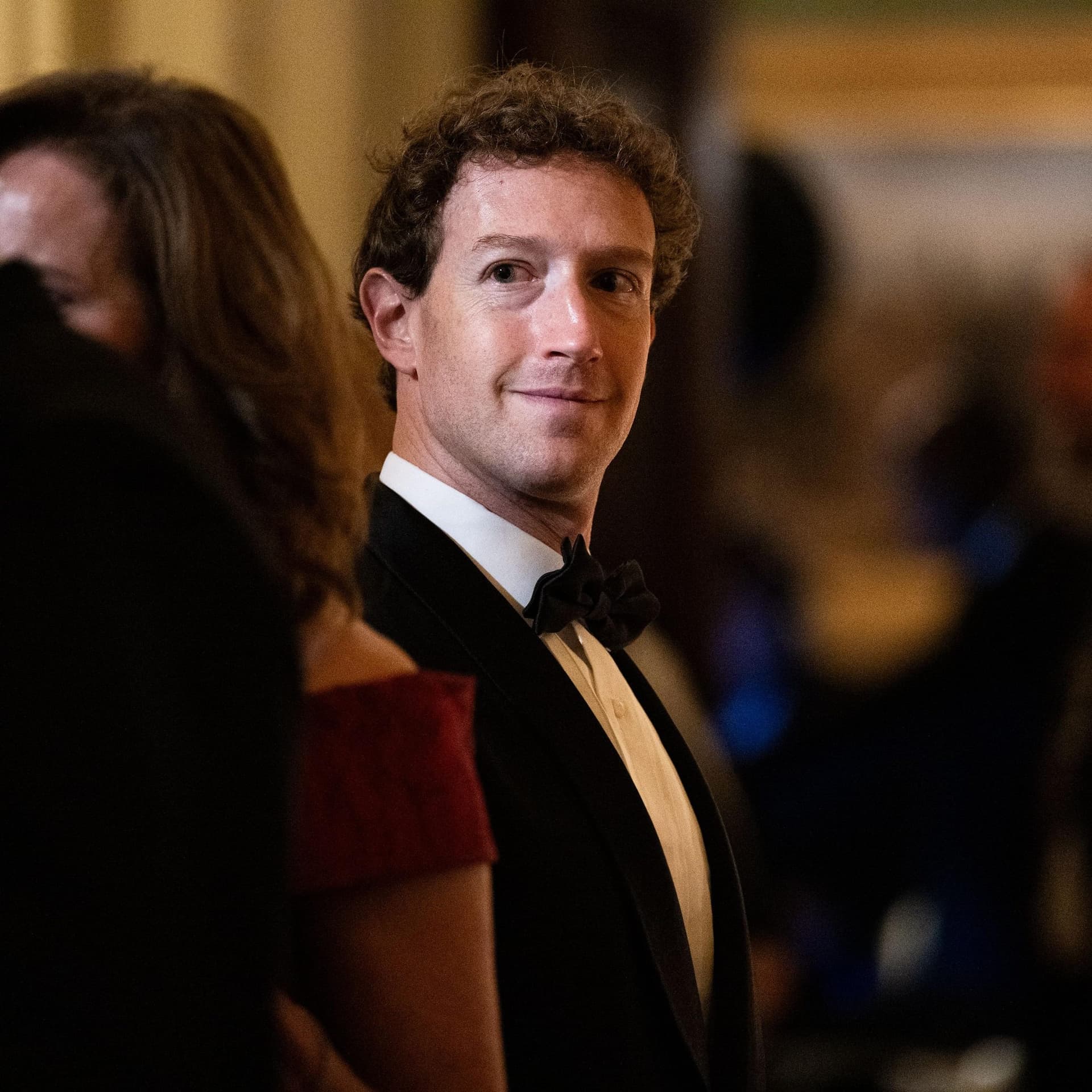
Image: CEO of Meta Mark Zuckerberg (Annabelle Gordon/POOL/EPA/Shutterstock)