In short
Whether social media is “dead” or transforming into something else—shifting from social connection to algorithmic, corporate, broadcast-style platforms, with AI and “dead internet” concerns.
Guests (and backgrounds)
Kyle Chayka, a staff writer at The New Yorker; previously wrote/covered internet culture and social platforms. Hosts Asma Khaled (Washington, D.C.) and Tristan Redman (London). Producer Zandra Ellen (New York) pitched the segment; she’s 28 and describes growing up online.
Key claims
Early social networks felt tighter and more human (MySpace “top eight,” college-only Facebook, Tumblr as niche curation). From 2015–16, feeds became more algorithmic, less user-driven. Pandemic accelerated online life. Twitter/X became more algorithmic under Elon Musk. Generative AI and bots make content harder to trust; “dead internet theory” suggests most traffic is automated. Social media may be shrinking as users drift to smaller spaces.
Notable examples
“Golden retriever Jesus” AI image with high engagement; Tumblr as “utopia” (early 2010s); Twitter hub of election discourse; 2011 live-tweeting art installations leading to artists confronting him; Musk’s “tune the variables” and algorithmic ranking; Instagram adding music to posts; Sora/AI-generated realism; 2024 report that most internet traffic is bots.
Written by AI. May contain mistakes. Listen to the episode to check what was said.
Chapters
Tap a time to open that second in VOZandra's Perspective on Social Media
0:42 to 1:11
Zandra discusses her upbringing on the internet and changes in social media.
“And to think, that's just a small taste of what Schwab offers.”
Zandra's Perspective on Social Media
2:38 to 4:19
Zandra discusses her upbringing on the internet and changes in social media.
“One thing you all might not know about this show is that it is made by a team, a fabulous team of folks that are spread across the globe working around the clock.”
Kyle Chayka's Insights on Social Media
4:19 to 7:05
Kyle shares his experiences and the evolution of social media platforms.
“I think it's a man who's supposed to look like Jesus.”
The Impact of the Pandemic on Social Media
7:05 to 14:00
Discussion on how the pandemic transformed social media usage.
“And I suppose MySpace was really the first social network that I got on, and that came toward the end of high school.”
The Pandemic's Impact on Social Media
14:00 to 15:47
Learn how the pandemic transformed social media use and accelerated internet habits.
“So if we fast forward a couple of years later, the pandemic essentially takes over all of our lives in 2020.”
Elon Musk's Acquisition of Twitter
15:47 to 17:48
Explore why Elon Musk bought Twitter and how it was influenced by social media's evolution.
“Like now the polarity has kind of flipped, I think, where you have all these cable news figures going onto YouTube.”
Understanding Algorithmic Feeds
17:48 to 20:10
Discover the difference between chronological and algorithmic feeds in social media.
“So in an algorithmic feed, the most engaging content to you or what is predicted as the most engaging to you will be at the top.”
The Role of AI in Social Media
21:32 to 24:18
Examine the influence of generative AI on social media content and trust.
“All right, so what happens then when you throw generative AI into the equation?”
The Future of Social Media
24:18 to 28:00
Discuss the potential decline of traditional social media and the rise of new online interactions.
“So yeah, I think it makes the internet less meaningful and more exhausting to parse just because you have to decide at so many moments if what you're looking at is meaningful or not.”
The Future of Journalism: A Professional Revival
28:00 to 29:39
Explore the evolution of journalism in the age of social media and individual creators.
“I'm interested in it particularly as a news source.”
Transcript
Automatic transcript. May contain errors.0:00This BBC podcast is supported by ads outside the UK.
0:30No bouncing between tabs. And best of all, no spreadsheets. Stop managing software and start managing your business with one unified system. Try for free today at odoo.com. That's O-D-O-O dot com. Self-directed investing. Trading. Full-service wealth management. Automated investing. Financial planning. Thematic investing. Retirement planning. Phew. And to think, that's just a small taste of what Schwab offers. Because Schwab knows that when it comes to your finances, choice matters. No matter your goals, investing style, life stage or experience, Schwab has everything you need, all in one place, so you can invest your way.
1:11Visit schwab.com to learn more.
1:15Kyle Chayka:Hey there, it's Asma and Tristan here. Hey guys, as we reach the end of 2025, we wanted to bring you a few of our favourite episodes of the podcast since we relaunched in September. That's right. And we will be back in the new year with brand new episodes bringing you stories about where the world and America meet. And we love to hear from you about what you thought about the episodes and the other topics we've been looking at. So please message us. Our email address is theglobalstory at bbc.com. So Tristan, one that I really enjoyed was when we looked at this question of whether we are witnessing the death of social media.
1:54Kyle Chayka:And I don't know, it got me a little nostalgic for the early days of Facebook and Instagram where there was a real energy around connecting with friends that you have in real life, also in social media. You were very into the golden age of social media. I remember that, Asma. What I'm quite pleased about this episode, I did really enjoy doing this interview, but I'm also quite pleased in retrospect that my revealing story about one of my first compromising run-ins with social media back in the early days did not make it into the final edit. Into the final cut. That was on the cutting room floor.
2:31Kyle Chayka:So listeners, if you're intrigued, you'll have to ping Tristan directly for the details on that story. Enjoy, guys. One thing you all might not know about this show is that it is made by a team, a fabulous team of folks that are spread across the globe working around the clock. We've got producers in London, in New York. I'm over here in Washington, D.C. My co-host, Tristan, you're sometimes in Paris. And it is mixed by an engineer in Australia, Travis. Hey there, by the way, Travis, if you're listening. Hi, we love your work. Hey, Travis. So today on the show, we're actually going to be hearing from someone you don't normally hear from.
3:08One of our producers in New York is Zandra Ellen. So Zandra, please take it away.
3:13Kyle Chayka:Hey there, Zandra. Hi. Hi, Global Story listeners. This is Zandra. I'm one of the producers of the show. I pitched this idea because I spend a huge amount of time on the internet. I was raised on the internet. I not to age virtue signal a little bit, but I am I am bravely I am bravely the youngest person on earth at at 28. On earth or in the teams? I know I'm the youngest person on earth, Tristan, as we know. Yes, you are. Yes, yes, you are. So let's be so clear about that. And yeah, and I grew up on the Internet. Most of the social interactions that I can remember having in my life, in my teen years, in my childhood transpired on the Internet.
3:56And I think that one of the things that I've sort of noticed is that social media is really transforming. And I wanted to show you an image that I think encapsulates what I'm talking about when I say social media has changed. I'm going to slack it to you right now, and then I just want you guys to describe what you see.
4:18Kyle Chayka:Oh, oh. Oh, what is this? I think it's a man who's supposed to look like Jesus. It's a man who looks a bit like... Who also looks like his dog. He's been AI'd, right? Has to be AI'd. It's a guy in the middle of a street, pretty crowded street, with long shoulder length, brown wavy hair, wearing some sort of white loose-fitting tunic it looks like, who clearly looks like he is supposed to be Jesus. He's holding his dog and his face looks like his dog, So he's half Jesus, half dog. Yeah. Very creepy. And the caption says, why don't pictures like this ever trend? Okay. So it kind of hurts my eyes to look at it a bit.
5:02It's a really stressful thing to look at. And another thing that I just want to observe about the photo is it has 282 ,000 likes and 5 ,000 comments. So people like this. So people, so evidently people like this. And the other thing that I just wanted to note about this image is this is from an account that I do not follow. I don't even know how one would find this account. It looks like it was posted by somebody called Emilio Piano dash one. Yeah. You know, I'm on Facebook to look at my friends from childhood's engagement posts. I'm not here to look at Emilio Piano dash one. Who may or may not be a real person.
5:45I mean, it seems. Oh, yeah. Exactly. And when I saw this, I was like, something really strange is happening. I sort of couldn't stop thinking about it because I feel as though our interactions with social media have become so much less social, so much more kind of uncanny in this way, like the golden retriever Jesus. And I think that a lot of people sort of are noticing that something has changed. But it's a little bit ineffable. You can't quite put your finger on what exactly is happening. And then recently, I saw this article, and I felt like finally someone had a theory about what was going on.
6:32And it was in The New Yorker. It was written by a New Yorker staff writer named Kyle Chayka. So I got in touch with him, and I asked him to come on the show. And that's all I've got for you. So you guys take it away.
6:45Kyle Chayka:All right. For the BBC, I'm Tristan Redman in London. And I'm Asma Khaled in Washington, D.C. And today on The Global Story, is social media dead or is it just becoming something else?
7:04so kyle what is your brief history of social media according to kyle what were your first experiences with social media and where did it take you it's a long story i mean i think like many millennials my life is kind of inseparable from the internet and social media has been and how I discovered things, and how I defined myself. And I suppose MySpace was really the first social network that I got on, and that came toward the end of high school. MySpace had that feature where you selected your top eight friends, and so you had to think about your actual relationships and communicate them in a literal way on the internet.
7:52And I think from MySpace, it was a quick jump to Facebook when I got a college email address. So at that point, you couldn't get on Facebook until you had an actual college email address. I remember those days.
8:06Kyle Chayka:Yeah. Students were that first demographic of mainstream social media. Funnily enough, the first place I ever encountered my now wife was on pre-college Facebook. No way. In 2005, I think, that we exchanged messages in some accepted students group. And I think that was why social media was enjoyable at that point, because you kind of knew who you were talking to and you were connecting with a set group of people. And it was much tighter and closer than 100 million random people on the internet as it is right now. What's your best memory of the early days of social media? The point that I always go back to, I think, was the early 2010s.
8:53And in particular, Tumblr, which was this microblogging website, which was a kind of parallel to Twitter, but it was more multimedia. It had more images and videos and GIFs and things like that. I was collecting photos of art. I was passing around anime screenshots. I was, you know, looking at curated selections of medieval manuscript illuminations. Tumblr just felt like this utopia of niche internet curation. And it was the zine of its time. And I mean, really, before dating profiles, I think, and before Instagram became the portfolio of your life, Tumblr was this representation of who you were and what you liked.
9:41Okay, Carl, was there a moment for you when you felt like social media changed? Oh, man. I mean, in 2015, 2016, I think, in the United States, when Twitter became the hub of election discourse, it kind of shattered the illusion that the internet was a space you could go to just like have fun and express yourself and find cool friends and discuss the latest cultural happenings. Oh, I did think of another moment that I can describe. Yeah, tell us. Which is earlier. And I think it happened in 2011. I was working at an art blog in Brooklyn. And so my boss hatched this plan to go to a series of performance art installations at a gallery and live tweet the whole thing.
10:35So we were kind of sitting in the corner, tweeting about the performances that were going on in this, you know, decrepit warehouse in Bushwick. and I was tweeting about, you know, one performance or other. I don't think I liked it very much. And so my tweets were a little bit critical. And so after the performance was over, the artists themselves came up to me and confronted me about my slightly negative tweets about their work. And I think at that moment I realized, oh, what you post online can come back to you very quickly. Yeah, yeah. Well, shortly after that experience of yours in 2011, Facebook in 2012 ends up buying Instagram, which I remember at the time seemed like a huge deal.
11:23Looking back on it, I think it was probably pipsqueak money compared to what we see now in the tech business. But it feels like that was the beginning of a kind of consolidation of social media companies by big corporations. Can you talk us through how that process panned out in the 2010s? The 2010s kind of started out as this profusion of different platforms and websites. You had blogs, you had Tumblr, you had Twitter, you had Instagram. And it wasn't really clear what would be successful. It was this kind of different options for different people. And I think when Facebook acquired Instagram in 2012, that was a signal that actually the future of social media was more in corporate consolidation than it was in this profusion of independent websites.
12:12A little later than that, in 2013, Tumblr was acquired by Yahoo. And that was the kind of death knell for my internet utopia on there. Later on, Facebook acquired WhatsApp. And Mark Zuckerberg's own strategy that he explicitly stated was that he was trying to buy startups in order to neutralize their competition. So by acquiring Instagram, he would ensure that Instagram would not threaten Facebook. By acquiring WhatsApp, he would ensure that messaging would not threaten Facebook and Instagram as a different way of communicating online.
12:50Kyle Chayka:I am curious, as we see this consolidation, does it change what the owners of social media want to do with these platforms? Yeah, I mean, I think the marketing message of social media was that by connecting everyone on Earth, we're going to bring in a new era of like total equality and democracy. And the people who deserve attention will get attention. And no more gatekeepers will stand in the way. Everyone's voices will be heard. And that was the case. That message continued through a bunch of the 2010s, I think, up until 2015, 2016, when social media feeds became more algorithmic. So more driven by recommendations, more automated, and less driven by the choices of the users.
13:38And that process has only continued until now. The algorithmic recommendation makes it easier to grow audiences faster. It makes social media more broadcast and less one-to-one. It makes it more centralized rather than decentralized. And so influencers or creators now, these singular voices, they become centers of gravity in that algorithmic landscape.
14:03Kyle Chayka:So if we fast forward a couple of years later, the pandemic essentially takes over all of our lives in 2020. And one of our producers, Zandra, was saying that it felt like during that time period, a lot of life moved onto social media because there was really no social life. Full disclosure, I had a small kid and was pregnant with another. So I felt like I was actually weirdly engaged in real life during that time period. But I know that for so many people, there was no social interaction. And so all of that was happening online. How big of a moment was the pandemic for transforming how people use these platforms?
14:42I think it was huge. I mean, I think a bit of common wisdom was that the pandemic accelerated internet habits by five or six years. Before the pandemic, there were many, many people who were extremely online, myself included, who just spent tons of time on social media, who consumed digital native content more than cable news, say, or newspapers or more traditional forms of content. But in the pandemic, hundreds of millions of more people embraced that extremely online lifestyle and started diving deeper into internet niches and finding their favorite influencers and figuring out what they like on YouTube and diving into that huge pool of the internet and getting lost there a little bit.
15:31But in a way, it made social platforms even more vital because that's how we connected with each other. But it also turned social media into more of a broadcast mainstream media kind of thing because suddenly that's where everyone's attention was. And as the attention went there, then you saw everyone else chasing it. Like now the polarity has kind of flipped, I think, where you have all these cable news figures going onto YouTube. You have podcasters who are more famous than traditional celebrities. So it's really a kind of process of professionalization almost of social media that you're describing.
16:09Is it in that atmosphere that Elon Musk decides to buy Twitter in 2022? Yeah, I think Elon Musk bought Twitter in 22 because he saw it as a political tool, for one thing. It was very clear that Twitter was a place where politics happened. Twitter also kind of got left behind in that professionalization of social media. Like it wasn't sharing revenue with creators like YouTube. It wasn't really embracing multimedia in the same way that Instagram or TikTok was. And so I think he saw a kind of distressed asset that wasn't as optimized as it could be. But then he also changed the mechanisms of that communication toward his own ends.
16:58He prioritized the topics that he wanted to prioritize. He made himself the loudest voice on the platform. So I think he bought it in order to tune the variables in his own favor. What do you mean by tune the variables? I mean, Elon Musk made Twitter even more algorithmic as he transformed it into X. So all of a sudden...
17:19Kyle Chayka:What does that mean when you say algorithmic? So there's a linear feed is a chronological list of posts from people you follow. That's how social media used to work. It's the kind of literal, here's what people posted kind of structure. An algorithmic feed instead is this disordered list of posts, not chronological, ranked in order of how the algorithm thinks you will engage with them. So in an algorithmic feed, the most engaging content to you or what is predicted as the most engaging to you will be at the top. The other thing is like the algorithmic feed itself can also be a kind of facade because it doesn't have to take your data into account.
18:06Like you don't know that the algorithmic feed is actually taking into account what you're clicking on. You don't know how well personalized it is. So I think what Musk did was tweak the variables so that it's not actually the exact topics that you want to see. It's the exact topics that he chooses to prioritize.
18:26Kyle Chayka:I've been wondering about that. That's interesting. Could you explain to me, hypothetically, Carl, if I were to open a Twitter account tomorrow or an X account, would the things I would be receiving in the algorithmic feed be things that the algorithm thought that I wanted to see as in that I appreciated or things that it thought would get a reaction from me? So if you were to open a new X account, if you just had no data and opened an account, the algorithmic feed would start you off with a range of generic topics, which on X might be Tesla, Trump, cryptocurrency. So that is an unbiased set of topics.
19:11And then the feed would mold itself around what you continue to engage with to some degree. but you can see like the x feed the x algorithm is much slower and stickier than like the tiktok feed which if you set up a new account on tiktok and start scrolling through videos tiktok will lock into your subconscious in five minutes it's absolutely insane different algorithmic feeds work differently and some are more based on what you engage with and some are more based on what does the platform want you to see. Okay, so what you're describing here is a extremely highly attuned piece of technology that is somehow tapping into your psychological profile.
20:00But only based on what you click on. Yes, yes. It's not reading your mind. It's just watching what you do and what signals you output. it. But it turns out that what video you watch for microseconds longer and what you scroll past immediately is a really good signal of what you're thinking about and what you want to see.
20:30Chicago Talks. A lot. Hold on, let me step over here. People are talking too much. We debate about food, deep dish, tavern style, who's got the best beef. We yell across rooms, across blocks, across generations. Yes, nice earrings, Grammy. And now we're doing it on our phones, too. Video calls from the L train, group chats that never shut up. Neighbors texting you the score before your TV catches up. Come on! Get a load of this guy. Catch up. On a dog. Yeah, we've got thoughts. Too loud? In Chicago, you're gonna hear it. Because nothing here gets built without conversation. Nothing moves without connection.
21:07So if you think you know AT &T, it might be time to rethink that because their network has improved, like, a lot. So Chicago can keep speaking its mind with AT &T Wireless and AT &T Fiber.
21:19Kyle Chayka:Chicago won't stop talking. Our improved network backs it up. AT &T, connecting changes everything. AT &T Fiber, limited availability in select areas.
21:32All right, so what happens then when you throw generative AI into the equation? That was the other pivotal moment in the 2020s so far when ChatGPT was released to the public and all of a sudden you could not trust that content was purely created by humans and wasn't just a product of AI. And I mean, social media has been leaning into AI. my favorite example of this is Instagram posts with music on them. Like, no one, I could not tell you a single person who is like, I love to see still images with soundtracks on them. And yet Adam Aseri is like, you will put music on your photo. Because you know what happens, Kyle?
22:15Kyle Chayka:Every time you post something, it tells you, oh, posts with music get more clicks. So now just to spite Instagram sometimes, I refuse to put music on my posts. It's awful. No one wants this. Kyle, I want to ask you about something that I think broadly relates to this conversation, which is dead internet theory. I do not entirely know what it means, but it's something I've heard out there. Can you explain to us what it is? Yeah, it's a very evocative phrase. Like, the internet seems so alive, there's so many people on it, but actually it's dead, like a coral reef in the ocean. Dead internet theory is the idea that the majority of the internet is now just bots talking to each other and generated automated content.
23:00And that gives the illusion of activity. It gives the illusion of interacting with other people. But actually what you're seeing is bots and the hollow echoes of content that has already been posted. And this has some truth to it. There was a report that just in 2024 last year, the majority of traffic on the internet is now bots. And that's not just like bots posting on social media, it's bots crawling the internet and AI models absorbing and training on data on the internet. It's this kind of machinery behind what goes on online. But it does mean that social media is less human than it used to be.
Read the full transcript
23:38Like you have a harder time trusting that what you're seeing on the screen is actually the thought and intention of a person. And so you have to kind of evaluate each bit of content to make sure that it's real or authentic. and that goes the same for videos now since you can generate very realistic videos with Sora OpenAI's tool. It goes the same for music on Spotify. AI slop music is an increasing problem and sometimes I listen to a loungy jazz track and then I realize that it's actually just a totally hollow fake artist who has no profile whatsoever. So yeah, I think it makes the internet less meaningful and more exhausting to parse just because you have to decide at so many moments if what you're looking at is meaningful or not.
24:29Okay, in that case, what is the future of social media? Where does it go from here? I mean, we see the large social networks and the tech behemoths leaning into generated content. And I think users don't actually want that. I think it's a novelty for now and people will drift away from it. So instead, I see people gravitating towards smaller online spaces, connecting more closely with individual voices like creator types and just posting less in general. There's another report recently found that literally social media peaked in 2022 in terms of usage and user activity. And it's been down ever since, which is also the pandemic so that's a contributing factor but i do i feel like in the 2010s in that golden age quote unquote there was this idea that posting your life on the internet was good that it was good to share the things that were happening that it was cool to post something that you observed and it was right to communicate that to hundreds of millions of people i mean i just I always remember people posting their breakfasts on Twitter, like just sharing the banal details of your life with random people online.
25:47And we kind of learned that there are many negative consequences to doing so. I think people are having less fun being on the internet, in part due to this AI wave, in part due to the corporatization of social media. And so that just leads people away from the internet. Well, I have to ask then, I mean, if you're Mark Zuckerberg or, you know, Elon Musk, who spent$44 billion on Twitter or whoever in that sphere, you must be quite concerned if the internet is dead. So, you know, what's their plan for either saving their investment or keeping these platforms relevant? Well, I think this pivot to AI is in part a maneuver to save the finances of these companies from long-term doom.
26:31Like, social media built up the world's best sets of human data on the internet because we all posted so much stuff. And so now the social media companies are huge troves of data that will make for better and better AI models. So that's become one direction they're going in. And I think the social networks have leaned into just being more passive broadcast experiences. Like, rather than people posting their lives and sharing things with each other, it's more just about people leaning back and consuming their favorite internet celebrities. And that's the end of the transaction.
27:10Kyle Chayka:Well, Kat, I want to ask you about that because it sounds like, as you've chronicled the short history of social media here, is that in some ways social media is becoming old school traditional media. You see it being professionalized in some ways, right? Is that just the logical endpoint of the death of social media? Yeah, it's really interesting. I mean, I think social media did turn into more mainstream media, but at the same time, mainstream media has turned more into social media. It's this coming together into one vicious or virtuous cycle of attention where, you know, no matter where you are, the point is just to broadcast yourself and get more eyeballs and ears and exposure.
27:55mainstream media feeds the internet the internet feeds mainstream media and everything is gravitating toward this i don't know semi-diy semi-professionalized youtube podcast tv show internet experience thing that's what's happening right now kyle if you're saying that social media is moving more towards this sort of professionalization. I'm interested in it particularly as a news source. Could we be returning to a kind of golden age of journalism where people like Asma and I fly around business class like in the old days, we have massive expense accounts and we just file like one story a week.
28:43Is that what you're saying? Can you guarantee that for me? So my theory is we've gone through this big wave of upheaval and we saw a lot of deconstruction of the media and of attention. And now it's building back up again. So I think you see individual creators and celebrities and journalists and just big voices gathering attention around themselves and then rebuilding small newsrooms and editorial teams. So I think we're in the kind of fish crawling out of the water onto the beach era a little bit. But I think you will see new organizations evolve. And the less they rely on massive social networks, the better they'll be able to turn a profit, hire more people, buy business class plane tickets.
29:35It's been a real pleasure to talk with you, Kyle. Thank you.
29:38Kyle Chayka:Same, Kyle. Thanks for having me. That was Kyle Chaika, a staff writer at The New Yorker. And that's it for The Global Story for today. If you want to get in touch with us with any comments or ideas, please send us an email to theglobalstory at bbc.com. Thanks very much. See you tomorrow, guys. Cheerio.
30:11Thank you.
From the publisher
We are away for Christmas, so this is a repeat of a previous episode.
For much of the 21st century, our social lives have been shaped, at least in part, on the internet. But in an age of influencers, generative AI, complex algorithms, and politically entangled technocrats, some users say social media is growing less, well, social.
So, is social media dead? Or is it just becoming something else? We speak with New Yorker staff writer Kyle Chayka about what happened to social networks, and what their transformation suggests about the future of media.
Producers: Xandra Ellin and Aron Keller
Executive Producer: James Shield
Mix: Travis Evans
Senior News Editor: China Collins
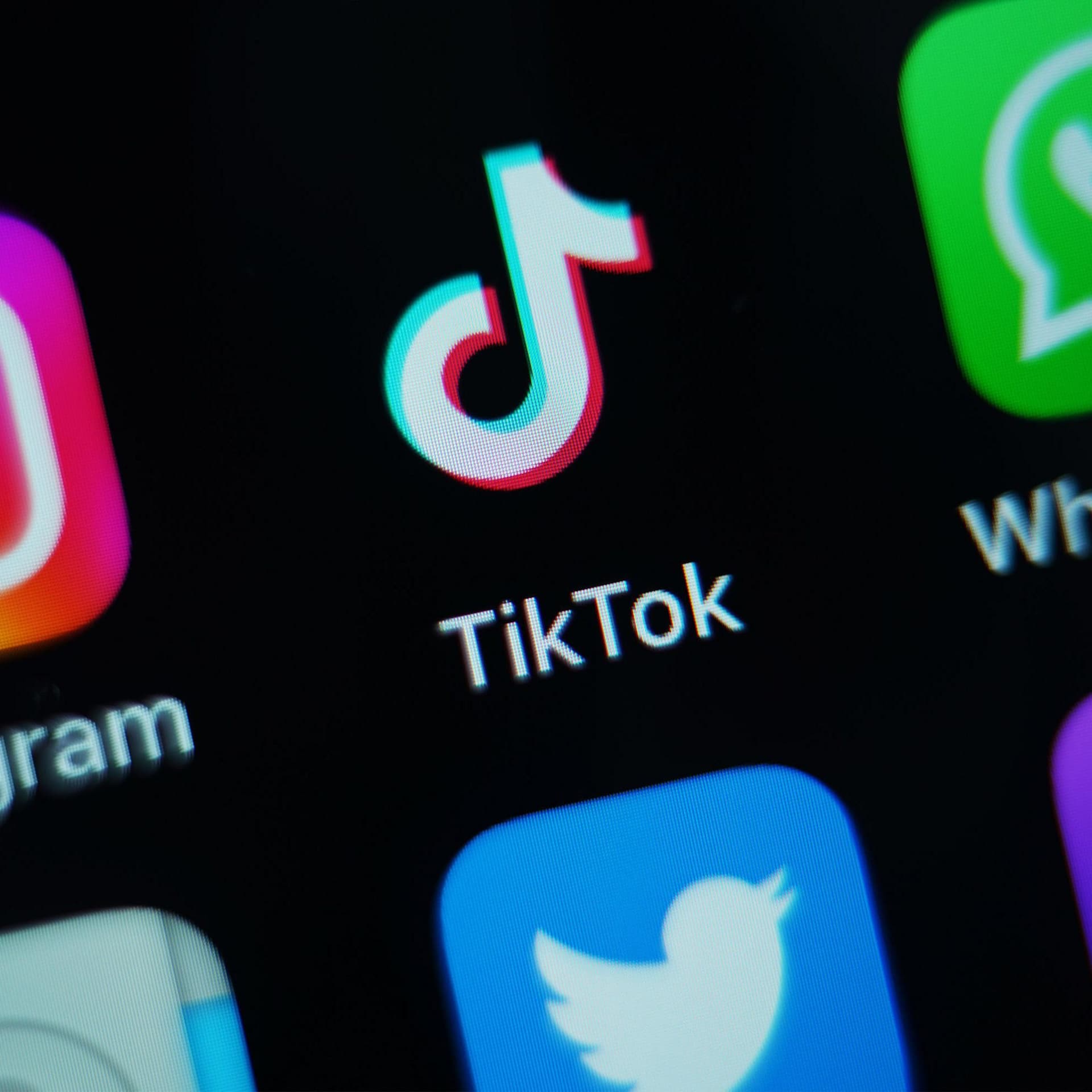
Photo: Social media apps on a phone. Yui Mok/PA