
In short
The BBC’s Global Story examines whether foreign states are behind political misinformation, focusing on (1) Elon Musk/X alleging China-linked “slopaganda” about AI data centres, (2) Spain’s Ceuta migrant crisis accusations involving Russia/Israel, and (3) Germany blaming Russia for a drone attack at Leipzig/Halle airport.
Guests
Marianna Springs, BBC social media investigations correspondent; she researches conspiracy theories, disinformation, trolls, and platform dynamics.
Key claims
X says it identified a bot farm of ~200,000 accounts and found 200 accounts posting AI-generated anti–data centre content to influence US debate; Ceuta misinformation spread via misunderstandings of Spanish processing rules and “mirage” Instagram/Facebook content, with no evidence of direct Russian/Israeli links; Germany attributes the Leipzig drone incident to Russian hybrid operations, while Russia denies and calls it a Nazi-style false flag.
Notable examples
X posts with AI villain cartoons about electricity bills; Ceuta “easy swim” aspirational routes; Leipzig/Halle drones near Ukrainian cargo planes; Russia’s “false flag” framing.
Written by AI. May contain mistakes. Listen to the episode to check what was said.
Chapters
Tap a time to open that second in VOIntroduction to Today's Topic
0:51 to 1:29
Discussion on foreign interference in various global events.
“Imagine buying a toy for your kid, but it doesn't come with batteries.”
Introduction to Today's Topic
1:31 to 2:26
Discussion on foreign interference in various global events.
“Is the US backlash against data centres actually a Chinese PSYOP?”
Elon Musk and AI Data Centers
2:26 to 3:37
Examination of accusations against China regarding misinformation about AI data centers.
“Or is everyone just really getting up in everyone else's business?”
Deep Dive into Bot Farms
3:37 to 6:06
Analysis of bot farms and the impact of inauthentic accounts on online discourse.
“Some of these stories are in the real world.”
Authentic Voices vs. Foreign Influence
6:06 to 9:11
Discussion on the complexity of discerning real concerns from foreign interference.
“So a division of X called Global Government Affairs has posted a couple of the examples of what they say are the posts, the slopaganda.”
Migrant Crisis in Ceuta
9:11 to 10:38
Exploration of the migrant crisis in Ceuta and its portrayal on social media.
“And I think the question of whether it's interference comes down to a wider discussion about impact, right?”
Investigating Misinformation in Migration
10:38 to 14:01
Insights into how misinformation affected perceptions of the migrant situation.
“Well, let's move on to foreign intervention story number two, which is one that you've been digging into on your hit podcast, Top Comment, wherever you listen.”
Investigating Migration Discourse Online
14:01 to 17:25
Explore how social media narratives about migration are shaped and manipulated.
“makes the swim look really straightforward, makes the process look really easy, aspirational content.”
Political Motives Behind Migration Accusations
17:50 to 20:14
Understand the political implications of blaming foreign states for migration issues.
“So he started off saying that some research done by something called the European External Action Service, which is basically the diplomatic service of the European Union.”
Real-World Consequences of Foreign Interference
20:15 to 27:48
Examine the implications of alleged Russian attacks in Germany and their narrative.
“Let's move on to our third story, Mariana.”
Transcript
Automatic transcript. May contain errors.0:00Marianna Spring:This BBC podcast is supported by ads outside the UK.
0:30We do the things we do. And how to make better choices to help avoid costly mistakes. Each episode covers the latest research in behavioral science and dives into themes like the power of self-control, shaping your mindset for success, navigating new beginnings, and why starting over can feel so hard. Listen to choiceology at schwab.com slash podcast or wherever you listen. Imagine buying a toy for your kid, but it doesn't come with batteries. That sucks. But honestly, it's even worse when you buy business software. You end up with fragmented, disconnected systems that cost a fortune and don't talk to each other.
1:12Odoo completely changes that. Odoo comes fully complete, with all your business apps perfectly integrated and working together seamlessly. It's everything your business needs in one place, saving you time, headaches and serious money. Stop paying for missing pieces. Go to odoo.com. That's O-D-O-O dot com to learn more. Is the US backlash against data centres actually a Chinese PSYOP? When tens of thousands of migrants tried to enter a Spanish enclave one day back in July, was it because of Russia and Israel? Were the Russians behind an attempted drone attack on a German airport? Or was it a German false flag operation, as Moscow says?
2:00There's finger-pointing and accusations of foreign intervention in all directions right now. And everyone's denied everything. Is this real life? Or is it just fantasy? From the BBC, I'm Tristan Redmond in London. And today on The Global Story, are cries of foreign interference the new political playbook? Or is everyone just really getting up in everyone else's business?
2:37Marianna Springs, so great to have you back. You haven't been on the show for a little while, so could you reintroduce yourself, please, for listeners?
2:44Marianna Spring:I can. I am the BBC's social media investigations correspondent, which means I spend a lot of my time digging into what's popping up on social media feeds and why everything from conspiracy theories to disinformation and trolls and algorithms and all the good slash bad stuff. Well, Mariana, we are here today to talk about three stories which are united by one thing. They all include accusations of foreign intervention. Now, some of these accusations have solid evidence behind them. Some of them live more in the realms of misinformation or at least accusations and misinformation. So we've called on you to help us decipher what's actually going on, whether there's a theme or even a strategy emerging globally at the moment here when it comes to accusations of foreign intervention.
3:37Some of these stories are in the real world. Some of them are more in the online world. Let's start with the most online of these three stories. So Elon Musk's company, X, has accused China of being involved with online misinformation about data centres. What's actually going on here? Talk us through it.
4:01Marianna Spring:When it comes to data centres in general, there's been quite a lot of noise, not just in the US, but actually in lots of different countries, including in the UK, about the impact that they could have on local areas, whether people want them, are they hot and noisy and very bad for the environment, and all sorts of valid concerns that people have. But there have also been accusations that misinformation or exaggerated claims are flying around online. And this very specific accusation here, made by Elon Musk and confirmed by X, is that accounts that are connected to China in some way have been deliberately posting content, slopaganda as we call it, AI content that is negative about AI data centers in English to affect, say, an American audience.
4:46Marianna Spring:So to encourage them to dislike data centers, which I guess if you follow that argument through, the broader accusation is this benefits China because China don't want us to have lots of data centers because then it stops our kind of AI capacity and capability. And X specifically said that its safety team, quote, identified a bot farm of approximately 200 ,000 accounts. Within this farm, we found 200 accounts posting in a manner that could manipulate a legitimate debate about American AI and energy policy. Is that a lot or a little? So in the relative scheme of the number of accounts on X, that is not very many.
5:19Marianna Spring:We do know that a very small number of accounts can have a very disproportionate impact on conversation. We know around the pandemic and when it comes to health misinformation, often a very small number of, say, anti-vaccine accounts have been able to have a huge amount of traction. They can get millions and millions of views, likes. So it's not out of the rounds of possibility that this small number of accounts could be impacting the conversation. The allegation here is that these are bot farms or inauthentic accounts, and it's often a lot harder these days. It didn't used to be, but it is these days, for inauthentic accounts to grow their reach as effectively as they used to be able to, not least because there are loads of influencers and real people looking to do the same thing and who are usually better at it than someone pretending to be, say, an American, but actually they're in China.
6:06So a division of X called Global Government Affairs has posted a couple of the examples of what they say are the posts, the slopaganda. Can I steal that? Yeah, yeah, yeah, of course you can. Slopaganda. Now, one of the examples here, I wonder if you can just talk us through it.
6:21Marianna Spring:So the post that you can see, which has been shared by the Global Affairs team at X, I mean, if I saw this account, I would almost immediately think it wasn't bot. It's GivingBot. Like it's got lots of numbers after its name. It's not got a photo of a real person. There's no actual caption. Instead, it's just got a link to an article. And then it's got this kind of AI-generated cartoon that says data centers get subsidized while we foot the bill. And then you've got some people who are really worried with their electricity bill saying, we're paying for this. And then you've got a presumably sort of boss of the data centers with a cigar in his mouth holding loads of bags of money.
6:59Marianna Spring:With dollar signs on it. With dollar signs on it. So it's a very sort of traditional villain cartoon. Yes. But crucially, I think that both of these posts, X have not, they've cropped out or you cannot see the reach of the posts. And some of these profiles appear to have been taken down. So finding the original post is very tricky and or impossible. And also there's quite a lot of telltale signs that these are bot accounts. What I would say is, and what I think is the trend of foreign influence, if you do a sort of potted history of how bot farms work, like back in sort of 2016, 2017, most of the accounts that were identified as bots, whether that was, you know, accounts that were affiliated with China or Russia or whichever hostile state, you know, pit your fighter type thing, those profiles would often put out a load of content, spammy content, and it would be deliberately divisive.
7:47Marianna Spring:And the whole kind of goal was to sow division because it was a kind of novel technique at that time. It was perhaps a bit harder for people to spot. It's now very obvious to people if an account doesn't really have a backstory, doesn't really have a cohesive identity, which is a positive thing. I think we're a lot better at discerning whether an account is authentic or not. So usually now what you see is that inauthentic accounts hop on pre-existing conversation. Like there are real American accounts that are posting against data centers. And there is a real conversation about AI data centers.
8:16I was speaking a few months ago with a journalist from Ohio who was telling me there are big concerns in her state about how much electricity it's using, how much water it's using, and the fact that it takes up huge amounts of resources and space but doesn't actually provide that many jobs. And that's part of the conversation that's taking place in Ohio right now.
8:33Marianna Spring:And this has been one of the criticisms of the accusations made about bot farms is that actually then the suggestion is, oh, all of this conversation about AI data centers and criticizing them is inauthentic. It's not real. And that's not the case because we know that there are real American people who are concerned about this, who are campaigning against this, who are worried about it. So two things can be true, which is there can be these inauthentic accounts. And we know that China is known for running bot accounts and networks of bot accounts on Twitter. And that can be true that they are co-opting or adding to that conversation.
9:04Marianna Spring:It can also be true that real people are posting about it. But the problem is, is it's often simplified down into is it foreign interference or not? And I think the question of whether it's interference comes down to a wider discussion about impact, right? It's like, how can you prove that the post from those 200 accounts actually affected the conversation? You can point towards their traction and reach. X haven't been entirely transparent about their traction and reach. And when it comes to these kinds of networks, while you can identify patterns of behaviors and telltale signs about inauthentic accounts, you ultimately often rely on the social media companies themselves coming out to say, we've removed this network of accounts, we've done X, Y, or Z, we've found they're doing X, Y, or Z.
9:45Marianna Spring:And so I think you've got an interesting situation here where X is coming out to make a point about the way that China, say, is trying to influence an online conversation. X's boss is Elon Musk, who has previously expressed support for Donald Trump. He's also obviously very interested in AI because Grok exists on X and he's frequently posted about it all the time and he's interested in technological development. And obviously he could be and would be concerned that the conversation is manipulated around this and that people are really opposed to AI data centers and that could slow the growth of AI and everything else.
10:21Marianna Spring:Again, all valid, those are like valid political debates. The question for me here is that there are lots of examples on X of where accounts that could be affiliated with a whole number of hostile states are co-opting conversations. And are X calling out those examples as readily? Okay. Well, let's move on to foreign intervention story number two, which is one that you've been digging into on your hit podcast, Top Comment, wherever you listen. It's the story of the migrant crisis in Ceuta, which is the enclave in North Africa, which belongs to Spain, but is surrounded by Morocco. So the latest development, Mariana, this week is that Spain's prime minister, Pedro Sánchez, has accused Israel and Russia of being involved in that massive influx of migrants into Ceuta that we saw at the end of July.
11:15So Sánchez told the Spanish radio station Cadena SER, he said, It's clear that if Russia gets involved in spreading misinformation on this issue, or if Israel also spreads misinformation on this issue while criticising the Spanish government, then it's not because they're concerned about migration in Spain or in Europe, but rather because of the political positions that we are taking. You've been digging into all of this. Like, what have you found out, Mariana?
11:47Marianna Spring:So I think there's two different things going on when it comes to the Suta crisis and the role that social media has played in what happened. So after there was this huge influx of migrants trying to arrive in Suta and more than 100 people drowned and there were serious tensions between Spain and Morocco. All of which are very real. All very real. Yeah, all very real. After that, there were immediately kind of cries of, this has been not just inflamed by, but almost caused or started by hostile state actors posting misinformation on social media. Now, in terms of what I've investigated and what I've found, there's been a lot of content posted about Souter for a while on social media.
12:29Marianna Spring:It's not new, it predates this happening, and it's a place where young Moroccan people have been encouraged to travel before. What appeared to happen is, over a period of time in the summer, There was a real ruling that happened in Spain, which said that if you arrive in Suta, you have to be essentially processed. And there'll be a discussion about your reasons for arriving in Suta. If you don't have a valid reason to, say, seek being a refugee, you will then be returned to wherever you've come from. The problem with this misinformation is that people interpreted it as, oh, because this has to be sort of processed, that means that actually I can make my case and I can then stay and I can then travel to mainland Europe.
13:10Marianna Spring:So this was kind of, whereas actually the reality is that nearly all of the people who arrived in Suta have been or will be returned to Morocco unless there is a threat to their life or some other reason that they've got to, you know, they're being persecuted, for example. So essentially there was a misunderstanding of a change in Spanish law, is that right? Yeah, or a kind of, not even necessarily change in law, but just a kind of change in processes around the law, I guess. And the suggestion was that if you swam specifically, they would have to do it in that way. And the issue was that once this happened, it then started to go viral on social media in lots of different places like Facebook groups where people post about migrating to Europe and Suta, but then also this kind of very viral, well, very active network of accounts on Instagram.
13:55Marianna Spring:And these accounts were posting what we described on Top Comment as mirage content, like content that makes it look really easy to arrive in Suta, makes the swim look really straightforward, makes the process look really easy, aspirational content. Short window. Yeah, aspirational content that's like, great, if you go here, it's your route to mainland Europe and there you go. And the accounts posting this, I've seen no evidence to suggest that they are pro-Russian accounts or in any way connected to any other kind of hostile state. Instead, these accounts, when I messaged them as myself, appear to be mainly based in Morocco, some in Spain, but people who are real people, essentially encouraging others to travel to Suta.
14:37Marianna Spring:And in order to investigate this further, I set up my own burner account, dummy account, which was purporting to be a young Moroccan man looking to travel to Suta. And what I found when I was running this account, Mohammed, that followed a lot of these profiles and engaged with their content was, yes, that I was offered advice for money. In this case, they were offering me advice about how to sort of hide in or travel through sewers close to where the sea is and where the border is and that you could then travel to Suta in some way. But no evidence of any involvement of Russia, no evidence of any involvement of Israel.
15:11So what is Pedro Sanchez basing the claim that Russia and Israel are somehow involved? What's he basing that on?
15:17Marianna Spring:So what he's talking about and what there is evidence of is that after this happened, the huge influx of people trying to cross and people losing their lives in the sea, After that happened, there were then new narratives online. And there were people who are very anti-immigration, posting and using this as an example, often making valid points about concerns around influxes of migrants to places where there's not capacity to live after, to house them, for them to set up their lives, etc. And there are lots of people with political motive. But that political discourse then got co-opted by accounts that benefit from, and we know this is how foreign interference tends to work, just inflaming wider discourse about something that is already very inflammatory.
15:59Marianna Spring:So you found that quite a lot of these profiles were then posting and, you know, some of them were what we would consider sort of bot accounts, like accounts that aren't being honest about who they are. but quite a few of these accounts are also like quite explicitly sort of pro-Russia or pro-Israel and are just posting about this stuff so i think that while what he's saying is fundamentally true in terms of these profiles inflaming the wider discourse it kind of misses the point that it didn't begin with them they just co-opted this is how they were it's a piggyback on to an already existing phenomenon yeah and an already existing political conversation right it's like now the way that foreign influence works is that we are all so polarized and divided including by these algorithmic systems that reward rage and reward negative emotions, that they don't need to come up with ways of causing division.
16:45Yeah, which is the parallel with the ex-AI data centres story that we were talking about before.
16:50Marianna Spring:You co-opt something existing. Yeah. If you tried to fabricate this stuff entirely from sort of the ground up, it'd be very, very difficult. You can't make people feel something that they don't feel. Yeah, it almost suggests a level of sort of super villain that is kind of improbable and impossible. Yeah. Whereas the way that these networks tend to work is that they do just jump on and exploit existing division. And whenever a politician blames it entirely on those hostile narratives, they are sort of missing the point.
17:26Get more with BBC Podcasts wherever you listen. Be the first to listen to your favourite shows like Evil Genius, Good Bad Billionaire and You're Dead to Me with a subscription to BBC Podcasts Premium on Apple Podcasts. You can also enjoy a range of our podcasts ad-free with an Amazon Music subscription. Well, there's been an interesting back and forth over the last few days after the Spanish Prime Minister Pedro Sanchez first made those assertions. So he started off saying that some research done by something called the European External Action Service, which is basically the diplomatic service of the European Union.
18:07He said that body had done some research that indicated that Israeli and Russian networks were somehow behind the arrival of migrants to the Spanish enclave of Ceuta in North Africa. But then that EU body put a bit of a dampener on Sanchez's assertion. It said that it doesn't have any conclusive evidence that the crisis was triggered by a disinformation campaign organized by, quote, foreign state actors. It did confirm that it identified attempts by Russia to take advantage of the situation through social media. So that chimes with what you're saying. Both Israel and Russia deny any involvement.
18:50But explain to us, what would Sanchez actually have to gain by Israel and Russia being credibly involved?
18:59Marianna Spring:I think that when it comes to accusations of foreign interference, the benefit to a politician or a leader in pointing the finger at hostile states is to essentially say, this is the fault of people that want to cause trouble for us, rather than taking responsibility or accountability for, say, policies around migration or the way that the ruling was misinterpreted. And that's not to say he could have necessarily controlled that. But what it does, I think, show is that politicians often use social media and foreign influence more generally as an easy scapegoat for issues where actually perhaps they have to take greater accountability.
19:33Marianna Spring:And also, and I think this is really important, when we talk about foreign interference and foreign influence, the pressure is often taken off the social media companies and put onto, say, the governments of those hostile states. When actually here, why is Sanchez not rallying against, say, Meta, who I found lots of evidence that they had not acted on accounts that were further encouraging or seemed to be contributing to some of this crisis. Meta came back to me and said that they have lots of policies in place to try and deal with this kind of content, that they don't allow illegal content or content encouraging people smuggling.
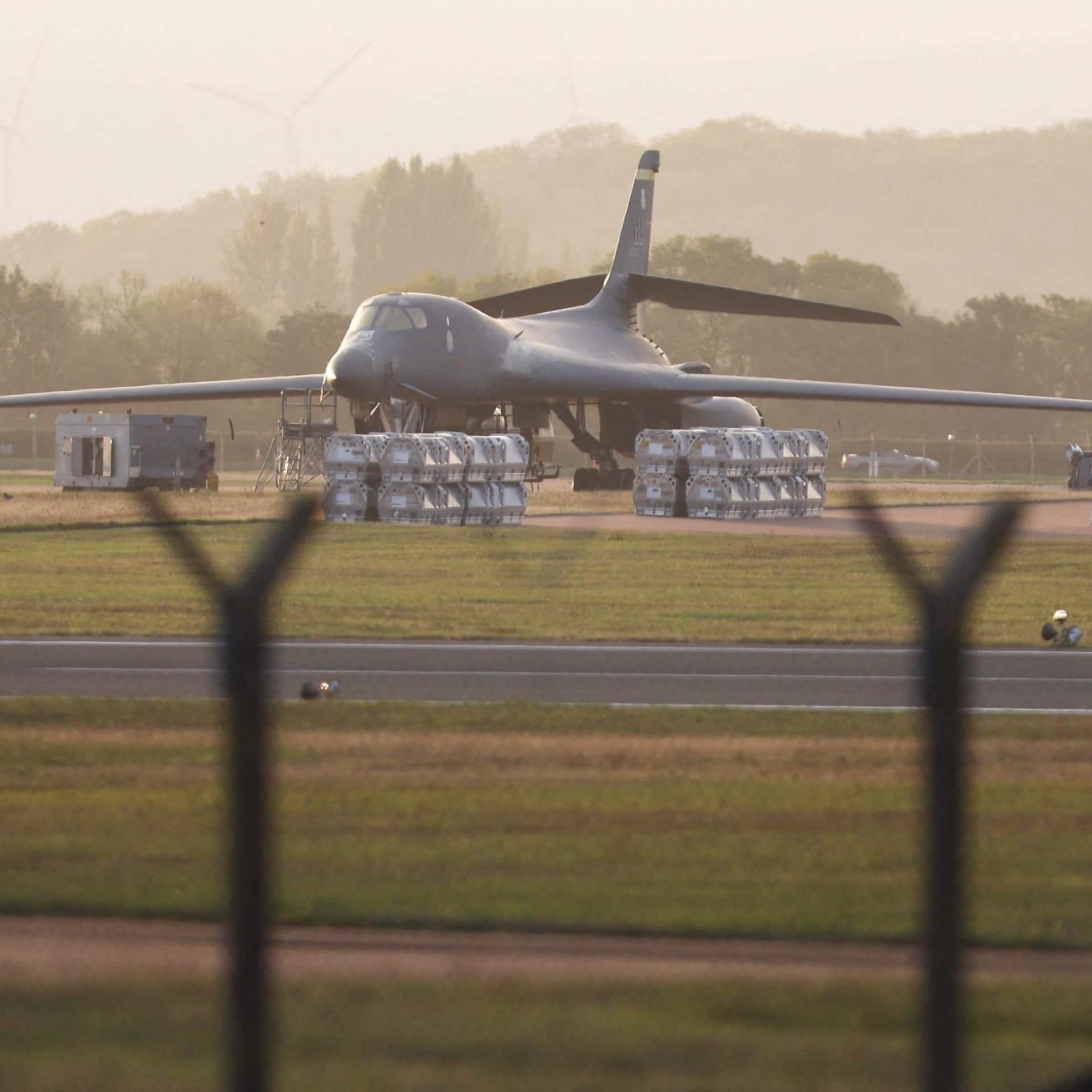
20:05Marianna Spring:But, you know, if you're Sanchez, that's who to focus on here, who is allowing this content to exist in the first place and to reach millions of people and a captive audience. Let's move on to our third story, Mariana. This is slightly different in the sense that it exists very much more in the real world than in the online world. So it's this accusation of foreign interference in Germany. So on Tuesday this week, Germany said that Russia was responsible for a drone attack in August at Leipzig Airport in eastern Germany. A drone carrying an explosive device was discovered at Leipzig Halle Airport in eastern Germany, close to Ukrainian cargo planes.
20:47And that was on the 4th of August. And a German bus driver reportedly kicked the drone out of the air. The bus driver didn't know that it had Semtex in it, which is an explosive. It failed to explode as the detonator was apparently faulty. And investigators suspect then a second drone collided with a cargo aircraft nearby. There was a third drone. It was reportedly found near the airport 10 days later.
21:18So the German interior minister, Alexander de Brindt, said that the Leipzig airport attack followed the, quote, well-established pattern of Russian hybrid operations in Europe. And the assumption was that Germany was going to be targeted again.
21:38The German foreign minister, Johann Waderful, said he would order the closure of the Russian consulate in Bonn. So we've got very real-world consequences here. And the contract for the Russian house in Berlin will also be terminated. Many observers have said that this has been used for espionage and to spread Russian propaganda over the years.
22:02And then, Mariana, this is where we start to get slightly more into the information war. Vladimir Putin responded on Wednesday. He rejected the accusations. He said, regarding the actions of the German authorities, this is primarily due to domestic political processes, businesses are closing, jobs are being lost. It's unclear why all this is being done. There's only one explanation, to confront an aggressive Russia. and he said, where's the evidence? The Russian state channel Rossiya One likened the Leipzig incident to a Nazi-style false flag attack. Leipzig marks a new escalation on European Union soil directly attributed to Russia.
Read the full transcript
22:46And then on Wednesday, in a press conference alongside the NATO boss, Mark Rutter, the European Commission president, Ursula von der Leyen, said this. So I want to be very clear about what this was. This was an attack using military-grade material carried out by Russian operatives on European Union soil. Now, this is slightly different, as we said, because it's very much happening in the real world. But when you look at it, it's a similar kind of tug of war over, you know, there's accusation, there's counter accusation. What do we know? And what do we not know about Russia's alleged campaigns of foreign intervention?
23:27Marianna Spring:So we do know that there are very real examples of where Russia seems to have disrupted infrastructure or even to have encouraged people to carry out illegal acts, to pay them to commit arson and issues like that. And that is not particularly surprising. That's a kind of long tested tactic that predates social media, certainly. is worth saying and to explain Vladimir Putin's defense or explanation that often it's not quite so simple as oh this is really obvious like this money came from this Russian bank account or this connects to this particular Russian individual like there's a chain right and often it's even with foreign interference it's the same it's like a lot of that chain is obfuscated or made a bit confusing so you're like oh hang on this person connects to this person connects to this person connects to this person but it is true that there are very real examples of sabotage in this way If we compare it to the social media interference, sabotage is much easier to prove because you can at least follow a quite concrete train.
24:26Marianna Spring:And often you have the cooperation of different authorities who will allow you to follow that train. Whereas with social media, you're often relying on the companies being transparent about what's going on on their platforms and who set what up and how. And it's much easier to hide who you are online, which happens all the time. So actually, I think that the allegations of sabotage on the whole, more broadly than just this, have been much more credible. And you can see why countries are quite quick to kind of call them out and say, well, this is an act of sabotage by this country. When it comes to this false flag thing as well, it's worth saying that that is a claim that Russia make repeatedly, including about the war in Ukraine.
25:07Marianna Spring:they have often suggested that attacks are false flag attacks rather than being real attacks it's a kind of well-tested well-used disinformation tactic and that's not to say that there are never false flag attacks ever like there are examples if you go back through history where governments can and do sort of do that sort of thing but they are few and far between right and false flag in general has become a real a really popular term in conspiracy land that i investigate more broadly but Russia I would say are one of the and certainly Vladimir Putin use that term all the time and have popularized it.
25:38Marianna Spring:I think that what these real world incidents highlight is how hard it actually is often to prove the level of influence that an online operation can have. Whereas here you can demonstrate the impact and the damage and the disruption very easily. In this case you've kind of got a binary option. It was either Russia or they say it was Germany or it was some other person that wanted to cause disruption. But it's not like there were other factors at play like, oh, there were like 700 people flying their drones all at the same time. And this drone happened to be from here, which is more how bot networks work, right?
26:11Marianna Spring:It's like there were 700 accounts posting about this and 10 of them happened to be inauthentic. Russia has consistently denied these kinds of foreign interference operations. But if you look at these two competing alleged campaigns that Russia supposedly wages, the kind of hybrid warfare campaign of drones, for example, in Europe, and then the online operations on the other hand, which one gets the bigger bang for the buck if you're a Russian operator of overseas operations? Probably in theory, the social media interference operations, because they are very, very cheap to run. They cost you basically nothing.
26:49Marianna Spring:You can manipulate algorithmic systems fairly easily. To be honest, a lot of these very polarised online movements exist without any inflammation anyway. So it's quite easy to get involved and it's much harder to trace back to you. It's much harder to prove that you're involved in some way. It's easier to kind of outsource who's doing this. We often see that there'll be a kind of group that are connected to, say, the government in a particular country like Russia or Iran, but then they would argue that they're nothing to do with the government. They're just a kind of separate company that's working in this way.
27:20Marianna Spring:So in terms of both obfuscating your role and also actually succeeding in causing kind of ongoing division, foreign influence operations on social media would in theory be more effective. And the fact that it's so hard for us to prove that they're connected to states and to prove the impact they have actually just increases the merit of them for these kinds of states. And the fact that people can then make kind of overarching accusations, which they can easily deny as well, also benefits them. And it benefits them to be able to deny this stuff and be like, your politicians aren't competent. They don't know what they're talking about.
27:57Marianna Spring:It's good for them as well. Basically, the social media companies are kind of quite good for anyone wanting to cause disruption and division. Marianne Spring thank you so much thank you for having me and that's it from us for today the episode was produced by Sam Chantarassack and Lucy Paul it was edited by James Shield and mixed by Travis Evans our digital producer was Charlie Firth our studio managers were Philip Bull and Mike Regard our senior news editor is Chyna Collins and I'm Tristan Redman we'll be back again tomorrow see you then, cheerio Thank you.
From the publisher
Accusations of foreign interference have been making headlines this week.
Elon Musk’s X alleges that China has been stirring up a backlash against American data centres.
Israel and Russia have denied allegations from Spain’s prime minister that they’re partly to blame for the migrant crisis in Ceuta.
And Germany has accused Russia of being behind a spate of drone attacks at a German airport. Vladimir Putin has dismissed those claims and accused Germany of a ‘false flag’ operation.
We speak to the BBC’s social media investigations correspondent, Marianna Spring, to examine the evidence – and ask whether foreign interference is really to blame in every case, or if it is just a convenient scapegoat.
Producers: Sam Chantarasak and Lucy Pawle
Digital producer: Charlie Firth
Mix: Travis Evans
Editor: James Shield
Senior news editor: China Collins
Photo: A drone view shows construction underway on Microsoft's ATL11 data center in Union City, Georgia, US. Credit: Brian Snyder/Reuters.