
In short
Escalation of the Iran conflict and whether a ceasefire/MOU is collapsing, with spillover risks to shipping through the Strait of Hormuz and the Red Sea (Houthis), plus US political and military costs.
Guests (and backgrounds)
Joe Inwood, BBC World News correspondent based in London, covering Iran and the region; host Mike Townsend, Charles Schwab Managing Director for Legislative and Regulatory Affairs (investor-focused policy framing).
Key claims
The ceasefire is effectively over; ambiguity in the MOU about managing Strait of Hormuz led to misunderstandings and renewed attacks. Trump briefly proposed a 20% “toll” as “Guardian of the Strait of Hormuz,” then reversed it after lobbying. Threats to hit power plants/bridges are framed as potentially war-crime–adjacent unless dual-use. US fatalities at Al-Azrak (Jordan) mark higher consequence; Pentagon says injuries are mostly minor (nearly 100 injured since July 7). Houthis could threaten Bab al-Mandab shipping, worsening global trade.
Notable examples
Strikes on Hormuz-area bridges and electrical/water impacts in Tehran province; Al-Azrak base attack (2 killed, 1 missing later found); Houthi “embargo” on Saudi shipping through Bab al-Mandab.
Written by AI. May contain mistakes. Listen to the episode to check what was said.
Chapters
Tap a time to open that second in VOThe Escalation of the Iran Conflict
0:57 to 2:52
Discussion on the current status of the Iran war and recent developments.
“Imagine buying a toy for your kid, but it doesn't come with batteries.”
Ceasefire Breakdown Analysis
2:52 to 4:28
Exploration of how the ceasefire in Iran collapsed and its implications.
“Here's why there's trouble brewing on three fronts for the United States.”
Misunderstandings and Escalation
4:28 to 6:22
Insights into the misunderstandings that led to military escalations in the region.
“to Wednesday the 8th of July, during the week in which the former Iranian Supreme Leader, Ali Khamenei was having several days of funeral commemorations and parades and services and memorials.”
Trump's Economic Toll Proposal
6:22 to 9:08
Discussion on Trump's proposal of a toll for shipping through the Strait of Hormuz.
“stopping shipping going through, firing at ships, and that is what has led really to where we are today.”
Targeting Infrastructure in Conflict
9:08 to 11:28
Examination of the implications of targeting civilian and military infrastructure.
“I think there was probably intense lobbying from his various allies across the region.”
Potential Ground Campaign Scenarios
11:28 to 14:00
Speculation on what a potential ground campaign in Iran could entail.
“By saying we're going to go to kind of what would essentially be, and again, this is if you read the message as take it at face value, would essentially be punitive strikes.”
The Role of the Kurds in the Conflict
14:00 to 14:40
Learn about the Kurds' potential involvement in the Iran conflict and its implications.
“When he says we have other people to do that, the group that is routinely talked about are the Kurds in the north.”
Escalation of US Military Actions
14:40 to 17:40
An overview of recent US military fatalities and their implications for the conflict.
“But that operation would be very, very costly, I'm sure, for all sides, but an incredibly escalatory one.”
Human Cost of the Conflict
17:40 to 20:00
Discussion on the human toll of the conflict on both US forces and Iranian civilians.
“retaliation for the soldiers or the service personnel who died.”
Potential Entry of the Houthis
20:00 to 23:06
An analysis of the Houthis' involvement and its potential threat to global trade.
“is the possible entry into the conflict of the Houthis.”
Show all 12 chapters
US Military Preparedness and Costs
23:06 to 24:56
Insights into the US military's funding request and the costs of the current conflict.
“Yeah, I mean, it's difficult to know exactly because what capacity the Houthis have.”
Current State of the Conflict and Future Prospects
24:56 to 27:32
Discussion on the current status of the conflict and potential future scenarios.
“Are we better or worse off than before that memorandum was signed?”
Transcript
Automatic transcript. May contain errors.0:00This BBC podcast is supported by ads outside the UK. Decisions made in Washington can affect your portfolio every day, but what policy changes should investors be watching? Listen to Washington Wise, an original podcast for investors from Charles Schwab, to hear the stories making news in Washington right now. Host Mike Townsend, Charles Schwab's Managing Director for Legislative and Regulatory Affairs, takes a non-partisan look at the stories that matter most to investors, including policy initiatives for retirement savings, taxes and trade, inflation concerns, the Federal Reserve, and how regulatory developments can affect companies, sectors, and even the entire market.
0:44Mike and his guests offer their perspective on how policy changes could affect what you do with your portfolio. Download the latest episode and follow at schwab.com slash Washington Wise, or wherever you listen. Imagine buying a toy for your kid, but it doesn't come with batteries. That sucks. But honestly, it's even worse when you buy business software. You end up with fragmented, disconnected systems that cost a fortune and don't talk to each other. Odoo completely changes that. Odoo comes fully complete with all your business apps perfectly integrated and working together seamlessly. It's everything your business needs in one place, saving you time, headaches, and serious money.
1:27Stop paying for missing pieces. Go to odoo.com. That's O-D-O-O.com to learn more. On Tuesday, the US Defense Secretary, Pete Hegseth, faced senators in Congress as the White House asked for tens of billions of dollars more to help fund the Iran war. Do you have a new estimate about what the war has cost us so far in this, the fifth month of the first year of this war in Iran? Senator, the estimate we have as of today is$37.5 billion. It was the first time in a long time that senators had a chance to scrutinize the United States' involvement in Iran. The Pentagon hasn't given a press briefing in two and a half months.
2:12You don't have a strategy. You don't have a long-term plan to actually win this war. Win the war. The men and women are going to be able to do it, but they need to have leadership. Of course we have leadership. Of course we have leadership. When will you show leadership? Why don't you show some leadership and stand up for your fellow Democrats who won't fund the troops, who stand and play partisan politics while you don't give us the money? With night after night of strikes exchanged between the two sides, the Iran war is heating up again. Costs are spiraling, several U.S. military personnel have been killed, and now Iran's allies, the Houthis, are threatening to enter the fight.
2:48From the BBC, I'm Tristan Redmond in London. And today on The Global Story, the Iran conflict is back on. Here's why there's trouble brewing on three fronts for the United States.
3:06Joe Inwood:I am Joe Inwood. I'm the BBC's world news correspondent. A lot of my time at the moment, and for, I was going to say months, frankly more than a year now, has been taken up by what's going on in Iran. but specifically over the last few months. Well, we're talking to you, Joe, on Tuesday, as the situation in Iran and the surrounding region is escalating pretty quickly. There are three big new developments that we want to focus on today. But first, we want to tell this story of how the ceasefire broke apart. I think we can say now pretty definitively that the ceasefire has broken apart, hasn't it?
3:42Joe Inwood:Yeah, I think it's fair to say that there is no longer a ceasefire in place. I mean, both sides are variously, at various points said the ceasefire is over and there is constant, you know, barrages, exchanges between the two sides. We should say we are not back to where we were before. You know, if you go back to sort of February, March time, it was a far higher intensity of strikes, specifically targeting, you know, big factories and that sort of thing in Iran. So we're not back there. And crucially, the Israelis are not involved in this current round of fighting, waves of fighting. And there's a ceasefire holding effectively in Lebanon as well.
4:19Joe Inwood:So there are important caveats to put in place here. But no, in any sense that anyone would understand it, there is not a ceasefire. Well, to understand how this all fell apart, we want to go back with you, Joe, to Wednesday the 8th of July, during the week in which the former Iranian Supreme Leader, Ali Khamenei was having several days of funeral commemorations and parades and services and memorials. It was the day before Ali Khamenei was actually buried. Is the ceasefire done? Is the MOU dead? It's a very interesting question. Donald Trump was asked about the ceasefire and he said... To me, I think it's over.
5:04I don't want to deal with them anymore. They're scum. You know what scum is? They're scum. They're sick people. They're led by sick people. Can you just remind us, what was the state of play at that point, Joe?
5:14Joe Inwood:So there had been a tentative ceasefire that had held, really, since for a fair few weeks, and there were sort of negotiations. Well, negotiations had been going on, but really, they haven't got that far. And the problem that you had, it all comes down to the Strait of Hormuz. The Memorandum of Understanding, this document that was signed, 14-point document between the two sides, it was almost deliberately ambiguous, it seems. In order to get a deal, in order to get them to agree to stop fighting, they signed this document that said, we will allow free passage through the Strait of Hormuz, allow ships to go through this really important shipping lane.
5:51Joe Inwood:But it didn't really specify how that was going to work, who was going to manage it. And basically, both sides understood it how they wanted to understand it. The Iranians understood it that the Strait of Hormuz is open and we will be managing it. And the Americans seem to understand it as the Strait of Hormuz is open, it's fully open, people can go through as they want. And that almost deliberate ambiguity in it has led to, we call it a misunderstanding, maybe probably stronger language would be used, between the two sides. And so the Iranians have been threatening shipping, stopping shipping going through, firing at ships, and that is what has led really to where we are today.
6:29Well, a few days after that statement from President Trump, things really started flaring up across the region. We started having consecutive nights of airstrikes, tit-for-tat airstrikes, but they really begin on the Saturday of July the 11th. What led up to that first night which precipitated the resumption of these strikes?
6:51Joe Inwood:So it's all to do with threatening of shipping. The Iranians had been, whenever there were ships going through the more southerly route, they would be firing on it. And the Americans would respond with their own airstrikes on coastal facilities or military facilities. And so you did have this at first quite low-level exchange of fire. But this is how escalation happens. You get one side doing something, another side responds in a way which it feels is proportionate. But then the other side feels, well, that wasn't proportionate because what we were doing was reasonable in the first place. And so that escalates and that escalates.
7:28Joe Inwood:And we get to a point from a few missiles being fired at shipping to situations where air bases are being hit, where bridges are being destroyed. Well, shortly afterwards, on Monday the 13th of July, we had the first act in a kind of two-part flip-flop by the US administration. Now, it feels like a crucial moment, all of this. So it starts when Donald Trump says he's going to impose a 20 % charge on all cargo shipped through the Strait of Hormuz. What was that supposed to be for? That was a really, really extraordinary moment. I remember that very well. put out a post on his social media. He said, the USA will be, from this point forward, known as the Guardian of the Strait of Hormuz, all in capital letters, and basically saying that we are paying to keep the Strait of Hormuz open.
8:19Joe Inwood:This is the American version of things. We don't really need to use it that much. It's not us that needs the oil coming through. And so anyone that is shipping stuff through, and the implication was this was not just the Iranians, this was his allies as well, would pay a 20 % toll. on all of their goods. That would be a vast, vast amount of money, far in excess of what the Iranians had ever said they would charge. The Iranians said they'd charge something like a dollar a barrel of oil. Now, that would work out at, I don't know, 1.5 % or something, depending on the value. So they were talking about an extraordinary, extraordinary economic toll on their friends as well as their enemies.
8:58Joe Inwood:And it was seen as a very, very surprising development, not just, as I say, by their enemies, but by their friends as well. Well, he did a U-turn on it in pretty short order. What actually happened? I think there was probably intense lobbying from his various allies across the region. Maybe they pointed out to him the exact implications of what it was he was proposing. And they decided that that would not be implemented, I think, for fairly obvious reasons. It would have been a far more onerous toll that was put on shipping, far more than anything the Iranians were put on. I was chatting to a very eminent analyst at the time, And he said rather jokingly that the Trump proposal made the Iranian deal look like a bargain.
9:37Joe Inwood:And I think probably that was that was pointed out to the Americans and therefore is rode back. Well, the U-turn happened the very next day, Tuesday, the 14th of July. Donald Trump gave an interview to Fox News in which he did another upping of the ante. We're going to hit him very hard the night after. and then next week it gets really bad for them because next week comes the power plants, next week comes the bridges. We're going to knock out all their power plants, we're going to knock out all their bridges unless they get to the table and negotiate. That got a certain reaction around the world, but why is it that targeting infrastructure like that is deemed to be so significant?
10:19Joe Inwood:So let's start by saying this. Targeting civilian infrastructure, if it is explicitly and exclusively civilian infrastructure is considered to be a war crime. You are allowed to target civilian infrastructure if it has a dual purpose. So, for example, if you just target a bridge, you're not allowed to do that. If you target a bridge that is used to transport missile launchers, well, that's considered a legitimate military target. So that's the context here. Donald Trump has made this threat before. If you remember, just in the sort of build-up to the ceasefire, he made some really quite extreme threats against, you know, I think he said tomorrow is power plant and bridge day.
10:56Joe Inwood:And I think he talked about civilizational erasure, made some threats which were very, very, you know, controversial and obviously were not followed through with, but I think was seen as a way of trying to force the Iranians to the negotiating table. The Iranians never have responded well to this. And the Americans are quite, they've been quite clear about this. They're targeting the facilities, the naval facilities, the infrastructure, the missile launch sites, the missile storage sites that are integral to the Iranians being able to threaten the Strait of Hormuz. By saying we're going to go to kind of what would essentially be, and again, this is if you read the message as take it at face value, would essentially be punitive strikes.
11:38Joe Inwood:We're going to start taking out your civilian infrastructure. Well, that is a once again an upping of the ante. Now, we haven't yet moved back to the sort of widespread destruction of civilian infrastructure. Again, we should say that the Americans and the Israelis say it was dual use. But we haven't moved back to that yet. But we have seen, the BBC has verified this, bridges being struck in Hormuzgan state, which is the state just closest to the Strait of Hormuz. So, Joe, some of our BBC World Service colleagues have been talking to people inside Iran. And those people have been saying that the strikes of the electrical grid have affected the water infrastructure.
12:18And that's potentially something that makes life pretty grim. In the Sharia district of Tehran province, we've been without water for an entire week. Imagine that, a whole week without water, seven days and we still don't have water. We've reached the point where we can no longer secure even the most basic necessities of life. We spend hours waiting by the tap, hoping the water will come back. If we in the northern cities are facing these hardships with water and electricity, how are our fellow citizens in the south enduring the bombardment and the war? So these decisions, as we've just heard, have real human consequences.
12:59And Donald Trump said also in that Fox News interview... of view. Are you ruling out a ground campaign in a limited capacity? I don't want to say that either, but I would say no, if I thought it was appropriate. Sometimes you need a ground campaign, but we have other people that will do the ground campaign for us. What would a ground campaign actually look like? And who are these quote unquote other people?
13:22Joe Inwood:It depends what he means by a ground campaign, because if what he's talking about and with the president, it is always He's difficult to know, be certain exactly what he means. You know, he speaks off the cuff quite a lot. If he's talking about a full-on ground invasion of Iran, well, that would be a military undertaking unlike anything the American military has done. I mean, I don't know what, since Vietnam. I mean, it would be an astonishing, astonishingly difficult to kind of march on Tehran. If they even have the capacity to do that, it would be the cost in, you know, in blood and treasure, as they say, would be beyond calculation.
13:59Joe Inwood:So if he's talking about that, which I don't think he is talking about that, but if he is, that would be the most controversial, the most difficult decision that any president could take. When he says we have other people to do that, the group that is routinely talked about are the Kurds in the north. Now, the Kurds have been traditionally sort of allied with in other parts of the region, the Americans. I mean, they're not a homogenous group, of course, but the Americans have worked with the Kurds. And there was talk at the start of this that there might be some suggestion of arming the Kurds and them being able to move in from the northern mountains and come through into Iran.
14:40Joe Inwood:Now, that never materialized. That didn't happen. But that operation would be very, very costly, I'm sure, for all sides, but an incredibly escalatory one. and I don't think the Americans are seriously talking about capturing, you know, capturing the country in some way.
15:05Joe Inwood:The thing that is, I think, has been discussed in a more realistic way is the idea of taking an island. Taking one of the islands, either in the Strait of Hormuz, there's a number of islands there, some of them contested, or Karg Island, people will have heard about, that was talked about, of capturing that, which is... Now, Karg Island is the real kind of beating heart of the Iranian oil export industry. So it would be a significant economic blow if the Americans took that. But it would be even taking one of those islands with the huge military advantages the Americans have would be incredibly costly, not least because you'd be putting a large number of American boots on the ground within striking distance of Iranian, potentially artillery, certainly missiles, drones, and in a small area, thousands of troops, they are going to be very, very vulnerable.
16:13OK, well, over the last weekend, things really start to escalate, particularly because we had some US military fatalities. Can you talk us through what happened there? How did these people actually die?
16:27Joe Inwood:Yeah, so this was on Friday night. There's a base in Jordan, a place called Al-Azrak. And there's a military base there. Apparently, there'd been for a number of nights, there'd been strikes. The Americans keep this stuff. They don't like to talk about it. But it was then confirmed on the Saturday. And I've seen the footage of some of the attacks. and you basically can see really significant explosions. We don't know who filmed the footage, but in these bases, and we have geolocated it there, and you can see missiles coming in and you can see huge explosions, people running for cover. And it was confirmed by US Central Command, CENTCOM, on the Saturday, I believe, that two of their service people had been killed.
17:08Joe Inwood:One was missing. That person who was missing has now, their remains have now been found. So three people, I believe, died in that attack. four others taken to hospital a number of others injured and those four have been discharged but this these were the first deaths from enemy fire from on the u.s side to take place i think for weeks if not months so this was not an escalation in terms of action because the iranians had been firing but an escalation in terms of consequence and obviously the president has come out subsequently and said that they were going to be taking their revenge getting retaliation for the soldiers or the service personnel who died.
17:44Joe Inwood:So the deaths of these US service members puts a lot more scrutiny on how much this conflict costs the United States in human terms. On Monday, the New York Times claimed that the Pentagon has withheld, quote, dozens of US military injuries. What do we know about the overall toll in US forces since the conflict began. So it's obviously significant. We saw over the weekend that strike on the base in Jordan, two people killed, one person missing. I think they have now found their remains. So obviously there are people being injured. It is disputed exactly how many. As you were saying, the New York Times say it's more significant than has been publicly revealed.
18:28Joe Inwood:Now we should say the American government's come out pretty, pretty firmly rejected that. They've said they are outright lies from partisan hacks. Now, obviously, the New York Times would reject that and saying they're doing an honest work of journalism. We have got some official stats from the Department of Defence. I'll read the exact quote here. While nearly 100 service members were deemed to have some degree of injury since July the 7th, 96 % have returned to duty. So basically, what they're saying is, yes, there are injuries. And I think it's indisputable there are injuries because we've also got it confirmed there were deaths.
19:02Joe Inwood:The point they're making is that they are, some of them are going to be minor injuries caused from maybe concussion, from an explosion. And if you get back to duty quickly, it's more of a technical injury than something that is serious or life changing. But there are Americans being killed as a consequence of this. It is very evident, David admitted that, and there are people being injured. It's also worth always in these things pointing out, the cost has been, the human cost has been higher on the Iranian side. The reports of deaths during the original war were vast. They're much, much lower now.
19:34Joe Inwood:We're talking in a handful of people on an evening of a night, but significant, and they are people who are dying, some of whom may be soldiers, some of whom are not. I mean, I've seen footage of overturned cars on bridges that have been struck, and they were civilian cars. So there are human costs on both sides. I always think it's important to remind people of that. We're not just talking about soldiers. are talking about civilians as well. The next bit of bad news for the US administration is the possible entry into the conflict of the Houthis. Remind us who the Houthis are and why that would be so significant.
20:11Joe Inwood:So the Houthis are an Iranian allied militia in Yemen. So just to remind people of the geography, if you look at the Arabian Peninsula, the vast majority of that is Saudi Arabia. But then to the south of that, you've got a kind of a coastal country, and that is Yemen. And the Houthis are a group that the Saudis and the UAE have been fighting for many, many years in a really brutal civil war, one of the world's great humanitarian disasters of recent years. So that's the context. The Houthis are allied with the Iranians. They're an independent group, but they get their supplies, they get their weapons from the Iranians.
20:47Joe Inwood:And so they are what's called part of the axis of resistance. They're one of their allied groups. Now, there hadn't been active hostilities particularly recently, but then there have, in the last kind of few days, there's been a seeming flare up there. And what's happened with some missiles exchanged and some fire exchanged, and the Houthis have now said that they're putting a kind of an embargo, they say, on Saudi Arabian. And this is important to understand the distinction. At the moment, it's reported that it's on Saudi Arabian transport. Saudi Arabian ships going through what's called the Bab al-Mandab Strait.
21:22Joe Inwood:This is a strait that basically is a very, very narrow 20-kilometre or so kind of gap through which all traffic that goes through the Red Sea, anything that comes down from the Suez Canal, has to pass through. So this is a really important choke point. Now, for now, they are saying that they're stopping Saudi shipping going through. Now, that's significant for the Saudis, because the Saudis have been using that as an alternative route to get their oil to market. So they've been using a pipeline to ship rather than bring their oil through the Strait of Hormuz. So they've been bypassing the Strait of Hormuz, the choke point which the Iranians control, but there's this other choke point that the Houthis can potentially control or certainly can threaten.
22:08Joe Inwood:And so they've said for now, we're stopping Saudi shipping going through. the reason it could be even more serious is if they said we're stopping all shipping going through this is the and this is the kind of potential for escalation that the iranians still have if they did that the effects on global trade would be catastrophic especially when combined with what's happening in the strait of hormuz now if you think about the additional cost in terms of both time and fuel to take your ship not through the suez canal and down through the red sea but all the way around Africa. That adds a huge amount of cost to any commercial voyage.
22:48We don't know whether the Houthis are going to follow through on this threat. We don't know whether they have the military capacity to actually shut down that Red Sea Strait. But it does look like, if they were able to pull that off, that potentially Iran could do to that stretch of the Red Sea something like what they have done to the Strait of Hormuz.
23:09Joe Inwood:Yeah, I mean, it's difficult to know exactly because what capacity the Houthis have. I don't think the Houthis have demonstrated in the past. They have managed to destroy ships. Whether they have the same capacity now, I think is unclear. So on Tuesday, Joe, the US Defence Secretary Pete Hegseth went to the Senate and he asked for tens of billions of dollars. What does that tell us about where the US thinks this conflict is going? It tells us two things, that they are preparing for this to go on for potentially a long time. I mean, also, to be fair, even if you're planning on it ending immediately, you might still make preparations for it to go on a long time.
23:54Joe Inwood:So the other side, know that you're serious about a long campaign. And it also shows just how expensive this has been. I mean, the Americans have, as well as expending a huge amount of munitions, and their munitions are significantly more expensive per use or per missile than the Iranians. But also, the other thing that they have expended a huge amount or have lost a huge amount of is their hardware. I mean, our colleagues at BBC Verify have looked at this new, looked at the satellite imagery of the bases. And American bases have been, despite their overwhelming sort of technological advantage they have over the Iranians, they seem to have been hit really, really hard.
Read the full transcript
24:35Joe Inwood:And even in the, and again, we should say, the Americans never reveal publicly what has been destroyed. They never reveal publicly what the weapons stocks are. But certainly, when you look at the satellite images, You can see bits of hardware, you know, radars, costing tens, hundreds of millions of dollars, utterly destroyed. And so this has been an expensive campaign for the Americans. So where does this all leave us, Joe? Are we better or worse off than before that memorandum was signed? It's firstly, we should say, breaking it into its component parts. In Lebanon, there is tentative hope at the moment.
25:15Joe Inwood:We are certainly, the situation is, to use a clumsy phrase, less bad than it was before. There does seem to be a ceasefire effectively holding between Israel and Hezbollah. And today we are seeing a first kind of a pilot scheme to see the Israelis hand control of a small number of villages over to the Lebanese army. So that is an improvement. there are still probably hundreds of thousands of people displaced from their homes but it is less bad than it was before and that has come about because of the Memorandum of Understanding it was the first point in that MOU the 14 points, the first one was ceasefire across the theatre and that included Lebanon and that has happened as a consequence the problem is you then get to the next steps in that and the next points when you go through the memorandum quite quickly you get to the reopening of the Strait of Hormuz and although there have been a small number of ships getting through today, it's not in any meaningful sense reopened.
26:18And I think more than that,
26:20Joe Inwood:we're in a situation where both sides are now looking at the prospects of resolving this through diplomacy and saying, well, it's just not working, is it? You know, they have sat down, they have talked and those talks clearly have not worked to any meaningful sense. So they are returning to the military option. Now, there was a piece in Axios today and that said that basically there are two options open to the Americans they could take. One is a return to talks. The other is a return to all-out war. And I think if that happens, that would be a really devastating consequences for the people of Iran, for the people of the whole region, for the global economy.
27:01Joe Inwood:And so I think we are at a dangerous moment here, as we have been so many times, but we are at a dangerous moment when it feels like a decision is going to be made soon. And that memorandum of understanding, whilst imperfect, is the thing that has got people round a table so far. And I think for people who are keen to see a peaceable solution to this, that's the framework we've got. The question is, are both sides going to look at it and think that's a framework that we can work with? And as I said, many people are thinking we're going to find out in the next few days.
27:43Joe Inwood:Joe, thank you so much. Always a pleasure, Chris, and good to be back anytime.
27:52That was BBC World News correspondent Joe Inwood. And that's it from us for today. You can get in touch by emailing theglobalstory at bbc.com. And for the very latest news headlines, tune in to our sister podcast, The Global News Podcast. The producers of today's show were Sam Chantarassak and Valerio Esposito. It was edited by James Shield and mixed by Travis Evans. Our studio manager was Mike Regard and our digital producer was Matt Pintus. Our senior news editor is China Collins and I'm Tristan Redman. Thanks so much for listening. We'll be back again tomorrow. Cheerio.
28:39Auct Miles
From the publisher
The US Defence Secretary Pete Hegseth faced senators on Tuesday as the White House asked for tens of billions of dollars more to help fund the Iran war.
It comes after over a week of consecutive US strikes, the deaths of several US service members, and the Iran-backed Houthis announcing a ‘maritime blockade’ in the region.
We speak to BBC world news correspondent Joe Inwood about the trouble brewing on three fronts for the US.
Producers: Sam Chantarasak and Valerio Esposito
Executive producer: James Shield
Mix: Travis Evans
Senior news editor: China Collins
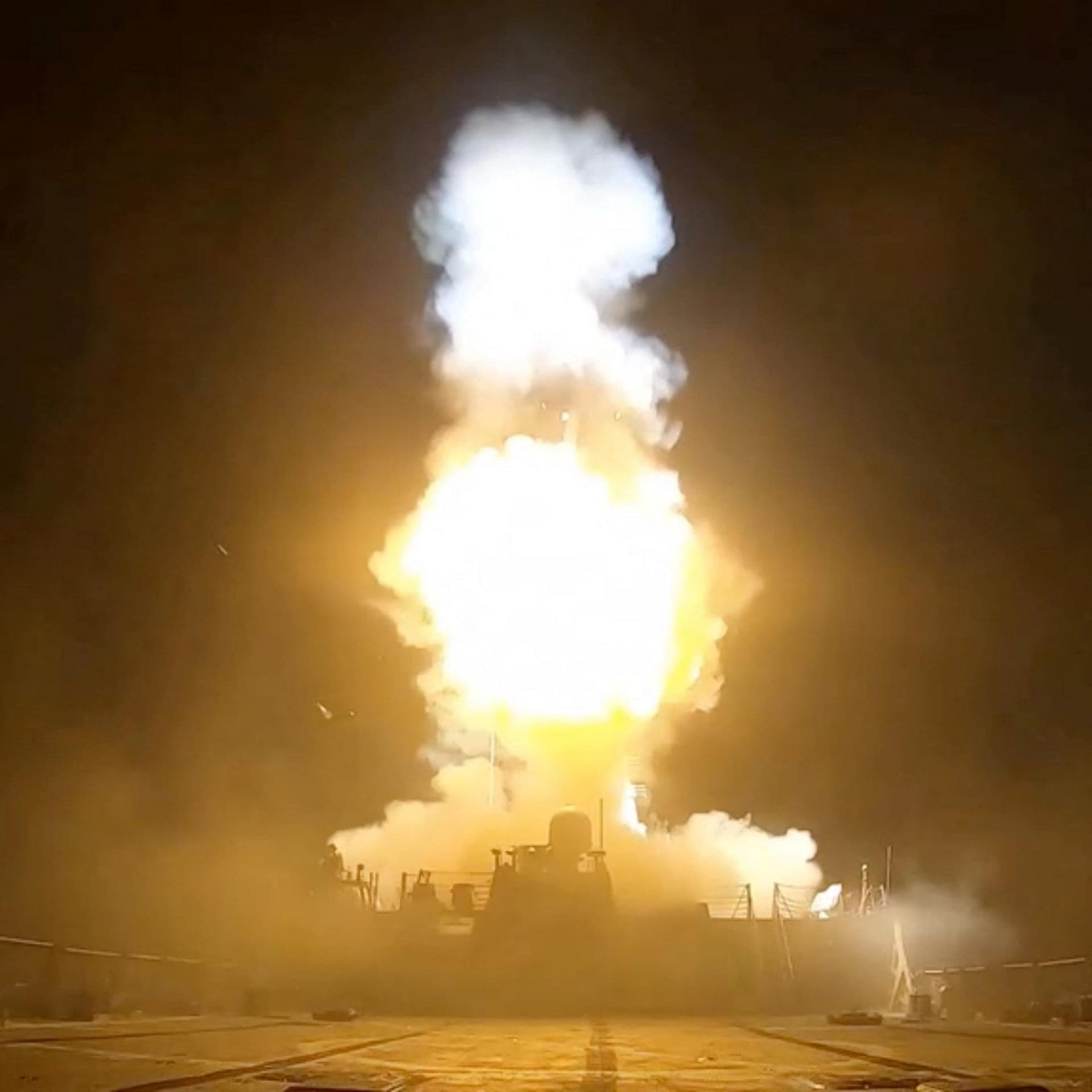
Photo: A projectile is fired during what the U.S. Central Command (CENTCOM) said was a round of strikes against Iran, in this screen grab taken from a handout video released on July 11, 2026. Credit: U.S. Central Command/Handout/Reuters.