In short
Whether the Iran war is helping Vladimir Putin’s Russia during its war in Ukraine, focusing on Ukraine drone attacks, Western distraction, sanctions/oil revenue, and NATO unity.
Guest
Mark Gagliotti, long-time Russia watcher; honorary professor at University College London; leads Mayak Intelligence; host of “In Moscow’s Shadows” (banned from going to Russia).
Key claims
Russia is exploiting the Iran crisis to drive up commodity prices and gain extra oil revenue; using up high-tech air defenses Ukraine needs (notably Patriot interceptors); and increasing disruption and division within the West, reducing long-term European support for Ukraine. Sanctions loopholes and “shadow fleet” tankers keep Russian oil flowing.
Notable examples
~1,000 drone strikes in a day on Ukraine; Patriot missile usage; “Shadow Fleet” of nearly 1,000 tankers; trilateral US-Russia-Ukraine talks paused after impasse.
Written by AI. May contain mistakes. Listen to the episode to check what was said.
Chapters
Tap a time to open that second in VOThe Situation in Ukraine
0:00 to 0:37
A discussion on drone attacks in Ukraine and their significance.
“This BBC podcast is supported by ads outside the UK.”
The Situation in Ukraine
1:42 to 3:14
A discussion on drone attacks in Ukraine and their significance.
“Imagine you're walking around a European city, maybe one with lots of tourists, Prague say.”
Current Dynamics of the War
3:14 to 4:21
Insights into the ongoing war dynamics between Russia and Ukraine.
“I am, well, frankly, a long-time Russia watcher.”
Negotiations and Peace Prospects
4:21 to 5:30
Exploration of stalled negotiations between Russia, Ukraine, and Iran.
“What's actually happening right now on the ground in Ukraine?”
Putin's Exploitation of the Iran War
5:30 to 7:58
Analysis of how Putin is leveraging the conflict in Iran.
“But I remember seeing this piece in Politico that detailed a day in the life of Steve Witkoff and Jared Kushner negotiating in Geneva back in February.”
Economic Impacts of Sanctions
7:58 to 10:51
Discussion on the economic advantages gained by Russia amidst global sanctions.
“I mean, on one level, he would be foolish not to.”
NATO's Response to the Conflict
10:51 to 12:39
Examination of the implications of the Iran war on NATO's unity.
“Russia's oil exports had had impact, but only limited impact.”
Intelligence Sharing Dynamics
12:39 to 14:00
Insights on the intelligence exchanges between Russia and the US regarding Ukraine.
“We've seen Donald Trump essentially saying that NATO is useless.”
Russia's Intelligence Dynamics with Iran and the US
14:00 to 16:45
Learn about the strategic exchange of intelligence between Russia and Iran, and its implications for US support to Ukraine.
“And if it did happen, what would that quid pro quo actually mean?”
Putin and Trump's Evolving Relationship
16:45 to 18:53
Explore the complexities of Putin's relationship with Trump and how it affects US-Russia dynamics.
“is a comfortable one for the so-called strongmen, authoritarian leaders, not just Putin, but whether we're talking about Erdogan in Turkey or Xi Jinping in China.”
Show all 13 chapters
Challenges and Opportunities for Russia in Iran
18:53 to 21:07
Discuss the potential downsides for Russia from the war in Iran and its impact on regional dynamics.
“And so they are a little bit concerned about whether this will give him opportunities.”
Putin's Diplomatic Strategy in Turbulent Times
21:07 to 24:26
Analyze Putin's opportunistic approach to diplomacy and the implications of his risk-averse behavior.
“But just simply to illustrate to them that he's not like Trump, he will talk to them.”
The Future of US-Russia Relations Amidst Chaos
24:26 to 27:29
Consider how the evolving situation in Iran could influence US-Russia relations and geopolitical stability.
“And I think it's one that really can only be answered in hindsight.”
Transcript
Automatic transcript. May contain errors.0:00This BBC podcast is supported by ads outside the UK.
0:30business needs in one place, saving you time, headaches, and serious money. Stop paying for missing pieces. Go to odoo.com. That's O-D-O-O.com to learn more. Self-directed investing, trading, full-service wealth management, automated investing, financial planning, thematic investing, retirement planning. Phew. And to think, that's just a small taste of what Schwab offers. because Schwab knows that when it comes to your finances, choice matters. No matter your goals, investing style, life stage or experience, Schwab has everything you need, all in one place, so you can invest your way. Visit schwab.com to learn more.
1:24the 25th of April in London at the historic BBC Maida Vale Studios. We'll be there and our friends from Newscast and AmeriCast will be there too. And if you're lucky, you might even get to make your own podcast. You can apply for tickets at the link in our episode description and we hope to see you there. On with the show. Imagine you're walking around a European city, maybe one with lots of tourists, Prague say. It's a Tuesday morning and this happens.
1:59A quite big drone streaks across the sky and it slams into a building in broad daylight. Now, this isn't Prague, but it's not very far off. It's Lviv in Western Ukraine. I've spent time there and it looks a lot like Prague. It's beautiful. Cobbled streets, Baroque architecture. Before the war, it was a big tourist destination. Now, these days, you might hear Ukraine drone strike and think, what's new? But what's happening in Ukraine right now isn't normal. One day last week, there were almost 1 ,000 drone strikes in one day. It's been called the biggest drone attack since the beginning of the war, and maybe even the biggest in history.
2:44I spoke with a journalist friend just back from Ukraine and he told me many Ukrainians believe that Putin is doing this because the US and the world is looking the other way right now, towards Iran. And that the Russian president is benefiting from the Iran war in other ways. All of a sudden, sanctions have been loosened and he's able to sell oil again at a big markup. From the BBC, I'm Tristan Redman in Paris. And today on The Global Story, is the war in Iran great news for Vladimir Putin?
3:27I'm Mark Gagliotti. I am, well, frankly, a long-time Russia watcher. I'm currently an honorary professor at University College London, and I lead a consultancy called Mayak Intelligence. But much of the time I spend writing about Russia, thinking about Russia and looking at it from admittedly something of a distance since I have been banned from going to Russia. And making a podcast which you proclaim proudly to have reassuringly low production values. Absolutely. In Moscow's shadows, which is just me, my computer and my headset. And that's about it. Well, that is a purist's way of doing it, and we're very pleased to have you here.
4:08So, Mark, last week, Russia unleashed on Ukraine what the Ukrainians are calling the largest drone attack over a 24-hour period since the war began. What's actually happening right now on the ground in Ukraine? What we're seeing is really the war still sort of following its usual pattern. We have seen some successful small-scale counterattacks by the Ukrainians on the ground. But when it comes down to it, we are coming out of the winter season, where the chief focus really was on these devastating Russian attacks on Ukraine's energy infrastructure. Now, Ukraine has weathered that, although it's going to take a lot of time, effort and money to actually repair the damage, and no doubt the Russians will keep hammering away.
4:55But we're now beginning to see, as temperatures slowly rise, a shift towards more activity on the ground. But when it comes down to it, this is not a war that it seems that either side has the capacity to actually decisively, certainly at the moment, push forward on the ground. Well, before the war in Iran started, I mean, there were some signs that Russia and Ukraine might be moving closer to something resembling a peace deal. There are plenty of people who'd be skeptical about whether that was a real thing or not. But I remember seeing this piece in Politico that detailed a day in the life of Steve Witkoff and Jared Kushner negotiating in Geneva back in February.
5:42And I just want to read you a little bit about their daily schedule during these negotiations, because it gives you an idea of how preoccupying and how busy it was making the American negotiating side. So this is Politico. They met with the Iranians from 9 a.m. to 12.30 p.m. They met with the Ukrainians from 1 p.m. to 5.30 p.m. And they spoke to the Russians after that. And that was followed by a dinner with the Ukrainians and regional partners, including Germany, the United Kingdom, France, Italy, and Switzerland. And the dinner was followed by another meeting with the Russians from 9.30 to 11pm, which suggests that the United States were taking all of this pretty seriously, but has a pause now being put on all of that?
6:29And what should we read into that? Yes, for the present, the trilateral negotiations have really been put on pause. And frankly, I think it reflects what really happened in the process. I don't want to say that these talks were useless. They weren't. They were actually very useful in clearing away a lot of the undergrowth, a lot of the secondary issues, and clarifying what were the absolutely core points. Really, these talks had reached an impasse. And I think what we're going to see is that they will be quietly allowed to die while the war in the Gulf is taking place. And maybe we will see a new, perhaps even with a different cast of characters, negotiation process emerging a bit later in the year, because I think Trump would like to have something nailed down before the midterms at the end of this year.
7:22So I was talking, Mark, to a friend of mine, a foreign correspondent who was in Ukraine just last week reporting on the drone war. And he was sleeping in shelters every night because he was underneath this drone assault. And he told me that the consensus among the people he spoke to in Ukraine was that Vladimir Putin was taking advantage of the war in Iran, the distraction that that was creating above all for the Americans. Is Vladimir Putin exploiting this moment? And if so, how? I mean, of course he's exploiting this moment. I mean, on one level, he would be foolish not to. The way that this is playing out, though, is quite interesting because he's launched this massive drone strike against Ukraine.
8:09But we've seen no evidence that in the past he is at all constrained by whether or not the West is paying attention or not. The key things are, first of all, clearly, this whole crisis is driving up the price, not just for oil and natural gas, but also a whole variety of other commodities in which Russia is a key player, like fertilizers, like aluminium and so forth. And look, this is not going to have a dramatic and long-term effect unless the crisis continues. But still, they reckon that probably the Kremlin has netted an extra$1.5 billion so far through this crisis through just simply oil revenues.
8:46It sounds like a lot of money, but it's actually relatively minor. But still, every little bit helps from Putin's point of view. So you have the economic advantage. you have the fact that it's using up a lot of the kind of high-tech weapons that Ukraine would like, and in particular Patriot interceptors, these very, very capable anti-aircraft and anti-missile defense systems. Now, so far, this war has used up about two years' production of Patriot missiles. And it is clear that priority is going to go to restocking American magazines, Israeli magazines, and those of Gulf allies. And it's going to be a long time, likely, before Ukraine can expect any Patriot missiles sourced from the United States.
9:30And finally, this creates inevitable disruption within the West. From Putin's point of view, the key problem with the West is its unity. And as we see this conflict creating, firstly, division between Europe and the United States. Secondly, within Europe, as some countries seem a little bit more Trump-friendly than others. And thirdly, is increasing the economic costs on Europe. There is a concern in Kiev that as European economies begin to really groan and creak under the burden of increased energy and other prices courtesy of this war, it will be harder and harder to get them to commit the kind of resources that Ukraine will need to continue in the long run.
10:17And that, of course, does embolden Putin. It gives him that greater confidence that time will ultimately be on his side. I just want to go back to something you raised back then, oil. If Russia is able to sell its oil again on global markets, how valuable is that to them? It is valuable. Again, I think we shouldn't overplay it. First of all, the Russians were still able to sell oil. Yes, they were having to discount it, but the market will always win. Russia continues to make a lot of money from its energy exports. And these attempts to essentially strangle Russia's oil exports had had impact, but only limited impact.
10:57Russia is the most sanctioned country in the world, and yet this year its economy is set to grow faster than all advanced economies. There are lots of countries that still want that lovely cheap Russian oil. As a result we had the so-called Shadow Fleet. A fleet made up of hundreds of tankers accused of bypassing Western oil sanctions. Almost a thousand of these unregulated tankers sail on the world's oceans. We had all kinds of different ways in which that was being exported. Western sanctions were never intended to be complete when it came to Russian energy. They wanted to reduce the revenues flowing to the Kremlin for its oil through a price cap, but not to cut off those flows completely.
11:35There have been people saying that some of those loopholes need to be tightened in order for sanctions to have real effect. And a lot of it gets, for want of a better word, laundered. So countries buy Russian oil and gas and then re-export it, claiming that it's not Russian. And everybody knows what's going on. But because we all need the oil, we turn a blind eye. So it is an economic advantage to the Kremlin But it is also political in that the Kremlin is using this in the global south or what it calls the global majority to underscore its point that you do not need to fear the Americans and the Europeans.
12:17You can make the deals you want. Mark, I have to ask you about NATO, because as is well known, one of Putin's great strategic aims would be something like achieving the demise of NATO. Now, the Iran war has opened up some pretty noticeable cracks in the NATO alliance over the last few days. We've seen Donald Trump essentially saying that NATO is useless. This is great news for Putin, isn't it? It certainly is. As regards the demise of NATO, I think we need to distinguish between wants and aims. Sure, if Putin had a magic wishing ring, then I'm sure wishing NATO away would be high on his list. But on the other hand, I don't think it's actually that he thinks he can destroy NATO.
13:06And in part, I think he doesn't feel he needs to. He can just sit back and watch the spectacle as NATO, to a degree, destroys itself. That said, I mean, we shouldn't assume that there's any kind of serious long-term threat to NATO, because it will take years, even after the Ukraine war is over, to reconstitute the Russian military. Some people say two years. I think that's ludicrously too little. Five is the absolute minimum, in my opinion. Eight years is more likely. And I think from the Russians' point of view, they actually take NATO seriously. Yes, they're very happy to see whatever divisions and disunity within it.
13:44But even if one looks at European NATO, European NATO, without the Americans and the Canadians, have more troops than the Russians do. Okay, so the talks between Russia and the United States are officially paused right now. But I want to tell you about something that I heard on the BBC last week from Shashank Joshi, who's the defence editor of The Economist, he said this. But what I think does worry some European officials and Ukrainians is that Russia has been reaching out to the Americans, saying to the Trump administration, if you stop providing intelligence to Ukraine for strikes on Russia, which has been happening, of course, we will stop providing intelligence to Iran.
14:25What are you hearing about that, Mark? Is it something that's happening? And if it did happen, what would that quid pro quo actually mean? I mean, we shouldn't be surprised that the Russians were providing the Iranians with intelligence on targeting and battle damage analysis, because it's exactly what the Americans have been providing the Ukrainians for four years. And in part, that is about the least they can possibly do to support their notional partners, the Iranians. They clearly do not want to get seriously involved in this conflict. There's nothing that they can do really to help shield the Iranians from the Israeli and US attacks.
14:59But on the other hand, yeah, it is also to give Putin a card that he can play. He can actually say to the Americans, you can actually limit even further your support for the Ukrainians. There will be some kind of quid pro quo. In terms of the arc of Vladimir Putin and Donald Trump's relationship, going back all the way to 2016 until now, what do you make of the argument that Vladimir Putin has gotten everything he wanted from Donald Trump, more or less? Yeah, I'm actually very critical of this, and certainly also the notion that somehow Trump is a mere agent of the Russians. The end of the first Trump presidency, US policy towards Russia was tougher than it had been at any point since the collapse of the Soviet Union.
15:46And I think we have to appreciate that there's a difference between the politics of the rhetoric and the politics of the reality. Now, yes, there are many aspects of Trump's policies that do benefit the Russians. The fact that he clearly has no real concern about the Ukrainians. He just wants to end this war, get it off his desk. And he's convinced himself that the line of least resistance is to push the Ukrainians into accepting an ugly deal. But he's not doing that for Putin's sake. He's doing that for his own. I think it's more that just because Trump is a bull in a China shop, because he is at the moment the ultimate expression of a process, which let's be honest has been happening for a long time, which is America pivoting away from Europe.
16:31And because Trump has this amazingly transactional view, I mean, he sees the presidency really as being the chief executive officer of USA Incorporated. And it's all about what are the immediate economic gains. for America, regardless of issues of international law, that contributes to creating a world that is a comfortable one for the so-called strongmen, authoritarian leaders, not just Putin, but whether we're talking about Erdogan in Turkey or Xi Jinping in China. So Putin is a beneficiary, but in some ways he's an accidental beneficiary.
17:11Are there any potential negative outcomes for Russia from the war in Iran? And I'm thinking particularly of the fact that Iran has traditionally been Russia's strongest ally in the Middle East. And here it is getting pounded by the United States in Israel. Look, I don't think anyone in the world imagined that the Russians could or would do anything to actually shield Iran. And I don't actually think Russia is getting any kind of particular pushback from its own allies as a result of that. That was never part of the deal. And ironically, the recent strategic partnership that Moscow and Tehran signed did not include a mutual defence clause at the Iranians' insistence.
17:55So I think from Putin's point of view, he probably felt he dodged a bullet on that one. That said, though, yes, there are downsides. First of all, in the short to medium term, Russia gains economically through its various exports and rising prices. But actually, if this crisis really does continue, and certainly if it leads to a global economic slowdown, that will affect Russia. Secondly, there is the fact that from the Russians' point of view, they're watching the Ukrainians trying desperately to muscle in. We've seen a couple of hundred of Ukrainian anti-drone warfare specialists being deployed to various Gulf states.
18:33Now, on one level, look, this is just a kind of a desperate attempt to maintain relevance. Kiev is worried precisely about attention being lost. But it also gives the Ukrainians the opportunities to actually build relationships with, let's be honest, or other wealthy Gulf states that might be useful to it in the future. I think one thing that the Russians have learned is precisely just how effective President Zelensky's foreign policy can be. And so they are a little bit concerned about whether this will give him opportunities. And the third downside from the Russians' point of view is Iran has historically been sort of an ally, in some ways a frenemy.
19:13It's an ally against various countries and sort of the global sanctions regime. But on the other hand, it's also actually a rival for influence in the Middle East and in the South Caucasus. So to a degree, Moscow is quite happy the idea of if this regime survives, but weaker, then it will be less of a challenger, more of a potential vassal state. But what if that doesn't happen? What if actually this regime is swept away? There is a sense that chaos in Iran will spread. They are worried about jihadist terrorism at home. They are worried about what the impact might be in terms of how this will destabilize the South Caucasus on their own borders and such like.
19:55So again, from Russia's point of view, there is this odd situation in which they want to calibrate the chaos that comes from this. But unrestrained chaos is bad for Russia, just as it's bad for the rest of us. What has watching Putin's approach to the war in Iran told you about his kind of wider diplomatic strategy? He is an opportunist rather than a strategist. He's neither got the temperament nor the capacity, frankly, to manage what happens in terms of wider geopolitical flows. So instead, he just sits and sees what opportunities arise. This is classic Putin. Judo fighter, not a chess player.
20:31You know, he looks for the opportunities and strikes rather than tries to work things out six moves in advance. But the second point about Putin that it really illustrates is actually that this is a very risk averse figure. Put aside the macho theatricals of how he's portrayed as this sort of bare chested figure. In practice, when Putin does not really know what is the best outcome, he tends to be frankly paralyzed. And we've seen this in so many different contexts where he just disappears from view, doesn't make crucial decisions. So actually, on the one hand, he will look for the advantages.
21:06He's presented himself as a potential interlocutor, both to Trump, but also to various Gulf region monarchs and leaders without great success. But just simply to illustrate to them that he's not like Trump, he will talk to them. But beyond that, there clearly is no real desire to actually make any tough decisions at all. Minimal support for Iran, suitable rhetoric at the United Nations, but again, nothing that is excessively critical of Trump personally. So, you know, basically he just plays it by ear, on the whole looking for what seems to be the least worst option. There's that saying that's been attributed to Napoleon.
21:51Napoleon is supposed to have said, never interrupt your adversary when they are making a mistake. Now, is that Vladimir Putin's strategy? I wouldn't say it's his strategy, but it's what's happening. I'm going to give you a little trot through of some of the things which have happened this year, Mark. So, Nicolas Maduro is on trial in New York. The first Ayatollah Khamenei is dead. if the war in Iran goes well, maybe Donald Trump might go for Cuba after that. We will have to see. Could Vladimir Putin be worried that he's next? I don't think he seriously is worried about that. I mean, it's very hard to know.
22:34This is a man who clearly has certain paranoias. We think of the extraordinary biosecurity bubble he hid himself in during COVID. But on the other hand, And we are not talking about Venezuela or Iran or Cuba. We are talking about what is no longer a great global power, but still a nuclear power with certain capabilities. And the Russians have made it clear that any attempt to actually do anything to Putin would be considered to be an act of war, plain and simple. So I don't think it's that he honestly thinks that suddenly he's going to be whisked away in Black Hawk helicopters and turn up in a war crimes tribunal in The Hague or whatever.
23:13I think it's more that from the Russians' point of view, what they see is almost an American campaign to pick off their allies one by one. Whereas in some ways, it's simply more, frankly, fortuitous that the kind of countries that Trump wants to pick off tend to be the kind of countries that have a relationship with Russia. So it's not really an anti-Russian strategy. But I think from Putin's point of view, he probably regards it as being something of an anti-Russian strategy. Of course, the irony is that although it may be in the short term embarrassing to lose all these various client states, in the long term, it's actually good for Russia because empires cost.
23:50If the Venezuelan regime is swept away, well, Russia will no longer be having to subsidize it. The Cuban regime, likewise, the alliance with Iran has cost Russia its frankly very, very good diplomatic relationship with Israel. So in all of these cases, actually losing an empire doesn't just, as it were, gain a role for Russia. It may well actually economize for Russia. Is there a case, Mark, that the four weeks that we've seen of the Iran war are actually the best four weeks that Vladimir Putin has had since the beginning of the Ukraine war back in 2022? It's an interesting question. And I think it's one that really can only be answered in hindsight.
24:30because obviously to a degree it depends quite what happens in Iran. You know, if the Iranian regime turn around, make a deal with Trump, and Trump therefore becomes established not just as the peace broker, but the power broker of the Gulf, then that's not necessarily good for Russia. And especially if then the oil and everything else starts flowing through the Straits of Hormuz freely. Whereas we can look at past moments. I mean, if one thinks of the extraordinary summit that was held between Trump and Putin in Alaska, I mean, in many ways, the two weeks leading up to that seemed to be a glorious victory for Putin, even though that actually came to nothing.
25:10So on the one hand, I am shamelessly sidestepping your question. But on the other hand, what I would I would go so far as to say that they have the potential absolutely to be the best four weeks that Putin has seen since February of 2022. And in that respect, ironically, for all the fact Putin is scarcely being a particularly generous ally, actually his prospects are now in the hands of the Iranian ayatollahs and Revolutionary Guard. What do you mean? In the sense that it is now up to them how effectively they resist the Americans, with what degree of resolve, whether or not this can become something of a gravestone of Trumpian foreign ambition, or whether in fact they do end up either losing power or deciding that they need to make a deal with the Donald.
26:07Above all, what the Russians want is paralysis.
26:14What they want is a West, and above all that means a United States, that is so consumed, whether it's by internal political wrangles or whether it's consumed by some kind of quagmire abroad, that in many ways it cannot mobilise its otherwise very substantial political, economic, military and moral force to any kind of purpose. So yes, Trump is useful, but Trump always has the risk of flipping. There's always this danger that Trump might decide actually that Putin is his enemy and throw his support behind Ukraine, for example, although that seems increasingly implausible these days. But on the other hand, if you have, let's say, a Trump who is mired in a quagmire in Iran, maybe even in Cuba for all we know, and who also perhaps faces serious political losses with the midterms at the end of this year, well, what you might get is an America that is so consumed by its own internal divisions that it scarcely even remembers that Ukraine exists.
27:20Let alone is able to actually do anything in support of it.
Read the full transcript
27:28Thank you so much. It was a total pleasure talking with you. My pleasure.
27:37That was Mark Gagliotti, a professor at University College London and host of the podcast In Moscow's Shadows. If you have thoughts and ideas on what we should cover, you can email us on theglobalstoryatbbc.com. And we actually had an email from our listener, Stephanie Salomo in Germany last week, asking us for an update on what's going on in Ukraine. So we hope you found this episode useful, Stephanie. One more time, our email is theglobalstory at bbc.com. And a quick record before we go, here at The Global Story, we bring you one story every day where the world and America meet. For the very latest news headlines, listen to our sister show, The Global News Podcast.
28:19you can find it wherever you listen. And just a quick reminder about CastFest the BBC's live podcast festival it's on Saturday the 25th of April in London at the historic Maida Vale Studios we'll be there and our friends from Newscast and AmeriCast will be there too and if you're lucky you might even get to make your own podcast you can apply for tickets at the link in the episode description and we hope to see you there. Today's episode was produced by Zandra Ellen and Kat Farnsworth it was edited by James Shield and mixed by Travis Evans Our digital producer is Matt Pintus. Our senior news editor is China Collins.
28:54And I'm Tristan Redman. Thanks for listening. We'll see you again tomorrow. Cheerio.
From the publisher
With the world’s attention on the war in Iran, Vladimir Putin appears to be stepping up Russia’s war in Ukraine. Last week saw the biggest Russian drone attack since the beginning of the war.
Some Ukrainians believe Putin is doing this precisely because the world is looking the other way. Russia also appears to be benefiting from the Iran war in other ways – oil prices have skyrocketed at the same time as Trump has loosened sanctions on Russian oil. On the other hand, it’s been a difficult few months for Russian allies in Tehran, Caracas and Havana.
The author, academic and Russia analyst Mark Galeotti joins us to examine the ways in which the war in Iran could help or hinder Putin.
Apply for Castfest tickets: https://www.bbc.co.uk/showsandtours/shows/castfest-2026 Email us: theglobalstory@bbc.com
Producers: Xandra Ellin and Cat Farnsworth Executive producer: James Shield Mix: Travis Evans Senior news editor: China Collins
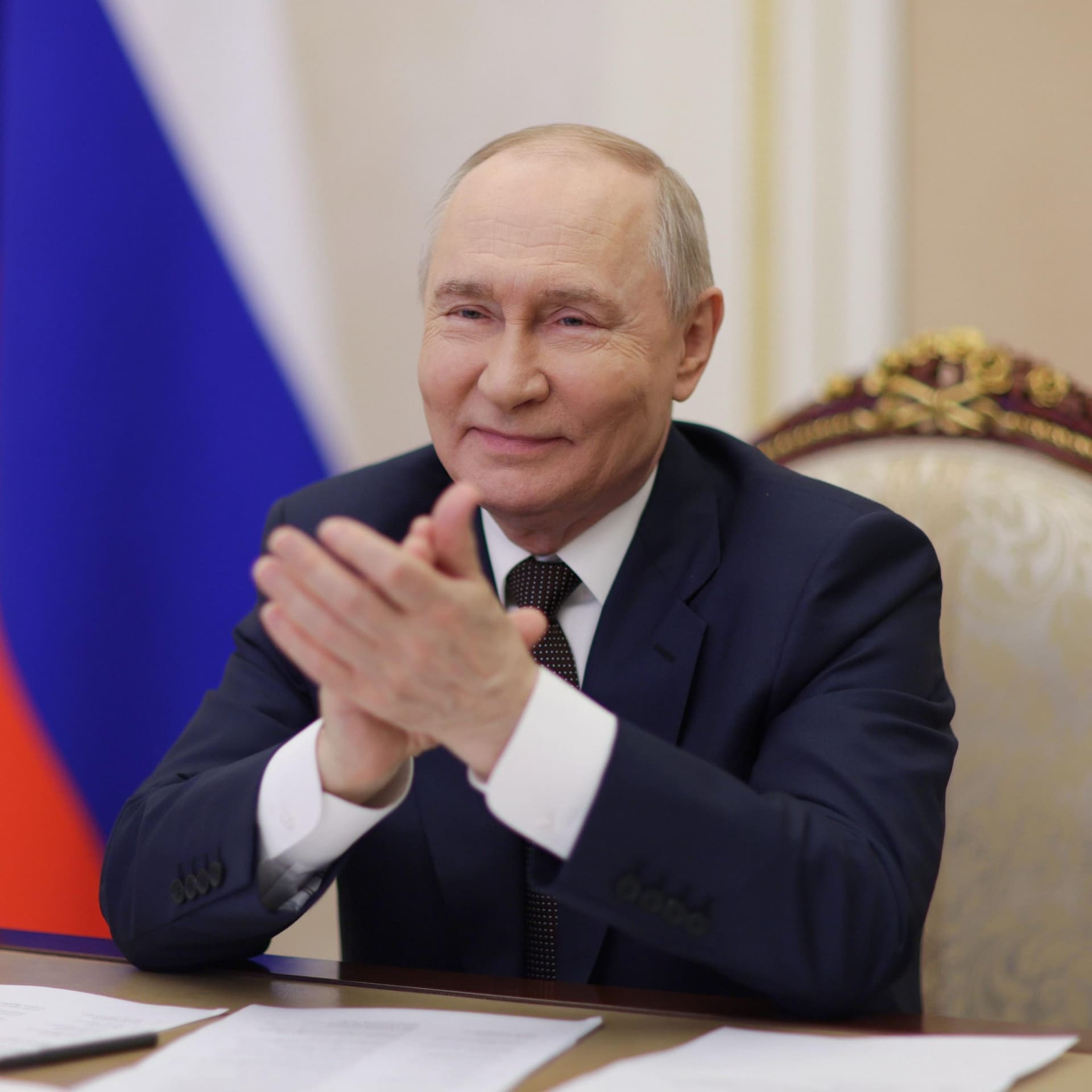
Photo: Russian President Vladimir Putin, in Russia, March 27. Credit: Gavriil Grigorov/Sputnik/Kremlin/Pool/EPA/Shutterstock.