
In short
Whether the US-China trade war is restarting, focusing on tariff threats, market reaction, and China’s response during negotiations ahead of an APEC leader meeting.
Guests
Stephen McDonnell, BBC China correspondent based in Beijing for over 20 years; previously covered the White House for several years.
Key claims
Trump’s tariff plans (including 100% on China mentioned) would raise prices for US consumers; tariffs are paid by Americans, not China. China is not “panicking,” instead retaliating with its own tariffs and export controls. The US-China pause after earlier escalation is under strain as rare-earth/magnet licensing and chip restrictions become sticking points. Economists/businesses expect “lose-lose.”
Notable examples
China’s soybean shift—US exports to China fell from 27 million tonnes (Jan–Jul 2024) to 5.9 million tonnes, with no purchases from the autumn US harvest in over 20 years; China redirecting to Brazil/Argentina/Uruguay. Rare earths/magnets and computer chips are central to negotiations.
Written by AI. May contain mistakes. Listen to the episode to check what was said.
Chapters
Tap a time to open that second in VOSetting the Stage: US-China Trade Tensions
0:38 to 1:51
Discussion on the re-emergence of trade tensions between the US and China.
“Donald Trump has been called the reality TV president.”
Introduction of Guest Stephen McDonnell
1:51 to 2:05
Host introduces Stephen McDonnell, the BBC's China correspondent.
“What time in the evening is it in Beijing?”
Historical Context of the Trade War
2:05 to 4:32
Exploring the evolution of US-China trade relations over the years.
“It's midday and asthma is at breakfast time.”
Trump's Tariff Announcement and China's Response
4:32 to 7:20
Analysis of Trump's tariff announcements and China's measured response.
“Yeah, I mean, I think in reality, Tristan, not much is agreed upon between Democrats and Republicans here in Washington.”
Impact of Tariffs on US Consumers and Exports
7:20 to 10:12
Discussion on the effects of tariffs on US consumers and China's export strategy.
“a Chinese exporter in the interim, that can be really bad.”
Negotiations Between US and China
10:12 to 12:08
Overview of the negotiation dynamics and challenges between the two countries.
“No, but I think that partly that's because China's position in the world has just grown and grown exponentially every year I've been here.”
Key Sticking Points in Trade Talks
12:08 to 14:00
Identifying the main issues hindering progress in US-China trade negotiations.
“Because the tension calmed down at one point.”
Understanding US-China Trade Tensions
14:00 to 14:50
A discussion on the underlying issues driving the trade tensions between the US and China.
“and all the stuff that all these countries want to be able to make, especially the US wants to make.”
Recent Developments in Trade Negotiations
14:50 to 16:00
An overview of the recent shifts in trade negotiations between the US and China, including tariffs.
“You're talking about over 100 % tariffs.”
China's New Export Controls
16:00 to 17:50
Examination of China's new licensing requirements for rare earth exports and its implications.
“So the Chinese government has said, all right, we're going to bring in these new licenses on the purchase of rare earths and magnets.”
Show all 14 chapters
Trump and Xi's Public Relations Strategies
17:50 to 19:59
Analysis of the contrasting public approaches of Trump and Xi regarding the trade war.
“Since then, US Treasury Secretary Scott Besson has had to acknowledge that that is the case, that there have been these meetings.”
The APEC Summit: Expectations and Strategies
19:59 to 21:50
Insights into the upcoming APEC summit and what both leaders hope to achieve.
“Not even somebody who manages a Twitter account for him or anything like that.”
Handshake Politics and Power Dynamics
21:50 to 24:49
Discussion of the significance of handshake politics in international relations, particularly between Trump and Xi.
“And on the face of it, Donald Trump at least likes to make out that he's kind of mates with Xi Jinping on some weird level.”
The Stakes of the Trade War
24:49 to 26:46
An analysis of who stands to gain or lose from a potential escalation of the trade war.
“And it's kind of the opposite of what Donald Trump says about how easy they are to win.”
Transcript
Automatic transcript. May contain errors.0:00This BBC podcast is supported by ads outside the UK.
0:30so you can monitor and engage with the account while your teen learns how to invest and manage money. Learn more at schwab.com. Donald Trump has been called the reality TV president. And in the spirit of the genre, every big plot line needs a strong follow-up. Not to worry about China, but he's been putting out some tough statements in regards to your tariffs, sir. Remember the US-China trade war? Well, it could be back. because we are taking in hundreds of billions of dollars, not only from China, from other countries. Huge tariffs are on the table again. November 1st, 100 % tariffs on China is what you said.
1:09Is that still the plan? Yeah, right now it is. Yeah, let's see what happens. The International Monetary Fund says they're a threat to American consumers. Trump's comments on China earlier in the day shook the markets. The Nasdaq down about 2%. We did reverse lower. By now you know the headline. The Dow that has taken a pretty sharp dip this morning after starting in positive territory. And the S &P had its worst day since mid-April. The markets are spooked, but publicly at least, China doesn't seem to be. All of this could mean higher prices for anyone who buys stuff, like all of us. From the BBC, I'm Tristan Redman.
1:50And today on The Global Story, why China isn't intimidated by Donald Trump's trade threats.
2:01How are you doing, Stephen? Nice to see you. I'm very good. Good. What time in the evening is it in Beijing? It's not too bad. It's 7.11. Well, it's sort of lunchtime you hear. It's midday and asthma is at breakfast time. No worries. Good to talk to you. Stephen McDonnell is the BBC's China correspondent. He's lived there for over 20 years and he gave us a call from Beijing. It all started. I mean, it just started all again on the weekend. I was just like, oh. You're like, again, again, we're here. I know. Well, Stephen, prior to me joining the BBC, I covered the White House for the last several years.
2:37So I'm really excited to talk about this story with you because I want to hear what this trade and tariff story looks like from the Beijing perspective. But I would also say that I think in order to understand where we are in this moment, it's worth rewinding over the last, let's say, eight years or so, at least going back to 2016. Because I remember covering that campaign and we heard so much from Donald Trump at the time of him trashing China. I will revoke China's most favored nation's trade status. And he accused China of at one point raping the United States with unfair trade policy. They make it impossible and more and more difficult for our businesses to deal with China on the other side.
3:20Use really strong language to go after them. China's upset because of the way Donald Trump is talking about trade with China. They're ripping us off, folks. It's time. I'm so happy they're upset. And then when he was in office that first term, he broke all sorts of diplomatic norms. And in 2018, he placed tariffs on hundreds of billions of dollars of goods coming in from China. China, of course, retaliated. And I will say from here in Washington, there was a lot of economic angst during that time period. And this went on for a couple of years. Eventually, Donald Trump, his administration, and China declared a truce.
3:59And they put out this phase one of a trade deal. You know, that's where things were when Trump left office. And then I covered the Biden administration. And one thing that I will say I was so floored by is that Democrats were really critical of tariffs in the abstract. But the Joe Biden administration really didn't change a thing about the Trump tariffs while they were in office. And that's where things were up until Trump took office again here in the second term. But what you're saying is there was continuity asthma between Trump won and Biden on tariffs with China. Yeah, I mean, I think in reality, Tristan, not much is agreed upon between Democrats and Republicans here in Washington.
4:39But tariffs to some degree on China are kind of a rare area of bipartisan agreement. The funny thing is, though, that I think being tough on China and pro tariffs are two different things. As many people would say here, at least, that they think that Donald Trump's misleading his own people about how tariffs work. You know, Donald Trump's saying, oh, no worries. This somehow enables us to collect money from China. Well, it doesn't. What it means is that U.S. consumers have to pay more for their stuff. And so, you know, you can be as tough on China as you like and still think that tariffs are ridiculous because your own people are the ones who are going to pay for them.
5:19So, Stephen, I'd love to start the story from the beginning of Donald Trump's second term and get a sense from you where and when does the story start for you? Well, it's when the big Trump tariff announcement came. Fortunately, we came after with a little spoiler chart. I was in the bureau when the footage came through of Donald Trump revealing the big list. European Union, 39%. Vietnam, 90%. Taiwan, 64%. Here are the tariffs that are going to hit everyone. Japan, 46%. They were charged us 46%. India, very, very tough. And of course the phones start ringing here. China, 67%. Everybody wants to know what's China's response going to be.
6:04And I think what they would have expected is for the Chinese government to freak out. But really what happened instead is that the Chinese government played it pretty cool and the more the tariffs were increased on China, the more China just increased tariffs on US goods. China has delivered on its promise to strike back at US reciprocal tariffs. Beijing announcing a slew of additional duties and restrictions against American goods. They weren't panicking here, I have to say, because most people thought this is just bluster from the US government. They really thought somehow or other the Chinese government will cut a deal with them.
6:46Now, when it comes to the Chinese government, what they've done immediately is just said, look, it doesn't matter what you whack on us in terms of tariffs, we're not going to cave in. And so they just started pumping up their own tariffs on the US. And the two sides kept pumping it up, pumping it up until it got to this ridiculous stage of being over 100%. And then by then you're just knocking it out of the park in terms of any trade at all. Most companies, most people thought somehow or other that will eventually be sorted out. The problem is if you're a Chinese exporter in the interim, that can be really bad.
7:28And I'll give you one example. There's all these Christmas decorations for the US that get made here and they seem to get the Christmas decorations into America in time because they're going to get hit hard. Now, the interesting thing with that is, you imagine if you're in the US tariffs, who's going to end up paying more for their Christmas decorations? US consumers are. Now it's going to hurt the Chinese companies because they're not going to sell as much. But if people in the US want their Christmas decorations, they're just going to pay more for it. And so what the Chinese government started doing is just looking elsewhere for its export markets.
8:04So that's what China exports. What about the things that they import? What are they buying? What are they bringing in? China was importing vast amounts of soybeans from the US. I mean, I can give you the numbers, actually, if you'd like. I mean, in 2024, the US exported 27 million tonnes of soybeans to China, January to July this year, down to 5.9 million tonnes. And then for the first time in more than 20 years, Chinese importers have not bought a single soybean from the autumn harvest of the US. Not a single one. Wow. Yeah. How much money is that? How much decrease in money is that? We're talking, well, if you're going back to 2024, 27 million tons, I don't know.
8:53I'm not a soybean price. You don't know off the top of your head what a ton of soybeans is worth. What kind of reporter do you call yourself, Stephen? I know I'm useless. I mean, also, a lot of these soybean producing states are places that have a lot of voters who support Donald Trump. Yeah, absolutely. I think in a place like Iowa, right? Yeah. And it is interesting. China's aware of this, right, which is one of the reasons why, whenever the battle is arced up, China stops buying things like wheat and soybeans. They know who it's going to hit. It's going to hit these Trump supporters. They know it's going to pile pressure onto the U.S.
9:30leader. And then, interestingly, the main, the sort of lead negotiator from China, when he went to the US for a meeting with his US counterpart earlier this year, he actually had a big meeting with these Midwest farm lobby groups to say to them, look, it's not our fault. We want to buy your staff. We want to get back into this, but there's the tariff war. And the big winner, of course, in all this has been these Latin American exporters, Brazil, Argentina, and Uruguay. And China can just say, well, well, we don't need US soybeans. We'll just get them from those countries. Were you surprised when you saw this tit for tat of over 100 % tariffs on goods between the US and China?
10:17No, but I think that partly that's because China's position in the world has just grown and grown exponentially every year I've been here. So if you go back two decades when I first arrived in China and there they are in the streets, these crappy cars, brands that no one had heard of, and, you know, second-rate clothes that fall apart pretty easily. Now, China was making a lot of stuff, but it was making a lot of pretty crappy stuff. And at a certain point, it shifted into all of a sudden making stuff that's pretty good. We did a store on these electric cars, and China's electric cars, I suddenly thought, you know, they're every bit as good as Tesla's.
10:59And now you look at the streets, and these streets are full of these high-end Chinese electric vehicles. Now that's interesting. I mean, it's interesting, the Chinese consumers, when it comes to the tariff war too, it's not a big patriotic thing for them, really. And I mean, I think in other countries, like in the US, it's a much more, oh, we're going to buy American and this sort of thing. I know this because we go and ask people all the time in the streets. And they're only worried about the tariff war if it means they can't get stuff they would otherwise be able to get. But now you're cutting out all these US goods.
11:36Well, there's all these great, fantastic, world-beating Chinese replacements for mobile phones and tablets and all this sort of gear, computers, cars, you name it. And so they don't need the rest of the world so much. And in fact, it's the other way around. They're selling these things like nobody's business. Stephen, those months of April and May, I mean, I remember being as quite kind of frenetic with the trade war and the kind of tit-for-tat escalations of tariffs. But when did that situation break? Because the tension calmed down at one point. Everybody realised that it wasn't going to be sustainable.
12:17This escalated to a point where both sides had added 125 % tariffs, amounting to an embargo in some senses on trade, an effective embargo, which of course was not a sustainable practice for either side. Unless you want to inflict massive pain on both of the leading economies in the world. Surprisingly, the two superpowers have managed to do a deal. And so they've come to an agreement to at least pause. Beijing and Washington have agreed to drastically reduce tariffs after meeting in Switzerland at the weekend. And I think that was how they were able to get out of it. Instead of both sort of saying, well, you're wrong or I'm right or whatever, they say, OK, let's just stop fighting for a little bit with the view to saying, right, we're going to talk about this for 90 days and see if we can work out a solution.
13:12We're in that period of negotiation right now. What are the biggest sticking points in the negotiations? The two big ones are the Chinese side restricting rare earths and magnets being sold to the US and the US side, it's computer chips. Now, these things might sound like who cares about this stuff? Rare earths, magnets. Yeah, I don't even think a lot of listeners probably have a sense of what rare earth minerals are. Yeah, so China has perfected the ability to dig them out of the ground and refine them, to turn them into these little magnets and bits and pieces of stuff that go into the production of mobile phones and cars and computers and microwave ovens and all the stuff that all these countries want to be able to make, especially the US wants to make.
14:07Unfortunately, they also get used in military technology. And when you come in the other way with computer chips, same thing. China doesn't have this access to computer chips. So China wants US computer chips to put into all these electronic goods. The problem, again, is guess what? They also get put into military technology. And so both sides, on the one hand, want to have trade with one another. But the two things they're worried about is that the other side will grow economically more quickly and more powerfully. The other is that their military will build up more quickly and more powerfully than they will.
14:49Okay, so in mid-April, the dynamic between the US and China got really, really rough. You're talking about over 100 % tariffs. It sounds like trade was essentially frozen. They reached some sort of rapprochement in May. They paused the situation, dropped the tariff rates. And for the last several months, Trump administration officials have been negotiating with Chinese government officials to figure out a trade deal. And at least from here in Washington, they had put this self-imposed deadline of November 10th. And it looks like over the last week or so, the situation's gotten really tense. Yeah, it's gone backwards.
15:44Can you walk us through what's happened in the last week? So it's gone backwards and it sent markets into a bit of panic because it looked like, oh no, they're going to go charging back into a full-blown trade war rather than heading towards some sort of solution. But there are a few elements to it. So the Chinese government has said, all right, we're going to bring in these new licenses on the purchase of rare earths and magnets. Not only that, we're also going to make you get this special license for the privilege of being allowed to export them. Was this on Thursday? Yes, this was at end of last week.
16:28Okay. Why did China tighten controls on those rare earth exports? They say that it's all about security, national security, and stopping the U.S. from developing more weapons. But it could be as simple as that it's a negotiating tactic. So China introduces these new licenses, and then so Donald Trump comes out on social media and says, right, the Chinese, you know, they've betrayed us, They're charging us for these rare earths. And we're going to whack China yet again with 100 % plus tariffs on all their goods. Now, what then happened over the weekend is that, I mean, if we're going to go through the sort of tit for tat threats and what have you, we've got the U.S.
17:15trade representative, Jamison Greer. I can tell you that we were not notified and quickly as soon as we found out. Saying that this came out of the blue and we're so surprised. We reached out to the Chinese to have a phone call and they deferred. Beijing was even blocking calls from Washington. I think it's become very clear to everybody that this power grab by the Chinese won't be tolerated. So I think... Well, the Commerce Ministry here has put out a statement and said, well, that's not true. We informed you before we did this that we were going to do it. And what's more, it's ridiculous to say we're not talking about it because we've had meetings earlier this week.
17:51Since then, US Treasury Secretary Scott Besson has had to acknowledge that that is the case, that there have been these meetings. So it seems a bit ridiculous to say that the Chinese won't talk. It's all leading up to this crucial meeting between the leaders on the sidelines of APEC in South Korea in a couple of weeks. Donald Trump, when he was on social media, threatening these 100 % tariffs, he's sort of saying, well, maybe I won't meet with Xi Jinping. Maybe that meeting won't happen. Interestingly, Scott Besson also said that this meeting is going to happen. This week, both sides have imposed charges on port calls from ships from either country.
18:31Now, the US did it first and the Chinese have responded. Partly, this is a way for the Trump administration to try and break China's stranglehold as it sees on shipping. Do we have any reaction from Xi? No, so in all of this, with all these latest moves, the only response we've had from this has been from the Commerce Ministry. So again, this is China's way of sort of downplaying it and showing that they're in control. They've put out these two written statements. That's interesting. You don't hear as much from him because we've seen so much commentary from the President of the United States, right?
19:09First you saw his sort of aggressive social media posts on Friday. Then you saw him backpedaling on Sunday, telling folks, don't worry, it's all going to be fine. They're going to sort out things with China. Trump has a style of trying to negotiate in public over social media. Yeah, but Xi Jinping's the opposite. I mean, that's so he just doesn't do any interviews at all ever, even with Chinese media. The only time we ever hear from him is if he makes a set piece speech or if he occasionally goes to some choreographed event and says a few things on camera. So you hardly hear from him. He's above all this, you know.
19:45He just has this air of, I don't need to say anything. I'm not required to. And it's a totally different approach. Does Xi Jinping have a presence on social media? No, no way. Not even somebody who manages a Twitter account for him or anything like that. No, no, no. It'd be hilarious if he did, wouldn't it? Yeah, Xi Dada. Big Xi, you know. That's what his nickname is. People call him Xi Dada. And it's sort of an affectionate name. What does that mean? It's like saying Uncle Xi or something like that. So we're expecting them to meet at the end of this month at the Asia-Pacific Economic Cooperation Summit in South Korea.
20:26Yes, correct. What can we expect to happen at this summit? it? Well, again, it's so funny. Donald Trump's turning up for the summit. The way these summits work at APEC, they have a sort of business people's economic meeting first, then all the leaders get together. I don't think Donald Trump's even staying for the leaders meeting. Really, it's all about sitting down with Xi Jinping. And both sides have been looking for a way to do it. It's a kind of good face-saving way to do it because it means Donald Trump doesn't have to come here. Xi Jinping doesn't have to go there. They can call it off at the last minute if things aren't going well.
21:02And it's a good excuse to go, oh, we just kind of bumped into one another. There we were at APEC and us ordinary blokes just sat down for a bit of a chinwag. So that's why they're doing it in this way. But I think unless things go terribly wrong, I think the meeting will take place. And it's interesting when they do meet, basically all the work gets done beforehand, all the bits and pieces of negotiating. But they kind of both want to come away with what the, you know, US government likes to refer to as announceables. They're not likely to have a meeting and we're back into the trade war the week after.
21:42Every time they have a meeting, there seems to be progress. Even if they have a call, like a phone call, there'll be a little bit of a step up in the discussions about students' exchanges or making it easier for flights to land or what have you. And on the face of it, Donald Trump at least likes to make out that he's kind of mates with Xi Jinping on some weird level. And yet on the other hand, he'll be slagging off the Chinese government. So it's a very strange relationship. Both of you have mentioned the kind of optics in Washington of being quote unquote, quote, tough on China. So there's a lot of power dynamics at play in everything to do with the United States and China.
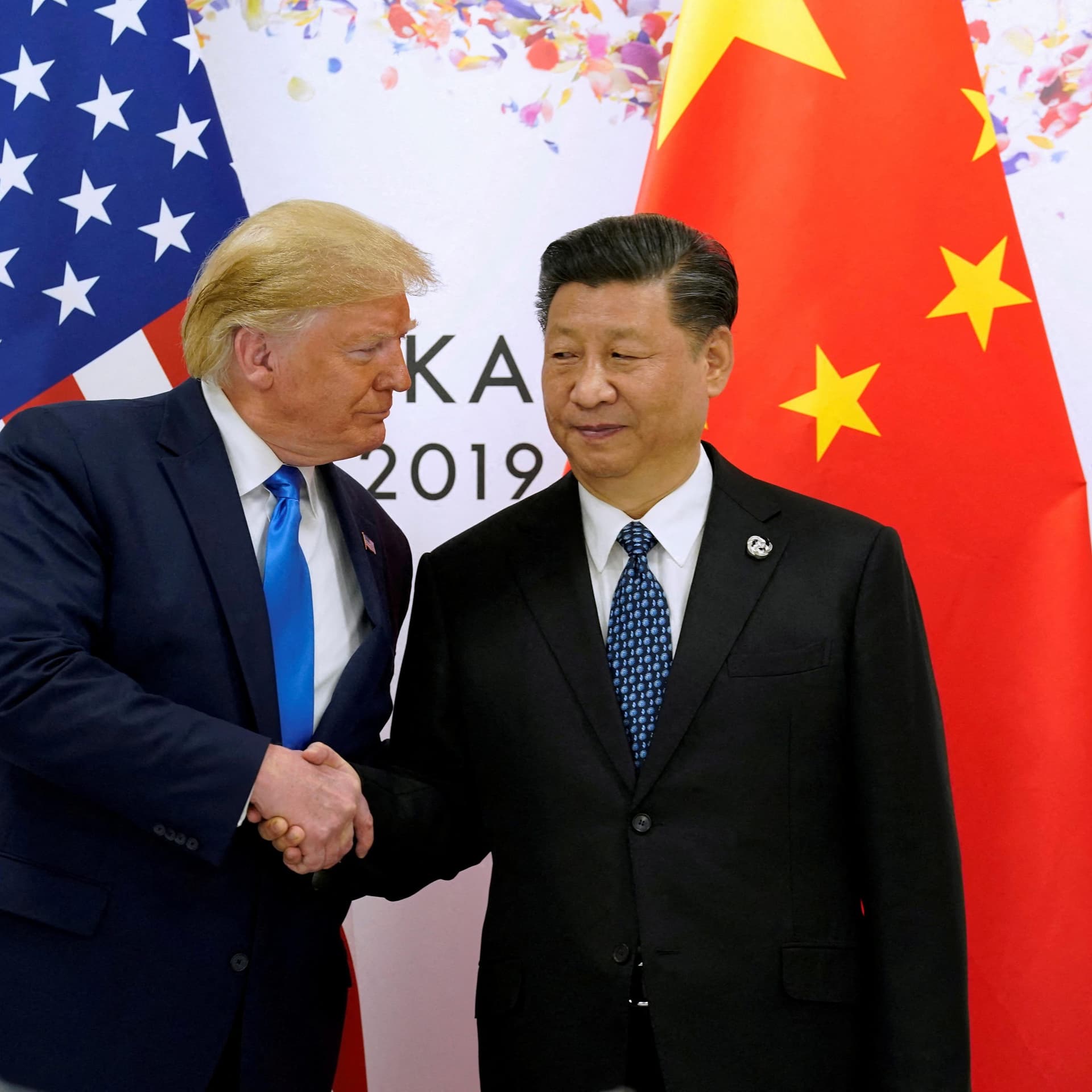
22:27Stephen, there was a thing that you mentioned to the team when we were setting up this interview about handshake politics. I wonder if you can tell us about handshake politics, what they are. Well, it's funny. I noticed the handshakes Donald Trump was giving out this week in Egypt. All these leaders are lining up and he's dragging them in And you can see that a little bit, China, but he wants to come in a bit closer. It looks totally weird. It's like an arm wrestle, isn't it? Weird, totally weird. Well, if you look at China's leader, Xi Jinping, the president, the general secretary of the Communist Party, his big thing is to stand on the left side of people for the handshake photo.
23:09Now, why does he do that? Because his body is sort of open and receiving guests. So here's Xi. There he is, holding out his hand like that. Now, the person who's coming in from the other side for the handshake, they're leaning across their body, but they're looking kind of a bit, well, lesser than the person who is just deigning to shake hands with them like this. So this is she's big thing. Yesterday, we actually acted this out with our editor, James. So if he was standing on the left-hand side of me, all he had to do to shake my right hand was just kind of slightly raise his elbow. That's right.
23:46And I, standing to his right, would have to reach across my body to, which is just like just more awkward maneuver. Yeah. It makes you look like a lesser leader. So, Stephen, it sounds like from your description of President Xi Jinping, he seems fairly calm, you're saying, fairly chill guy here, unfazed by some of this trade war dynamic, at least in public. That's his image. That's his image, I should say. And I mean, I don't know that he's really chill. I mean, he's feared. That's for sure. He's feared here. Okay, well, let's say that publicly he presents that he is not two-faced, you're saying, by these tariffs or the threat of these tariffs.
24:28And so I want to know from your perspective, which country has the most to lose or gain from a new trade war? In a nutshell, it's lose-lose, really. anyone you talk to, all the economists, the businesses, it's just a question of who loses the most. You can't win from it. And it's kind of the opposite of what Donald Trump says about how easy they are to win. No one wins, really. The consumers lose, the companies lose. It stuffs up world trade. It stops innovation. And it's just a matter of who can tough it out more than the other. and I think China's shown last time around they're pretty good at toughing it out.
25:14They held firm and no matter what was thrown at them by the Trump administration, they didn't seem phased. Certainly their public perception wasn't one of being phased and the Chinese economy is really strong and resilient despite its huge problems, like it's got enormous problems, real estate, local government debt, youth unemployment and yet the government here has very deep pockets. It's got an enormous domestic pool of population that can consume things to keep all these Chinese companies alive if it had to even just turn in on itself and it's also got all these other countries it can sell stuff to.
25:55So there's no way they can be bullied into it. There's no way China can be forced by the Trump administration to do anything really. but obviously it also cuts the other way and so they've just got to decide how much pain they're both prepared to wear and I think that the Chinese government has shown it's very stubborn they're not backing down on this. It's not only the economy, it's not only the impact on local finance in this country, it's the way the country's perceived, it's the way Xi Jinping's perceived, it's being seen as a potential replacement for the US, as the top of the pile in the world.
26:34There are so many reasons for them not to back down, and I don't think they will. So there's got to be, the only way out is some sort of negotiated settlement. Thank you, Stephen. That's the kind of big thought you put some slow music under. Well, thank you, Stephen. Really appreciate it. Yeah, thank you so much, Stephen. It was a pleasure. No worries. Good to talk to you any time.
Read the full transcript
26:59That was Stephen MacDonald, the BBC's China correspondent. And you can read all his articles about China at bbc.com. That's it from us. This episode was produced by Kat Farnsworth and Hannah Moore, and it was mixed by Travis Evans. Our senior news editor is China Collins. I'm Tristan Redman. See you next time. Cheerio.
From the publisher
“If there’s a fight, we’ll fight to the end”, a Chinese commerce ministry spokesperson said on Tuesday, of the increasingly fierce trade war playing out between the US and China.
As President Donald Trump threatens imposing 100% tariffs on goods coming from China, his counterpart, President Xi Jinping, has restricted US access to its rare earth minerals – which are vital to producing everything from smartphones to fighter jets.
With the two leaders due to meet in South Korea later this month, can they break the stalemate, or will they plunge the world’s two biggest economies into a global trade war? BBC China correspondent Stephen McDonnell joins us to discuss how the world’s two largest economies got locked in stalemate – and what it could mean for the cost of the goods we all buy.
Producers: Cat Farnsworth and Hannah Moore Mix: Travis Evans Senior news editor: China Collins Image: Russian Matryoshka wooden dolls, depicting US President Donald Trump and Chinese President Xi Jinping. Yuri Kochetkov/EPA-EFE/REX/Shutterstock