In short
Whether the US and other powers are moving toward a new era of nuclear testing, and what that would mean for deterrence and global risk.
Guests
Asma Khalid (BBC host) and Tristan Redman (co-host). Historian Serhi Plokhy (Harvard professor; Chernobyl historian; author of The Nuclear Age).
Key claims
Trump’s remarks suggest possible US nuclear testing “like other countries,” but officials may mean “system tests” rather than detonations; the US last tested explosive warheads in 1992. Plokhy argues the Cold War “balance of terror” depended on testing and signaling, but breaking the testing taboo would be dangerous and could force “test to a test” responses. Underground testing reduces fallout but still sustains the arms race and enables more states (e.g., North Korea).
Notable examples
1954 Castle Bravo (15-megaton) fallout affecting Marshall Islands and Japanese “Lucky Dragon” fishermen; 1958–early 1960s US tooth collection showing strontium-90 in children; 1992 last US warhead test; Russia’s 2023 withdrawal from the Comprehensive Test Ban Treaty.
Written by AI. May contain mistakes. Listen to the episode to check what was said.
Chapters
Tap a time to open that second in VOU.S. Nuclear Testing Discussion
0:31 to 4:30
Exploration of the implications of U.S. nuclear testing announcements and historical context.
“Listen now or search for Good Bad Billionaire wherever you get your BBC podcasts.”
Introducing Historian Serhi Plokhi
4:30 to 5:12
Introduction to historian Serhi Plokhi and his expertise on nuclear history.
“So I'm really into the history of nuclear weapons and then also kind of the long shadow of the Cold War.”
The First Act of Nuclear History
5:12 to 7:20
Discussion of nuclear testing post-World War II and its significance.
“And I'm really excited about the chance to speak with him for the show.”
Castle Bravo Test and Its Impact
7:20 to 11:37
Exploration of the Castle Bravo test and its consequences, including the Lucky Dragon incident.
“So all this, quote unquote, progress in the development of nuclear weapons, it's really impossible without testing what you got.”
Global Reactions to Nuclear Testing
11:37 to 14:00
Discussion on global reactions to nuclear tests and the impact on human health.
“This is the product of the 1950s, and this is the result of imagination about what happens as the result of those tests.”
The Impact of Nuclear Testing on Children
14:00 to 16:41
Learn about the scientific evidence linking nuclear testing to contamination in children's teeth.
“So they decided to collect those teeth from children and see what is happening there.”
Underground Testing and Its Implications
16:41 to 19:00
Explore the dangers and geopolitical implications of underground nuclear testing.
“In our timeline, Sehi, we're in the early 60s.”
The Intermission: A Pause in Nuclear Testing
19:00 to 21:49
Understand the context of reduced nuclear testing post-Cold War and the perceived end of the nuclear age.
“That means that the major players, like the Soviet Union and then Russia, they put the breaks or applied breaks to their nuclear testing program.”
Current Nuclear Tensions and Testing Prospects
21:49 to 24:49
Discuss the resurgence of nuclear tensions and the implications of potential nuclear testing by major powers.
“That's a big question that makes this Act Two in which we are today much more dramatic, much more tense, much more filled with conflict than was Act One.”
Debating the Return of Nuclear Testing
24:49 to 28:00
Examine arguments for and against the necessity of nuclear testing in maintaining global security.
“So we are in this situation of the nuclear confrontation, and it can't be left without a response.”
Show all 11 chapters
Strategic Implications of Nuclear Weapons
28:00 to 28:19
Explore the dangers and strategic considerations of nuclear arsenals.
“It is very dangerous, but the only way to make it less dangerous It's actually to signal that this is a bad idea to attack me because I have weapons that are as good as yours or maybe even better.”
Transcript
Automatic transcript. May contain errors.0:00This BBC podcast is supported by ads outside the UK.
0:30Search for PostGeorge The Times wherever you get your podcasts.
1:00Listen now or search for Good Bad Billionaire wherever you get your BBC podcasts.
1:30quote him here, because of other countries' testing programs, I've instructed the Department of War to start testing our nuclear weapons on an equal basis. That process will begin immediately. The president was asked to clarify what exactly he meant. Are you saying that after more than 30 years, the United States is going to start detonating nuclear weapons? I'm saying that we're going to test nuclear weapons like other countries do, yes. But the only country that's testing nuclear weapons is North Korea. China and Russia are not. No, no. Russia's testing nuclear weapons. So my understanding...
2:04And China's testing them too. You just don't know about it. That's what he told 60 Minutes recently. And in that same interview, he later added this. If we have them, we have to test them. Otherwise, you don't really know how they're going to work. Now, you might imagine what Trump is talking about involves huge explosions, mushroom clouds, that sort of thing. But the energy secretary said it meant something kind of different. I think the tests we're talking about right now are system tests. These are not nuclear explosions.
2:39All that was a couple of weeks ago. But in the last 72 hours, this story has taken on a whole new life. On Friday, CNN reported that the energy secretary, along with other top nuclear officials, are planning to meet with the White House in the coming days to try and convince the president to not actually blow anything up. The situation got even more muddled when a reporter on Air Force One followed up by asking Trump if nuclear testing meant exploding a warhead. This is being very specific. Are you saying you want to explode a warhead? I don't want to tell you about that, but we will do nuclear testing like other countries do.
3:17We have more nuclear weapons than any other country, and we have to test.
3:25According to the Arms Control Association, the only country to have conducted a nuclear test explosion in the 21st century is North Korea. So there is still a lot of confusion out there. We still don't know what these American tests might be, whether they'd entail exploding actual warheads. The U.S. hasn't done that since 1992. Or if it would just mean testing the missiles that deliver them. What we do know is that other countries, like Russia, are taking this all very seriously. Russia says if the United States resumes nuclear testing, it'll respond in kind. So where does that leave all of us?
4:05Well, from the BBC, I'm Asma Khalid. And today on The Global Story, what would it mean to return to an era of nuclear testing? And what can history teach us about this moment?
4:23So my co-host, Tristan Redman, he's been banging on and on about this in our editorial meetings. So, Tristan, hi there. Hey, Asma. So I'm really into the history of nuclear weapons and then also kind of the long shadow of the Cold War. And I'm particularly excited to cover this story, Asma, because we have a chance to speak with an incredible historian called Serhi Plokhi. So he's a bit of an idol of mine. He's a historian from Harvard University. He is also known for writing an incredible book about Chernobyl, on which that HBO series was partly based. And he has just written an incredible book called The Nuclear Age, which is a history of nuclear weapons since the Second World War.
5:06And I cannot think of anybody who knows this subject better than Sergei Plokki. And I'm really excited about the chance to speak with him for the show. All right. Well, Tristan, let's hear a conversation with Sergei Ploky. Hello, Sahi. Hello. So good to have you with us, Sahi. Thank you for joining us. I mean, you're very well known as a historian of Ukraine. Could you tell us how you equally became so interested in nuclear history? Well, first of all, it's a pleasure to be on your show and your program. I grew up in Ukraine, and then, of course, I was there in April 1986 during the Chernobyl disaster.
5:47And everyone had one question on their mind, what actually happened there? And there was a demand to the Soviet government tell us the truth about Chernobyl, and the government refused to do that. So once the archives became more accessible, I just followed the same question that my neighbors, my friends, members of my family were asking, what was the truth about Chernobyl? What the government was hiding from us? And my book on Chernobyl came out of that. And the next question was, that was asked by my readers, they were saying, do you really think that it's only the Soviet government that behaved like that?
6:31And I thought, I have no clue. I don't know. So that's how I ventured outside of Chernobyl, outside in Ukraine into a broader nuclear world. One of the individuals in your latest book describes the history of nuclear weapons in a very interesting way, I thought, which is almost like a stage play where you have a first act, which is the history after the Second World War through to the end of the Cold War. And then there's an intermission. And then where we are right now is like the beginning of the second act. Why don't we start with the first act of the play, which is the period after the Second World War, when there was a huge amount of nuclear testing.
7:11There were 499 nuclear tests made. That's about two a month over an 18-year period. Can you tell me about this period? Why was there so much testing exactly? So all this, quote unquote, progress in the development of nuclear weapons, it's really impossible without testing what you got. You have to really get a handle on how much yield, how much explosion, whether the improvements that you do work or don't work. That's one part of the story. Another part of the story is that, of course, signaling to the other side, to the other guys, that actually we got an equally powerful and destructive bomb.
7:54Or maybe actually we are ahead of you and don't mess with us. So the creation of what Churchill called the balance of terror that kept us from the nuclear war during the Cold War. Well, you tell a fascinating story in your book about one of the consequences of the first US hydrogen test, the Castle Bravo test, in 1954. Operation Castle, the fifth in a series of tests at the Pacific Proving Ground. What was the Castle Bravo test, say he? The Castle Bravo test took place on March 2nd, 1954, in Marshall Islands. That was the first ever test of the hydrogen bomb. Castle was an all-thermonucleic test, a test basically of devices in the megaton range.
8:47It took place at Atoll Bikini. Starting at H-48 hours, all personnel at Bikini Atoll were evacuated from the scattered islands. The yield was approximately 15 megatons. Tremendous yield resulted in a serious fallout situation at Bikini and certain other atolls downwind from ground zero. So it's basically much, much more than Hiroshima and Nagasaki. Their own personnel were affected by radiation and then the natives of the Marshall Islands were affected atolls and so on and so forth. I wonder if you could tell us the story of some Japanese fishermen who stray close to the test zone. I thought this story was fascinating because for me, it encapsulates not only the dangers of the nuclear testing, but also the fact that it makes people more aware of what's actually going on around the world.
9:43I wonder if you could tell us the story of what happened with these Japanese fishermen. Yeah, the boat was called Lucky Dragon and it turned out to be extremely unlucky. on many levels. First of all, they got in the zone in the Marshall Islands because they didn't get much fish, so they were trying to catch as much as possible before they returned to Japan. And they still didn't get fish, but they got a lot of contamination, and they thought that it was a snowfall in the South Pacific, but in reality that was the radioactive powder that was put into the ear by the Castle Bravo test. And they didn't realize what was going on.
10:28They came back to Japan, and Japan, after living through Hiroshima and Nagasaki, they were much more educated in terms of the threat of the nuclear weapons and testing than any other nation. So very soon they realized that tuna that they brought, whatever little tuna they brought, that it was contaminated. And then they found out that the fishermen were contaminated as well, and they ended up in the hospital. And that's how it became really an international scandal, because the U.S. government, of course, was trying to keep what happened secret. but American soldiers and Navy personnel. They started to write back home to their home newspapers and home newspapers in Kansas and another place was starting to write about that.
11:18So the story of the lucky or unlucky dragon, this Japanese ship, was basically one of the reasons why the world learned about what happened. And then probably listeners know what Godzilla is. Godzilla, king of the monsters. Alive, surging up from the depths of the sea on a tidal wave of terror to wreak vengeance on mankind. This is the product of the 1950s, and this is the result of imagination about what happens as the result of those tests. Because the Godzilla is the monster that comes from the bottom of the ocean because it's chased out from there by the rising level of radiation caused by the nuclear testing.
12:06This is the end of our civilization. So you're saying there's a direct line between the Castle Bravo test and the irradiated fisherman on the lucky dragon and then the creation of the Godzilla character in the films. Exactly, exactly. And it seems to me that it also set off an entire trope that you get in kind of science fiction films where a monster who has been created by nuclear radiation comes to earth and causes all sorts of problems. I had no idea there was a link between these things. Okay, so the 50s and 60s are a moment of these giant nuclear tests by the United States, the Soviet Union and other countries.
12:51What is the reaction around the world at this stage? How do people start to understand what these tests are doing to their bodies? And I wonder, Sahih, if you can tell us particularly the story about the teeth collections in the United States, which is absolutely fascinating. Yeah, it started in 1958, and it went into early 1960s. And the idea came from scientists in the United States, and they were dealing with how you can tell that this nuclear fallout, because they're relatively low levels of radiation, that they affect you or they don't affect you. Basically, it's a big, big question marks, and we don't know yet enough about the impact of the small doses of radiation on human beings and on nature as well.
13:42And they came up with a brilliant idea. They decided to measure whether it was actually getting into the human body or not. And in case of children at the age of whatever, six, seven, eight, the teeth are falling out and the permanent teeth start growing. So they decided to collect those teeth from children and see what is happening there. And that gave a chance to kids in the American schools to join a special nuclear club and have a pin on their chest. I donated my tooth to science. And they basically scientifically had proven that there is actually dramatic increase of strontium 9-0, which is really very bad, in the teeth of children.
14:35And the later they were born in the 1950s, the higher the percentages. That was something that also impacted and influenced on the emotional level. People like Kennedy, for example, right when when you come and you show that okay that's what happens to to our children that was a really really very powerful piece of evidence actually scientific evidence and i would say one of the most important factors that really led that mobilization and also influenced the governments i mean you mentioned president kennedy being emotionally affected by the idea of these children's teeth being contaminated with radioactivity.
15:18How did that lead to changes in the way nuclear testing was undertaken? Before the Cuban Missile Crisis, since late 1950s, there were already quite intense discussions between the Soviets and Americans, and they were the two nuclear superpowers contributing the most to the contamination, about a ban on the nuclear testing. The Soviets wanted ban on nuclear weapons, Americans didn't want, so the discussion was about ban on the testing. And the American position was just ban on all sorts of testing. The problem was, and to a degree continues to be till now, that if you test your nuclear device underground, there was no actually way to see whether you're doing that or not.
16:12So Americans insisted on inspections. And the Soviets were saying, no way. So at the end, the compromise was ban on testing in every sphere but underground and no inspections. That was a major step forward, given that the tests in atmosphere, in the water, underwater, that contaminate the environment the most, they were banned. In our timeline, Sehi, we're in the early 60s. There's a huge amount of public outrage and fear that's coming from things like the Lucky Dragon story that you've told us about, the Cuban Missile Crisis. So we enter at this stage into a period of underground testing by many different countries all around the world.
17:01Could you explain to me what's dangerous about underground testing? The impact on the environment is much less than it would be in atmosphere or above the ground or in the space, but it is still there. But the biggest issue and the biggest concern, at least the way how we understand it now, the underground testing means that the nuclear arms race continues. New countries are being added to the club of nuclear powers, countries like North Korea, for example. Are you saying that because underground testing can be conducted by more countries, because you don't need vast spaces like, you know, an island in the middle of the Pacific that you happen to control, it actually encourages more countries to have nuclear weapons?
17:51Is that what you're saying? That's certainly what is happening, especially with the smaller countries who have nuclear weapons like North Korea, right? So underground testing really allows them to develop those nuclear weapons in this new environment. Well, if we go back to our framework of nuclear history, where the period of the Cold War is the first act of the play, when the Cold War ends, we get to the intermission. And the intermission from the early 90s onwards is a period where there is very little, comparatively, nuclear testing. The last American nuclear test was in 1992. The French did some nuclear testing in the South Pacific in the mid-90s.
18:36And then, you know, there are other countries who develop their own weapons like North Korea and India and Pakistan. But comparatively, there's been a lot less testing. What's the framework around which that reduction in testing has been based? There was a perception that the nuclear age came to an end. In reality, the nuclear age never left us. But there was an intermission and continues to be on a certain level in terms of the nuclear arms race. That means that the major players, like the Soviet Union and then Russia, they put the breaks or applied breaks to their nuclear testing program. 1990s was probably the most promising decade in terms of non-proliferation.
19:26And the reason why we had that was that the Cold War came to an end. The idea that the world can be destroyed by nuclear confrontation, that idea kind of really, really disappeared from the agenda of politicians, from the media headlines, and so on and so forth. And now we are in a very different geopolitical environment. I was going to ask you about that because the thing about intermissions, the thing about intermissions is that they come to an end and then you find yourself in the second act of the play, which in this analogy is where we are now. So can you bring us up to date? Because Vladimir Putin has pulled out of the comprehensive test ban treaty.
20:20He did so in 2023. Donald Trump is saying that the United States might start testing nuclear weapons again. We don't know exactly what he means by that yet, whether he'd be testing warheads or their delivery mechanisms. Within the last few weeks, Vladimir Putin has said that he has tested some new Russian super weapons, including a nuclear powered drone, a possible nuclear powered cruise missile. I mean, it feels like we are heading into a moment of potential danger and uncertainty. What is happening right now? Why is this story suddenly flaring up again in this way? What is happening in three-act plays is that the tension is growing in the second act, after the intermission between the first and the second one.
21:12And in that sense, we are in a much more tense environment today and potentially more dangerous environment than we were during the first act. And the most dangerous moment there was the Cuban Missile Crisis of 1962.
21:34Now we have much more nuclear countries around. So now we don't have the agreements that were signed after the Cuban Missile Crisis in terms of the control of nuclear weapons. And we have also new technologies. That's a big question that makes this Act Two in which we are today much more dramatic, much more tense, much more filled with conflict than was Act One.
22:36POSCH GEORGE behind Farage. Search for Post George The Times wherever you get your podcasts.
23:08from the BBC World Service. Listen now or search for Good Bad Billionaire wherever you get your BBC podcasts.
23:22Donald Trump has told American media in the last few weeks that he believes that there are American adversaries, including Russia and China and Pakistan, he mentions. He says that these countries are already testing. He doesn't say what evidence he has for this. Wouldn't we know if those countries were testing their nuclear weapons? Isn't there some way of knowing whether or not they're testing their weapons? Yes, yes. So you can't do that in secret, even underground today, with the new ways of really monitoring what is happening around the Earth. So we'll know that for sure. The Trump statement, I wrote an op-ed for Washington Post where I said that this is, on the one hand, this is a step in the right direction because Putin's nuclear threats associated with his announcements about the nuclear-powered cruise missile, they have to be met with some sort of a response from the West.
24:27because otherwise it shifts the balance of terror, it shifts the balance of fear. And this is very dangerous because nuclear weapons historically are much more used to intimidate the other side than they used really on the battlefield. Only two cases are out there, Hiroshima and Nagasaki. So we are in this situation of the nuclear confrontation, and it can't be left without a response. But the response that came from President Trump was extremely confusing. Because if we are talking about resumption of nuclear testing, this is not something that is in the interest of the United States. This is first and foremost in the interest of China, which is now an economic superpower, but really in nuclear terms, a meat power.
25:24They have around, at this point, 600 warheads in comparison to roughly, if I'm not mistaken, 1 ,500 or something like that deployed already on the American and Soviet side. So they're catching up. And to catch up and to do that effectively, you need the resumption of nuclear testing. But then the White House gave kind of a broad interpretation of the term, saying that what President Trump really had in mind was testing all sorts of the issues related to the nuclear weapons. That includes, of course, the missiles, that can include air force, that include experimenting with the AI trying to integrate the nuclear defenses into general military and defense infrastructure.
26:15So at this point, it looks like that the White House is actually producing this very broad interpretation. And if you accept it, everyone is involved in that. But I think that what is not in the interest of US, not in the interest of the world, is US breaking taboo that really exists among the major powers on the testing underground or in any other sphere. I'd like to put to you an idea, Sehi, to see what your response is to it, which is, what if nuclear testing were a good thing? Isn't nuclear testing a necessary part of nuclear deterrence? And nuclear deterrence is something that seems to have worked for 80 years.
27:03We haven't had a nuclear war in the last 80 years, thankfully. And in order for deterrence to work, you have to test because you have to know that your nuclear deterrent functions and you need to show your adversaries that it functions. So could it be that the return to testing is actually a good thing? We are much safer without testing going on. But if the taboo is broken, then the idea is, again, maintaining the balance of terror and the balance of fear, which really saved us during the Cold War, producing the concept of mad, mutually assured destruction.
27:51So if the taboo is broken, then the only way to bring back that balance is actually to respond test to a test. It is very dangerous, but the only way to make it less dangerous It's actually to signal that this is a bad idea to attack me because I have weapons that are as good as yours or maybe even better. Sehi, thank you so much for joining us. It was a pleasure. Thank you very much for asking this question. Thank you for this conversation.
Read the full transcript
28:30That was my co-host Tristan Redman speaking to Sergei Plaki. He's a professor of history at Harvard University whose new book is called The Nuclear Age. And one more quick thing. If you all have any thoughts, story ideas, comments for us, drop us a line at theglobalstoryatbbc.com. And folks, that is it for today's show. This episode was produced by Viv Jones, Zandra Allen, and Aaron Keller. It was edited by James Shield and mixed by Travis Evans. Our senior news editor is Chyna Collins. Thank you as always for listening and we'll talk to you again tomorrow.
29:32Farage. Join me, Gabriel Pogan, from The Sunday Times for a wild ride through the worlds of politics, crypto, and crime. It's in our new podcast series, PostGeorge, the criminal behind Farage. Search for PostGeorge The Times wherever you get your podcasts.
From the publisher
In the last 72 hours, comments from President Trump and his administration have sparked fresh debate about whether the US could – or should – resume the kind of nuclear weapons tests that were halted over 30 years ago.
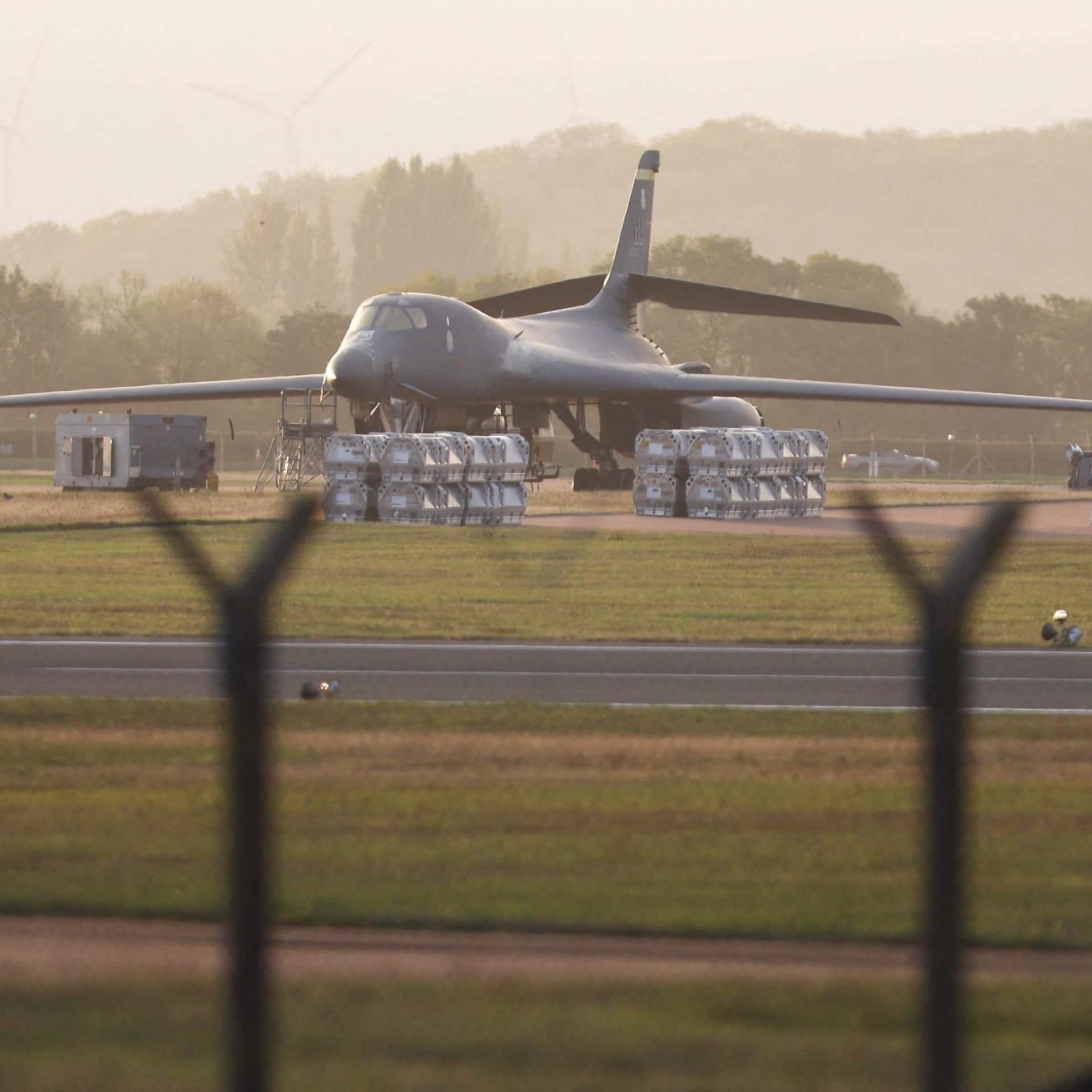
The current debate centres on whether Trump plans to test nuclear delivery systems, such as missiles, or nuclear warheads. The latter would be a major reversal of a long-standing policy, as the US has not tested a nuclear warhead since 1992, but it’s unclear what the plans involve.
Today, Tristan speaks to Serhii Plokhy, a history professor at Harvard and author of The Nuclear Age, about what it would mean to return to an era of nuclear testing.
Producers: Viv Jones, Xandra Ellin, Aron Keller
Executive producer: James Shield
Mix: Travis Evans
Senior news editor: China Collins
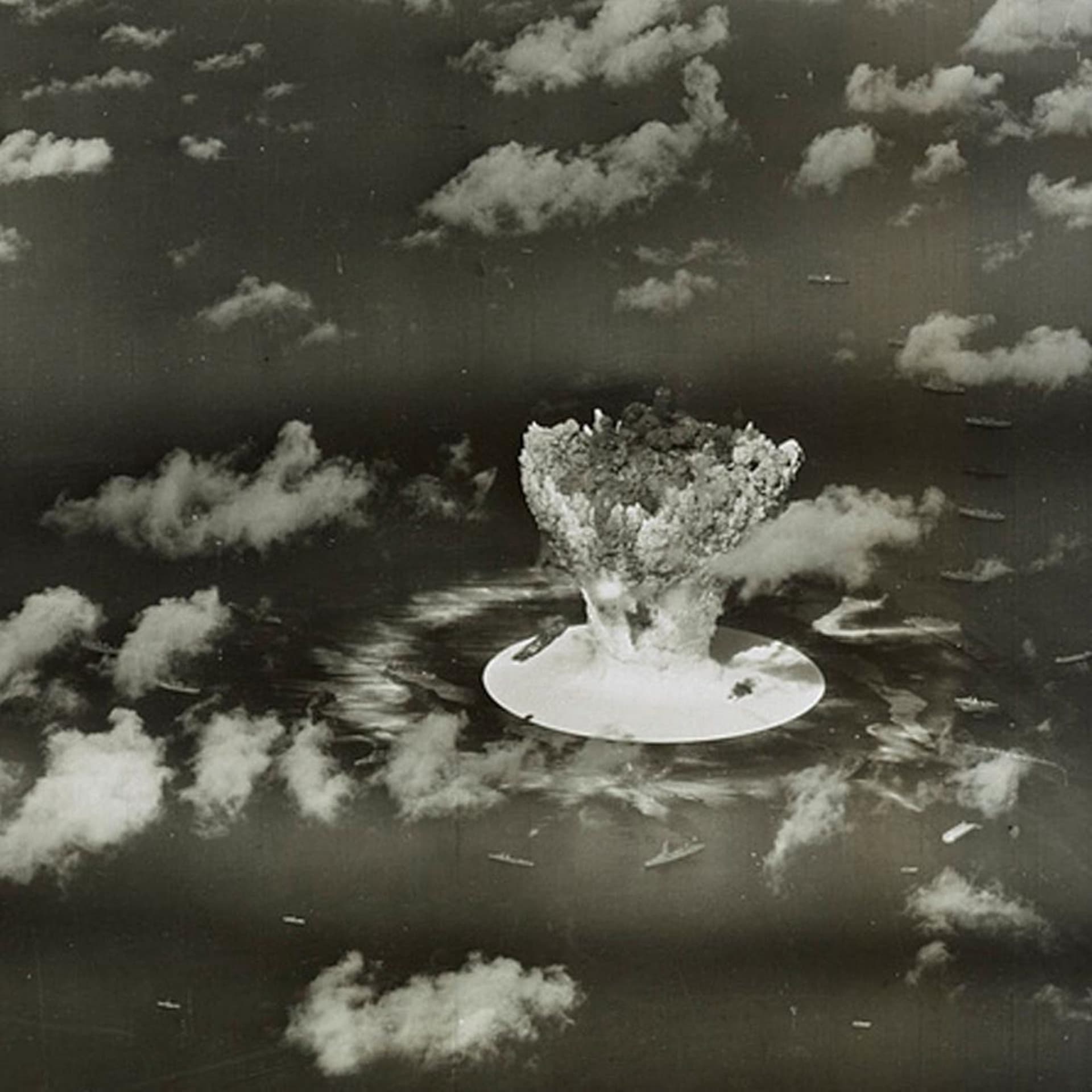
Photo: Mushroom cloud rises during Operation Crossroads nuclear weapons test. Reuters