In short
The episode examines whether President Trump is building toward war or regime change in Venezuela amid escalating U.S.-Venezuela tensions. It traces events from September onward: U.S. strikes on vessels in the Caribbean, then the Dec. 10 seizure of a Venezuelan-linked oil tanker (Washington says it carried sanctioned oil to Iran), and Trump’s threats of a “total blockade” of sanctioned oil tankers. Key claims discussed: Democrats question the legality of a blockade (called “an act of war”) and demand proof that Nicolás Maduro leads a drug cartel (“Cartel of the Sons”). BBC Mundo journalist Jorge Perez Valeri (Venezuela) describes life under shortages, power/water failures, and inflation, and says Venezuelans face repression and fear speaking freely. He notes U.S. cases involving Maduro relatives and former officials, but says direct evidence against Maduro is still lacking. He also explains Venezuela’s vast heavy-oil reserves, U.S. refinery dependence, and how sanctions and “dark fleet” shipments may be driving the oil focus. Notable example: Maria Corina Machado praising Trump’s strategy; Maduro’s response citing militia mobilization and drills.
Written by AI. May contain mistakes. Listen to the episode to check what was said.
Chapters
Tap a time to open that second in VOThe Build-Up to Tension
0:30 to 0:48
Understanding the military actions that have led to the current crisis.
“And to think, that's just a small taste of what Schwab offers.”
The Build-Up to Tension
2:08 to 3:22
Understanding the military actions that have led to the current crisis.
“And a lot of the journalists in Mundo not only know the language and politics of Latin America, they are from the region themselves.”
Trump's Escalating Rhetoric
3:22 to 4:23
Analyzing President Trump's threats and their implications for Venezuela.
“And meanwhile, then on December 10th, we saw another huge flashpoint erupt.”
Venezuelan Perspectives on Crisis
4:23 to 7:29
Insights from a Venezuelan journalist on the country's situation amidst US actions.
“And the move drew international concern.”
Drug Trafficking and U.S. Justifications
7:29 to 13:19
Exploring the claims of drug trafficking in Venezuela and their legitimacy.
“So you have families that are separated, families that are economically struggling, and a country that is basically stuck in time because it hasn't been able to overcome its humanitarian and economic crisis.”
The Oil Connection
13:19 to 14:01
Discussing the historical and economic significance of oil in Venezuelan-U.S. relations.
“Over 300 billion barrels of oil are under the Venezuelan soil.”
The Oil Connection Between the U.S. and Venezuela
14:01 to 14:37
Explore the historical relationship and economic dependency on oil.
“And most of this oil was sent to the United States where there are specific refineries over there, especially in the Gulf, that can treat the Venezuelan oil.”
Historical Overview of U.S.-Venezuela Oil Relations
14:41 to 15:40
Understand the evolution of oil relations from the early 1900s to nationalization.
“And how far back does the U.S.-Venezuela relationship go when we talk about oil?”
Decline of Oil Production in Venezuela
15:48 to 17:29
Learn how political actions led to a significant drop in oil production.
“But nonetheless, why does Venezuela not have anything like the wealth of a country like Saudi Arabia?”
Trump's Statements on Venezuelan Oil
17:30 to 19:23
Examine Trump's claims regarding Venezuelan oil and U.S. sanctions.
“And there has also been cases of corruption.”
Show all 16 chapters
Military Buildup and Potential U.S. Intervention
19:24 to 20:37
Discuss the implications of military movements and the push for regime change.
“invaded Panama, there were around 30 ,000 military officials in the region.”
Venezuelan Perspectives on U.S. Actions
20:38 to 22:05
How Venezuelans view potential U.S. military actions and their own political struggles.
“There is a huge military buildup in the country.”
The Opposition's View on U.S. Support
22:06 to 23:28
Insights into the Venezuelan opposition's perspective on U.S. intervention.
“I absolutely support President Trump's strategy.”
Response of the Maduro Government
23:29 to 24:51
How the Maduro regime is preparing for potential military threats from the U.S.
“These protests generally turn into violence and some people have been killed during protests.”
Closing Remarks with Jorge
24:52 to 25:03
Wrap-up insights from Jorge on the current situation in Venezuela.
“Jorge, thank you so much for joining us today.”
Reflection on Venezuelan Struggles
25:04 to 27:31
Discussion on the impact of U.S. actions on Venezuelans and their future.
“What really struck me in this conversation were the quite heartfelt things that Jorge told us about what it's like being in Venezuela in the present moment.”
Transcript
Automatic transcript. May contain errors.0:00This BBC podcast is supported by ads outside the UK.
0:30And to think, that's just a small taste of what Schwab offers. Because Schwab knows that when it comes to your finances, choice matters. No matter your goals, investing style, life stage or experience, Schwab has everything you need, all in one place, so you can invest your way. Visit schwab.com to learn more. Tensions between the US and Venezuela are reaching a tipping point.
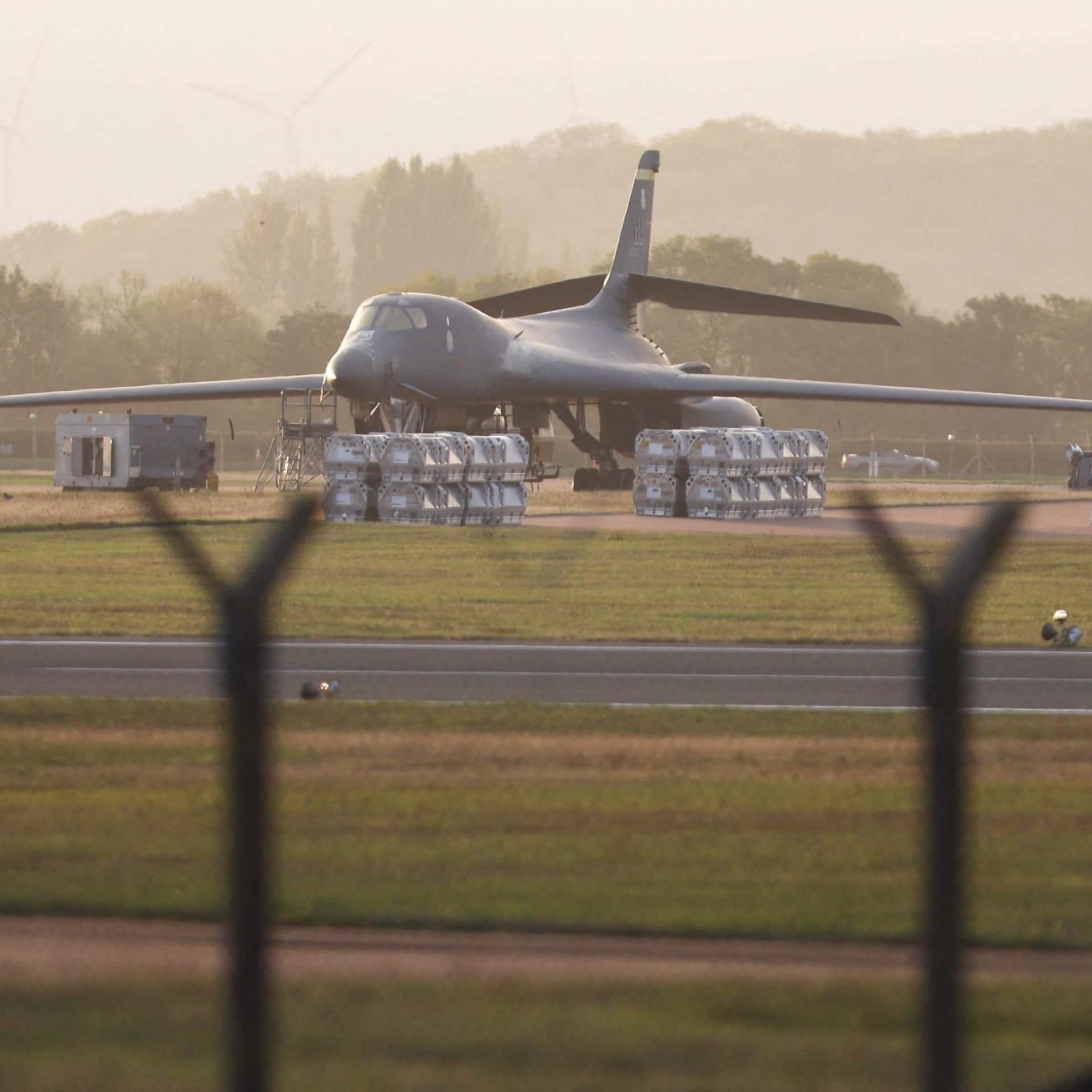
0:58Jorge Perez Valeri:Tomorrow, the UN Security Council is expected to convene for an emergency meeting. The meeting comes at the request of the Venezuelan government over what it describes as, quote, ongoing U.S. aggression and a plan typical of colonialism. This came after President Trump ordered a blockade of Venezuela, targeting sanctioned oil tankers. He's designated Maduro's government a foreign terrorist organization and accused the country's leader of being the head of a drug cartel. Over the last several weeks, there's been a steadily escalating military campaign out of Washington. The U.S. has been building up a naval force in the Caribbean, one that Donald Trump describes as the largest armada ever assembled in the history of South America.
1:44Jorge Perez Valeri:And it all culminated this weekend with the seizure of at least one Venezuelan-linked oil tanker by U.S. forces. From the BBC, I'm Asma Khalid in Washington, D.C. And I'm Tristan Redman in London. And today on The Global Story, is President Trump mounting a case for war with Venezuela?
2:07So one of the aspects of the BBC that I have really come to appreciate is that the network is home to some 40-plus language services. One of them is BBC Mundo. And a lot of the journalists in Mundo not only know the language and politics of Latin America, they are from the region themselves. And in a little bit on this episode, we are going to speak with one of our Venezuelan colleagues from Mundo. But first, we want to explain how U.S. pressure on Venezuela reached this moment of simmering tension.
2:38Jorge Perez Valeri:So let's start by quickly summarizing how we got to this point. It all began at the beginning of September. Tonight, the White House releasing this dramatic video of the U.S. blowing up a boat in the Southern Caribbean. President Trump says it was carrying drugs from Venezuela. It is the first known military strike in the region since President Trump ordered an increased military presence in the Caribbean. Venezuela has been very bad both in terms of drugs and sending some of the worst criminals anywhere in the world into our country. That first strike in September on a boat that the White House said was carrying drug traffickers has now been followed by more than 20 additional strikes on vessels, killing an estimated 100 people to date.
3:22Jorge Perez Valeri:And meanwhile, then on December 10th, we saw another huge flashpoint erupt. The U.S. seized an oil tanker off the coast of Venezuela. Washington says the vessel was transporting sanctioned oil from Venezuela to Iran and that the revenues from the cargo were supporting foreign terrorist groups. The Maduro government denounced the action, calling it an act of international piracy. And then last week, President Trump's rhetoric reached a whole new level. In a long, true social post, he threatened a total blockade of oil tankers under sanctions from the U.S. going into and out of Venezuela. He also said he was designating Maduro's government as a foreign terrorist organization.
4:04Jorge Perez Valeri:And strikingly, he accused the Maduro government of, quote, using stolen oil fields to finance themselves, drug terrorism, human trafficking, murder and kidnapping, and said the U.S. will not allow, quote, a hostile regime to take our oil, land or any other assets and demanded the return of those things. It was a bewildering message. It was indeed. And the move drew international concern. Joining me now is the top Democrat on the House Armed Services Committee, Congressman Adam Smith of Washington. And here in Washington, some Democratic lawmakers raised fresh concerns about the legality of the Trump administration's plans in Venezuela.
4:42And keep in mind, a blockade is an act of war. A blockade, I mean, is literally by definition an act of war. This sure seems to me like it is straightforward, a war against Venezuela masquerading as some sort of effort to reduce drug problems in the U.S.
4:58Jorge Perez Valeri:And over the weekend, the U.S. administration seized a second oil tanker that the U.S. government said had left Venezuela. And as we're recording late Sunday, the Reuters news agency is citing government officials who say the U.S. is pursuing a third. The Venezuelan government described the latest move as, quote, theft and kidnapping, and said the acts would not go unpunished. So we want to know how Venezuelans are feeling about this escalation. Hello, Asma. Can you hear Asma already? Yeah, I can hear you. Hi, how are you? Nice to meet you. Hi, it's very nice to meet you. Thank you for very well.
5:35Jorge Perez Valeri:And so we have turned to one of our expert colleagues from BBC Mundo. I'm Jorge Perez Valeri. I'm a journalist at BBC Mundo, the BBC Spanish service for the Spanish-speaking world. We deliver the news to all Latin America and, of course, Spain as well. And where are you from? I'm from Venezuela. And if you report on Venezuela from Europe, how do you do that? Well, of course, you keep the connections with the country, right? You have friends, you have relatives, you have colleagues still living over there. So we get in touch with people over there, some sources. We try to understand their perspective of the people that are still living over there.
6:14The freedom of speech situation is one of the worst, not only in the continent, but in the whole world. It's very difficult to express yourself in Venezuela without fearing any consequence from an institution. We have cases recently of people being imprisoned. So it's clearly they are not as able as those outside to express what they think or what they feel. Could you paint a picture of what life is like? It's very hard to live in Venezuela if you are an average Venezuelan. It's hard to have to deal with a life in which you get home and electricity is out because there's a power blackout. But you open the tap and there's no water because the water industry, which is also a state company, is not working properly.
7:06But you go to the supermarket and nowadays you can find more food than years ago because the scarcity of foods was somehow solved. But the prices are so high that you can barely buy something for your family. And it's a constant race against inflation, which has been these years estimated to reach around 400 percent annually. Almost 8 million people living abroad. So you have families that are separated, families that are economically struggling, and a country that is basically stuck in time because it hasn't been able to overcome its humanitarian and economic crisis.
7:46Jorge Perez Valeri:Jorge, on The Global Story, we've been grappling for a little while now with the question of what Donald Trump's interest in Venezuela seems to be. And there are a couple of theories about why Trump may be building up towards some kind of intervention. Drug trafficking on the one hand and oil on the other. And we're trying to understand how legitimate those two theories might be and which is the most realistic. So let's start with drug trafficking. In the earlier phase of Donald Trump's escalation against Venezuela, when the U.S. was attacking boats, he justified it as a counter-narcotics operation.
8:25Jorge Perez Valeri:And Donald Trump has even accused Nicolas Maduro of being the head of a drug cartel. Is there any evidence to support the claim that the Venezuelan government is some kind of drug trafficking operation? It is a key question. It is not the first time that the U.S. is accusing Venezuelan officials of being involved in drug trafficking. These accusations started as early as 2010 during Hugo Chavez time. Hugo Chavez, the predecessor of Nicolás Maduro. By that time, some Venezuelan officials were sanctioned because their alleged involvement in links with drug traffickers and also of the smuggling of guns.
9:06It has, of course, escalated massively since then, because now we have the U.S. saying that they are offering a$50 million reward for information that leads to the arrest or detention of Nicolás Maduro, who they are accusing of being the leader of the Cartel of the Sons. The opposition in the United States, the Democrats, has been asking the government to show the proof that Maduro is actually involved and the administration hasn't showed them. It seems that there's still more information needed from the U.S. administration to prove that he is actually linked with drug trafficking. But we have to remember some relatives of Nicolás Maduro and his wife are involved in drug trafficking and were even convicted in the United States to 18 months in prison because of alleged involvement in conspiracy to bring cocaine into the United States.
9:58That happened a couple of years ago. And another important case to remember, the former chief of intelligence of Venezuela, Jim Hugo Chavez, and even worked during the Maduro administration, Hugo Carvajal, is convicted in the United States. And he pleaded guilty in drug trafficking conspiracy and is right now imprisoned in a U.S. federal jail. So, yeah, there has been elements in which members of the Venezuelan government has been linked, according to the U.S. justice, to drug trafficking. But it still needed more information to link directly Nicolás Maduro to a drug trafficking organization. We also saw news that President Trump has signed an executive order declaring fentanyl a weapon of mass destruction.
10:46No bomb does what this is doing. 200 ,000 to 300 ,000 people die every year that we know of. So we're formally classifying fentanyl as a weapon of mass destruction. That caught my attention because I haven't seen that terminology used for drug trafficking. I mean, the most famous case, I think, for many of us here in the United States of WMDs, weapons of mass destruction, makes many of us think of Iraq and the drumbeat of war at that time. But nonetheless, we saw this language now being used in the context of fentanyl. And Jorge, I want to ask you about the extent to which Venezuela is involved in the production or trafficking of fentanyl, because we've heard President Trump reference that fentanyl is coming through Venezuela.
11:32Is there any evidence that China is now smuggling fentanyl through Venezuela to bypass U.S. and Mexican port controls? They are doing that, yes. He acknowledged that this is coming from other places like China passing through Mexico, but he also has singled out Venezuela. Venezuela has a minimum mention about fentanyl production in U.S. administration reports on drug producing in Latin America. It is mentioned as a transit country, mostly for drugs being produced in South America, and cocaine is the most referred one. So no, it's not a big player in the production of this specific drug. If you hear from the Venezuelan government, from the Nicolás Maduro government, they're going to say that this is a creation of the United States imperialism, trying to find an excuse to, you know, invade a country and appropriate the oil reserves of the country.
12:23For them, everything is a narrative creation, trying to find an excuse to take a military action and take control of the Venezuelan oil. That's the official position of Maduro.
12:39Jorge Perez Valeri:Well, should we move on to the second suggested motivation for a possible U.S. intervention in Venezuela, which you just mentioned there yourself, which is oil? As we've seen in the last couple of weeks, there's been more focus from the U.S. administration on oil in Venezuela, especially in this Truth Social posting from Donald Trump. Trump said the Venezuelan, quote, regime was a foreign terrorist organization. And he accused government officials of using oil to enrich themselves and finance drug terrorism. How much oil does Venezuela actually have? Well, according to the data, it's a country with the biggest oil reserves in the world.
13:20Over 300 billion barrels of oil are under the Venezuelan soil. So it means that it has a lot of oil. Even more than Saudi Arabia. Even more than Saudi Arabia, even more than Iran. It's the country with the biggest, largest oil reserves in the world. And there is something important to mention. It's not easy to process this type of oil that Venezuela has because most of the reserves of Venezuela are heavy oil. And this needs a specific treatment in order to be refined. And this is where the link with the U.S. refineries comes up because during a long time, Venezuela and the U.S. were big partners in the oil production.
14:01And most of this oil was sent to the United States where there are specific refineries over there, especially in the Gulf, that can treat the Venezuelan oil. But that's the connection between these two countries. It's worth less in terms of commercializing, for example, than other oils, but it's still a valuable resource. Over 90 percent of the profits of the country come from the oil. So you can have a sense of what oil means for Venezuela. Oil means everything for the Venezuelan economy. Jorge, I want to understand the legacy of the United States relationship with Venezuela when it comes to oil, because I don't think that is a relationship that is well known here.
14:40President Trump posted on True Social that Maduro's government is using, quote, stolen oil fields. What does he mean by that? And how far back does the U.S.-Venezuela relationship go when we talk about oil? Basically, in the early 1900s, when American companies found oil in Venezuela, it helped the country, which was at a very rural state, to develop its oil industry. And the investments first came from the United States. Venezuela was being left with not the biggest portion of these profits. But of course, it helped the country to modernize and to grow. So the commercial partnership between these two countries just grew throughout the whole century.
15:20And around the 1970s, Venezuela started to consider nationalizing its oil industry. And it successfully did it. But after that, during the Hugo Chavez time, some of these actions actually forced the U.S. to look for compensation for American companies like ConocoPhillips and many others. And some of them are still today are claiming for a sort of compensation of what was nationalized or expropriated before.
15:47Jorge Perez Valeri:Well, here's another thing that I've been struggling to get my head around, which is that if Venezuela has oil reserves that are even bigger than Saudi Arabia's, yes, its oil is not quite of as good a quality as Saudi Arabia's. But nonetheless, why does Venezuela not have anything like the wealth of a country like Saudi Arabia? Where has the money gone? It's a very good and interesting question to make, because when you see what Venezuela was before Hugo Chavez's government was elected, the country is actually producing 70 % less oil than it was producing by that time. And what has happened, for example, during Hugo Chavez's time, there was a famous national oil strike against his government.
16:38When workers at PDVSA went on strike to protest the loss of experienced executives, the 2002-2003 oil strike crippled the economy. They were trying to make Chávez resign as a president, and this strike didn't accomplish its purpose.
17:02Chávez, as president of Venezuela, took a whistle on national TV and started to fire people that were highly qualified in the Venezuelan oil industry.
17:16Plenty of these professionals were fired from Venezuela. And that's where this is a breaking point in which some analysts say the production of oil in Venezuela started to decline. There's serious accusations from experts that the country has been mismanaging its resources and its oil company. And there has also been cases of corruption. There's another element to that True Social post in which the president said he's ordering a, quote, total and complete blockade of all sanctioned oil tankers going into and out of Venezuela. What does that mean? It's not that all oil in Venezuela is sanctioned.
17:59Actually, one American company still managed to export oil from Venezuela. That is Chevron, which has had a license from the U.S. government to still operate in the country. A fifth of the Venezuelan production of oil goes to the United States through Chevron. And it's very specific when Trump mentions that he is targeting sanctioned oil. Around 40 percent of Venezuelan oil actually goes out to the international market through what is called the dark fleet. They manage to transport oil without proper controls. And it seems that Trump might be targeting this specific part of the oil that can go out of the country to mostly China without the sanctions being implemented.
18:44Jorge, we want to move on to how do you interpret the drip drip of social media posts as well as military actions that we are seeing from the Trump administration directed toward Venezuela? Is it being interpreted as an effort to build a narrative for intervention, for war? What we see or what we read from analysts about this is that the buildup, the military buildup in the Caribbean is too large to only fight drug trafficking in the region. And it's too small for an invasion, a full scale invasion in Venezuela. When you compare it to the latest military action that took place in the region that happened in 1989 when the U.S.
19:30invaded Panama, there were around 30 ,000 military officials in the region. And for now, we are only counting 15 ,000 and Venezuela is a country way bigger than Panama. So the question that has been repeated in many areas of analysis or debate is what does Trump really want in Venezuela? It seems that he is mounting a lot of pressure on the Venezuelan government for them to resign and to give up and allow a transition in the country. But again, it's hard to simply answer that. I will say here in Washington, there's a lot of chatter about this drumbeat for possible war being not necessarily just about oil and drugs, but also very much seen as an effort at regime change and a project of the Secretary of State Marco Rubio.
20:23At the end of the day, it is clear that the current status quo with the Venezuelan regime is intolerable for the United States. The status quo, that they operate and cooperate with terrorist organizations against the national interest of the United States. Whether the U.S. is looking or not for a regime change in Venezuela, I think you have to see the facts. There is a huge military buildup in the country. They are accusing Maduro of being the leader of a drug cartel called the Cartel de los Soles, Cartel of the Sons. They have been accusing Venezuela of stealing U.S. assets. So there's a narrative that has been around this situation that leads you to think that they're indeed looking for a political change in the country.
21:09How is that going to be enforced? We haven't seen it yet. How are Venezuelans viewing this escalation? It's another moment of expectation, anxiety, trying to understand what is going to be next. Because in previous years, when something escalates and there's the chance that that might be a political change in Venezuela, maybe the situation in the country just gets worse. And it's different from those that live abroad than for those that are still in the country. For those that are abroad, sometimes you might hear Venezuelans even supporting some sort of actions from the United States because they see this as the only resource for them to maybe go back to the country.
21:54But it's not that black and white. And of course, you also have those Venezuelans that are still supporting the Maduro government and they consider that they are ready to fight for it.
22:05Jorge Perez Valeri:Asma's just mentioned there that there is potentially also interest in Washington for regime change in Venezuela for political reasons. And there are people in the Venezuelan opposition who've seized on to Donald Trump's interest in Venezuela as a possible way of achieving that, particularly the newly minted Nobel Peace Prize winner, Maria Corina Machado, who has welcomed Trump's potential intervention in Venezuela. I absolutely support President Trump's strategy. And we the Venezuelan people are very grateful to him and to his administration, because I believe he is a champion of freedom in this hemisphere.
22:51When you hear Venezuelans support the opposition, a lot of them support actions from the U.S. taking place in Venezuela because what they want is for this situation to be over. They make Maduro responsible for the struggles that the Venezuelan people has been going through for the past decade. What you hear from these people is that they feel that they have been doing a lot trying to carry out a political change in the country. They went to presidential elections last year. They were widely called as a sham, as a re-election, even by independent electoral observers. They have been going to the streets to protest.
23:31These protests generally turn into violence and some people have been killed during protests. So for them, there is no other option.
23:41Jorge Perez Valeri:How is the Venezuelan government responding to all this? What is their response to the possibility, as they describe it, of a U.S. military intervention in their country? In Venezuela, the narrative of the U.S. invading or taking any military action in the country has been present for a while. Since Hugo Chavez's time, they have been saying that the U.S. is going to try to take over our assets in Venezuela, mainly the oil assets.
24:09And recently what they have been doing, for example, Maduro said that about 8 million militia members are already active to fight whatever action is taken by the U.S. We cannot contrast those numbers if they're real or not. They have been taking some military drills in the country involving civilians, taking guns to them and teaching them how to fight. Some of these images include elderly people managing gangs, big gangs. It's part of the narrative that they are trying to create, that the people are ready to fight. But at least that's the political response of the Maduro government to what the U.S.
Read the full transcript
24:52is doing.
24:54Jorge Perez Valeri:Jorge, thank you so much for joining us today. It's been really a pleasure to get your insight on what's actually happening inside Venezuela. Thanks, you. Gracias.
25:16Jorge Perez Valeri:What really struck me in this conversation were the quite heartfelt things that Jorge told us about what it's like being in Venezuela in the present moment. It's really hard. I was also really struck by the fact that many people in the Venezuelan opposition might welcome a Trump intervention because they see it as a way of getting rid of President Nicolas Maduro, who they believe is illegitimate. And he spoke about how difficult economic life is in Venezuela. And President Trump's actions could frankly squeeze the Venezuelan economy even further, putting pressure on the Maduro government. There are a lot of words flying around in this one, Asma, and we don't hear a lot of them from actual Venezuelans.
26:05Jorge Perez Valeri:So it was really, really great to hear from Jorge today. And he says that it's part of the narrative that Maduro's government is trying to create, that people are ready to fight. But, you know, I sort of wonder to what extent there's appetite in the United States for any kind of military intervention in Venezuela. that? Well, Tristan, there is certainly very little appetite for physical boots on the ground. You know, and President Trump himself has in the past campaigned on keeping the United States out of foreign wars. I will also say that none of the efforts that we've seen in Congress, largely led by Democrats, to reel in President Trump on Venezuela have actually passed.
26:47And so there is also, I would argue, little appetite among many Republicans to put guardrails on President Trump's foreign policies.
27:01Well, that is a wrap for The Global Story today. If you've got any questions, suggestions or ideas for us, drop us a note. Our email address is theglobalstory at bbc.com. We love to hear from you all, even if we can't always respond to everybody. This episode was produced by Aron Keller, Lucy Paul, and Sam Chantarasek. It was edited by Bridget Harney and engineered by Marty Peralta. Our senior news editor is Chyna Collins. Thanks, as always, for listening.
From the publisher
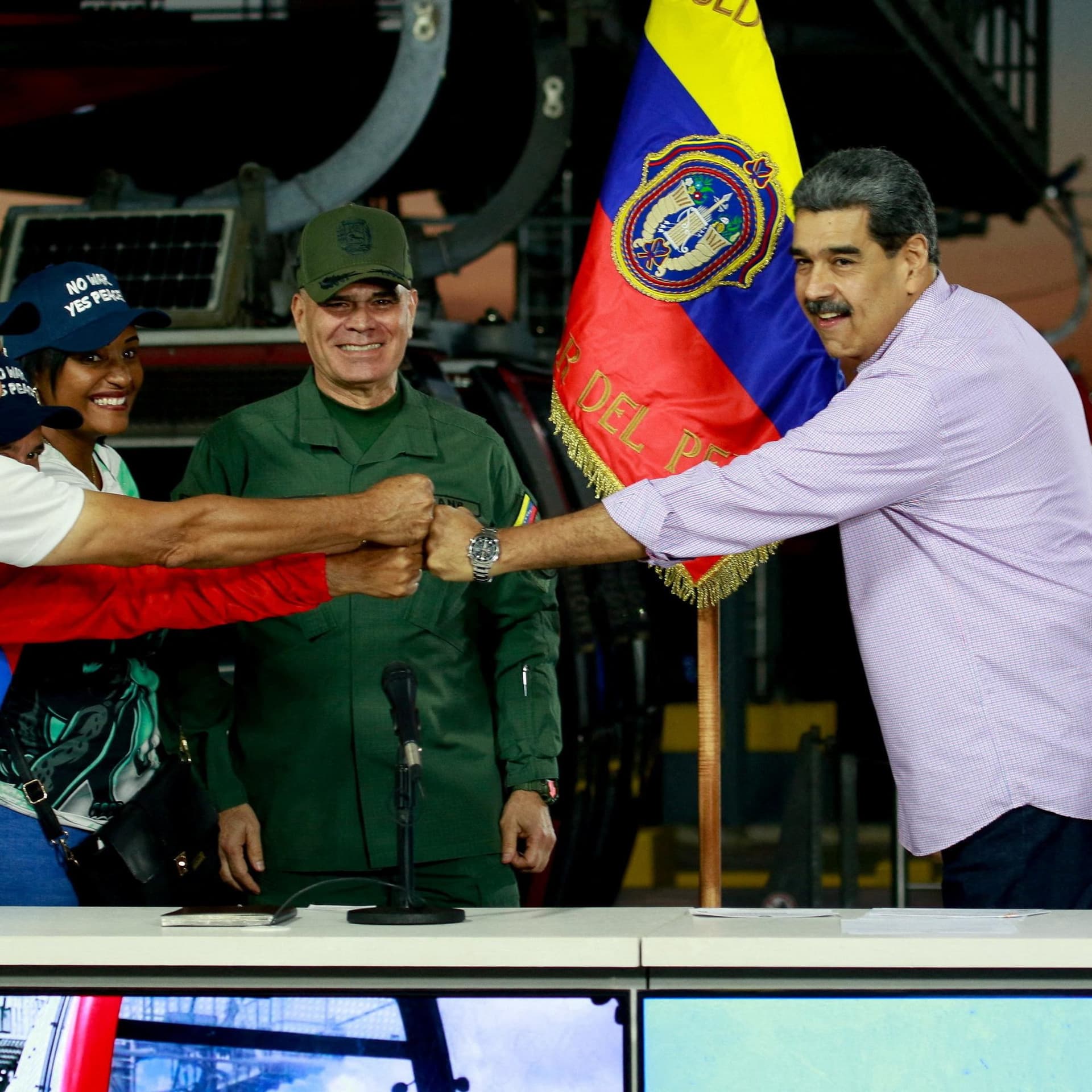
Tensions between the US and Venezuela are reaching a dangerous tipping point. The Trump administration has accused president Nicolas Maduro of leading a drug cartel and declared Maduro's government a “foreign terrorist organisation”. President Trump has also ordered a naval blockade of the country’s oil-sanctioned exports using what he calls “the largest ever armada assembled in the history of South America”.
In today’s episode, we speak to BBC Mundo journalist, Jorge Perez Valeri to ask whether the escalating military rhetoric from Washington could be paving the way for war, and how Venezuelans, already grappling with deep economic hardship, are feeling about the prospect. Producers: Sam Chantarasak, Lucy Pawle and Aron Keller. Editor: Bridget Harney Mix: Marty Peralta Senior news editor: China Collins Photo: Venezuela’s President Nicolas Maduro attends an event at the Mariche Metrocable station. Credit: Reuters.