
In short
The episode asks whether the Trump administration is trying to influence foreign elections, using Brazil as a current case study and comparing it to historical and broader patterns. It opens with U.S. claims of non-interference, then cites past U.S. actions (e.g., CIA funding and threats tied to elections, including the 1948 Italian election). Guest Leandro Prezeres (BBC Brazil correspondent) reports that the U.S. tried to send diplomats to Brazil ahead of October elections; Brazil denied visas, fearing the mission would fuel suspicion about the electoral system. He describes the stakes as a polarized race between Lula da Silva and Flávio Bolsonaro (Jair Bolsonaro’s son). Prezeres notes the U.S. denies interference and that observers generally view Brazil’s electronic system as secure. Guest Nahal Tusi (Politico senior foreign affairs correspondent) argues Trump-era interference is unusually overt, citing endorsements and aid conditionality (e.g., Colombia, Argentina). She also references research by Dove Levin (128 partisan U.S. interventions, 54 in the Cold War) and examples like U.S. anti-Milosevic funding and aid threats in El Salvador. Notable claims: endorsements count as interference; diplomats worry about long-term alliance damage.
Written by AI. May contain mistakes. Listen to the episode to check what was said.
Chapters
Tap a time to open that second in VOHistorical Interference in Elections
0:00 to 0:37
Explore the history of U.S. interference in foreign elections.
“This BBC podcast is supported by ads outside the UK.”
Historical Interference in Elections
0:39 to 2:14
Explore the history of U.S. interference in foreign elections.
“Ever wonder why we make the choices we do and how to make smarter ones?”
Trump's Accusations of Election Interference
2:14 to 4:37
Discuss Trump's alleged interference in foreign elections and its implications.
“has not shied away from foreign election interference.”
U.S. Diplomats and Brazilian Elections
4:37 to 7:30
Investigate the U.S. government's attempt to intervene in Brazilian elections.
“But then when the Brazilian government discovered that this mission was being assembled, the Brazilian government denied their visas to come to the country.”
Allegations of Interference
7:30 to 9:10
Understand the Brazilian government's response to U.S. interference allegations.
“which Bolsonaro is facing jail at the moment due to his alleged involvement in a coup d 'etat that took place in Brazil in 2023.”
Trump's Influence on Brazilian Politics
9:10 to 11:06
Analyze how Trump's endorsements may impact Brazilian elections.
“Well, Leandro, to be clear, the United States government has said that any allegation that it was intending to interfere in the Brazilian elections are baseless.”
Comparative Election Interference
11:06 to 14:00
Examine recent examples of U.S. election interference in various countries.
“Asma, I asked Leandro if all of this was changing the way Brazilians viewed Americans, and he thought that it was a little bit too early to say.”
Trump's Influence in Argentina's Elections
14:00 to 15:11
Discussion on Trump's endorsement of a candidate in Argentina and implications.
“Just the other day, we endorsed somebody that El Tigre.”
Backlash Against U.S. Interference
15:11 to 17:03
Exploring the international response to perceived U.S. electoral interference.
“And what we're seeing now, though, is this backlash in other countries to this U.S.”
Analyzing Trump Administration's Approach
17:49 to 20:52
Discussion on the intentions behind Trump's foreign electoral influence.
“Why is the Trump administration doing this?”
Show all 12 chapters
Historical Context of U.S. Election Interference
20:52 to 23:37
Examination of past U.S. interventions in foreign elections and their implications.
“or is again, like threatening, you know, people by saying, look, you're gonna, you're gonna lose this amount of money if a particular party wins.”
Consequences of Election Interference
23:37 to 27:37
Discussion on the long-term effects of U.S. interference in foreign elections.
“Well, I want to go back in time a little bit.”
Transcript
Automatic transcript. May contain errors.0:00This BBC podcast is supported by ads outside the UK.
0:30business needs in one place, saving you time, headaches, and serious money. Stop paying for missing pieces. Go to odoo.com. That's O-D-O-O dot com to learn more. Ever wonder why we make the choices we do and how to make smarter ones? Introducing Choiceology, an original podcast from Charles Schwab. Join Wharton Professor Katie Milkman, an award-winning behavioral scientist and author of the best-selling book, How to Change, as she shares true stories from Nobel laureates, authors, athletes, and everyday people about why we do the things we do and how to make better choices to help avoid costly mistakes.
1:12Each episode covers the latest research in behavioral science and dives into themes like the power of self-control, shaping your mindset for success, navigating new beginnings, and why starting over can feel so hard. Listen to choiceology at schwab.com slash podcast or wherever you listen.
1:36Bags of money from the CIA to politicians to run their campaigns. Threats of withholding economic aid. Joe DiMaggio and Frank Sinatra urging voters to vote against the communists. The US did all of this and more in the 1948 Italian election. Today, their casting vote on the dividing line between the ideologies of East and West affects the whole world. Free nations turn anxious eyes to Italy, knowing that only victory by Premier de Gasperi's party of Christian Democrats can stem totalitarian advance. Historically, the U.S. has not shied away from foreign election interference. But is it still happening these days?
2:22If former CIA director James Wolsey is to be believed in this Fox News clip from 2018, the answer's yes. We don't do that now, though. We don't mess around in other people's elections. Well, nom, nom, nom, nom, nom. Only for a very good cause. Can you do that? Let's do a Vine video on this former CIA. Since that Italian election in 1948, the U.S. is believed to have intervened in more than 100 other elections, often covertly. These days, President Trump's accused of trying to sway elections in a more brazen and open way. What exactly is he trying to do? From the BBC, I'm Tristan Redman in London.
3:03And I'm Asma Khaled in Washington, D.C. And today on The Global Story, is intervention in foreign elections now over U.S. policy? If so, how could that change how the U.S. is viewed around the world?
3:25We're going to talk about the big picture of possible U.S. interventions and elections around the world with asthma and special guest Nahal Tusi from Politico. But really, the reason we're talking about this right now is because of a story coming out of Latin America. To find out more, I called up Leandro Prezeres, BBC Brazil correspondent in Brasilia. It all starts with two US government officials with a plan to travel to Brazil. Well, this story is just the latest development of a series of episodes between Brazil and the US. But this particular story broke when the Washington Post published a story about the plans of the US government to send a diplomatic mission to Brazil ahead of the Brazilian elections that will take place in October this year.
4:21So these two diplomats, they are part of a branch of the Department of State, which has been seen by specialists as kind of like dominated or populated by the MAGA movement. So in the end of July, the U.S. government tried to send this mission to Brazil. But then when the Brazilian government discovered that this mission was being assembled, the Brazilian government denied their visas to come to the country. They would have meetings with some religious leaders here in Brazil and also some politicians. But the Brazilian government believed that at that time that they would be coming to Brazil to foster and to fuel suspicions against the Brazilian elections and the Brazilian electoral system.
5:09Why is the Trump administration interested in Brazilian politics anyway? What's at stake? So the general elections here in Brazil, they will take place in October. And the main candidates are the incumbent, Mr. Lula da Silva, who is a traditional left-wing leader leading the most recent polls. And just after him, we have the Brazilian Senator Flávio Bolsonaro, who is the son of former President Jair Bolsonaro. He's second in the pools and he's been very competitive. Brazil remains a very polarized country. We have now the left led by Lula da Silva again, and we have the right led by Flavio Bolsonaro.
5:58So basically, that's what is at stake in the Brazilian elections. Okay, so Flavio Bolsonaro is the principal opponent for Lula da Silva, the current president in this election. Jair Bolsonaro, as you mentioned, was his father, and he was a close ally of Donald Trump. Does his son Flavio have similar politics to his father? Oh, definitely. Definitely. But Flávio Bolsonaro has been trying to appeal to the centre, saying that he is a more moderate. He said, for example, that he was the vaccinated Bolsonaro in contrast with his father, who is an anti-vaccine figure in the country. I was not expecting you to tell us that his political epithet was the vaccinated Bolsonaro.
6:46So it's a politically sensitive moment. You've got these elections coming up in a few months. The United States wants to send these two diplomats to Brazil for meetings, we think. But when does the Brazilian government decide to push back against their visa applications? Well, the decision was taken immediately after the story broke out. So the end of July. It wasn't the first time that the Brazilian government denied a visa to a U.S. diplomat. A few months ago, another U.S. diplomat, very close to the Bolsonaro family, Darren Biddy, tried to come to Brazil, but he had his visa denied by the Brazilian government after the Brazilian government discovered that he was trying to visit Jair Bolsonaro in prison.
7:37which Bolsonaro is facing jail at the moment due to his alleged involvement in a coup d 'etat that took place in Brazil in 2023. So just to say that it's not the first time that something like that happened. So we are seeing now it's an escalation of the situation and the tensions between Brazil and the US government. Okay, so how has the US government actually responded to the allegations that they are attempting to interfere in the Brazilian election? Officially, they said that these allegations were completely false. A few days ago, they issued a statement saying that the US government respects the Brazilian people and that they will work with whichever government the Brazilian people would choose in fair and free elections.
8:32Well, are Brazilian elections considered to be free and fair by independent observers, generally speaking? Oh, yes, definitely. Definitely. In the last 30 years, I would say the Brazilian elections, they have been seen as fair and free. Brazil has an electronic electoral system, so the votes are casted electronically. We have seen some international organizations and international observers coming to Brazil and stating that the Brazilian electoral system works and safe. But of course, we have some criticism coming from right-wing politicians and right-wing figures saying that the Brazilian electoral system is not auditable, but there hasn't been any serious allegations of fraud against the Brazilian electoral system recently.
9:27Well, Leandro, to be clear, the United States government has said that any allegation that it was intending to interfere in the Brazilian elections are baseless. But that said, we have seen recent examples of Donald Trump openly endorsing political candidates in foreign elections. Would an open endorsement by Donald Trump of a particular candidate in Brazil sway things as far as the election is concerned? So it's difficult to measure how an endorsement of Donald Trump would play in the Brazilian elections. What Lula's aides have been telling me is that they believe that an endorsement from Trump to fly for Bolsonaro would be a good thing for Lula because they believe that Trump is not seen as a popular figure in Brazil.
10:27The tariffs, which in Brazil we call tarifasso, have been very negatively seen by the majority of the population in the country. So the Lula camp is trying to play the card of sovereignty and some nationalism. and the Trump administration is also, at least for part of the Brazilian population, is seen in a very negative way.
10:59Okay, well, thank you so much, Leandro, for shedding some light on all of this for us. Fascinating to talk to you from Brasilia. Thank you. Thank you very much.
11:13Asma, I asked Leandro if all of this was changing the way Brazilians viewed Americans, and he thought that it was a little bit too early to say. But he also said that all of this is happening at a moment where Brazil is in this kind of tug of war between the United States and China. And all of that made me think of the Don Roe Doctrine, which we did some shows about at the end of last year. The Dunro Doctrine being the U.S. attempt to reassert dominance over its perceived sphere of influence in the Western Hemisphere. Remember all that? Yes, indeed. And I think that is what's so interesting, is this story is not isolated only to Brazil.
11:56We have seen President Trump offer his overt endorsements to other leaders. I'm thinking of, in particular, Latin America, as you alluded to with the Dunro Doctrine. And Tristan, you had mentioned earlier in this episode, Nahal Tusi. I'm Politico's senior foreign affairs correspondent and columnist based in Washington. She is someone I think of as one of the sharpest journalists in town when it comes to foreign policy, just incredibly well-sourced. And she's been writing recently specifically about U.S. efforts to sway foreign elections. The fascinating thing about this is, you know, recently President Trump gave this speech.
12:31The People's Republic of China carried out what is believed to be the largest compromise of election data in history. Decrying what he said was foreign interference in American elections, right? Blaming the Chinese. That information includes names, addresses, phone numbers, political party preferences and other sensitive data that would be needed to register to vote and engage in other nefarious activities, which is exactly what was happening. But in the meantime, since he's taken office, especially in the second administration, he and his team have been very clear about their preferences of who people should vote for in other countries.
13:14Thank you, Prime Minister, first of all, and thanks to the people of Hungary for welcoming me. We all remember when Vice President J.D. Vance went to Hungary a few days before the election for the prime minister there. And he was campaigning essentially on behalf of Viktor Orban. I want to help as much as I possibly can the prime minister as he faces this election season, which I believe is happening in just about a week, the election to elect the next prime minister of Hungary. It didn't work. Orban lost. But it was it was just like something you just hadn't really seen hardly at all. This type of overt thing.
13:52President Trump has flat out given out endorsements via True Social or whatever to, for instance, the right wing candidate who won in Colombia. Just the other day, we endorsed somebody that El Tigre. They call him El Tigre because he's tough. He's another fighter. I like fighters again. Oh, yes, who was just sworn in just the other day. OK. Correct. Another case was he told the people of Argentina that the U.S. basically would or would not help the country with$20 billion in financial assistance if, depending on how they voted for the party of Argentine president Javier Malay. If the president doesn't win, I know the person that he'd be running against, I believe, probably.
14:36We probably have the person. A person who's extremely far left and a philosophy that got Argentina into this problem in the first place. So we would not be generous with Argentina if that happened. I do recall this. We, in fact, did an episode on this because it was essentially economic bailout in exchange for a preferred candidate's party. We think he's going to win. He should win. And if he does win, we're going to be very helpful. And if he doesn't win, we're not going to waste our time because you have somebody whose philosophy has no chance of making Argentina great again. Right. And Trump preferred Malay and Malay's party won.
15:13And what we're seeing now, though, is this backlash in other countries to this U.S. interference. We saw what Brazil has done recently denying visas to American diplomats because they were worried about the electoral interference. Mexico recently passed a constitutional amendment to try to ward off foreign election interference. That kind of went under the radar. Tell us more about that. So basically, the ruling party in Mexico, Morena, which is the party of President Claudia Shyamalan, pushed through this amendment that included a number of things about protecting the election system, but it did include this kind of vague idea of we need to do more to protect from foreign interference.
15:58And the former president of the country, also a party who is a member of this ruling party, came out and actually issued a statement that very directly accused the U.S. of trying to interfere. And that was a real signal of what the Mexicans were worried about. We've also seen Europeans speak out about things like J.D. Vance's trip to Hungary and some grants that the State Department has recently been issuing. They're basically aiming these grants at organizations that European leaders worry is about boosting far-right political parties in Europe. I think the State Department grant actually says, oh, we're not going to, it's not about partisanship and it's not about political parties.
16:38But these grants use terms like, you know, we want to boost organizations that focus on things like migration and our common Western civilizational heritage. And that last term in particular is very much a signal that we're talking about far-right political parties that want to restrict immigration. So European leaders say, look, you guys are trying to interfere in our election. Stay out of it.
17:15I'm Brooke Gladstone, co-host of WNYC's On the Media. Information doesn't just inform us, it shapes how we see the world, what we fear, and who we trust. That's where On the Media comes in. Each week, we investigate how information flows, who controls it, and what that means for our democracy. It's not about the headlines. It's about the hidden structures behind them. Don't be a passive consumer. Listen wherever you get your podcasts.
17:49Why is the Trump administration doing this? And have you gotten any clearer understanding of what their intentions are? I can tell you what White House spokesperson Anna Kelly said to me. She said, President Trump is a great American statesman who will speak or work with anyone, and he makes no secret about those he likes or supports because he is the most honest and transparent president in history. Candidates who align with the president's way of thinking are winning elections around the world because everyone wants to replicate America's success in their own countries, suggesting that this is in any way comparable to China's illicit acquisition of 220 million U.S.
18:28voter files. The largest compromise of election data in history is asinine. And to be clear, China's foreign ministry has strongly denied the allegations of Chinese meddling in the 2020 presidential election here in the United States, saying that they were entirely fabricated. And I believe also the U.S. intelligence community has previously concluded that China did not interfere. Correct. I get that this is happening in the classic Donald Trump style. And so maybe it is more transparent, more overt. But haven't we seen, to some degree, previous U.S. administrations, whether they are Democrats or Republicans, try to get involved in other countries' elections in the past?
19:12When I look back at this, I turn to the research done by a University of Hong Kong associate professor. His name is Dove Levin. And he has really looked into this. And Levin found that between January 1st, 1946 and December 31st, 2014, the U.S. government conducted 128 partisan electoral interventions. And 54 of those were in the Cold War era. But he found stuff like, you know, the secret funding of a political party or threatening a country, for instance, with the loss of money or some sort of economic policy change if a specific party wins or loses. There are ways for U.S. presidents to signal their preference without being overt and, you know, falling into interference side of the spectrum.
20:03One of them, for instance, back in 2024, President Joe Biden and his aides were really frustrated with Israeli Prime Minister Benjamin Netanyahu. and, you know, they had to work with him, but they really weren't happy. And Netanyahu was really politically on the ropes back then. But the U.S. wasn't going to flat out say, hey, Israelis, please vote against Netanyahu. Still, there was this opposition leader at the time who was pretty popular then, Benny Gantz, and he visited Washington. He actually did so in defiance of Netanyahu's wishes. And the Biden administration went all out to welcome him.
20:38his meetings included one with Vice President Kamala Harris. I recall. Right. And so he didn't meet with President Biden, but still to meet with Harris, this opposite, and they were very public about it. It was a clear signal without being an overt endorsement. But for instance, if the United States is funneling funds to opposition parties, or is again, like threatening, you know, people by saying, look, you're gonna, you're gonna lose this amount of money if a particular party wins. these are the types of things that do count. What about an endorsement, as you alluded to, we've seen with President Trump, for example, with the new Colombian leader?
21:17Is that considered election meddling? An endorsement would count as election interference. But what wouldn't count is like a general statement that is like, we really want this election to be conducted properly and fairly, right? What wouldn't count is just a photo op with a candidate or world leader, whatever. I mean, but no outright endorsement. So, you know, I will tell you that back in 2000, the U.S. spent millions to fund the opposition running against Slobodan Milosevic in Yugoslavia. You might remember Milosevic. He was the dictator type leader of Serbia and then Yugoslavia. He was in power for roughly 13 years.
22:07And, you know, he was one of the people who was part of the Balkans wars. And ultimately, he was later put on trial for war crimes related to the 1990s Balkans conflict. But he died before a verdict. But that said, you know, in this election, the U.S. absolutely did not want to see him win. And, you know, Milosevic was one of those leaders who did allow elections, but the opposition had been so fragmented. So they couldn't really defeat him. So the U.S.-funded consultants helped convince the opposition to unite behind one candidate, Vojtoslav Kostunika. I mean, the funding was so fascinating. The U.S.
22:44even paid for cans of spray paint to write anti-Milosevic graffiti, right? Oh, wow. But it was because they really see, they saw Milosevic as like a war criminal that they did not want to see stay in power. And ultimately, he was defeated. And this at the time would have been the Democratic president, Bill Clinton, for much of that year in 2000. Yeah. You know, another really interesting case, to be honest, was El Salvador in 2004. It was this leftist party running against a right-wing guy. And the U.S. basically said to El Salvadorians, if this leftist candidate wins, we're going to cut off any aid you get, including they were threatening remittances.
23:24And remittances is what people often in the United States might send back to family members. Relatives in El Salvador. Wow. And the right-wing candidate won. He won for a variety of reasons, but it was very unusual to basically threaten a country's money. Well, I want to go back in time a little bit. The historian you mentioned found that there were well over 100 cases of partisan electoral interventions. A number of those, I think you said 54, were in the post-Cold War era. So it seems like Republican or Democrat, this tradition of election interference has been a pretty common occurrence in the United States.
24:01Was it the case, though, that it was more covert? It wasn't as open as what we're seeing nowadays? So the difference is a lot of what would have counted is stuff that was being done at lower levels. Like, say, an ambassador said something publicly or it was something where there was some funding directed to a particular group. And some of this, you know, what was covert. I mean, this isn't just overt. What Dove Levin, the international relations scholar, told me was kind of unique about the Trump era is that so much of this interference is coming from the president himself, as opposed to some underling who might make some comment or— And that is very unusual.
24:43That's what really stood out to him. So you're saying that this pattern has existed for some time. And I know you spend a lot of time speaking with diplomats here in Washington, D.C. I'm curious what they tell you about our history, the United States history of election interference or efforts to sway elections and how they feel about this particular moment. So, look, many U.S. diplomats, when they are being really frank, you know, they will admit that, of course, the U.S. has preferences and sometimes it has signaled them. Sometimes it has signaled them very overtly. Often it has done things covertly that we don't find out about two years later.
25:25But they are very wary of being too obvious about this and making this a standard part of U.S. policy. And one of the main reasons for that is that if the party that you campaigned against wins, that's going to ruin your bilateral relationship. Right. So U.S. diplomats feel as if the best thing generally is to stay neutral and, you know, push for, you know, clean elections, fair elections, democracy, that sort of thing, but not to take a partisan point of view, because ultimately you're going to have to deal with whatever party wins. So it sounds like from the American diplomats you've spoken to, there is a nervousness about the United States interfering in other nations' elections, other sovereign countries, because it could potentially undermine U.S.
26:15foreign policy goals over the long run. What do you hear from diplomats from other countries? They really feel as if America is hurting itself, damaging its alliances. And they keep saying, like, look, like, we get that this administration wants kind of a sugar high of the short win. But people have long memories. Countries have long memories. And when you interfere, that overtime will hurt you. And look, I think a classic example is Iran. Back in 1953, the CIA helped fuel a coup-like thing that basically brought the power back to the Shah instead of with the prime minister. When that got out, Iranians, I'm telling you, still to this day complain about that.
27:11And it was one of the reasons that the Iranian revolution happened, because the people who wanted to overthrow the Shah could cast him as an American puppet. So if you're a U.S. president and you're not thinking about second, third, fourth order effects on our country in doing these types of endorsements, then, you know, you're taking a lot of risk.
Read the full transcript
27:36Well, lots to think about. Nahal, thank you so much for spending some time and walking us through it all. I really appreciate it. It was great. Thanks for having me.
27:49That was Nahal Tusi, senior foreign affairs correspondent and columnist at Politico. And earlier, we heard from the BBC Brazil correspondent Leandro Prezeres in Brasilia. And as always, a reminder that you can always reach us here at The Global Story with any questions, story ideas, even complaints. We take it all. The best way to get in touch is through our email address. It's theglobalstory at bbc.com. And as all of you loyal listeners know by now, at The Global Story, we cover one story each day where the world and America meet. But for the very latest news headlines, check out our sister podcast, The Global News Podcast, wherever you listen.
28:27Today's episode was produced by Zandra Ellen, Sam Chantarasek, and Aron Keller. It was edited by Martine Powers and mixed by Travis Evans. Our digital producer is Sam Gruet. Our studio manager was Stephen Bailey. Our senior news editor is Chyna Collins. And I'm Asma Khaled. And I'm Tristan Redmond. And that's it from us for today. Thanks so much for listening. We'll be back again tomorrow. Cheerio.
From the publisher
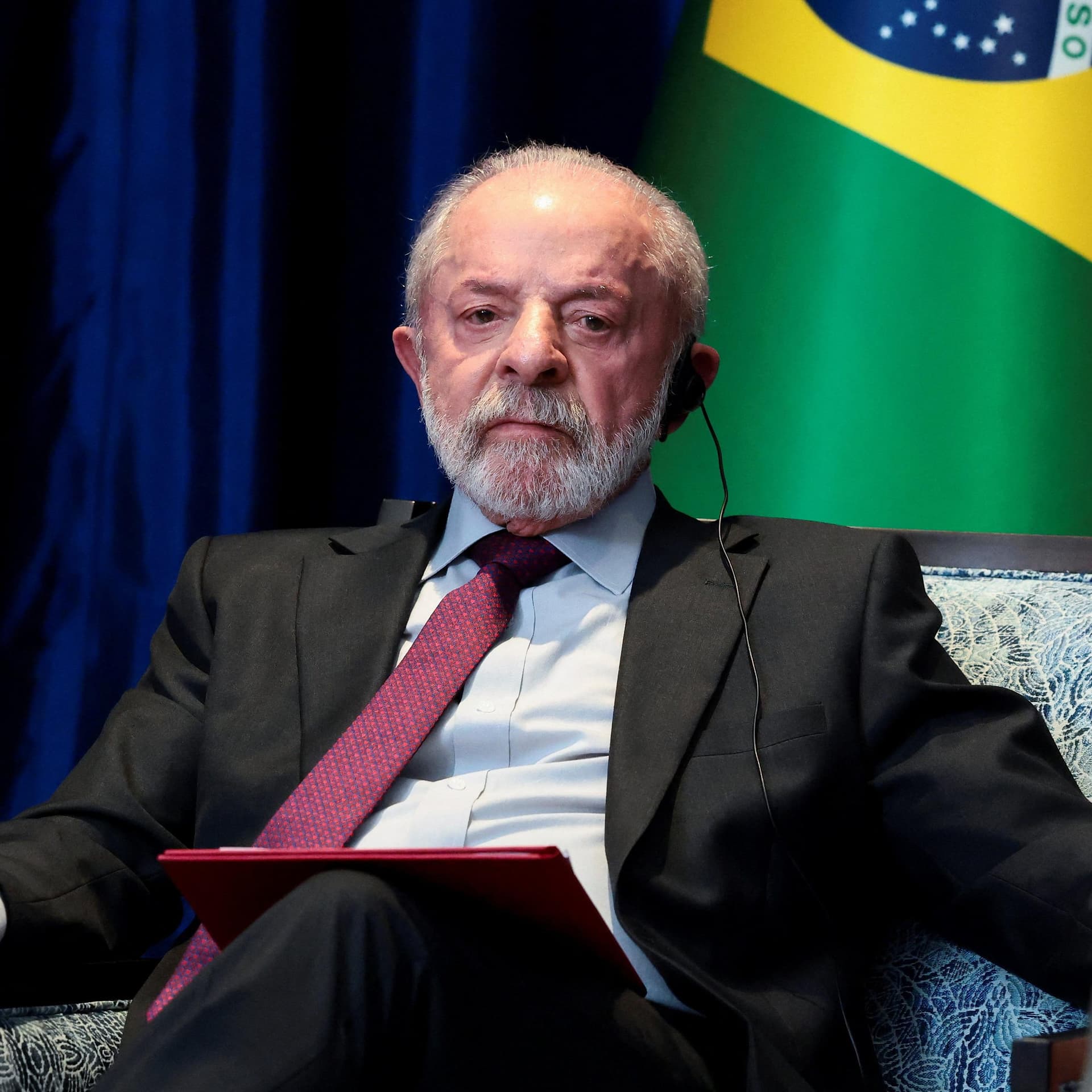
The Trump administration is embroiled in a diplomatic standoff after Brazilian President Lula da Silva accused the US of sending officials to “meddle in Brazil’s elections”, an allegation the US called, "baseless".
Throughout its history, the US has been accused of trying to influence political events outside its borders – from offering subtle incentives for its preferred political outcome to secretly sponsoring coups against foreign governments. In recent years, President Trump has pursued a more overt strategy, publicly endorsing candidates who align with his politics. So are we seeing a new blueprint for US foreign policy?
We speak to BBC Brazil correspondent Leandro Prazeres about the US-Brazil fallout. We also hear from Politico correspondent Nahal Toosi about the long history of US interference in foreign elections, and how the Trump administration compares.
Producers: Xandra Ellin, Sam Chantarasak and Aron Keller
Executive producer: Martine Powers
Mix: Travis Evans
Digital producer: Sam Gruet
Senior news editor: China Collins
Photo: Brazilian President Luiz Inacio Lula da Silva at the Association of Southeast Asian Nations (ASEAN) summit in Kuala Lumpur, Malaysia, October 26, 2025. Credit: Reuters/Evelyn Hockstein