In short
Whether Turkey’s President Recep Tayyip Erdogan is NATO’s “greatest asset,” focusing on his leverage over Western allies amid democratic backsliding, US–Turkey tensions, and Turkey’s strategic role.
Guests
Mark Lowen, BBC presenter and correspondent; BBC Istanbul correspondent (2014–2019); returned in 2025 to cover protests after the arrest of Istanbul mayor Ekrem Imamoglu; later deported and banned from Turkey until 2030.
Key claims
Trump admires Erdogan’s “strongman” style and respects him personally; Erdogan uses NATO’s eastern security importance as leverage. Turkey’s media and press freedom are heavily controlled; Lowen says independent journalism has little room. Erdogan’s 2016 crackdown followed the failed coup and a purge of alleged “Gulenists,” after Erdogan framed Fethullah Gulen’s network as a “parallel state.”
Notable examples
Imamoglu’s arrest and mass protests; Lowen’s detention/deportation; Andrew Brunson case and Trump tariffs; Turkey’s Russian S-400 deal and F-35 suspension; $700m US defense approvals; Istanbul-hosted Ukraine–Russia talks; NATO summit in Ankara.
Written by AI. May contain mistakes. Listen to the episode to check what was said.
Chapters
Tap a time to open that second in VOErdogan's Influence at NATO
0:30 to 1:50
Discussion on Trump's relationship with Erdogan and NATO's dynamics.
“president is at the NATO summit in Turkey this week.”
Turkey's Role in NATO
1:50 to 4:23
Exploration of Turkey's historical commitment to NATO and its strategic importance.
“Mark Glowen is a presenter and correspondent at the BBC, and he was the BBC's man in Istanbul between 2014 and 2019.”
Erdogan's Political Landscape
4:23 to 6:32
Insight into Erdogan's political opponents and the jailing of Ekrem Imamoglu.
“Well, we're going to move on in a second to the relationship between Erdogan and Trump.”
Press Freedom in Turkey
6:32 to 8:08
Discussion on the state of free speech and journalism under Erdogan's regime.
“Now, I've covered a lot of protests in my time in Turkey, but I was sent back because it looked like it was really building steam.”
The 2016 Coup Attempt
8:08 to 14:00
Detailed account of the attempted coup in Turkey and its implications.
“I love the country and it's just really sad that I sort of felt like my Turkish adventure had ended in that way.”
Erdogan's Resilience and the 2016 Coup Attempt
14:00 to 15:40
Explore Erdogan's response to the 2016 coup attempt and its implications for Turkish democracy.
“15 minutes after the president left his hotel in Mamaris, who helicopters fired on it.”
The Trump-Erdogan Relationship
15:40 to 17:59
Discuss the evolving dynamics between Trump and Erdogan and their mutual interests.
“Jailing, chasing people out of the country.”
Turkey's NATO Position and S-400 Controversy
17:59 to 19:08
Examine Turkey's controversial missile deal with Russia and its NATO implications.
“So Turkey got an S-400 Russian anti-missile shield in 2019, which as the second largest member of NATO is not a great look.”
Turkey's Strategic Importance in Current Geopolitics
19:08 to 25:08
Assess Turkey's critical role in NATO and its relationships amid global tensions.
“and other F-35 partners are aligned in this decision to suspend Turkey from the program and initiate the process to formally remove Turkey from the program.”
Erdogan's Influence and Democratic Backsliding
25:08 to 27:11
Analyze how Erdogan's leadership affects Turkey's democracy and its international relations.
“Military might, huge global significance and also, yeah, the one guy who Putin still kind of will pick up the phone to quite regularly.”
Transcript
Automatic transcript. May contain errors.0:00This BBC podcast is supported by ads outside the UK.
0:30Just tap into iHeart to start watching. And we hope you enjoy the show.
0:38The U.S. president is at the NATO summit in Turkey this week. But it sounds like it was touch and go. I mean, I wouldn't have gone for, you know, what we went through over the last two months with, you know, the various countries. There's been a big question mark over U.S. commitment to NATO ever since Donald Trump entered the White House in 2016. But according to Trump, there's at least one leader who still has sway with him when it comes to the alliance. I would have not gone for most people, but he called me up. He said, please, I have it in Turkey. You got to be there. The United States has to be there.
1:17And so I'm going out of respect to President Erdogan. Recep Tayyip Erdogan, president of Turkey. He's both a committed friend of Donald Trump and a leader who's committed to NATO. Many of the other NATO leaders have their differences with Erdogan over democracy, over migration, and sometimes even personally. But not Trump. Right now, is Erdogan the person holding NATO together? From the BBC, I'm Tristan Redmond in London. And today on The Global Story, who is Turkey's all-powerful leader? And is he NATO's last hope?
2:04Mark Glowen is a presenter and correspondent at the BBC, and he was the BBC's man in Istanbul between 2014 and 2019. He joined me in our London studio, and I started by asking him why it was so significant that Donald Trump is attending this year's NATO summit in Ankara. Donald Trump's antipathy towards NATO is no secret. And Donald Trump likes sort of massaging the ego of world leaders who he likes and who he feels close to. And I think he's cottoned on to the fact that Recep Tayyip Erdogan has a very difficult relationship with a lot of Western leaders. He's been long criticised for, you know, backsliding on democracy, human rights abuses, growing authoritarianism.
2:49And Donald Trump doesn't have any time, really, for leaders who kind of worry about that. He likes leaders who are punchy, this sort of strongman leadership. You know, he admires Putin and Kim Jong-un and Erdogan absolutely in that camp. The NATO summit happening in Turkey, it's the first time since the early 2000s that it's been there. Turkey is a pretty committed NATO member and is strategically a pivotal country in the alliance. But what's the history of that? Why is Turkey so committed to NATO? Turkey joined in 1952, three years after NATO was founded, and its admission was seen as a badge of Turkey's pro-Western political alignment.
3:38And so, you know, Turkey, this country, which is in the Middle East, but also in Europe, you know, very largely Islamic and increasingly so. The fact that it was kind of part of the Western club of nations was a real huge feather in its cap. Today, it's got the second largest army in NATO and such a fiery neighborhood bordering Iran and Syria. and at the crossroads of so many complex geopolitical problems, it is a really essential country for NATO. But Erdogan has used that as leverage so much with Western leaders because he knows that, yeah, he can get all the criticism he likes, but Turkey is the pillar of NATO security in the East.
4:23Well, we're going to move on in a second to the relationship between Erdogan and Trump. But before we do that, we want to get a little bit of a sense of who Erdogan is within Turkey. So you lived in Turkey for five years in the 20-teens while Erdogan was president. And then you went back last year in 2025 to cover a protest movement against Erdogan. What actually happened, Mark? I had been the correspondent there until 2019. And Turkey's very much kind of in my blood. It's such a fascinating place. And even after I left, I still have continued to watch it closely and monitor it closely and feel very kind of close to the story in many ways.
5:04And so I was sent back to cover the aftermath of the arrest of the mayor of Istanbul, Ekrem Imamoglu, who I interviewed when he won the election as mayor of Istanbul, which was a huge deal because Istanbul is the it's not the capital, but it is the most important city in Turkey. It's the biggest city. And also it happened to be the city that a certain Recep Tayyip Erdogan was mayor of in the 90s. And he once said, whoever wins Istanbul wins Turkey. So that showed how important Imamoglu's victory was. The governing AK party disputed it, went to a recount, then he won a rerun, basically. He won in a bigger way.
5:44So it was a huge slap in the face for the AKP. So Imamoglu has been seen as the biggest political opponent of Erdogan And last year he was suddenly jailed Arrested and jailed on various different charges Including alleged corruption His university decree was revoked And you can't be a president of Turkey unless you have been to university So his supporters saw it as an absolutely brazen attempt To stifle the opposition And to basically get rid of the biggest threat to Erdogan In his political career The government says that's not the case and the judiciary is independent. So it sparked massive protests.
6:22To Turkey now, where the interior ministry says more than 1 ,100 people have been detained after days of protests over the arrest and detention of the mayor of Istanbul. Now, I've covered a lot of protests in my time in Turkey, but I was sent back because it looked like it was really building steam. Well, let's speak to our correspondent, Mark Lewin, who is in Istanbul. And we covered it for a few, two, three days, you know, in a very sort of straight up and down way. Yeah, there's a growing clamp down by the government, Gita, but also a growing street protest movement by people who believe that Ekremi Mamoru's arrest is completely politically motivated.
7:00And then suddenly I was in my hotel room on maybe day three or something and the phone rang in my hotel room. and this chap said, Mr Lowen, it's reception. Can you come down? There's an important thing we'd like to talk to you about. And I said, well, can we not talk about it on the phone? And he said, no. So I came down and there were three plainclothes policemen in reception waiting for me and they said, get your passport. Police have detained some 2 ,000 demonstrators in the past days And Turkish authorities have also deported the BBC journalist Mark Lowen. And they told me in the middle of the night that I was deemed a threat to public order and I was being deported and I was put on an 8am flight to London.
7:57Is it true that you're still banned from going to Turkey? I am until 2030. I'm sorry to hear that. How does that feel? It's frustrating. I mean, you know, I quite like to go there as a tourist and take my children there. I love the country and it's just really sad that I sort of felt like my Turkish adventure had ended in that way. What does all this say about the wider context of democracy and free speech and journalism within Turkey? It says what we knew for a long time, which is that free speech and freedom of the press no longer exists in Turkey. It is estimated that around 90 % of the media in Turkey is either under the control of the government or of people very close to President Erdogan.
8:52I mean, just in the run up to this NATO summit, dozens of journalists who were deemed to be independent or critical were denied accreditation to the NATO summit, which was a kind of awkward thing for NATO itself to deal with. NATO said, well, you know, it's the host country that deals with press accreditation. I mean, when I lived there, Turkey was the biggest jailer of journalists in the world. Independent journalism exists, but it has very little room for maneuver. But I think what it also shows, Tristan, is that President Erdogan and the government have become increasingly confident in what they can do and what they can kind of get away with, I suppose.
9:29Yeah. Well, Erdogan's been around for a good while. Has it always been like this? if you speak to his opponents some of them will say yes but he hid it you know the the big dividing dividing line in turkey is and has always been i think over islam and over religion in political office and the staunch secularists say you know the islamists are always like this they always start they look as though they're going to be fine and then they clamp down on democracy. I mean, he came through Islamist politics and then he became mayor of Istanbul in this shock result. And he was a really good mayor of Istanbul in many ways.
10:11He cleaned up the city, collected the rubbish, et cetera, et cetera. And he was initially seen by the West as a man they could do business with. It was said that Barack Obama called Erdogan on the phone more often than any other world leader, David Cameron, the British Prime Minister at the time. So Erdogan was the leader who took Turkey towards EU accession. He was the man who finally emasculated the military, who were for decades the kind of driving force in Turkish politics and would routinely come in and just take over when political Islam was getting a bit too powerful. So those were all seen as really important signs of democratization.
10:53But then came the increasing crackdown. And that is where critics of him will say signs of that were already emerging much earlier. The next thing that happens in our story, though, is the coup, the attempted coup against Erdogan in 2016, which many of us remember. Why was that such a crucial turning point? I have to go a little bit back, which is that there was this chap who died recently called Fethullah Gulen, who was a Turkish preacher who used to be very closely allied with Erdogan. In fact, Gulen helped Erdogan get to power, basically. And Gulen's followers were in all the kind of elite universities in Turkey and a lot of institutions and things.
11:38And they really kind of helped lay the groundwork for political Islam to come into office. And so they were allies. But then Gulen began to turn on Erdogan. And there were all these recordings that emerged of Erdogan and his followers allegedly discussing deeply corrupt deals. And Erdogan, the great political survivor that he is, managed to turn this whole thing on its head and say, this is illegal. This is the parallel state, as he called it. And it is all the fault of this menace, Gulen, and his followers. So they were all suddenly labeled terrorists. and the term Gulenist was just bandied around to everybody, not just people who were actually Gulen followers.
12:24And absolutely there were, and there was a sort of, if not parallel state, there were many people working for this guy in institutions. But, you know, people who sent their children to Gulen schools and who were fairly, you know, had nothing to do with him were suddenly labelled terrorists and forced out of the country. So then, fast forward to July 2016.
12:45Tanks on the streets.
12:49Jets overhead, the world watched in shock as a military coup unfolded in Turkey. Suddenly, for the first time since the 1990s, tanks started rolling into Istanbul, crossing the Bosphorus Bridge and running over people and firing.
13:09A hail of bullets descending from a helicopter. gunshots fired in the streets of turkey the crowd ducking for cover there were planes that were commandeered and uh you know bombed parliament in ankara it was absolutely shocking in another part of the country in a neighborhood where many government offices are located witnesses say a helicopter dropped a bomb i mean i've got sort of almost shivers going down my spine talking about it because it's a long time since I have talked about it. And, you know, thinking back that we lived through this, it was just extraordinary. And this was an attempted coup.
13:48The army attempted to put Turkey's main cities into lockdown, taking over state television and instructing a newsreader to announce a peace council was now in charge. And they tried to kill Erdogan as well. 15 minutes after the president left his hotel in Mamaris, who helicopters fired on it. It absolutely stunned the country and shook it to its core and it failed quickly. I mean, he's a very wily guy. He took his phone, or he was given a phone by a reporter and he recorded a selfie video at the airport. The country's president took to video messaging to get his view across. We will take all the necessary steps by standing tall.
14:37We cannot behave otherwise and we will not leave the arena to them. It was a call to arms in the social media world and people did it. And I mean largely his supporters did it but also people actually were like we don't really want the military to run a country anymore. Yet here were people on the streets booing the soldiers and defiantly climbing on tanks. A soldier I am. I am the soldier. There is no passing here. It can run over me. It can run over this flag, but it can't pass from here. And there was this mass mobilisation and it was extraordinary. And the government paints this as the victory for democracy.
15:27Of course, what happened afterwards was that the government then launched a massive purge of hundreds of thousands. of anybody who they thought was linked to Gulen. Jailing, chasing people out of the country. And so first came the coup, then came the purge. Well, shortly after, Donald Trump is elected, and very quickly, Trump and Erdogan established quite a strong bond. But what was that bond based on? It was based, I think, as I said, on their personalities sort of aligning. They're also very transactional presidents. They like to do deals. And for Erdogan, he wanted things from Trump. I mean, he wanted to be kind of given the time of day actually by a US president, because I mean, the Biden administration between the two Trump terms snubbed Erdogan largely.
16:19Obama fell out with Erdogan over Erdogan's backsliding on democracy. So a lot of Erdogan is about wanting to be respected in the world stage. And Trump respected him because he's the kind of leader who Trump does respect. But I have to say, Tristan, yeah, they had close alliance from 2016, but they also rubbed up against each other a little bit. After the coup, one of those who was jailed was an American pastor, a guy called Andrew Brunson. And he was held in jail for about two years in Turkey. The government accused Pastor Brunson of being a terrorist. That's, of course, something that was completely denied by Brunson and his followers and the American government who were just absolutely determined to get him out.
16:58So Trump slapped tariffs on Turkey quite early, which led to massive inflation. The Turkish lira absolutely sinking. This was 2018, I think. But then Trump and Erdogan, being Trump and Erdogan, they kind of kissed and made up. And now they're very close because Brunson was let out of jail and went back to America, got an audience at the White House, despite the fact that Erdogan's saying the judiciary is independent, you know, a pressure from Trump, does it? So I'd forgotten about the pastor, but I do remember from Trump's first term that this kind of moment of tension over a Turkish weapons deal that was struck with Russia and Washington not being happy about that.
17:39But what actually happened? So Turkey has always been close to Russia as well. Erdogan is one of the few world leaders who speaks to Putin and Zelensky and the Europeans and America. Now, within the past hour, Turkey has signed a deal with Russia to purchase its latest missile defense system. So Turkey got an S-400 Russian anti-missile shield in 2019, which as the second largest member of NATO is not a great look. The US and other NATO allies are concerned the S-400s could compromise NATO's defence systems. Washington has threatened sanctions against Turkey over the deal. And the Europeans were furious and the rest of NATO was furious.
18:31Russia is trying to continue to probe ways to divide our alliance and to weaken NATO And to have that kind of adversary with a piece of defense equipment that is made to repel our own missiles, our own airplanes, it's untenable. And there were calls to expel Turkey and there were sanctions that were put on Turkey in Congress because potentially there are security risks and vulnerabilities about having Russian hardware of that kind of level on your territory that is potentially controlled from Russia as well. The U.S. and other F-35 partners are aligned in this decision to suspend Turkey from the program and initiate the process to formally remove Turkey from the program.
19:43at The Global Story dive deep every weekday on one big story at the intersection of where the world and America meet. And you can now watch The Global Story on the iHeart app. Catch every brand new episode every weekday. Just tap into iHeart to start watching. And we hope you enjoy the show.
20:06so erdogan strikes a missile deal with russia which kind of suggests that turkey is moving closer to russia that becomes particularly visible then when the war in ukraine starts in 2022 what was erdogan's position when russia first invaded ukraine because i mean he's Threading quite a small needle with a big thread here. Also remember that when Russia took over Crimea, I was in Crimea for that whole takeover actually, Crimea was also important to Turkey because it's got ethnic Turks there. So Turkey was very quick in condemning that. In terms of the invasion, the re-invasion I suppose, Turkey has condemned it, but not to the point of freezing relations with Moscow.
20:53And they are still absolutely communicating. And the Ukraine talks so far between Ukraine and Russia have been held in Istanbul, many of them. Erdogan still speaks to Putin and they've met several times. But there are more people now in Russia, I gather, and more opinion pieces saying, don't go and spend your rubles on Turkish beaches because you are funding Turkish drones being used by the Ukrainians. So it's a tricky one because you can't be friends with everybody, I think. And the war in Ukraine, clearly, I think that there's pressure on Turkey to choose sides. Yeah, he's obviously quite skilled at the tightrope walking.
21:40As we discussed a little bit earlier on, Turkey's a pretty committed member of NATO. Donald Trump potentially is less so, particularly since he's returned to the White House in 2025. There's a lot of speculation about whether US membership of NATO might be under threat. What's the role that Erdogan might be playing in keeping the United States inside the alliance? I mean, I don't know how unwilling Trump was to come to a NATO summit. He was at the Hague summit last year. He probably would have come this year. Who knows, even if it had not been in Turkey. I think Erdogan wanted Trump to come because it would be the first visit by a US president to Turkey since 2015.
22:22And as we said earlier, a lot of what Erdogan wants is recognition to be treated as an equal on the world stage. One of his big slogans is the world is bigger than five, meaning the five permanent members of the UN Security Council. He rails against the fact that the UN has got these five NATO wielding members and no Islamic country is one of them. He thinks Turkey should be one of them. And so in many ways, just to sidetrack slightly, one of Erdogan's huge successes is that he has been seen, and he sees himself, I think, as the leader of the Muslim world. And to be honest, Tristan, whenever he's re-elected or defeated the coup or whatever, leaders from Pakistan to Brunei to Albania, they're all there.
23:06Because he is this kind of rallying point for the Islamic world. And being seen hobnobbing with Trump, it elevates his country, elevates Islam, it elevates Turkish identity and everybody who is with Turkey on that. So Donald Trump is now in Ankara at the NATO summit. You mentioned earlier that you see Trump and Erdogan as presidents who like to make a deal. Is there anything that might be on the table this week? It looks like the US has approved$700 million worth of defence equipment sales to Turkey, including engines for F-35 fighter jets, American-made F-35s. That was all held up because of the row over Turkey buying the Russian anti-missile system back in 2019.
23:51But it's now been approved. And it looks like actually Turkey might be getting F-35s themselves from the US. Okay. I mean,$700 million in the great scheme of things seems like a relatively small amount of money, but I guess it's symbolic of bygones being bygones between NATO and Turkey. Yeah, I think that it's more about the symbolism of those F-35s that were really, you know, that was such a sticking point and has been resolved. You know, the other interesting thing is that as far as Europe's concerned, the waning commitment or less than firm commitment of the US to NATO is meaning that Europe actually is depending more on Turkey because Europe needs more strategic autonomy, as they call it.
24:37And they need a defense industry in Turkey that is booming. So, you know, the criticism of Turkey is fading, actually, by European leaders who realise they need Turkey with a vacuum of America. So, you know, the net beneficiary of what Trump is doing with NATO is Turkey. So, God forbid, from the European perspective, but if there ever were a war with Russia, you wouldn't want to face that without Turkey as your ally beside you. Absolutely. Military might, huge global significance and also, yeah, the one guy who Putin still kind of will pick up the phone to quite regularly. NATO is in such a precarious position right now.
25:23We all know that. Could Erdogan be a vital ally for someone like Mark Rutter, the Secretary General of NATO, in keeping the alliance together because Turkey is so strong, because Erdogan has such an important relationship with Trump? Yeah, I don't know what the Turkish for daddy is, but maybe Mark Rutte will have to look in his Turkish dictionary before he speaks to President Erdogan. But, you know, yeah, Turkey's central to NATO, always has been, ever more so now. And with the alliance looking shaky in many ways, they need someone who is committed to it. And it's a huge moment of pride for Turkey, having NATO back for a summit on its soil.
26:02There hasn't been one since 2004. But you have all these other NATO leaders. What do they have to say about the state of backsliding of democratic rights in Turkey as they land there? Not very much, to be honest. You know, these are the ones who were criticizing and slamming the state of Turkish democracy just a couple of years ago. And it's gone quiet.
26:35Because, as we said, without the US being committed to NATO, who else are you going to rely on? And I think in the grand scheme of things, you'd have to say in the battle between Europe and Turkey for democracy, Turkey hasn't won on the democratic level, but I think it's won on the kind of who's stronger level, because the criticism of him has largely fallen silent and he is still in power.
Read the full transcript
27:10Thank you so much, Mark. That was really interesting. Pleasure, Stoetje.
27:18That was BBC presenter and correspondent, Mark Lowen. Our email, as always, theglobalstory at bbc.com. If you have thoughts and feelings to share, we love hearing from you. As our regular listeners know, we here at The Global Story, look at one story each day. But if you want the latest news, make sure to listen to our sister podcast, The Global News Podcast. Today's episode was produced by Valerio Esposito and Sam Chantarasak. It was edited by Bridget Harney and mixed by Travis Evans. Our senior news editor is Chyna Collins. Our digital producer was Tom Bage. Our studio manager was Mike Regard.
27:58And I'm Tristan Redman. Thanks so much for tuning in. We'll be back again tomorrow. Cheerio.
28:32every brand new episode every weekday. Just tap into iHeart to start watching. And we hope you enjoy the show.
From the publisher
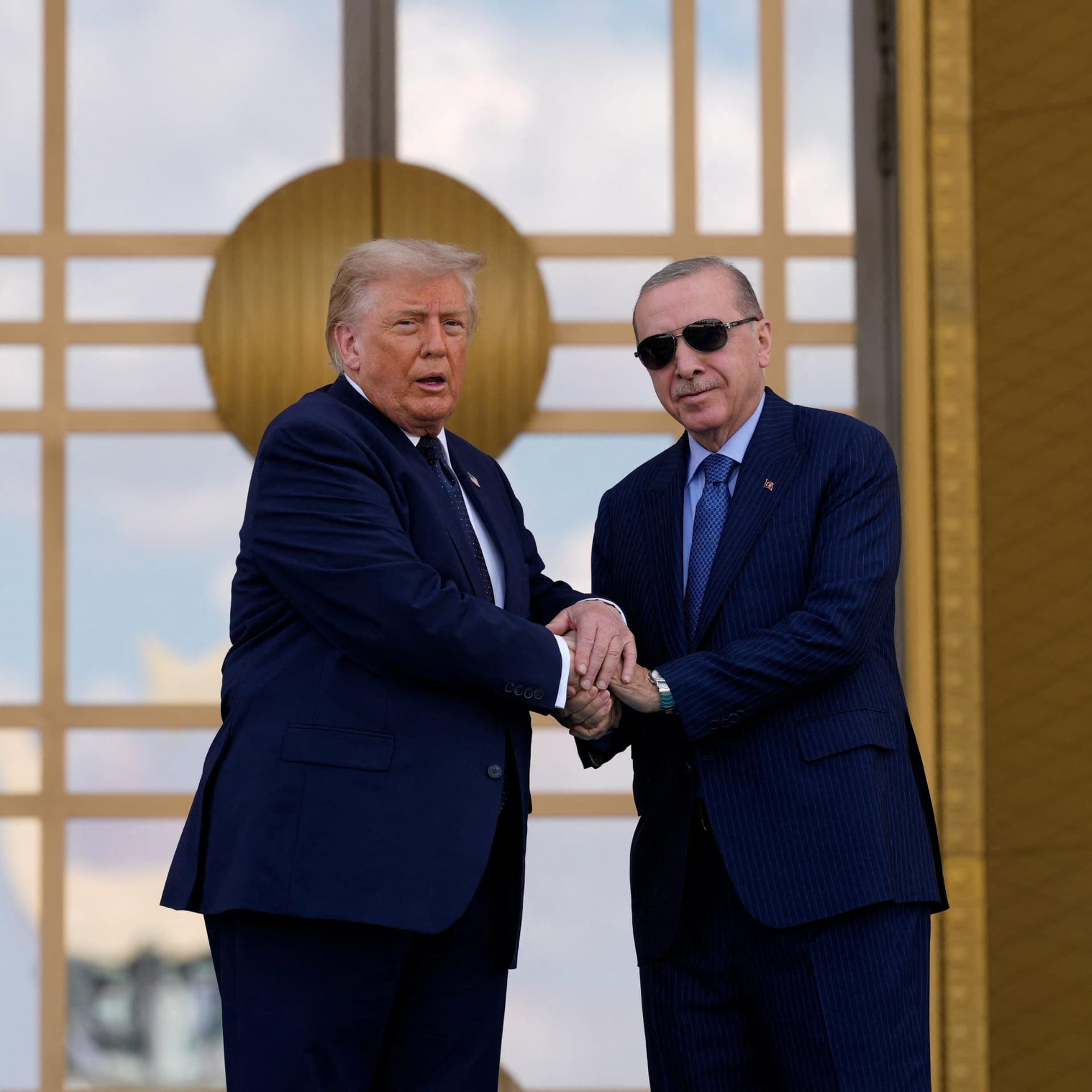
World leaders are gathering in Ankara, Turkey for a Nato summit, despite tensions between Donald Trump and Nato allies over financial contributions and the Iran war. The US president hasn’t hidden his consternation with European leaders, and has suggested he is only attending ‘out of respect to President Erdogan’.
Turkey’s leader Recep Tayyip Erdogan has come under criticism for a crackdown on dissent in the country, which has led to over 200 arrests of activists, journalists and public figures in the lead up to the summit. So how has he taken on such a pivotal role within Nato?
We speak to BBC correspondent and presenter, Mark Lowen, who was based in Istanbul for five years, before he was detained and banned from the country while on a reporting trip last year.
Producers: Valerio Esposito and Sam Chantarasak
Executive producer: Bridget Harney
Mix: Travis Evans
Digital producer: Tom Bage
Senior news editor: China Collins
Photo: President Trump shakes hands with Turkish President Erdogan at the NATO summit in Ankara, Turkey, July 7, 2026. Credit: Emrah Gurel/Pool via Reuters