
In short
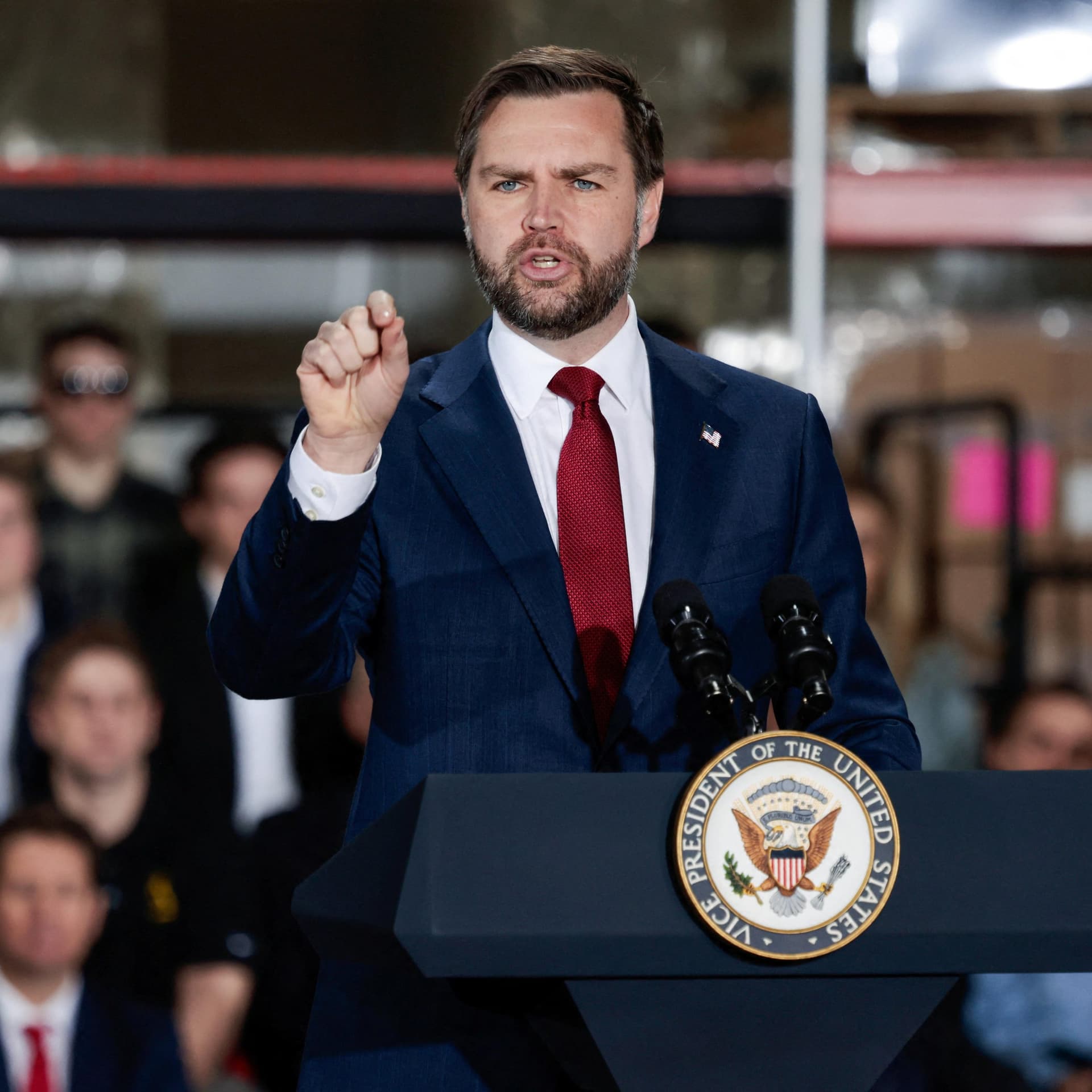
J.D. Vance’s “big political test” as vice president during the U.S.-Iran war, including whether he can help negotiate an end to fighting while staying aligned with Donald Trump’s “no new wars” message.
Guests
Daniel Bush, BBC Washington correspondent covering the White House and Trump administration; he has interviewed people who know Vance and has covered major White House moments.
Guest backgrounds
Bush is a long-time White House reporter (Washington correspondent).
Key claims
Vance is shaped by his Iraq-era anti-intervention worldview but is now tasked with winding down a war Trump launched. Negotiations are led by Steve Wyckoff and Jared Kushner; Vance would step in if talks get concrete, and he’s also been in contact with Netanyahu. Vance’s loyalty shift is attributed to a tense Mar-a-Lago meeting where he apologized for past criticisms.
Notable examples
Vance’s Munich Security Conference speech on “free speech” and migration; the Oval Office shouting match with Zelensky; behind-the-scenes de-escalation on Greenland; Vance absent from Mar-a-Lago during the Iran war’s start.
Written by AI. May contain mistakes. Listen to the episode to check what was said.
Chapters
Tap a time to open that second in VOJ.D. Vance's Background and Political Views
0:30 to 0:45
Exploration of J.D. Vance's upbringing and his views shaped by his experiences.
“Because Schwab knows that when it comes to your finances, choice matters.”
J.D. Vance's Background and Political Views
2:14 to 5:02
Exploration of J.D. Vance's upbringing and his views shaped by his experiences.
“I'm the BBC's Washington correspondent here in D.C., where I cover the White House and Trump administration.”
Republican Views on Foreign Policy Shifts
5:02 to 5:50
Discussion on the shifting stance of Republicans regarding foreign intervention.
“And it's interesting because, you know, to people who lived through the Iraq and Afghanistan wars, they will remember a period of time when it was Republicans who were supporting intervention abroad.”
Negotiating Peace in Iran
5:50 to 6:16
Insight into Vance's role in the negotiations for peace in Iran amid conflict.
“So we're having this conversation now in the midst of the war in Iran.”
J.D. Vance's Political Transformation
6:16 to 8:04
Analysis of how Vance transformed from a critic to a loyal Trump supporter.
“What's your sense of why President Trump has asked him to be a part of negotiating an end to the war?”
Vance's Approach at the Munich Security Conference
8:04 to 11:12
Examination of Vance's controversial speech at the Munich Security Conference.
“into the loyal vice president that Donald Trump needs.”
The Ukraine Meeting and Vance's Negotiation Style
11:12 to 14:00
Discussion on Vance's interaction with Ukraine's President during a critical meeting.
“And he gave an example of someone who is arrested for praying outside of an abortion clinic.”
Episode Discussion
14:00 to 28:00
“No, in this entire meeting, you said thank you.”
Transcript
Automatic transcript. May contain errors.0:00This BBC podcast is supported by ads outside the UK.
0:30Schwab offers. Because Schwab knows that when it comes to your finances, choice matters. No matter your goals, investing style, life stage or experience, Schwab has everything you need, all in one place, so you can invest your way. Visit schwab.com to learn more. In American politics, the vice president is often the one expected to be the White House's attack dog. You should be ashamed of yourselves, every single one of you. Questions? J.D. Vance has adopted this role with a fervor we haven't seen in years. Mr. President, with respect, I think it's disrespectful for you to come into the Oval Office and try to litigate this in front of the American media.
1:09And across Europe, free speech, I fear, is in retreat. Most Democrats didn't stand up or clap. And what a shame that is. What a sad commentary that is on the Democratic Party. Schooling allies, trolling critics, doubling down on Trump's election pledges, including the president's promise of no new wars. The trouble is that Trump's message has changed. Launching a war in Iran has exposed some cracks in the Republican coalition. Vance has long questioned American intervention abroad, and now he's in the awkward position of being the VP to a president who's launched a war in Iran. And Trump has said that Vance will be involved in talks to end it.
1:54From the BBC, I'm Asma Khalid in London. And today on The Global Story, J.D. Vance's biggest political test yet.
2:12My name is Daniel Bush. I'm the BBC's Washington correspondent here in D.C., where I cover the White House and Trump administration. Daniel, it's wonderful to have you on The Global Story. And I feel so bad that you're there in our bureau in D.C. And I actually happen to be here in London, but it's wonderful to have you. Thanks so much for having me. You've been a White House reporter for years. You have met J.D. Vance, the vice president. You have interviewed scores of people who know him, who know what his policies are, who know what his ambitions are. And so I want to begin with a broad question here.
2:45And that is, how would you say J.D. Vance sees the world? It's a very good place to start, Osman. I think that the best answer is to say that he is a creature of his environment and of his era. We all know J.D. Vance's backstory, and we'll get into that, I think, in a little bit more detail. But, you know, he is someone who grew up and came of age in the Bush era. My fellow citizens, at this hour, American and coalition forces are in the early stages of military operations to disarm Iraq, to free its people, and to defend the world from grave danger. In a moment in time when America became involved in not just one but two wars abroad.
3:29The United States had always warned the events of September 11 would not go unanswered. The United States has launched its war against Iraq with an air raid and missile. Unleashing its wrath, America, with the help from Britain, has struck at Taliban targets and terrorist training camps across Afghanistan. We will not waver. We will not tire. We will not falter. And we will not fail. There was a huge debate in the United States about what America's role should be in the war. Go justice! Go peace! U.S. out of the Middle East! What its relationship should be to its allies. There's vast apprehension about this war and it's rapidly turning into mass action.
4:11How it should project power. And J.D. Vance served in the Marines. I worry about us getting drawn into these protracted conflicts. Because you were in Iraq. But I was in Iraq. And that was a formative period for him that has really, I think, informed who he's become as a politician. Was it in our interest to spread democracy to Iraq, where not only did a lot of Americans and a lot of other people die needlessly, but then we created a proxy of Iran in the Middle East. It's preposterous. It's fair to say that J.D. Vance, I think, sees the world both through the prism of his current job, but also through his own experiences having grown up in the Midwest, having served in the army, having been in Iraq, and sort of becoming disillusioned with America's foreign policy choices under both Republican and Democratic administrations.
5:04And it's interesting because, you know, to people who lived through the Iraq and Afghanistan wars, they will remember a period of time when it was Republicans who were supporting intervention abroad. Right. It was what liberals used to call neocons or neoconservatives who were pushing America to invade Iraq, to go into Afghanistan after 9-11 and Democrats pushing back, Democrats marching in the streets. And right now, there's a little bit of the opposite. And it's actually Republicans and those MAGA, core MAGA supporters of the president's and now Vance's who are demanding that the U.S. take a step back, that the U.S.
5:43become more isolationist, spend less money abroad and more money at home. And that has really been J.D. Vance's mindset writ large. So we're having this conversation now in the midst of the war in Iran. And there have been reports that J.D. Vance has been tasked to help negotiate a possible resolution, a possible end to this war. And I was intrigued when I saw those reports, Dan, in part because Vance doesn't strike me as someone who's had Iran or the Middle East as a big part of his remit. What's your sense of why President Trump has asked him to be a part of negotiating an end to the war? So in speaking with people who are close to J.D.
6:24Vance, I do know that the vice president is not involved in the weeds of this negotiation. He has been tasked or floated as someone who can step in if the negotiations get to a more concrete point. Steve Wyckoff, President Trump's special envoy, and Jared Kushner, his son-in-law, are leading these negotiations. They are the ones who are talking indirectly to the Iranians who are proposing this 15-point peace plan that has come out in the last two weeks or so and that are really trying to work through the details to see if Iran is open to any kind of a deal to end this war. Then we can send in J.D.
7:05Vance as a symbol of how serious we are about winding down the war. Before we can talk about J.D. Vance as vice president, I think it's worth reminding listeners how he rose through the political ranks. He, in fact, only became a senator in 2022 for the state of Ohio. What can you even say after a night like tonight? We've had a good night in the Ohio Republican Party. And two years after that, of course, Donald Trump selected him as his running mate. But I'm thrilled to have a new friend and partner fighting by my side. the next vice president of the United States, the current senator from Ohio, J.D.
7:42Vance and his incredible wife. And it was a rather remarkable turnaround for a man who had previously described himself as a never-Trump guy. I'm a never-Trump guy. I never liked him. Correct me if I'm wrong, but I believe he even once compared Trump to Hitler. He had very strong criticism of Donald Trump. How has he managed to shape himself into the loyal vice president that Donald Trump needs. Well, look, I think that all politicians sort of morph a little bit and change over time, you know, to suit different audiences and different voters and bases. But by the time that Vance began to contemplate a run for office and then finally launched his first political run in 2021, 2022, this was the party of Trump.
8:29and Vance understood that he went to Mar-a-Lago for a meeting with Trump. And it was a tense meeting. I've spoken to people who with knowledge of it, it began with Vance sitting down and Trump immediately bringing up all of the slights, all of the criticisms to Vance's face that Vance had made of him in the past. I mean, Trump is someone who... How did Vance navigate that? Well, he showed the shrewd political instincts that got him where he was. You know, he didn't pretend that he hadn't said them. You know, he immediately apologized, I've been told, and said, listen, I got it wrong. And what I've been told is that Trump appreciated that candor.
9:07And that sort of helped catapult him, you know, to to the Senate because then Trump endorsed him. And Vance is one of the first prominent Republicans in Washington to step out almost right away and back Donald Trump. And so Trump saw that early endorsement from Vance as loyalty that he eventually repaid. Well, J.D. Vance strikes me as the type of person that the Trump administration calls when they want to have a particularly blunt, tough conversation. You know, one of the first foreign trips that J.D. Vance took was to the Munich Security Conference, as often a venue where American vice presidents speak.
9:45Please welcome Vice President J.D. Vance. But he went there and he berated European leaders, scolded them, whatever the word is you want to use. And what I worry about is the threat from within. The retreat of Europe from some of its most fundamental values, values shared with the United States of America. It was a really stunning moment. How did you interpret that? And what did that tell us about how J.D. Vance was going to interact with the world? It really was stunning. I mean, this was very unusual. This is the type of venue that's a sort of training ground for a vice president where they can bring the message of the administration.
10:28They can sort of burnish their own foreign policy chops a little bit and where they're expected to develop close relationships with allies. And instead, J.D. Vance showed up and delivered a speech the likes of which had not been seen in that venue. And I've spoken to European diplomats who were taken aback at the candor with which, you know, he presented his own views, the rhetoric, the really aggressive tone. I had the speech pulled up here and I was rereading it. Yeah, can you get ahead of this? And, you know, he said that if you're running in fear of your own voters, there is nothing America can do for you.
11:04What he was saying sort of in short was that Europeans were stifling free speech in the name of political correctness. And he gave an example of someone who is arrested for praying outside of an abortion clinic. And, you know, Vance's message was this was someone who was just professing his faith. And his argument to Europe was you need to let everyone express the views that they want to express. So he went after Europeans on that. And then he also had very harsh words on migration. And of all the pressings, challenges that the nations represented here face, I believe there is nothing more urgent than mass migration.
11:46He presented a lot of problems and in a pretty hectoring and aggressive way that put Europe on notice. But he did win some praise from Republicans back home. And I think that's important to focus on because it was lost a little bit in the moment. There's a lot of criticism. But it was something that that Republicans here, some factions of the party wanted to see. They wanted to see a politician go to Europe and stand. Yes. Yes, yes, exactly that. And to say, you know, the sort of the free lunch is over. Free lunch being defense, being defense spending, being, you know, promoting and offering other forms of soft power support to European democracies.
12:26I mean, this was happening in the context of the Ukraine war. Right. And Vance did go and reiterate that message we've heard from President Trump, right, that Europeans need to pay more of their fair share. Was that part of his message as well? It was, but that was a more behind the scenes message. And it's striking that in that speech, Ukraine was mentioned in a single sentence. This is three years into the largest land war in Europe since World War II. That was on the minds of the Germans who hosted the conference as they tried to figure out whether they would need to step up support for Ukraine, for France, for the UK, for others, for NATO, obviously.
13:05That was the big issue. And Vance sort of glanced over it. He said at the beginning, you know, we're hopeful that under Trump, we're going to get a resolution to this war, you know, pretty quickly. And then he moved on. Now, shortly after the vice president gave that speech in Munich in February of last year, I remember, I remember this because I was on White House duty in my old job at NPR that day. Ukraine's President Volodymyr Zelensky came to the White House. Well, thank you very much. It's an honor to have President Zelensky of Ukraine. And there was this epic showdown. You're right now not in a very good position.
13:43You've allowed yourself to be in a very bad position, and he happens to be right about it. From the very beginning of the war. You're not in a good position. You don't have the cards right now. In which J.D. Vance played a rather prominent role. You said thank you once. That's a lot of times. No, in this entire meeting, you said thank you. What did we learn about the vice president's approach to negotiations from what transpired on that day, in which he very publicly told Ukraine's leader that, you know, that Ukraine ought to be more thankful for the support it's gotten from the American government.
14:18It was quite a moment. I was there that day on White House duty as well. You know, people who had covered the White House for years had never seen anything like this, right? A shouting match between the president, the vice president, and a foreign leader, a head of state. And we learned a couple of things, I think, you know, if we look at J.D. Vance, the human, not just his policies and so on, but but how is this person adapting to this role? Right. And we just talked about his quick rise. He's not someone who had long years of experience in foreign relations and public service and so on. And he's been in many ways thrust onto the national scene in just the last couple of years.
14:54And he didn't shrink from the moment. I mean, this is a a delicate issue. The U.S. has spent already tens and tens of billions of dollars in military aid and in economic support to Ukraine. It has deeply impacted the global economy. It has changed our relationship with Russia to a certain extent with China. It was a moment where people were were Republicans were expecting him to focus on the task at hand, which was how do you get Zelensky and Russian President Vladimir Putin to find a way to end this war, which has killed so many people. Does being the attack dog make him more popular with a segment of the Republican base, though?
15:26It does. people who support J.D. Vance who are pleased with it. That's the value set that he would share with Republican Party base. So there were people that wanted to see him stand up in that moment. And we're happy to see a blow up, frankly, in the Oval Office, because it was a piece of this idea that, you know, it's not business as usual. And that, you know, Vance is here to to shake things up and represents a new generation of political figure on the right. But there's another moment to point to where we can kind of see how Vance is approaching foreign policy and his unique role as Donald Trump's understudy.
15:58This was back, if you remember, before Iran, when for a couple of weeks, Trump was fixated on the idea of the U.S. somehow seizing control of Greenland. He even threatened to use military force. This caused a big diplomatic stir and controversy here in Washington and Europe for weeks on end. Vance was tasked to deal with this. And he and Secretary of State Marco Rubio sat down with the foreign ministers of Denmark and Greenland in a closed door private meeting. And what I'm told from sources is that in that meeting, and this is a really a window into Vance, he told his counterparts in Denmark and Greenland, can we find a quote middle way?
16:42Is there something we can come up with here that, you know, Trump will be happy with, but that will also not sort of cross red lines for you? So while, you know, Trump was publicly berating NATO and, you know, threatening to seize control of sovereign territory of another nation, Vance was behind the scenes saying, well, you know, maybe we don't have to go that far. So it's just another example of sort of the difficult place that he's in, right, where Trump makes demands on other countries. So it sounds like trying to de-escalate the rhetoric. Though, Dan, I will say we're still all waiting to see what exactly that off-ramp in terms of Greenland looks like.
17:17That's right. Greenland is still a big question mark. But yes, you know, finding ways in private to de-escalate, to look for off-ramps, you know, which, again, is something that is part of his own worldview about America's role in the world.
18:02We'll see you next time. gift cards every week. So yeah, keep playing games. Just maybe get rewarded for it. Download MistPlay today and enter for your chance to win.
18:17And so Dan, this leads me to a central question that I have here, which is how you think this is all going to play out in the Iran negotiations. I mean, it strikes me that what we have here is not just a war between the United States and Iran. You have an important third party here, and that is Israel. Do you know how Vance has navigated that relationship with Israel and how that might factor into any effort to end the war? It's a very good question, Asma. And I think that U.S.-Israeli politics and the relationship between these two countries presents a really delicate balancing act for politicians on both sides of the aisle here in the U.S.
18:57Democrats and Republicans are very careful about criticizing Israel. The U.S. provides billions in aid to Israel every year. It's written into the budget. And also to present the U.S. as the protector of the national project of Israel. Though there's a strain in the Republican Party, it feels, that has been more vocal in recent weeks. Being a Trump supporter or being part of MAGA does not mean you have to accept another Middle East war. In questioning why the United States is participating in this war. Make America Great Again was supposed to be America first, not Israel first. And at times blaming Israel.
19:40This is Israel's war. This is not the United States' war. For pushing the United States toward this war. That's right. And so that's the sort of the balancing act that Vance has been presented with. You know, on the one hand, he does need to message to those Republicans who are both lawmakers in Congress, some of them. and then, you know, parts of the base, he does need to message to them that he understands their concerns that, you know, this war could drag on. It could, you know, lead the U.S. into a longer term conflict in the Middle East. While on the other hand, you know, Vance is trying to find a way to to end the war, which is the objective of Trump in the White House.
20:19And that's who he reports to. So we know that that Vance has spoken with the Israeli prime minister, Benjamin Netanyahu. So he has served as a sort of go between. And Vance's style, his his approach to this role has really been trying to not ruffle feathers. And he's trying to do it as much as possible out of out of the spotlight. And, you know, I can say that I was traveling with Vance recently and, you know, we had lots of questions that the press pool did about the war in Iran. And what he said in response to a question that I asked him was that, you know, he doesn't want to negotiate in public, that he doesn't want the national security staff and advisers to the president sort of all their views spilling out into the open areas where they may disagree.
21:03And so that's why, you know, he's doing a lot of this behind the scenes, including those conversations with Bibi, with Benjamin Netanyahu. He's making those overtures, trying to thread that political needle, but trying to do it out of the spotlight. In prepping for this interview, Dan, I was going over some of the writing and interviews that J.D. Vance has done over the last couple of years. And I came across this op-ed that I was reminded of that he had written in his own words, has his byline in 2023 in the pages of The Wall Street Journal. and it's titled, Trump's Best Foreign Policy, question mark, not starting any wars.
21:40And yet we have seen President Trump over the course of the last several months. We've seen, you know, in January, he captured Nicolas Maduro, the leader of Venezuela. The next month, the Trump administration began this war in Iran. But how has J.D. Vance been managing this? It seemed so central to him in his articulation for why he was supporting Trump, at least publicly there in the Wall Street Journal, that part of it was because this was a man he believed would not engage in foreign wars. Well, it's a little awkward, right? This isn't an easy moment for J.D. Vance. You know, he is tied to Trump.
22:17He's tied to Trump as a political figure on the right. He's tied more concretely, you know, in the here and now to Trump's record. And, you know, were Vance to run in 2028, this will be a big part of it. And, you know, to a certain extent, vice presidents can can raise their hands and they say, you know, we don't make the policy. But on the other hand, you know, they are expected to support what the president does. And the I think it's fair to say that that the public sees doesn't see a lot of daylight between the two. Right. You know, distancing himself at times, even physically. And I can tell tell the story The night of the war, which began in the early morning hours of February 28th, President Trump was down in Mar-a-Lago in a sort of makeshift situation room there at his Florida state with Secretary of State Rubio, with his chief of staff, Susie Wiles, with others.
23:11One notable absence, Asma, Vice President Vance. Vance was not there. You know, if we think back to those famous pictures of the Osama bin Laden raid, right, when the Obama administration went into Pakistan and killed Osama bin Laden and that famous shot in a small room off the Situation Room where Obama was surrounded by all of his top people, right? Secretary of State Hillary Clinton at the time, his vice president Joe Biden and others. And it was a it presented a picture symbolically of a united team. Right. And that is not the imagery that we got at the beginning of this war in Iran. which is the biggest foreign conflict that President Trump has gotten into, you know, in either of his terms.
23:51Vance was not down there in Florida. He was, as I was told by sources, in the Situation Room at the White House. As you know, covering the White House, we don't know all the behind-the-scenes details. There are security considerations. There are scheduling considerations. There are all sorts of reasons why, in addition to the politics of all this, they may have been in different places. But the symbolism was hard to miss. My final question for you is that we are talking about J.D. Vance not just because he's the vice president, but because he has been seen as the heir apparent of the MAGA movement, the Make America Great Again movement.
24:27And a key pillar of that is that you're going to focus on making America a priority, which in turn means no more foreign wars. How do you think that J.D. Vance manages to balance these competing ambitions, right? He has the ambition to be the loyal vice president in this job, and yet he also has his own personal political ambitions. That is the conundrum that has faced all vice presidents who have wanted to become president, which is to say almost all of them. You know, 2028 is a long way away, but as a fellow veteran of the campaign trail, you know as well as I do that it will be here before we know it.
25:05And in fact, you know, everyone who is interested in running is beginning quietly to sort of feel that out, right, to talk to donors, to talk to advisors, to think about messaging. You know, people will be announcing their presidential campaigns a year from now, crazy as that sounds, right, after the midterms. And the question for J.D. Vance is how does he navigate that moment? Now, I know that people often come up to him in private at donor events, other political events and, you know, say, we're so excited for you to run in 2028. And I've been told by by multiple people who have witnessed these interactions that Vance always says, that's not my focus.
Read the full transcript
25:41Let's let's focus on the midterms. He always shifts it away from himself back to the Republican Party. But he can only do that for so long. And what he's going to have to figure out is, does he differentiate himself from Trump? or does he just fully embrace the record, all of the record, including? And particularly the foreign policy record here that we're talking about. Particularly the foreign policy, right? Does he say in two years, you know, we did the right thing by going into Iran? Now, it's hard to know right now because this war is ongoing. We don't know how it will end. And it's a question that all vice presidents, you know, face.
26:17And they typically find ways to generally embrace the record, but then signal to voters, I'll be a new person. And when they're unable to signal that, that's when they run into trouble.
26:37you know just two years ago now kamala harris gave a now famous interview right where she was asked you know how will you be different from joe biden um and she paused and struggled to come up with an answer and finally said i don't really think i'll be any different well that didn't fly with a lot of democrats right they wanted someone different from biden rhetorically stylistically policy wise on foreign policy, right? And Vance won't be able to give that answer. He is a shrewd political operator, though he hasn't been doing this all that long. And so, you know, the people around him will begin soon to come up with an answer to that very question.
27:14Are you any different from Trump? And he's going to have to have an answer to mount a credible run in 2028 if he decides to jump into the ring.
27:27Dan, thank you so much for spending some time with us. It was a pleasure. Thank you so much.
27:35That was the BBC's Washington correspondent, Daniel Bush. Thanks again to him. By the way, if you have any questions or story ideas for us, we love to hear from you all. So you can drop us an email, send us a note at theglobalstory at bbc.com. Today's episode was produced by Hannah Moore and Zandra Ellen. It was mixed by Travis Evans. Our executive producer was Richard Fenton-Smith. Our video journalist was Matt Pintus. And our senior news editor is Chyna Collins. I'm Asma Khalid, and thanks as always for listening.
From the publisher
When Donald Trump was re-elected on a ‘no more wars’ promise, his vice-president was his staunchest ally, criticising previous US foreign interventions, most notably in Iraq, as well as the US’ recent financial support for Ukraine. And yet, the vice-president, who has substantial MAGA support and is expected to run for the 2028 presidency, now finds himself among Trump’s team negotiating an end to the US-Israel war on Iran, a war he was reportedly skeptical of launching.
What tactics will Vance use to secure both the interests of the president abroad, and his own domestic popularity among MAGA supporters who do not support the war? BBC Washington correspondent Daniel Bush joins us to discuss. Producer: Hannah Moore and Xandra Ellin Sound engineer: Travis Evans Senior news editor: China Collins