In short
A live BBC discussion at CastFest on whether the “special relationship” between the US and UK is over, amid King Charles’s US visit for America’s 250th independence anniversary.
Guest backgrounds
Lord Kim Darroch, former UK ambassador to the US; worked in British foreign policy for decades; dealt directly with President Trump’s White House; resigned in 2019 after leaking of his negative assessment.
Key claims
The term “special relationship” was coined by Winston Churchill after WWII; Brits use it more and sometimes as a joke. Darroch argues Trump-era dynamics are worse because Trump won’t threaten UK leaders like earlier presidents, and because US/UK trust has eroded. He says the 2019 leak made honest diplomacy impossible. He advises the King to focus on world issues and climate, not policy disputes.
Notable examples
1956 Suez (US criticized UK/French without consultation); Vietnam (Harold Wilson refused token UK troops); 1983 Grenada invasion (Thatcher furious; Reagan reportedly mocked her on speakerphone); Brexit-era uncertainty; Darroch’s 2019 resignation and Trump tweet; Starmer’s Mandelson appointment controversy.
Written by AI. May contain mistakes. Listen to the episode to check what was said.
Chapters
Tap a time to open that second in VOContext of King Charles's Visit
0:44 to 0:57
Discussion on the significance of King Charles's visit amidst tensions.
“teens can gain hands-on investing experience and build positive money habits.”
Context of King Charles's Visit
1:24 to 2:36
Discussion on the significance of King Charles's visit amidst tensions.
“King Charles is visiting the United States this week to mark 250 years since America's independence from Britain.”
The Special Relationship Defined
2:36 to 3:48
Exploration of the term 'special relationship' and its historical context.
“We are here today at the BBC's Maida Vale Studios in London, a legendary recording studio which has seen the likes of The Beatles, Beyonce, David Bowie, and now CastFest, the BBC's podcast festival.”
Historical Ups and Downs
3:48 to 5:54
Insights into the historical challenges and notable moments in US-UK relations.
“There has been a lot going on between the United States and the UK.”
The Vietnam and Grenada Incidents
5:54 to 7:50
Analysis of pivotal moments like Vietnam and Grenada affecting relations.
“the so-called special relationship during that time?”
Margaret Thatcher's Response
7:50 to 8:04
Discussion on Margaret Thatcher's reaction to the Grenada invasion.
“Michael knows we have no plans for expenditure in Vietnam.”
US Leadership Changes
8:04 to 8:52
Examining how different US administrations impacted the UK relationship.
“Harold Wilson is keen to come here on a visit.”
Brexit's Impact on Relations
8:52 to 11:03
Discussion on how Brexit has influenced UK-US relations today.
“but it's not yet confirmed whether an attack is underway or who may be taking part.”
Shifting Dynamics in the Relationship
11:03 to 13:10
Analysis of the recent changes in the perception of the US-UK relationship.
“whereas President Trump has actually said...”
The Ambassador's Resignation
13:10 to 14:03
Exploring the circumstances surrounding the ambassador's resignation.
“it has absolutely dissuaded any other European country from even contemplating it.”
Show all 15 chapters
The Ambassador's Resignation and Its Context
14:03 to 16:44
Explore the events surrounding the resignation of Britain's ambassador and the implications for UK-US relations.
“Tonight at 10, after days of mounting pressure, Britain's ambassador to America resigns after the leak of his frank assessment of the Trump administration.”
The King's Visit: A Diplomatic Opportunity
16:45 to 19:04
Discussion on the significance of the king's upcoming visit to the US and its potential effects on bilateral relations.
“Our colleague Sarah Smith actually interviewed President Trump just on Thursday.”
Comparing Diplomatic Strategies
19:05 to 21:32
Analyzing past diplomatic engagements and how they reflect on the current relationship between the US and UK.
“Plus, of course, whether we would have won the Second World War without America's support.”
Shifts in American Foreign Policy
21:33 to 24:29
Understanding the changing focus of American foreign policy and its implications for Europe and the UK.
“And I think that just symbolises the strength of the relationship between us.”
Peter Mandelson's Controversial Appointment
24:30 to 26:46
A critical look at the appointment of Peter Mandelson as US ambassador and the surrounding political implications.
“So it's not like everything is going off in different directions.”
Transcript
Automatic transcript. May contain errors.0:00This BBC podcast is supported by ads outside the UK.
0:30No bouncing between tabs. And best of all, no spreadsheets. Stop managing software and start managing your business with one unified system. Try for free today at odoo.com. That's O-D-O-O dot com. With the new Schwab Teen Investor Account, teens can gain hands-on investing experience and build positive money habits. It's an account co-owned by you and your teen, so you can monitor and engage with the account while your teen learns how to invest and manage money. Learn more at schwab.com. Today's episode of The Global Story was recorded on Saturday at CastFest, which is the BBC's live podcast festival in London.
1:10We spoke before the events at the White House Correspondence Dinner in Washington, which is why you won't hear us mention any of that. Several of our BBC colleagues were there at the dinner and were glad that everyone is safe. For now, on with today's episode. King Charles is visiting the United States this week to mark 250 years since America's independence from Britain. But the visit comes at a particularly tense moment between the two countries. And I'm not, by the way, I'm not happy with the UK either. This is not Winston Churchill that we're dealing with. We've never needed them. We have never really asked anything of them.
1:56You know, they'll say they sent some troops to Afghanistan or this or that. And they did. They stayed a little back, a little off the front lines. So in this moment, is it now, in fact, Britain that wants to declare independence from America? America is no longer an ally. It is not underpinning NATO in any way, shape or form. I'm not going to change my mind. I'm not going to yield. It is not in our national interest to join this war, and we will not do so. From the BBC in London, I'm Asma Khalid. And I'm Tristan Redman with a live studio audience.
2:35And today on The Global Story, is the special relationship between the United States and the UK over?
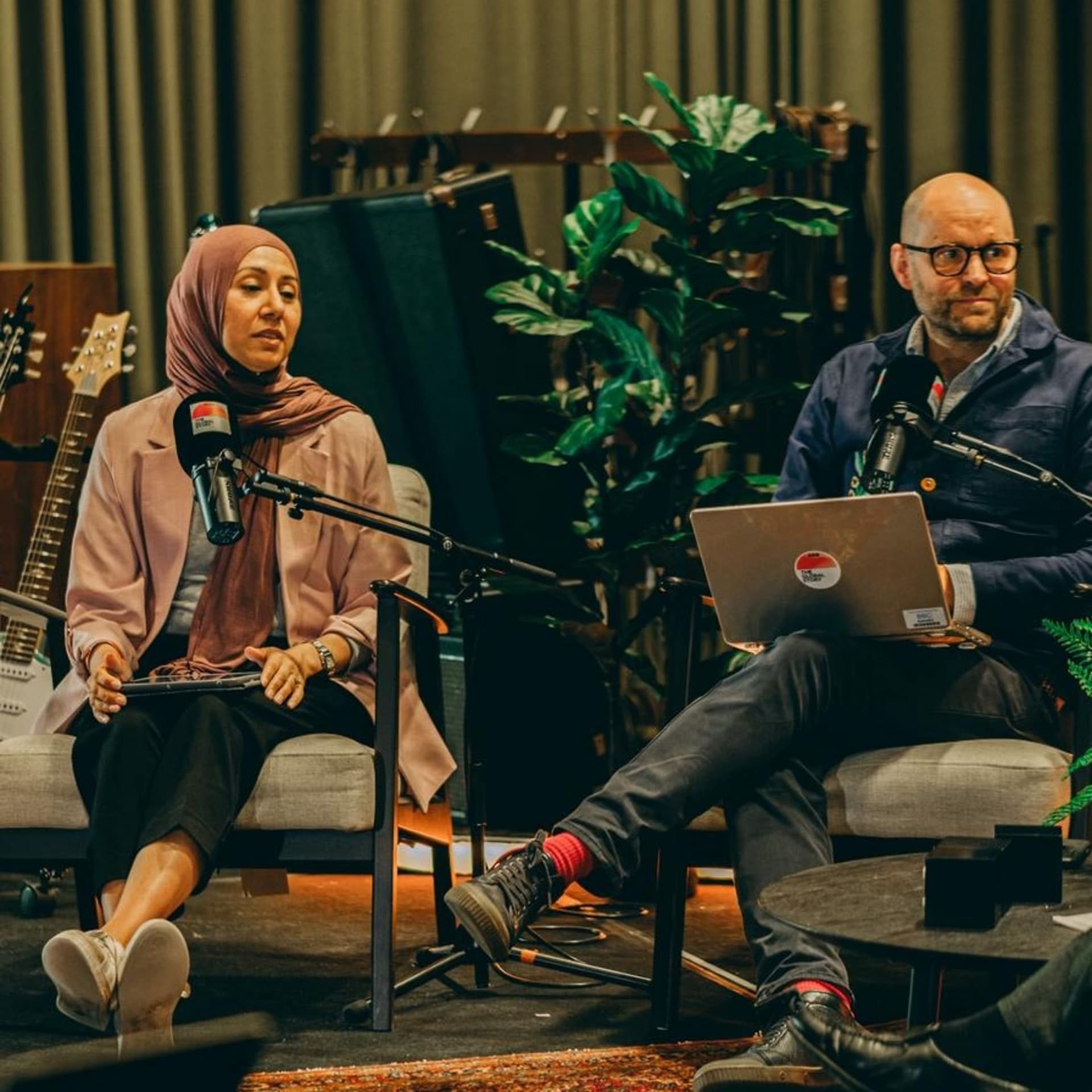
2:48We are here today at the BBC's Maida Vale Studios in London, a legendary recording studio which has seen the likes of The Beatles, Beyonce, David Bowie, and now CastFest, the BBC's podcast festival. Now, ladies and gentlemen, we have a very special guest today. He's a former ambassador to the United States.
3:13he's dealt directly with president trump in the white house his tenure was cut short in suboptimal circumstances it's lord kim derrick thank you intro a reminder lord derrick uh and i should ask can we call you kim Kim, please. Well, welcome to the show. We've asked you here today because you worked in the British government for decades, particularly on foreign policy. There has been a lot going on between the United States and the UK. And, you know, we've all heard the term special relationship. But where did that expression first come from? Because I will say it doesn't feel like the relationship is all that special in this moment.
4:02Yeah, it's a term actually that I and some of my predecessors as ambassador tended to kind of avoid.
4:15It was, of course, a very big day in the history of Fulton, Missouri, when President Truman and Winston Churchill paid their visit. It's a term coined by Winston Churchill in a speech in the immediate aftermath of the Second World War. Neither the sure prevention of war, nor the continuous rise of world organisations, will be gained without what I have called the fraternal association of the English-speaking people. And one of the real foundation stones of it is the defence and security and intelligence relationship. This means a special relationship between the British Commonwealth and Empire and the United States of America.
5:01which is closer, I think, than any other two countries on the planet. But if you keep talking about a special relationship, it sounds like you're desperate that it is really special and kind of doubtful that it is. It sounds a bit needy to talk about it. I mean, do you feel that you hear Brits referring to it more than Americans, for example? Absolutely. That's one of the things that you notice all the time. And there is also a sense sometimes is used as a kind of comedy line, oh, special relationship is too special, up to something has gone wrong between the two countries. So, you know, we kind of tend to avoid it.
5:32Well, Asma and I talk about this sometimes, about whether or not when we talk about the special relationship, we should preface it with the words so-called or not. I mean, as a journalist, it sometimes feels slightly like branding. You were the British ambassador in Washington, D.C. How did you see the ups and downs of the special relationship, the so-called special relationship during that time? Can I give you a little bit of history on this, Tristan? Please. In terms of number 10. Okay.
6:03If you go back through post-war UK-US history, the first big crisis, 1956, Suez Crisis, the Anglo-French invasion of Egypt... The British and French governments delivered a 12-hour ultimatum to Israel and Egypt, now followed up by armed attack against Egypt. The Eisenhower administration led the criticism in the United Nations. The United States was not consulted in any way about any phase of these actions. We do not accept the use of force as a wise or a proper instrument for the settlement of international disputes. So that was a real trough, and arguably the biggest dip in the relationship that there's been since the war.
6:48But then you fast forward to the 1960s, mid-1960s. Young Vietnamese men and women who've never known a single day of true peace in their lifetime are already raising a second generation that knows only war. And for the past 12 years, and in ever-increasing numbers, young Americans have shared the agony of the people of Vietnam. And LBJ Lyndon B. Johnson very much wanted the UK to provide even some token military presence in Vietnam. The demonstration wasn't America alone there, it was about international effort to fight communism in Vietnam. The communists expect to divide this nation. The communists are not happy about the military defeats they're taking in South Vietnam.
7:35But sometimes they do get encouraged, as they said this week, about the dissension in the United States of America. And the then-bridged Prime Minister, Harold Wilson, Everything in our program has been costed. Absolutely refused to do it. We're in Vietnam! Michael knows we have no plans for expenditure in Vietnam. And it led to a couple of legendary moments. One, when they came to LBJ in the White House and said, Harold Wilson is keen to come here on a visit. And he said, what, that little creep can't be on my doorstep? What makes you think I want to see him? And on the other hand, Wilson did get across there for a visit at some stage, and he came back to Cabinet.
8:18He reported that LBJ had pressed him on sending a British contingent to Vietnam and had said to him, anything we'll do, why don't you send us a platoon of bagpipers? And we didn't even send bagpipers. So that was a pretty bad time. Then you fast forward a bit to a sort of peak of the special relationship, which was Thatcher and Reagan. And even then, in 1983, Reagan sent American forces into the island of Grenada. The authorities in Grenada have said the island is being invaded by foreign troops. but it's not yet confirmed whether an attack is underway or who may be taking part. The Queen was head of state so it'd been a former British colony.
9:02The Queen was still head of state without telling or consulting the British government in advance. President Reagan said he ordered the invasion because about 1 ,000 Americans in Grenada were exposed to great danger from a brutal group of leftist thugs running the government. These are the weapons which Mr. Reagan says turned a friendly island paradise into a Soviet Cuban colony. The United States' objectives are clear. To protect our own citizens, to facilitate the evacuation of those who want to leave, and to help in the restoration of democratic institutions in Grenada. And Margaret Thatcher was furious about this.
9:37She told Parliament today she thought the action was ill-advised. We communicated to the United States our very considerable doubts. And she first of all rang up Reagan and said, this has got to stop, you must call your forces back. Reagan said, it's too late, they're on the beaches already. American Marines have landed on the Caribbean island of Grenada. Early reports speak of heavy fighting. So she rang up again. Reagan took the call, legend has it, in the Oval Office, with a few of his staffers around him. Reagan reportedly at one point turned the phone onto speakerphone so that everyone in the room could hear the handbagging going on from Margaret Thatcher.
10:15and apparently he whispered to them all. He said, isn't she wonderful? Hello, Margaret Satchel here. If I were there, Margaret, I'd throw my hand in the door before I came in. I suppose there's no need to do that. Listen, we regret very much the embarrassment that's been caused you. It was just our fear of our own weakness over here with regard to secrecy. It's very kind of you to have run wrongly. Well, my pleasure. How is Nancy? Just fine. God, give her my love. I shall. All right. So with all that context, though, I mean, does this moment really feel all that bad to you? It doesn't. It doesn't.
10:54Except for one fact, Asma, which is you can't imagine Reagan or Clinton or Obama threatening the UK, whereas President Trump has actually said... They think they're going to make an easy buck. That's why they've all taken advantage of our country. They don't take advantage of it. No, we've been looking at it, and we can meet that very easily by just putting a big tariff on the UK, so they better be careful. Your arrival in Washington dovetailed relatively closely with the Brexit vote. How serious, from your point of view, was that in terms of its effect on the transatlantic relationship? I was having lunch with a senior inner circle Obama staffer just after the Brexit vote.
11:38he was really quite angry and he said, we don't understand why you would call a referendum without being absolutely certain that you'll get the right result. You didn't need to call this referendum and you call it and now your prime minister's resigned. I mean, how can you do that? How can you do something so dumb as that? The other line that he had that sticks with me is he said, if you're not in the European Union anymore, we're not really quite sure what the UK is for now. Now, why do you say that? Because America is very interested in everything that happens in the European Union. There's legislation going through every month, which affects American interests.
12:18So we used to be, when I was in Brussels, I did 15 years of my career on the EU business. And you would get requests, we hope you will do X, not Y. And could you please help to ensure that outcome? And sometimes you would, and sometimes you actually wanted Y. So it sounds like they thought that you guys were their sort of inner voice into the EU. Yeah. But by contrast, Kim, Brexit may have been something which caused distance between Washington and London back in 2016. But if you look at the relationship now, it potentially it's something which actually causes a rapprochement, no? Well, yes, because it all changed when Trump came in because Trump had always supported Brexit.
12:54But he thinks that we have messed it up. They are, I think, worried that we are now going to get closer again to Europe under this administration. and they thought, also hoped that a number of other countries would follow us. And of course, the way it has panned out, it has absolutely dissuaded any other European country from even contemplating it. You know what I find so fascinating is during those end years of the Obama administration, it appeared like the United States did not think the UK was a reliable partner anymore, particularly when Brexit happened. And so it felt like the special relationship, if we can call it that, was on the rocks because the US did not find the UK to be a reliable partner and wanted to distance itself.
13:36And I think what to me is so interesting is now if we look at it is the UK that appears to be pulling back from the relationship also and not thinking that the United States can be a reliable partner. And that entire dynamic has shifted, but it feels like the relationship was already falling apart if you look at that linear trajectory going back to Brexit. I think there's something in that. Kim, as I alluded to earlier on, and thank you for humouring me with my introduction to you, your time in D.C. came to an end abruptly. Tonight at 10, after days of mounting pressure, Britain's ambassador to America resigns after the leak of his frank assessment of the Trump administration.
14:17You called the Trump administration dysfunctional, unpredictable, diplomatically clumsy and inept. He also said some positive things. This happens on Sunday, around the 4th of July in 2019. On the Monday, President Trump tweeted, I do not know the ambassador, but he's not liked or well thought of within the United States. We will no longer deal with him. Now, we have seen Donald Donald Trump fall out with people. And then sometimes days later, their relationship seems to be repaired. I wish the British ambassador well, but they've got to stop their leaking problems there, just like they have to stop them in our country.
15:06Why did you think at the time it was impossible to recover from that situation? Because when you're doing that job, you are literally in the White House every week. You're not seeing the president every week, You're seeing his senior advisors all the time. And even if the president himself had said, well, move on to new targets, as it were, I didn't think you could do the job anymore when everyone you were talking to knew what you had been reporting back to London. I just didn't think they would be honest. Because the whole point about having an ambassador there, it's crucial that people will tell you what they think.
15:44and if they are worried that what they tell you will be leaked, they're going to climb up and you can't do the job if you're not getting all those sources of information. So that's it. With seven years' extra hindsight, do you think you would have played it differently knowing that it is possible to repair a relationship with President Trump? To be honest, and this is going to sound a bit sort of defeatist maybe, I had done 43 years in the Foreign Service. It would be fair to say I was completely mackered. And I was six months off the end of my posting, and I was done, frankly. So no, I don't think I would play it differently.
16:27So since those days in 2019... It's also, by the way, very nice to be able to come to a thing like this and say what you think rather than what the government's line is. We appreciate that. So since those days in 2019, during President Trump's first term, the UK and the U.S.'s relationship seems to have further deteriorated. Now, if we look at the second term, whether it's about immigration, the Chagos Islands, drilling in the North Sea, the Iran War. Our colleague Sarah Smith actually interviewed President Trump just on Thursday. And he told her that he thought that the king's visit could help repair the relationship.
17:02What would your advice be to the king? First of all, I think the king is, I've met him a few times, he's actually a naturally accomplished diplomat. And he has a relationship with the president already. They've met several times. And he's very, very good at this kind of thing. Second, I think Trump wants this visit to go very well. We, the Brits, will have talked endlessly, exhaustively to the White House about the constitutional role of the British monarch and the difference between a prime minister and a king and who handles what. Because it's different. Donald Trump does admire the royal family.
17:46That's abundantly clear. He's made that clear himself. It all dates back to his Scottish mother. So things may go wrong still, but one thing I'm sure of is that Trump wants this to go well. Doesn't the king want it to go well? Doesn't the king really need it to go well, to be honest, for the British government? I'm sure the king, A, he wants it to go well. B, he hopes he can make a difference and to some extent smooth things over in terms of the recent flashes. But he's not there to explain British policy on the Iran conflict or to talk about why we aren't drilling as much as Donald Trump thinks we should in the North Sea or why we have wind turbines.
18:25So what can he do to help smooth over the relationship? So what can he do? I mean, what's your advice if he is there not to do those things? I think they will talk about the state of the world. I think the king will raise some of his concerns, which he did at great length when they met during Trump's state visit during the first term in 2019. He'll talk about his concern about climate change and all that. He will want to congratulate the American nation. The whole point reason for this visit is the 250th anniversary of the birth of the United States. I will say this all seems very strange to me, that the king is coming to America to celebrate our independence from Great Britain.
19:00I find it all very strange. Bygones are bygones. Bygones are bygones. We're big hearted people. Plus, of course, whether we would have won the Second World War without America's support. It's a huge thing. And America has guaranteed our security through the years of the Cold War and everything that's happened since. So we owe a big, big debt to America. And it's right that the king should go across there and express some of these things, which he will. I think if the subject comes up, he will also say how much we are actually doing in the Gulf. But he's not there to argue about Iran policy or that kind of thing.
19:36That's not his role. Kim, there is a parallel between what's happening now with this visit by the king to Washington and something that happened when you were in your role. I am honoured to have Prime Minister Theresa May here for a first official visit. I'm delighted to be able to congratulate you on what was a stunning election victory. She's the first head of government to come to Washington after Trump's election. And by the way, my mother was born in Scotland, Stornoway, which is serious Scotland. And during that visit, she invites Donald Trump to the United Kingdom. And in a further sign of the importance of that relationship, I have today been able to convey Her Majesty the Queen's hope that President Trump and the First Lady would pay a state visit to the United Kingdom later this year.
20:31And I'm delighted that the president has accepted that invitation. And you say in your book that this was counter to the advice that you had given to London. And the advice you gave was that to offer a state visit at this early stage would be, quote, a bit desperate. It is my pleasure to bring from His Majesty the King a letter. He sent his best wishes. So fast forward to now, and does what's happening look like Britain is a bit desperate? Thank you very much. Am I supposed to read it right now? Yeah, please do. So I would have kept the thing sort of hanging out there as something which isn't firmly offered, but which is sort of in the air.
21:20Not making it a straight bargaining chip. That would be crude and probably counterproductive. but pick the moment to offer it rather than put it on the table right in the very first meeting and actually to be honest i would have given the same advice to kia starmer all of you remember that moment when he offers the president the letter yes i said oh what could this be oh that's well oh it's an invitation for a state visit this is a letter from his majesty the king it's an invitation for a second state visit. This is really special. This has never happened before. This is unprecedented. And I think that just symbolises the strength of the relationship between us.
22:06And the story I heard about that was that Starmer actually handed the letter over in the private meeting between the two of them and the president said, no, no, no, I want to open it live on TV, so let's do it when the camera's on. Yes, somebody who knows how the cameras work in live TV. I would have held it back a bit, but it's happened. So it's dumb. You mentioned the fact that the king is coming to the United States in part to mark the 250th anniversary of American independence. And there has been this overarching question that we have had of whether in fact it is Britain now trying to declare independence from the US and this relationship.
22:43Has trust been so lost from the British perspective that the UK can really trust the United States ever again. I mean, is this just a moment, a blip in time? And then where will we be? I think that, I mean, America is now called around European circles, the unreliable ally. If there'd just been a first term of Donald Trump and not a second term, I think people would have thought it was some kind of blip in history and that America had then gone back to being what we all knew. The second term makes people think this is a more permanent shift in American views of the rest of the world. I think there is something in that, and then I think whoever wins the next American election, whether Democrat or Republican, will still want to shift the center of effort of American security and defense to the Asian theater away from the North Atlantic theater, because there is a consensus, I judge, both sides of the aisle, both Democrats and Republicans, that China is the existential challenge for the 21st century.
23:43And so I think that's just a reality, and Europe has to adapt to it, and we have to be more self-sufficient on defense. We have to be more autonomous, given the threat that is very clear from Russia. You cannot allow America to continue to take 70 % of the burden of NATO. There is quite a lot that is unique about Trump. So I don't think necessarily you're going to find a future American president who behaves like him and the kind of things he says about some of his partners. But I think more focus on Asia and maybe on the American homeland, the backyard, Latin America, is just a reality of life.
24:21And that means we have to do more. Whether that leads to more political separation of the two, we'll wait and see. Still, we have a huge amount in common in terms of values and the way we see the rest of the world and support for democracy and those kinds of things. So it's not like everything is going off in different directions. We cannot let you leave this place without asking you about the question of Peter Mandelson. Now, Peter Mandelson is a familiar figure to many people in Britain, but maybe around the world less so. So I'm going to explain very briefly. In 2024, the British Prime Minister Sir Keir Starmer broke with convention.
25:00He made a political appointment to the US ambassador's job. Peter Mandelson was the first political appointment to that job in nearly 50 years. Usually they're career civil servants or diplomats such as yourself. Mandelson was somebody who'd been in Tony Blair's government. His nickname in Britain was the Prince of Darkness. That's something he was called in political circles. He was then fired from his job, partly over his connections to Jeffrey Epstein. Peter Mandelson denies all wrongdoing. The BBC understands. At the time Sir Keir Starmer appointed Mandelson to the job, do you think it was a genius move or a not-so-genius move?
25:48Yeah. Look, I was, I mean, I would never have called it a genius move, but I thought on balance it was a justified risk by the Prime Minister. Obviously, everyone who thought that has been proved completely wrong. So I was wrong on that. But I'll tell you why. I knew Peter Manilson when he was British Trade Commissioner. He's a trade specialist, and all the risks around the Trump presidency were seen as, or most of them were seen as, around tariffs. And he was seen in those days as a very, very effective operator. Now, you look at Stalmer's decision. He always wanted, it seemed to me, to send a politician to Washington to deal with this unique president.
Read the full transcript
26:33And maybe the title Prince of Darkness tells you why he thought that would be a good choice for Washington. And then the whole thing blew up. And then lots of things about his past with Epstein. And of course, it now looks like it was a terrible appointment. And it's not a lot of damage to the prime minister, a lot of damage to the government. But I can see why Keir Starmer made the choice. but I can see also now why it's regarded by all those who supported it like me as a big mistake. Well, I'm afraid that is all the time we've got. So all that is left now is to just say a thank you to Lord Kim Darroch.
27:05Thank you.
27:10That was us speaking with Kim Darroch, the former British ambassador to the United States. And special thanks as well to our live audience in London at BBC Maida Vale Studios. And that's it for today's show. Our live show was produced by Sam Chantarasek and edited by James Shield. It was mixed by Travis Evans. Our video producers were Matt Pintis, Tom Bage and Grace Braddock. Our senior news editor is Chyna Collins. And I'm Asma Khalid. And I'm Tristan Redman. Thanks so much for joining us. We'll talk to you again tomorrow. Cheerio.
From the publisher
King Charles is visiting America at a tense moment for the ’special relationship' between the United States and the United Kingdom. Can he help turn things around?
In a special live recording at the BBC’s Maida Vale Studios in London, Asma and Tristan speak to the former British ambassador to the United States, Lord Kim Darroch.
Recorded on Saturday 25 April as part of Castfest, a one-day celebration of BBC podcasts.
Producers: Sam Chantarasak and James Shield Mix: Travis Evans Senior news editor: China Collins
Photo: BBC. Kim Darroch talked to Asma Khalid and Tristan Redman at BBC Maida Vale Studios.