
In short
A landmark Los Angeles jury found Meta (Instagram/Facebook) and YouTube negligent for a young woman’s childhood addiction to social media, awarding Kayleigh $6 million and potentially setting a precedent for more lawsuits. The episode also explores whether platforms’ algorithms and engagement design (autoplay, infinite scroll, filters) are deliberately engineered to harm teens, plus whistleblower allegations about internal safety tradeoffs.
Guests
Mariana Spring, BBC social media investigations correspondent. Background: spent more than a year investigating social media companies’ algorithms; conducted exclusive interviews with current/former insiders and whistleblowers from platforms including TikTok and Meta; received documentation from some sources.
Key claims
jurors ruled the apps were deliberately engineered to be addictive; insiders say algorithmic systems boost harmful content for engagement; companies deny intent and argue teen mental health is complex.
Notable examples
Kayleigh began Instagram at 9 and YouTube at 6; filters and infinite scroll worsened anxiety/depression. Callum (14) described being funneled into racist/misogynistic views via recommendations, later reversing them after real-life contact.
Written by AI. May contain mistakes. Listen to the episode to check what was said.
Chapters
Tap a time to open that second in VOThe Landmark Trial Against Meta and YouTube
0:30 to 0:48
Discussion about the verdict holding Meta and YouTube accountable for addiction.
“And to think, that's just a small taste of what Schwab offers.”
The Landmark Trial Against Meta and YouTube
0:52 to 1:56
Discussion about the verdict holding Meta and YouTube accountable for addiction.
“A jury in Los Angeles has said that Meta and YouTube are responsible for a young woman's childhood addiction to social media.”
Understanding the Verdict and Its Implications
1:56 to 3:05
Exploring the implications of the jury's decision on the tech industry.
“And today on The Global Story, could social media companies be forced to change their algorithms?”
The Role of Design in Addiction
3:05 to 4:24
Insight into how app design contributes to addiction and mental health issues.
“And the woman who is known as Kaylee has been awarded$6 million in damages.”
Whistleblowers and Internal Insights
4:24 to 8:03
Details from whistleblowers about the algorithms and intentions behind social media.
“Can we just sit with the verdict for a minute?”
The Aftermath of Zuckerberg's Congressional Hearing
8:03 to 11:56
Analyzing the impact of Zuckerberg's testimony and algorithm decisions on content.
“So let's talk more about intentions and the way that social media companies are building algorithms.”
TikTok's Impact on Meta's Strategy
11:56 to 14:00
Discussion on how TikTok's rise affects Meta's algorithm and competition.
“Remember, this is all around the pandemic.”
Impact of Algorithms on Mental Health
14:00 to 16:59
Explore how algorithms on social media affect user well-being and engagement.
“And how much does that big tech rivalry fuel the decisions around algorithms?”
Callum's Journey with Social Media
16:59 to 19:27
Hear about Callum's transformation from consuming harmful content to questioning his views.
“So we're having this conversation with you in the context of the landmark social media trial we saw just this week.”
Platforms' Responses to Harmful Content
19:27 to 20:38
Understand what social media platforms claim to do about harmful content and their accountability.
“Well, what do the platforms themselves say about the rage baitiness that Callum was experiencing?”
Show all 13 chapters
Legal Implications for Social Media Companies
20:38 to 22:48
Discuss the potential legal repercussions for social media platforms stemming from user harm.
“So that doesn't really deny the fact that they are promoting rage-baiting?”
Political and Social Dynamics Impacting Platforms
22:48 to 24:24
Examine how changing political environments impact social media regulation and user safety.
“in places like what's happening in Australia.”
Parental and Personal Responsibility in Social Media Use
24:24 to 26:26
Debate the balance of responsibility between users, parents, and social media companies.
“And so I think if you're the companies, you've got one eye on that, which is if we lose our kind of support in the U.S., certainly from politicians, then we're in trouble.”
Transcript
Automatic transcript. May contain errors.0:00This BBC podcast is supported by ads outside the UK.
0:30And to think, that's just a small taste of what Schwab offers. Because Schwab knows that when it comes to your finances, choice matters. No matter your goals, investing style, life stage or experience, Schwab has everything you need, all in one place, so you can invest your way. Visit schwab.com to learn more. A jury in Los Angeles has said that Meta and YouTube are responsible for a young woman's childhood addiction to social media. Kayleigh, the plaintiff, has been awarded$6 million in damages. It's a small payout compared to the sheer billions these tech giants make, but it could open the floodgates to hundreds of other cases making their way through the courts.
1:15Now at the heart of this is the question of whether these companies are intentionally building these apps to be addictive. It's a question our colleague, Mariana Spring, the BBC's social media investigations correspondent, has been digging into for more than a year. Coming up, we talk to Mariana about her exclusive interviews with whistleblowers from inside the tech giants. People who told her that the companies took risks with user safety when they decided to allow more harmful content on people's feeds. Allegations the companies deny. From the BBC, I'm Asma Khalid in Washington, D.C. And I'm Tristan Redman in London.
1:56And today on The Global Story, could social media companies be forced to change their algorithms?
2:10Marianna Spring:My name is Marianna Spring and I'm the BBC's social media investigations correspondent. Great to have you back with us, Marianna. Thanks for having me. Well, we've got a lot to talk about because you cover social media companies and algorithms and all of the above. Now, a jury has just found Meta and YouTube negligent in this block bluster trial in Los Angeles. What exactly were they found negligent of? So what's really interesting is that this case that has been unfolding, and it's one of many cases that are currently kind of making their way through the courts in the US. This is about addiction and about design.
2:47Marianna Spring:So the case, this particular case, has revolved around a 20-year-old woman who essentially said, my mental health was seriously impacted by the addictive nature of your platforms. And I'm going to prove to you that was the case. And I'm going to prove to you that you knew that was the case and you still went on with it anyways. So actually, this is all about design. It's about the way that the platforms were built and the impact that that has. And the woman who is known as Kaylee has been awarded$6 million in damages. Obviously, as you might imagine, Meta and Google do not agree with the outcome of this.
3:19Marianna Spring:They say that it's not the case that they have built platforms that are harmful and addictive in this way. Meta said, quote, teen mental health is profoundly complex, cannot be linked to a single app. We will continue to defend ourselves rigorously as every case is different and we remain confident in our record of protecting teens online. And a spokesperson for Google said this case misunderstands YouTube, which is a responsibly built streaming platform, not a social media site. And the reason that, for example, Meta say every case is different is because there are these other cases. And the broad feeling is that this sets a bit of a precedent, really, and that the other cases are unlikely to go in a different direction.
3:55Marianna Spring:because once you agree on this principle of the way these platforms are designed causes harm, you can kind of make a whole variety of arguments and the evidence is ultimately the same. I've been messaging various people who work inside the major social media companies who still do, who have done, and I think quite a few of them were taken aback by just how clear and assertive the judgment was here, that actually they determined that Meta and Google acted with malice, oppression or fraud in the way the companies operate their platforms. Can we just sit with the verdict for a minute? Because I realize$6 million, it might sound a lot to you and me, but it is a fraction of what the profits are for these companies.
4:35Nonetheless, I mean, this is historic. I mean, we've never seen a verdict like this one.
4:40Marianna Spring:Yeah, and I think that actually the main impact of this case is not necessarily the money like you say. I mean, these companies make huge amounts of money. And even if they had to pay out this several times over, it wouldn't really dent the amount that they make. The issue is, is that they are operating in an environment where there are increasing concerns from not just people who use the platforms, but from policymakers and politicians. And so if you're Meta or Google or any of the social media companies, you're thinking, oh, whoa, hold on a second. This is just another thing that adds to the kind of drip, drip, drip effect of people saying, wait, you guys can't be trusted to regulate yourselves.
5:22Marianna Spring:and actually you are going to have to either take some really decisive action when it comes to your design or if you're not able to do that then certain age groups and people just can't use the platform which is very not good from a financial point of view more so than any of these finds like they're much more worried about losing hyper-engaged young users who are the future of their platforms at the center of this case and also at the center of a lot of the work that you do were things like algorithms, autoplay, all sorts of devices that social media companies allegedly use to keep people on their platforms.
5:59What did the ruling in court actually say about things like algorithms and autoplay?
6:04Marianna Spring:So a lot of the case focused on the personal experience of Kayleigh, but actually in lots of ways. I mean, it's an experience I hear time and time again from different teenagers and different young people. She said she started using Instagram when she was nine, YouTube when she was six. So you've got kind of first thing is not blocking people who are too young to be on the platform. She then said that from a really young age, so from sort of 10 or so, she started developing anxiety, depression, disorders, which she would be diagnosed with later. And a lot of this came from kind of the obsession with her physical appearance and filters.
6:37Marianna Spring:So that's another kind of aspect of it, that you can put filters on images on Instagram and that those were distorting her perception of what she looked like and what other people look like. So those are things that have been introduced to kind of make the platforms more engaging. But in her case, she's saying, well, they actually they did make them more engaging, but they had a negative effect on her. And then things like infinite scroll. So this is where on Instagram, for example, you just never run out of posts. Like you can just refresh, refresh, refresh, and you're just going to get more posts.
7:06Marianna Spring:And essentially, her lawyers were arguing that all of those design features were introduced with the goal of keeping people like Kayleigh hooked. And the companies knew that that wasn't necessarily going to be safe or positive for them. But they plowed on with it anyways, because ultimately they make a fair bit of money. I think the thing that's interesting is the social media companies have always really strongly argued against the use of the word addiction. And even when I speak to people within the companies who've left the companies, say, and don't agree entirely with how they operate, everyone's quite wary of that word addiction.
7:41So, Mariana, to be clear, in the end, did the jurors find that Meta and Google intentionally built these apps to be addictive?
7:50Marianna Spring:Yeah, so the jury did rule that not just that the apps are addictive, but that they are deliberately engineered to be addictive. And that is why they decided that the owners have been negligent and they haven't protected kids in the way that they should. Mariana, you mentioned intentions. So let's talk more about intentions and the way that social media companies are building algorithms. You have been doing this fantastic big investigation in which you heard from whistleblowers inside some of these social media companies like TikTok and Meta. What were the main allegations? Yeah, so I've spent the past year, really, more than a year, speaking to a range of different people who work in all sorts of teams within these social media companies.
8:29Marianna Spring:They're people who've not spoken out before, the majority of them. Some of them are whistleblowers who've shared documentation with me to back up what they're saying. Others talk about their first-hand experiences. Quite a lot of them have done it on camera, so they're doing it in their own names. Some of them are anonymous just to protect them because they still work within the industry or within the companies. Yeah, exactly. Exactly. My main takeaway from doing the investigation was that the algorithmic systems are essentially responsible for almost all of the harms that we point to all the time.
8:58Marianna Spring:So a lot of the time we're kind of saying, oh, look, people are seeing this kind of thing or this, you know, kids are exposed to this sort of content. It's ultimately about the design of the platforms and the systems. So are you saying that the main takeaway you had from the whistleblowers you spoke with is that the design, the algorithms are at fault more so than the actual content? It's not like Tristan or Asma is out there spouting this like crazy, hateful thing. It's that the algorithm is boosting perhaps like harmful misinformation, racist, rage-baity posts. Yeah, yeah, essentially that. I mean, obviously the people who post this stuff are responsible for what they post, but I think most people would be fine if this stuff wasn't being seen by millions of people.
9:39Marianna Spring:The difference is when it's being actively recommended and pushed to people. And that's why it kept coming back to the design and it kept coming back to this issue of intentionality, which is what the companies are saying outwardly does not match up with what is going on on the inside. And there are various reasons that the whistleblowers and insiders give for that. Some is to do with business and competing with other companies. Some is to do with this kind of cognitive dissonance sometimes between like what the companies sort of say that they think they're doing and then what is actually happening.
10:10Marianna Spring:It's sort of like being gaslit perpetually, which is why it's such a relief to speak to the people within the companies because they'll say, no, no, no, this is what I was actually doing or this is what we were told to do or this is what I saw. Well, I wanted to ask you about one of these moments of dissonance, which is when Mark Zuckerberg goes to Congress in 2018. It's a sort of moment, a kind of humbling moment where he has to apologise for accusations that his companies destabilise different parts of the world. and I wonder if you could explain what happens next because it surprised me. Yeah, so there was this change that happened in that period of time, sort of around 2018, which was Facebook at the time, contributing to violence in Myanmar.
10:48Marianna Spring:After that, there was this kind of moment that felt like a bit of a moment of reckoning where people like Mark Zuckerberg came forward and said, look, we take responsibility for not necessarily handling this as responsibly as we could have and we're going to do better. and the company kind of said, oh, Meta, which was then Facebook, said, let's try and go back to what we used to be like, like when it used to be just your friends and your family and people that you know. And this is this idea of sort of meaningful social interaction, this metric that they could use to say, right, we're going to make sure that actually you see more stuff from people that you know and that you like and you're kind of seeing less stuff from random people or from news outlets or, you know, about politics and those kinds of things.
11:27So it's a sort of back to basics idea.
11:29Marianna Spring:The idea, yes. The problem was is that you started to see how your next door neighbor or your uncle, who perhaps believes a really strange conspiracy theory, they're getting as much prominence as a reputable journalistic outlet. And that is then the problem. It's not like you're having meaningful interaction with these people. It's just amplifying the voices that offer the most outrageous, the most extreme ideas because they get the most engagement and so on and so forth. And so you end up in a place where actually the fix has made the issue worse. Remember, this is all around the pandemic. I mean, you can think of all the kinds of stuff that was spreading during COVID, like the amount of misinformation about vaccines, about the virus.
12:10Marianna Spring:And by misinformation, I don't mean legitimate questions about restrictions. I mean, it's a hoax. The vaccine is going to kill millions of people. All of these things that are just explicitly disinformation. Can I just ask that? Isn't the counter argument to that, though, that the platform genuinely is a mirror on the world then? Because they are just showing you your crazy uncle. The problem is, is that that would be OK if your crazy uncle had the same prominence as your very reasonable best friend. But ultimately, the crazy uncle is being given more of a platform. Like you would see his posts more often.
12:45Yeah, because they get more engagement.
12:46Marianna Spring:if someone posts something really boring, like, hello, today I cooked some banana bread and sat in my garden. Versus if someone says... Tristan, this explains why your social media posts don't get as much engagement. Tristan's like, aha! Whereas someone says, COVID is a hoax and it never happened and I know the secret. There's a secret plot happening and I'm going to tell you the truth. But politeness, yeah, it doesn't get you that far. No, no, just because the way that the systems are built is fundamentally on emotion and emotions like outrage are especially strong. and that's why you end up in this place.
13:16Marianna Spring:And again, this is the argument against the mirror thing. Algorithms are active. They're not passive things. They are making decisions to put certain bits of content over other bits of content, to push you certain bits. The algorithm is perceiving what you engage with, what you spend time on, what you're hovering over, what you interact with, and giving you more of that. And so that will always bias the platforms towards stuff that is reactive. And then, Mariana, to complicate the situation even more, in 2018, so this is around the same time this is all happening, TikTok burst on the scene here in the United States.
13:51And it quickly became a huge hit. And my understanding, in part from your reporting, is that that really complicates the situation for Meta, which at the time owns Instagram. And how much does that big tech rivalry fuel the decisions around algorithms?
14:08Marianna Spring:Yeah, so TikTok, and I think the pandemic did play a big part in this as well, because TikTok started to become popular before the pandemic. And then the pandemic happens in 2020. And everyone has nothing to do. And there's this new, very sort of exciting short form video platform where you can consume huge amounts of content. And it's not from anyone you follow. In fact, it's kind of the opposite of the meaningful social interaction stuff. So you're not seeing your uncle? You actually don't know. You're actually seeing just like anyone, anyone and everyone. And actually, you don't need to follow anyone on TikTok to just see the same creators to see the people that you want to see.
14:41Marianna Spring:I mean, TikTok emerges and then lots of people I've spoken to on the Insider Meta, say, including Matt, another insider who's an engineer, say to me, look, they just said, we've got to compete here. We can't not compete. And they launch Reels, which is their equivalent, Instagram and Facebook's equivalent of TikTok. But the problem is, whenever you introduce a new anything and you haven't necessarily tested it en masse, there's obviously going to be room for Any time you're introducing a new type of product, say reels, there's an elevated risk because the infrastructure that existed before, it's either completely absent or it's very immature.
15:19So it's hard to prepare sufficiently in advance of that launch because there's a common tradeoff between protecting people from harmful content and engagement. it.
15:32Marianna Spring:The issue was is that there was a real uptick in the prevalence of certain harmful content in the comments. So violence, incitement, bullying and harassment, that kind of stuff. In feed, you have to convince the team that owns feed or that owns reels to sign off on the product change that you want. But there's this power imbalance. They have incentives to not let those products launch because toxic stuff gets more engagement than non-toxic. And Matt's argument as someone who worked in safety was why you like your approach was move fast and break things and you've done that but the problem is is that you've basically left a load of people at risk when you should have properly tested this out before you did that or built the necessary guardrails.
16:19Marianna Spring:Instead you focused on just making the kind of new feature as popular as possible and now and now we're in a pickle. The most concerning thing is, is that you had people like Matt who were presenting this kind of evidence to senior management and seemingly there doesn't seem to, like, obviously they can then remedy those issues, but they've already happened. The impact on the users has already felt, particularly teenagers, and you can't undo that. And I think that's the issue really, is that people almost don't realise that they are the guinea pigs and the test cases all the time for these new features.
16:59So we're having this conversation with you in the context of the landmark social media trial we saw just this week. And in that case, as we mentioned, the plaintiff said that social media platforms had seriously harmed her mental health. And that reminded me of one of the people that you spoke with in your reporting. And that was a young man by the name of Callum who said that he was also affected as a teenager by algorithms. but in a very different way. Can you tell us about him?
17:28Marianna Spring:Yeah, so Callum was about 14 when he got really hooked on social media. He says that he was using most of the major platforms really and watching initially content that was about politics. It started with immigration for me. I was sort of the perfect candidate. When I was 13 and 14, I was kind of struggling with a lot of insecurities around my ability to have friends and relationships. And then you start getting recommended there are other fields in that space where it then talks about feminism and then talks about LGBT rights. And then all of a sudden, you hear from a perspective that sounds reasonable at first.
18:07And then a couple months later, you believe literally everything in that space. But to be clear, Mariana, did he say he did not have these opinions or attitudes prior to this? Not at all. Or he didn't have people in his real life who...
18:19Marianna Spring:No, not at all. It was like really out of step with his general experience growing up. Yeah, yeah, yeah, exactly. And he noticed how much it correlated with the time spent on these platforms and how much he was consuming this kind of content. And the thing that, and this happened over a period of time, over several years. And it was only when he sort of was sort of 17, 18 years old and he went to a different school. And in real life, he was encountering people that were the kinds of people he was being told to hate, essentially. Who were what, like immigrants, women? Yeah, women, exactly. And they'd be able to have really productive, interesting conversations.
18:53Marianna Spring:And he suddenly thought, oh, I think maybe what I've been being told is not necessarily the case. But because he was so in this silo in his online world and it was isolating him in real life too. I've been wanting to talk about this publicly for over a year now. And now I've finally worked up the courage to talk about things I've kept quite close to myself. I've started to abandon my old racist and misogynistic views as they no longer made any sense to me in my head. I think it takes a lot of guts to actually say, like, I really got this wrong. I got really pulled into this and it really impacted me.
19:25Marianna Spring:And I'm really sorry. And I want people to better understand how they can be exploited and targeted and kind of used for the sake of some of the influencers who were pushing this stuff, but actually also by the platforms who ultimately benefit from a user like Callum spending a huge amount of time on the platforms consuming this kind of outrage style content. Well, what do the platforms themselves say about the rage baitiness that Callum was experiencing? What are they actually doing about it? So all of the platforms talk about the kinds of measures that they take to protect users, to limit the spread of harmful content.
Read the full transcript
20:03Marianna Spring:It was really interesting. So when I contacted them with the various allegations, Meta said any suggestion that we deliberately, and the word deliberately is really interesting here, deliberately amplify harmful content for financial gain is wrong. TikTok said that the claims, that the whistleblowers that the investigation made were fabricated and that the company invested in technology that prevented harmful content from ever being viewed. When I contacted X, they shared the source code of the algorithm, which they released earlier this year, which essentially shows how if you reply to things, which broadly would be, e.g.
20:34Marianna Spring:if you're in an argument, that content is going to get much more prominence on the feed than if no one's arguing with or debating or engaging with it. And that was all they said. So that doesn't really deny the fact that they are promoting rage-baiting? No, not at all. I mean, they did then send their guidelines where they talk about freedom of speech versus freedom of reach and how there's certain content that they still aim not to amplify on their platforms. You made an interesting aside there where you said that the use of the word deliberately was interesting. Can you just expand on that? So in their statement, Meta specifically say, any suggestion that we deliberately amplify harmful content for financial gain is wrong.
21:10Marianna Spring:What that word deliberately does, for me at least, is to say that's not saying we we don't amplify harmful content which we then financially benefit from it's saying well if we do that we don't mean to but the problem is is that the impact on users is the same and this is the argument that all of the insiders and whistleblowers were making the whole time and that is i think the place that we're at where there's been a bit of a sort of change i i would say in terms of society's attitude towards these companies and that people are feeling increasingly frustrated at a lack of transparency, at wanting answers, at wanting to understand what they're seeing, because so many people use social media and are affected by it.
21:49Marianna Spring:And we're not just talking about kids and teenagers, we're talking about adults as well. If this one case in California were to lead to a parade of more cases like it, how big of a threat could this be to social media platforms? And there's several other trials taking place this year, I believe, in the United States, right? Yeah, there are, exactly. And a lot of them involve like parents and children, but kind of asking for quite similar amounts of money as this case. The issue is if this is a trigger for or further evidence, the issue for the companies when it comes to how they operate, perhaps them even being forced to overhaul their designs, which ultimately they were built in such a way, they were built in this algorithmic way.
22:26Marianna Spring:And if they decided to overhaul it, so they had, say, more proactive moderation, they kind of slowed down their algorithms. They didn't allow their algorithms to promote a whole range of different types of content. that would not be good for business. So you've got the possible having to overhaul how their platforms work. And then you've got the ban threat, which is almost like if they can't prove that they can make their system safer and the way their platforms are built safer, then they do risk being banned in places like what's happening in Australia. There's an argument, and banned for under-16s, there's an argument that actually kids can get around this stuff, they can use VPNs, they can, you know, what impact does it have?
23:00Marianna Spring:But I would say as one counterpoint, a lot of these companies are based in the United States And Donald Trump's approach at the moment as president to the companies is very different to, say, the new approach that the prime minister in the UK is taking or that the government in Australia have taken. Broadly, in European countries, Australia, there's been this kind of these rumblings across the political spectrum of people saying, actually, when it comes to kids and teenagers, maybe we should ban this or they need to have entirely separate platforms that, you know, have appropriate content for them.
23:30Marianna Spring:Donald Trump has been a huge kind of advocate for the social media companies. Well, he is an owner of a social media company. He is, Truth Social. And then also, obviously, he has a friendship, slightly fractious at times, with Elon Musk, who owns X. When he took over, Mark Zuckerberg, who owns Meta, very quickly said, we're going to change some of our rules on fact-checking, for example, in the United States, and we're going to prioritise freedom of expression, which was very much in line with Donald Trump's view of how the platform should work, which is you kind of should allow most people to be on them.
24:00Marianna Spring:You should allow most bits of content, let people make up their own minds. You shouldn't censor people. But I would say that, like, Donald Trump is not president forever. Over the next few years, the environment in the United States could change quite significantly. And under Joe Biden, there was a much kind of harsher approach to the companies and wanting them to perhaps do more to protect kids and teenagers and to prioritise safety, say, more so than freedom of expression as ideological points. And so I think if you're the companies, you've got one eye on that, which is if we lose our kind of support in the U.S., certainly from politicians, then we're in trouble.
24:36Marianna Spring:And that's another reason why these cases, I can imagine, are concerning them just a little bit. Mariana, we have been talking throughout this episode about the potential harm caused to teenagers and children through social media. And I reckon that as we see more of these sorts of trials, it's going to raise all sorts of questions about personal responsibility and parental responsibility. And I imagine some listeners hearing this conversation will wonder, well, what are the limits that a company can be held responsible for? I mean, in fact, we got an email from one of our listeners, Santosh, who said that in his view, these kinds of cases absolve people of taking responsibility for the consequences of their own actions.
25:17And that is not an entirely isolated perspective. I've been seeing some chatter online from more libertarian folks who have concerns about what might happen as a result of these sorts of precedents. I mean, for example, there's about 20 % of children in the United States who are considered obese. Obesity is a huge problem here in the United States. And are we going to see sugar companies, soda companies on the hook for that?
25:42Marianna Spring:Yeah, I think that it's interesting because the companies will often introduce tools, for example, like teen accounts, which exist on Instagram, say, where ultimately parents can have oversight of what their kids are seeing or doing. The responsibility is shipped out a little bit to the parents. I think that there's an argument that, you know, everyone, including the people that are using social media for themselves, are responsible for how they behave. But I think this just comes back to the design thing. no parent or teacher or police officer can account for the way that they're designed they also don't benefit from it in the way that the companies do like the companies make huge huge huge amounts of money out of this and i think that's why they're held to a standard that's kind of like well hang on you guys benefit from these systems and you're not protecting people in a way that's sufficient and you need to do something about it
26:40Well, Mariana, thanks so much for bringing your reporting to us.
26:43Marianna Spring:Thank you so much.
26:51That was Mariana Spring, the BBC's social media investigations correspondent. And folks, if you've got any ideas, questions or suggestions for future episodes for us, we love to hear from you all. You can send us a message by emailing us at theglobalstory at bbc.com. And a quick recope before we go, here at The Global Story, we bring you one story every day where the world and America meet. For the very latest news headlines, listen to our sister show, The Global News Podcast. You can find it wherever you listen. Now, if you're in the UK, we have an announcement about a special event coming up because on April 25th, The Global Story will be at the BBC's podcast festival, CastFest.
27:31There's going to be loads going on there with all of your favorite podcasts, and we'll be recording a live show in front of an audience. It's all happening at the historic Maida Vale Studios in London, which has hosted the likes of Jimi Hendrix and David Bowie,
27:44Marianna Spring:and soon Tristan Redman and me. We would love it for some of you all to join us there too. The link to book tickets is in our episode description. And that's it from us today. Today's episode was produced by Kat Farnsworth and Valerio Esposito. It was edited by James Shield and mixed by Travis Evans. Our studio engineer was Johnny Hall. Our digital producer is Matt Pintus. And our senior news editor is China Collins. I'm Asma Khalid. And I'm Tristan Redman. Thanks so much for listening. Have a great weekend and we'll see you next week. Cheerio.
From the publisher
In a bellwether case, a jury in Los Angeles found on Wednesday that Meta and YouTube are responsible for a young woman’s childhood addiction to social media, and intentionally built addictive platforms that harmed her health.
The companies say they intend to appeal against the verdict, which could set a legal precedent and have far-reaching consequences.
Marianna Spring, the BBC’s social media investigations correspondent, has spent the past year speaking to whistleblowers and insiders from social media companies, revealing how algorithms designed to connect people have been helping to tear them apart. We ask if this week’s verdict is just the start of something much bigger.
The BBC is throwing open the doors to Maida Vale Studios on Saturday 25 April for Castfest, a one-day celebration bringing its biggest news podcasts directly to fans. Apply for Castfest tickets below.
Producer: Valerio Esposito and Cat Farnsworth Sopund engineer: Travis Evans Senior news editor: China Collins
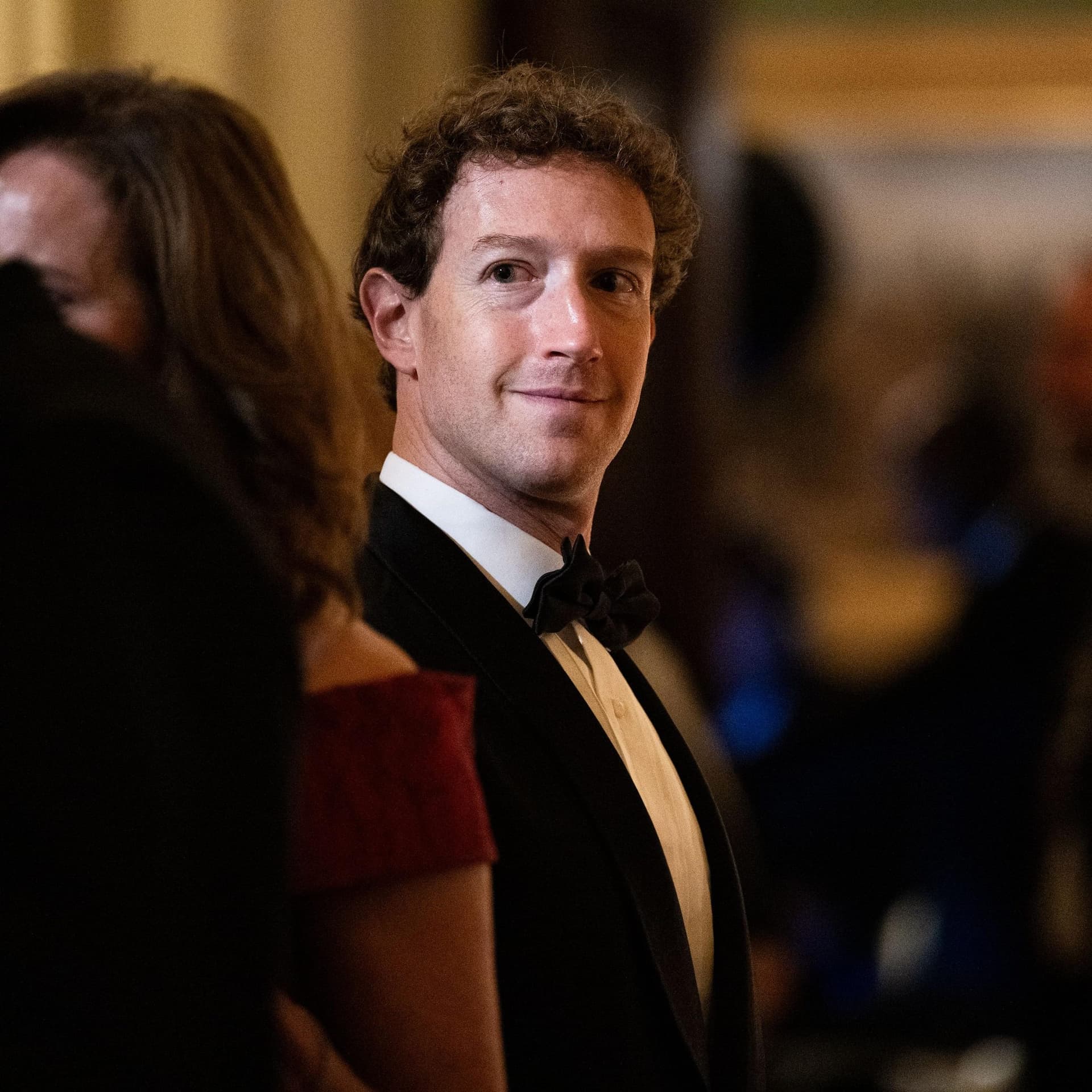
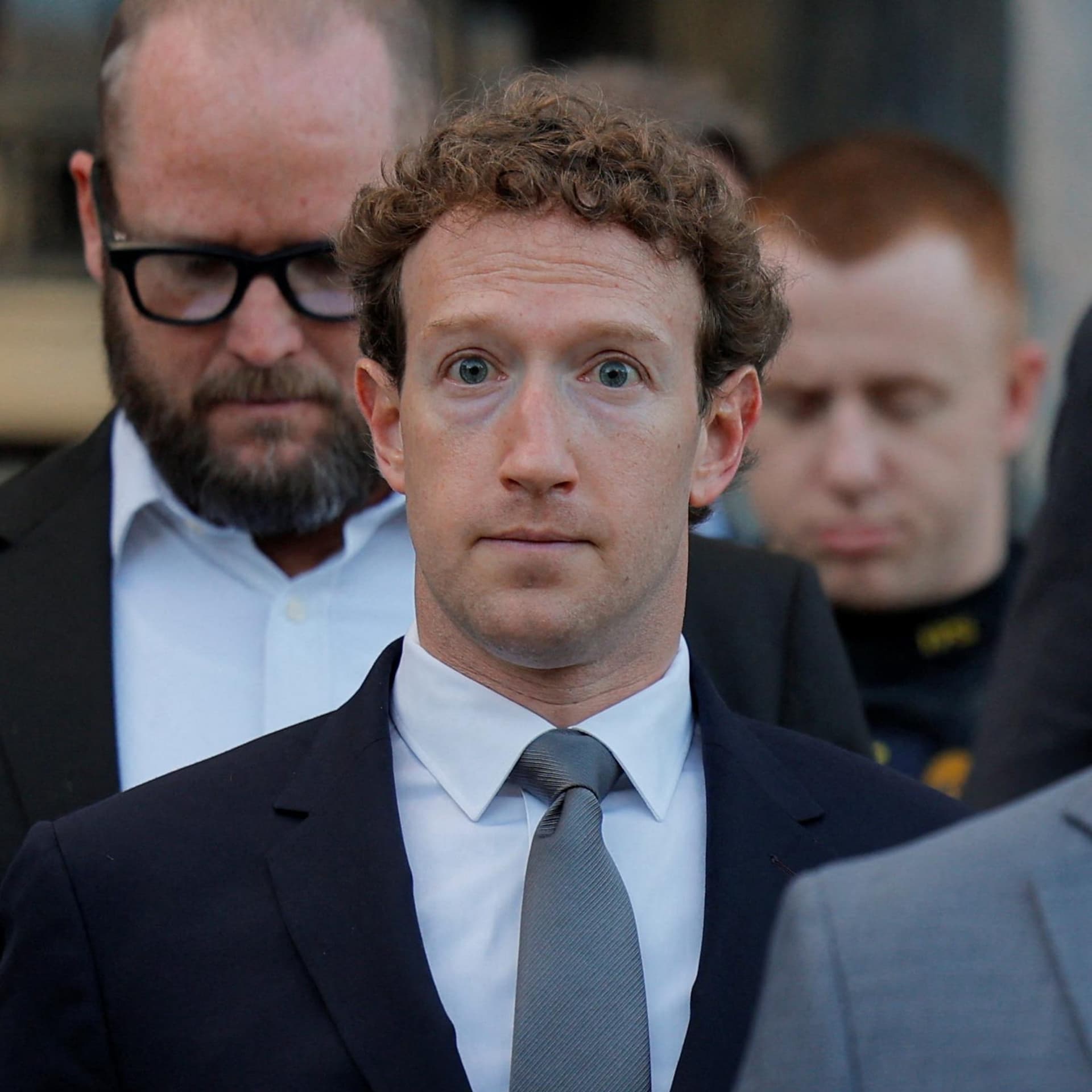
(Photo: Meta Platforms CEO Mark Zuckerberg leaves the court at the case accusing Meta and Google's YouTube of harming kids' mental health through addictive platforms, 18 February, 2026. Credit: Mike Blake/Reuters)