In short
North Korea’s nuclear escalation, driven by Kim Jong-un’s push to expand nuclear capacity, the failure of earlier denuclearization talks, and shifting alliances amid Russia’s war and China’s anxieties.
Guests
Celia Hatton, BBC China-Asia foreign correspondent turned on-air analyst; hosts/producer of BBC Newsroom and sister podcast The Global News Podcast.
Key claims
Kim Jong-un ordered an “exponential” expansion of North Korea’s nuclear arsenal after inspecting a new nuclear facility; weapons-grade material production is reportedly more than double since five years ago. Six-Party Talks (North/South Korea, US, China, Russia, Japan) stalled because North Korea never trusted denuclearization. Russia-North Korea ties deepened after a Feb 2022 Putin-Kim summit, including weapons transfers and trade surges; China worries about arms-race instability and a 2024 mutual defense pact. North Korea is now treated as a “de facto” nuclear state, shaping how leaders view Iran.
Notable examples
2006 nuclear test triggering UN/US sanctions; Trump-Kim summits (Singapore, Hanoi) framed as photo-ops; North Korea’s COVID border closure (2020-2023); North Korean troops sent to fight in Ukraine; claims of ~60 warheads and 6–7 more annually.
Written by AI. May contain mistakes. Listen to the episode to check what was said.
Chapters
Tap a time to open that second in VONorth Korea's Nuclear Expansion
1:10 to 2:14
Discussion on North Korea's recent nuclear developments and global attention.
“It's considered a hermit kingdom, closed off to reporters, tourists, much of the world.”
Perceptions of North Korea in the West
2:14 to 2:56
Exploration of how North Korea has been viewed in Western culture and media.
“And today on The Global Story, why is North Korea going even more nuclear?”
North Korea in the Early 2000s
2:56 to 4:14
Celia shares her experiences covering North Korea and its nuclear ambitions.
“I started covering North Korea when I first moved to China back in 2001.”
The Six-Party Talks and Their Failure
4:14 to 6:43
Discussion about the Six-Party Talks aimed at denuclearization and their outcomes.
“So this is a man who was known to be a film buff.”
The Shock of North Korea's Nuclear Test
6:43 to 8:15
Reactions to North Korea's first nuclear test and its implications for the world.
“But those talks ultimately went nowhere because North Korea never trusted the idea that it was a good idea for them to give up their nuclear ambitions.”
China's Role and Relationship with North Korea
8:15 to 11:10
Analysis of China's strategic interests in maintaining its relationship with North Korea.
“much more heavy-handed sanctions than we'd seen before.”
Trump's Engagement with North Korea
11:10 to 14:00
Celia discusses the high-profile summits between Trump and Kim Jong-un.
“And so when it comes to North Korea, they're just happy to keep North Korea going and they'll do a lot to make sure that happens.”
The Failed Diplomacy of North Korea's Nuclear Talks
14:00 to 17:08
Understand the implications of failed diplomatic efforts between the U.S. and North Korea and their impact on nuclear development.
“Featuring President Donald Trump and Chairman Kim Jong-un.”
North Korea and Russia's Strategic Alliance
17:29 to 20:38
Explore the burgeoning military cooperation between North Korea and Russia amid global conflicts.
“And together we're the hosts of the Global Story podcast from the BBC.”
China's Reaction to North Korea and Russia
20:39 to 23:24
Analyze how China's relationship with North Korea is affected by its alliances and regional stability concerns.
“And that makes me wonder, well, where does that leave China?”
Show all 11 chapters
The Global Implications of North Korea's Nuclear Status
23:25 to 27:36
Discuss the broader global context of North Korea as a nuclear state and its implications for international relations.
“Okay, can we drag this analogy out too far?”
Transcript
Automatic transcript. May contain errors.0:00This BBC podcast is supported by ads outside the UK.
0:30Just tap into iHeart to start watching. And we hope you enjoy the show.
0:38Before we dive into today's show, we want to tell you all about something exciting that we are cooking up for later this week, tied to the launch of the World Cup. We're calling up an expert to answer all of your unanswered questions about the big soccer tournament. Or the big football tournament, potentially, depending on where you are. We want to hear from you. whatever questions you have about the sports or the geopolitics or the pop culture of it all, email us at theglobalstory at bbc.com. With your questions, we'll be delighted to hear from you. Now, you generally don't hear a whole lot of news from North Korea.
1:13It's considered a hermit kingdom, closed off to reporters, tourists, much of the world. But the other day, the country's state news agency released some photos showing Kim Jong-un inspecting a new nuclear weapons facility at an undisclosed location. The reports say Kim called for an exponential expansion of North Korea's atomic arsenal. He said his country's capacity to produce weapons-grade nuclear material was already more than double where it was five years ago. While Washington's been focused on the possibility that Iran could get the bomb, has the world been paying too little attention to a country that already has nuclear weapons?
1:55You're probably going to hear quite a few headlines about North Korea in the next few days. It's not just the nuclear weapons. The Chinese leader Xi Jinping is visiting Pyongyang this week, in another sign that North Korea is a player to be taken seriously. From the BBC, I'm Asma Khaled. And I'm Tristan Redman. And today on The Global Story, why is North Korea going even more nuclear?
2:29I'm Celia Hatton. I'm a longtime China-Asia foreign correspondent turned on-air analyst for the BBC. But I also host the Newsroom program and the Global News Podcast, which is the sister podcast of The Global Story. Our sister podcast. Welcome, Celia. So great to have you back on the show again. North Korea has not always been painted in the most serious of lights in the West over the last few decades. What do you make as a Korea watcher of the way in which North Korea is portrayed? I started covering North Korea when I first moved to China back in 2001. You had to because a lot of the organizations who worked in North Korea were actually based in Beijing at the time.
3:13And so they would hold their press conferences in Beijing. It wasn't that unusual also to maybe go to the North Korean border to interview people who had just crossed between China and North Korea at the time. It was quite porous. And again, North Korea was also, as you said, in pop culture, in Western pop culture. Kim Jong-un's father, Kim Jong-il, was the man who was kind of portrayed in that spoof comedy, Team America World Police. That's the one. Yes. Mr. Il, I was supposed to be allowed to inspect your palace today and your gods won't let me into certain areas. Hans, Hans, Hans, we've been through this a dozen times.
3:50I don't have any weapons of mass destruction, okay, Hans? To be honest, I don't think it would be made today because a big part of the Kim Jong-il character he's portrayed as the supervillain in this film is that he's not really that threatening. He's a bit silly. He's a bit eccentric. And a lot of the other reporting around that time was also obsessed with his eccentricity. So this is a man who was known to be a film buff. He actually watched, apparently, watched Team America and was so enraged by it, he tried to get it banned in a lot of parts of the world. Yeah, that's thought to be. He's also, at the time it was well reported, he had the world's largest collection of Daffy Duck memorabilia.
4:34Apparently he was a Daffy Duck obsessive. Yeah. Are you taking us for a ride on this one? No, I'm really not. I'm really not. You can look it up yourself. It was daffy. It was daffy. So random. We've talked a bit about how North Korea was viewed in the early 2000s as this eccentric country. Some of the West didn't take any of its threats particularly seriously. Particularly, I will say, when it comes to nuclear weapons, I want to understand what the conversations were like at that time, because my understanding is this was also the time period in which North Korea did develop a nuclear weapon.
5:08Is that right? They were trying to develop a nuclear weapon. They hadn't gotten to that point yet, but they had a nuclear program. It was all very covert at the time, but they weren't making a secret of the fact that they were considering the idea very heavily and they were trying to enrich uranium, the material that you need in order to develop a weapon. So they weren't trying to cover up that fact. And so a lot of effort went into a process called the Six-Party Talks. I'm going to describe something to you that sounds almost ridiculous now, but it was a process that went on for years, and I used to cover it for years because it would kind of convene every year or two.
5:49There's been a flurry of diplomatic activity in recent months to jumpstart those talks, the long-stalled Six-Party nuclear talks. And it was six countries, so we had North Korea, South Korea, Japan, Russia, China, and the United States, all sitting around a table, really trying to convince North Korea to give up its nuclear ambitions. We have raised the issue on the overall question of proliferation and the need to do something about proliferation. Six-party talks cannot substitute for action by North Korea to cease its destabilizing actions on the Korean Peninsula. Five of them agreed that North Korea should denuclearize.
6:30And in return, North Korea would be allowed to develop. They would drop sanctions on North Korea. North Korea, however, is refusing to make any concessions on its nuclear program. But we don't have an agreement on what constitutes disabling yet. But those talks ultimately went nowhere because North Korea never trusted the idea that it was a good idea for them to give up their nuclear ambitions. Why did they want a nuclear weapon? Because they've always seen nuclear weapons as protection. So for the North Korean regime, the Kim regime, which is now in its third generation, the way to keep their regime safe, the way to stop any invasion by South Korea, to stop any attacks by the United States, those were always the two enemies that they sided again and again.
7:23The way to prevent that was to arm themselves to the teeth. So they did arguably then arm themselves to the teeth because they successfully tested a nuclear weapon, which was the thing that the global community had been trying to stop them from doing. What was your reaction when that happened? That was a moment of pure shock. In 2006, right? Yeah, I mean, because their language has always been quite bombastic and quite threatening. But there's one thing to kind of say those words. There's another thing to actually test a weapon. So I remember that was a moment where we thought, oof, OK, we're really getting away from the talk of Daffy Duck collections and Team America.
8:02Now we're getting into real weapons tests. And the international community reacted with the same amount of shock. That's the moment when we saw the UN really panic, I think. And that's when UN sanctions went into place on North Korea, much more heavy-handed sanctions than we'd seen before. That's when the United States placed quite heavy-handed sanctions. And I think also there was a lot of alarm in Beijing at the time. You know, Big Brother wasn't so happy. You know, we have to remember, China prizes stability. Speaking of China, Xi Jinping, China's president, is visiting North Korea this week.
8:37And this is his first visit to the country since 2019. Why is this relationship so important? This is a relationship between two countries who share a border. They're also politically longtime allies. They're both communist states, whether we can debate what that term actually means. But historically, when the Soviet Union crumbled, in a way, they kind of clung closer to each other. And I think China was always quite happy that it had North Korea just on the other side of the border, a country that served as sort of a buffer as well, while South Korea was a developing democracy and has now turned into quite a wealthy country that's aligned with the United States.
9:21Yes, exactly. If the United States wanted to put troops, and it has, into South Korea, it has a huge base there. You know, I think China's always been pleased that it has North Korea, its ally, to prevent any U.S. troops coming right up to the Chinese border. So it's always served that purpose. You know, there was a time it was described by Mao Zedong, China's communist revolutionary leader, that China and North Korea were as close as lips and teeth. So they really were seen as rather descriptive. But we also have to I was about to say they were like brothers. But we have to always remember that China is the big brother in this relationship in so many ways.
10:00They are at a very different place economically. China is, you know, a very fast developing economic superpower. North Korea, as you mentioned, is very poor. Would China like North Korea to be more economically developed, ideally? I think you can see people argue both sides of it. There are some people who would argue that it's done China quite well for North Korea to be quite subservient, quite dependent on Chinese aid for quite some time. You know, China has been giving North Korea food and fuel aid up to, some estimates say around 95 % of their food and fuel aid for years now. And so North Korea is really economically dependent on China.
10:42Does China want North Korea to strike out on its own a little bit more? Probably, you know, but I think China values stability when it comes to North Korea. They might not like the regime that's in place there, but ultimately they just want North Korea to stay in place. They do not want that regime to crumble. They don't want a huge refugee crisis. They don't want the 23 million North Koreans to be flooding into China if the regime ever fell. And so when it comes to North Korea, they're just happy to keep North Korea going and they'll do a lot to make sure that happens. So after North Korea tests a nuclear weapon and the world is then aware that it has this capability.
11:26If we fast forward to when Donald Trump enters the White House, President Obama reportedly warned Donald Trump during the transition period that North Korea was the biggest problem that he would face. So then you see Donald Trump in his first term enter the White House, and he repeatedly tries to engage North Korea. What did you make, Celia, of those meetings? I think those meetings were framed by a sense of spectacle. Both men involved in those summits, Donald Trump, Kim Jong-un, both of them like a photo op. Both of them really prized the visual aspects of having this high-profile summit. So we had the first summit in Singapore, you know, this glittering city.
12:12A lot was promised at that meeting. You know, oh, those men were smiling. And I remember American analysts I was speaking to at the time, military analysts, they were amazed at how well that meeting went and how open the North Koreans seemed to be. But there was also a question mark after that first summit, because a lot had been kind of promised about friendship and the path forward. But we didn't see a lot of concrete evidence. Fast forward to a year after that, there was another meeting in Vietnam and Hanoi. And we know that the United States wanted the North Koreans to give up their nuclear weapons and to make real strides to shutter their nuclear weapons program.
12:53And Donald Trump really kind of put a lot on the line to say that he was the one who would strike this deal. We want denuclearization. And I think you'll have a country that will set a lot of records for speed in terms of an economy. Forget this whole six-party talks business with all these other players involved. he would be the one to sit at a negotiating table and get this deal done. I mean, I remember Trump entered North Korea, North Korean territory. We went and met at the line and in meeting at the line, I said, would you like me to come across? He said, I would be so honored. That's right.
13:28Later that year, he even stepped onto North Korean territory, the first U.S. president to ever set foot in North Korea. I didn't really expect it. So I just want to thank you. At one point, the Trump administration even made a video. Seven billion people inhabit planet Earth. Of those alive today, only a small number will leave a lasting impact. To show Kim Jong-un and his inner circle, you know, this is what North Korea could look like if you allowed us to help you develop. Will this leader choose to advance his country and be part of a new world? Be the hero of his people? Will he shake the hand of peace?
14:10It was this kind of PR dream. Featuring President Donald Trump and Chairman Kim Jong-un. Tall buildings and trains and springtime flowers. And it just did look like this idyllic place. One moment, one choice. What if? The future remains to be written. I mean, ultimately it didn't work, but I wish I could have been in that room when that video was first shown. and just to kind of even get in the head of Kim Jong-un. You know, what was he thinking when he was watching this video? I mean, I guess we can assume that he didn't quite believe what it was promising. I mean, ultimately those talks failed, right?
14:52And so what happened then to North Korea's nuclear program from there and its willingness to engage in any diplomatic talks with any Western nations about this? So not long after Donald Trump set foot in North Korea, the COVID outbreak first began. We have to remember that North Korea shut its borders, sealed itself off from the rest of the world, including China, big brother, in January 2020. It was the first country to shut itself off. It had arguably the world's most extreme COVID lockdown, and that lockdown lasted until the middle of 2023. So it shut its borders to trade. It said no to, frankly, even from China, a lot of COVID aid for a couple of years.
15:39And for a long time, maintained that there was absolutely no COVID in North Korea, which to a certain extent may have been possible for a while. But it was a really extreme time. Its economy just collapsed, really. And the BBC has pretty good reporting from that time to indicate that there were people who died of starvation. It was a dark, dark time. So that's what happened inside North Korea. At the same time, though, moving to 2021, North Korea really made a pivotal decision. They published a report. It was a military plan, a five-year plan. And that plan showed that they had made a decision to double down on the development of nuclear weapons, to modernize their military.
16:27That's the moment. whether Kim Jong-un had a lot of time to reflect while his country was in this extreme COVID lockdown, they really became the hermit kingdom. He really clearly made a plan to ditch the Donald Trump promise and to move towards what his country, his father, his grandfather had been planning for quite some time and to move towards it with real gusto.
17:08Celia Hatton:Good morning.
17:22Celia Hatton:Car buying you'll want to tell stories about. Buy your car today on Carvana. Delivery fees may apply. Hi there, I'm Asma Khaled. And I'm Tristan Redmond. And together we're the hosts of the Global Story podcast from the BBC. For those of you who might be new to our show, we here at the Global Story dive deep every weekday on one big story at the intersection of where the world and America meet. And you can now watch the Global Story on the iHeart app. Catch every brand new episode every weekday. Just tap into iHeart to start watching. And we hope you enjoy the show.
18:01So right when Kim Jong-un had made this major military decision to push forward with nuclear weapons, something else was happening really close with another North Korean ally, Russia. Russia had just invaded Ukraine and made its own big military decision. At this point, we're in February 2022. February 2022. Exactly. Not that many months after that invasion, Kim Jong-un writes a letter to Vladimir Putin, the leader of Russia. And in this letter, he proposes that the two countries engage in strategic and tactical cooperation. Okay, so the letter was sent. What does that mean? Okay. Then the two men meet at quite a significant summit, at a Russian cosmodrome, a space base where satellites are launched.
18:49and both men just look, I think, thrilled to be there. There's big smiles. They're really trying to show the world that they are treating each other as equals almost and they're really showing each other things and they're engaged in deep discussion. This was a turning point for these two men. And not long after this summit, there was a transfer of weapons from North Korea. Satellite footage shows that. And we can also see satellite footage of iron ore and petroleum being transferred to North Korea. So very, very quickly, the two countries have realized that they can really benefit. Russia's getting the weapons it needs from North Korea.
19:29I mean, low-grade bullets and armament. That's extraordinary in the sense that Russia is very many times bigger than North Korea, that it should be leaning on its much smaller neighbor for military support. I think that Russia was in a place at the time where it had entered into a war that maybe it hadn't quite bargained for. And it was looking anywhere it could for allies, for support. Russia was facing heavy sanctions at the time. And frankly, it looked good for both men to be able to show that they were engaging with another world leader. Trade between the two countries just absolutely boomed.
20:10It was up ninefold between 2022 and 2023 and up another 54 % the year after. And so they really turned to each other. We know that the Russians have given the North Koreans technological support for military satellites to develop nuclear-powered submarines, to develop more advanced missiles. And so really, at a time when both countries were at a low point, they really found a very close ally on each other. So you've been describing a situation, Celia, in which Russia and North Korea, as you say, cozied up to one another. And that makes me wonder, well, where does that leave China? China and North Korea had a long historical friendship.
20:51And as we have said, Xi Jinping is in North Korea. Why is it significant that he is heading there now? China has been watching this blossoming friendship between Russia and North Korea with eagle eyes. And you might think that, oh, you know, two countries that China has very good relationships with should be seen as a good thing to China. Why would you not want your friends to develop a closer friendship? But it's actually quite complicated for China. On the one hand, North Korea was really looking to be in quite a shaky place during the COVID years. You know, in 2023, we thought that around 45 % of the North Korean population was severely undernourished.
21:42There were real concerns that it was tipping towards... 45%, Celia. Yeah, absolutely. There were real concerns it was tipping towards a major famine. That's not something China would want. But at the same time, as North Korea becomes a de facto nuclear state, that heightens Chinese anxieties about what could happen in the rest of the region. China can see that Japan and South Korea, both countries that are very wealthy, both countries that have U.S. military bases on their soil, well, those countries have both been looking at what's happening in North Korea with a lot of alarm. And China doesn't want Japan and South Korea, you're saying, to have nuclear weapons.
22:20No, they're really worried about an arms race. And that doesn't equal stability. China's also really worried that Vladimir Putin and Kim Jong-un have this bromance going on. And they've actually even kind of put it in writing. In 2024, they signed a mutual defense pact, meaning that if one of them is in trouble militarily, the other one will come to their aid. And that's a real worry. Beijing does not want that. That does not equal stability. And in fact, we have seen North Korea really commit to Russia. They've sent troops to fight on the front lines on the war in Ukraine. And in fact, just recently, Kim Jong-un was praising soldiers who killed themselves on the front line instead of being captured by the Ukrainians.
23:04North Korea has gone to great lengths to solidify its relationship with Russia. And that's a worry for China. So I think that Xi Jinping is interested in speaking with the North Koreans almost to remind Pyongyang, remind Kim Jong-un that they are the ones that pay the North Koreans bills, that they are the ones who are the big dog in the region. So to borrow the lips and teeth analogy, Russia got in between the lips and teeth and Xi Jinping's trip to Pyongyang is an attempt to bring the lips and teeth back closer together again. Okay, can we drag this analogy out too far? But okay, say that...
23:43That's what we do is... Okay, so Russia are kind of like the temporary teenage braces that have gone on between the lips and teeth. But actually, that kind of leads us into this concern. The Russian retainer. Well, they don't want them to be the retainer because then you stick around for way too long, right? Well, yeah, but there's also this thought that actually the North Koreans might need to think twice because what happens if the war in Ukraine comes to an end? I think that's something that China might also want to remind North Korea, that China has been an ally of North Korea for decades.
24:18But, you know, this object that got between the lips and teeth, well, maybe it's not going to be around forever. How risky is North Korea in the current global context? How worried should we be? I think there is a concern that North Korea has always been willing to engage in criminal activity. A sizable portion of their economic activity every year comes from crypto heists and cyber heists. That concern has been whispered many times in backrooms in Beijing that if China pulls the plug on North Korea, that North Korea would then turn to selling its nuclear weapons on the black market, that it would be willing to share its weapons.
25:03And so that is a worry. I do think that's a major concern. Celia, this conversation about North Korea being, as you said, a de facto nuclear state is really, really interesting to me because it is happening in the broader global context in which we have seen the United States start a war with Iran. And the justification we hear from the Trump administration, it's multifaceted, but we've largely heard them talk about the fact that they want to eradicate Iran's nuclear program. We've also heard officials say that they want to destroy Iran's ballistic missile program. And Donald Trump, as we've said during his first term, was really focused on, it seemed to some degree, trying to denuclearize North Korea.
25:46That does not seem to be a priority of his now in his second term. North Korea test-launched missiles this morning. What's your reaction to that? In fact, he was asked on Air Force One about North Korea testing a missile several months back. He's been launching missiles for decades, right? Just another missile that was launched. I always had a very good relationship with him. He seemed very nonchalant about it, says that they've been doing this for decades. Why, in your sense, is he not concerned by North Korea's missile program? I think because North Korea is a de facto nuclear state. North Korea has, we think, around 60 nuclear warheads now, and they have the capability to develop around six or seven additional warheads every year.
Read the full transcript
26:38They're consistently, with Russian help, modernizing their military. It's still existing under the weight of UN sanctions and US sanctions, But by acknowledging the fact that North Korea is a nuclear state, it's also you would have to then acknowledge that diplomacy failed in that regard. And I think by highlighting that as well, well, surely countries around the world will look at the North Korean example and think, well, they made the right choice. If you were part of the leadership in Tehran, would you be looking at North Korea as well and wondering if that's the way to go? But yeah, every time I hear Donald Trump say that Iran should never be allowed to have a nuclear weapon, I think about the North Korean example.
27:32Celia, it's always good to have you on The Global Story. Thanks for joining us. Please come back again soon, Celia. I will. It's always good to talk to you guys. Thank you.
27:44That was Celia Hatton, host of our fantastic sister show, The Global News Podcast, which brings you the latest headlines from around the world every day. And a reminder, if you enjoyed our show today, we really appreciate when you all take a moment to rate us or write a review. It really does help other people find the global story. And please do it because Asma hates saying that. She feels so uncomfortable asking for anyone to be nice to her. So please do it. Thank you. Thank you. Our episode today was produced by Zandra Ellen, Sam Chantarassak and Aron Keller. It was edited by James Shield and mixed by Travis Evans.
28:22Our studio manager was Mike Regard. And our digital producer was Tom Bage. Our senior news editor is Chyna Collins. I'm Tristan Redman. And I'm Asma Khaled. And we'll be back again tomorrow. Thanks so much for listening. Cheerio.
28:43Hi there, I'm Asma Khaled. And I'm Tristan Redman. and together we're the hosts of the Global Story podcast from the BBC. For those of you who might be new to our show, we here at the Global Story dive deep every weekday on one big story at the intersection of where the world and America meet. And you can now watch the Global Story on the iHeart app. Catch every brand new episode every weekday. Just tap into iHeart to start watching. And we hope you enjoy the show.
From the publisher
North Korea’s leader Kim Jong Un has announced plans to expand the country's nuclear arsenal at ‘an exponential rate’, according to state media reports.
His announcement comes as China’s president, Xi Jinping, is making his first visit to Pyongyang this week since 2019 – the same year Donald Trump met Kim Jong Un several times for failed talks on denuclearisation.
We speak to the BBC’s Celia Hatton about why China might now be trying to keep North Korea in check.
Producers: Xandra Ellin, Sam Chantarasak and Aron Keller
Executive producer: James Shield
Mix: Travis Evans
Senior news editor: China Collins
Studio manager: Mike Regaard
Digital producer: Tom Bage
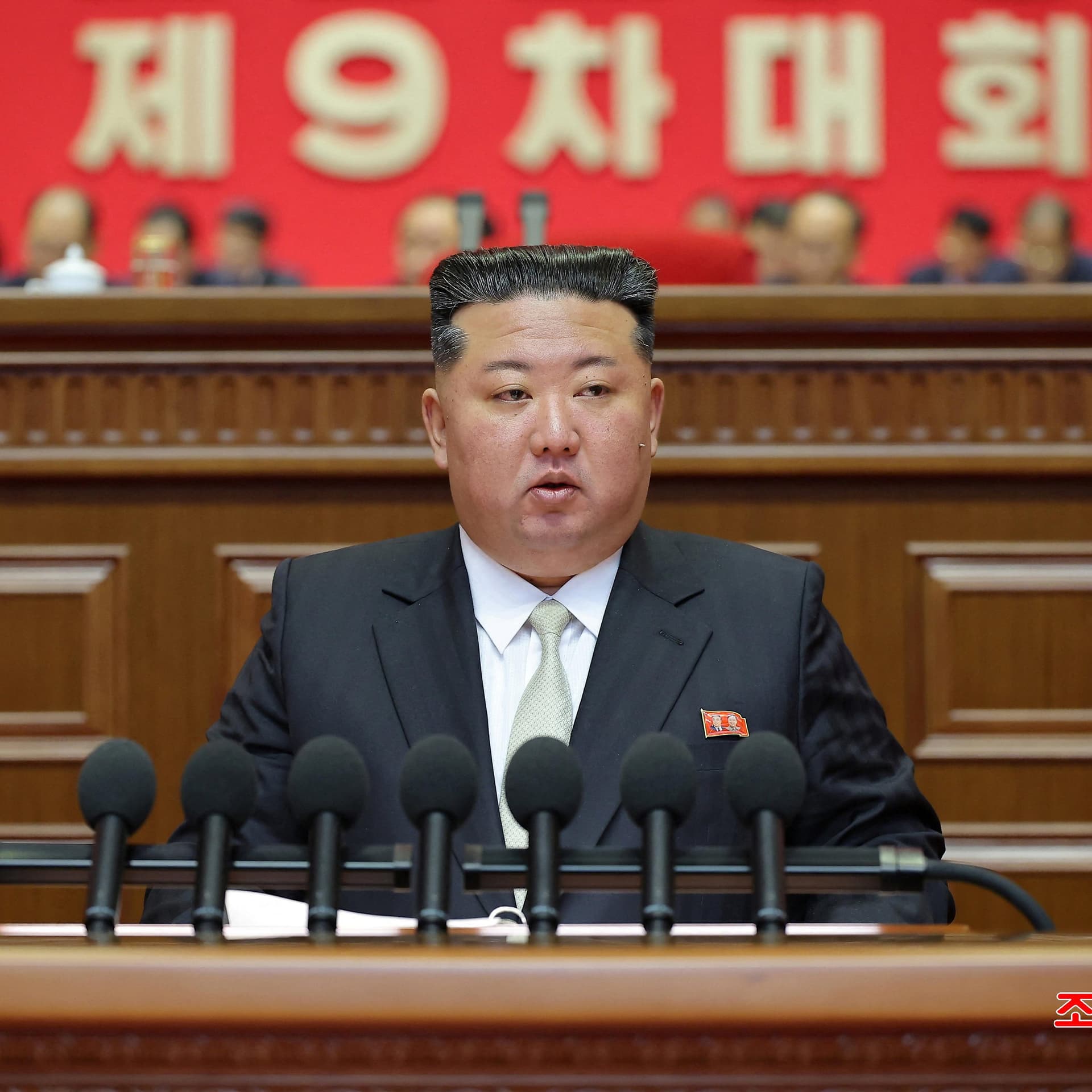
Photo: North Korean leader Kim Jong Un speaks during the fifth session of the Ninth Congress of the Workers' Party of Korea (WPK), in Pyongyang, North Korea, February 23, 2026. Credit: KCNA/Reuters
Clip: Team America: World Police/Trey Parker/Scott Rudkin/Trey Parker/Matt Stone