
In short
Liran Berman’s two-year effort to secure the release of his twin brothers, Gali and Ziv Berman, kidnapped by Hamas during the Oct 7, 2023 attack on Israel; the episode focuses on his cautious optimism amid reports of a possible ceasefire/hostage deal and his criticism of stalled negotiations.
Guest backgrounds
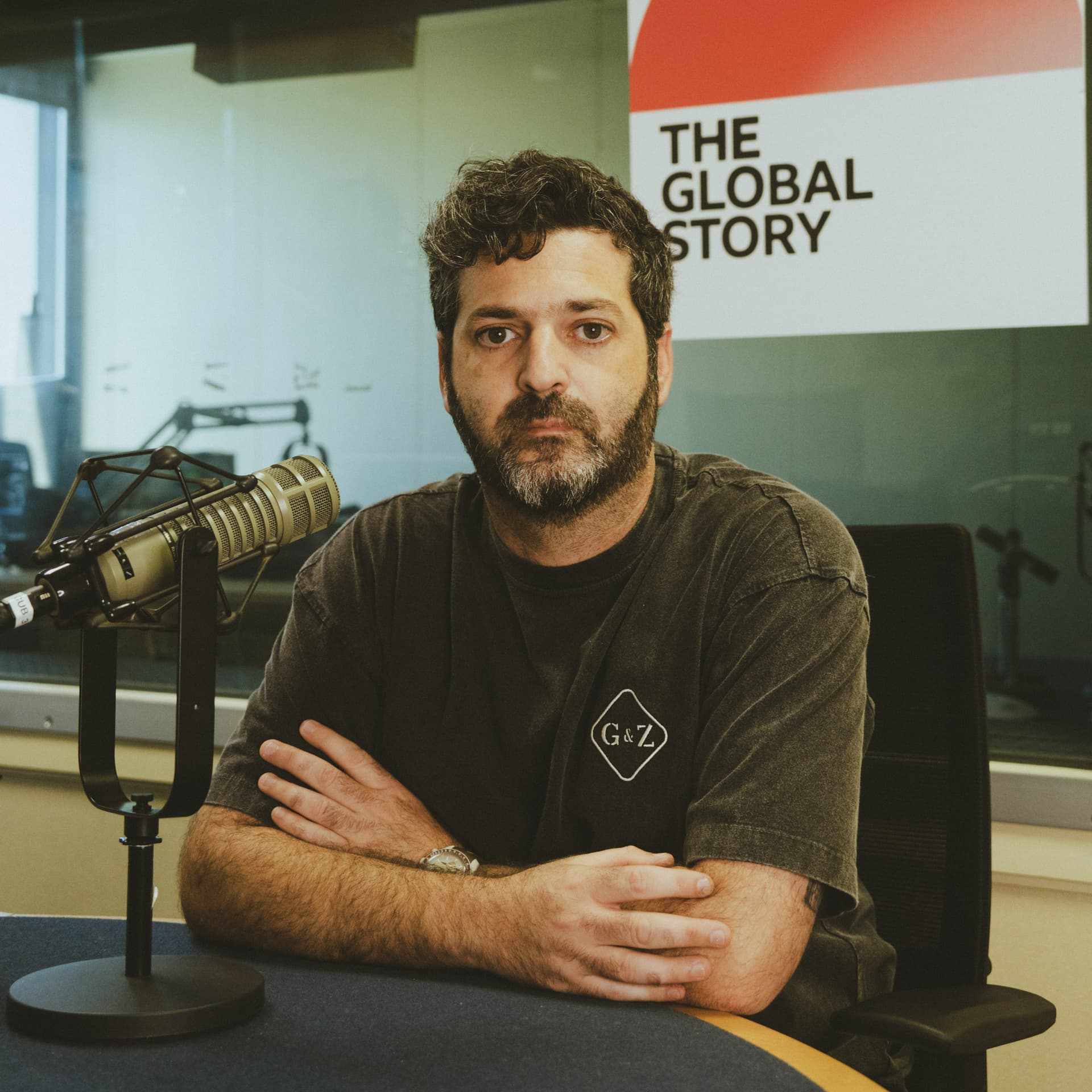
Liran Berman is the eldest of four brothers from Kfaraza near Gaza; he lives in Israel’s north and has been traveling to Washington, D.C. to lobby politicians with Bring Them Home Now. His brothers are 26-year-old twins from a kibbutz near the Gaza border.
Key claims
Hamas is “mainly” to blame for deal collapses; Israel’s government didn’t do enough to prolong phases of negotiations. Trump’s return and his Gaza-hostage pressure helped restart talks.
Notable examples
Liran recounts receiving early WhatsApp voice memos from Gali and Ziv during the kidnapping; he says last confirmed eyewitnessing was in December, with intelligence in February that they’re alive; he describes visiting their apartments in Kfaraza on their 28th birthday and imagining their reunion.
Written by AI. May contain mistakes. Listen to the episode to check what was said.
Chapters
Tap a time to open that second in VOBackground on the Hostage Situation
1:15 to 2:12
Overview of the October 7th attacks and the hostages taken.
“On October 7th of 2023, Hamas attacked Israel, taking 251 people hostage.”
Liran Berman's Emotional Journey
2:15 to 3:35
Liran shares his feelings and hope regarding his brothers' captivity.
“about his two-year quest to rescue his brothers.”
The Berman Brothers' Bond
3:37 to 5:38
Liran describes his brothers' personalities and their close relationship.
“You woke up feeling stressed, but you're also optimistic.”
Life Before the Attack
5:40 to 7:41
Discussion about the Berman family's life and plans leading up to October 7th.
“Ziv is the eldest by a minute and a half.”
The Day of the Attack
7:45 to 13:14
Liran recounts his experience and the chaos of the day his brothers were kidnapped.
“I remember every minute of October 7th, every minute.”
The Aftermath and Hope
13:21 to 14:00
Liran reflects on the long journey of seeking his brothers' release and the roles of families.
“And I want to get a sense of the trajectory of that time period for you and some of the other hostage families.”
Navigating Hope and Envy Amidst Stagnation
14:00 to 16:27
Learn about the emotional tumult of waiting for loved ones' release amidst hope and envy.
“It was so chaotic in the first three weeks.”
Blame and Political Context of Hostage Situations
16:29 to 19:16
Explore the dynamics of blame regarding hostage situations and political responses.
“You mentioned that there have been these kind of fits and starts and these long periods of stagnations.”
Optimism in Diplomatic Efforts
19:17 to 21:42
Understand the shifting optimism regarding hostage negotiations and diplomatic efforts.
“You've been making multiple trips, you said, to here in Washington, D.C.”
Personal Reflections on Family and Hope
21:43 to 24:06
Gain insight into the personal reflections and emotional challenges faced by a family member of hostages.
“We can be, we were very optimistic in the past and deals collapsed.”
Show all 11 chapters
Future Hopes and The Weight of Uncertainty
24:07 to 28:01
Delve into the hopes and fears surrounding the potential release of hostages.
“We know that the Trump administration has sent negotiators to Cairo, Egypt.”
Transcript
Automatic transcript. May contain errors.0:00This BBC podcast is supported by ads outside the UK.
0:30No bouncing between tabs. And best of all, no spreadsheets. Stop managing software and start managing your business with one unified system. Try for free today at odoo.com. That's O-D-O-O dot com. Hi there, I'm Asma Khalid. And I'm Tristan Redmond. And together we're the hosts of the Global Story podcast from the BBC. For those of you who might be new to our show, we here at the Global Story dive deep every weekday on one big story at the intersection of where the world and America meet. And you can now watch the global story on the iHeart app. Catch every brand new episode every weekday. Just tap into iHeart to start watching.
1:10And we hope you enjoy the show.
1:15On October 7th of 2023, Hamas attacked Israel, taking 251 people hostage. Gali and Ziv Berman were among them, Twin brothers who lived on a kibbutz near the Gaza border. They were 26 years old. Now, after two years, they are among some of the remaining hostages still held in captivity. But in the last few days, the prospect of the war in Gaza ending and the remaining hostages coming home seems closer than ever. And that gives Gali and Ziv's older brother Liren cautious hope. We are waiting. We are stressed out. but this is the most optimistic I've been since January 2025. I met Liran in Washington, D.C.
2:03He's here to keep pushing politicians to make this deal happen and not let it fall through like the previous ones. From the BBC, I'm Asma Khaled. And today on The Global Story, I speak with Liran Berman about his two-year quest to rescue his brothers.
2:27Liran, thank you so much for coming into the studios to be with us. I really appreciate it. Thank you, Asma. This has been a dramatic weekend of developments, possibly inching closer to a ceasefire deal that might bring hostages like your brother's home. I imagine it's been a really emotional few days for you, for your family. How did you feel when you woke up this morning? Like, tremendous amount of stress. A lot of stress all the time. Specifically in the last 72 hours, maybe a little bit more. More stress. More stress than I was for a long, long time. Me coming here to D.C. was in a question mark because should I come?
3:13Would I come? Why wouldn't I stay at home and wait for news? News you're saying possibly that your brother's going to come home. Yes, the news that we are waiting for is the news that a deal will be signed and a hostage will come back. So we are waiting. We are stressed out. But this is the most optimistic I've been since January 2025, since the second deal. You woke up feeling stressed, but you're also optimistic. Yeah. I have so many emotions in the same time. I'm living with guilt since October 7th. Guilt? Yes, of course. What do you mean? I'm an older brother who wasn't there to help my two little brothers on October 7th.
4:01I have just the ability to choose what I'm eating in the morning on what bed I'm sleeping in, and my brothers doesn't. They have AK-47 directed to their heads. They need permission to go to the toilet or to eat or to talk. And I don't. So I live with an ongoing guilt because I wasn't there. And because I failed, I failed them. I didn't manage to bring them back. I want to hear more from you about what the last few weeks have been like and how you've been processing it all. But before we do that, I was wondering if you might tell us a little bit more about your brothers. I actually, in fact, noticed your t-shirt.
4:43It says G and Z? Yeah, Gali and Ziv, yeah. So we are four siblings, four brothers. I'm the eldest, we have another brother in the middle, Idan, and Gali and Ziv are twins, they are the youngest. I was 10 years old when they were born, so there is a 10 years gap between us. Actually, I missed their birth because I had basketball practice, but I came, they were already in like the little bed in the hospital. What I remember from birth, they were always together. Always, always, always. Of course, when they were babies, but when they grew up, our mother tried that they won't be the regular twins, like same clothes, same friends, same hobbies, same everything.
5:27My mother, our mother tried her best that they will be individuals, but their twins, them, like their bond is so strong that they always draw to each other. Were their personalities similar? No. Their personalities are different. Ziv is more shy. Ziv is the eldest by a minute and a half. He's always telling Gali this. I'm your eldest by a minute and a half. And Gali is more outspoken, like very strict. Gali is a handyman. He's a very good handyman. Like if you need to put on a shelf or move your house or whatever Gali is there to replace the tire in your car. Gali is there and Zivi is always accompanying him, smoking a cigarette from the outside and pointing the finger where you need to put the shelf, what you need to do.
6:14Like always telling from the outside what you need to do and Gali is always doing it. He's the actual handyman. Yes, Gali is actually the handyman. Zivi is the pointy man. You should put the shelf over there or over here. We grew up in Kfaraza. It's a small community, just under a thousand people. Whereabouts is that? Can you place that for us? It's like a kilometer from Gaza City, just in the middle of the Gaza envelope. That's where you all grew up? Yes, we all were born there, grew up there, and I'm actually the only one who left Kfaraza. I left to the north. I lived in Kirachmona, which is like the northeast city in Israel.
6:54How far of a drive were you from where the rest of the family was? Less than two hours. Okay. How much were you in each other's lives before October 7th? We came with our kids like weekend every month, like at least once a month. On holidays, of course, we came all the holidays. We were supposed to be on October 7th on the holiday there in Kfaraza. But you were not? We were not because my wife's family had COVID. Our father has Parkinson's and dementia, is disabled, 100 % disabled. so our mother doesn't take chances with him. I see. So because our wife's parents had COVID, we didn't arrive. But we were supposed to be with our two little kids on October 7th in Kfaraza.
7:40Where were you when you first heard about the attacks on October 7th? I was at my house. I remember every minute of October 7th, every minute. My youngest, Alma, my youngest daughter, woke me up 625. Yeah. How old is she? She is now three and a half. She was one year and a half. So she just woke up as a baby. Yeah. I gave her a pacifier, went back to bed. It was four minutes before the start of the attack, before the first sirens. I sat back in bed, like sitting down, preparing to go back. The alarm started all over Israel, 6.29. Like everyone else in my family was sleeping, I moved to the living room, turned on the news, got a location of Kfaraza, where my family lives.
8:31So my phone rang like crazy. I sat in the living room watching the news. I'm saying it with a real sort of way. We are used to the sirens. We are used to the rockets. Every couple of years, we have a small operation, something like this, for a few days, maybe a few rockets. Israel will retaliate and then it will be over. All the time. But at 7.15, I watched the news, the first pickup truck of terrorists in the city of Sderot. Sderot is like less than 10 minutes from Kfaraza. We saw them on CCTV, on the news. We realized it's something else. It's not just rockets. It won't be an hour and over. But it didn't stop.
9:20It didn't stop. The alarms didn't stop. and then we started to hear about like terrorists entering the kibbutzim and you're seeing this all on TV all on TV and starting to text my family like 7.15 they said that they are hearing live ammunition they're hearing a lot of shouting in Arabic I entered the kibbutz WhatsApp group I saw like text messages that I can't forget They are in our neighbor's house. We are smelling smoke. They are entering our house. We need help. Where is the army? Where is the police? Why is no one coming? We are hearing people trying to break our door. This is all in our kibbutz message group.
10:10We have an audio of my two little brothers talking with our mother, Gali. How do you have the audio? You called? No, no. they texted our mother like they sent her an audio. Like a voice memo. A voice memo, yeah. I see. Gali sent our mother an audio saying that Emily Damari, another hostage who came back on the 19th of January, she's afraid. So I'm taking a kitchen knife and I'm going to be with her. It was around 7.15, 7.30 in the morning. And we have another audio of Ziv with our mother again saying that he's smelling a lot of smoke. And he thinks it's entering his apartment. So our mother is telling him, lock all the doors, close the windows, stay in your safe room.
10:57Everything will be okay. Just don't go out. What we later found out about their kidnapping is that they burned his apartment from the outside. Like two smoke bombs from the outside. He had two options, either to be suffocated by the smoke or get out. So they waited for him outside of his apartment and they took him. and they breached Emily's room, entered there, and they shot her dog. She had a little puppy on her knees. They shot it. Two of her fingers were cut off because of the bullet and she had a bullet in her leg. Then she said, I don't want to come with you. I don't want to be a hostage.
11:41So they put a rifle on Gali, telling her that they will shoot him on the spot if both of them won't come out with them. So they took all three of them into Gaza. How did you find out that your brothers had been taken and were still alive? For 11 days after the attack, we had no information. We waited all our family. We weren't very optimistic. The idea that both of them were kidnapped It was somewhere in our thought, but we waited for two announcements, either that they survived somehow or that we need to pray them. So when they arrived on the 11th day, IDF intelligence arrived. We were very, very stressed, very, very nervous.
12:38You can't, this is a knock on the door that you can't prepare yourself for. and they say to us that with 99.9 % intelligence, Gali and Ziv were kidnapped into Gaza. In a very, very surreal sort of way, it was one of the happiest days of my life. The alternative is much worse. I felt hopeful. I felt that we have a reason to fight for now. We didn't believe it will take two years. Liran, it has been a long time, you say, since that date, now nearly two years later. And I want to get a sense of the trajectory of that time period for you and some of the other hostage families. How did your life change in those first few weeks and first few months?
13:40Since we got the announcement that they were kidnapped, we divided them among our immediate family. Each got a role in this fight. What was your role? My role was international media, media in Israel. So things like this. Interviews in English. Yes, interviews in English and delegations. My first one was in the 2nd of November, three weeks after the attack. I came here to D.C. What did you do? It was so chaotic in the first three weeks. It was before the first deal. Before that first high school. It was five days. It was mostly media. But there was already starting off a talk of the first deal then.
14:20I see. In the first two deals, there is a lot of hope and optimism. And you're very high. By now, you know all the families and all the hostages. And you're so happy for them to get their loved one back. but you also live with envy. Why them and not me? Yeah, I wanted to ask you about that. Can you tell me what it's like when you see other hostages being released, when you see other families reuniting with their loved ones and then those people being released ultimately were not your brothers? So in the first deal in November, we understood, we understood and we got it that the babies, the little children, the mothers and the elders should come out first.
15:06This was a given. But I wanted my brothers. And then when they didn't come? It was a huge, huge, huge downfall. A huge downfall. Like I said, the deal collapsed. And we got into a stagnation for several months. until I think the next time that we heard about another deal was in May, the Biden-Netanyahu proposal, and it also collapsed. And then there was another long, long stagnation until actually President Trump was elected.
16:27Transcription by CastingWords Every weekday. Just tap into iHeart to start watching. And we hope you enjoy the show.
16:38You mentioned that there have been these kind of fits and starts and these long periods of stagnations. The deals collapsed. Who do you blame for that? Mainly. Mainly Hamas. He's the man to blame. Tell me more. Hamas should have entered Israel on October 7th. Israel would have entered Gaza, wouldn't, if Hamas on October 8th released all the hostages. So you think that Israel would not have entered Gaza? I'm sure that Israel wouldn't have entered Gaza. There would be a retaliation against Hamas. Nothing in this proportion. And Hamas had all the opportunities to help his people by releasing all the hostages and agreeing for still up until now, even now, the 21 points of Donald Trump, Hamases didn't agree to all of them.
17:34So I'm curious what you thought of the Israeli prime minister before October 7th. Were you someone who was political? I wasn't very political. I voted, of course. It's my right as in a democratic place. I didn't vote for Netanyahu, but I wasn't cared that he was the prime minister. I am center-right wing in my perspective. I didn't vote for him, but I didn't care that he was the prime minister. The reason I was asking this is I know here, even in the United States, there was a lot of coverage about some of the protests against Benjamin Netanyahu leading up before October 7th. And there has been criticism we've heard even from within Israel that Netanyahu could have made a deal sooner to get the hostage.
18:18This is also a criticism that I have, that the Israeli government didn't do enough. This is a fact. Do you think that he could have made a deal sooner? Probably. He could have prolonged the second deal. The second deal being the one, the beginning of the Trump administration. The January 2025, yeah. And then that second phase never came. Never came. Hamas like strengthening their positioning, then Israel said, if Hamas is threatening, we are withdrawing. They even try to speak on the 16th day. This is a lot of criticism I have for my government that they didn't do anything to prolong the second deal, to get to the second and third phase.
18:59And since then, Israel government hasn't done enough. This is a given. I can be a very pro-Israeli government and still the Israeli government hasn't done enough. And so we didn't need to arrive through the two years anniversary. We can end it all in April, maybe. You've been making multiple trips, you said, to here in Washington, D.C. I was curious to know what your view of Donald Trump was before he took office again this past January and whether your opinions on him have evolved. Okay. Once Trump gave the tweet about if I'm reelected, whole hell will break loose in Gaza if the houses won't come out.
19:47I remember that. There was a beginning of the Trump effect. We felt it. We felt that there was a new surge of optimism and talks is possible and we need to talk and maybe with this new administration there is a possible way of ending this. So once he gave the tweet, before him being elected, I remember coming here for his inauguration. I was on stage on the 20th of January. But a day before he was inaugurated, there was the beginning of the second deal. Three women came out and we were there on stage to thank him. and promised us, he promised us, together with Mr. Whitkoff and Adam Buehler, they will be with us until the last hostage.
20:40And up until now, it's almost 10 months since the inauguration, yeah. And they not let us down. Mr. Whitkoff, the special envoy to the Middle East, all of us has this personal phone number and he's very responsive, he's fully committed. Trump has an open door for the least hostages. You can agree with his politics. You can disagree. He's an eccentric man. I don't care about anything else. He's the one that made the deals possible. Him being elected, him making this tweet even before being elected, his connection with Prime Minister Netanyahu, his connection to the mediators in Qatar, he is making the deals happening.
21:22Does this moment then feel different than in the past? Now? Yes. I feel the most optimistic since January 2025. Since January. So you feel like it's akin to January. Yes, I do. Not more so, perhaps. You're willing to get yourself to feel justice. Until they are here, they are not here. Until they are here, they are not here. We can be, we were very optimistic in the past and deals collapsed. We waited on the 16 days in the second deal and the deal collapsed. the fall from these highs is terrible. Even if it's signed, a lot can be happening. So until they are here, they are not here. I want to ask you about your brothers.
22:09What is the most recent update you've had from them and any indication that... The last eyewitnessing was in December, but we got it in February. We have intelligence that they are still alive and the intelligence is not eyewitnessing. It's just we didn't get anything else. We know that they were separated in the first day. Am I right in understanding that last month was their 28th birthday? Yes. What was that day like for you? Very weird. We didn't celebrate any holiday for two years. Any. And the birthday is like, okay, I'm waiting for tomorrow. I don't want to be involved in this day. I went to Kfaraza to their apartments.
22:58I sat there outside. You went there? I went there. I went to Kfaraza. It's my go-to when I need a minute for myself. I'm sitting outside of their apartments, talking to them. You talk to them? I talk in their directions. Yeah. To Gaza, I speak. What do you say, if you don't mind me asking? normal day-to-day stuff that we used to talk about before. Like, Liverpool just won. Salah scored twice. My eldest son just got into first years in school. Alma is dancing, and Alma, she's my youngest daughter. She's starting to ballet dancing, and we want to sign her for a ballet class. And, like, every day, like, this is what I miss the most.
23:48that they are not here. It's that our day-to-day talk, I miss to fight with them on who is mowing our parents' grass and who is taking out the trash in the end of the dinner. These little shenanigans, this is what I miss the most. So you're here in Washington, D.C. We know that the Trump administration has sent negotiators to Cairo, Egypt. Our understanding, at least as of now when we are taping this, which is about midday East Coast time on Monday, they're in theory supposed to be hammering out the beginnings of this deal. What do you think is going to happen? How much are you willing to have hope right now?
24:31I'm willing to have a good amount of hope. But like I said, we've been there. And until they're here, they're not here. I think we are the closest. I say it's a lot of cautious. but with growing hope.
24:53This is a really hard question for me to ask. How much do you ever let your mind wander into what might happen? What are you most afraid of? I'm most afraid of two things, I think. one that they will be mad at us and angry at us that they'll be angry with you yeah
25:23we know that they know that other hostages got out hostages have been with them and they probably heard because we know that they let them see the news every now and again so my first if I'm closing my eyes and like Letting all the shields go off, I'm afraid that they will be angry at us. That why haven't we been out yet? I just want to make sure I understand that. Are you saying almost like you worry that they think you have not fought hard enough for them? Yes. And the second thing is that after two years in hell, mentally they will come out, not the Gali and Zivi that I knew. We will work as hard as we can that they at least be as close to Gali and Zivi that they were before October 7th.
26:21Have you imagined what the day might be like? All the time. All the time. Everyone that's asking me this, I'm saying that it's on mute. I'm hearing nothing. You see the picture. I'm seeing the picture. I'm imagining it. It's like a silent movie. Oh, wow. I imagine him hugging them in the bright white light of the hospital. I imagine him sleeping in the uncomfortable chair between their two beds. I imagine the first hug. I don't know what I will say to them. I don't know. Probably, I'm sorry and I love you. Just a big hug. And we won't let them go.
27:12Liran Berman, thank you very much. Thank you. Of course.
27:26Liran is here in Washington, D.C. with the group Bring Them Home Now. It's been advocating for the release of the hostages being held in Gaza. And here on the Global Story podcast, we have been covering the war in Gaza quite often. So please check out your feed for prior episodes. Our most recent episode on this issue was in fact just on Monday about President Trump's peace deal, how it came about, and if it could actually possibly end the war. Also, a favor to ask you all, if you are appreciating our show, please take a moment to rate us, write us a review. It helps other people find the show.
28:02This episode was made by Valerio Esposito, Kat Farnsworth, and Annie Brown. It was engineered by Travis Evans. Our senior news editor is Chyna Collins. And folks, that is it for today's episode. We'll be back again tomorrow. Thank you as always for listening, and we'll talk to you again soon. Hi there, I'm Asma Khalid. And I'm Tristan Redmond, and together we're the hosts of the Global Story podcast from the BBC. For those of you who might be new to our show, we here at The Global Story dive deep every weekday on one big story at the intersection of where the world and America meet. And you can now watch The Global Story on the iHeart app.
Read the full transcript
28:44Catch every brand new episode every weekday. Just tap into iHeart to start watching. And we hope you enjoy the show.
From the publisher
On October 7 2023 Hamas attacked Israel, taking 251 people hostage. Gali and Ziv Berman were among them – twin brothers who lived on a kibbutz near the Gaza border. They were 24 years old. Now, after 2 years they are among the remaining hostages still being held in captivity. But in the last few days the prospect of ending the war in Gaza and releasing the remaining hostages seems closer than ever. That possibility gives Gali and Ziv’s older brother Liran Berman cautious hope. Liran speaks to Asma at length about his memories of October 7th, his quest to get his little brothers out of Gaza, and who he will give credit to if the peace deal succeeds. Producers: Valerio Esposito, Lucy Pawle and Cat Farnsworth Editor: Annie Brown Mix: Travis Evans Senior news editor: China Collins Image: Liran Berman by Valerio Esposito