
In short
Xi Jinping’s large-scale purge of China’s military leadership amid his anti-corruption drive, and what it signals about Chinese power ahead of Donald Trump’s Beijing visit.
Guests
Celia Hatton, BBC China correspondent for 15 years (also co-hosts the Global News Podcast). She explains how purges unfolded since Xi took power in 2012. Hosts include Tristan Redmond (London) and Asma Khalid (Washington, D.C.).
Key claims
Xi is purging perceived disloyalty within the People’s Liberation Army to tighten control and loyalty; the scale is unprecedented (about 60% of senior generals; ~100 officials removed or missing). The campaign may relate to leadership succession planning, possible missile/munitions problems reported by Bloomberg, and/or fear-building inside the military.
Notable examples
Fourth Plenum missing officials; 2014 investigations of Central Military Commission member Su Caihao and security chief Zhou Yongkang; “tigers and flies,” “four dishes and a soup,” and “scraping poison from the bone.” Mentions “Garden Prison” and “Qinqiang Prison,” plus death sentences with reprieves for some former defense ministers.
Written by AI. May contain mistakes. Listen to the episode to check what was said.
Chapters
Tap a time to open that second in VOContext of Xi's Power Consolidation
0:42 to 1:11
Discussion on Xi Jinping's consolidation of power and military purges.
“And to think, that's just a small taste of what Schwab offers.”
Context of Xi's Power Consolidation
2:41 to 4:00
Discussion on Xi Jinping's consolidation of power and military purges.
“And today on The Global Story, what does Xi Jinping's purge of the military tell us about Chinese power?”
The Scale of the Purges
4:00 to 5:48
Analysis of the unprecedented scale and implications of military purges.
“We started getting an inkling that there was going to be another massive military purge.”
Reasons Behind the Purges
5:48 to 7:40
Exploration of theories regarding the motivations for Xi's purges.
“And then through a sort of kind of a dribbling of announcement, it turns out really that over those months, around 100 officials, top military officials have been purged or potentially purged.”
Xi's Anti-Corruption Campaign
7:40 to 11:14
Examination of Xi Jinping's long-term anti-corruption efforts in China.
“So it could be something to do with some kind of leadership transfer.”
Historical Context of Corruption in China
11:14 to 14:00
Celia shares insights from her experiences about corruption under Xi's leadership.
“Asma, let me tell you a story, a tour that I went on when I was one of the BBC's China correspondents.”
Investigating Xi Jinping's Anti-Corruption Campaign
14:00 to 14:58
Learn about the early stages of Xi Jinping's anti-corruption efforts and their implications.
“a man named Su Cai-ho, was under investigation.”
The Evolution of Anti-Corruption in China
15:00 to 17:35
Discover how the anti-corruption campaign has transformed into a way of life in China.
“but also as a way to go after people who might have offered any alternative to him.”
Life After Purge: The Fate of Corrupt Officials
17:36 to 19:52
Understand the consequences faced by high-ranking officials implicated in corruption.
“He was slaving away, working very, very hard.”
The Messaging Behind Corruption Sentences
19:53 to 24:24
Examine the political implications of publicized corruption sentencing in China.
“Their families are often targeted as well.”
Show all 12 chapters
Power Dynamics: Xi Jinping vs. Donald Trump
24:25 to 26:51
Explore the power dynamics between Xi Jinping and Donald Trump during a pivotal moment.
“I wouldn't believe that Donald Trump is arriving in Beijing questioning Xi Jinping's position because he's let go of so many generals, because Donald Trump himself has let go of key members of his cabinet at times.”
Exploring Chinese Turn of Phrases
28:00 to 28:59
Listeners will learn about the significance of Chinese idioms in political discourse.
“Before you go, Celia, I'm going to put you on the spot.”
Transcript
Automatic transcript. May contain errors.0:00This BBC podcast is supported by ads outside the UK.
0:30No bouncing between tabs. And best of all, no spreadsheets. Stop managing software and start managing your business with one unified system. Try for free today at odoo.com. That's O-D-O-O dot com. Self-directed investing. Trading. Full-service wealth management. Automated investing. Financial planning. Thematic investing. Retirement planning. Phew. And to think, that's just a small taste of what Schwab offers. Because Schwab knows that when it comes to your finances, choice matters. No matter your goals, investing style, life stage or experience, Schwab has everything you need, all in one place, so you can invest your way.
1:11Visit schwab.com to learn more. For the first time in nearly a decade, a sitting American president is traveling to China. The two most powerful men in the world are meeting in Beijing. And yes, while tensions between the United States and China have been simmering for a while now over everything from tariffs to Taiwan. Donald Trump seems to admire his Chinese counterpart. I have a great relationship with President Xi. He's described him as a smart and fierce man in the past. An amazing man. And when I say that, the press always says, oh, that's terrible that he called him. He runs 1.4 billion people with a pretty iron fist.
1:59as Trump says in Iron Fist. Xi's a leader who's consolidated his power and is purging military elites in China in an effort, he says, to root out corruption. Well, here's the news. China has purged several generals. Beijing says they were corrupt. President Xi has carried out a campaign to purge the People's Liberation Army of those he perceives as disloyal. This is a great demonstration of Xi's judgment about who belongs in the military. It's in this context that Donald Trump and Xi Jinping are meeting face to face. From the BBC, I'm Tristan Redmond in London. And I'm Asma Khalid in Washington, D.C.
2:43And today on The Global Story, what does Xi Jinping's purge of the military tell us about Chinese power?
2:55I'm Celia Hatton. I actually present the sister podcast to this podcast, the Global News Podcast. But I also am a longtime China correspondent. I lived there for 15 years. Well, Celia, it's a pleasure to have you back with us. It's great to see you both. And it's so nice to be here in the studio. Thank you for joining us. Last time we spoke with you in the studio was back in September. And it was at the moment at which China was hosting this massive military parade in Beijing with a whole bunch of world leaders that descended on China. And the significance of the moment, it seemed like, was for Xi Jinping to showcase this massive military strength that he has been building up.
3:39Now, here we are some eight months later, and it seems like there is, as well as some building, there is some deconstructing going on. He has been purging many of the high-ranking top brass in the People's Liberation Army. Why is he doing this? Well, this is an unprecedented moment, really. We started getting an inkling that there was going to be another massive military purge. around October last year. That's when there was a key party meeting, something known as the Fourth Plenum. It's a time when we were expecting to see all the top brass, military brass, come to Beijing alongside all of the top Communist Party officials.
4:24Everybody should be there. It's supposed to be a who's who of the party on display. At that meeting, a lot of key officials were missing. Personnel changes are a key part of the Fourth Plenum. This year's nine purges. dwarfed the three of the last plenum. Including around 60 % of the most senior generals. Eight of the CCP's Central Committee members, who were top generals, were expelled from the party last week. And that's really when alarm bells started going off. Maybe this is the first time in CCP history that so many generals have been purged at one time. Fast forward to December, nine very senior generals were accused of crimes.
5:07the state media said, involving an exceptionally large amount of money. Then in January, to, again, I know I say top officials, but let's go to the very, very top, the Central Military Commission. Nobody in the inner circle is safe. That's how many political observers are interpreting in the Chinese president's latest military page. Normally has seven, including Xi. We learn that two very key members of that commission are under investigation. And that brings that group of seven down to two, Xi Jinping and one other general. The move underlining that even close personal ties offer a little protection when it comes to loyalty to the party leadership.
5:48And then through a sort of kind of a dribbling of announcement, it turns out really that over those months, around 100 officials, top military officials have been purged or potentially purged. Either they've simply disappeared and we haven't heard from them since that key meeting in October, or they've actually been ousted from the party, accused and sentenced, all in very quick succession. One have to question his judgment. I think we were wondering, like, what's going on? Why are we seeing these individuals being purged? At what point is this reshuffling going to stop? Because it is creating a lot of instability in the system.
6:27Some have been describing it as if Xi Jinping as waging an internal war against his own military. It's all about loyalty and control. Yeah, I think so. If you're not loyal to me, so you will be purged. He has carried out purges on military top brass in the past. This time, it's on a scale we've never seen before.
6:54Sili, I still don't get a sense of why this is happening in this moment. Well, there's a lot of theories around this. I think it has something to do with where he is in his life. He's 72. He's been in power since 2012, so for well over a decade. He's right now serving an unprecedented third term. And next year, he in theory might be entering his fourth term or nominating people who will succeed him. In past power transfers in China, not always, but sometimes, the leader will hold on to perhaps one title because Xi Jinping is the head of the party, he's China's president, and he leads the military.
7:35It's possible that he is trying to tighten loyalty around him, put his own much younger people in place underneath him, so that when he does begin to pass the baton, perhaps he will allow someone else to become the head of the party and the president while he maintains control of the military. So it could be something to do with some kind of leadership transfer. There's another theory as to why Xi Jinping is cracking down now. There's some U.S. intelligence reported by Bloomberg that there was some really big problems found with some Chinese missiles. We don't know when this happened, but it was found that some missiles, instead of being loaded with fuel, had been loaded with water.
8:18And also, apparently, there were some problems with some missile silos. And so basically that shiny hardware that we saw on display in Beijing during that massive military parade, maybe there were some problems with that hardware. The top brass who were buying these weapons and servicing these weapons, well, maybe they were taking some money on the side. And so it's possible that Xi Jinping, who's always had an anti-corruption effort at the core of his leadership, well, maybe he decided to just completely clean out the system when these missile issues came to light. Celia, you mentioned that rooting out corruption has long been a part of Xi Jinping's brand.
8:58He first came to power in 2012. You were living in China at that time. What did it look like? As soon as Xi Jinping came into power, even actually, frankly, before he came into power, when he still was actually vice president of China, he made it clear that corruption would rot away at the party and that anti-corruption efforts needed to be at the center of all of the party's efforts and activities. He came out with some really key phrases that were repeated again and again and again by the media, by the Chinese propaganda wing, to say that he wanted to go after tigers and flies, meaning he wanted to go after high-ranking officials and low-ranking officials.
9:42Those messages got a ton of attention at the time. And I will say that I just kind of took the whole thing with a giant grain of salt, because at that point, I'd been living in China for more than a decade. And we'd seen a lot of officials and top leaders pledge that they would go after corruption. But it was also well known that corruption was a huge issue among the Chinese government. We knew that the military, for example, was heavily involved in selling pirated goods on the street. You know, if you bought a pirated copy of Friends on the street, it was probably the military at the time that was profiting from that.
10:18Smuggled cigarettes were known to be one of the things that the military dabbled in. I could go on and on and on listing these examples. So at the time, we paid attention, but we waited to see what was happening. But over the years, this anti-corruption effort has never gone away. We see about a million officials a year punished for corruption. Now, that doesn't mean they're all sent to prison, but sometimes they're demoted, they're fined. A million people a year is a lot. A million people a year is a lot. It is a lot. So we have to put it into context, right? So the party has around 100 million members.
10:51But a million officials a year, it is quite significant. You're absolutely right. So it's just become part of Xi Jinping's time and power. And I think most people would say that as a result, corruption really has not completely gone away, but it has become less of a way of life now. See, was corruption a real problem prior to this? When you say that corruption has gone away, it wasn't just a campaign slogan. Absolutely. Asma, let me tell you a story, a tour that I went on when I was one of the BBC's China correspondents. Mr. Sheng tells me that once you speak out against corruption, you start to spot it everywhere.
11:31We went to a small town in Henan province. That's just in central China. And it's actually a province that at the time was notorious for corruption. And we were invited by a man named Shengxinyan. So in an effort to see the world through his eyes, you've asked him to take us on a tour of his town, a corruption tour. He wanted the BBC to come and see his town. Our first stop, the main police station. On this corner, a brothel operated by a government official. Then the town's Communist Party headquarters. He drove us past the local Communist Party headquarters, where in a tiny little town, we drove up to this massive marble building surrounded by huge, beautiful gates.
12:16This building is famous across China for its extravagant$16 million price tag. This is just the local, the local party building. Is the allegation that there may have been financial irregularities that led to that elevated cost? Absolutely. So it's difficult when you're looking at a town which is in an impoverished part of China to look at a building that is coated in marble and to not question why it was built at such lavish expense. It was obvious that some of the anti-corruption efforts in that part of China really weren't working.
12:56So I mentioned that Xi Jinping came into power in 2012 with pledges to tackle corruption. And then we began to see repeated sort of sweeps through all of the Chinese provinces and regions where we would see just an announcement that X thousand number of officials had been punished for corruption. But there were some murmurs at the time that even though a lot of quote-unquote flies, so lower-level officials were being punished, we weren't seeing a lot of higher-level officials. That really changed in around 2014 when we saw some very senior people being expelled from the party and investigated for graft.
13:37And I can remember one moment. It was the summer of 2014. I was working in the BBC's Beijing Bureau at the time. and we had become used to hearing these announcements. Every day we would all turn on the Chinese noontime news because that was when the party would make pronouncements. And I remember they'd already announced that one very senior member of the Central Military Commission, a man named Su Cai-ho, was under investigation. So we'd been told that. We'd also been told by the state media that he'd been ousted from the party. Then we heard that another man, a man named Zhou Yongkang, who at the time was the minister of public security, a very key position.
14:17He's the man who ran all of China's domestic security. He was under investigation. And that's the moment in the Bureau when that was announced on the television. We all snapped our heads around and looked at the screen. And I remember the Bureau chief came out of his office, And we just all stood there going, wow, Xi Jinping is really going for it. He's really using the anti-corruption campaign to put a lid on corruption, but also he's going after possibly some of his political rivals. And that's really what we've seen time and time again. Xi Jinping using corruption in order to clean up the party and ensure the party's survival, but also as a way to go after people who might have offered any alternative to him.
15:13In that way, he's also made himself so much more powerful than any leader in China has been for decades.
15:26So what year was it that you were watching TV again? That was 2014. OK, so where does the anti-corruption campaign go from there? Well, the anti-corruption campaign has never, ever gone away. It's less of a campaign than a way of life now. So we'll go through different phases of it. So sometimes the anti-corruption campaign is focused more on business leaders. There was a time in 2020 when China's richest man, Jack Ma, disappeared. He isn't a government official. He's part of the business community. But we'd hear different slogans. So early on in 2013, the state media came out with a slogan talking about all party officials should only have at a banquet four dishes and a soup.
16:07Now, China's obsessed with food. This is a big deal. If you go to a banquet in China, you would expect the table to be groaning with food. It would be laden down with so many things. But when Xi Jinping came into power, he very quickly said, this is not allowed anymore. It almost feels like there's been no arena of life for a Chinese official that has not been targeted in some way or another by the anti-corruption campaign. One little crux to this is that it's very, very difficult to rise through the ranks of the People's Liberation Army without paying to rise. Officials literally pay to get their next promotion.
16:47So if you're a sort of mid-tier army official and you want to get up to the next level, you almost need to let it be known that you'd be willing to pay X number of renminbi, of yuan. And it's almost like a bartering system. Is that considered corruption or is that just how it works? It is corruption, but it's also how it works. So does Xi Jinping never participate in that himself? If he rose to power in this system, you're saying that he's trying to deconstruct now. How does he fit into that all? That is a very good question. And I will say that of all the years that I've studied Xi Jinping, I've done documentaries on him.
17:26I've interviewed people who have met him and worked with him. And it seems that he is an outcast. So, for example, you know, in the UK terms, he wasn't the one going to the pub for drinks after work or he wasn't on the golf course on the weekends. He was slaving away, working very, very hard. But yeah, he actually, by many accounts, is thought to be clean. And in some ways, I think that's also why he's been able to use anti-corruption. It's not just the way that he's helping himself survive, helping the party survive, but it's become a key part of his identity. I can't think of any other official who has that reputation.
18:04Hypothetically speaking, if I am a high-ranking Chinese official, a tiger, if you will, and I am purged for allegations of corruption, what happens to me? There are two prisons in China where you might go. There's one prison that is in southwest China. It's known as the Garden Prison. And there are some officials who are thought to be there. Is it really a garden or is that a euphemism? Apparently, it really is a garden. You can even have time outside. You can, if you'd like, tend to the garden. It's thought to be quite, in prison terms, thought to be quite beautiful. The more common place where high-ranking officials are thought to go, especially these top military officials who have really angered Xi Jinping, we think, there is a prison in the mountains just outside of Beijing known as Qinqiang Prison.
18:53And it's known as a luxury prison. Now, there are some ordinary prisoners, I will say, who go to this prison. It is actually a maximum security prison compound, but it has a luxury wing where these officials are believed to have almost like carpeted apartments. They have large televisions. They have nice bedrooms. They are given uniforms, but they don't have to wear them. They're given nicer food than the other prisoners. There are some people who say that these officials are allowed to leave their, quote unquote, apartments at times. Now, the theory is that this is because all Chinese officials know that they themselves might end up in Xinjiang prison or the garden prison at some point in time.
19:36And so they have an incentive to treat their predecessors well. It's a bit of a self-perpetuating cycle. So they're reprimanded by being sent to what you're describing as kind of luxury prison sites. And that's it. There's no other real repercussions beyond that. Well, they are cut out of Chinese life. Their families are often targeted as well. So often when a high-ranking official is taken down, you'll also hear about how their family members were instantly detained as well. And we rarely hear what happens to their family members. Are there death sentences at all for any of these folks? There are death sentences for some of the worst cases.
20:15Yes, that's true. And in fact, just last week, two former defense ministers were handed death sentences. Oh, wow. But they were death sentences with a two-year reprieve. It means that they have to have two years of good behavior, and then the death sentence will be commuted to life in prison. When these sentences are broadcast on state media, they are broadcast with almost two audiences in mind. They're broadcast with the public in mind. So the public is sort of comforted with the idea that these officials aren't allowed to get away with it. But I think that the message is also going to other senior officials.
20:49They really want to ramp up the fear factor in China. I think Xi Jinping's frustration is that the fear factor hasn't been ramped up enough, maybe among the military. And that's why we've seen this huge military purge. So Celia, you described earlier a situation in which a million officials have been disciplined in a year. Approximately. Presumably. Approximately. But presumably those jobs have to be filled nonetheless. So who's doing the work? I mean, who's replacing some of these military generals? Well, there's no shortage of people who want to serve as party officials. In China, there's a term, the iron rice bowl.
21:29It means that if you get a position as a government official, either as a civil servant or if you're lucky enough, you pay your way sometimes up into these really senior military positions. If you get the quote unquote iron rice bowl, it means you'll be fed for life. You will be taken care of. In China, there are special military hospitals where you will get special treatment. Perhaps your children will be allowed to go to a special school. You will get a very good pension. And so there are reasons why people want to serve as officials. It's really seen as a bit of a security blanket. All right.
22:10So all of this is happening, isn't it? When Donald J. Trump is about to arrive in Beijing for the first visit by U.S. president in some time, several decades. Is that right, Asma? 2017. So about a decade. OK, what's the significance, if anything, of all of this happening right now? And how's it like to play into what we see happening between Trump and Xi? I've been thinking about it. Why would Xi Jinping choose to clean house now? Perhaps, and I'm just theorizing, I wish Xi Jinping was sitting at this table with us and in the studio and we could ask him. To answer for this question. But if I'm Xi Jinping, yeah, exactly.
22:49If I'm Xi Jinping, perhaps I'm thinking, well, do you know what? we're seeing quite a tumultuous time in Washington. Maybe this is a good time for me to be able to set my military in order, ensure loyalty while the United States is clearly dealing with some issues of its own. And then when the United States gets presumably back in form, we'll all be ready as well. So perhaps he's just really chosen his timing. Perhaps, you know, referring back to that possible tidbit of U.S. intelligence, it really was discovered that there were issues with the Chinese military. If the Chinese military, as some believe, is really marching towards the invasion of Taiwan and a move by Xi Jinping to take over Taiwan, he's long stated that that's what he wants to do, then he needed to deal with it at that time.
23:40He can't go on if there are real issues with Chinese missiles and Chinese missile silos. So it's possible that he felt that he didn't have a choice. Is there an element of show of strength before the arrival of Donald Trump? Yeah, I think that that's possible. You can view this purge as a sign of weakness. Why would Xi Jinping appoint people and then take them out of their own positions? There are many people who say, well, why would you have an anti-corruption campaign going on for more than 10 years? Obviously, he needs to start taking responsibility for that. Yeah. So there's some people who say this is a real weakness.
24:20Although I will say that that is a question I don't really see being asked inside China. Instead, I think that he is really using this to show off his strength. I wouldn't believe that Donald Trump is arriving in Beijing questioning Xi Jinping's position because he's let go of so many generals, because Donald Trump himself has let go of key members of his cabinet at times. He is a man whose catchphrase is, you're fired. You're fired, you know? So I don't believe that he'd be questioning that at all. Celia, this week, you're going to see the American president, Donald Trump, sit down, say, across the table from Xi Jinping.
25:00You're going to see these two leaders, face-to-face meeting for the first time on Chinese soil in several years. And you have described a situation in which Xi Jinping has built up an entire Chinese political system around him over the last several years. And that makes me wonder, at this moment, who's the more powerful one of the duo? I think my quick answer is Xi Jinping is the more powerful man.
25:33He came into power with a vision, with a Chinese dream that he would lift up China as a collective, as a whole, to become a superpower once again. He immediately unleashed this anti-corruption campaign that we've been discussing and has continued with it. And he has simply brought the party and the Chinese people, to a certain extent, into line underneath him. He is at the very top of a very, very large pyramid. But he's a man who has been able to push forward China's development. Now, I'm not saying China doesn't have problems. Its economy is struggling. The U.S. war with Iran is really pushing China in many ways.
Read the full transcript
26:21But when you look at a man who is very consistent in how he names goals and goes after those goals and brings his country in line with those goals, He is very difficult to question in that respect. And so I would say that Xi Jinping is the more powerful of the two. He also doesn't have to contend with elections on a regular basis. In so many ways, he's benefiting from this political system that he is a product of.
27:02Well, on that note, Celia, thank you very much. Thank you so much, Celia. Really curious how this meeting goes down. Thank you. Thank you both. Yes, we'll be watching closely.
27:15That was Celia Hatton, a BBC News correspondent who spent 15 years living and working in Beijing. She also, by the way, co-hosts the Global News Podcast. That's our sister show where you can catch up on the latest headlines from around the world. Now, we love to hear from you, your thoughts, feedback and ideas for topics that you'd like us to cover in future. Our address, as always, is theglobalstory at bbc.com. Please rate us wherever you're listening, because that helps other people to find us. And that's it for The Global Story for today. Our episode was produced by Kat Farnsworth and Zandra Ellen.
27:49It was edited by Bridget Harney and mixed by Travis Evans. Our senior news editor is Chana Khalids. And I'm Asma Khalid. And I'm Tristan Redman. See you again tomorrow. Cheerio. Before you go, Celia, I'm going to put you on the spot. One of the things that I really enjoy talking to you about is the Chinese turn of phrase. So today we've had iron rice bowls and we've had tigers and flies. Yes. What is your favorite Chinese turn of phrase? Oh, my favorite one is a bit gory, but it actually has an anti-corruption one. Go on. You'll have to forgive me because I can't even remember what year it came out.
28:31I think it came out around 2015, 2016. And it's called Scraping Poison from the Bone. So it's basically that you have to get rid of the poisonous parts of the party and get rid of the poisonous officials. So Scraping Poison from the Bone. Do you ever do that in real life? Thankfully, no. Thankfully, no. But I do like to go home and polish my iron rice bowls. That's for sure. Thank you.
From the publisher
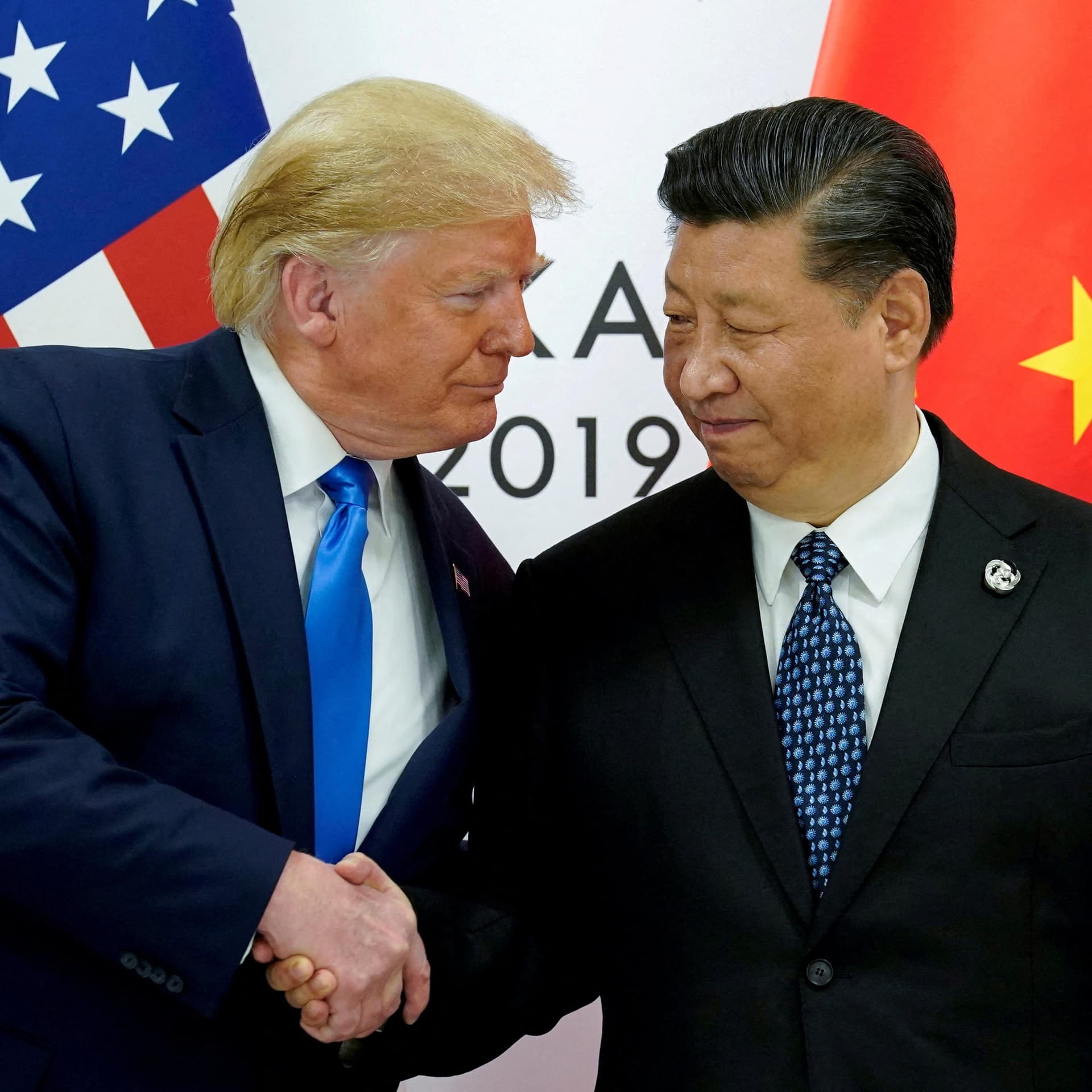
For the first time in nearly a decade a sitting American President is travelling to China. While tensions between the US and China have been simmering for a while now, over everything from tariffs to Taiwan, Donald Trump has expressed admiration for his powerful Chinese counterpart.
Meanwhile in China, President Xi has been conducting a years long “purge” on the military elite.
The BBC’s Celia Hatton joins us to discuss whether this should be seen as a weakness… or a strength.
Producers: Cat Farnsworth and Xandra Ellin
Executive producer: Bridget Harney
Mix: Travis Evans
Senior News Editor: China Collins
Photo: U.S. President Donald Trump meets with China's President Xi Jinping at a G20 summit in 2019.