In short
The BBC discusses Russia’s revival of the Soviet-era Intervision Song Contest in Moscow, framed as “soft power” and a cultural alternative to Eurovision after Russia was banned in 2022.
Guests
Steve Rosenberg, BBC Russia editor in Moscow (30+ years in Russia), long-time Eurovision fan and former foreign correspondent.
Key claims
Intervision is revived mainly so Russia can participate again and to challenge Western cultural dominance. The Kremlin uses it to present a “nicer face” of Russia amid the Ukraine war. Intervision’s rules emphasize “traditional,” “family,” “spiritual,” and “religious” values, avoiding Eurovision’s campness and LGBT themes.
Notable examples
Soviet Intervision history (1970s; Czechoslovakia won six times; Irina Ponorovskaya gave nine encores in 1976). Eurovision politics: Russia banned from 2022; 2014 Conchita Wurst backlash; 2016 Ukraine’s “1944” and Russia’s complaints; 2022 Eurovision winner “Stefania.” Intervision participants mentioned: Tajikistan, Kazakhstan, and the United States (singer Brandon Howard, “We Are Champions”).
Written by AI. May contain mistakes. Listen to the episode to check what was said.
Chapters
Tap a time to open that second in VOThe History of Intervision
0:45 to 2:24
Exploration of Intervision's origins and its significance in the Cold War.
“Intervision was a Soviet copy of the hugely popular Eurovision Song Contest in the West.”
Putin's Revival of Intervision
2:24 to 4:28
Discussion on Putin's motives for reviving Intervision as a soft power tool.
“I should say that I am a bit of a Eurovision curmudgeon.”
Contrast with Eurovision
4:28 to 6:00
Comparison between Eurovision's inclusivity and Intervision's traditional values.
“So Russia is reviving InterVision right now.”
Eurovision: A Cultural Phenomenon
6:00 to 8:00
Insights into what makes Eurovision a beloved event across Europe.
“And, you know, we went to the draw for the Intervision Song Contest a few days ago, and that was pretty clear, this sort of emphasis on traditional values coming across.”
Russia's Eurovision Journey
8:00 to 11:44
Overview of Russia's participation and success in the Eurovision Song Contest.
“I mean, that's a good year to come in, I guess.”
Political Influences on Russian Entries
11:44 to 14:00
Exploration of political factors affecting Russia's entries in Eurovision.
“And we have the winner of the 53rd Eurovision Song Contest is Russia, Dima Vilan.”
The Political Evolution of Eurovision
14:00 to 18:42
Explore how Eurovision has been influenced by political events over the years.
“because it seemed to be going against this idea of traditional values in Russia.”
Intervision: Russia's New Musical Contest
18:42 to 22:46
Discuss the launch of Intervision as a response to Eurovision and examine its political implications.
“took the decision to suspend Russia from Eurovision, which came as a big shock to Russia.”
Global Implications of Intervision
22:46 to 26:23
Analyze how Intervision might signify Russia's geopolitical realignment and its impact on international relations.
“that list reflects the groupings or the alliances of which Russia is part, which are non-Western alliances.”
Transcript
Automatic transcript. May contain errors.0:00At the height of the Cold War in the 1970s, the Soviet Union set up an international song contest. It was mostly for countries behind the iron curtain, and it was called Intervision.
0:23Poland, Cuba, East Germany, they all took part. Czechoslovakia won six times.
0:38In 1976, the crowd was so pumped for Irina Ponorovskaya that the Soviet singer gave nine encores. There was no phone-in vote. Not that many people had phones. Intervision was a Soviet copy of the hugely popular Eurovision Song Contest in the West. But it fizzled out and died, just like the USSR. Except, on Saturday in Moscow, Vladimir Putin is reviving it. Intervision's back, this time with Tajikistan, Kazakhstan and the United States.
1:20From the BBC, I'm Tristan Redman. And today on The Global Story, why is Putin reviving this Soviet relic? And what does it tell us about the new global soft power?
1:41So I'm Steve Rosenberg. I'm the BBC's Russia editor based in Moscow. I've been living and working in Russia for more than 30 years now. And I'm a huge fan of the Eurovision Song Contest and have been since I was a small kid. Steve is so into Eurovision that he performed a one-hour piano special when it came to the UK a few years ago. And now for something completely different. For one day only, from foreign correspondent to Eurovision cocktail pianist. But he's never had a chance to go to Intervision. He's covering it this weekend for the BBC in Moscow, his home city. OK, well, I feel like, for the interest of transparency, I should say that I am a bit of a Eurovision curmudgeon.
2:32I don't see what all the fuss is about. Personally, I obviously respect anyone who does because I know it is a really big deal. But I am fascinated in all things to do with nostalgia for the former Soviet Union. And that's one of the things we're here to talk about today. Because this weekend in Moscow is this thing called the Intervision Song Contest. You're going, Steve. Are you excited? I'm the BBC. I can't get too excited. I've got to retain a degree of sobriety here. But it will be interesting to see how they do the show, what kind of songs we're going to hear. I think the authorities and Russian television will do all they can to get people excited.
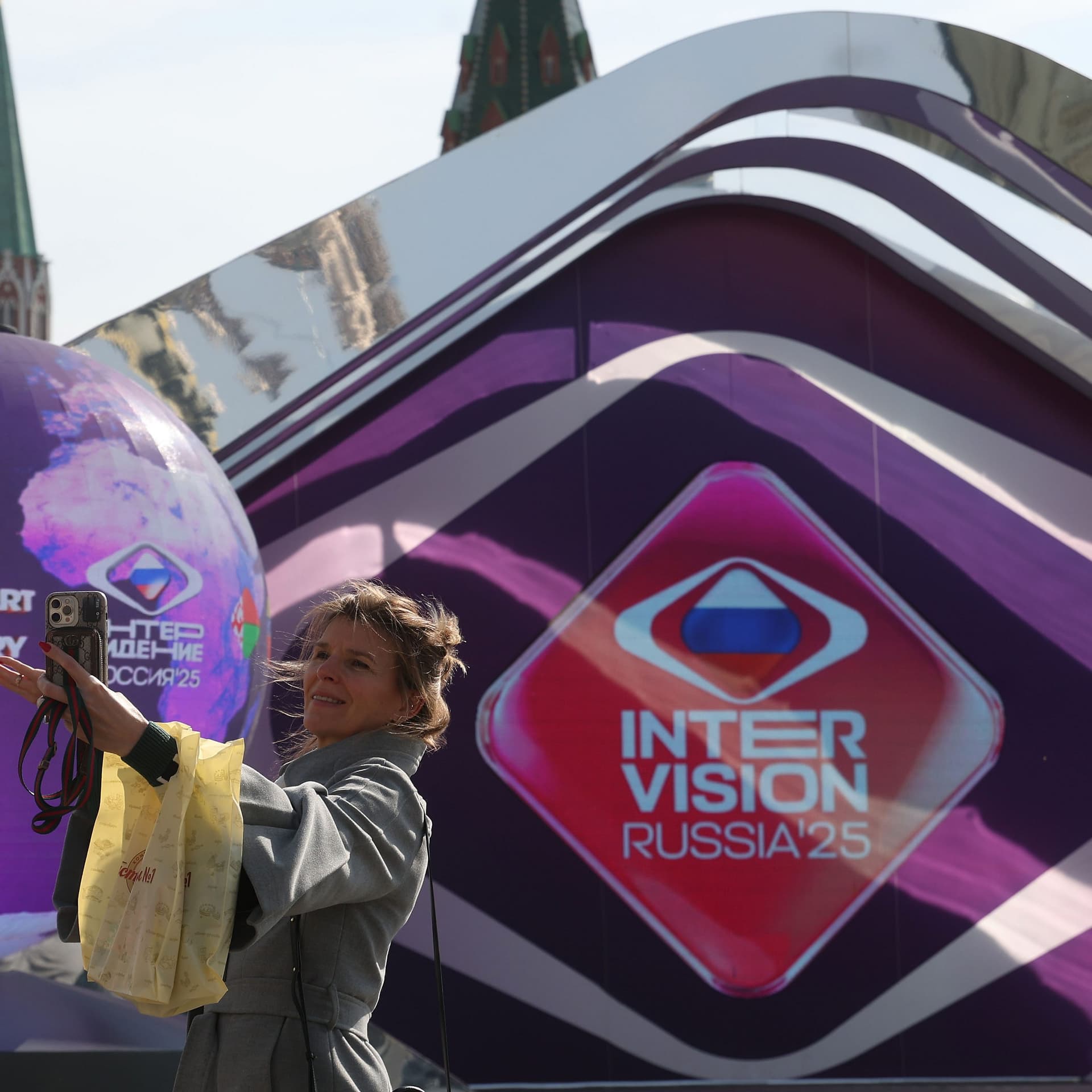
3:17I mean, the show's going to last, they say, at least three and a half hours. and there's going to be a long program on Russian television building up to it, and after it as well, it's a discussion. Live from Moscow. Intervision International Music Contest. So they're creating quite a stir. Top artists and chart-topping hits from different continents, all on one stage. And if you walk around Moscow, there are lots of Intervision flags all over the place, lots of intervision signs. So they're doing the best to push this. For the Kremlin, it's a very big day because this is an opportunity to present a nicer face of Russia to the world.
4:08Obviously, the war in Ukraine has overshadowed everything here over the last three and a half years. So I think the Kremlin is using intervision this sort of Soviet-era music contest which has been revived, as soft power to try to show that actually Russia's a great place. You know, you get on stage with the Russians and sing, and everything's fine. So Russia is reviving InterVision right now. Why is that happening? Why this competition right now? I think probably the main aim is to create a song contest that Russia can actually take part in. Because, you know, in 2022, shortly after the full-scale Russian invasion of Ukraine, Russia was banned from taking part in Eurovision, which was a big shock to people here because Eurovision had become very popular since the mid-nights in Russia.
5:05So once the Russians were booted out of Eurovision, I think the decision was taken, well, let's come up with a competition. let's revive the old Intervision song contest that we can actually take part in. And let's invite to take part our allies around the world. So that's, I think, the first main reason. The second main reason is in the same way that we see Russia now challenging Western dominance, geopolitical dominance in the world, I think Intervision now is an attempt to challenge Western domination in culture. So whereas Eurovision is very inclusive, it stresses diversity, it stresses freedom of expression, Intervision now is all about traditional cultural values of countries.
5:54Less glitz, less glamour, fewer sequins, and more sort of cultural values of each individual country being expressed on the stage. And, you know, we went to the draw for the Intervision Song Contest a few days ago, and that was pretty clear, this sort of emphasis on traditional values coming across. Well, you mentioned sequins. Sequins are a big deal in Eurovision. I know that much. But a lot of our listeners in the United States, for example, might only know about Eurovision through that Will Ferrell film. It was about Eurovision a few years ago. What is Eurovision like and why is it such a phenomenon in Europe and places like Australia, for example?
6:35Well, first thing to say, Eurovision is amazing, completely objective. Eurovision has changed over the years.
6:47It appeared in 1956 as this attempt to experiment, really, bringing countries together through the medium of television. And particularly, you know, the World War II was fresh in people's minds, And people in Europe were looking for ways to unite countries to prevent, you know, the repeat of a terrible European war. And why not create a music contest?
7:18So I think these were the grand aims when Eurovision was created. And gradually, more and more countries joined Eurovision. and yes, people criticise the quality of the music. People love to do that. But it was super popular. Hundreds of millions of people watched the Eurovision Song Contest. Me among them. Good evening, ladies and gentlemen. And welcome to this, the 19th Eurovision Song Contest, coming to you from the Dome in Brighton. The first Eurovision Song Contest I remember watching was in 1974 when I was six years old and I was transfixed. That was the year that ABBA won.
8:10I mean, that's a good year to come in, I guess. Yeah, absolutely. And I remember listening to the crackly telephone lines as the different international jurors were giving their votes. I was transfixed. I think to a large extent, that led to me eventually becoming a foreign correspondent because I could see there was a big world out there. People singing in different languages, speaking different languages, and I wanted to know more about it. So in a sense, I have Eurovision to thank for the job I do now, I think. Wow. Okay. That is huge praise. It's really part of the Steve Rosenberg origin story.
8:47So if InterVision is almost like a kind of Russian version of this thing, Eurovision, how did it come about and how much was it a reaction to the existence of Eurovision? Well, I mean, if you go back to communist times, East and West used to compete at everything, really, whether we're talking about the space race or the arms race, but also in culture too. Of course, there was the Eurovision Song Contest, which quickly established itself really as one of the premier music festivals in Europe. On the other side of the Iron Curtain, people had the idea to do something similar. And so what you saw appearing in the 60s was a music competition in Czechoslovakia, which was part of the Eastern Bloc, which kind of got the label Intervision for a few years.
9:40And then that stopped. And then in the 70s, there was a song contest in Poland which was also given the title Intervision. So for a few years, Eurovision and Intervision existed kind of side by side. The interesting thing about Intervision at the time, even though it featured mainly countries from the Eastern Bloc, socialist countries, and singers used to come and take part. Big names like Alla Pugachova, who was huge, a huge name in the Soviet Union. Also, some Western countries took part, Finland took part in Intervision and actually won the Intervision Song Contest with Marian Rung, I remember.
10:23But it was clear in the 1980s that Intervision wasn't going to last. Then the Soviet Union collapsed and Russia eventually joined Eurovision, you know, in 94.
10:44And in 96, by quirk of fate, I was taking a tour of Russian state television. And I wandered into a studio where they were rehearsing Russia's Song for Europe competition, the competition where they would choose the Russian song to represent Russia at Eurovision. Just accidentally happened to wander into the studio, got talking to the director, and he said, well, why don't you co-present the show tonight? Isn't that bonkers? Totally bizarre. So I found myself that night as co-presenter of Russia's Song for Europe competition, kind of my first TV appearance, I suppose. But the point was, I remember the excitement.
11:20And after decades of communism, in the mid-90s, Russia really wanted to be part of the European family. So the Berlin Wall falls in late 1989. Russia joins the Eurovision Song Contest in 1994. What was Russia's story in Eurovision through until 2022? How did they do? They did really well. I mean, they won it one time in 2008. And we have the winner of the 53rd Eurovision Song Contest is Russia, Dima Vilan. La Russie. Congratulations, Russia. They came second four times and maybe third four times as well. That's a pretty good record compared to, you know, how the United Kingdom has done in recent years.
12:14Eurovision was extremely popular. The whole country got really excited as Eurovision came around every year. The organizers here took it very seriously. They always, usually, put in its top artists and achieved a lot of success. Eurovision Song Contest entries are often known for their kind of high campness. Would you say Russian entries fit in under that category or were they different? Russia certainly avoided cabinet in its entries. And certainly, there are, I think, political reasons for that, first of all. I mean, if you go back over the last 10 years or so, political measures were taken, laws were passed about promoting what are described here as non-traditional sexual relations.
13:06In recent years, those laws have been tightened. For example, or more recently, so-called international LGBT movement, in inverted commas, was actually banned by the courts here in Russia. In other words, you can be prosecuted for espousing or promoting LGBT values. So the country has taken a more conservative path over the last decade or so. And I suppose that's reflected in the Eurovision entries that Russia was putting in. I remember in 2014 when Austria won Eurovision with Conchita Wurst, the drag queen.
13:58Shocked the conservative elements in Russian society, particularly in political circles. because it seemed to be going against this idea of traditional values in Russia. And you had politicians, Russian MPs in parliament condemning the direction that Eurovision had taken and demanding a more conservative approach to the music in international competitions and demanding that Russia pulled out of the Eurovision Song Contest. So this is a decade ago. And I remember of their MPs calling for a new kind of competition called the Voice of Eurasia or Open Vision. One MP called for a competition called Good Vision that will be based on sort of traditional folk music.
14:43So even then, there was a push to take a different direction, musical direction in Russia and particularly now. So in InterVision, we're not going to see campness. We're not going to see LGBT values, I think, being presented on stage. This is all going to be about traditional culture, traditional values, family values. It's in, I've actually got the rules. And it's the goals and the values of the contest, getting to know the unique cultural traditions and achievements of the participating countries, promoting universal, spiritual, family, cultural, ethical, and religious traditions of different nations.
15:25I mean, that's hard to judge, isn't it, really? I've heard, for example, the song from Uzbekistan, which is very traditional. And I've heard the song from South Africa, which is very different. I don't know how they're going to actually find a way of ranking these songs. Well, one of the things that Eurovision purports to be is apolitical. I mean, that's not always possible in Europe because there are a lot of countries that have longstanding rivalries, but it does say it's apolitical. Has that been the case for Russia's involvement since it joined Eurovision? The first thing to say is it's very difficult to create a song contest that is not political, right?
16:06When you get a bunch of countries together in anything, whether it's a song contest or a soccer World Cup, you're going to have a degree of politics. Politics has always been part of Eurovision. In terms of Russia and Ukraine, the politics predates the full-scale invasion of Ukraine and Russia being banned from Eurovision. I mean, I remember after the Russian annexation of Crimea in 2014, a couple of years later in 2016, you had Jamala singing for Ukraine a song called 1944, which was about Stalin moving against the Crimean Tatars.
16:49This was seen as a veiled reference to Russia's annexation of Crimea in 2014. And the Russians complained. They said this was a political statement. So there was politics there. Then Ukraine, when it won the competition, the next year it hosted Eurovision, it banned the Russian entrant, Yulia Samoilova, from actually entering Ukraine, which annoyed Russia intently. So politics was bubbling away long before the full-scale Russian invasion of Ukraine in 2022. And then what happened when the invasion went ahead in 2022? So 2022, obviously an extremely dramatic year, full-scale Russian invasion of Ukraine in February.
17:38The Eurovision Song Contest in May, Ukraine won with this dramatic song, emotional song, Stefania.
17:54What we saw with the start of the so-called special military operation was, I think, an attempt by Moscow to force Ukraine back away from Europe. back into Russia's orbit. Ukraine!
18:17And that didn't work out. The operation didn't work out, and it became a war, which has gone on for three and a half years. But through Eurovision and its victory in Eurovision, I think Ukraine showed that, no, Ukraine is a sovereign, independent nation with its own culture, its own language, its own history. And the world could see that. So soon after the invasion, the EBU, the European Broadcasting Union that organizes Eurovision, took the decision to suspend Russia from Eurovision, which came as a big shock to Russia. But this fitted in with what was happening in other realms, in sports, in politics.
19:04You know, We'd seen in previous years Russia being excluded from the G8 group of nations, which became the G7 again. We've seen Russia being excluded from the Olympic Games. And in each case, Russia's reaction was, this is unfair. This is anti-Russian sentiment. We're going to do our own thing. And so politically, Russia went off. It left the G7 behind and it created its own kind of alliances with BRICS and the Shanghai Corporation organization. It created its own version of the Olympics. And now it's created its own version of Eurovision.
19:57Well, Steve, the story you're telling us of Eurovision over the last couple of decades sounds like one where politics has been encroaching even more. And the central political controversy that is engulfing Eurovision right now, it doesn't have to do with Russia, it has to do with Israel. There's been condemnation of Israel's war in Gaza following October the 7th from many quarters. Eurovision hasn't banned Israel from the competition, but there have been calls from some countries to boycott Eurovision, including one country, Spain, that funds the competition overall. So this is a moment when Eurovision as an institution is kind of beleaguered.
20:40And so to me, it seems interesting that Putin is taking the opportunity to be relaunching another competition that Russia controls. Do you see this as kind of political opportunism? No, I don't think so. I think it's coincidence. I think it's coincidence. Interestingly, I went to a press conference yesterday given by a very senior Kremlin official, the deputy chief of staff of Putin, the Russian foreign minister, and a deputy prime minister. I mean, that reflects the fact that Intervision is very much, I think, a political contest, right? But they didn't refer to the threat of a boycott by some countries at Eurovision.
21:24They didn't do that. The other thing I'd say is that Eurovision has survived 70 years, and there have been difficult moments in those 70 years. There have been moments when people have doubted whether Eurovision could continue. There was the big moment in 1969 when four countries won the contest because of the voting system. And in protest at that strange outcome, several countries pulled out in 1970. But Eurovision survived everything. It's got through and it's still a hugely popular competition. You know, I think 166 million people watched it this year. And so, you know, the chances are that it will get through these difficulties too.
22:08Well, one of the things we've been following here on The Global Story is the big summit and the big parade that happened in Beijing and China a couple of weeks ago, where President She hosted Vladimir Putin, Kim Jong-un, Narendra Modi and various other world leaders. And we spent some time exploring whether or not this was a kind of axis of upheaval that was forming around Xi Jinping as a kind of counterweight to Western power. Do you feel like there's a way in which Intervision is part of that realignment? Yeah, absolutely. I do. When you look at the list of participants in Intervision, that list reflects the groupings or the alliances of which Russia is part, which are non-Western alliances.
22:58So for example, the BRICS group of nations, Brazil, India, China, South Africa, they're all taking part. The Shanghai Cooperation Organization, the Commonwealth of Independent States, these are the kind of countries that are taking part in intervision. It's certainly Russia using soft power at a time when Russia continues to wage a war in Ukraine. This is something that we mustn't forget. It's very easy to get carried away in the color of a music competition. But we shouldn't forget that for the last three and a half years, Russia has been conducting hostilities in Ukraine after a full-scale invasion of the country.
23:40There's no end in sight to that. That is why Ukraine has accused Russia of using Intervision to whitewash Russia's actions in Ukraine. And we believe the United States is also taking part, although I haven't actually seen him in Moscow yet, the singer. How surprised were you that the United States was taking part? Well, when they first announced that America was taking part in Intervision, that was a big deal. It was big news in Russia. And it was used here as an example of the warming ties between Moscow and Washington. Then they announced who was going to be singing for America. Brandon Howard, I think his name is.
24:22He bears a striking resemblance, I have to say, to Michael Jackson. I mean, he sounds a bit like him too. However, at the draw, when they made the draw for the order in which the inter-vision participants will be performing a few days ago, he wasn't there there was no american delegation in the hall he hadn't turned up uh and they showed a little social media video from him on a big screen saying that he would be here in moscow he will come don't worry but he couldn't make it in time so i don't know whether he will be there or whether he won't be there what's his song um i think it's called we are champions fight until we've won we are champions we are champions we are champions we are champions so i i'm not going to comment on the quality of it uh bbc objectivity but um obviously if he does turn up brandon and performs on the intervision stage that'll be big for russia you know they'll love that because despite continued tension with washington russian officials never miss an opportunity to point out that they're so optimistic about building a better relationship with the Trump administration.
25:46Maybe it will be successful, and maybe Intervision will go on to lead a very happy and successful life. But right now, in 2025, it feels very much like a political project by Russia to kind kind of challenge the West and also create a contest that they can actually take part in.
26:11Steve, thank you so much. You're welcome.
26:17That's it from the Global Story for today. We'll be back on Monday. Cheerio.
From the publisher
At the height of the cold war in the 1970s, the Soviet Union set up an international song contest to rival Eurovision. It was called Intervision, and like its western counterpart, featured a bevy of cheesy songs, sequins and highly flammable outfits – albeit with a different political message.
Intervision burned bright and fast – disappearing long before the fall of the Berlin Wall. But this weekend, with Russia still exiled from the Eurovision Song Contest because of its full-scale invasion of Ukraine, Vladimir Putin is reviving the competition, and the USA is due to compete.
In today’s episode, BBC Moscow correspondent and Eurovision superfan Steve Rosenberg explores the intertwined histories of Eurovision and Intervision, and the politics behind Putin’s decision.
Producers: Hannah Moore and Valerio Esposito Executive producer: Annie Brown Sound engineer: Travis Evans Editor: China Collins
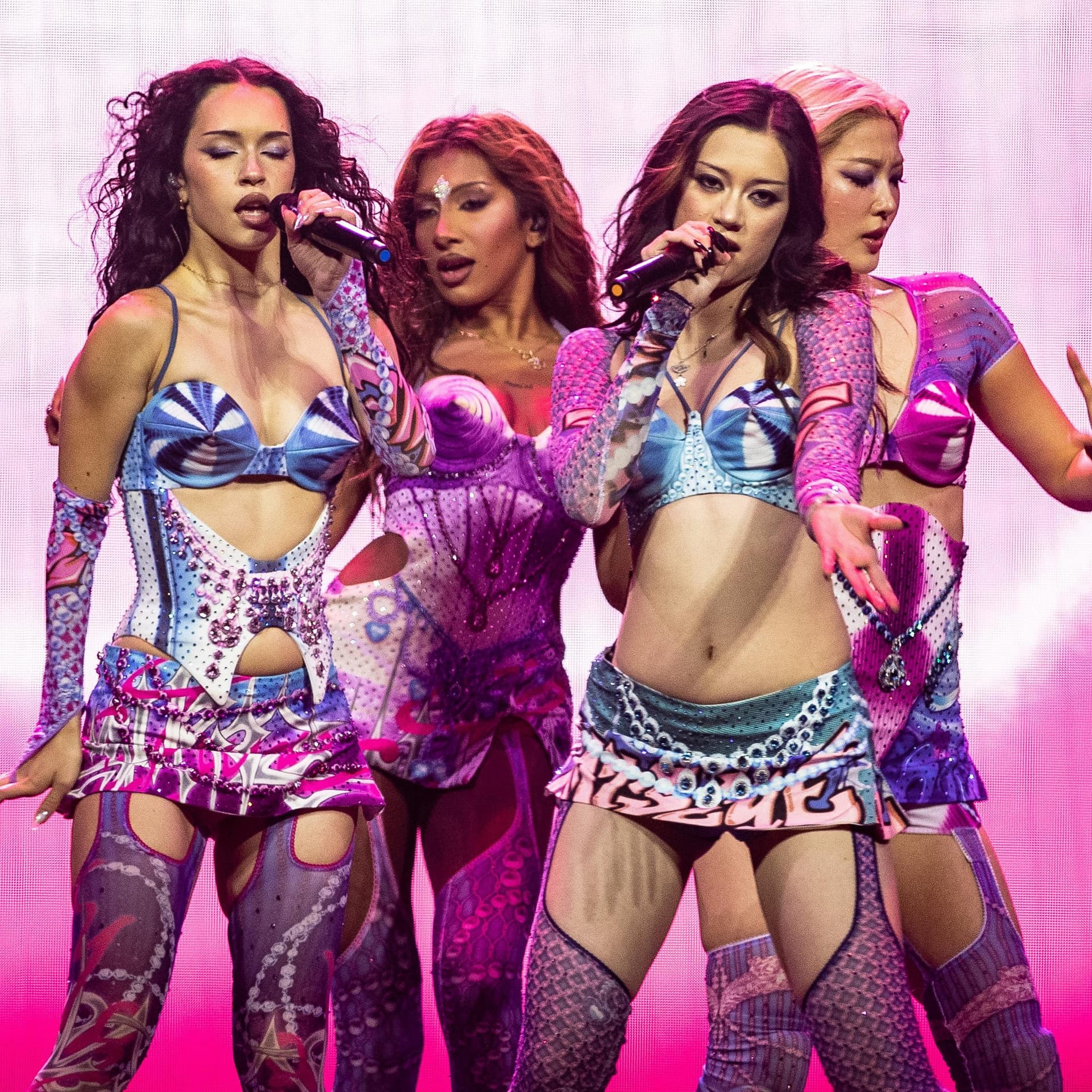
(Photo: The international music contest Intervision at Zaryadye Park in Moscow. Credit: Maxim Shipenkov/EPA/Shutterstock)