In short
Why Vladimir Putin seeks to restore Russian “greatness” by expanding and controlling a sphere of influence, especially over Ukraine and other former Soviet states.
Guests
Vitaly Shevchenko, Ukrainian co-host of BBC UkraineCast and an analyst at BBC Monitoring.
Key claims
Putin uses history to justify present-day claims (“historical regions” of annexed or targeted Ukrainian territories). “Greatness” means international clout, not better domestic living standards. Russia’s “near abroad” (former Soviet republics) is treated as having reduced sovereignty, giving Russia “legitimate interests.” Putin’s rise involved consolidating power by controlling oligarchs and suppressing opposition, making expansion more feasible.
Notable examples
Tucker Carlson’s 2024 Kremlin interview; 2014 “secret” invasion and Crimea annexation; 2008 war with Georgia; pressure tactics in Ukraine; Belarus kept in orbit via dependence on Russian oil/gas; Russia’s far-abroad influence in Africa (mercenaries/African Corps replacing French forces) and ties with Venezuela, including claims of a possible Venezuela-for-Ukraine “swap.”
Written by AI. May contain mistakes. Listen to the episode to check what was said.
Chapters
Tap a time to open that second in VOIntroducing Vitaly Shevchenko
0:00 to 0:45
Vitaly shares his insights on Russia's sphere of influence.
“This BBC podcast is supported by ads outside the UK.”
Introducing Vitaly Shevchenko
2:17 to 2:56
Vitaly shares his insights on Russia's sphere of influence.
“to look at so-called spheres of influence and tell the story of how we got here.”
Putin's Historical Narrative
2:58 to 4:23
Discussion on Putin's historical claims during an interview with Tucker Carlson.
“I still remember fondly our work in Washington, D.C.”
Putin's Sphere of Influence
4:27 to 6:27
Exploring Russia's influence and Putin's perspective on historical claims.
“we asked the most obvious question, which is why did you do this?”
The Concept of Greatness
6:27 to 8:00
Examining the notion of greatness in Russia and Soviet nostalgia.
“officially used term, the regions of Ukraine, which Russia has annexed or is trying to annex, are officially referred to as Russia's historical regions.”
The Fall of the Soviet Union
8:00 to 11:28
Discussing the impact of the Soviet collapse on Putin's worldview.
“And looking at what Vladimir Putin has been saying and doing, this is the kind of quote-unquote greatness he is trying to restore.”
Putin's Rise to Power
11:28 to 13:15
How Putin's rise shaped Russia's political landscape and ambitions.
“And there's an era sort of between about 2000 and 2007, where it seems like Russia could have gone in one of two directions.”
Military Actions in Ukraine and Georgia
13:15 to 14:00
Analyzing Russia's military strategies in Ukraine and Georgia.
“He was more confident politically after a lot of the key opposition leaders were either killed or jailed or forced into exile.”
Russia's Military Actions in Ukraine and Georgia
14:00 to 16:50
Explore Russia's military actions in Ukraine and Georgia and the implications for other former Soviet states.
“When that pressure didn't work in the year 2014, Russia launched a secret invasion of Ukraine.”
Putin's Strategy for Belarus and Other States
16:50 to 19:29
Discuss how Putin maintains control over Belarus and the tactics he employs with other regions.
“Is it the historical approach that you've described or is it something more economic?”
Show all 13 chapters
The Naivety of Historical Comparisons
19:29 to 20:02
Analyzes the dangers of historical comparisons in discussing Putin's ambitions.
“so what we're seeing now is a massive and fundamental failure by humanity and its political leaders to learn from the past.”
Russia's Global Influence Beyond the USSR
21:12 to 24:17
Examine Russia's ambitions and military support in countries like Syria and Venezuela.
“You have said that Russia is most concerned with its near abroad.”
The Complexities of Ukraine and Venezuela Relations
24:17 to 27:25
Delve into the differing significance of Ukraine and Venezuela in Russia's foreign policy.
“Well, you know, we have our own version of this.”
Transcript
Automatic transcript. May contain errors.0:00This BBC podcast is supported by ads outside the UK.
0:31Because Schwab knows that when it comes to your finances, choice matters. No matter your goals, investing style, life stage or experience, Schwab has everything you need, all in one place, so you can invest your way. Visit schwab.com to learn more. You may have noticed that we're doing something a little different this week. We've stepped back and we're looking at how the world we know is changing and how the new world order fits together in this moment. So, in that spirit, here's a niche milestone for you. As of this week, Russia has been fighting in Ukraine for longer than its predecessor, the USSR, fought against Nazi Germany in World War II.
1:16In other words, in the same time it's taken for Russia to occupy a small chunk of Ukraine, most of the Second World War happened. Many Russians look back at that time as the supreme moment of glory and strength in their history. You couldn't say the same of their war in Ukraine now. Russia's struggle to overcome a much smaller opponent. But that has not stopped Vladimir Putin from dreaming of restoring Russia to its former glory. Since coming to power, he's tried to rebuild a Russian empire, and he now believes that Russia has reclaimed its rightful place on the world stage, alongside the US and China.
1:57From the BBC, I'm Tristan Redmond in London. And I'm Asma Khalid in Washington, D.C. And today on The Global Story, why Vladimir Putin wants to restore Russia to something like the Soviet Union.
2:16This week, we're teaming up with some of our sister podcasts here at the BBC World Service to look at so-called spheres of influence and tell the story of how we got here. Today, we speak to Vitaly Shevchenko. He's been with us on The Global Story before. He's the co-host of UkraineCast, the BBC's podcast that follows big developments in Russia's war against Ukraine. And he's also an analyst at BBC Monitoring, and he's from Ukraine. So he's well-placed to talk about how Russia cultivates and controls its sphere of influence, and what it's like to live in a country that Putin has tried to both influence and dominate.
2:56Vitaly, nice to have you back on the show.
2:58Vitaly Shevchenko:It's nice to see you again. I still remember fondly our work in Washington, D.C. back in August. Well, Vitaly, we're talking to you today in the context of our series about global empires and how they're all fitting together at this moment of kind of tectonic plates that are shifting. And really, today, we're focusing on the Russian global sphere of influence, such as it is. And I wanted to start by telling you a little story about when Tucker Carlson went to Moscow in 2024 to interview Vladimir Putin. The following is an interview with the president of Russia, Vladimir Putin, shot February 6, 2024, at about 7 p.m.
3:45in the building behind us, which is, of course, the Kremlin. And when he was there, he made a bunch of videos about how great he believed life was in Russia compared to the United States. How does Russia, a country we're told is a gas station with nuclear weapons, have a subway station that normal people use to get to work and home every single day that's nicer than anything in our country? And he did this interview with Vladimir Putin, which maybe didn't go that well because it was one of the most boring pieces of television ever created. and I say that in all objectivity. It was two hours long.
4:21The interview, as you will see if you watch it, is primarily about the war in Ukraine. At the beginning of the interview, we asked the most obvious question, which is why did you do this? And the answer we got shocked us. And Vladimir Putin basically just gave this very lengthy history lesson to Tucker Carlson. Putin went on for a very long time, probably half an hour, about the history of Russia going back to the 8th century. We're just going to play you a little bit of tape around this interview, and it'd be great to hear your response to it. All right. So if you don't mind, I will take only 30 seconds or one minute to give you a short reference to history for giving you a little historical background.
5:05Let's look where our relationship with Ukraine started from. The Russian state started gathering itself as a centralized statehood, and it is considered to be the year of the establishment of the Russian state, in 862, when the townspeople of Novgorod invited a Varangian prince, Rurik, from Scandinavia to reign. In 1862, Russia celebrated the 1000th anniversary of its statehood. 862, Vitaly
5:38Vitaly Shevchenko:Oh, well, yeah, that goes back a long way And what it tells us is that Vladimir Vladimir H. Putin has a thing for history And the reason for that is because in his mind If Russia or Russians were ever present in any part of the world in history no matter how distant, that gives them a right to be still present there or to come back. And I think that idea is central to Vladimir Putin's worldview. He sees his mission of making Russia great again by gathering lands which he sees as historically Russian. And that's an officially used term, the regions of Ukraine, which Russia has annexed or is trying to annex, are officially referred to as Russia's historical regions.
6:39Vitaly Shevchenko:And that, of course, places them firmly in Russia's sphere of influence in the Kremlin's view. Where that sphere of influence ends, they're not saying. What, in your view, is Russia's sphere of influence? Well, there are sort of really wide definitions of that and narrower definitions. The narrow definition, I think, is what Russians call the near abroad, i.e. the former Soviet Union. And that very phrase kind of implies that members of former republics of the former Soviet Union, they sort of have less statehood. And by definition, Russia has legitimate interests in them, which is entitled to defend.
7:28Well, Vitaly, today we don't want to ask you to go back all the way to the ninth century as Vladimir Putin did with Tucker Carlson. maybe just to the 1980s. What was it about the USSR that Vladimir Putin is so nostalgic for?
7:46Vitaly Shevchenko:The idea of greatness. There's so much talk about greatness in the Russian media right now. And there was so much talk about the Soviet Union's greatness back in the day. Greatness that means expansion and domination of your neighbors and greatness that comes at the expense of others. And looking at what Vladimir Putin has been saying and doing, this is the kind of quote-unquote greatness he is trying to restore. So the definition of greatness in the USSR, are, as it is in Russia now, is not how well off you are, is not how good your hospitals or schools are or your roads or whatever. It's about how much clout and influence you have in the international arena.
8:46Vitaly Shevchenko:In fact, well, I've been listening to his speeches for, what, 25 years now. And I remember There's so many examples where he would be giving his end-of-year speech or addressing parliament and talking about milk production and the economy, and he sounded as though he was going through the motions. And then when he got to missiles and tanks and the Russian military-industrial complex, his eyes would light up and he would start to get excited and interested. And that's what understood that Vladimir Putin is not about making Russians' lives better. It's about spreading Russian influence abroad. So it sounds like Vladimir Putin has been extremely nostalgic for this era, you say, of, quote, greatness under the USSR.
9:36When the Soviet Union then falls apart in 1991, where was Putin in all of this?
9:43Vitaly Shevchenko:It was a pretty dire time, which was followed by political turmoil and poverty for tens of millions of citizens across the former Soviet Union. You know, people still shudder when they think back to the extreme poverty they had to cope with. Back then, Russia and the Soviet Union was receiving a lot of food aid from the United States. There's even a phenomenon known as Bush's legs, as in George Bush's legs. What's that? It's like chicken legs are sent by George Bush to the Soviet Union to relieve all the food shortages. That is a really unappetising picture. I've never heard that before. I've never heard that before either.
10:33Vitaly Shevchenko:So it was like frozen chicken legs. That's right. Okay. Noshka bucha in Russian. Okay. So for many Russians, you were poor. And in political terms, the consequence of that poverty and turmoil was disrespect on the international arena. And this is something that Vladimir Putin was so much aware of. And when he saw the collapse of the Soviet Union with his own eyes, I really don't think he was happy to witness that. In fact, years later, he called the disintegration of the Soviet Union the greatest geopolitical catastrophe of the 20th century, which tells us so much about his attitude towards, well, the near abroad.
11:24So Putin comes to power in 1999, appointed by Boris Yeltsin. And there's an era sort of between about 2000 and 2007, where it seems like Russia could have gone in one of two directions. It could have joined forces with Western powers, integrated economically and opened up to the world. Or it could have gone down a more kind of non-aligned path with allies like China and Iran and trying to restore Russia's golden era. Would you say it was always inevitable that Putin would end up on the path he's on now? I would say so.
12:05Vitaly Shevchenko:I really don't think that integrating into the West and coexisting peacefully with Russia's neighbours was ever an option for Russia with Vladimir Putin in charge. Even if back in the year 2000, he did say that Russia could become potentially a member of NATO if he said Russia's interests were respected. So, Fatali, how did you get from those remarks he made in 2000 to the point where Putin is then invading his neighbors? The stronger he became, the more assertive he was in expanding Russia's sphere of influence. He managed to take the rampant oligarchy under control, by that I mean really rich, multi-billionaires in Russia who used to exercise a lot of political influence.
13:06Vitaly Shevchenko:Those oligarchs were, well, gone, making Vladimir Putin the only person in charge of Russia. There was no competition. He was more confident politically after a lot of the key opposition leaders were either killed or jailed or forced into exile. And then his rhetoric became emboldened in pursuing this objective of restoring a version of the Soviet Union. And the approach that he exercised to expanding Russia's influence, it was varied. There are countries like Ukraine or Georgia, for example, where he tried to use political and economic pressure. When that pressure didn't work in the year 2014, Russia launched a secret invasion of Ukraine.
14:13Vitaly Shevchenko:In Georgia, similarly, Russia went to war with Georgia in the year 2008. But there are other parts of the Soviet Union more aligned with Russia, where Moscow did not have to resort to brute military force, and they're still aligned with it. I think Belarus is the best example of those countries. Vitaly, you referred a moment ago to Russia's secret invasion of Ukraine in 2014. You're talking, of course, about Russia's previous attack on Ukraine, which ended with Russia de facto annexing Crimea, which is part of Ukraine's territory. That attack was conducted somewhat surreptitiously. And to remind listeners, it involved Russian special forces without insignia.
15:01And at first, Putin denied all involvement in it, although he later admitted that he had ordered the invasion. Now, that was a huge moment that, as you say, sent the message that Russia's leader was willing to use military force to keep countries in his backyard in line. But you've also alluded to the fact that there are other countries from the former Soviet Union where Putin has not felt any need to resort to that kind of brute military force. And you mentioned Belarus. So I'm curious to follow up on that. How has Putin kept Belarus in his orbit? What tactics has he used?
15:41Vitaly Shevchenko:Of course, the Belarusian leader, Alexander Lukashenko, he knows very well the price of stepping out of line, especially given how dependent Belarus is on Russian oil supplies, for example. Belarus is getting a lot of Russian oil, refines it and then ships it back to Russia. Alexander Lukashenko knows full well that should he try and leave Russia's orbit, the price would be huge. Oil supplies will stop, I think. This is what happened to Ukraine. Gas supplies stopped. I remember sitting in my flat in Kiev freezing thinking, oh my God, what does future hold for me and my family? Because it's cold and dark and there's no Russian gas in my kitchen.
16:29Vitaly Shevchenko:So that is something that leaders across the former Soviet Union are very aware of. If they try and leave Russia's orbit, there will be economic pressure, there will be political pressure. And if that doesn't work, well, military invasion is not out of the question. What's driving his interest in Ukraine? Is it the historical approach that you've described or is it something more economic? Is he invaded for the spoils essentially? I don't think it has. Look at Donbass. It used to be the industrial heartland of Ukraine. Destroyed. Gone. The famously fertile Ukrainian land in the southeastern parts of the country, it's now littered with landmines, which to me suggests that they're not really worried about the economic potential of the land they're occupying.
17:23Vitaly Shevchenko:It's not about land for Vladimir Putin. Ukraine existed as a formally independent state for many years. Vladimir Putin was perfectly happy with Ukraine's borders back then. On one condition, you toe the line. You work with us. The moment that changed, Russia cut gas off for Ukraine. Russia sent troops into Ukraine. So I really don't think it's either about territory or money for Vladimir Putin. When you say, Vitaly, that he wants to piece together the USSR, is he concerned only about certain parts of the former Soviet Union aligning too closely with the West? Some concern him more than others.
18:07Vitaly Shevchenko:If you look at other parts of the Soviet Union, such as the Baltic states or Central Asia, for example, they are so different from Russia culturally, economically, linguistically, that I don't think Vladimir Putin realistically entertained any plans to keep them so firmly within Russia's orbit. And that's why the three Baltic states, Estonia, Latvia and Lithuania, they were really successful in breaking away from Russia early on, despite brutal attempts to crush pro-independence movements in those countries by Soviet forces. Is there an outcome in which if the world is divided into spheres of influence, that that might lead to somehow a more peaceful version of planet Earth, where countries are not competing with each other where they don't need to compete?
19:08Vitaly Shevchenko:Well, history suggests that that's hardly realistic. all those empires confident in their power and in their presumed right to expand sooner or later they came into conflict with each other that's how the first world war started the second world war so what we're seeing now is a massive and fundamental failure by humanity and its political leaders to learn from the past. I think it's exceptionally naive to think that this time around it's going to be different, that we've changed, that, you know, let's give Putin Crimea the same way we gave Hitler Sudetenland and they'll stop there. Well, Hitler didn't stop.
20:01Vitaly Shevchenko:Will Putin? I doubt it.
20:15Chicago Talks. A lot. Hold on, let me step over here. People are talking too much. We debate about food, deep dish, tavern style, who's got the best beef. We yell across rooms, across blocks, across generations. Yes, nice earrings, Grammy. And now, we're doing it on our phones, too. Video calls from the L train, group chats that never shut up. Neighbors texting you the score before your TV catches up. Come on! Get a load of this guy. Catch up on a dog. Yeah, we've got thoughts. Too loud? In Chicago, you're gonna hear it. Because nothing here gets built without conversation. Nothing moves without connection.
20:52So, if you think you know AT &T, it might be time to rethink that. Because their network has improved, like, a lot. So Chicago can keep speaking its mind with AT &T Wireless and AT &T Fiber. Chicago won't stop talking. Our improved network backs it up. AT &T. Connecting, changes, everything. AT &T Fiber. Limited availability in select areas.
21:17You have said that Russia is most concerned with its near abroad. But of course, Russia has had projects, ambitions far beyond just the former USSR. We've seen Russia provide military support in places like Syria, Iran, Venezuela. How do you make sense of that?
21:39Vitaly Shevchenko:I think there are two different ways and reasons for Russia's expansion in the near abroad and in the far abroad. In the near abroad, there's a sense of entitlement. These places were in the Soviet Union or maybe in the Russian Empire, therefore they belong to us. In the far abroad, it's more about Russia's confrontation with quote-unquote West, or America perhaps, and Russia's global dominance. If we look at parts of Africa, such as Mali or Burkina Faso, Russia first sent its mercenaries and then African Corps, which is part of the Russian army, to help local governments fight Islamist insurgents, also make some money in the process, and French troops were replaced with Russians as well.
22:43Vitaly Shevchenko:And all those factors, they are really good for Russia. We were making money, we kicked the French out, we have friendly governments in Africa, works for us, even if we were never there before, which is so different from how Russia approaches its near abroad. Vitaly, it is interesting to hear you mention Russia's influence campaigns in Africa, because in fact, tomorrow on this very show, we're looking at how the so-called superpowers are trying to gain a foothold in Africa. But for the moment, I actually want to turn back to Venezuela. Russia has been one of Venezuela's closest allies. The two countries do a lot of trade together.
23:27Russia has provided Venezuela with loans. They are military allies. And I was reading that back in 2019, Fiona Hill, who was serving in the National Security Council during the first Trump administration, she testified to a House committee and said that the Russians pushing for the creation of spheres of influence had been offering to somehow swap Venezuela for Ukraine. And I'm going to quote from the text directly. She said the Russians at this particular juncture were signaling very strongly that they wanted to somehow make some very strange swap arrangement between Venezuela and Ukraine. She goes on then to later say, quote, they were basically signaling, you know, you have your Monroe Doctrine.
24:15You want us out of your backyard. Well, you know, we have our own version of this. You're in our backyard in Ukraine. What do you make of that?
24:26Vitaly Shevchenko:That's just another example of how some countries matter more to Russia than others. Ideally, of course, Vladimir Putin would prefer to have both Ukraine and Venezuela, and I'm sure a lot of other countries in his pocket. But if that's not working, of course, he's never going to engage in a military standoff with America over Venezuela. Ukraine is so much different. It used to be ours. It's like us. It belongs to us. Venezuela, well, if we can't have it, so be it, but give Ukraine to us. But then what's the focus of that, Vitaly? If, for example, the idea is to have an outpost in Latin America or a place in the Middle East that you say is about combating the West to some degree, what's that mean then for the way that spheres of influence are supposed to operate?
25:27They're not, then you're saying, totally geographically limited.
25:30Vitaly Shevchenko:Oh, they're not. The bigger it is, the better it is for us. It's like when Putin uttered another famous or infamous quote. He was talking to some schoolchildren years ago. The teacher asked one of the schoolboys, OK, so where does Russia's border end? And the boy said, oh, it's in the Bering Strait in the Russian Far East, right next to America. And Vladimir Putin countered that with Russia's borders never end.
26:06Vitaly Shevchenko:So that kind of suggests that, you know, it also applies to Russia's fear of influence. It's as big, or should be as big, as we want it to be. As we know, Donald Trump desperately wants a peace deal in Ukraine to seal his reputation as this kind of ultimate peacemaker. He's hoping that Russia and Ukraine might agree to a peace for land deal. But from everything you've just said, is Putin the kind of man you can do a pragmatic deal with? Or is he too much of an ideologue, the kind of guy who likes quoting 9th century history? Donald Trump has not given Vladimir Putin any reason to tame his appetites as far as Ukraine is concerned.
Read the full transcript
26:57Vitaly Shevchenko:Ukraine is getting a lot less aid because of Donald Trump. He cut aid to Ukraine. Is that supposed to make Vladimir Putin stop? I don't think so. That has only made Vladimir Putin think, oh, I can work with that guy. I can have Ukraine and keep Donald Trump at bay.
27:24Vitaly, thank you so much. Thank you so much, Vitaly.
27:56News Podcast, wherever you get your podcasts. Thanks, as always, for tuning in, and we'll talk to you again tomorrow. Cheerio.
From the publisher
All this week, we are teaming up with our BBC sister podcasts to explore how power and influence around the world is shifting. We’re exploring which countries have a sphere of influence, and which countries are in someone else’s.
Today, we speak to Vitaly Shevchenko, co-host of Ukrainecast, about how Russia cultivates and controls its sphere of influence.
President Vladimir Putin has called the Soviet Union's collapse "the greatest geopolitical catastrophe" of the 20th century. Since he came to power in 1999, Putin has tried to exercise influence over what he calls Russia’s ‘near abroad’: the former Soviet republics in its backyard.
Producers: Viv Jones and Xandra Ellin
Executive producer: Bridget Harney
Mix: Travis Evans
Senior news editor: China Collins
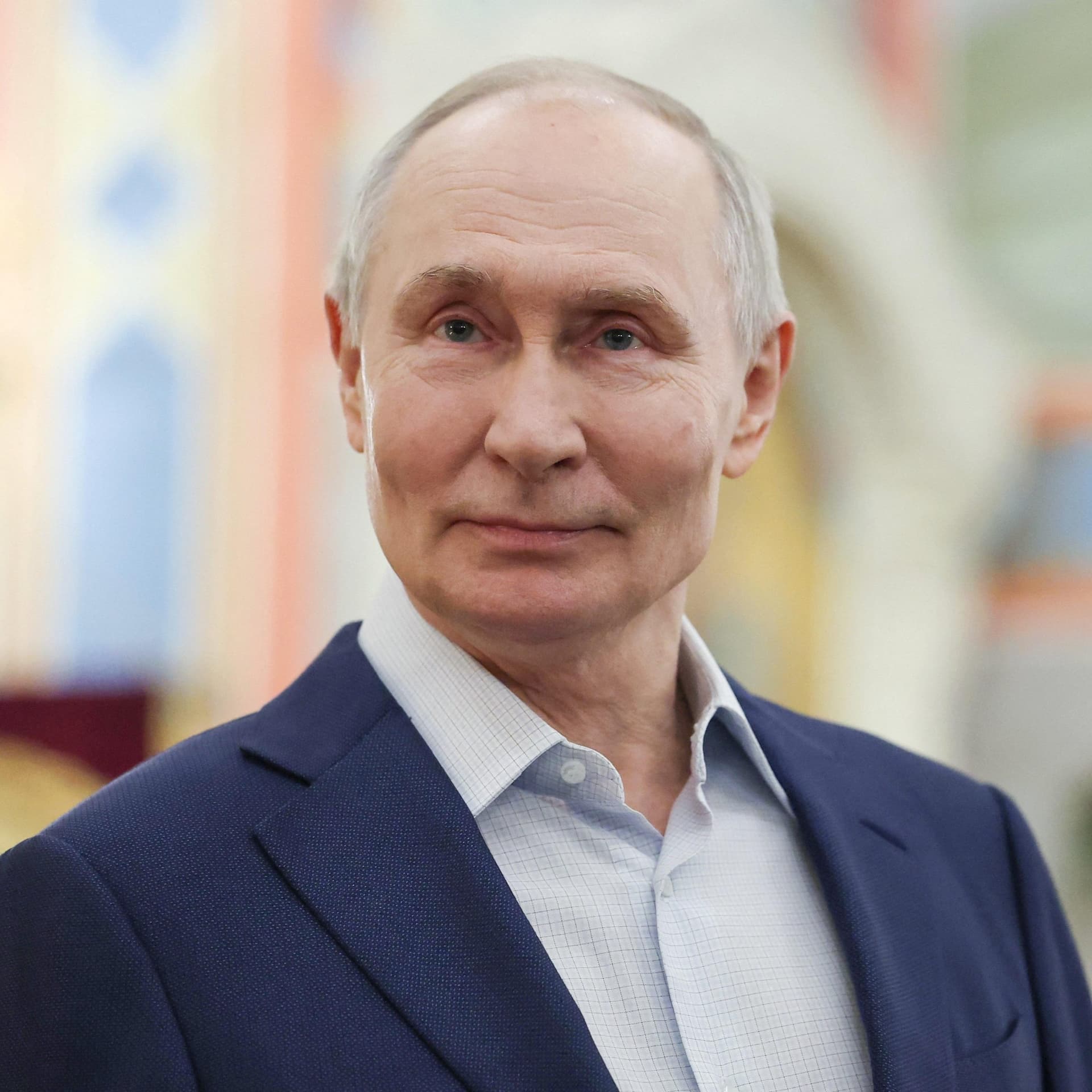
Photo: Russia's President Vladimir Putin. Vyacheslav Prokofyev/ Sputnik/ Reuters