
In short
The episode examines whether the Trump administration is right to worry about far-left groups—especially Antifa—framing it around Marco Rubio’s planned Washington summit on “transnational far-left terrorism,” and the murder of UK MP Anne Widdicombe (Reform UK) as an example of political insecurity.
Guest backgrounds
Mike Wendling is a BBC journalist who specializes in reporting far-right and far-left movements, particularly in the US and internationally.
Key claims
Antifa is described as a loose, often leaderless movement that can be both a street presence and a “bogeyman” used by right-wing politicians. The episode argues left-wing violence is real but often less deadly than right-wing identity-based attacks; it also claims Antifa’s role in some unrest (e.g., after George Floyd) is frequently overstated.
Notable examples
July 2025 Texas immigration-facility protest (fireworks, body armor, weapon; one protester shot a police officer; long sentences); Charlottesville 2017 “Unite the Right” and Heather Heyer’s killing; Berkeley and Portland street clashes (2019); George Floyd protests (2020); January 6, 2021 where right-wing narratives alleged Antifa involvement without evidence. Mentions Sebastian Gorka and Stephen Miller; also the State Department ban on “Antifa-Ust” (German group).
Written by AI. May contain mistakes. Listen to the episode to check what was said.
Chapters
Tap a time to open that second in VOPolitical Insecurity and Violence
1:16 to 3:20
Discussion on the killing of a British politician and the implications it has on political safety.
“A prominent British conservative politician was killed in her home last week, and the news has made it across the Atlantic.”
Understanding Antifa and Its Impact
3:31 to 5:21
Exploring the significance of Antifa as a group and its association with recent violence.
“Just talking with you about movies last week.”
Competing Narratives on Violence
5:46 to 7:37
Examining two narratives about the rise of fascism and left-wing violence in the U.S.
“This is one of the cases that the Trump administration has held up as a signal of the potential threat of left wing violence and Antifa violence in the United States.”
Antifa's Historical Context
7:48 to 10:10
Tracing the origins and evolution of Antifa from its European roots to present-day America.
“Antifa was in the public discourse a lot after Donald Trump was elected for the first time in 2016.”
Charlottesville and Mainstream Politics
10:29 to 11:39
Analyzing the impact of the Charlottesville rally on political discourse regarding Antifa.
“And then that attracted counter-protesters, Not all of them Antifa, but a sizable number of them were anti-fascists.”
Protests and Confrontations
11:43 to 13:09
Insights into confrontations between Antifa and far-right groups during protests.
“At what point do you start to realize, Mike, as someone who follows this very closely, that there is something happening on the ground as far as far left groups are concerned?”
Leadership and Organization in Antifa
13:09 to 14:01
Discussion on the structure of Antifa and the concept of leadership within the movement.
“You know, a lot of people who have sympathy with the Antifa movement are also anarchists and they're kind of allergic to leaders.”
Debate Between Protesters
14:01 to 15:10
Listen to a heated exchange between two individuals with opposing views.
“This was at the height of the protests in Portland, where these people would be shouting at each other in the street, and sometimes worse.”
Antifa's Role in Protests
15:10 to 16:46
Explore the complexities of Antifa's involvement in the protests following George Floyd's murder.
“I thought I was going to respect you more after this, man.”
Perception vs. Reality of Antifa
16:46 to 17:56
Understand the disparity between public perception of Antifa's role and the evidence.
“Antifa activists were certainly there, but how much they had to do with the ensuing violence and mayhem that happened because of that takeover is really debatable.”
Show all 15 chapters
January 6th and Antifa Narratives
17:56 to 19:24
Investigate the narratives surrounding January 6th and how Antifa was implicated.
“on one big story at the intersection of where the world and America meet.”
Executive Order on Antifa
19:24 to 22:43
Discuss the implications of Trump's executive order designating Antifa as a terrorist organization.
“Outside, they were scaling the ramparts, the mob for the moment in charge, believing they have the right to overthrow the will of the people.”
Debating Political Violence
22:43 to 23:38
Analyze the issues of political violence and how left-wing and right-wing groups compare.
“But is there a real security threat from left-wing groups in the United States?”
Political Extremism and Its Consequences
23:38 to 25:04
Learn about the implications of labeling political opponents and the rise of political violence.
“That's the Center for Strategic and International Studies, which is a think tank in the US.”
Summit on Antifa and Political Terrorism
25:04 to 27:24
Examine the political implications of a summit discussing Antifa as a terrorist group.
“Well, Mike, you and I are sitting here in London and there are a couple of relevant and important things happening here this week.”
Transcript
Automatic transcript. May contain errors.0:00This BBC podcast is supported by ads outside the UK.
0:30No bouncing between tabs. And best of all, no spreadsheets. Stop managing software and start managing your business with one unified system. Try for free today at odoo.com. That's O-D-O-O dot com. Hi there, I'm Asma Khalid. And I'm Tristan Redmond. And together we're the hosts of the Global Story podcast from the BBC. For those of you who might be new to our show, we here at the Global Story dive deep every weekday on one big story at the intersection of where the world and America meet. And you can now watch the global story on the iHeart app. Catch every brand new episode every weekday. Just tap into iHeart to start watching.
1:10And we hope you enjoy the show.
1:15This is shocking. It's hard to understand. It's hard to believe. I mean, maybe it's not hard to believe. A prominent British conservative politician was killed in her home last week, and the news has made it across the Atlantic. This is the podcaster Megyn Kelly. Anne Whittacombe was a former member of parliament in Great Britain and had become somewhat of an elder stateswoman for the Reform UK party. She was 78 years old. At first, investigating police said that there was, quote, no information that this is a politically motivated crime. But that initial assessment evolved. That new evidence had prompted Britain's National Counterterrorism Unit to take the lead.
2:04Police said they believed Widdicombe had been killed in a, quote, targeted attack. Investigators say there's a limit to the details they can provide given it's a live murder investigation. but they're working to understand a possible motive. What exactly that means? I don't know. There are still big questions over whether Widdicombe was targeted because of her political beliefs and who targeted her. But the case has amplified a sense of insecurity on both sides of the Atlantic amongst members of the political right that they might be targeted by attackers from, as they see it, far-left groups.
2:44On Thursday in Washington, Marco Rubio, the Secretary of State, will host an international summit on the threat posed by, quote, the resurgence of transnational far-left terrorism. There'll be a particular focus on the loosely composed group the Trump administration calls Antifa. What is this group? Is it a significant threat? Or is there something else motivating the D.C. summit? From the BBC, I'm Tristan Redmond in London. And today on The Global Story, is the Trump administration right to worry about far-left groups like Antifa?
3:30Mike Wendling, great to have you back. Nice to be back. Just talking with you about movies last week. And today we are back to talk about something that's, you know, roughly in the same ballpark. Yeah, more extremist politics for you. Yeah. Well, Mike, for those of our listeners who were not listening last week, could you introduce yourself, please? Tell us what it is you do. Sure. My name is Mike Wendland, and I'm a journalist. I specialize in, amongst other things, movements on the far right and the far left, particularly in America, but around the world. Great to have you back with us, Mike.
4:05So Marco Rubio is hosting a summit in Washington, D.C. on Thursday. By all accounts, he's invited senior ministers from more than 60 countries to talk about, quote, the resurgence of transnational far left terrorism. When Marco Rubio thinks about far left terrorism, what's he thinking about? Is there one incident more than any other that really captures what this is and explains what's giving the impetus of the White House here? There's one case that the authorities in the United States will point to, and that's a protest outside an immigration facility in Texas about a year ago, in July 2025.
4:49A group of left-wing activists protested, brought fireworks, but then also brought body armor and, in at least one case, a weapon. The protest turned violent when police showed up, and one of the protesters actually shot a police officer. After that, a number of the protesters were arrested. They were accused of being part of an Antifa group. And just recently, just in the last few weeks, have received lengthy prison sentences. The man who shot the police officer was sentenced to 100 years in prison. And other sentences included sentences of 40 to 50 years in prison. Now, they weren't convicted necessarily of being part of an Antifa group because that is not in itself illegal.
5:37But the organization that went into the protests and the consequent violence led to their criminal convictions and those long sentences. This is one of the cases that the Trump administration has held up as a signal of the potential threat of left wing violence and Antifa violence in the United States. So the Trump administration would hold up this particular case as justification of something needing to be done about far left extremist groups. Who's leading the charge on this for them? Well, the White House's counterterror chief is a man named Sebastian Gorka, who will be fairly familiar to people who watch BBC content.
6:23Left-wing terrorism in America is on the rise. And guess what? We're going to stop it. He appears on the BBC. I'm not going to be caught or pulled into some BBC, you know, fake news questioning. And has done in the past quite a while. That is classic BBC hackery. He grew up here in Britain, originally Hungarian. He's very hawkish when it comes to these kinds of groups. And him and other White House officials like Stephen Miller, who's the White House chief of staff, have identified Antifa as a threat to American values. They really think that the rising tide of left-wing violence is something that could destabilize the country.
7:07And they're committed to sniffing it out. Okay, well, over the last decade or so, Mike, there have been two competing narratives, haven't there, about what's happening in the United States. The first is led by people who believe that there's a rise of fascism in the United States and something needs to be done about that. The second is led by people who believe that there's a rise of violence in the US fermented by people on the far left and something needs to be done about that. So today we're hoping that you're going to help us establish how much truth there is in each of those two narratives.
7:45So let's start from the beginning. Antifa was in the public discourse a lot after Donald Trump was elected for the first time in 2016. but it's been around for a long time in the United States. Where did it start? Where does it come from? Well, it's originally a European movement, right? If you go back to the history, there were anti-fascist groups in Germany in the 1930s prior to World War II. They don't really have any sort of direct lineage to the groups that sprung up in the 1970s and the 1980s. In the American context, it's a little bit different. In the 1980s, there was a group called Anti-Racist Action, which developed in Minneapolis and other Midwestern cities.
8:30And basically, this was around the punk scene. It was a subculture. At the time, as punk and underground music was taking off, those kinds of scenes were attracting not only sort of left-wing anarchists, but also neo-Nazi skinheads. and the anarchists didn't really want to hang out with the neo-Nazi skinheads. So they formed these sort of self-defense units to keep those people away from their movement. It remained part of that. It didn't sort of break containment until Donald Trump came along. And what happened around 2015 and 2016 is very interesting because you had a series of right-wing groups who formed around that time, most notably groups like the Proud Boys.
9:10There was a group called Patriot Prayer in the Pacific Northwest. they start to become emboldened as Donald Trump starts to say the things that they want said in politics. And they start to hit the streets and they start to have rallies and street marches. That's when you really see Antifa as a sort of reaction to that also step out into the streets. And in many cities, Portland, Oregon, Berkeley, California, in New York City, you had pretty violent street clashes between these far right and far left groups. When did Antifa first become something that politicians in the mainstream would actually talk about?
9:51Like, do you remember when you first heard Donald Trump mentioning them? They first came to light in a big way in Donald Trump's consciousness in 2017. In August 2017, there was that violent melee in Charlottesville. If you remember, there were a large contingent of neo-Nazis, ethno-nationalists, other assorted far-right groups and people came to this university town under the banner, Unite the Right.
10:29They wanted to show their force. And then that attracted counter-protesters, Not all of them Antifa, but a sizable number of them were anti-fascists. Kato fascist USA! Nazis go home! Nazis go home! And they battled in some ways on the streets. The crowd in Charlottesville showed up to protest a white supremacist rally. Despite the anger, no one expected this. A member of one of the far-right groups drove a car through a crowd, hitting people, killing a counter-protester from the left-wing side. The verdict reached today in a Virginia courtroom, James Fields deliberately plowed into the protesters, killing 32-year-old Heather Heyer and injuring two dozen others.
11:18He eventually was convicted of murder and put in prison. But this was the catalyst for a whole range of media attention that got the attention of Donald Trump and many other people. I mean, this was the moment many people remember when Donald Trump famously said that there were fine people on both sides. That's right. And that comment has been sort of picked over ever since. Yes. Okay. So you mentioned this is a kind of warning sign of what was to come. At what point do you start to realize, Mike, as someone who follows this very closely, that there is something happening on the ground as far as far left groups are concerned?
11:55Well, later that year, I went to Berkeley, California, where there was a campus event at the University of Berkeley, famously a pretty left-wing pro-free speech university. And I witnessed sort of running battles between groups like the Proud Boys and groups like Patriot Prayer and counter demonstrators. Many of them were Antifa. Many of them were what they call the black block wing of Antifa, dressed head to toe in black and masked. And basically, therefore, what they would say is security or self-defense, but they are willing to use violence. There were fights. It was quite a chaotic situation.
12:37And then I also, you know, later witnessed the same kind of thing happen in Portland, Oregon. It became a regular feature in the Trump years. And it would be anything from sort of verbal confrontation to pepper spray to fighting with sticks and batons. And sometimes, you know, even greater violence than that. For an organization to be a quote unquote terrorist group, the common understanding would be that they would have to have leaders of some sort. Are there Antifa leaders? You know, a lot of people who have sympathy with the Antifa movement are also anarchists and they're kind of allergic to leaders.
13:19They often form loose associations, not organized groups. You don't sign up to a direct debit or have a membership card or anything like this. I have encountered in the course of my reporting people who are sort of de facto leaders. One of whom, Antifa spokesman of sorts in Portland, agreed to sit down with one of his opposite numbers, a card-carrying Proud Boy member. Guys, so look, first of all, I'm just going to go over the rules. We don't want any violence, number one. No violence. No violence. Can we stay seated? Stay seated. Stay seated. I know that it's going to get heated. This was at the height of the protests in Portland, where these people would be shouting at each other in the street, and sometimes worse.
14:11Luis, what do you think of Rob? I think he's misguided. I think he's a bigot. I think he's a misogynist. I think he's violent towards women. And I think he's a racist. What do you think of Luis? I totally think he's ignorant of who I am. I think he's violent on the street. I think he's trying to duck out a responsibility. My dad always told me, you go to a protest, you end up getting arrested. Don't cry. Own it. They had a fairly frosty, but I wouldn't call it respectful. I would maybe call it civil conversation. And I want to ask you one more question, which is, Has anything changed in your mind as a result of this meeting?
14:56Luis? Honestly, more sorrow, more sadness. The fight's going to be longer. Man. Rob, has anything changed in your mind as a result of this meeting? I respect you less now, dog. I thought I was going to respect you more after this, man. I respect you even less. It was an interesting dynamic between the two. I'm not sure if it told us much more than they would continue to be ideological foes forevermore. Well, so this is in 2019 that you're reporting in Portland. Not very long after that, the world enters the 2020 COVID pandemic. And within that moment, there is the murder of George Floyd in Minneapolis in May 2020 by a police officer.
15:50and in the wake of that, months and months of civil unrest, to what extent, if any, was that unrest caused by Antifa? You know, that's a great question. And I think this really shows how Antifa operates on sort of two levels, one as an actual sort of street force and one as a bogeyman for Donald Trump and his allies. So Antifa activists were certainly present in protests, right? And Antifa activists, there are cases where some of them were arrested on charges of criminal damage and rioting and whatnot. They certainly weren't the majority because this was a mass movement, right, that sprung up after George Floyd was murdered.
16:36However, in certain segments of the right, it became a common wisdom that Antifa was driving the whole protest movement. Antifa activists were certainly there, but how much they had to do with the ensuing violence and mayhem that happened because of that takeover is really debatable. So the public perception of their involvement is possibly greater than the actual evidence of them being involved. And certainly from the Trump administration and the MAGA movement, which tends to use Antifa as a catch-all for, you know, not just the sort of people who are directly inspired or pledge their allegiance to Antifa, but left-wing violence as a whole.
17:18And then even other incidents that don't necessarily have anything to do with left-wing violence or come from different political perspectives. So yeah, it's become a much larger thing than the relatively small numbers would imply.
17:56on one big story at the intersection of where the world and America meet. And you can now watch the global story on the iHeart app. Catch every brand new episode every weekday. Just tap into iHeart to start watching. And we hope you enjoy the show.
18:15So much of this is party political. I mean, as we've discussed, there was an increase in activity of groups like the Proud Boys during Donald Trump's first term. Is the reverse true? When Joe Biden entered the White House, did that allow an increase or a flourishing of left-wing extremist groups as well? Well, not in the same way, because, you know, Antifa at one level is a reactive movement. When Joe Biden was in office, there was a huge investigation into the events of January the 6th, 2021. As a result of that, a lot of those right-wing groups, the Proud Boys, the Oath Keepers, They were hobbled.
18:55Their members were in prison. They were broken up. They weren't holding marches and rallies. And so you didn't have the corresponding reaction by Antifa groups, which was to come out and confront them. You mentioned January the 6th, which seems like an important staging post in this story. They were literally banging on the doors of Congress. And then some Trump supporters managed to get inside. They were armed and wandering the Capitol building. We all remember what happened that day. The chamber has emptied. Democracy put on hold. Outside, they were scaling the ramparts, the mob for the moment in charge, believing they have the right to overthrow the will of the people.
19:35I mean, there were rival narratives that grew up about the reasons behind the unrest around the capital in Washington, D.C. How did these different narratives develop, Mike? Some of the right-wing groups that were there accused Antifa operatives of being in the crowd, of stirring up the crowd. I think that narrative developed because in the lead-up to January the 6th, there were those sort of street battles. But on that day itself, they were largely kept away and keeping away from the events at the Capitol. But because Antifa as an idea had become such a sort of big thing on the right, there was almost an immediate assumption that there were agent provocateurs in the crowd.
20:21There was almost no evidence that that was the case. Well, if we jump forward a few years, Donald Trump comes back to the White House. Less than a year into his second term is the murder of Charlie Kirk, which you touched on earlier on. Back then, we did a whole episode on how the bullet casings were engraved with far left slogans. A trial is underway right now. Shortly after that murder, Donald Trump signs an executive order in which he designates Antifa a domestic terrorist organization. What was the reaction to that order? And what does it even mean? What does it change? It doesn't change a whole lot.
21:03The president can't ban a group, for instance. You can't make it illegal to be a member of a group. But I think from a policy perspective, it showed that the president suddenly wanted to emphasize or reemphasize his opposition to the left wing activists and Antifa specifically and make a counterterrorism official like Sebastian Gorka concentrate on this Antifa idea. You said the president can't ban a group, but why not? If he deems that group to be a security threat and quote unquote terrorist in nature, why wouldn't he be able to do that? It's just not a part of the United States law. Is it a First Amendment thing?
21:48It is definitely a First Amendment thing. Freedom of speech. Yeah, absolutely. You can declare yourself a neo-Nazi and as long as you're not threatening anyone, One, you can walk down Broadway, goose-stepping all the way. Similarly, if you call yourself Antifa, it doesn't matter if Donald Trump has said that this is a domestic terror organization. You cannot be thrown in prison simply for saying, I support Antifa. But to be clear, if I declared myself a member of Islamic State, that would be different because it's an international. Absolutely, yes. The law is different for foreign terror groups.
22:24So the State Department does keep a list of foreign terror groups. And the Trump administration has actually banned a number of foreign Antifa groups. One notable example, Antifa-Ust, a German group translated Antifa-East, that is on the State Department's banned list of foreign terror groups. Well, Mike, this brings us neatly to what's happening in Washington on Thursday, because this summit under the aegis of Marco Rubio and Sebastian Gorka, who we mentioned, is aimed at discussing Antifa as an international terrorist group. But is there a real security threat from left-wing groups in the United States?
23:05Or is this summit in D.C. part of a kind of campaign of political name-calling that we see a lot in politics on all sides of the political spectrum at the moment? I mean, some people on the left call their political opponents fascists. Some on the right call their opponents communists. Bolting the word terrorist on, is that just a way of sort of turning the dial up even further? I think so. I think that obviously there's not a zero threat from left-wing groups, the CESIS. That's the Center for Strategic and International Studies, which is a think tank in the US. That's right. They pointed out that in the early part of 2025, for the first time in years, the number of attacks carried about by left-wing inspired assailants was larger than the number carried out by right-wing assailants.
24:00However, the nature of the attacks has been very different. If you think about the nature of right-wing violence versus left-wing violence, right-wing violence tends to be much more deadly and much more sort of based on identity. So if you look at a recent attack on a mosque in San Diego, an attack on a black grocery store in a black neighborhood in Buffalo, New York, an attack on a Hispanic area in El Paso, Texas, a synagogue in Pittsburgh. All these are very, very deadly events that have happened in recent times in the United States. Left-wing violence certainly has, in some cases, claimed lives.
24:37Generally, it is to do with property crime, vandalism, targeting corporations or the state, and the nature of it is very much different and it's not necessarily targeted at random individuals or civilians. So there is a disparity in between the amount of storm and fury that the Trump administration has devoted to Antifa and other left-wing groups versus the actual impact on the ground. Well, Mike, you and I are sitting here in London and there are a couple of relevant and important things happening here this week. The first is at the end of the week, there's a CPAC conference, the first one that's ever going to take place in the UK.
25:16Now, CPAC is the Conservative Political Action Committee. And also, we can't have this conversation without mentioning that a prominent conservative politician called Anne Whittacombe, now retired from Parliament, was killed in her own home. There's an investigation underway, and the facts are uncertain at this point. But we do know that the police who are investigating her death are counter-terrorism police. How does all of this play into the summit that we're seeing in Washington? I think it probably depends on what we learn about that case. And obviously, you know, the investigation is ongoing.
25:52Certainly it will get the attention of Americans and the people who might be at that conference. I think more generally, though, the idea of political terrorism has been, in some ways, democratized. The Internet has sort of made it easier for people to be radicalized no matter where they are. They don't necessarily need to rely on a group. How concerned should we be about an increase in political violence of any kind across the spectrum? When you attach extreme names to your political opponents, calling people fascists or calling people communists, does that increase the possibility of political violence?
26:32Well, the people who study this kind of thing say, yeah, absolutely. And this is all feeding into what we're seeing. There are other cases in Europe and the United States, politicians being targeted, politicians being murdered. I myself, a little over a year ago, was in Minnesota where I was covering the murder of the Democratic leader in that state. So, you know, the temperature on all sides just keeps going higher and higher. It takes people who have the guts to reach out to the other side and really try and turn the temperature down to stop a cycle of violence like is what's happening. There's really no indication that there's a critical mass really somewhere in American politics that that will actually do that.
Read the full transcript
27:24So for now, I'm afraid we're stuck in a pattern of the temperature keeps going up.
27:31Thanks so much, Mike. It's been, I won't say it's been great to talk this through with you, but it's been super interesting. Thank you. Thanks a lot.
27:41That was Mike Wendling, BBC journalist who specialises in the far right and far left and has spent significant time reporting those movements up close. Now, we love to hear from you, so please do send us your thoughts and ideas on theglobalstoryatbbc.com. We're especially keen to hear what big stories from the last six months or so that you'd like an update on for some special episodes over the summer. And if you want to catch up on the latest news from around the world, then look out for our sister show, The Global News Podcast, wherever you get your podcasts. And that's it for the global story for today.
28:15Our episode was produced by Kat Farnsworth and Aaron Keller. It was edited by James Shield and mixed by Travis Evans. Our studio engineers were Philip Bull and Mike Regard. Our digital producer is Matt Pintus And the senior news editor is Chyna Collins. I'm Tristan Redmond. We'll be back again tomorrow. Thanks for listening. Cheerio.
28:59of where the world and America meet. And you can now watch the global story on the iHeart app. Catch every brand new episode every weekday. Just tap into iHeart to start watching. And we hope you enjoy the show.
From the publisher
On Thursday in Washington DC, Marco Rubio, the Secretary of State, will host an international summit on the threat posed by "the resurgence of transnational far-left terrorism.” There will be a particular focus on the loosely composed group the Trump administration calls Antifa. What is this group? Is it a significant threat? Or is there something motivating the DC summit? BBC journalist Mike Wendling joins us to discuss whether the Trump administration is right to worry about far-left groups like Antifa.
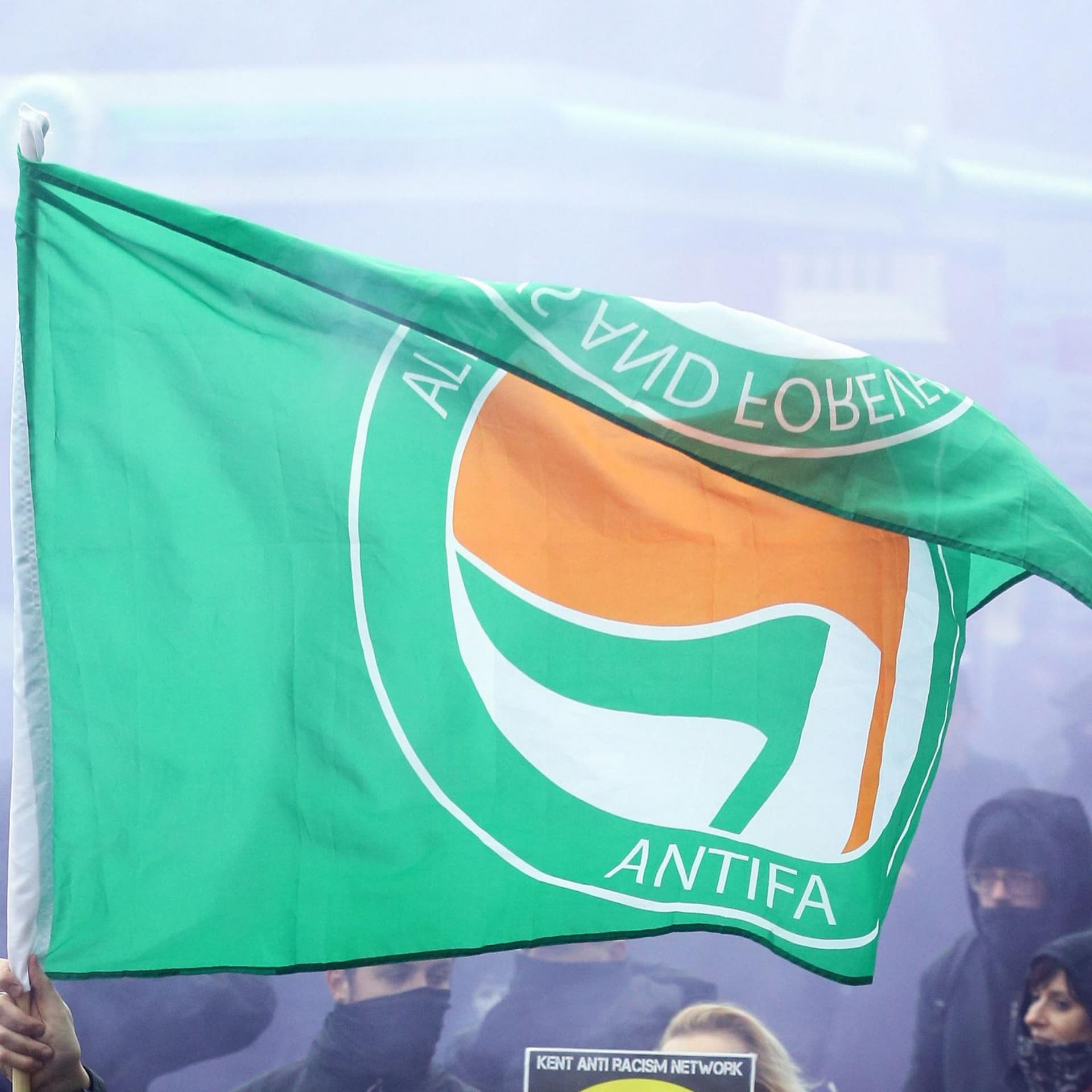
(Photo: Anti-fascist demonstrators wave an Antifa flag, which is green and has an orange, green and white circular logo in the middle, in the UK, 2016. Credit: Gareth Fuller/Press Association)
Producers: Cat Farnsworth, Aron Keller and Hannah Moore
Executive producer: James Shield
Sound engineer: Travis Evans
Senior news editor: China Collins