In short
“Spermageddon” explores social-media “sperm maxing” hacks and whether male fertility (sperm count/quality) is truly declining, amid anxiety about masculinity and falling birth rates.
Guests
Jackie Wakefield, BBC global health reporter who interviewed men trying fertility-boosting protocols.
Key claims
TikTok/Instagram trends promote cooling testicles with ice packs, sauna/microplastic filtering, and “protocols” sold by influencers; evidence is limited. Experts say sperm counts likely are dropping but the size of the decline is uncertain due to inconsistent past studies; obesity/metabolic health is a leading suspected cause, with microplastics/pollution less certain. Exogenous testosterone can reduce sperm production; natural testosterone and healthy endocrine function support fertility.
Notable examples
“Don’t Die” influencer Brian Johnson (6M followers) sells supplements/protocols; Simon uses ice packs without prior semen testing. “Jamal” used testosterone/anabolic steroids from online sources, later sought care at Imperial College London (Dr. Chana Jayasena), and was told fertility often recovers after stopping. Mentions RFK Jr.’s “teenagers have 50% less sperm/testosterone” claim as unsupported.
Written by AI. May contain mistakes. Listen to the episode to check what was said.
Chapters
Tap a time to open that second in VOExploring Men's Concerns about Fertility
2:40 to 4:25
Discussion on why young men like Simon are concerned about their sperm count.
“Why some guys are trying to supercharge their fertility.”
Influencers and Fertility Hacks
4:25 to 6:28
Analyzing the influence of social media and specific individuals on men's fertility practices.
“We may be the first generation of humans who don't die.”
The Science Behind Sperm Count Decline
6:28 to 7:48
Exploring the scientific consensus on the decline in sperm counts and the factors involved.
“He said that he didn't actually take a test, that he wanted to at some stage.”
Crisis Narrative and Public Perception
7:48 to 10:03
Understanding the public perception of a fertility crisis and its implications.
“So that's all been since the 1970s, and they cite about a 50 % drop.”
Unconventional Fertility Solutions
10:03 to 11:41
Overview of various unconventional methods being tried by men to boost fertility.
“These are countries that tend to be more overweight than other countries.”
Testosterone and Fertility Connection
11:41 to 14:00
Examining the relationship between testosterone levels and sperm count.
“The other thing that we've seen is taking supplement stacks, taking peptides, hormonal treatments, and also taking things like steroids or peptides, which boost sperm count.”
The Complex Science of Testosterone and Fertility
14:00 to 16:15
Learn about the effects of testosterone replacement therapy on male fertility.
“OK, but it sounds like the science on testosterone and sperm count, the picture is not yet fully complete, is it?”
Pete Hegseth's Controversial Stance
16:15 to 18:48
Explore the implications of Pete Hegseth's push for testosterone screening in the military.
“supplements are beneficial for some men.”
Jamal's Journey with Testosterone
18:48 to 20:40
Hear Jamal's personal story about using testosterone and its consequences.
“And the reason he took this was he was told by online influencers that his testosterone levels were likely too low.”
The Medical Perspective on Male Fertility
20:40 to 23:54
Understand the medical advice regarding testosterone and fertility recovery.
“a fertility expert at Imperial College London, Dr.”
Show all 11 chapters
The Manosphere and Male Fertility
23:54 to 26:59
Examine the relationship between masculinity, the manosphere, and fertility discussions.
“But at the same time, you know, some of these interviews you've done, it seems like there has also been this focus on boosting male fertility, on boosting sperm count.”
Transcript
Automatic transcript. May contain errors.0:00This BBC podcast is supported by ads outside the UK. If you are currently overpaying on software to run your business, remember this number, 10 ,000. That's the number of new businesses that join Odoo per month. Join Odoo today at odoo.com. That's O-D-O-O dot com. Ever wonder why we make the choices we do? And how to make smarter ones? Introducing Choiceology, an original podcast from Charles Schwab. Join Wharton Professor Katie Milkman, an award-winning behavioral scientist and author of the best-selling book How to Change, as she shares true stories from Nobel laureates, authors, athletes and everyday people about why we do the things we do and how to make better choices to help avoid costly mistakes.
0:51Each episode covers the latest research in behavioral science and dives into themes like the power of self-control, shaping your mindset for success, navigating new beginnings, and why starting over can feel so hard. Listen to choiceology at schwab.com slash podcast or wherever you listen.
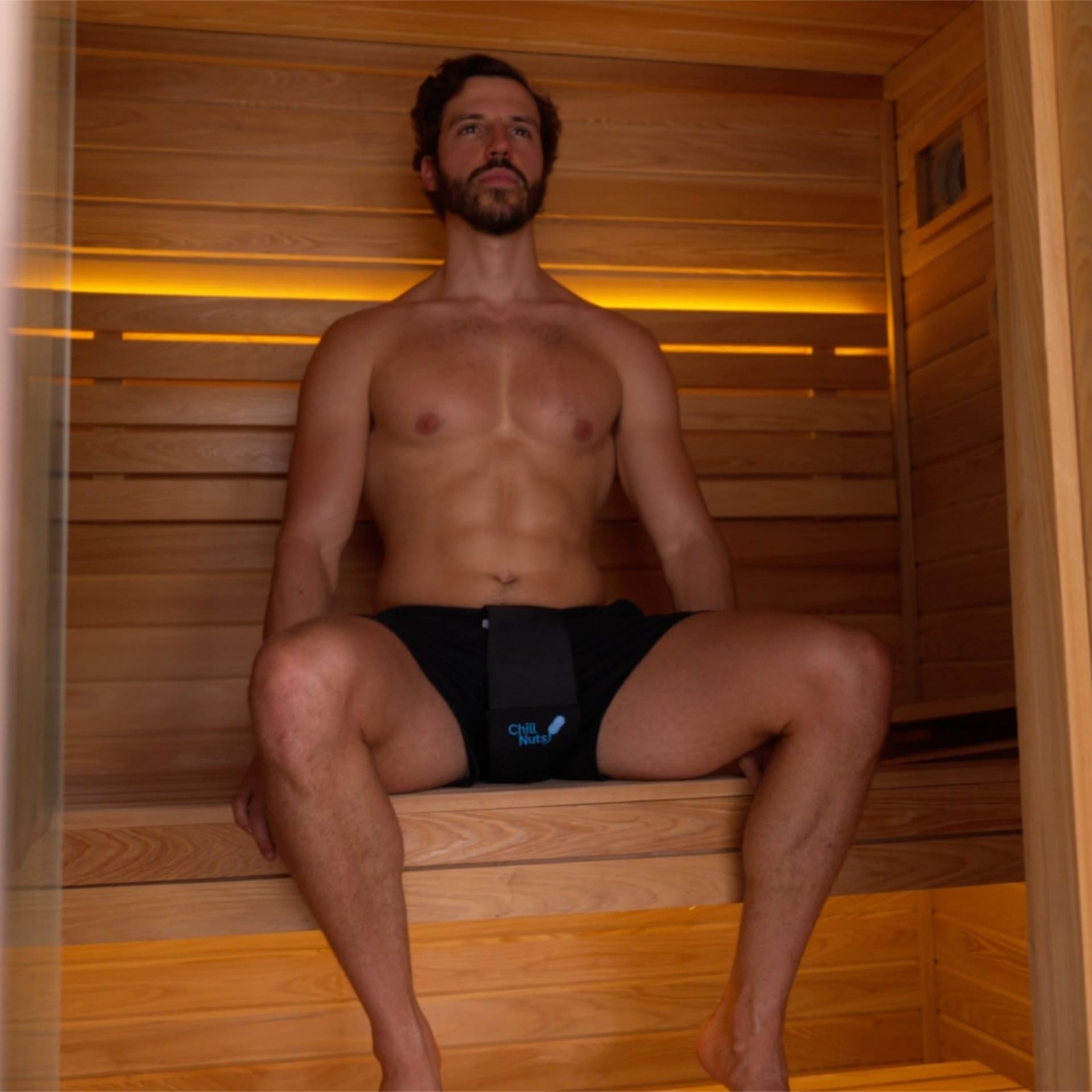
1:15So every morning, Simon starts his day. He has a stretch in the Miami sun. He's about 28 years old. He exercises regularly. He drinks filtered water that takes out all of the microplastics. Then he gets in the soda, but before doing so, he puts on his cotton boxer shorts with an ice pack attached to cover his testicles. The BBC's global health reporter, Jackie Wakefield, is telling us about Simon. He's this guy that she's been interviewing for one of her recent stories. He's actually doing this to boost his sperm count. So Simon is one of the growing number of young men worried about their fertility.
1:55So they're trying all these different hacks that are being promoted on TikTok, Instagram, boosted by different influencers to up their sperm counts. Maybe you've noticed influencers promoting activities to increase sperm count. Many also claim the average man's sperm quantity and quality is dropping. And there is some data to back this up. One review found sperm quantity had dropped by 50 % in the past 50 years. But how solid is the actual evidence? Does it do you any good to strap an ice pack to your bits? And do doctors agree with any of this? How does all this play into modern anxieties about what it is to be a man?
2:35From the BBC, I'm Tristan Redman. And I'm Asma Khalid. And today on The Global Story, sperm maxing. Why some guys are trying to supercharge their fertility.
2:51Great to have you with us, Jackie. You've been speaking to men across the world a little bit like Simon, who've been trying to boost their sperm count and quality through this method of wearing an ice pack amongst other methods. What's this about? Why are they trying to do this exactly? It's become a bit of a new trend, mostly on social media, as many of these things happen to be. So hashtags like male fertility, hashtag semen analysis sperm, they've attracted hundreds of millions of views. and this has particularly grown in the past year or so. On the topic of your Johnson, I want you to get your nuts out right now.
3:35Tell me what they look like. Do they look like a shriveled up date? No, your sperm needs the right fluid to stay active. And the right fluid is no alcohol or beer or soda. It is water. The good news is my sperm count is at 15.3 million, and standard range is 15 million, meaning I have a full return of swimmers. This kind of comes after there's been fears of falling birth rates, but also fears around masculinity, testosterone, and how sperm count and male fertility ties in with that masculinity. And so he got this idea that he needed to take some sort of preventative measures, you're saying largely through information that's been spreading on social media?
4:18Yeah, correct. So Simon in particular cited one influencer, Brian Johnson. So Brian Johnson's famous for his don't die mission. We are at that point with technology. We may be the first generation of humans who don't die. Now, if that's the case, everything changes. And one of the things that he preaches about is boosting sperm count and boosting testosterone. So one of these things is getting in the sauna, which he says filters microplastics out of your sweat. and then he wears an ice pack which cools the testicles which is also supposedly good for sperm count so as the first part of the experiment i tested by having ice on my balls for 21 sessions of sauna what happened all of my fertility markers improved in fact the best markers i've achieved in years then we changed the experiment to remove the ice so there's no ice on the balls and guess what happened devastating consequences wiped out 50 of my fertility markers we know that microplastics have been found in male testicles.
5:21The impact, we're not really sure at this stage. I wear cotton underwear and cotton shorts. Then for the ice pack, I use a BPA-free, toxic-free, reusable pack. You just slip it in over the underwear between the shorts. This is an easy win. I'm going to call it Don't Die Sperm. So Johnson is followed by more than 6 million people across social media, and he drives his followers back to his website where he sells his protocols and his supplements. Okay, so he has a financial interest in this? Yes, correct. Of course, there's not a whole lot of evidence behind these claims, but this is a very compelling narrative for men like Simon, who are scared about his health.
5:59He's really anxious about it, and he's anxious about what his sperm count means for his health. I'm a very health-oriented person. I do care about keeping my fertility count intact. A lot of diseases have low sperm count correlations, So it's something that I'm generally scared of. Has he got a low sperm count? How does he know this? It's not something that Simon's actually tested for. So it was sort of interesting when we asked him, do you plan on getting your sperm count tested? Is this something that you're actively concerned about? He said that he didn't actually take a test, that he wanted to at some stage.
6:35So it's interesting that he's taking these steps despite not even knowing whether he's got a low sperm count. And does he intend to have kids soon? He also doesn't have a partner, nor is he planning on having kids anytime soon. So what he cited to us when we asked, okay, why are you so worried about your sperm count if this is not something that's actively on your mind yet? It's this anxiety. Started using like 100 % cotton made clothes without any microplastics that could disrupt like your endocrine function and your fertility as well. He's very passionate about his personal health. It's one of these things that a lot of young men that we spoke to were super anxious about.
7:13There was so much information online that was making them concerned that their sperm counts were just dropping, despite not knowing whether it was or not. Jackie, as I hear you describe Simon's experiences and what he is attempting to do to boost male fertility, the sort of natural question I have is what the science actually says about men's sperm count? And has it indeed been on the decline over the last several decades? We are far from consensus on what is happening to male sperm counts and what that actually means for male fertility. So there have been large-scale analyses that have suggested a really significant global drop in sperm count and quality.
7:56So that's all been since the 1970s, and they cite about a 50 % drop. However, there's been other studies that have been a little bit more recent. So one in 2024 and one in 2025, which had a more rigorous methodology but looked at more localised populations and didn't find this drop. When speaking to experts, they kind of cite a few different reasons for this. The issue with them is their analyses of past studies. So these past studies tend to use different methodologies and it's really hard to say whether those methodologies were really high quality. So what experts can say is we know that sperm counts are most likely dropping, but we're just unsure how bad it is at this stage.
8:38Yeah. Do we know why sperm counts may be dropping? Yeah. So there's a few reasons that have been put forward. So the main reason experts are putting forward is obesity and metabolic health. That has a very significant impact on sperm count. The other reasons that experts have put forward is potentially pollution, potentially microplastics. But once again, we don't yet know how much of an impact these things are having on sperm count and sperm quality. Can you explain that a bit more? Sure. Because, I mean, it presumably is possible to, I mean, you hear about sperm count being X, Y, or Z, but is that a very inaccurate figure?
9:18It can be when it's at scale. So it's really difficult to test at scale. And we also know sperm count goes up and down throughout a man's lifetime. So you could test it one month and it'd be higher, and then you could test a month later and it'd be a lot lower for various different reasons. Perhaps you drank more that month, you smoked a cigarette, you didn't exercise it much. There could be many different reasons for sperm counts kind of going up and down for different individuals. And is the drop in sperm count kind of uniform around the world or does it depend where you are? It does depend where you are to a certain extent.
9:51So studies have shown there is generally a global drop in sperm count, but it tends to be worse in places like the US, the UK, Australia. And that links back again to metabolic health. These are countries that tend to be more overweight than other countries. So, Jackie, if these studies have been out there for some years, what is going on exactly in this moment that makes some men think that this is some sort of existential crisis? There's a couple of things happening at once. So there's a lot of talk about birth rates at the moment. This has become a really big political issue in the last year or so.
10:27So we've seen in America, RFK Jr. has talked about the fertility crisis and so have really big male influences. People like Joe Rogan have talked about the fertility crisis, particularly in men. And then at the same time, you are seeing birth rates drop in many, many countries all around the world. And there's many reasons to why. So men are becoming more anxious that, okay, is it sperm count that's leading to this massive fertility drop? Usually the answer is it's complicated. It's one of the many, many factors leading into it. But it doesn't stop leading political figures from saying sperm counts are leading to this.
11:07Okay, so we wish Simon the best of luck in his sauna. What are the other hacks that men like Simon are trying to improve their fertility? There's many different hacks that are being promoted on social media that different men are trying. So one of the things I came across was men are encouraging other men to donate blood to clean their blood of microplastic. So they donate their blood, which has the microplastics in it, and then their body produces new blood, which is apparently clean. Once again, this doesn't have any evidence to support it at this stage. The other thing that we've seen is taking supplement stacks, taking peptides, hormonal treatments, and also taking things like steroids or peptides, which boost sperm count.
11:53You mentioned earlier, Jackie, RFK Jr., the Secretary of Health and Human Services here in the United States. Thank you, Mr. President. Thank you for your vision, your commitment to our country. He has spoken, I know, a number of times about falling sperm counts, about testosterone levels. I will say I think there's a lot to pick through in terms of what exactly he has said. But I'm particularly interested in one claim that I want us to all take a listen to because it is so astounding. He said this last fall during an event at the White House. They, the average teenager in this country, has 50 percent of their sperm count, 50 percent of their testosterone is a 65-year-old man.
12:38Where does that claim come from and how accurate is it? So this claim is slightly confusing because he's sort of combining a few things at once in this statement. So there have been a few studies that have shown about a 50 % drop in sperm counts in men over the last half century. That's the study you explained to us at the outset, right? Exactly. The age thing was not talked about in this study. They compared different ages of men and they didn't look at teenagers compared to 65 men of the past to teenagers now. So the teenagers one is a little bit funny. There have been a few studies on teenager sperm counts, but it doesn't tend to be on healthy teen populations.
13:18So that comparison is not really possible to make. What about the 50 % testosterone claim? This is very similar to the sperm count drop. We know that testosterone is falling in male populations. We know that there has been a drop. We don't know if it's 50%. What we do know is it has been falling for very similar reasons to why sperm count has been dropping. And that is due to most likely metabolic reasons. So men are more overweight than they were 50 years ago, and different environmental concerns, lifestyle issues, and general health of the population. Is sperm count linked to testosterone? Yeah.
13:58So your testosterone levels, if they're very low, you'll tend to have lower sperm count. OK, but it sounds like the science on testosterone and sperm count, the picture is not yet fully complete, is it? Exactly. Like with all of science, these are slowly being put together by many, many studies over many, many years. Both RFK Jr. and Pete Hegseth, the Defence Secretary in the United States, have said that they want to make it easier for men to obtain a testosterone prescription. Why is that and what effect could it actually have? So there's a few reasons for this. So testosterone can have really, really positive impacts for men with low testosterone.
14:42So it can improve energy, it can improve their general lifestyle, sex drive, a lot of things that can have really big impacts for men and their daily lives. However, the side effect of testosterone replacement therapy is infertility. So what it does is when you're taking testosterone is it turns off your natural ability to make testosterone, which therefore stops you from creating sperm. So a lot of men who take testosterone replacement therapy end up actually not producing sperm naturally. Usually when you go off testosterone replacement therapy, these kind of natural hormones turn back on again, but this is not always the case.
15:21So it can have... Jackie, I just want to make sure I understand what you're saying. You're saying if you take testosterone replacement therapy for some reason that will decrease the sperm count? Yeah, it turns off your natural ability to make these hormones in essence. So if you've got high testosterone naturally, then all of the other hormones in your endocrine system are working correctly and then sperm is created through that mechanism. However, when you're taking testosterone replacement therapy, it sort of turns off this hormone-creating pathway, which then results in sperm production. So yes, high testosterone does result in higher sperm production.
15:59But if you're taking it unnaturally, that's when sperm production stops. In simple terms, if you give your body too much testosterone, the brain tells the body that it doesn't need to produce it itself anymore. Exactly. Yeah. Okay. So Pete Hegseth clearly believes that testosterone supplements are beneficial for some men. And he's taken a particularly public stand on this. What actually happened? So in a video posted in early July, Pete Hedseth is looking directly at camera, giving a very motivational speech about improving the elite warriors of the US. Every single day, you are pushed to your absolute physical and mental limits to master the profession of arms.
16:46We demand your all and you give it. He's speaking directly to the audience and he's claiming that they were going to optimise and improve testosterone and introduce this new screening program for testosterone deficiency to improve their warriors. While we invest heavily in our weapons systems, platforms, and gear, our most decisive tactical advantage will always be the individual warfighter. We have a sacred duty to maintain that advantage, which is why we must constantly look for new ways to optimize your performance, your resilience, and your long-term health. Pete Hedset himself is probably not medically qualified.
17:26You'd hope that he would have gotten medical advice when creating this pledge. However, a lot of experts have criticised this idea. Experts aren't completely agreed on what testosterone level in men is deficient and what's not. He also hasn't specified what level of testosterone that would be. So it's really unclear to what this program will actually look like at this stage.
17:58Taking testosterone for non-medical reasons is strictly prohibited in the US military. And for men particularly who are still in that reproductive age, so Pete Hegseth is suggesting that this could be for men over the age of 30, that's men who can still have kids. This could potentially be problematic for their future if they did wish to have kids after taking this therapy.
18:30Jackie, I know from your reporting, you also spoke to a guy who did not share his real name, but you refer to him as Jamal. He had been taking testosterone and anabolic steroids, which he'd seen recommended online. Did he explain why he's doing this? What did he tell you? So Jamal started with testosterone. That was the very first thing he took. And the reason he took this was he was told by online influencers that his testosterone levels were likely too low. This was not the case. His testosterone levels were normal. I think as I got older, obviously, the energy level goes lower. Training starts to stagnate.
19:03I've been training for 15 years. I thought, OK, let's see if I can go with just a little bit of help. The idea was, like I said, was to do one cycle, see how it is, and then end it, not do it again more. But very addictive to stop once you got started. He started taking it because he wanted to see gains in the gym. He wanted to improve his appearance. He wanted to improve his life. And he said when he started taking it, at first he felt great. They say over the age of 30 and you take testosterone and you feel like you're 16, 17, 18 again, like a teenager. You have amazing energy, amazing drive.
19:34You just feel great. Like it's hard, you know, you can see why it's addictive for people. He then began taking more and more anabolic steroids, other things that would improve his fitness, his performance in the gym. but mostly also his looks. So he was doing this for more bodybuilding purposes. What ended up happening is he got the negative side effects as well. His mood went terribly. He said that he was really aggressive with people, that he nearly lost his job. And that's when he decided to kind of come off these things. Then he met his now partner and he wanted to have kids and he realised a lot of the things that he'd taken had made him infertile in that time.
20:12So at first he followed advice from online influencers to take even more peptides and compounds, which were said to jumpstart his fertility hormones again. So it was like without the guidance of a medical expert or clinician? Yeah, literally you just get articles on the website and the internet just saying take 40 milligrams for this or that a week and then 20 milligrams afterwards or 150, something like that. This was false and could have done a lot more damage to him. Eventually he did go to an expert, a fertility expert at Imperial College London, Dr. Chana Jayasena. He's kind of become famous in this world for treating men like Jamal.
20:50Male infertility is real. It's getting more common. But if you actually look on the internet and actually seek advice, most of it is wrong. He's reported that there's been a real rise in cases like Jamal. So more and more men are getting into taking these sorts of hormones, these sorts of peptides, medications that can damage their fertility. And he's taking on more and more cases like Jamal. So actually, it's actually really nice to catch up with you. So we last met about two weeks ago, didn't we? We went along with him to a consultation where it was recommended that he come off everything. And I think we discussed at the last appointment that, you know, your testosterone levels, the hormone levels are recovering, aren't they?
21:33And that's brilliant. And that's exactly what we see in most men, that actually in the first three months, when you stop taking steroids, you know, your testes aren't ready to actually pick up the slack, but it looks like actually, you know, your testosterone level's really good. It's about 12. It's entirely normal for a young, healthy man like you. And the next step is really to sort of try to see about fertility. And I can reassure you that in the vast majority of cases, your fertility will recover on its own. And they're hoping to recover those fertility hormones in the coming year. Who are the doctors who are providing this testosterone to people like Jamal?
22:13So for Jamal, he got testosterone through these kind of like dodgy online clinics, so not necessarily through doctors. So often how people sell things like testosterone, peptides, anabolic steroids, either, as he put it, you go up to the biggest guy in the gym and you ask him where he gets his. But the other way is a lot of influencers sell them. So many of the influencers that we came across online often would have an online shop where they sold these compounds as research materials. And that's how they kind of get around some of the bans and selling it to humans. That's typically how people do get a hold of these things.
22:54I'm really surprised by this because, you know, I follow cycling very closely. And testosterone in cycling is a controlled substance. It's something you're not allowed to take in competition. Is it a new thing that you can get testosterone without a prescription? It's not necessarily a new thing. Like bodybuilding guys have been accessing testosterone illegally for ages, but now it's really easy to get it. There's online forums, there's influencers promoting it. it's made into mass market, I guess, with the rise of looks maxing influences. So people trying to improve their appearance and their muscle density.
23:32They've kind of linked to online shops where it's sort of this gray area of whether it's legal or not to buy and sell them. Yeah, I think it's very important to be clear about that, that this is a gray area. Exactly. Okay. Jackie, I understand that taking this testosterone therapy, you're saying, could actually negatively impact male fertility. But at the same time, you know, some of these interviews you've done, it seems like there has also been this focus on boosting male fertility, on boosting sperm count. And I'm just curious what you think that means, because for so many years, there has been an onus on women, particularly when couples are trying to get pregnant, to really think about fertility, do you think it's valuable in any capacity that men are beginning to take an interest in their fertility?
24:24Now, to be abundantly clear, I'm not saying that all the tactics they are using are actually beneficial, it seems, but is the focus on it beneficial? I think the increased focus on male fertility is really, really important. It's great that men are thinking about this and being a part of the conversation and also thinking about their role in fertility alongside women's role. As you said, women have always taken the blame for infertility historically, and it's just not the case. We know that men also play a role here. So for clinically infertile couples, so when we know it's medical reasons causing the infertility, the male partner is solely responsible in about 20 % of those cases, and then a contributing factor in about 30 to 40 % of them.
25:10So it is really important that men are looking to their fertility and thinking about their role in this as well. And the responsibility isn't solely on the women, but it's good to the point that it's useful if it's being used to sell men products they don't need, things that are actively potentially harmful to their health. That's when it's a problem. How inextricable are these concerns from what we know as the manosphere and general conversations that are going on about what masculinity is? So the manosphere is really interesting because it always is super tied in with health and wellness, particularly recently.
25:48The manosphere and the online world of looks maxing, so improving one's looks often to the extreme, has really brought in testosterone to improve muscles, to improve the appearance of masculinity in the face in the manosphere. A lot of them do believe that they should spread their seed, that they should have lots of kids, that they've got better genetic material than others. That's where also this idea of sperm maxing and improving your sperm count, improving your fertility so you can have as many kids as possible also comes into it. But to be abundantly clear, when you say testosterone is good for sperm count, you mean naturally occurring testosterone, not testosterone supplements, correct?
Read the full transcript
26:32Precisely. And that confusing fact is often jumped upon by these manosphere influences. is. Taking testosterone, exogenous testosterone, so unnatural testosterone, makes your sperm count go down and switches off those natural pathways. But high testosterone levels naturally do result in higher sperm counts. There's no shortcut. And also it's very important to state that having average or slightly below average testosterone levels is not necessarily a problem either.
27:11Jackie Wakefield, thank you so much. It's been great to have you on the show. Thank you so much for having me. It's been a real pleasure. Thank you.
27:22That was Jackie Wakefield, the BBC's global health reporter. We put a link to her article about this in the show notes. Now, if you have any thoughts, questions, story ideas for us, as always, you can email us at theglobalstory at bbc.com. And a reminder that here on The Global Story, we dive deep every weekday on one big story about where the world and America meet. If you're also looking for a way to catch up on the latest news headlines, then you can check out our sister show, The Global News Podcast. This episode was produced by Hannah Moore and Vari McKenzie. The technical producer was Ben Andrews.
27:58Our executive producer was Sam Bonham. And our senior news editor is China Collins. I'm Tristan Redman. And I'm Asma Khalid. Cheerio!
From the publisher
Wearing loose cotton boxer shorts. Icing your testicles. Doing blood transfusions to ‘clean’ your body of microplastics. Eating raw garlic. These are all unproven methods to boost sperm count being promoted by wellness influencers.
On TikTok and Instagram, hashtags such as #malefertility, #semenanalysis and #sperm attract hundreds of millions of views, while, in the White House, US Health Secretary Robert F. Kennedy Jr has claimed that men’s fertility is in drastic decline, partially due to unhealthy diets.
What scientific evidence is there to claims that the average sperm count and quality is falling? And how do these claims play into men’s anxieties about their masculinity? On today’s show, the BBC’s global health reporter, Jacqui Wakefield, speaks to men across the world concerned about their fertility, and to reproductive experts who help explain what’s really going on.
Read Jacqui’s article: https://www.bbc.co.uk/news/articles/c8921982pgzo
Producers: Hannah Moore and Mhairi MacKenzie
Executive producer: Sam Bonham
Mix: Travis Evans
Senior news editor: China Collins
Photo: Simon from Miami, who is trying to boost his sperm count by wearing ice packs in the sauna. Credit: BBC.