
In short
Whether Ukraine could replace President Volodymyr Zelensky during wartime, amid a rift with former ally Mikhail Fedorov and calls for fresh elections.
Guests (backgrounds)
Vitaly Shevchenko, Chief Analyst at BBC Monitoring; Ukrainian, personally affected by the war (BBC Verifiable satellite-image work suggested Russian soldiers used his childhood home). Host Asma Khalid (BBC) interviews him; the episode also references a separate BBC interview with Fedorov.
Key claims
Fedorov, Zelensky’s former digital adviser and former defense minister, was sacked after conflict with commander-in-chief Aleksandr Sirsky; protests backed Fedorov and demanded Sirsky’s removal. Fedorov’s nine-minute video calls for elections before the war ends, arguing corruption hinders victory and that elections can’t be timed by the Kremlin.
Notable examples
Fedorov’s drone campaign and Starlink influence (reportedly asked Elon Musk to stop Russian Starlink use); allegations of $3+ million laundering/bail for a jailed former minister; Zelensky’s response that wartime elections would be a “tsunami” splitting Ukraine.
Written by AI. May contain mistakes. Listen to the episode to check what was said.
Chapters
Tap a time to open that second in VOZelensky's Leadership Amidst War
0:55 to 2:27
A discussion on Zelensky's presidency and the challenges he faces during the war.
“You can also enjoy a range of our podcasts ad-free with an Amazon Music subscription.”
The Rise of Mikhail Fedorov
2:27 to 4:25
Introduction to Mikhail Fedorov, his background, and his relationship with Zelensky.
“From the BBC, I'm Asma Khalid in Washington, D.C.”
Fedorov's Influence and Sacking
4:25 to 7:50
Analysis of Fedorov's role in the Ukrainian defense and the circumstances of his dismissal.
“And formerly he was an advisor to Zelensky even before he became president.”
Protests and Public Support for Fedorov
7:50 to 11:16
Exploration of the protests in Ukraine following Fedorov's sacking and their implications.
“He's a man you describe as being loyal to Zelensky for many, many years.”
Shifts in Military Leadership
11:16 to 12:22
Discussion on the changes in military leadership and their potential impact on Ukraine's war efforts.
“Aleksandr Sirsky's response was that, well, look, I like drones too.”
Fedorov's Call for Elections
12:22 to 14:00
Fedorov's recent video calling for elections during the war and its implications for Ukraine.
“It's not a good thing if there's a game of musical chairs happening among the top brass.”
Corruption Allegations in Ukraine
14:00 to 16:28
Explore the persistent allegations of corruption in Ukraine's governance and military.
“He said we should not allow the Kremlin to decide when we hold elections.”
Challenges of Holding Elections During War
16:28 to 20:48
Discuss the practical and political challenges of holding elections in Ukraine amid ongoing conflict.
“I mean, what are people referring to in Ukraine when they speak of corruption?”
International Pressure for Elections
20:48 to 23:20
Analyze the international calls for elections in Ukraine and their implications on Zelensky's leadership.
“Well, Vitaly, you mentioned earlier that calls for election are not really popular from within Ukraine.”
The Political Landscape and Public Sentiment in Ukraine
23:20 to 26:54
Examine the dynamics of Ukrainian public opinion regarding Zelensky and potential political challengers.
“all but impossible to allow these elections in Ukraine and also hold them practically.”
Transcript
Automatic transcript. May contain errors.0:00This BBC podcast is supported by ads outside the UK.
0:30Your business needs in one place, saving you time, headaches and serious money. Stop paying for missing pieces. Go to odoo.com. That's O-D-O-O dot com to learn more. Get more with BBC Podcasts, wherever you listen. Be the first to listen to your favourite shows like Evil Genius, Good Bad Billionaire and You're Dead to Me with a subscription to BBC Podcasts Premium on Apple Podcasts. You can also enjoy a range of our podcasts ad-free with an Amazon Music subscription.
1:04All the countries of the former Soviet Union. The year is 2019. Look at us. Volodymyr Zelensky is running to be president of Ukraine as a young, charismatic, popular, anti-corruption candidate. Everything is possible. That was the last time Ukraine held an election, over seven years ago. And now Zelensky faces his biggest challenge since Russia's full-scale invasion. I have a lot of different plans. I'm on my mission to defeat Russia and to save our country. A new young charismatic popular politician is positioning himself as the voice of anti-corruption. And the thing is, this young guy, his name is Fedorov, has been advising Zelensky for years.
1:56They were close political allies. But now there's a huge rift between the two. The young challenger says corruption in Ukraine is making it harder to win the war. He's calling for fresh elections. Over the weekend, Zelensky responded and said wartime elections would be a huge risk, a, quote, tsunami that would split Ukraine. On top of all of this, there are reports Fedorov could be visiting the United States soon. So where could all this lead? From the BBC, I'm Asma Khalid in Washington, D.C. And today on The Global Story, could Zelensky really be replaced in the middle of the war?
2:47My name is Vitaly Shevchenko and I'm Chief Analyst at BBC Monitoring. Vitaly, we should mention to listeners that you don't just cover this war. You are Ukrainian and it has affected you personally. You wrote, in fact, an article for the BBC last year where you wrote that there were literally Russian soldiers living in your childhood home in Ukraine, which is wild. It is wild. It is my understanding that they're using my childhood home. Basically, there's a new road that appeared leading straight into that house. And with help from my colleagues from BBC Verifiable looks at some satellite images, and we think nobody else can be using that house but Russian soldiers.
3:31Well, Vitaly, it has now been about four and a half years since the full-scale invasion of Ukraine began in February of 2022. And during this entire time, we have seen one man in charge of Ukraine, and that is President Volodymyr Zelensky. He has been Ukraine's leader. From the outside, from the West, I would say he is largely, not unanimously, but largely seen as a unifying sort of war hero, almost a Churchillian figure. But our understanding is now there are some calls for him to hold an election and potentially be replaced. And those calls, we understand, are coming from someone who used to work for Zelensky.
4:15Can you tell us who that is? Where did he come from? And what was his story before this argument began? Mikhail Fedorov, the former Ukrainian defense minister, And formerly he was an advisor to Zelensky even before he became president. And Asma, there's more in common between Fedorov and myself than you probably think. He's basically a neighbor. He is from a town that is right next to my home village, a town called Vasilivka. Very kind of sleepy, agricultural. We went to the same university in the Parisian. Different years, the Vitaly wishes specify. Yes. Not to age you, sorry. He's slightly younger.
5:03He is, remind us, he's in his 30s. That's right. But when he became Minister of Innovation, I think he was the youngest ever minister. He was 28 when he became minister. And when you think Fedorov, think digital. He was active in Zapparysia as a student, as an activist. And that caught Woldimir Zelensky's attention before he was elected. And Fedorov was his advisor for all things digital during the election campaign. So they've known each other for years. They've been quite close. For a long time. It could be argued that Fedorov is very firmly a Zelensky man. His most recent government job was defence minister when he was just 35.
5:58So when he became defence minister, one popular trend of thought was, what does he know about military? It's all about digital apps and platforms. Turns out he knows a lot. He spearheaded this massive drive to use more drones Long range, winged, kind of plane-like drones Hitting targets thousands of kilometres inside Russia SPV first-person view drones hitting Russian logistics in occupied parts of Ukraine, ground-based drones, basically robots with wheels and tracks, delivering supplies, evacuating wounded soldiers. That all shot up to prominence on his watch. And that was all going so well. I remember seeing talk of, if this is so successful, we might get Crimea back.
7:05You know, there was hushed murmurings of possible breakthrough and success. It was widely reported that because of his digital prowess and reputation, he could get in touch with Elon Musk just like that. So he had called to ask Elon Musk to stop the Russians from using Starlink. this highly effective and difficult to jam satellite communication system. And that happened because Russian drones could no longer use Starlink. Ukraine started to make what seemed to be very important advances. So that's just one example of how important and influential Fedorov was. And then he was sacked. How did he end up on the outside?
7:54Not with Zelensky. He's a man you describe as being loyal to Zelensky for many, many years. He's sacked. And now we hear him calling for elections against Zelensky. That's the question millions of Ukrainians were asking. It's all happened last month, and it was all very abrupt. So Zelensky said Fedorov just couldn't get on with Alexander Sirsky, the commander-in-chief of the Ukrainian army, or the two men. He didn't single out Fedorov. He said, look, the commander in chief and the defense minister, they wouldn't sit down and talk unless the president was in the room. I need people who work together, not against each other.
8:39And describe the commander in chief to us. He was presumably a much older man. I've heard him described as a bit of a traditional army chief. The two men kind of come from completely different ends of the political and military spectrum, if you like. Alexander Sirsky is more traditional, you're right. He's more about bricks and mortar. He's more about the kind of boring but necessary things that the military needs, you know, guns and artillery and petrol and whatever, diesel. And the younger part of the Ukrainian public, they were a lot more inclined to like and support Fedorov because he was more like them.
9:22He knows everything but apps and Elon Musk and all that. We want him. He is more relatable to us. So these two men, the traditional army chief, let's say for shorthand, and the young, innovative defense minister, they are just at odds. They don't get along. And you're saying Zelensky says that they're not even really talking to each other. So Zelensky decides to fire the young defense minister, Fedorov. What did Fedorov say about that? And what was the response in Ukraine. He basically accused the commander-in-chief of stalling reform, of not supporting his initiatives. And he was really critical of him.
10:04And protests erupted across Ukraine. And that's a very unusual thing because, you know, it's a wartime country and And there's an understanding and, you can say, a consensus within Ukraine that, you know, rocking the boat isn't necessarily a good thing when you're being bombed. So when protests erupted last month, they were unusual. They attracted a lot of mostly young people. Mr. Fedorov is supporting technological innovations. And this technological innovation is very important to our win. So we need Fedorov. We have held their trademark, crudely made posters made on cardboard. It's a decisive time for our country and we really need to show up and show to our president that we really support our Minister of Defence.
11:04Those posters, they not only demanded Mikhail Fedorov's reinstatement as defence minister, but also the dismissal of the commander-in-chief. They just didn't like him. Aleksandr Sirsky's response was that, well, look, I like drones too. I know drones as well. I've been using them. So don't portray me as this kind of stodgy, old-fashioned, Soviet-trained commander. I agree. We need drones. OK, so Fedorov is on the outside. There are protests in the street. And then it appears the plot thickens. The traditional army's chief is also fired. How did that happen, Vitaly? I see that dismissal as Zelensky's concession to the protesters.
11:56This is what they were demanding as well. And they wanted a specific man called Michal Drapati to become commander in chief. So Zelensky said, OK, I've heard you. I'm replacing Zyrsky with the man you want. Vitaly, this seems like an extraordinary amount of chaos in the defense operation and organization of a country that is fighting a war. Has this all affected Ukraine's ability to actually prosecute the war itself? It's not a good thing if there's a game of musical chairs happening among the top brass. I've not seen any obvious signs of Fedorov is gone and the defense lines are collapsing. And the worst thing, I think, from the Ukrainian point of view is trust.
12:50Because so many people are sacrificing their lives, donating their money, spend months and months on the front lines in awful conditions, or away from the front lines being bombed. and to continue doing that, they have to trust the people at the top. If that trust stops, potentially, it hasn't happened yet, but potentially this might have an impact on how willing Ukrainians are to continue sacrificing their everything. So that, I think, is what a A lot of people have been worried about divisions, possible divisions. Speaking of divisions, we have seen Fedorov become an increasingly vocal critic of Zelensky.
13:43And just last week, he released this bombshell nine-minute video.
13:51And Vitaly, I would appreciate you walking us through what he actually said, because there's a lot he seems to say. The key takeaway is that Fedorov unexpectedly has called for elections to be held in Ukraine. He said we should not allow the Kremlin to decide when we hold elections. He is alluding to the fact that, according to Ukrainian law, elections can only happen when the war ends. and presumably the war ending is dependent on when Moscow, in part, decides it wants to end this war. That's exactly what his reasoning is. And also he had more general criticisms of the system of governance in Ukraine.
14:44And he spoke about corruption. Corruption allegations have never been far away from the center of power in Ukraine. You can call it a Soviet or post-Soviet legacy, but it exists. It's undeniable that there are signs of corruption within the Ukrainian government and the Ukrainian military, possibly. Ukraine's been gradually getting better if you look at reputable rankings, such as the Corruption Perceptions Index compiled by Transparency International. But it's still there. That is undeniable. And this issue predates Zelensky, to be clear. Absolutely. And I have to say, I've not really seen massively damaging, credible accusations of corruption by Zelensky himself.
15:40But one head of Zelensky's office had to go amid all sort of allegations of corruption swirling. Volodymyr Zelensky has said or indicated on numerous occasions that he is determined to stamp out corruption. And one key reason for that is because if there's a feeling among Western donors to Ukraine, if they feel that that money is being embezzled, if it ends up in the pockets of corrupt politicians, that money is just going to stop flowing to Ukraine, which means that Ukraine will find all but impossible to continue fighting Russia without Western assistance. Vitaly, can I pause you on that? What precisely are the allegations?
16:31I mean, what are people referring to in Ukraine when they speak of corruption? Money for the war, it's not very often that you hear about it being embezzled. It happens. There have been claims that the building of defence structures in the East, some of the money was embezzled. But this latest case that emerged this week, it involves former and current members of parliament and somebody from the president's office, who were apparently discussing how to launder more than$3 million in money so that it can be used as bail for a former minister. who is already behind bars. So that's what annoys a lot of people in Ukraine.
17:18One of them said, well, look, we're struggling to find money to buy drones. And there's these people with basically bags of cash, millions of dollars, laughingly discussing how to bail someone out who we think is corrupt. when it's literally a matter of life and death, it just sounds extremely outrageous.
17:51I'm Brooke Gladstone, co-host of WNYC's On The Media. Information doesn't just inform us, it shapes how we see the world, what we fear, and who we trust. That's where On the Media comes in. Each week, we investigate how information flows, who controls it, and what that means for our democracy. It's not about the headlines. It's about the hidden structures behind them. Don't be a passive consumer. Listen wherever you get your podcasts.
18:25Well, what has Zelensky said or done at all in response to Fedorov's criticism in that bombshell video we referred to. Somebody from his office spoke to the BBC and offered a sort of a tongue-in-cheek response. Well, how are they going to hold elections when they're being bombed? I'd like to see that. So that is very indicative of this kind of consensus within Ukraine that, well, look, this is not happening. No other key politician or figure or potential rival of Zelensky is calling for an election right now. The latest opinion, Paul, I saw suggested that a mere 15, 1.5 % of Ukrainians agree that an election should be held right now before a ceasefire, before the war ends, whatever, then there are more practical reasons.
19:21Members of the military, how are they going to vote? How are they going to run if they choose to run in those elections? If they are stuck in the trenches and have been stuck in the trenches for months, if not years, what about millions of Ukrainians who are now refugees scattered across the globe? What about occupied parts of Ukraine? How are Ukraine going to vote there if they're literally being forced to take Russian passports? There are unsurmountable practicalities. And of course, Russia is really good at manipulating elections. And that's, I have no doubt whatsoever, that's what they would like to do.
20:06If, theoretically speaking, Ukraine holds an election, Russia supports a puppet candidate who eventually wins, that's it they no longer need to wage war against ukraine you can wage war or you can install a puppet government through elections if this happens works for putin so because of all that i struggle to see whose ambitions or hopes and dreams fedorov is voicing when he says we need election apart from his own ambitions. Well, Vitaly, you mentioned earlier that calls for election are not really popular from within Ukraine. But we have heard these calls for an election from Russia's Vladimir Putin.
21:02We have heard them in the past. In fact, even from the president of the United States, from Donald Trump. They haven't had an election in a long time. He gave an interview to Politico last December. You know, they talk about a democracy, but it gets to a point where it's not a democracy anymore. What is your sense of why they were pushing for elections? And how were some of those calls received within Ukraine? Well, there are so many things that Donald Trump and members of his administration had been saying, things that are so close to what Russia has been saying. Things like Zelensky is a dictator.
21:41A dictator without elections. Zelensky better move faster. He's not going to have a country left. Got to move. Got to move fast. Things like Vladimir Putin wishes well for Ukraine. Russia wants to see Ukraine succeed. Once it sounds a little strange. Now, secondly, how these remarks have been perceived in Ukraine, for members of Vladimir Zelensky's administration, for him personally, well, they have to walk a really tight rope. Because even though the United States has all but stopped providing assistance, aid to Ukraine, Ukraine still relies on things like intelligence shared by the American military.
22:26If Woldomir Zelensky somehow annoys or angers Donald Trump, there's so many things that he can do to harm Ukraine. And Woldomir Zelensky knows it. And that's why he's been really, really diplomatic in his remarks. I mean, didn't Zelensky in response suggest that there could be elections under some circumstances after those comments were made by the President of the United States? Yes, what he said was along the lines of, yes, but. Look, I'm ready for the elections. Not only that, but I'm now asking, and I'm saying this openly, for the United States to help me, possibly together with our European colleagues, to ensure security for the elections.
23:06So if you like, there was a kind of a holding response that is designed to keep both Donald Trump satisfied and Ukrainians happy as well, because they know it's all but impossible to allow these elections in Ukraine and also hold them practically. You know, we're having this conversation now in August of 2026. The relationship between Donald Trump and Volodymyr Zelensky has been rocky, to put it mildly. It ebbs and flows. I would say that at this point they seem to be on better speaking terms. Nonetheless, I'm curious where you see all of this Fedorov criticism leaving Zelensky. I mean, could it rekindle some of the criticism that we have heard from parts of the MAGA base about the idea that Zelensky is corrupt or that he's a dictator?
24:04Where is it we've in fact heard the president himself use in the past? Possibly. Depends on what Donald Trump sees, I guess. I tend to see what Fedorov said as an inconvenience for Zelensky, an obstacle, rather than a massive challenge. Mikhail Fedorov just does not have the political weight to oust Woldymyr Zelensky. We've seen reporting in Reuters indicating that a source close to Fedorov says that he plans to visit the United States very soon. How could this all change the relationship between Ukraine and the U.S.? And between Zelensky and the Trump administration more specifically, which, as we have indicated, has been volatile at times.
24:53I guess another way of asking that question is, what happens if Trump says, I want Fedorov, not Zelensky? That will change a lot of things. But will that work? I really don't think so, because looking at the dynamics of popular opinion within Ukraine, every time Donald Trump says or does something that can be seen as an insult to Volodymyr Zelensky or an attack on him, that is interpreted in Ukraine as an attack on the Ukrainian nation. and it sends support for Vladimir Zelensky surging. So if Mikhail Fedorov were to go to the States and be supported by, I don't know, J.D. Vance, Donald Trump, whoever, I don't think that would particularly endear him to the Ukrainians.
25:55Of course, if he comes back with some practical results, For example, one thing he's been pushing for is allowing Ukraine to use Starlink to strike targets within Russia. And apparently Elon Musk told Fedorov, no, no, I'm not doing that. If that changes, maybe he will become more popular because he'll say, you know what, I've done this. If we use Starlink to hit the launch sites of ballistic missiles, if that stops ballistic missiles raining down on Kiev, Yeah, but Ukrainians have heard so many empty words coming from so many capitals, including Washington, that if Fedorov says, oh, Donald Trump likes me or Elon Musk likes me or J.D.
26:46Vance says I'm a good guy, that's just not going to be enough.
26:54Well, Vitaly, thank you for joining us on The Global Story. It's always our pleasure when you come in and spend some time with us. Thank you very much.
27:04After I wrapped up my conversation with Vitaly, our BBC colleague Dan Johnson actually sat down with Fedorov for an interview. And this exchange caught her ear. I think that probably you better ask the president about this. Do an interview with him, have a conversation with him in front of the world. Do you think he has questions? I believe that he is ready. Why not? That's his responsibility to explain whether he was aware of all that or not. You can find more of that interview on bbc.com. And thanks to Vitaly Shevchenko again from BBC Monitoring. As always, if you're looking for a way to get in touch, our email address is theglobalstory at bbc.com.
27:52Thanks to Duncan for writing in, who is asking what it means that the U.S. national debt hit$40 trillion last week. Well, Duncan, we are in fact working on a show that touches on this all, so stay tuned. A reminder that here on The Global Story, we try to go in-depth every day on one big story about where the world and America meet. If you're also looking for a way to catch up on the latest news headlines, then we recommend checking out our sister show, The Global News Podcast. Today's episode was produced by Vari McKenzie and Zandra Ellen. It was mixed by Travis Evans. Our digital producer was Tom Bage.
28:26Our executive producer was James Shield. And our senior news editor is Chyna Collins. I'm Asma Khaled. Thanks, as always, for spending some time with us. And we'll talk to you again tomorrow.
29:03Thank you.
From the publisher
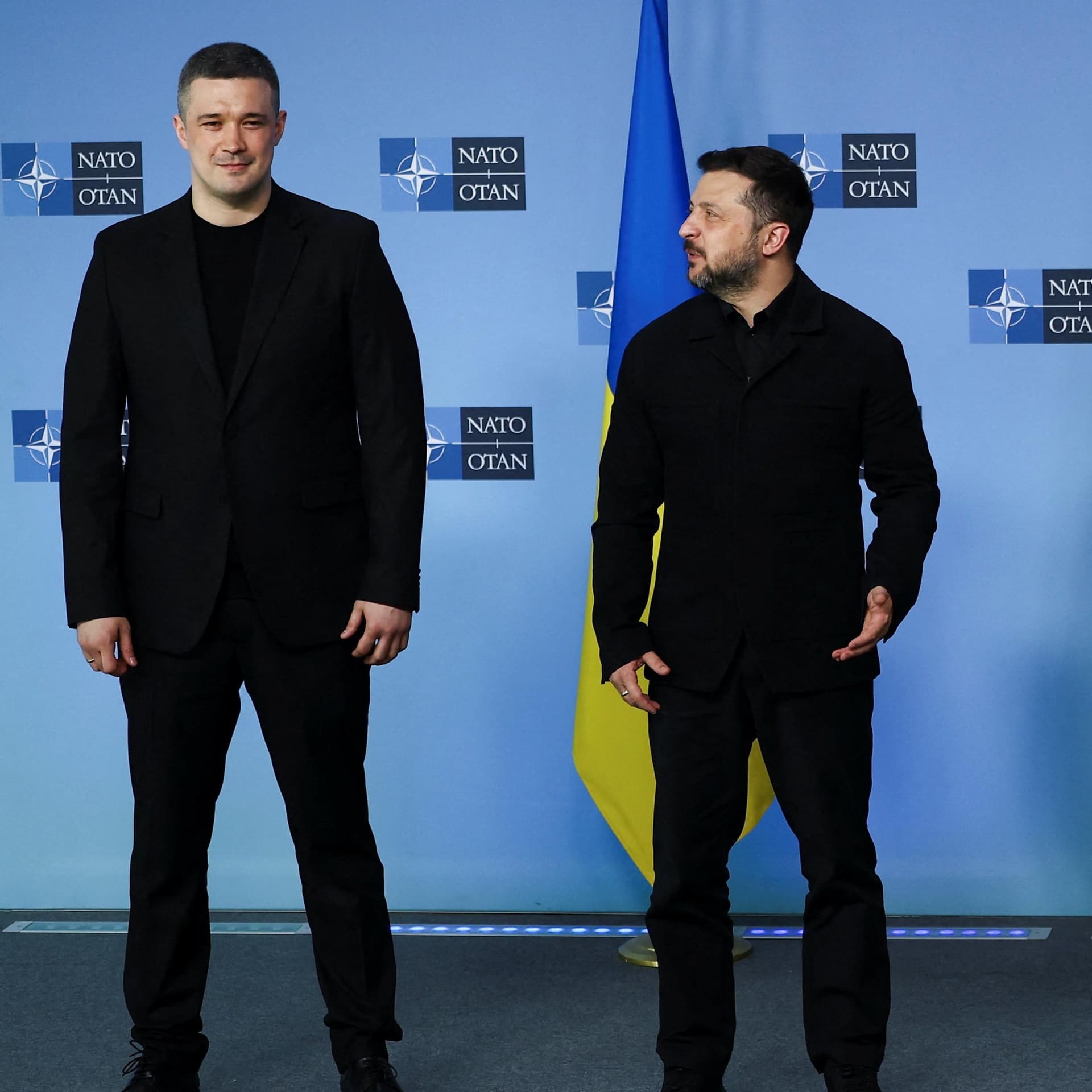
Last week Ukraine's popular ex-defence minister Mykhailo Fedorov called for wartime elections, in what is widely seen as the biggest challenge to Volodymyr Zelensky's presidency since Russia's full-scale invasion in 2022.
Zelensky, whose five-year presidential term ended in May 2024, has been under pressure from both Washington and Moscow to hold new elections, but they have been suspended until after the war is over. Fedorov says that corruption is depriving the military of weapons and making it harder for Kyiv to win the war, and that, "democracy cannot be held hostage by Russia”, although he tells the BBC that he had not himself seen the president engage in any corrupt activity.
We speak to Vitaly Shevchenko from BBC Monitoring about where all this could lead.
Producers: Mhairi Mackenzie, Xandra Ellin and Lucy Pawle
Executive producer: James Shield
Mix: Travis Evans
Digital producer: Tom Bage
Senior news editor: China Collins
Photo: Volodymyr Zelensky and Mykhailo Fedorov pose for photos at NATO's headquarters in Brussels, Belgium, June 18, 2026. Reuters/Stoyan Nenov