In short
The episode argues that smartphones and visual/oral media are driving a “post-literate society,” reversing the 18th-century “reading revolution” and reshaping education, concentration, and democracy.
Guests
James Marriott, an opinion columnist for The Times (London), covering culture, society, and ideas; he wrote the viral Substack essay “The Dawn of the Post-Literate Society.”
Key claims
Reading for pleasure has fallen sharply (citing ~40% of US adults and ~1/3 of UK adults). Smartphone adoption since 2007/early 2010s correlates with declining literacy, concentration, and reasoning; some measures like PISA and IQ may be worsening. Print constrained emotional persuasion and supported logical argument; losing it may increase emotion-driven politics and reduce access to reliable information (replacing institutions with Silicon Valley engagement algorithms).
Notable examples
Neil Postman/Aldous Huxley quotes; Kant’s Critique of Pure Reason as an example of thoughts requiring writing; 18th-century lending libraries with ordinary soldiers/peasants reading; “forbidden bestsellers” in pre-revolutionary France; professors increasingly not expecting students to finish assigned books.
Written by AI. May contain mistakes. Listen to the episode to check what was said.
Chapters
Tap a time to open that second in VOThe Decline of Deep Reading
0:30 to 0:45
Discussion on the loss of immersive reading in modern society.
“Because Schwab knows that when it comes to your finances, choice matters.”
The Decline of Deep Reading
0:48 to 2:06
Discussion on the loss of immersive reading in modern society.
“For many of us, that kind of deep, immersive reading is being lost.”
James Marriott's Background
2:06 to 2:46
Introduction of guest James Marriott and his insights on reading.
“I am an opinion columnist of The Times, mainly covering culture, society, ideas.”
Awareness of Declining Reading Habits
2:46 to 3:52
James discusses the gradual decline in reading habits over time.
“There probably wasn't a moment of realisation.”
Evidence of Declining Literacy
3:52 to 4:59
Analyzing studies showing a decline in reading and literacy rates.
“Well, my case, and you know, listeners may disagree, is that this idea that nobody's reading anymore, which has been floating around in our culture since probably the 1990s, people began to talk about this.”
The Concept of Post-Literacy
4:59 to 6:04
Exploration of what it means to live in a post-literate society.
“Well, James, you recently wrote this essay called The Dawn of the Post-Literate Society.”
The Impact of Oral vs. Written Communication
6:04 to 7:08
Discussing the differences between oral and written forms of communication.
“this conversation in an audiovisual platform, though.”
Historical Context of Literacy
7:08 to 8:04
Connecting the decline of reading to historical literacy movements.
“And one of the things that reading and writing and literacy does is that it expands our range of available thoughts.”
The Reading Revolution's Significance
8:04 to 10:09
Discussing the historical significance of the reading revolution.
“And you just can't fix it and you can't refine it and you can't go back over it.”
Impact on Politics and Revolutions
10:09 to 11:47
How the reading revolution influenced democratic movements and political thought.
“You know, James, we're nearing the 250th anniversary of the American Revolution.”
Show all 15 chapters
The Counter-Revolution Against Reading
11:47 to 14:00
Examining the factors contributing to the decline of reading in society today.
“You can't get those revolutions without people having access to knowledge and the ability to understand and criticize power.”
The Impact of Smartphones on Culture
14:00 to 16:18
Discussion on how smartphones affect our reading habits and intellectual engagement.
“expect their students to be able to finish those books.”
Literacy's Decline and Democracy
16:27 to 23:50
Exploration of how declining literacy impacts democracy and access to information.
“AT &T Fiber, limited availability in select areas.”
Navigating Information in the Digital Age
23:50 to 27:36
Discussion on the paradox of information democratization and its effects.
“Not everybody in the world will find that their post or their tweet, I guess your post on X, we now call it, will be picked up and promoted by the algorithm.”
Final Thoughts on Reading and Technology
27:36 to 28:00
Hosts share personal reflections on maintaining reading habits in a tech-driven world.
“Can I leave everyone, Asma, with another quote from Neil Postman?”
Transcript
Automatic transcript. May contain errors.0:00This BBC podcast is supported by ads outside the UK.
0:30James Marriott:Schwab offers. Because Schwab knows that when it comes to your finances, choice matters. No matter your goals, investing style, life stage or experience, Schwab has everything you need, all in one place, so you can invest your way. Visit schwab.com to learn more.
1:00phone between paragraphs. For many of us, that kind of deep, immersive reading is being lost. There's this quote from the writer Neil Postman, and he says, what George Orwell feared were those who would ban books. What Aldous Huxley feared was that there would be no reason to ban a book because there would be no one who wanted to read one. We first came across this quote in a piece written by our guest today, James Marriott. He's worried that Aldous Huxley might be right. And he's written an essay on Substack that's gone viral about the dawn of a post-literate society, which basically means what happens if people stop reading books altogether.
1:42This essay was so gripping that we wanted to break away from our usual format to explore it. So from the BBC, I'm Asma Khalid in Washington, D.C. And I'm Tristan Redman in London. And today on The Global Story, why the death of reading isn't just a cultural quirk, but a shift that might reshape our world more than we think.
2:05I'm James Marriott. I am an opinion columnist of The Times, mainly covering culture, society, ideas. And James, you said The Times, but just to be abundantly clear, you were talking about The Times of London. Yes, The Better Times. Not The New York Times, just making sure. The Good Times. The Old Times. The original times, almost, you might say. Yeah, original better than old. Fair enough. We are here today to talk about an essay that you've written, which is about the end of reading and whether or not we live in, in effect, a post-literate society. Could you tell us a little bit about your moment of realisation that we might be in a place where people have stopped reading?
2:46Good question. There probably wasn't a moment of realisation. I've always loved reading. Since I was a kid, it's been the main thing that I've done. I've always been a bookworm. And I think I've always been aware that that's been somewhat unusual. But the older I've got, the more I've realized that reading is really not a popular thing. I think since I moved to London and since I've started going on the tube and going on the bus, even in that time, I think, which has only been about 10 years, books have disappeared from buses and tube carriages and been replaced by phones. and James how old are you if you don't mind me asking I'm 33 okay so you're not that old you know relatively speaking I'm older than I feel and I think also older than I look I've always been quite baby faced so but yeah so it's something that I've sort of noticed ambiently and I'm aware that when I say it it sounds like exactly the kind of fuddy-duddy thing that newspaper columnists come along and say but I do think that in the last Could you explain what fuddy-duddy means for our American listeners Fuddy-duddy for American listeners I'm going to enrich their lives what does it mean sort of old fashioned Okay, so tell us why you're not being a fuddy-duddy then.
3:53Well, my case, and you know, listeners may disagree, is that this idea that nobody's reading anymore, which has been floating around in our culture since probably the 1990s, people began to talk about this. And there's been a school of thought that says this is a moral panic, you're overworrying, this isn't a thing. In the last few years, we've had increasingly convincing evidence that reading has really fallen off a cliff in our society, especially in the 21st century. also before. But I think certainly since the invention of the smartphone in 2007 when the iPhone was launched, and since smartphones became widespread in the early 2010s, reading has dramatically declined in society.
4:33There was a study, I think, early this year in America that found 40 % of American adults had stopped reading for pleasure. There was a similar study in the UK that found, I think, about a third of British adults said they once read for pleasure and no longer did. And this is a really dramatic thing in the history of how people spend their free time. You know, it's never been the case that everybody's read, but books and reading have always been a pretty central pillar of our culture. Well, James, you recently wrote this essay called The Dawn of the Post-Literate Society. Can you just describe to us what you actually mean when you say post-literate?
5:10What are you referring to? The argument is that for the last 300 years, the central mode of communication in our culture and the means through which we've conducted ourselves as a society has been print. We've had these conversations about politics and about history and about who we are through magazines, through newspapers and through books. And what's happening is that that literate world that structured our society, that structured the way that we thought about ourselves, that structured the way we communicated complex ideas to each other, that structured our political debates, that structured our politics, is being replaced by a world that is oral and visual.
5:50And that is a huge transformation for our society. And I think will change, I think, almost everything about the world of the 20th century that we knew from our childhoods and from growing up. I do want to say we're having this conversation in an audiovisual platform, though. I know. Well, you asked me, we should be doing this over email. And I mean, look, James, I am really, really a strong proponent in the power of audio. So I do want to hear you out, but also say that like oral storytelling and radio and audio has been around for years. Yes. And I agree. And it's a good point. My case is not that every podcast is terrible.
6:30And my case is not even that every TikTok video is terrible and we shouldn't be engaging with these things at all. I guess the argument is more about the particular biases and the particular intellectual biases that are inherent in certain media of communication. There's a really prophetic book about this whole issue, Amusing Ourselves to Death by Neil Postman, that came out at the end of the 1980s, at a time when culture was increasingly dominated by television. And he makes a great analogy, which I think is useful for understanding how all this works and the argument that I'm making. He says that if you had a society that only communicated through smoke signals, and they had no other way of talking to each other, it would probably limit the kinds of thoughts they were able to have.
7:10And one of the things that reading and writing and literacy does is that it expands our range of available thoughts. So the way I tried to explain it in the essay was to imagine somebody writing a long philosophy book. I kind of arbitrarily picked Immanuel Kant's Critique of Pure Reason because I thought it sounded like the longest and most difficult philosophy book that I could use as an example. If Immanuel Kant had woken up one morning at the end of the 18th century and decided to speak the critique of pure reason. He couldn't have done it. A book that's 700 pages long and deeply intellectually complex can't simply be produced by speaking it.
7:47If you want to produce a work of philosophy that complicated, you have to write a sentence down, you have to analyze it, you have to refine it, you come back to it, you join it to the next sentence, you refine it. And there are certain kinds of complex thoughts that are basically inseparable from reading and writing. Speech disappears as soon as you say anything. And you just can't fix it and you can't refine it and you can't go back over it. It seems like a trivial point, but I think it's quite fundamental. Okay, so, I mean, if we are, as you fear, moving into a post-literate society, you tell this extraordinary story that I had never heard before in your essay about the beginning of the fully and popularly literate society, this moment when everybody started reading.
8:32Could you tell us that story? When was it and why was it so significant in your view? Yeah, so this is the story of what some historians call the reading revolution, which happened at the beginning in the middle of the 18th century. Literacy for the entire history of the human species until that point had been the preserve of generally a pretty small and exclusive elite in society, limited to initially scribes and perhaps educated members of the upper classes. That began to expand, obviously, with the invention of the printing press at the beginning of the 15th century. Nevertheless, for the first few hundred years after the invention of printing, it was still a fairly elite activity.
9:15This phenomenon, the reading revolution, refers to the fact that in the early years of the 18th century, as education began to expand and books became a bit cheaper, this is pretty much the first time that reading has become a widespread activity among ordinary people. And there's a real sense that this was something dramatic happening in culture. Some people complained about it. Some people were kind of marvelling that you would go to a lending library in Germany and there would be ordinary soldiers reading books. Or you'd go to a peasant's hut in rural England. And in the bacon rack, there's a novel stuck up there.
9:49And at this point, for virtually the first time in history in a serious way, ordinary people have access to the kinds of knowledge contained in books. And this has, I think, really revolutionary social implications eventually that work themselves out in society over the next couple of hundred years. You know, James, we're nearing the 250th anniversary of the American Revolution. And the timeline you're describing of the 18th century, this is like the mid-1700s, is precisely when a lot of those conversations were happening in the United States. And so that makes me wonder what effect, from your vantage point, the reading revolution had on politics, on like physical, actual revolutions.
10:33So until the middle of the 18th century, policy discussions and foreign policy and domestic policy and taxes, these were all things that were discussed in the corridors of power among aristocrats and the social elite. And the important thing that the reading revolution does is that it gives access to these kinds of information about politics and policy to ordinary people. There have been interesting studies of what have sometimes called the forbidden bestsellers of pre-revolutionary France. Books that were officially banned were printed overseas and were immensely popular detailing abuses of power in the regime.
11:10And suddenly people had a real access to information about the way that the state was abusing its power. and this eventually had really revolutionary implications because a state that had been able to present an idea of itself as glorious and impervious and powerful and just was suddenly undermined by information that was leaking out of it and being read by ordinary people in the street this is a really important democratic moment because these are the roots of the democratic revolutions that took place in Europe and America through the 18th and the 19th centuries. You can't get those revolutions without people having access to knowledge and the ability to understand and criticize power.
11:54We've kind of established that reading is a healthy mind enriching activity. It is a good thing. But let's fast forward to where we are now, which is you've called it the counter revolution. If you compare it to the reading revolution of the 18th century, can you explain to us exactly what is happening now that is undoing all of that good work? I mean, what's happening now is pretty simple. We know that since the invention of the smartphone in 2007, and especially since the early 2010s when smartphones began to become widespread, reading has really begun to fall. We know that reading has declined significantly.
12:33There was a report that came out at the end of last year published by the OECD, which found that literacy was declining or stagnating in most developed countries. which is a really remarkable thing to find. You know, I think once upon a time, a social scientist looking at a statistic like that might have thought that it meant something really dramatic had happened, like, you know, the education system had collapsed or there'd been a civil war or a natural calamity or would take something really big for literacy to decline in a developed country with an advanced education system. Along with those declines in reading, there has been increasingly interesting research about the declining ability of schoolchildren, adults to concentrate, to reason.
13:19There is some evidence that IQ scores may have begun falling since the mid-2010s. My understanding is that American high school students' skills in math, science, and literacy are now at their lowest level on record. There have been various measures of reasoning ability that seem to be falling. PISA scores, the global, I guess, insofar as there's a gold standard for international test scores for high school students have been falling since about the mid 2010s. And it seems to be the case that various measures of human reasoning and intelligence have begun to decline. I mean, the other really depressing thing is increasing reports from universities that professors, even teaching English literature and even at prestigious universities, are giving up on assigning their students books or will assign their students books and not expect their students to be able to finish those books.
14:06I've got friends who are academics and they say this is absolutely happening. It's a really significant moment for our culture because a lot of these books that are being taught on English literature courses or on history courses have been handed down from generation to generation for hundreds. In the case of some classics, if you're doing a classics degree, thousands of years. And we're reaching a point where it seems like we're no longer able to hand on those books and hand on that knowledge. There's a great essay laying all this out in the Financial Times by a journalist called John Byrne Murdoch called Have Humans Reached Peak Brainpower?
14:37And he argues that smartphones, it's moot whether they're literally making us stupider, that's quite a strong assertion, but they certainly seem to be impairing our ability to realize our full intellectual potential.
14:57if you can't concentrate it's very hard to really reason through a problem it's very hard to be as fully creative as you can be if you're checking your phone every five seconds if you can't concentrate on a point and you can't reason through a point it's very hard to engage seriously in a political debate so this seems to be impairing our ability to function intellectually as a society
15:33chicago talks a lot hold on let me step over here people are talking too much we debate about food deep dish tavern style who's got the best beef we yell across rooms across blocks, across generations. Yes, nice earrings, Grammy. And now we're doing it on our phones, too. Video calls from the L train, group chats that never shut up. Neighbors texting you the score before your TV catches up. Come on! Get a load of this guy. Catch up on a dog. Yeah, we've got thoughts. Too loud? In Chicago, you're gonna hear it. Because nothing here gets built without conversation. Nothing moves without connection.
16:10So if you think you know AT &T, it might be time to rethink that because their network has improved, like, a lot. So Chicago can keep speaking its mind with AT &T Wireless and AT &T Fiber. Chicago won't stop talking. Our improved network backs it up. AT &T, connecting changes everything. AT &T Fiber, limited availability in select areas.
16:37james we'd like to break down with you the consequences of this decline in literacy as you describe it so the first that you've touched on there slightly already is education uh the second would be what's it actually doing to our democracy yeah i i think for me this is the most important point i think there's a way of thinking that it's very easy to get into in the 21st century. We've lived in democratic societies for a very long time. And I think you can begin to think that democracy is this kind of abstract virtue that has just fallen out of the sky into our laps from nowhere. And it will probably always exist somewhere.
17:10We're just so used to it. I think what is harder to recognize is that modern democracy, as we know it, is a historically contingent phenomenon that grew up in a particular time and a particular place and a particular culture. And that culture was the highly literate societies of the 18th and 19th centuries. The feudal, autocratic, hierarchical society that existed in Europe before the invention of reading was very image-based. Monarchs and aristocrats enforced their power through impressive visual display, firework displays, parades, enormous buildings. The whole argument was an emotional and awe-inspiring one.
17:46And one of the important changes that literacy introduced was that it democratized knowledge and it gave people a way of seeing behind those impressive emotional displays and people would begin to go, okay, well, the palace is very impressive, but why should a king be more powerful than a peasant? So I think what's happening now is that we're returning to a world that is much more visual, that is much more based on emotional appeals. I mean, this is maybe a crucial thing to say about what I think print does, which is that when you communicate in person or when you communicate in the medium of a TikTok video or even a podcast, loath as I am to criticize podcasts, you have a whole range of means of communication and persuasion at your disposal that are not necessarily perfectly logical.
18:34So if I'm talking to you in a conversation, as I am now, and I want to persuade you. Let's say you are a politician. If I'm a politician or a podcast and I'm talking to you over TikTok and I want to persuade you of a point, I could shout at you if I wanted to, or I could start crying, or perhaps I'm very charming and I could really charm you around to my way of thinking. And we're human beings and we are very inclined to be persuaded by these emotional and social ways of communication. And I think a really important thing, perhaps the most important thing that print did in the way that it restructured our political discourse was that it removed our access to those illogical forms of communication.
19:14I'm an opinion columnist and I write a column every week. I would never say that print is perfectly logical. I'd never said everything I've written is perfectly logical, but you really feel that you have a much more restricted range of persuasive techniques to rely on. You're forced much more to fall back on logic. All you can do in print is just fit a sentence after a sentence after a sentence after a sentence and try and build a logical argument. Everyone's noticed in a conversation that if there's someone who's like very tall and good looking and confident, they might get their point across much more effectively than someone who's well informed, but less charismatic.
19:47Well, you are tall and good looking. No, I'm short and unconfident. And it's nice of you to say that I'm charming. Well, James, I would say here in the last several years in American politics, there has been a sense that the way of governing and that democracy has been elitist. I mean, that was sort of the rise in many ways of Donald Trump's campaign and then his presidency. And I hear everything you're saying, but one major question I've had, James, is you've talked a lot about how reading democratized knowledge, that reading democratized access to information. And in many ways, I think people would say, well, the Internet has further democratized that access to information.
20:31I mean, there's a lot of socioeconomic inequality. And the great thing, I think, to many people about the Internet was that a lot of people could suddenly access information that they might not otherwise have had access to. You know, it's very expensive to go to the best universities in this country. And I don't know that I think access to information on the Internet is bad. In many ways, I think that it has increased access to information, that the Internet has democratized opportunity and access to information. Now, what you do with it, you know, is up to you, but it certainly increased the availability of information in much the same way that you described the 1700s with the advent of the reading revolution.
21:08Yeah, I hear that case a lot. And I think it's superficially true. So in the age of print, if you wanted to write a book or a magazine article, there was still a pretty high bar to get over that. You had to probably have an education. You probably had to find a job at a newspaper and be employed by a newspaper. What social media has done is it's completely removed all those barriers. Anybody can post on Twitter and anybody can get their information out there, get their story out there. Now, obviously, this sounds like an incredibly democratic thing. at least superficially, more people can talk.
21:40And there is truth in that. I think the other side of it is that the effect of it has been much less democratic than it seems, because I think the average person's access to reliable information has fallen off a cliff since the invention of the internet. And although the old system of information production, when we got our information through institutions like newspapers and the BBC, superficially seemed elitist, there was actually something deeply democratic about that, because that meant everybody had access to accurate and reliable knowledge about the world. As those much-hated gatekeepers have lost their control of the flow of information, what should seem like a really democratic change in our society has been a profoundly anti-democratic one because access to reliable information about the world is being restricted to a smaller and smaller minority of people.
22:28And we know this because we can see that beliefs about vaccines and science are becoming less and less scientific among the population. And the people who have access to accurate information about science and accurate information about the news, that kind of accurate information is increasingly restricted to wealthy, educated people who can afford newspaper subscriptions and can afford to participate in that old-fashioned media information ecosystem. So I get that it seems more democratic than people can speak, and it is more democratic for the people whose voices are heard, who might not have been employed by a newspaper.
23:03The tragic effect is that it has really taken access to reliable information about the world away from a lot of people. No, I understand that. I understand that. I think we've also learned things, though, James, that we never would have seen otherwise, right? I mean, that's the criticism, at least racially here in the United States, is that certain things like George Floyd's murder would have never been known by traditional gatekeepers and media outlets. And they weren't known, frankly, for decades here in the United States. Yeah, of course. And that's totally true. And the case is never that that old media way of doing things was perfect.
23:34It clearly wasn't. I think all we can talk about is general effects in our culture. And I think if you want people to make decisions in a democracy based on reliable information about the world, I think the previous system got us better outcomes. The other thing that's really important to say about the idea that information has been democratized is yes, anybody in the world can tweet. Not everybody in the world will find that their post or their tweet, I guess your post on X, we now call it, will be picked up and promoted by the algorithm. It feels democratic because anybody can do it. Actually, what's happened is the gatekeepers are still there, but the gatekeepers aren't the gatekeepers at the BBC and the Times who care pretty generally about accurate information about the world.
24:16The gatekeepers are now people sitting in Silicon Valley whose only aim is to increase the amount of time that you spend on your phone and you spend on your screen because they can track your movements online just to show you better ads. And that is what the whole business model is based on. And the way to do that is to promote content that is angrier, that is more emotional, that is more full of outrage. Are you saying then that we should be switching to dumb phones for the good of society? Well, I got rid of my smartphone a couple of years ago. I don't think it's realistic that everyone will do that.
24:53I think for a lot of people having a smartphone, I find this really pretty sinister, has become virtually compulsory. I've got a friend who needs a smartphone to scan the door of his office to get into his job. Increasingly, it's very hard to function without a smartphone. I would say it's worth thinking about how much of a positive impact your smartphone is having on your life and thinking about whether you can afford to get rid of it. It might be worth doing. I think getting rid of my smartphone improved my life a lot. I also think that as our world becomes ever more based on addictive screens if we can build up a minority of people who will form a kind of interest group and say we don't have smartphones we're not participating in that culture not everyone's going to do it but I think a vocal minority of people who are willing to join me a few people doing it could be powerful well James that's all fine as long as people carry on listening to podcasts particularly basically podcasts like this one, which are both high-minded and compelling at the same time.
Read the full transcript
25:50Exactly. We're letting you guys off. Thank you. Thank you. Thanks, James. Thank you so much, James. Thank you. Total pleasure to talk with you. Thank you. Thank you.
26:03That was the writer James Marriott from The Times of London. And look, I think of smartphones as a tool and how we use that tool is up to user discretion. Because I think the idea that folks will all suddenly give up these remarkably beneficial and useful tools in some ways just doesn't seem realistic to me, Tristan. Oh, well, I think it really chimed with me. I mean, partly because I'm just, my brain hurts from staring at a stupid little screen all day in my hand. And when I read his piece, I immediately wanted to go and read a book to try and prove to him that I still could. I found myself a few years ago feeling frustrated that I just wasn't reading novels anymore.
26:47So I decided to create a book club. And in fact, I just hosted a recent book club gathering at my house a few days before we taped this interview. And look, I'm not reading still as often as I did before. But to me, it feels so satisfying to have people to read a book with and to hold myself kind of accountable to doing something I really loved to do as a child. I hear you. I hear you. I mean, I have a similar thing that's maybe slightly less organized, but I find that if I read in the bath, it is a captive location to read and I cannot reach my phone. And that forces me to read, basically. That's my solution.
27:26Well, there we have it. I mean, these are two solutions for folks who maybe want to read books more often, but don't actually want to get rid of their smartphones and live in that alternative universe. Can I leave everyone, Asma, with another quote from Neil Postman? Because that's where we started. And when we were poking around on this story, after having spoken to James, we found this second quote, which I really love. So he says, George Orwell feared that the truth would be concealed from us. And Aldous Huxley feared the truth would be drowned in a sea of irrelevance. And that also really chimed for me because I feel like the overload of information that we all get from the internet feels sometimes like a sea of irrelevance.
28:11Well, folks, that is it for today's show. If you have any thoughts, ideas, questions for us, drop us a note at theglobalstory at bbc.com. This episode was produced by Aron Keller and Sam Chantarasek. It was edited by James Shield and mixed by Travis Evans. Our senior news editor is Chyna Collins. Thank you all, as always, for listening, and we'll talk to you again tomorrow. Cheerio.
From the publisher
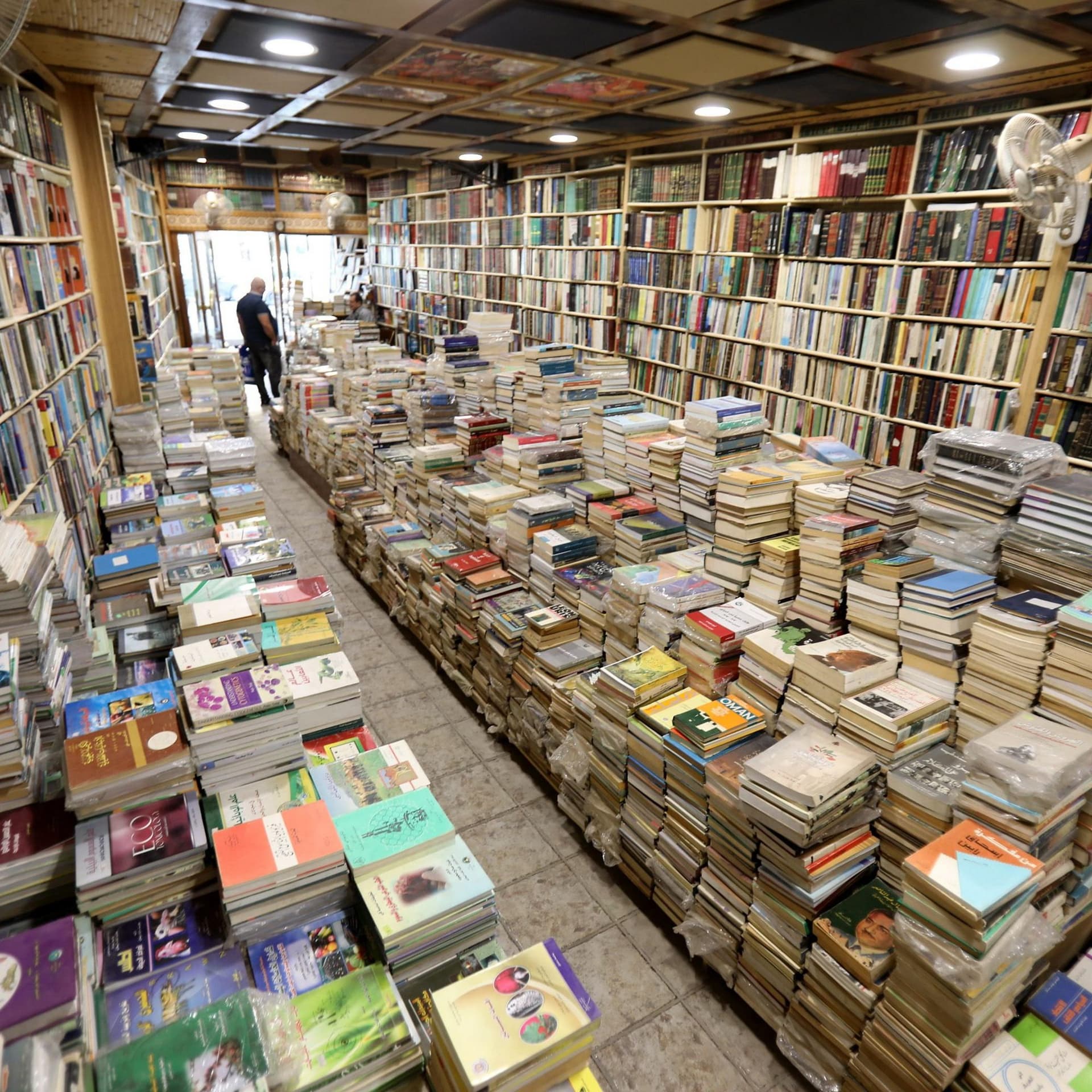
Are we living through the slow death of reading - replaced by an addictive screen culture that fragments our attention and floods us with trivial or unreliable information? Writer and voracious reader James Marriott believes we are entering a post-literate age with profoundly negative consequences for education, culture and democracy itself. In today's episode, James traces how an 18th century ‘reading revolution’ shaped the modern-world - and what might follow its sudden decline. Producers: Aron Keller and Sam Chantarasak Editor: James Shield Mix: Travis Evans Senior news editor: China Collins Photo: The al-Nahda al-Arabiya library in central Baghdad. (Credit: Ahmed Jalil/EPA)