
In short
The episode explains the Enhanced Games, dubbed “the Doping Olympics,” scheduled for May 24 in Las Vegas. It’s like the Olympics but limited to swimming, sprinting, and weightlifting, with drug use openly allowed under medical supervision. Athletes can earn up to $1 million for world records and $250,000 for event wins. Allowed substances include testosterone/anabolic steroids, growth hormones, metabolic modulators, and stimulants, provided they’re FDA-approved for medical use. The show traces the concept to Australian venture capitalist/lawyer Aaron D’Souza, backed by Peter Thiel and co-founder Christian Angermeier, and highlights business motives: Enhanced sells performance medicines/supplements and launched on the NYSE with a valuation over $1 billion; Trump Jr. is linked via 1789 Capital; investors cite “biohacking.”
Key claims
supporters argue it’s controlled, safer than underground doping and rewards athletes; critics (IOC, WADA, UK Fair Play) warn it normalizes doping and poses long-term health risks.
Notable examples
Ben Proud (2024 Paris silver), Emily Barkley (2019 British 50m freestyle gold), and Australian swimmer James Magnussen.
Guests
Dan Rowan (BBC sports editor).
Written by AI. May contain mistakes. Listen to the episode to check what was said.
Chapters
Tap a time to open that second in VOOverview of the Enhanced Games
0:32 to 1:16
Exploration of the Enhanced Games and their unique approach to sports.
“This weekend, elite athletes from around the world are descending on Las Vegas, Nevada for the first of its kind sporting competition known as the Enhanced Games.”
The Controversial Nature of the Games
1:16 to 2:14
Discussion on the ethics and implications of allowing performance enhancers in sports.
“aims to rival professional athletics with a twist.”
The Origin and Philosophy Behind the Games
2:14 to 4:28
Details on how the Enhanced Games were conceived and the philosophical arguments supporting them.
“I'm Dan Rowan, and I'm the BBC's sports editor.”
Reactions and Controversies Surrounding the Games
4:28 to 7:04
Exploration of the backlash and condemnation from sporting authorities and public figures.
“into the conversation, I just want to understand what specific drugs we're talking about.”
Funding and Investment in the Enhanced Games
7:04 to 10:46
Insights into how the Enhanced Games obtained funding and the involvement of various investors.
“and they'll argue, of course, that it does redistribute vast sums to national sporting federations as well as to grassroots projects.”
Insights from Athletes Participating in the Enhanced Games
10:46 to 13:44
Profiles of athletes involved and their motivations for participating in this controversial event.
“company, and it's had a valuation of more than a billion dollars even before this first event has taken place.”
Challenges and Implications for Athletes
13:44 to 14:03
Discussion about the potential consequences for athletes participating in the Enhanced Games.
“So not an Olympic athlete, but nonetheless, you know, somebody who's competed at a decent level.”
Understanding the Enhanced Games
14:03 to 16:46
Discussion about the athletes' backgrounds and motivations for participating in the Enhanced Games.
“I mean, And I think it's fair to say the majority are from Western countries, from Europe and the US, Australia, for example.”
Inside the Training Facility
16:46 to 17:31
Insights into the training facility and medical supervision for performance enhancements.
“and together we're the hosts of the Global Story podcast from the BBC.”
Safety Protocols and Monitoring
17:31 to 19:19
Exploration of the safety measures and health monitoring in place for athletes.
“Well, the administering of these enhancements, as they call them, was being conducted under medical supervision, the organizers emphasized, in a hospital on the outskirts of Abu Dhabi.”
Show all 13 chapters
Critiques and Concerns about Health Risks
19:19 to 21:35
Criticism of the Enhanced Games for health risks associated with performance-enhancing drugs.
“Dan Turner, for example, the Enhanced Games Director of Athlete Safety and Performance, who insisted that this monitoring meant that the risks could be minimised.”
Athlete Perspectives on Health and Risk
21:35 to 23:50
Discussion on athletes' views regarding health risks and the normalization of drug use in sports.
“I think the athletes are exposed to some substantial unknown risks that they're just not being made aware of.”
Cultural Implications of the Enhanced Games
23:50 to 27:04
Analysis of the cultural significance and societal shifts related to the Enhanced Games.
“But that's accepted because it's entertaining.”
Transcript
Automatic transcript. May contain errors.0:00This BBC podcast is supported by ads outside the UK. Hi there, I'm Asma Khalid. And I'm Tristan Redmond. And together we're the hosts of the Global Story podcast from the BBC. For those of you who might be new to our show, we here at the Global Story dive deep every weekday on one big story at the intersection of where the world and America meet. And you can now watch the Global Story on the iHeart app. Catch every brand new episode every weekday. Just tap into iHeart to start watching. And we hope you enjoy the show.
0:38This weekend, elite athletes from around the world are descending on Las Vegas, Nevada for the first of its kind sporting competition known as the Enhanced Games. It's kind of like the Olympics, but only for swimming, sprinting, and weightlifting. The aim is to break world records. In fact, some of these competitors are former Olympians, medalists, battling it out for money and glory. But there's one big difference. What might be possible in a sport if performance-enhancing drugs were all allowed? Well, we might soon find out the inaugural Enhanced Games, or the Doping Olympics, as it's been dubbed, aims to rival professional athletics with a twist.
1:18At the Enhanced Games, athletes openly take drugs that are normally banned in high-level sports. Steroids, growth hormones, various performance-enhancing drugs, They're all OK at these games, so long as they're approved by the U.S. Food and Drug Administration. Why on earth should we want or have a doping Olympics? Because science is real, Pierce. Medicine is real. But this isn't just sports and medicine. It's business. And in Vegas this weekend, the athletes who compete may be putting their reputations on the line. But they may also hit the jackpot. One million dollars is up for grabs for any world record.
1:58250 ,000 for the winners of each competition. From the BBC, I'm Asma Khalid in Washington, D.C. And today on The Global Story, we dive into the controversial world of the enhanced games.
2:16I'm Dan Rowan, and I'm the BBC's sports editor. Well, Dan, it's a real pleasure to have you back on the show, because I know you've been doing some reporting on a sporting event called the Enhanced Games. I should point out that some would say that name in and of itself might be a euphemism, Enhanced Games. But for the uninitiated, can you just explain what the games are? Because when I first heard about them, I will say I thought it was a wild concept. Yeah, I think many people share that view, Asma, and thanks for the invite back. I think it's fair to say it's one of the most divisive and controversial events that the world of sport has seen for a long time.
2:54It's an event where performance-enhancing drugs banned elsewhere in mainstream sport, of course, are actually allowed to be taken by the competitors under medical supervision. But these inaugural games, they're scheduled to take place in Las Vegas on May 24th, and the athletes involved can earn up to a million dollars if they break the world record in their respective discipline. And, you know, a quarter of a million dollars if they win their event. you know organizers say that this is going to redefine the future of sport that it's unique that it it celebrates athletic excellence while exploring the limits of human potential it combines scientific innovation with athlete welfare but the critics of course say that this crosses an ethical line that it sets a dreadful example because it risks normalizing doping it could harm the integrity therefore of sport and it could be dangerous to the health of those taking part.
3:46Now, others say as well that athletes are at risk of being exploited for commercial reasons, because it is important to bear in mind that as well as a sports event, you know, Enhanced is also calls itself a performance products company. So it is selling consumer health medication that those behind it claim will improve people's longevity and vitality. And they say that the athletes aren't being exploited, they're being handsomely rewarded, and that they're being open about these commercial objectives. But it is really important for, I think, from the offset to emphasize that this is more than just a live sports event for entertainment.
4:22It's very much a business and a consumer platform too. That's really interesting. And Dan, I think before we can dive any deeper into the conversation, I just want to understand what specific drugs we're talking about. I mean, presumably we're not talking about cocaine, heroin. No, recreational substances like that are strictly banned, the organizers say. But what they are allowing are performance-enhancing substances such as testosterone, anabolic steroids, hormones and growth factors, metabolic modulators, and stimulants. What the Enhanced Games organisers stress is that these are all approved by the US Food and Drug Administration, and they're available for medical reasons already.
5:05But obviously, those substances have long been associated with cheating in sport, and so it is highly controversial that these athletes are being allowed, and indeed helped to take them. Dan, I want to circle back to what we can actually expect from those enhanced games in Las Vegas. But I think it is important to understand how the competition came about, how this commercial enterprise came about. What was its origin story? Sport has, obviously, as we know, waged this arduous ongoing battle against drugs cheats to preserve the integrity of competition and ensure that those watching it can believe what they see.
5:39If you can't, then the whole point of it is eroded. But the prevalence of cheating in sport over generations has often, I think, led some to wonder whether, to ensure a level playing field and regulate the practice, whether doping should be allowed to some extent. Now, such suggestions have traditionally been condemned and dismissed. But the concept, nonetheless, has been around for a long time. But this particular vision of the Enhanced Games, it was conceived by an Australian venture capitalist and lawyer a few years ago, Aaron D'Souza, who says he came up with the idea when he was working out and he overheard two men talking about being enhanced, as they put it.
6:14And he then pitched the idea to Peter Thiel, the billionaire co-founder of PayPal, who he'd met at Oxford University when he was a student there and Thiel had been a guest speaker. And also a German venture capitalist called Christian Angermeier also came on board as an investor and a co-founder. So that was the genesis of this. Okay. How would you characterize the main philosophical argument behind these games? If you look at what Aaron D'Souza said over the years, there's a number, I think, of philosophical arguments being made. One is certainly a sort of anti-establishment disruptor angle. This argument that athletes are not being properly rewarded by the sporting authorities.
6:58Financially not being properly rewarded. Correct. And, you know, you put this to the IOC, the International Olympic Committee, and they'll argue, of course, that it does redistribute vast sums to national sporting federations as well as to grassroots projects. But I think that has indeed been, for a long time now, a debate as to whether enough money does filter its way down to the stars of the show, the athletes that are sacrificing so much to entertain so many and to generate the revenue that sporting bodies, of course, benefit from. So there's that angle. Then there's a libertarian perspective, I think, as well, behind the enhanced games.
7:32You know, it's being seen very much as a platform, a celebration even of self-sovereignty, freedom and personal choice. Now, D'Souza has referenced studies that suggest that 44 % of elite athletes may have used performance-enhancing drugs at some point in their careers. We don't know. I mean, it's contested by some, but I think he's referred to some studies that suggest it's very prevalent. And we know from the numbers of athletes that have been found to have cheated over the years that this is not uncommon. His argument, I think, is similar to those that argue for legalizing drugs. rather than try to fight an unwinnable battle with all the costs involved, and in doing so, push doping underground where there's no oversight, and corners can be cut and it's dangerous, why not allow it?
8:18And do it in a more controlled environment. And then there's also, I think, this belief in longevity and self-optimisation. You know, those behind it celebrate what they claim to be this new vision, this new frontier for human advancement. And the Games is, you could argue, a platform for that. It's a promotion. To see what humans are capable of. Correct, yeah. But also it's a promotion for the course of the drugs that are being used and then will be sold. So, you know, D'Souza has sort of spoken about 60-year-olds potentially breaking world records with the aid of drugs. And so rather than just seeing as a mere sporting event, as I said, you could also see it as almost an experiment to see what is possible biologically.
8:57It sounds like the reaction to this event has been controversial. So what has the reaction been like? well yeah as you'd expect you know there's been widespread condemnation from the sporting authorities and the anti-doping authorities for example in 2024 the IOC and the World Anti-Doping Agency released a joint statement condemning the enhanced games the Biden White House at the time also criticized it the IOC referred to it destroying the concept of fair play and fair competition or at least they said this would be a good way to do it the International Fair Play committee said it was a potentially catastrophic healthcare risk to those taking part.
9:37And so a wave of condemnation, of course, D'Souza and those behind it dismissed much of that. But there's no doubt that the reaction in the first year or two, up until this day, has been one of disappointment and I think, and dismay in many quarters. And so despite some of that disappointment and dismay, how was D'Souza able to raise the funds? Well, I mentioned earlier that he'd attracted venture capitalists like Peter Thiel and Anga Maya. And they'd already invested these guys in biotech, you know, life extending technologies. A Saudi investor called Prince Khaled called it as the ultimate biohacking opportunity for elite athletes.
10:14So I think that was what lay behind the investors was the possibility that this could be very, very lucrative. And indeed, as I've mentioned, you know, enhanced in March, in fact, launched formally its sort of range of performance medicine and supplements, which included, you know, hormone replacement therapy for men and women, supplements, longevity protocols. And so those drugs are a revenue stream, you're saying? Absolutely. And, you know, it's said openly it wants to become the leading provider of personalized enhancement products. So what I should say is that earlier this month, the Enhanced Games started trading on the New York Stock Exchange, became a publicly traded company, and it's had a valuation of more than a billion dollars even before this first event has taken place.
10:56So there is a lot of money involved. I'd also read that President Trump's son, Donald Trump Jr., is involved in some financial capacity. Can you explain that? That's right. Yes. The Teal, one of the investors behind the Enhanced Games, already had ties with the Trump White House. And that was reinforced when the 1789 Capital Fund, which Donald Trump Jr., the eldest son of the U.S. president, has been partnering, became another investor in Enhanced. And Trump Jr. said that the Games was about excellence, innovation, American dominance on the world stage, something he said that the MAGA movement, Make America Great Again, of course, is all about.
11:31So there is this connection. And that's been strengthened, I think, by some of the rhetoric of the health secretary under Donald Trump. Oh, RFK Jr. Correct. And he's spoken about his use of testosterone replacement as part of an anti-aging protocol. And his Make America Healthy Again campaign has referenced the deregulation of many treatments, including peptides, which would allow companies like Enhanced to sell them. So despite, it sounds like some of the initial controversy, these games got off the ground. And as we say, they're about to take place here in Las Vegas. I know that you visited a training facility for the Enhanced Games in Abu Dhabi in the UAE.
12:17You interviewed some of the athletes who are going to be participating in these games. Can you give us a sense of who they are and why they say they want to participate in these games? Absolutely, yes. It was a fascinating experience being able to go and see inside what must be one of the most controversial training camps in world sport. A range of athletes from all across the world were there. Perhaps one of the highest profiles, certainly, is British swimmer Ben Proud. Swimmer Ben Proud is a former world champion who won a silver medal at the 2024 Paris Olympics. there is I think sometimes a misconception this is these are all just athletes who have retired or quite obscure and far from it you know this this was a very serious Olympic athlete during that time as a freshman swimmer I think I conducted myself well I was on 10 consecutive podiums towards the end of my career I got the most sub-22 second swims in history and you know even though I did all these things I rarely received any sort of compensation and you start to think, especially as a 30, 31 year old, what's the point of spending 15 years building a skill just to retire and forget about it for the rest of my life?
13:21Another British participant is a young woman called Emily Barkley. Doping is happening in sport, especially in gym communities. You hear a lot about people, you know, buying it through the back door in unsafe ways. Also a swimmer. Now, she won a gold medal in the 50 metre freestyle at the 2019 British Championships, competed on the university. Did you go to college in America too, I think? Yeah. Yeah, that's right. Yeah. University of Arkansas in the US. So not an Olympic athlete, but nonetheless, you know, somebody who's competed at a decent level. The stuff that we're doing here is just going to facilitate, you know, a better understanding of these sort of drugs that we'll be taking so that, you know, in the future, people can do it in a medically safe way.
14:02Dan, you mentioned a couple of Brits who are competing in these games, but presumably there are people from a number of countries. Absolutely. Across the world, yes. I mean, And I think it's fair to say the majority are from Western countries, from Europe and the US, Australia, for example. But there are athletes in there from Africa, for example, as well. It's a pretty broad range. You mentioned only about 40 athletes are here at these games. And that doesn't seem particularly huge. Is that because there's presumably a cost to taking part in these enhanced games? I mean, if you are going to be an athlete here, are you not allowed, for example, to compete in the Olympics anymore?
14:36Well, I think undoubtedly the consequences of signing up may well be deterring some from joining. I mean, it depends what sport you're in. So, for example, last year, World Aquatics became the first international sports federation to ban athletes, coaches and officials from its events if they'd taken part in the enhanced games. now other sports may feel differently i mean that's they're the only sport so far to have done that i think it's a really big decision i think for those who are sort of at the end of their elite careers or have retired maybe it's an easier decision but for the younger athletes who are still got ambitions at world championship or even olympic level then this could be a really big moment if they turn their backs on that but of course balancing all that consequence is the incentive of these huge payouts if you're successful.
15:26You've mentioned that if an athlete breaks a world record, they will get a million dollars. If someone were to break a world record, what's your sense of whether breaking a record while taking these drugs devalues the record? I think that's a really good question. And it's one that I thought long and hard about when I was at the Enhanced Games training camp. I put this to the chief executive and a co-founder of the Enhanced Games, Maximilian Martin. How would you feel if you were the record holder that dedicated your entire career to competing clean, naturally, and then somebody comes along and takes that record?
16:01Does that not devalue that record? It doesn't. Because it's set under a completely different set of rules. And also the traditional federation is not accepting that record as a record. You know, they emphasise that they are not trying to compete with the Olympics, for example, or World Championship. This is their own event. But of course, one can argue, well, you are connecting with the mainstream world of sport because you are setting that benchmark of the world record and saying, if you can beat it, then we will financially reward you. And in doing so, there is that link.
16:46Hi there, I'm Asma Khalid. And I'm Tristan Redmond. and together we're the hosts of the Global Story podcast from the BBC. For those of you who might be new to our show, we here at the Global Story dive deep every weekday on one big story at the intersection of where the world and America meet. And you can now watch the Global Story on the iHeart app. Catch every brand new episode every weekday. Just tap into iHeart to start watching. And we hope you enjoy the show.
17:18When you were in Abu Dhabi reporting on this training facility where the athletes were prepping for the games and taking these drugs, what does that actually look like in practice? Who's giving them the drugs? Well, the administering of these enhancements, as they call them, was being conducted under medical supervision, the organizers emphasized, in a hospital on the outskirts of Abu Dhabi. Now, we were originally told before heading out there that the aim was to give us access to that facility and let us speak to the medics actually administering these drugs. We did take a drive to this hospital.
17:54It was very modern with a good reputation, but we weren't allowed actually in. But we did get the chance to speak to the head of the medical commission that the Enhanced Games has set up, which it says plays a role in safeguarding the athletes by establishing safety protocols. it's emphasizing that this enhancement program is absolutely strictly supervised and in terms of how this looks like i mean what how it was described to me was that these athletes were taking part effectively in a clinical trial again we weren't able to actually see it for ourselves we were told that each athlete would be given an individualized program of enhancements and from what i was told these enhancements would be taken in the hospital they would be given sort of individualized health biomarker monitoring that would focus on safety profiling.
18:45So this would involve, for example, cardiovascular health. So checks for myocardial function, blood counts would be assessed to detect any potential adverse effects, genetic screening, electrocardiograms, and also brain health monitoring to track neurological function. So they really were trying to emphasize to us that this was very thorough, much better than athletes would be used to in conventional elite programs, and that that should answer some of the concerns over health risks. We spoke to Dr. Dan Turner, for example, the Enhanced Games Director of Athlete Safety and Performance, who insisted that this monitoring meant that the risks could be minimised.
19:27And he said that it's not the use of the substances that was dangerous per se, but rather the misuse. But there are many critics who think it's irresponsible and dangerous. You know, I think for a lot of people who follow sports, who really love sports, these games might seem controversial because for so long we've been told that using these types of performance-enhancing drugs, doping is unfair, that it's cheating the system. You know, it's cheating perhaps other players, it's cheating the fans, and now you're describing a world where it's all totally okay under the rules. Is that the primary criticism you've been hearing?
20:04Are there health or medical concerns you're also hearing? I think it's both. And if we take the first one, this, you know, according to many, kind of violates the values of fair play that we've associated with elite sport. Sport at any level, in fact, for so long, I think many find it very difficult to accept. And if you talk to someone such as the UK Anti-Doping Agency, Jane Rumble is the chief executive. And I asked her what she made of the fear that this could set a really bad example to athletes everywhere and in doing so lead to more occurrences of cheating. The key concern that I've got about the potential impact of these enhanced games is very much on the next generation.
20:50So the young people who may tune in and watch these games or hear about it, I do very much believe that it sends a dangerous message about performance enhancing drugs with little, if anything, said about the health risks associated with performance enhancing drugs. The second main concern is that this could actually involve health risks to those taking part. Now, we know that some of the substances involved, the scientific research has shown that long-term use can lead to damage, for example, to the heart, to the liver. It can disrupt the body's natural hormone production. It can affect fertility.
21:29It can even affect a person's mood and mental health. I think it's been misrepresented to the athletes. I think the athletes are exposed to some substantial unknown risks that they're just not being made aware of. I spoke to Professor Ian Bordley of Birmingham University, who's conducted research into some of these substances. Now, he says that there are clear health risks with some of them. He speaks about the fact that notwithstanding the supervised nature of the enhanced games protocols, there's still uncertainty around the long term effects years into the future. and also what may happen when different substances are combined.
22:08The athletes are being told that their safety can be protected. And even if there are tests that will happen in several years from now, what will they do if they are showing effects on the athletes? Because some of the effects are irreversible. Dan, you also spoke with an athlete, an Australian swimmer, by the name of James Magnuson, and asked him whether he had concerns about the long-term health impacts of taking these drugs. Any concerns at all about any potential long-term health impacts, side effects? I think as professional athletes, we take risks with our health innately by what we do. There's nothing healthy about training at the peak of your physical ability for 30 hours a week.
22:50So it sounds like, Dan, what he's saying is that the physical training that a lot of top-level athletes go through is perhaps just as dangerous as taking performance-enhancing drugs. You are someone who follows and watches sports and covers and reports on sports much more extensively than I do. What do you make of that argument, that athletes are already living these somewhat abnormal, some would say unhealthy lifestyles, pushing their bodies to the extremes? I think many people would dismiss that position on the basis that, in the most part, training regimes don't mean the sort of risks that could occur with taking these substances.
23:28certainly if you believe what some of the scientific experts have said. But I do think that Magnussen's position is really interesting because undoubtedly some believe that it is perhaps hypocritical of sports authorities to condemn this for involving potential risk when elite sport by its very nature does, in many cases, involve risk or harm. But that's accepted because it's entertaining. Look at the prevalence of potential brain injuries in not just combat sports, a range of contact sports, whether that's NFL in the States, or whether it's rugby or even football. Look at the amount of athlete welfare scandals there have been.
24:06You know, you could argue that the enhanced games, while perhaps involving risk, isn't necessarily that inconsistent with the world of sport. So that's the position that Magnussen seems to be articulating. I think wherever you stand on that position, there's no doubt that what this is doing is kind of forcing sport and those that love it and those that take part in it to sort of confront the risks that are involved to varying degrees. As Magnussen says, it wouldn't be the only sporting event that does involve some form of risk. Dan, these games are going to take place in Las Vegas. You were at a training camp in Abu Dhabi.
24:47I think it's fair to say that if anybody spent a lot of time in those places, there's something that kind of culturally makes sense to me that these games are happening in those venues. At the same time, the enhanced games also seems like an event of our times, of our era. It feels like a very 2026 cultural phenomenon. You know, the idea of self-optimization, of human enhancement, it feels so live in the zeitgeist right now. Is it your sense that the existence of these games, the amount of money that's being into them is part of a bigger cultural conversation. Yeah, I do think it speaks to perhaps a weakening of the taboo that for a long time has existed around taking performance-enhancing drugs.
25:33We know, don't we, that millions of Americans use unregulated PEDs. Surveys conducted over here in the UK recently found that a third of young people have bought performance-enhancing drugs that are deemed life-threatening and have not been approved for human consumption. So this is very relevant. It's a very live issue. And you, Andy Erping, have said that the enhanced games does not help the situation because this will be streamed to millions of people live for free. And I think there are inevitably, therefore, big fears that this all adds up to a kind of normalisation of what up until recently was regarded with a great deal of scepticism and taboo.
26:18I think in sports, we've seen, haven't we, in recent years, a number of innovations, disruptive concepts, whether it's e-sports, whether it's social media influencers fighting traditional boxers. What appeals to a younger generation now is very different to what traditional sports fans have grown accustomed to. Some aren't comfortable with it. Some believe it's about sport growing, pushing the boundaries. I don't think many things, though, have been quite as controversial as what we're about to see in Las Vegas. To what extent sport's ready for this and what the costs are to those taking part will be absolutely fascinating.
Read the full transcript
27:03On that note, Dan, thanks so much for joining us back on the show. We really appreciate it. Pleasure.
27:13That was the BBC's sports editor, Dan Rowan. And by the way, if you all haven't seen it, you should check out the video documentary he reported on this all. It's called The Enhanced Games, A Sporting Revolution or Dangerous Doping. You can find it on YouTube. And a quick favor, I know you all know I feel a little uncomfortable asking for praise, but since Tristan isn't here today, I feel obliged to step in and say that if you enjoyed our episode today, if you can take a moment to rate us wherever you listen. It really does help other people find us. See, I ask that even though I feel uncomfortable doing.
27:44But we do appreciate all you listeners. And remember that we here at The Global Story go deep every weekday on one big story about where the world and America intersect. If you're also looking for a way to catch up on the latest news from around the world, then you should check out our sister show, the Global News Podcast. Today's episode was produced by Zandra Ellen and Valerio Esposito. It was edited by James Shield, Our digital producer is Matt Pintis. Our senior news editor is Chyna Collins. And I'm Asma Khalid. Thanks, as always, for tuning in. And we'll talk to you again tomorrow.
28:20Hi there, I'm Asma Khalid. And I'm Tristan Redmond. And together we're the hosts of the Global Story podcast from the BBC. For those of you who might be new to our show, we here at the Global Story dive deep every weekday on one big story at the intersection of where the world and America meet. And you can now watch the global story on the iHeart app. Catch every brand new episode every weekday. Just tap into iHeart to start watching. And we hope you enjoy the show.
From the publisher
At the inaugural Enhanced Games this weekend, something unprecedented is taking place; professional athletes from around the world will be encouraged to swim, lift, and sprint with the aid of performance enhancing drugs.
The competition — nicknamed the 'Doping Olympics' — has provoked enormous controversy in the world of sport. Enhanced runs counter to the many athletic organisations who have spent decades prioritising a crackdown on performance enhancing drugs. Many in the sporting world say that a competition that endorses doping will normalise unfair and possibly dangerous drug use. But supporters argue that the competition will facilitate the safe, open use of drugs that are often taken unsafely and without medical supervision at competitions elsewhere.
BBC sports editor Dan Roan joins us to break down all things Enhanced Games. His documentary, Enhanced Games: A Sporting Revolution or Dangerous Doping?, is available now on YouTube.
Producers: Xandra Ellin and Valerio Esposito
Executive producers: James Shield and China Collins
Mix: Travis Evans
Senior news editor: China Collins
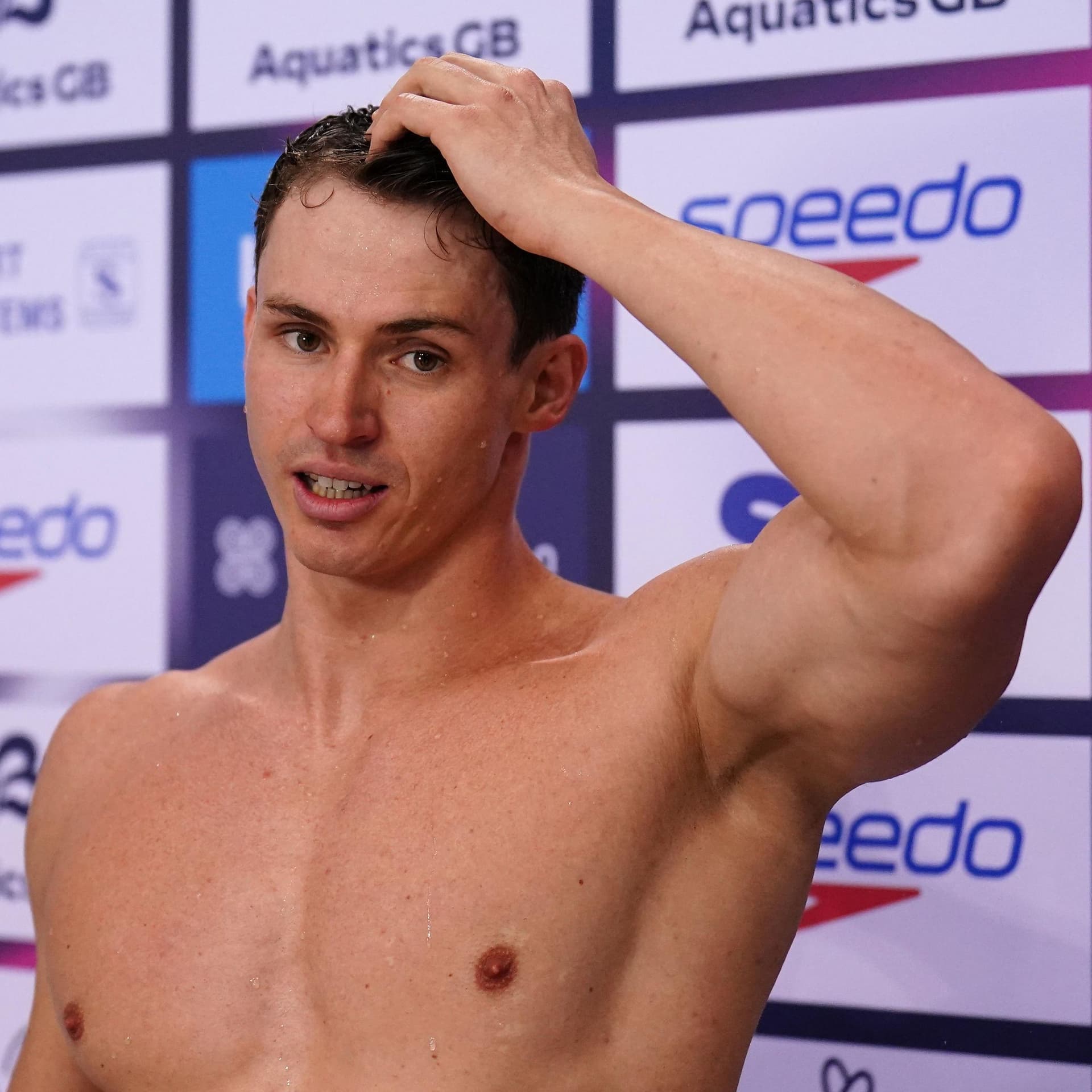
Photo: Olympic swimming medallist Ben Proud has become the first British athlete to join the Enhanced Games, an event which allows athletes to take performance-enhancing drugs. Credit: Zac Goodwin/PA Wire.