
In short
The BBC Global Story episode explains why planned US-Iran peace talks in Islamabad never happened, amid an extended Iran ceasefire and continued port blockades in the Strait of Hormuz; it also covers fertilizer shortages and price impacts from the blockade.
Guests/backgrounds
Paul Adams, BBC diplomatic correspondent in Islamabad; Charlotte Smith, BBC Radio Farming Today presenter (over 20 years).
Key claims
Pakistan prepared for a major diplomatic breakthrough but felt “crushing” disappointment when Vice President J.D. Vance didn’t fly. Trump’s social-media post cited Iran’s “seriously fractured” government and lack of a “unified proposal.” Adams argues mixed US signals, ceasefire violations, and Iran distrust derailed talks; he notes Iran’s AI-empty-chairs mockery and says the extension is an “odd hybrid” ceasefire. Smith says UK fertilizer prices rose ~40%, and the Strait blockade plus higher oil/gas raises fertilizer costs.
Notable examples
empty-chair AI video; reports of IRGC seizing ships near Hormuz; a farmer selling stored fertilizer instead of planting.
Written by AI. May contain mistakes. Listen to the episode to check what was said.
Chapters
Tap a time to open that second in VOSetting the Scene in Islamabad
0:00 to 0:37
Discussion on the preparations in Islamabad for the peace talks.
“This BBC podcast is supported by ads outside the UK.”
Setting the Scene in Islamabad
2:45 to 3:19
Discussion on the preparations in Islamabad for the peace talks.
“And today on The Global Story, the negotiations that never happened.”
The Disappointment of Canceled Talks
3:19 to 6:05
Paul Adams shares insights on the missed opportunity for peace talks.
“There were supposed to be these talks between the Americans and the Iranians.”
Analyzing Trump's Messaging and the Iranians' Position
6:05 to 11:12
Discussion on Trump's social media post about Iranian leadership issues.
“And then there's a caption that says, 2 ,000 years later.”
Trust Issues and Future Negotiations
11:12 to 14:00
Exploring the implications of trust issues for future Iran negotiations.
“Paul, I'd love to know what you make of it.”
The Role of Oman in Mediating Talks
14:00 to 14:48
Learn about Oman's involvement in previous negotiations and the impact of U.S. actions on trust.
“I think at the moment it's the only show in town.”
Iran's Response to U.S. Mixed Messages
14:49 to 16:42
Explore how Iran interprets U.S. messages and the implications for diplomatic efforts.
“our colleague Lise Doucette has been reporting from Iran this week.”
The Escalation of Hostilities in the Gulf
16:43 to 18:35
Examine the current military tensions in the Gulf and the potential for further conflict.
“saying, I see your blockade and I raise you.”
Listeners' Curiosity on the Fertilizer Supply Chain
18:36 to 21:30
Understand listener interest in how geopolitical events affect fertilizer supply and pricing.
“That doesn't mean that we won't see, maybe even in the coming days, another attempt to get everyone around the table.”
Fertilizer Prices and Farmer Decisions
21:31 to 24:46
Learn how rising fertilizer costs are impacting farmers' planting decisions and market dynamics.
“Here in the UK, we've seen the price of fertilizer increase by 40%.”
Show all 11 chapters
Global Food Supply Concerns
24:47 to 27:05
Discuss the broader implications of fertilizer shortages on global food supply and prices.
“The fertilizer will cost you significantly more, you expect.”
Transcript
Automatic transcript. May contain errors.0:00This BBC podcast is supported by ads outside the UK.
0:30business needs in one place, saving you time, headaches, and serious money. Stop paying for missing pieces. Go to odoo.com. That's O-D-O-O dot com to learn more. Decisions made in Washington can affect your portfolio every day, but what policy changes should investors be watching? Listen to Washington Wise, an original podcast for investors from Charles Schwab, to hear the stories making news in Washington right now. Host Mike Townsend, Charles Schwab's Managing Director for Legislative and Regulatory Affairs, takes a non-partisan look at the stories that matter most to investors, including policy initiatives for retirement savings, taxes and trade, inflation concerns, the Federal Reserve, and how regulatory developments can affect companies, sectors, and even the entire market.
1:20Mike and his guests offer their perspective on how policy changes could affect what you do with your portfolio. Download the latest episode and follow at schwab.com slash Washington Wise or wherever you listen. The Serena Hotel in Islamabad had been scrubbed clean and was ready for its big moment. The regular guests had been kicked out. Everything was set to welcome a US delegation and an Iranian delegation for peace talks to end the war. For 48 hours, there'd been on-again, off-again speculation about whether Vice President J.D. Vance would take off for Pakistan. It was happening, quote, soon, and then it didn't, and then silence.
2:05There was almost no news from Tehran about the delegation that Vance was supposed to meet with, until late Tuesday, Donald Trump posted on social media that the two-week ceasefire with Iran would be extended with no end date given. And the blockade of Iranian ports would continue. And so this meant the talks were off indefinitely. Was this all a power play, a failure of diplomacy, or just diplomacy merely on pause? Both Iran and the United States seem to think that they can dictate the terms of this standoff. From the BBC in London, I'm Tristan Redman. And I'm Asma Khalid. And today on The Global Story, the negotiations that never happened.
2:57Today on the show, we're going to kick things off by speaking with the BBC's diplomatic correspondent, Paul Adams, who's joining us from Islamabad in Pakistan. And after that, we're going to give you something special. You, our listeners, have been contacting us about one subject more than any other. And after we hear from Paul, we're going to tell you about it. Well, Paul, you're there in Islamabad, Pakistan. There were supposed to be these talks between the Americans and the Iranians. And as we all know, those talks didn't materialize as of this point. And so it kind of feels like you're at a party where the guests of honor never showed up.
3:37How's it been, Paul? Yeah, and where the host is deeply, deeply disappointed. I mean, this was such a matter of pride for the Pakistani authorities. They really felt that if they could broker some kind of deal between Iran and the United States, that that somehow would have a hugely enhancing effect on Pakistan's international reputation. They billed themselves as the one country that had good contacts in both Washington and Tehran. They thought that they could make this happen. And everything about the way this city was being prepared with huge chunks of it being shut off, roads being closed, hotels being evacuated, you know, it all felt like they were getting ready for a big deal.
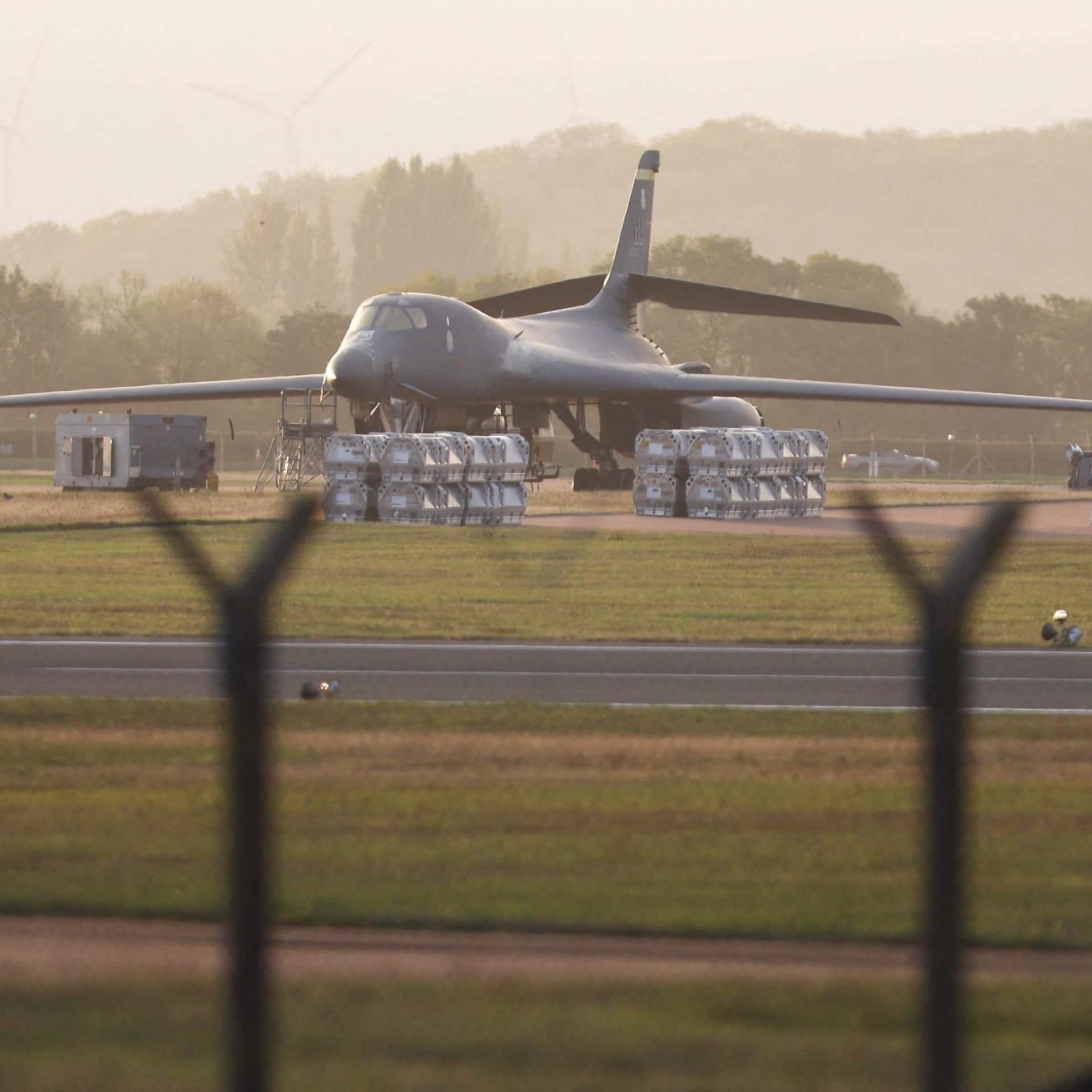
4:19And in fact, we all thought it was going to happen because we watched, you know, American C-17s coming in, bringing who knows what. You know, there was all kinds of speculation. Oh, I hadn't realized that was already there then. The prep was there on the American side. The prep may still be here for all we know. You know, there could be a bunch of presidential limousines sitting out at a military airbase just on the off chance that this still happens. But right now you do get this slightly crushing sense of disappointment that somehow this has eluded Pakistan's grip. I mean, you had a lot of political reporters in Washington following, well, why is J.D.
4:56Vance not yet on that plane? I mean, all day in Washington. We were hearing that the pool was out there at Andrews Air Force Base getting ready to board the plane, only to be told, you know, wait, you had Steve Wyckoff and Jared Kushner apparently flying up from Florida to join J.D. Vance, talk of all kinds of last minute strategy meetings in the White House. But at some point, clearly they thought this isn't going to happen right now. The Iranians, for their own reasons, are not showing up. And, you know, it is one of those things where the Americans needed to see signs that the Iranians were about to leave Tehran and the Iranians wanted to see the Americans in the air.
5:36Of course, the Iranians had the advantage of being many, many hours closer to Islamabad than Washington. So they were able in some ways to play this. And I think they did. There's an interesting video doing the rounds, which I think is the latest bit of social media fun. We are having very great negotiations with Iran. Being produced by the Iranians in which you see Donald Trump waiting, saying that they're going to have great talks, but facing a row of empty chairs. If Iran doesn't come to negotiate, we're going to bomb them. And then there's a caption that says, 2 ,000 years later. So where are the Iranians?
6:14This is from Iran. A message comes from the Iranians saying, stop shouting. and Donald Trump caves and says, OK, well, you can have an extended ceasefire. All right. Then I will extend the ceasefire at Pakistan's request. And just be clear, that video is AI generated. I mean, yeah, the Iranians are having a bit of fun with this. But this is, of course, no laughing matter. There are hugely important issues at stake for both sides. So there was a lot of back and forth all day long, a lot of guessing on whether the Americans or the Iranians would show up on Tuesday. And then at 4.15 East Coast time in Washington, D.C., we see a message posted online by President Trump.
7:01And I'm going to read part of this message because I do think it's really worthwhile to dissect it. He said, based on the fact that the government of Iran is seriously fractured, and then he goes on to say, we have been asked to hold our attack on the country of Iran until such time as their leaders and representatives can come up with a unified proposal. It's a much longer message, right? There's a lot of other details in there. But those two details, to me, they caught my attention because it made me wonder, well, why did these talks really not materialize from the American side? The president of the United States seems to be saying, well, the Iranians aren't unified.
7:36They're not really bringing us a concrete proposal. Is that the crux of why they fell apart from your perspective on the American side? I mean, yeah, seriously fractured and unified proposal. You're absolutely right to highlight those two phrases. Now, either Washington wants everyone to think that the regime in Iran is weak. It's at sixes and sevens. It doesn't know which way to move. Or this reflects a genuine concern in Washington, which is being voiced, by the way, not just by the administration, but also by many Iran watchers, which is what exactly is going on in Tehran? Donald Trump loves to trumpet the fact that he's achieved regime change.
8:14and maybe all he's achieved is regime fracture. And that is a rather dangerous place to be because in the old days, six weeks or so ago, you had a supreme leader who clearly called the shots, who determined everything that was happening. When you had negotiations with the Iranians, you think back to the negotiations that resulted in the 2015 Iran nuclear deal, you kind of knew what the format was, who the players were, the interlocutors, The Iranians are supremely effective and efficient negotiators. They're tough. They do play for time. But you kind of knew who you were dealing with. There's a slight sense now that the Americans don't know who they're dealing with.
8:57Are they dealing with a new supreme leader? If so, where is he and what state is he in? Has there been a kind of military coup in Tehran in which now, frankly, everything is decided by the Revolutionary Guards and that everyone else is secondary to that. It is difficult to know precisely what is going on. Various people have pointed out that when the first round of negotiations happened here, what, 10 days or so ago, the Iranians brought 80 people with them. A huge entourage. An absolutely vast one. Now, they were all described as the delegation, but actually, probably only about, people say only about 30 of them were properly members of the delegation.
9:40Others were, you know, hardline newspaper commentators and, you know, an assortment of other people. And one theory, and this is just a theory that I'm repeating here, is that at a time when Iran feels under enormous pressure, has been absolutely hammered in all sorts of ways since the very end of February. There is a need to make everyone a part of the debate, a part of the discussion, and a part of the outcome. And so you would have in the talks people who are highly skeptical. They're U.S. hawks. They're people who think that America is still Satan. And if they're in the room, if they're part of the delegation, they will be part of the outcome too.
10:27That is one way of looking at it. Sharing the blame and the credit. And so that, I think, is certainly part of why the talks didn't happen this week. The other part, and this is what the Iranians say, is that they felt that the Americans were not serious. They felt that having offered to reopen the Strait of Hormuz only for Donald Trump to say, you know what, I'm keeping my blockade of Iranian ports going, that that indicated that, frankly, the Americans were, A, not interested in a deal and B, actually trying to engineer another breakdown and a resumption of hostilities. So that goes some way to, you know, if you like, officially accounting for Iran's reluctance to get on the plane.
11:11Can I put to you a third possible permutation of the truth social post that Asma just read out? Paul, I'd love to know what you make of it. It's the possibility that actually the Iranian negotiators might have outmaneuvered the Americans here and that Donald Trump's truth social post is a face saving device. I mean, Asma, for example, pointed out quite perspicaciously earlier on that it was a very carefully written truth social post and not in the Donald Trump style. It didn't sound like it comes from him. There's a lot more bombastic messages we've seen over the years as someone who's covered the president.
11:48The style, the tone of it felt a lot more measured, is all I'll say. Do you think it might be a face-saving device? Look, I think it is. I mean, I think it's a device to buy some time, clearly. Let's not forget a couple of big dates in Donald Trump's diary. He's got the king arriving on Monday. Yeah. That is a big deal for Donald Trump. And that he's going to China to meet President Xi, what, a couple of weeks after that. Does he really want to be at war with Iran when either of those two things happen? He most certainly does not. I think the feeling a few days ago here was there's not going to be a big, all-encompassing deal.
12:23The idea that somehow the nuclear issue and the new issue of the Strait of Hormuz can be negotiated away in a couple of sessions, even long sessions, was frankly for the birds. But maybe some kind of memorandum of understanding, an agreement that would essentially end the war, but kick all the tough issues ahead. That that was perhaps the most likely, perhaps the preferable outcome of any negotiation. So absent that, he's gone for something that is a kind of hybrid. It's neither a declaration of peace, because he still has a robust blockade of Iranian ports in force, but nor is it a development on the negotiating front either.
13:06It's a kind of odd hybrid. So we do now have essentially an open-ended ceasefire and, you know, the possibility of a resumption of negotiations. Now, the question is, when and where will those take place? Will they still be here as the Pakistanis fondly hope? There's been interesting stuff coming out of Tehran in the last few days, suggesting that they are more than a little frustrated with what they see as Pakistan's failures. They think that the Pakistanis are bending over backwards to accommodate US interests. And some commentators have been going on Iranian TV pointing out that they do not think that Pakistan is an honest broker.
13:46Now, that obviously is very damaging for Pakistan, which really wants to be seen as precisely that. And it does make you wonder, you know, if and when there is another round, will it be Pakistan hosting? I think at the moment it's the only show in town. Would we see Oman getting back into the mediating game as it was? Who was negotiating originally, right, before the strikes on Iran began? They were. And of course, they rather angered the White House by suggesting that not only was a deal on the table, but that the U.S. negotiators, Steve Witkoff and Jared Kushner, either didn't understand the issues involved or chose to misrepresent them, setting the scene for the outbreak of the war literally within, you know, what, 24 hours of the breakdown of those talks.
14:36So, you know, Oman felt burned by that. So at the moment, it's not clear who or how or when or even if any of this is going to resume. To your point about why the talks didn't materialize and the lack of trust that the Iranians have for the Trump administration, our colleague Lise Doucette has been reporting from Iran this week. And earlier in the week, she interviewed a spokesperson for the Iranian foreign ministry, Ismail Baghaey, who we understand was in the room for the last round of talks. And he essentially spoke to this point. So far, no decision has been made. And I think the reason is very clear because of the confusing messages we have been receiving from the United States.
15:21Literally speaking, there have been many violations of ceasefire. You know that during the course of the past two days, they have attacked Iranian vessels. They have taken hostage our people on board Veseltuska. And at the same time, they're continuing with their threats of war crimes, threats of genocide, bombing our bridges and power plants. So this is not the behaviour of a country that is really serious about a diplomatic process. What do you think of that, Paul? He's not the only one pointing out mixed messages from the White House and, you know, blustering rhetoric, apocalyptic rhetoric one day and then offers a ceasefire the next.
16:19You know, it may be designed to throw everyone off, but for the Iranians who have their own sense of how these things should be conducted, this is discombobulating to say the least. And it all helps to create an impression that the White House is not serious. Of course, he is glossing over the fact that it was Iran that turned the Strait of Hormuz into a weapon in this war. I think the United States and the Trump administration has kind of thrown them off their game by saying, I see your blockade and I raise you. And I think the fact that now you have two blockades in place, each one inflicting pain, one on the Iranian economy and one on the global economy, has complicated matters for Iran.
17:02It feels that this weapon that it has utilized so effectively has somehow been turned around and used against it. And so we do have this situation in which they feel that just as the Americans don't quite know what Iran is up to, I think Iran doesn't quite know what America is up to and certainly doesn't trust them. Paul, we're speaking to you on Wednesday, and the original ceasefire was supposed to expire on Wednesday. It had a two-week timeline, a two-week time frame. This new extension we've seen announced by President Trump doesn't seem to have a timeline. And it is amidst all that uncertainty that we're also seeing reports from Iranian media that the Islamic Revolutionary Guard Corps says it has seized ships near the Strait of Hormuz.
17:44I guess I'm wondering what does that all mean in terms of escalation or de-escalation? Look, we are seeing kinetic activity in the Gulf by both sides. Each side has fired on vessels that it regards as having breached the conditions or the terms of their own blockades. That is a combustible situation. Right now, it is only combustible on the water. But you would have to be a pretty bold person to put a bet on this not escalating into a resumption of hostilities. Israel, who we haven't really mentioned, would dearly like to finish the job as it sees it. And is pretty apprehensive at the thought of some kind of negotiated deal, sort of in the middle of a war which is unfinished.
18:32This is not a settled, steady ceasefire. This is one with all sorts of reasons why it could go wrong. That doesn't mean that we won't see, maybe even in the coming days, another attempt to get everyone around the table. But we're not seeing that just yet.
19:01We've just been hearing from the BBC's diplomatic correspondent, Paul Adams, about the talks that didn't happen and the Strait of Hormuz. And this brings us on to the thing that we have received more emails about than any other from you, our listeners. Tristan's very excited about this. I am. And it does involve the Strait of Hormuz. A couple of weeks ago, I was talking to the BBC's business reporter, Sean Farrington, about the economic impacts of the closure of the strait. And we talked a lot about oil, which is obviously what's gaining a lot of headlines. But he said that something else was also severely affected by the closure of the strait, and that is the supply of fertiliser.
19:44Oh yes, Tristan. Because it turns out that one third of the world's fertiliser comes through the strait. Many fertilisers are produced from byproducts of petrol products. And I joked that we should make a whole week of programmes about fertiliser. I don't think that was entirely a joke from you, Tristan. And then something crazy happened, which is that we received a lot of emails. We got so many emails. We actually did. We really did. We got so many emails about fertilizer and we even got a voice message. Hi, Global Story team. This is Laura from Denver. I'd like to add my voice to the silent majority chorus calling for more coverage of the impacts of the U.S.
20:25war in Iran and the blockade of the Strait of Hormuz on the fertilizer market and global agricultural markets more broadly. I'm so grateful for all of the incredible work that this team does, and I'm really excited to hear what your investigations turn up next. This is the moment, not only when I'm vindicated, but when we give the people what they want. Actually, this goes to an interesting and unexpected place, and we go there with a very special guest. from a BBC programme that has been running since 1960. Hello, my name's Charlotte Smith, and for the past more than two decades, I've presented a farming programme for BBC Radio imaginatively titled Farming Today.
21:10Can I give you the backstory of how we got here? Yes, your sudden interest in fertiliser. Well, it's not my sudden interest. I've hidden my fertiliser interest light under a bushel for some time. But then there was an overwhelming interest from listeners, which is where you come in, Charlotte. We're so happy to have you here. Well, I'm delighted that your listeners are wiser than you because it is serious. Here in the UK, we've seen the price of fertilizer increase by 40%. So that leaves farmers making difficult decisions in both the short and the longer term. And what we have here is a sort of a double hit because there's firstly blocking the Strait of Hormuz, which hit supplies of fertilizer and fertilizer ingredients, if you like, from moving around the world.
21:56And then we've also got hikes in the price of oil and gas. And that means that making fertilizer becomes far more expensive. So the hit is both on the cost of growing food and then perhaps also on the amount of food grown. So just to explain that a bit, when spring crops are planted, that means farmers are using fuel, the price of which is also up, and fertilizer. Now, counterintuitively for a famously rainy place. The past few years here in the UK, we've seen a lot of dry weather and that hit spring crops, meaning that there were low yields and farmers actually lost money on them. So as a farmer standing in your field now, do you spend more money, because fertiliser's up and fuel is up, planting a crop which may again make you no money?
22:46and in the longer term for autumn planting farmers will again have to balance the cost and the benefit and there it could have a bigger impact if things aren't sorted out already lots of warnings of higher food prices okay so so i fully understand there are there are two things going on here on the one hand there are raw materials which are used to make fertilizer which come from petrochemicals, from oil, and that oil is stuck in the Persian Gulf because of the closure of the Strait of Hormuz. Is that correct? Yeah. And the second thing is, is that then energy is needed to turn those raw materials into fertilizer and the energy has also gone up, doubling the problem.
23:33Yeah. Okay. I just want to understand how big a role fertilizer plays in feeding the world. If there were no more fertilizer tomorrow, do we have a sense of how much of the world we can actually feed without fertilizer? Well, the industry says that would be very, very serious because they say that fertilizer doubles global crop yields. Now, some organic farmers might point out that there are other ways of doing it. Not everybody will be using these manufactured fertilizers. But the way global agriculture currently works, it wouldn't work without these chemicals. And presumably, many of the crops and products which require the fertilizer that will soon become more expensive or if it isn't actually already more expensive haven't even been planted yet.
24:30Yeah. So if you're a farmer who's done your spring planting now with fertilizer you already had in the shed and you're now making your plans for autumn, what do you do? Do you think, yeah, I'm going to plant winter wheat in the autumn and I'm going to put the fertilizer on it, knowing that just planting it, using all that machinery and all that diesel will cost you more. The fertilizer will cost you significantly more, you expect. And do you gamble and buy it now, thinking, well, it might go up? You know, it's so difficult for farmers to know what to do in that situation. So on farming today, Charlotte, you talk to farmers all the time.
25:10What have they been telling you? Are there any particular stories that stand out for you? Yes, I mean, we hear a lot of frustration because it's quite a difficult decision that farmers are making at the moment. We heard from one, for instance, who bought fertilizer back last summer. So actually this spring, he isn't planting a crop. He's going to sell the fertilizer back to the merchant because that's a guaranteed profit rather than, as he would describe it, gambling on planting a crop. Oh, wow. Others, though, say because they've already got the fertilizer, they will plant, they'll use a bit less.
25:45And now if more decide that they're just not going to be able to cover their costs with the price that they eventually get for the crop and don't plant, then they're warning there could be a tightening of supply. Okay. I mean, that's absolutely fascinating. That example that you gave there of one farmer who has made the decision that it makes more economic sense for them to become a fertilizer trader than it is to remain as a farmer for the time being. But fundamentally, we could find ourselves in a situation globally where production is going down because farmers can't afford to produce as much and prices are going up because there's less supply.
26:29How serious could that be globally in terms of food supply and which places in the world could be most hit? Food prices, I think, will go up either way because they'll either go up because it's been more expensive to produce that food or they'll go up and maybe go up again because there is less.
26:53What usually happens is that the places that can afford to pay more for food do better in that situation than the places which frankly can't. this crisis could have a very long tail is that right yes exactly farmers here are saying even if it was all sorted out tomorrow some of this is sort of baked in now to the cost of food that's currently being produced charlotte thank you so much we've really appreciated having you on here to answer all our listeners questions about fertilizer cheers
27:35That was Charlotte Smith from the BBC's Farming Today program. And before that, we spoke with the BBC's diplomatic correspondent, Paul Adams. And as you all can hear, we love hearing from you all. And we read the messages. So if you've got any questions or ideas for us, you can send us a note at theglobalstoryatbbc.com. If you're looking for a way to catch up on the latest news, the very latest headlines, then check out our sister show, The Global News Podcast. You can find it wherever you listen to your favorite shows. And by the way, Farming Today is also available as a daily podcast if you require more farming content.
Read the full transcript
28:13Today's episode was produced by Hannah Moore, Lucy Paul, and Valerio Esposito. It was edited by James Shield and Richard Fenton Smith. It was mixed by Travis Evans. Our digital producer is Matt Pintis. Our studio managers were Ben Andrews and Mike Regard. Our senior news editor is Chyna Collins. And I'm Asma Khalid. And I'm Tristan Redmond. And thanks, as always, for listening. We'll talk to you again tomorrow. Cheerio.
From the publisher
Why were scheduled talks between the US and Iran suddenly cancelled? On Tuesday, as US vice president JD Vance was due to be flying to Pakistan for mediated talks on ending the war in Iran, Donald Trump announced on Truth Social that he was extending the ceasefire agreement, but that the US will continue to block Iranian ports.
Meanwhile, the Strait of Hormuz, a critical shipping lane through which 20% of the world’s oil, as well as critical supplies of gas, aluminium and fertiliser is transported, remains a flashpoint, with Iran attacking cargo ships attempting to get through.
Today, we speak to the BBC’s diplomatic correspondent, Paul Adams, who is in the capital of Pakistan. Plus, in response to listener demand, we speak to Charlotte Smith, the long-time presenter of the BBC’s Farming Today, about how the blocking of the Strait of Hormuz is affecting the farming and food industries globally.
Producers: Hannah Moore, Lucy Pawle and Valerio Esposito
Executive producers: James Shield and Richard Fenton-Smith
Mix: Travis Evans
Senior news editor: China Collins