
In short
The “new race to the Moon,” comparing SpaceX’s Musk-driven lunar ambitions with NASA’s Artemis program and China’s parallel push, and explaining why countries compete for lunar presence, resources, and prestige.
Guests
Rebecca Morell, BBC science editor; involved in “13 Minutes Artemis II,” a series covering Artemis II step-by-step.
Key claims
Artemis II will launch four astronauts around the Moon’s far side and splash down in the Pacific; it’s a risky test because the rocket has never carried people. NASA’s Artemis is partly a “practice ground” for Mars. The moon is valuable for critical minerals and especially water (ice near the south pole), enabling fuel and sustained bases. China aims for lunar crew landings by 2030; NASA targets 2028, but lander selection and testing make it tight.
Notable examples
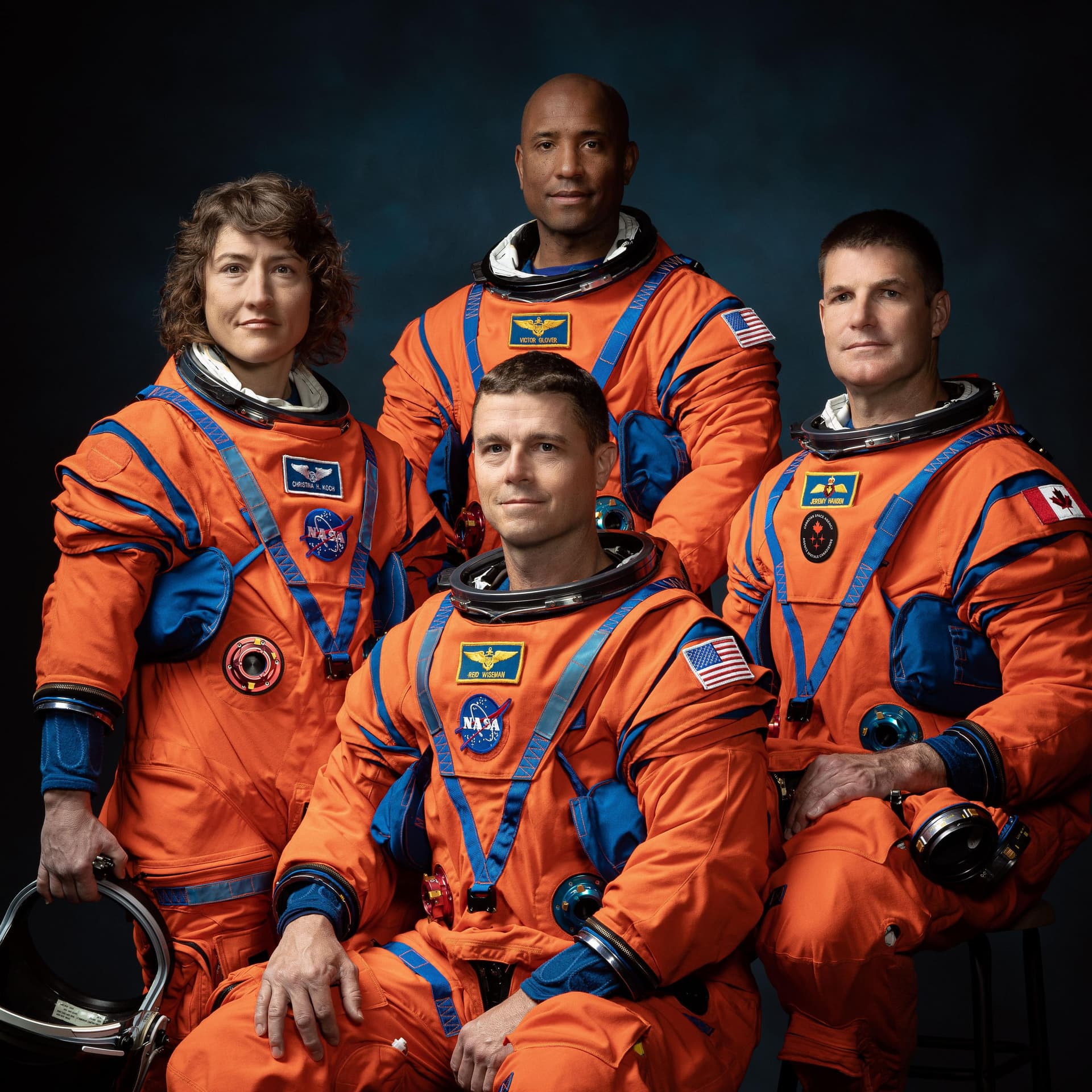
Apollo missions ended in 1972; costs for Apollo (1960–1973) cited as $25.8B (about $257B today). Artemis II crew: Reid Wiseman (commander), Victor Glover (pilot; first person of colour to go to the Moon), Christina Cook, Jeremy Hansen (Canadian space rookie). Artemis 3 lunar lander competition: SpaceX (Starship) vs Blue Origin (New Glenn), with delays driving NASA’s revised plans.
Written by AI. May contain mistakes. Listen to the episode to check what was said.
Chapters
Tap a time to open that second in VOSpaceX Shifts Focus to the Moon
1:30 to 2:26
Discussion on SpaceX's new moon mission led by Elon Musk.
“After all, no human has stepped foot on the lunar surface since 1972.”
Understanding the New Space Race
2:26 to 2:42
Exploring why the US and China are competing for lunar exploration.
“And why are countries on Earth competing for a piece of the moon?”
A Closer Look at Artemis 2
2:42 to 3:15
Rebecca Morell discusses the upcoming Artemis 2 mission details.
“I'm Rebecca Morell, and I'm the BBC's science editor.”
Excitement for the Launch
3:15 to 4:43
Rebecca shares her excitement for witnessing the lunar launch.
“OK, so, Rebecca, you're heading off quite soon to Florida to go and see a lunar launch.”
JFK's Vision for Lunar Exploration
4:43 to 5:27
Analyzing JFK's speech and its impact on the moon landing timeline.
“It's a speech that we've heard time and again here in American history.”
The Cold War and Space Race
5:27 to 8:31
Connecting the Cold War dynamics to the space race and its historical context.
“I mean, you've kind of got to look back, to look forward.”
The Shift from Moon to Low Earth Orbit
8:31 to 10:15
Discussing the reasons for the shift in focus from lunar missions to low Earth orbit.
“It was incredibly expensive putting the Apollo program together.”
The Return to the Moon: Artemis Program's Revival
10:15 to 11:43
Explaining how political decisions led to the revival of lunar exploration plans.
“So that's really where everyone sort of focused their attention.”
Details of the Artemis Missions
11:43 to 14:00
Exploring the differences between Artemis 1 and the upcoming Artemis 2 mission.
“The directive I'm signing today will refocus America's space program on human exploration and discovery.”
Mission Overview and Timeline
14:00 to 14:40
Learn about the timeline and risks of the upcoming moon mission.
“And then it'll take them about four days to get to the Moon.”
Show all 17 chapters
Astronaut Profiles and Selection
15:05 to 16:29
Explore who the astronauts are and how they were selected for the mission.
“Who are the astronauts and how are they chosen?”
Mission Risks and Family Impact
16:29 to 17:51
Discuss the inherent risks of space travel and how astronauts prepare their families.
“You know, this is his first foray into space.”
Cost of the Artemis Missions
17:51 to 18:24
Understand the financial aspects of NASA's Artemis missions.
“But, you know, compare that to the Apollo program, you know,$260 billion in today's money.”
Scientific Reasons for Lunar Exploration
18:24 to 20:07
Discover the scientific motivations behind returning to the Moon.
“What's the stated scientific reason for going back?”
Resources on the Moon
20:07 to 21:44
Learn about the valuable resources available on the Moon and their importance.
“You can split water into its parts of hydrogen and oxygen.”
Interplay of Public and Private Space Interests
21:44 to 24:33
Examine how NASA collaborates with private companies in space exploration.
“Rebecca, so much of space exploration in recent years, it feels has become privatized, whether we're talking about companies like SpaceX or Blue Origin.”
The New Space Race: US vs. China
24:33 to 27:54
Discuss the emerging space race between the US and China and its implications.
“about the United States' ambitions in the 1960s to get somebody to the moon happening in the context of the space race with the Soviet Union.”
Transcript
Automatic transcript. May contain errors.0:00Rebecca Morelle:This BBC podcast is supported by ads outside the UK.
0:30Come on! Get a load of this guy. Ketchup. On a dog. Yeah, we've got thoughts. Too loud? In Chicago, you're gonna hear it. Because nothing here gets built without conversation. Nothing moves without connection. So, if you think you know AT &T, it might be time to rethink that. Because their network has improved, like, a lot. So Chicago can keep speaking its mind with AT &T Wireless and AT &T Fiber.
0:55Rebecca Morelle:Chicago won't stop talking. Our improved network backs it up. AT &T. Connecting changes everything. AT &T Fiber. Limited availability in select areas. Hi there, I'm Asma Khalid. And I'm Tristan Redmond. And together we're the hosts of the Global Story podcast from the BBC. For those of you who might be new to our show, we here at the Global Story dive deep every weekday on one big story at the intersection of where the world and America meet. And you can now watch the global story on the iHeart app. Catch every brand new episode every weekday. Just tap into iHeart to start watching. And we hope you enjoy the show.
1:38Earlier this month, Elon Musk announced that his company, SpaceX, has shifted its focus from Mars to the moon, with the mission to build a self-growing city on the moon, which he says they can potentially achieve in less than 10 years. Now, that might sound hard to believe. After all, no human has stepped foot on the lunar surface since 1972. But now, for the first time in more than half a century, there's a new mission to the moon, NASA's Artemis program. NASA is intending to launch a crew of astronauts around the moon this spring. From the BBC, I'm Asma Khalid in Washington, D.C. And today on The Global Story, America is going back to the moon.
2:25This time, China is on a similar mission of its own. What does this new space race mean? And why are countries on Earth competing for a piece of the moon?
2:42I'm Rebecca Morell, and I'm the BBC's science editor. Fantastic. Thank you so much for joining us, Rebecca. You are involved in this podcast called 13 Minutes Artemis 2 about the Artemis 2 mission. Can you tell us a little bit more about the series? Yes, well, this is a series that's going to be covering every step along the way of the 10-day long Artemis II mission, from launch through to the astronauts heading to the moon through to them flying around the far side of the moon and then coming back home again for splashdown. So it should be very exciting. OK, so, Rebecca, you're heading off quite soon to Florida to go and see a lunar launch.
3:24What are you expecting from that? And are you looking forward to it? Well, I'm hugely excited about it. I mean, who wouldn't be, you know, the first humans to head back to the moon in more than 50 years. And going to Cape Canaveral, the Kennedy Space Centre, where we'll see the launch, there's so much history, you know, embroiled in that place. It's where the Apollo missions launch from. The entire history of spaceflight is kind of tied up in that place and getting to see the rockets close up, seeing the astronauts to kind of walk out to the rocket. You know, they do a moment where they come out, you know, all dressed up in their spacesuits, ready to get in their car to take them to launch pad 39B.
4:07Well, they'll then head to the top of the rocket and they'll climb into their Orion crew capsule. They'll be closed in by the crew. And then a few hours later, they'll be hopefully blasting off into space. So heading there to actually, you know, witness this moment in history will be fabulous. I mean, I wasn't around during the Apollo missions, but we've all seen, you know, we've all seen the grainy black and white images that came through. This time around the images that come back will be, you know, streamed and in 4K. And yeah, it's going to be incredibly exciting to be there and to get to report on it and tell the world about it as well.
4:42Well, speaking of the last time that Americans landed on the moon, here in the United States, it is well-known political lore, JFK's very famous speech, where he promised that humans would go to the moon. We choose to go to the moon. We choose to go to the moon. It's a speech that we've heard time and again here in American history. We choose to go to the moon in this decade and do the other things, not because they are easy, but because they are hard. And I'm wondering if you can give us a sort of brief sense of how we went from him saying that, promising that Americans would go to the moon, to then actually landing on the moon a few years later.
5:26Yeah, that's right. I mean, you've kind of got to look back, to look forward. And that's such a spine tingly speech. But the origins of human spaceflight are really tied up in the Cold War.
5:42Rebecca Morelle:But the biggest news to come out of Russia was the story of the year, perhaps of our generation. Not one, but two artificial moons circled the Earth. Their radioed beeps signaling not merely a red scientific triumph, but the launching of mankind into a new era. The dawn of the age of space. This ideological war between the US and the Soviet Union, capitalism versus communism. And this was a time of rapid technological development. And really this race to space was tied up within that. Sputnik and Mutnik, they were called. Or in the second road, a dog, Laika, the first earthly life to travel in outer space to prove that life can survive in the vast reaches of the universe.
6:24And that was for a couple of reasons. First of all, for national security. You know, if you can build a satellite and get it up into space, then that's quite handy for looking down on what your enemy is doing.
6:34Rebecca Morelle:Only a crude prototype of the true spaceship of the future. Also, the country who won this race to space would really set themselves out as the dominant space power, and that was really important. So at the start of this space race in the 1950s, it was really the Soviet Union who were pushing ahead. So they had the first satellite launched into space, Sputnik 1, the first animal, a dog, launched into space, and importantly, the first human who launched into space in 1961, Yuri Gagarin. reach beyond the surface confines of his own planet for the first time in all history. And the bleep bleeps of automatic instruments are signals to the human spirit as well that a new era is at hand.
7:22America was lagging behind, but in 1962, that's when President John F. Kennedy gives this very famous speech saying that America will go to the moon and they'll get there by the end of the decade. We meet in an hour of change and challenge, in a decade of hope and fear, in an age of both knowledge... And through the Mercury, through the Gemini and then the Apollo program.
7:46Rebecca Morelle:11, 10, 9... That's when they really got astronauts to the moon. 6, 5, 4, 3, 2, 1, 0. All engine running. Liftoff. We have a liftoff. 32 minutes past the hour. So in 1969, you have this absolutely historic moment of humans landing on the moon.
8:14That's one small step for man, one giant leap for mankind. And then several other Apollo missions followed. So they had five other moon landings in really quick succession after that, six in total and by 1972 that was the last people to set foot on the moon with Apollo 17 and you know it's so it's been a really big gap it's been a long time yeah huge a huge amount of time you know more than 50 years the last time people were not only on the moon but anywhere near the moon in fact so you know it's been a return that's been a long time coming why did human beings stop going to the moon though why why did why did we stop those missions well I mean it's what it always comes down to money.
9:02It was incredibly expensive putting the Apollo program together. I think the cost spend between 1960 and 1973 was$25.8 billion, which in today's money, in those dollars, in today's money, it's about, according to the Planetary Society, about$257 billion US dollars. I mean, it's a lot of money. And also there was this feeling that, you know they'd done it they got a lot of people down onto the lunar surface they well and truly beat the Soviet unions to the to the moon the Soviet Union never landed any people on the moon's surface so the US at that time they switched their attention to something a bit more sort of reachable and a bit cheaper actually going into orbit around the earth they really concentrated on low earth orbit and this was first of all with their Skylab program and then the space shuttles The Soviet Union at this time put the MIR space station up into launch and that was later operated by Russia.
10:03And then both of them came together for the International Space Station, which has had astronauts working, living on there since the year 2000. So more than 25 years of people living continuously in low Earth orbit. So that's really where everyone sort of focused their attention. And to put this into some kind of perspective, the International Space Station orbits about 250 miles above the Earth's surface. the moon is a quarter of a million miles away. So you can see why it's easier and cheaper to focus on this area. And, you know, we've really nailed it. We're very good at operating in low Earth orbit.
10:38So, you know, that has been sort of ticked off the space to-do list, as it were. So if that was the priority for the last several decades, this low Earth orbit, space exploration, how and why did we shift to this focus now of wanting to return back to the moon? I mean, And it's been, as you say, more than half a century since humans went to the moon. Well, space takes a long time. And actually, the US started to eye the moon again in 2005. So they started a program known as Constellation. And the aim of this was to get humans back on the moon by 2020. So this program was signed off by the president at the time, George W.
11:21Bush, and it operated for 10 years. But in 2010, the president then, Barack Obama, cancelled the program because costs were spiraling, you know, had massive time overruns. And also there was a feeling that the moon had already been done. And then in 2017, Donald Trump, during his first term, said, right, we're going back and started the Artemis program. I do remember that. Yes. That's right.
11:43Rebecca Morelle:The directive I'm signing today will refocus America's space program on human exploration and discovery. It marks an important step in returning American astronauts to the moon for the first time since 1972 for long-term exploration and use. This time, we will not only plant our flag and leave our footprint, we will establish a foundation for an eventual mission to Mars and perhaps someday to many worlds beyond. Okay, so the Artemis program is devised. What happens next? Well, the Artemis program is split up into different missions. So Artemis 1, that's the first Artemis mission. And it basically involves building an absolutely enormous moon rocket called the Space Launch System.
12:38And also using the Orion capsule, which was developed for the aforementioned constellation program. This is the capsule that's going to contain the astronauts in the future. and that actually does the job of getting to the moon. So the rocket blasts off and then the Orion spacecraft carries on. So the Artemis I mission launched in 2022 and it embarked on a 25-day mission to the moon, travelled around the moon and then back to Earth again. So it really was a test of the technology. Unmanned. Yeah, no humans were on board this at all. This mission that is due to launch soon How is it different from Artemis 1?
13:22The main difference with the Artemis 2 mission is that astronauts are going to be taken parts.
13:32There is going to be a crew of four astronauts. When the rocket goes up, right on the top of the rocket is the Orion spacecraft. The four astronauts will be strapped in to the Orion crew capsule and they will be blasting off with the rocket and then the Orion crew capsule detaches from that and they'll spend about a day in high Earth orbit around the Earth. And then it'll take them about four days to get to the Moon. They'll be travelling around the Moon's far side which is the side we never ever see from Earth. and then about another four days to come back again and they'll be splashing down in the Pacific Ocean.
14:16It's a risky mission too because, you know, they're going to be on a rocket that's never carried people before, so there are lots of risks involved too.
14:40Kristen Redmond, and together we're the hosts of the Global Story podcast from the BBC. For those of you who might be new to our show, we here at the Global Story dive deep every weekday on one big story at the intersection of where the world and America meet. And you can now watch the Global Story on the iHeart app. Catch every brand new episode every weekday. Just tap into iHeart to start watching. And we hope you enjoy the show.
15:12Who are the astronauts and how are they chosen? So there are four of them in total. There are three NASA astronauts. Victor, Christina, Jeremy, we're going to the moon. So Reid Wiseman is the mission commander. His previous career before he became an astronaut was as a fighter pilot. When we get off the planet, we might come right back home. We might spend three or four days around Earth. we might go to the moon. That's where we want to go, but it is a test mission and we are ready for every scenario as we ride this amazing space launch system and the Orion spacecraft 250 ,000 miles away. It's going to be amazing.
15:52There's Victor Glover, who's the missions pilot. He was actually a test pilot before he became an astronaut and he's going to be the first person of colour to travel to the moon. And then there's Christina Cook, who is a mission specialist and And she took part in the first all-female space station on the International Space Station. And she's actually spent the longest amount of time in space than any of the team, including Jeremy Hansen, who's a Canadian. He's from the Canadian Space Agency. And he's never been to space before. He's a space rookie. I know. What a first mission. You know, this is his first foray into space.
16:32How risky is it, especially if this is your first ever trip into space? I mean, what are we looking at in terms of risk? Well, I mean, the mission is inherently very risky. The thing that's really struck home for me is sort of hearing the astronauts talking about their families, for example. So Reid Wiseman said, you know, he's shown his kids where his will is, where the paperwork is at home. You know, Jeremy Hansen, the Canadian astronaut, he has sat down with his family to watch a launch. because the first stages of a launch when the rocket goes up, it can look like an explosion, but he sat down with them to get them to watch it, to say, no, look, this bit's fine.
17:12You know, this is what happens. All the families who will be watching will have astronauts accompanying them at Kennedy to sort of talk them through the launch process. And, you know, the astronauts are normally the calmest people on the day, but it's their loved ones who are watching. It will be sort of both amazing and very difficult, I should imagine. How much is it all costing, Rebecca? I mean, we live in an age of restricted budgets. Money's tight. Well, NASA are paying, which is, you know, funded by taxpayers in America. It's estimated that the cost between 2012 and 2025 has been$93 billion.
17:51So it is expensive. But, you know, compare that to the Apollo program, you know,$260 billion in today's money. It's less. You have to factor in Artemis 3, which is, of course, the third Artemis mission, which is a really important one. So Artemis 2 is going to take astronauts back to the moon. They're flying around it. But Artemis 3 is the one where they're going to land on it. And that's the one that everyone's waiting for. And then, of course, there are the missions to follow because they don't just want a fleeting visit to the moon. They want to build a sustained lunar base there. What's the stated scientific reason for going back?
18:27There are lots of different reasons for going back. But I mean, in terms of the science, there's still loads you can learn about the moon. So, for example, the astronauts brought back this sort of haul of rocks from the moon during their missions in the 60s and 70s. The amount that scientists here on Earth learned from them was phenomenal. They learned, for example, that the moon formed out of the Earth when a Mars-sized object crashed into the Earth and knocked off the moon, which then went into orbit around it. That theory was really confirmed by the Apollo rock. So there's a huge amount that scientists still want to learn.
19:02But it's not just about the science, actually. There's more to it than that. Go on. Well, one of the big reasons are the resources on the moon. So, you know, the moon looks kind of dry and dusty and pretty much devoid of anything. But there is a lot there. So there are critical minerals there, you know, which we're very interested today on Earth. There are metals there, things like iron and titanium. The critical minerals that countries are sort of competing over to make new technology, like batteries, you're saying, and cell phones. Yeah, that's right. The critical minerals, we're all racing over here at the moment.
19:35There are some of those on the moon. There's metals on the moon. There's helium-3, which is used in everything from superconductors through to medical equipment. Now, it's one thing having this stuff there on the moon, but another thing sort of working out how to extract it and bring it back. So really, the resource that everyone is most interested in is very interesting. It's actually water. If you want to have a sustained presence on the moon, which is what NASA wants to do, which is what other countries want to do as well. Water is very handy. You know, it's handy for drinking, for your people living there.
20:09You can split water into its parts of hydrogen and oxygen. They're the fuels used for rockets. So if you wanted to send a rocket elsewhere from the moon to Mars, for example, you've got your fuel sitting there ready to go. So there's really interest on the water on the moon, but also the water scientists think is sort of located in particular areas, particularly the south pole of the moon, where they think there are craters which never see the sun. So there's frozen water in there. So there are particular parts of the moon that are of real interest. You mentioned Mars a moment ago. When I heard President Trump in his, I believe it was his final State of the Union address during his first term, he talked about the need for Congress to fund Artemis.
20:51And he specifically talked about this being a launch pad for the United States to go on and plant a flag on Mars. Yeah, that's right. I mean, really, the best way to think of it is that the moon is a practice ground for getting to Mars. So going to Mars is going to be really, really hard. You know, one, it's a very long way away. But two, if you want to build any kind of base there, that's going to be very hard too. So what you want to do is to work out all the technologies you need to do that. And you need a place to practice. And the moon is a really smart place to do that. So you learn how to build your sort of shelters where your astronauts are going to be living.
21:29You learn how to protect them from radiation. You sort of, you learn how to get power there. You learn about your communication. So if you use the moon as sort of your practice ground, everything you learn there can then be applied to Mars too. So really the moon is a sort of step along the way for getting to Mars. Rebecca, so much of space exploration in recent years, it feels has become privatized, whether we're talking about companies like SpaceX or Blue Origin. And what's your sense of why NASA is leading this project? And are they collaborating with some of these private companies? Commercial companies are also involved, particularly for Artemis 3.
22:14So Artemis 3 is a little bit complicated. So it's going to involve our SLS rocket, the Space Launch System and Orion. That's going to carry the astronauts up into space and to the moon. But then there's going to be a second rocket launch. And that rocket is going to carry the lander, the spacecraft that's actually going to take the astronauts down onto the lunar surface. So the astronauts go up on NASA's Space Launch System rocket. This other rocket launches. And then the astronauts transfer to the lander and go down to the moon and back again. But it's commercial companies who are involved with actually that second rocket that's going to be built and also the lander.
22:55And the two companies competing to do this are SpaceX and Blue Origin. The contract for Artemis 3 originally went to Elon Musk. He was going to use his big Starship rocket, which has been undergoing lots of testing lately. You've seen a few flights and a few explosions along the way and a lunar lander. But he's had delays. So NASA have now asked both SpaceX to come up with a simplified plan to get down to the moon faster. But they've also asked Jeff Bezos' Blue Origin Company to come up with a Lunar Lander Plan 2, which would use their New Glenn rocket. And also they're working on a Lander 2. So there's a bit of a battle between the tech billionaires in there too.
23:37Well, I'm very interested in the crossover in interests and aims, though, because it's well known. Elon Musk has long term visions of having colonies on Mars and colonies on the moon. this Artemis project itself seems to be pushing in a similar sort of a direction. So how do you understand the interplay between public money, public aims and private aims and interests and investment? You know, SpaceX and Blue Origin are busy developing their moon plans, you know, to send sort of NASA astronauts down and, you know, in the future maybe European Space Agency astronauts to the lunar surface. So they're working with NASA, but there's nothing to stop them developing their own plans at the same time.
Read the full transcript
24:23I mean, Elon Musk, he's also spoken about going to the moon first of all. So I think the two are happening in parallel, but that's been happening all along the way as well. Rebecca, we spoke at the outset of this conversation about the United States' ambitions in the 1960s to get somebody to the moon happening in the context of the space race with the Soviet Union. A lot of this felt like it was about nationalism, about prestige, as much as it was about scientific exploration. And so in the moment that we're in now, it seems like some of the context I keep hearing about is about China and China's ambitions also in the space orbit.
25:00What is China planning and how close are they to getting somebody back on the moon? Yeah, we haven't mentioned China yet. And China are very, very interesting. So they have been very steadily progressing their plans to get to the moon too. They want to get astronauts, well, taikonauts, they're called in China, down on the lunar surface by 2030. And they've been making huge amounts of progress. So, you know, they've had rovers landing on the moon landers. They've had a sample return mission where they've grabbed some lunar rock and brought it back to Earth. Their Tychonaut program has been developing and expanding with a space station.
25:43They've been really, really pushing ahead. NASA say they want to get their astronauts down by 2028. However, that is a very ambitious timeline for America because they still have to select the lander that's going to take the astronauts down to the moon. That lander has to be built. It has to be tested. You know, you don't want your first mission of that lander to have astronauts on board. You want to send it up there and check it can go down onto the moon's surface and come back again. So the 2028 timeline is really tight. And I think it's going to be quite a sort of closely fought race between them.
26:24And it matters who's first with this as well. You know, part of it is about being the first to sort of plant your flag, you know, back in the lunar surface or on the lunar surface, you know, by humans for the first time for China. But it also matters where you plant your flag, because you want to go and kind of grab the best bit of the moon to set up your lunar base. You want the bit that's got the best access to water, to the lunar resources. And the country who gets there first, well, they're the ones who really set out that path. So it does matter. Is this a new space race then? Instead of being a US Soviet one, it's a US-Chinese one.
27:04Yeah, I think it's definitely a new space race. And, you know, America or even, you know, NASA say very openly, we're racing China to the moon. Russia are involved as well. So they are working with the Chinese to be part of a moon base, which has been scheduled for 2035. That's why we're pushing ahead so quickly. But it's also a space race where other countries are involved too. I mean, India have made huge progress with their space program. And, you know, they've had a rover landing on the moon. You've got commercial companies thrown into Elon Musk, Jeff Bezos. It's a space race with a few more players this time round.
27:53Well, Rebecca, thank you so much. It was a real pleasure. Thanks.
28:02That was Rebecca Murrell, the BBC Science Editor. And by the way, if you enjoyed our episode today, you might also want to check out the BBC's Space Podcast. It's called 13 Minutes Artemis II. It'll be following the Artemis II mission every day for two weeks. And folks, that's it for the global story today. Our show was produced by Valerio Esposito and Kat Farnsworth. It was edited by James Shield and mixed by Travis Evans. Our senior news editor is Chyna Collins. And I'm Asma Khaled. Thanks, as always, for tuning in, and we'll talk to you again tomorrow.
28:40Hi there, I'm Asma Khaled. And I'm Tristan Redmond, and together we're the hosts of the Global Story podcast from the BBC. For those of you who might be new to our show, we here at the Global Story dive deep every weekday on one big story at the intersection of where the world and America meet. And you can now watch the global story on the iHeart app. Catch every brand new episode every weekday. Just tap into iHeart to start watching. And we hope you enjoy the show.
From the publisher
More than 50 years since the last Apollo mission, Nasa is preparing to send astronauts back to the Moon.
Artemis II will take its crew farther from Earth than any human has travelled in decades - a crucial step towards landing on the lunar surface once again. At the same time, China has been quietly advancing its own plans for a crewed Moon landing.
Some experts say this signals the start of a new space race – not just for prestige, but to build a long-term presence on the Moon, tap its resources and use it as a stepping stone to Mars. We speak to the BBC’s Science Editor, Rebecca Morelle.
Producers: Valerio Esposito and Cat Farnsworth
Executive producer: James Shield
Mix: Travis Evans
Senior news editor: China Collins
Photo: Official Artemis crew portrait. Josh Valcarcel/NASA Handout/EPA-EFE/REX/Shutterstock