
In short
The origins and evolution of U.S. Immigration and Customs Enforcement (ICE), and why it became internationally controversial, amid a new Trump crackdown and congressional scrutiny.
Guest backgrounds
Camilo Montoya Galvez, BBC reporting partner CBS News, covers U.S. immigration.
Key claims
ICE traces to post-9/11 homeland-security restructuring (DHS/ICE created in 2003). Obama-era arrests were narrowed to national security, public safety, and recent border crossers; Trump expanded ICE authority to arrest broader groups, including long-term residents with no serious criminal record. In the second term, ICE rescinded prior limits, pursued highly visible city operations, used other agencies (FBI/DEA/IRS/NPS), set targets of about 1 million deportations/year and 3,000 ICE arrests/day, and increased detention (70,000 vs 40,000 under Biden). Masks are described as an ad hoc safety practice. Courts have challenged “third-country” deportations; a judge found Venezuelan men sent to El Salvador were illegally deported without due process.
Notable examples
Chicago South Shore apartment sweep; ICE Miami arresting nearly 800 in four days; Minneapolis shootings (Renee Good, Alex Preddy); a 19-year-old Georgia college student detained after a traffic stop; Venezuelans deported to El Salvador and held at “Zecote”; Milan Olympics protest against ICE.
Written by AI. May contain mistakes. Listen to the episode to check what was said.
Chapters
Tap a time to open that second in VOThe Formation of ICE and Its Historical Context
0:38 to 2:52
Explores the origins of ICE following the September 11 attacks and its early structure.
“This week, for the first time since two people were shot and killed in Minneapolis, the top official from U.S.”
ICE Under the Obama Administration
2:52 to 4:48
Discussion on how ICE operated during Obama's presidency and the resulting controversies.
“And their immigration work in the interior of the country was fairly discreet and limited.”
Transformations with Trump's Presidency
4:48 to 6:46
Details the significant changes in ICE's operations and policies during Trump's first term.
“National security threats, so spies, suspected terrorists, and foreign nationals, again, who are suspected of undermining national security.”
Escalation of ICE Operations in Trump's Second Term
6:46 to 8:34
Examines the further changes and intensified actions of ICE under Trump's second term.
“So can you talk us through what has changed now in his second term?”
Recruitment and Training of ICE Agents
8:34 to 14:00
Discusses the recruitment campaigns and training changes for ICE agents under the current administration.
“So the Trump administration has set an internal goal of trying to carry out around one million deportations per year.”
Concerns About ICE Operations and Public Perception
14:00 to 19:03
Learn about the rising concerns regarding ICE operations and their impact on public perception.
“So the number has increased exponentially, and there are many concerns about conditions in detention centers.”
Unprecedented Deportation Practices
19:04 to 21:42
Discover the unprecedented practices of deporting individuals to countries not of their origin.
“And you can now watch the global story on the iHeart app.”
Effectiveness of Current Immigration Policies
21:43 to 24:44
Examine whether current immigration policies are effectively deterring illegal immigration.
“What have the courts had to say about it?”
Public Sentiment Towards ICE and Immigration Enforcement
24:45 to 27:17
Understand the evolving public sentiment towards ICE and the enforcement of immigration laws.
“faces now because of the operations in the interior of the country.”
Transcript
Automatic transcript. May contain errors.0:00This BBC podcast is supported by ads outside the UK.
0:30Just tap into iHeart to start watching. And we hope you enjoy the show.
0:38This week, for the first time since two people were shot and killed in Minneapolis, the top official from U.S. Immigration and Customs Enforcement, more commonly known as ICE, will testify in front of Congress. Democrats are demanding changes to the agency. They want to see stricter rules on the tactics used by immigration agents. including a ban on wearing face masks, and warrants signed by a judge before agents can enter private property. Republicans say these measures could make officers less safe.
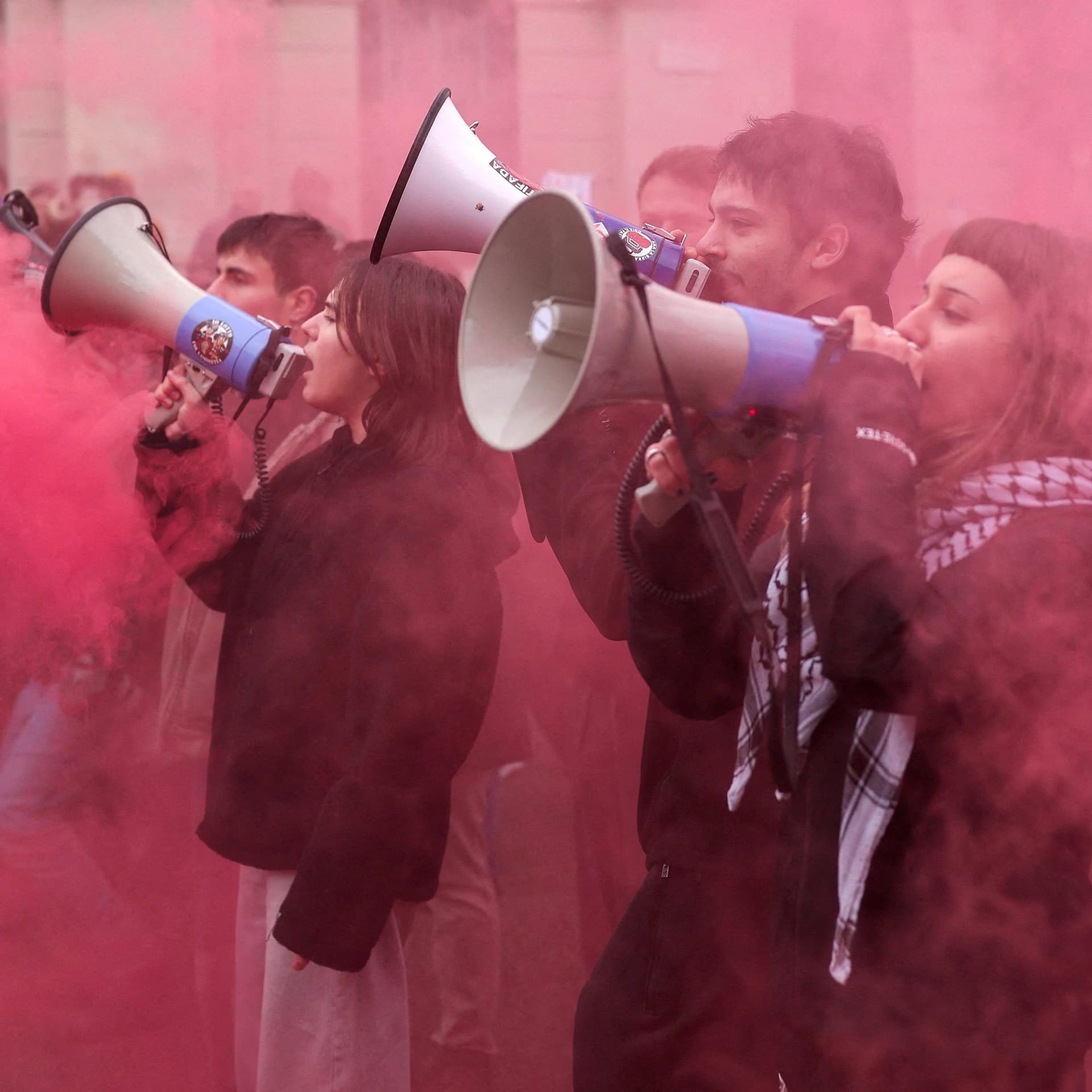
1:19Meanwhile, the controversy over ICE has even spread across the ocean. A protest broke out in Milan at the Winter Olympics in response to the presence of ICE agents. AIS, AIS, AIS! AIS, AIS, AIS! AIS, AIS, AIS! They say they're there to support American security operations during the Games. From the BBC, I'm Tristan Redman. And I'm Asma Khaled. And today on The Global Story, how did we get here? How did a previously little-known American agency become so internationally controversial? What's the history of ICE?
2:02To make sense of how we got to this point, we've turned to Camilo Montoya Galvez. Now, Camilo covers immigration for the BBC's reporting partner in the US, CBS News. We kicked off by asking him to tell us how, when and why ICE was created. Well, it really traces back to the September 11th attacks in 2001 by al-Qaeda. And at the time, Congress felt that the national security apparatus of the U.S. government had completely failed in detecting and obviously preventing those attacks from happening. And it felt on a bipartisan basis that a new federal department had to be created that would fold in many different agencies and many different functions of the U.S.
2:49government into one homeland security department. That was a dramatic shift from before, because before DHS became an agency, immigration enforcement was handled by the Immigration and Naturalization Service, the INS, which is part of the Justice Department. And their immigration work in the interior of the country was fairly discreet and limited. It did not have the detention capacity it has now. It was mainly arresting undocumented immigrants who posed a threat to national security or had committed serious crimes. And Border Patrol was arresting people, obviously, crossing the U.S.-Mexico border illegally.
3:26But it did not have the infamy that ICE has. And that's because the people that ICE is targeting has changed, and also the money and resources that ICE has has changed dramatically. But that was really the origin story of DHS and ICE. It was an attempt by Congress to try to rectify the mistakes that they believe happened in the lead-up to the 9-11 attacks in 2001. You describe an organization that began in its infancy in 2003. So we're talking about an organization that was created essentially a little more than two decades ago. And it's obviously grown a lot since then. I know the issue of deportation has been an ongoing political issue here in our American politics.
4:09You know, I think of, for example, the days of the Obama administration and when immigration activists labeled the former president, President Obama, the deporter-in-chief. That was a Democratic president. What did ICE look like at that time period? Well, ICE immigration enforcement was still controversial during the Obama administration. The agency was arresting not only people who were recently crossing the border, but also serious criminal offenders. And in some cases, undocumented immigrants who had been charged with civil immigration violations, but otherwise were law abiding. And that created a lot of controversy initially in the Obama administration.
4:47And after a few years, ICE, under a lot of intense political pressure, really narrowed down the population of individuals who its agents should prioritize for arrest. And they focused on three groups. National security threats, so spies, suspected terrorists, and foreign nationals, again, who are suspected of undermining national security. Secondly, public safety threats, meaning people in the country illegally who have also been convicted or charged with serious offenses. And then lastly, recent border crossers, people who recently entered the country illegally. That was the policy that the Obama administration implemented.
5:25And gradually, after some time, ICE operations became much more focused, targeted, and less indiscriminate, if you will. Well, when Trump came into the White House back in after the 2016 election, many of us were aware of his administration's actions against migrants in the U.S., family separation and so on. That's something that was heard about all over the world. but we weren't quite so aware of ICE as an agency. What was ICE's role during Trump 1.0? How did it evolve from the Obama days? Well, the biggest change was that the first Trump administration immediately scrapped Obama-era guidance that, again, limited ICE arrests to the individuals that I mentioned, national security threats, public safety threats, and recent border crossers, and basically expanded dramatically the population of people who could be arrested by ICE to include, again, people with no serious criminal record who, yes, are in the country illegally, but otherwise have not been convicted of any other crimes and, in some cases, have been living here for years, if not decades.
6:28That was the biggest change. So that was Trump's first term, and you say it was still really distinct from what we are seeing now in his second term. Donald Trump promised during the campaign the largest mass deportation in modern history, and he is trying to carry out that campaign promise. So can you talk us through what has changed now in his second term? And can you take us back to the beginning? Yeah, no, President Trump's current crackdown on immigration started immediately after he took office again for a second time. ICE rescinded all Obama and Biden administration guidance that limited ICE arrests.
7:06ICE was also instructed to have a broader mandate to just go into major U.S. cities to conduct highly visible operations. We saw that in Chicago initially. Dozens of federal agents surrounded an apartment building in Chicago's South Shore neighborhood. A neighbor said people were screaming, there were loud bangs. Other major U.S. cities. ICE Miami and Florida law enforcement arrested nearly 800 undocumented migrants in the first four days of their operation. And Seattle now finds itself on notice for immigration enforcement. People on edge following reports of immigration enforcement at restaurants in popular D.C.
7:42neighborhoods. Also, the U.S.-Mexico border was essentially sealed off to asylum seekers by an emergency proclamation. All illegal entry will immediately be halted, and we will begin the process of returning millions and millions of criminal aliens back to the places from which they came. President Trump effectively closed down the American asylum system and gave agents just the power to turn people away without even hearing their claims. And the administration quickly started enlisting the help of other federal law enforcement agencies like the FBI, the DEA, the IRS, and even the National Park Service to help ICE carry out immigration enforcement.
8:25Because again, the mandate from the administration has been, we have to oversee the largest deportation operation in American history. And what's their numerical target with that, Camilo? So the Trump administration has set an internal goal of trying to carry out around one million deportations per year. That has never been done before in American history or in the history of ICE. That is actually a quota that has been mandated to ICE by top White House official Stephen Miller. And Stephen Miller joins us now with more. All right. Who has expanded immigration enforcement across the country. Well, under President Trump's leadership, we are looking to set a goal of a minimum of 3 ,000 arrests for ICE every day.
9:11And President Trump is going to keep pushing. ICE's arrest tally right now is hovering around 1 ,900 per day. So it's not quite to the level of 3 ,000 that the White House would like, but it is still an unprecedented increase in immigration arrests. That's really striking to me because if their target is 3 ,000 a day and they're only just hitting just over 50 % of that, maybe almost two-thirds of that, and it's nonetheless caused significant eruptions in U.S. society, it makes you wonder if they were to ramp it up to their 3 ,000-a-day target, the kind of impact that could have on the public conversation.
9:49No, it's true. Immigration enforcement has never been carried out at this scale in American history or in this manner that is so visible and conspicuous in American communities. Usually ISIS work has been limited to the early morning hours, not in broad daylight. Now you're seeing broad sweeping immigration sweeps in broad daylight by ISIS and Border Patrol. And Border Patrol has been seen on the streets of American cities asking U.S. citizens or other individuals for their papers and questioning their citizenship status. That is something that we truly have not seen before, at least in modern history.
10:28And Camila, Border Patrol traditionally isn't really in the interior of the country, is it not? No, the 20 ,000 agents that Border Patrol has have been limited to the U.S.-Mexico border, the U.S.-Canada border, and several coastal sectors, including in Florida and California. Never before has any administration deployed teams of Border Patrol agents far away from the border to places like Chicago, Los Angeles, and obviously, most recently, Minneapolis. What's the justification from the administration for why they are doing that? The administration is essentially making a two-pronged argument to why it should be deploying Border Patrol to the streets of American cities.
11:05It is arguing, firstly, that the previous administration used Border Patrol in a way to let in millions of people who enter the country illegally. So it is now Border Patrol's responsibility to find those people, apprehend them, and process them for deportation. The administration, secondly, argues that ICE's number of deportation agents right now, at least, is simply not enough to carry out the immigration enforcement at the scale that they're envisioning. So they need help from other agencies like Border Patrol. That is for now because ICE is in the process of hiring 10 ,000 new recruits in the next few months.
11:43And that is thanks to the One Big Beautiful Bill Act. Well, I really want to ask you about the recruitment because how is that actually happening? To recruit that many people is a huge task. How do they do it? And what's the training like afterwards? ICE and DHS have really undertaken a really massive and unprecedented recruitment campaign, highly publicizing recruitment ads and holding recruitment events across the country to try to bolster ICE's ranks. The goal is to be able to hire, train, and deploy 10 ,000 additional ICE deportation agents across the country over the next few months. In terms of the recruitment, ICE says that it has already reached that number of recruits, 10 ,000 recruits.
12:24The training is still something they have to undergo, but the administration has taken some steps to relax and reduce the number of hours that the training entails. And also has eased some of the requirements like being able to speak Spanish or having a Spanish language course as part of that training. and they say they have to do that to expedite the hiring process and to get these agents on the street as soon as possible. So it is a process that DHS would say is sufficient to meet the current demands, but obviously there are many concerns about the training just simply not being adequate enough, especially amid all these accusations that ICE agents are not complying with internal rules and regulations and amid concerns about the fatal shootings of Minneapolis residents, Renee Good and also Alex Preddy by ICE and Border Patrol, respectively.
13:16Camilo, I want to go back to the early days of the administration to understand what has changed to the point where ICE has gained such notoriety around the world, where we are now a year later. What changed and how did ICE operate differently? I think one major reason is the scale and magnitude of the work that ICE is doing now. Never before has ICE done this type of work at this scale, arresting so many individuals. Right now, ICE is detaining 70 ,000 people in detention centers across the country, and that number continues to expand. Just to put it in perspective, when the Biden administration left office, there were around 40 ,000 people in detention.
13:58Now it's 70 ,000. So the number has increased exponentially, and there are many concerns about conditions in detention centers. The second reason, I think, is the masking. You're seeing ICE and Border Patrol agents routinely and frequently wearing masks when they carry out operations. That was never a comprehensive nationwide practice by any administration, Republican or Democrat, before in U.S. history. Is this a policy or this is just something just sort of ad hoc being done? It appears to be an ad hoc practice, not necessarily a policy that is mandated. I have actually questioned the head of ICE about that practice.
14:34And he told me, Todd Lyons told me that. I'm not a proponent of the masks. However, if that's a tool that the men and women advise to keep themselves and their families safe, then I'll allow it. He says he allows that practice to continue because he's concerned about his agents getting doxed or threatened by individuals who are angry over the administration's deportation priorities. I would also want elected officials to help us hold those people accountable that do dox or threat an ICE officer. I think that'd go a long way. So you will continue to allow ICE officers to wear masks during operations?
15:12I will. And I think the last reason for the infamy that ICE is getting now is just the fact that many of the people who are being swept up in the operations are sympathetic individuals. You know, over the past year, we have endeavored to talk to the people directly affected by the crackdown. And we met, for example, a 19-year-old college student in Georgia who was arrested after a traffic stop. And she was detained by ICE for several days, despite the fact that she has been living in the U.S. since she was a child, and despite the fact that she has no criminal record in the U.S. What scares you the most?
16:06That is against somebody who would not have been prioritized for arrest under any previous administration, including the first Trump administration. We also met a mother whose husband was actually arrested during an immigration check-in appointment. Now the Trump administration is sending ICE officers into checking locations and immigration courts to arrest people who are complying with the immigration process, attempting to attend their checking appointments or court hearings, but they're being arrested in the process. And ICE's argument is that they may be undergoing immigration proceedings, but they're still in the country without permission, so they're fair game for enforcement.
16:47ICE has the authority to arrest anybody who is here illegally just to set the record straight. But obviously, historically, ICE has focused on getting serious offenders out of the country, not just regular undocumented people. You mentioned earlier that in prior administrations, you might have seen these ICE operations taking place in discrete ways or early in the morning. They weren't these sort of widely publicized sweeping efforts. And what we have seen thus far, you know, whether we're talking about Minneapolis, Chicago, L.A., have been just much more publicized immigration deportation efforts.
17:24Have you been to some of those cities? And can you just describe what the scene is like and what you've seen? Yeah, no, I've been to Portland, Chicago, Los Angeles and other major U.S. cities that have seen an increase in ICE and Border Patrol operations under this administration. and local leaders say in those cities that the only reason they're being targeted by the administration is because they're run by democratic officials, that immigration enforcement has been politicized. The administration would argue on the other side of the debate that they're targeting these democratic-led cities because the jurisdictions there do not cooperate fully with ICE and Border Patrol, and so they have to send more agents onto the streets of cities.
18:05But you're completely right. ISIS work before this administration was typically conducted in a very discreet way in the early morning hours. They apprehended the target, who was typically somebody in the country legally and a criminal, and they left that location. Now you're seeing highly visible, highly publicized ICE operations that are garnering a lot of backlash, importantly because most of them are now being filmed by bystanders. Basically, on a daily basis, you're seeing viral TikTok videos of Border Patrol or ISIS arrests across the country.
19:03on one big story at the intersection of where the world and America meet. And you can now watch the global story on the iHeart app. Catch every brand new episode every weekday. Just tap into iHeart to start watching. And we hope you enjoy the show.
19:24Camilo, early on in the second term of the Trump administration, there were news headlines and reports of Venezuelans who were deported. The Trump administration said that they were members of a notorious gang, Trenda Aragua, and they were sent not to Venezuela. They were instead sent to El Salvador. And that intrigued me because I just didn't know how common the idea is of people being deported to countries that are not of their own national origin. And I wanted to understand that storyline. And I know you've done some reporting on this yourself. Yeah, I think that truly has been one of the most overlooked elements of the administration's crackdown.
20:00The U.S. has long deported people to their home countries. That is the standard procedure historically. But this administration has been able to secure agreements with several dozen countries around the world, including in the Western Hemisphere. You mentioned El Salvador, but also Panama, Costa Rica, Guatemala, Honduras, and countries in Europe like Kosovo, countries in Africa like Eswatini and South Sudan, Uganda and Rwanda, to have those countries accept people who are not their citizens. And in some cases, like the El Salvador example, to actually imprison those deportees for some time. That truly is unprecedented.
20:37The administration says it is doing that because some countries limit or reject deportations of their citizens. So they have to find a way to send people who are here illegally to other countries outside of the U.S. But obviously, advocates say that it is deeply illegal and inhumane to send people to countries where they have no ties. especially when you send them to a country that is going to imprison them indefinitely, like was the case in El Salvador before the men there were released as part of a prisoner swap, without any legal argument or conviction in El Salvador to actually justify that detention.
21:14And so that has been an action that is garnering a lot of legal challenges, but it's an action that the administration continues to pursue very aggressively. the State Department continues to push countries around the world to sign these third country deportation agreements, often threatening to impose visa sanctions or to withhold American foreign aid to those countries if they refuse to actually agree to a deal. You mentioned that there are court challenges to this. What have the courts had to say about it? Well, for example, in the case of the men sent to El Salvador, a federal judge in Washington, D.C.
21:52has found that they were illegally deported under the Alien Enemies Act, or at least 137 of the more than 200 Venezuelan men sent to El Salvador and initially held at that notorious prison known as Zecote, found that they were given no due process or any chance to actually contest their deportation or the allegation that the administration made, which was that they were We're all criminals and members of that Tren de Agua gang. And right now, the administration is supposed to either return them to the U.S. so they could get that due process or give them some sort of hearing remotely. But the administration is arguing that the political crisis in Venezuela basically prevents the U.S.
22:33from doing that. So they're still in legal limbo in Venezuela or in Colombia and other countries in Latin America and have not received that due process that a federal court here in the U.S. has said they're entitled to. We've been outlining these new strategies that the administration is employing through ICE. And one question that I think is worth asking and answering is whether this is working. Is it actually deterring immigration? If you look at the U.S.-Mexico border, there has been a seismic and undeniable change there. I was there in December of 2023 under the Biden administration when nearly 250 ,000 people, a quarter of a million migrants, crossed the border illegally just in one month.
23:17In January of this year, about 6 ,000 people crossed the U.S.-Mexico border illegally. And illegal border crossings are down to the lowest level now than fiscal year 1970, over 55 years ago. So there has been a dramatic reduction in illegal immigration at the U.S.-Mexico border. And obviously the administration would say that that is due to their hardline immigration policies. And you could argue that their message of deterrence through the highly publicized arrests and deportations are having an impact in essentially scaring people in the region from even trying to come here. At the same time, it's also being done through policies that many advocates would say are illegal or inhumane.
24:01And so that is a political and legal question that obviously the administration is facing now, especially as the crackdown in cities like Minneapolis continues to garner even more backlash. And what you're seeing is that there has been some significant erosion in public support for the administration's immigration agenda. Typically, if you poll Americans on the situation at the border, they give credit to the administration for ending the crisis there. But if you ask them about the tactics, the arrests of ICE and Border Patrol in cities like Minneapolis, that is now deeply unpopular, especially in blue cities.
24:37And so it really depends on who you ask, how you measure success. There has been an undeniable change at the U.S.-Mexico border, but I don't think ICE and its work have ever faced the backlash that it faces now because of the operations in the interior of the country. You mentioned, Camilo, know that this is a highly polarizing topic in the U.S. What do we know about how Americans feel about ICE as an agency and how has that public sentiment evolved? So it's a really critical question. At the start of the Trump administration in January of last year, we actually polled Americans and asked them about their opinions on the president's deportation promises in his agenda.
25:22And about 59 percent of respondents said they were supportive of his deportation effort to identify and arrest people in the country illegally. That number is down to 46 percent now. So there has been a pretty significant drop in public support for the president's deportation campaign. And that polling, I will say, Camila, the polling is striking to me because it's not not just one poll, what you were referring to, I should just mention to listeners. We've seen a sort of systematic drop off in the support, it seems, in a range of public opinion polling on this issue of immigration, which was a really winning issue for the president during the campaign.
26:04Yeah, I think that's mainly due to two reasons. The first one being that the public believes that ICE and Border Patrol's tactics have become too aggressive, too tough. And you're seeing that obviously in full display in cities like Minneapolis. And the second reason is that many Americans now feel, including Americans who previously supported the overall deportation program, that ICE and Border Patrol are targeting more people than they originally expected, who, yes, may be in the country without legal permission, but have not committed any other crime, who often have U.S. citizen kids or spouses, and who by and large are contributing to the U.S.
Read the full transcript
26:41economy and do not pose a threat to public safety. Legally, ICE has the authority to target those people because they're here in violation of the law. But it's a question of policy and resources. ICE does not have the resources even now to detain and deport everyone, the millions of people here in the U.S. illegally. And the concern now is that everyone is being prioritized now for immigration enforcement, including people who do not pose a threat to public safety or national security.
27:17Thank you so much, Camilo, for your time and your reporting. We really appreciate it. Thank you, Camilo. Thank you, guys. I really appreciate you guys having me on. That was Camilo Montoya-Galvez. And that's it for the Global Story for today. If you're looking for the very latest news from around the world, then look for the Global News Podcast, our sister show, wherever you get your podcasts. Today's episode was produced by Viv Jones, Aaron Keller and Chris Benderev. It was edited by James Shield and mixed by Travis Evans. Our senior news editor is Chyna Collins. See you tomorrow. Cheerio.
28:08For those of you who might be new to our show, we here at The Global Story dive deep every weekday on one big story at the intersection of where the world and America meet. And you can now watch The Global Story on the iHeart app. Catch every brand new episode every weekday. Just tap into iHeart to start watching. And we hope you enjoy the show.
From the publisher
The top official from ICE – US Immigration and Customs Enforcement – will testify in front of Congress this week, for the first time since two people were shot and killed in Minneapolis. Democrats are demanding changes to the way ICE operates, including banning face masks and requiring agents to have warrants signed by a judge before they can enter private properties. Republicans say these measures could make officers less safe. Meanwhile, the controversy over ICE has spread to other countries. A protest broke out in Milan in response to the presence of ICE agents in Italy, who say they are helping with American security operations during the Winter Olympics. Camilo Montoya-Galvez, immigration reporter for CBS News, has been covering ICE operations across multiple US cities. He tells us the history of how this previously little-known law enforcement agency was created, and how it has become so internationally controversial. Producers: Viv Jones, Aron Keller and Chris Benderev
Executive producer: James Shield
Mix: Travis Evans
Senior news editor: China Collins
Photo: Anti-ICE protests in Milan. Credit: Reuters/ Alkis Konstantinidis