
In short
The BBC Global Story explains the renewed Israel-Hezbollah war in Lebanon, linking it to the wider Israel-Iran conflict and describing the impact on Lebanese civilians.
Guests
Hugo Bacheca, BBC Middle East correspondent based in Beirut since Oct 2023; hosts Asma Khaled (Washington, D.C.) and Tristan Redman (London).
Guest backgrounds
Bacheca reports from Beirut amid ongoing attacks and displacement; he has interviewed residents in southern Lebanon and Shia communities.
Key claims
Western intelligence says Israel’s Mossad carried out the “pager” and walkie-talkie attacks against Hezbollah in Sept 2024, crippling communications and killing operatives. Hezbollah is described as both a military force and a political/social power rooted in Shia support, created in the 1980s to fight Israel’s occupation. Israel’s current goal is to push Hezbollah away from the border and potentially create a buffer zone; a full destruction of Hezbollah is considered impossible.
Notable examples
pager explosions injuring a nurse; displacement to Martyr Square tents and people sleeping in cars; Israeli evacuation warnings covering about a fifth of Lebanon; mention of Hassan Nasrallah’s killing and Hezbollah’s continued ability to fight after leadership losses.
Written by AI. May contain mistakes. Listen to the episode to check what was said.
Chapters
Tap a time to open that second in VOCurrent Situation in Beirut
0:00 to 0:32
Hugo shares insights on the current tense atmosphere in Beirut.
“This BBC podcast is supported by ads outside the UK.”
Current Situation in Beirut
2:08 to 3:10
Hugo shares insights on the current tense atmosphere in Beirut.
“I am a Middle East correspondent based in Beirut, and I've been here since October 2023, so it's been very busy.”
The Conflict Between Israel and Hezbollah
3:10 to 5:06
Exploring the ongoing conflict between Israel and Hezbollah and its implications.
“that nobody really knows what is going to happen.”
Humanitarian Impact of the War
5:06 to 6:29
Discussion on the displacement of people and the humanitarian crisis in Lebanon.
“So again, we're talking about, as you say, one million people who've been displaced.”
Hezbollah's Military Actions
6:29 to 7:57
Examining recent Israeli military actions and Hezbollah's responses.
“This is a country that's been in a state of permanent crisis for almost a decade.”
Hezbollah's Origins and Political Role
7:57 to 11:03
Understanding Hezbollah's formation and its dual role as a military and political entity.
“Hugo, you recently wrote a story with the headline that caught my attention.”
Historical Context of Israeli-Lebanese Conflicts
11:03 to 14:00
A recap of the historical conflicts between Israel and Lebanon, including key events.
“It is an organization that provides sort of political organizing and social services for a number of people.”
Hezbollah's Rise and Sectarian Divides
14:00 to 14:43
Learn about Hezbollah's consolidation of power and the sectarian divisions in Lebanon.
“And they really consolidated that position as the most powerful force here in Lebanon.”
Aftermath of the 2006 Conflict
14:46 to 15:18
Explore the uneasy truce post-2006 conflict and the rising tensions leading to new attacks.
“Because over the years, I remember lots of flare-ups and incursions by Israeli forces and firing of rockets into Israel from Lebanon.”
The Pager Attacks: A Turning Point
15:20 to 16:41
Discover the significance of the pager attacks in escalating conflict between Hezbollah and Israel.
“They decided to show solidarity with Palestinians in Gaza after Israel launched its destructive response to the Hamas attacks.”
Show all 15 chapters
The Death of Hassan Nasrallah
16:43 to 18:11
Understand the impact of Hassan Nasrallah's assassination on Hezbollah and its future.
“Good evening from Beirut, where just a few hours ago, huge plumes of smoke could be seen rising through the city.”
Public Sentiment Shifts Regarding Hezbollah
18:13 to 20:07
Examine the changes in public opinion towards Hezbollah amidst ongoing conflict.
“Shia communities, people wouldn't be very vocal, even though they could oppose or be against some of Hezbollah's decisions, but they will never really express those views.”
Lebanese Government's Dilemma
20:09 to 22:04
Learn about the challenges faced by the Lebanese government regarding Hezbollah's disarmament.
“But there's also growing anger directed at Israel because of the mass displacement of people, because of the destruction of infrastructure, because of the attacks that are happening.”
Israeli Military Strategy Against Hezbollah
22:06 to 24:46
Explore the goals of Israeli military actions and the implications for Lebanon.
“So we had a new government last year and the new president, Josefon, has promised to disarm Hezbollah.”
The Future of the Conflict
24:48 to 26:12
Discuss the long-term prospects of the conflict between Hezbollah and Israel.
“for example, Hamas in the recent past or the Iranian government right now.”
Transcript
Automatic transcript. May contain errors.0:00This BBC podcast is supported by ads outside the UK.
0:30learns how to invest and manage money. Learn more at schwab.com. It's September the 17th, 2024, at 3.30pm Beirut time. And all over the city, there are small explosions. And they happen at exactly the same time. Tonight, shockwaves and panic across Lebanon after a stunning, unprecedented attack, both widespread and personal. Members of the armed group Hezbollah are being simultaneously attacked by their pagers. Ambulances reverberating through cities one after another. It was one of the most audacious and complex covert operations ever mounted. And Western intelligence agencies say the Mossad, Israeli foreign intelligence, was behind it.
1:26Hezbollah has not only lost a principal way it communicates, but had operatives killed and hundreds put out of commission for weeks, if not months to come. Back then, it looked like Hezbollah had taken a crippling blow. And yet here we are, 18 months later, and Israel is so concerned about Hezbollah again, a group that says it wants to destroy Israel, that they've invaded Lebanon to do something about it. And they're doing this at the exact same time they're waging another war altogether in Iran. From the BBC, I'm Asma Khaled in Washington, D.C. And I'm Tristan Redman in London. And today on The Global Story, who are Hezbollah?
2:11And how do they keep coming back?
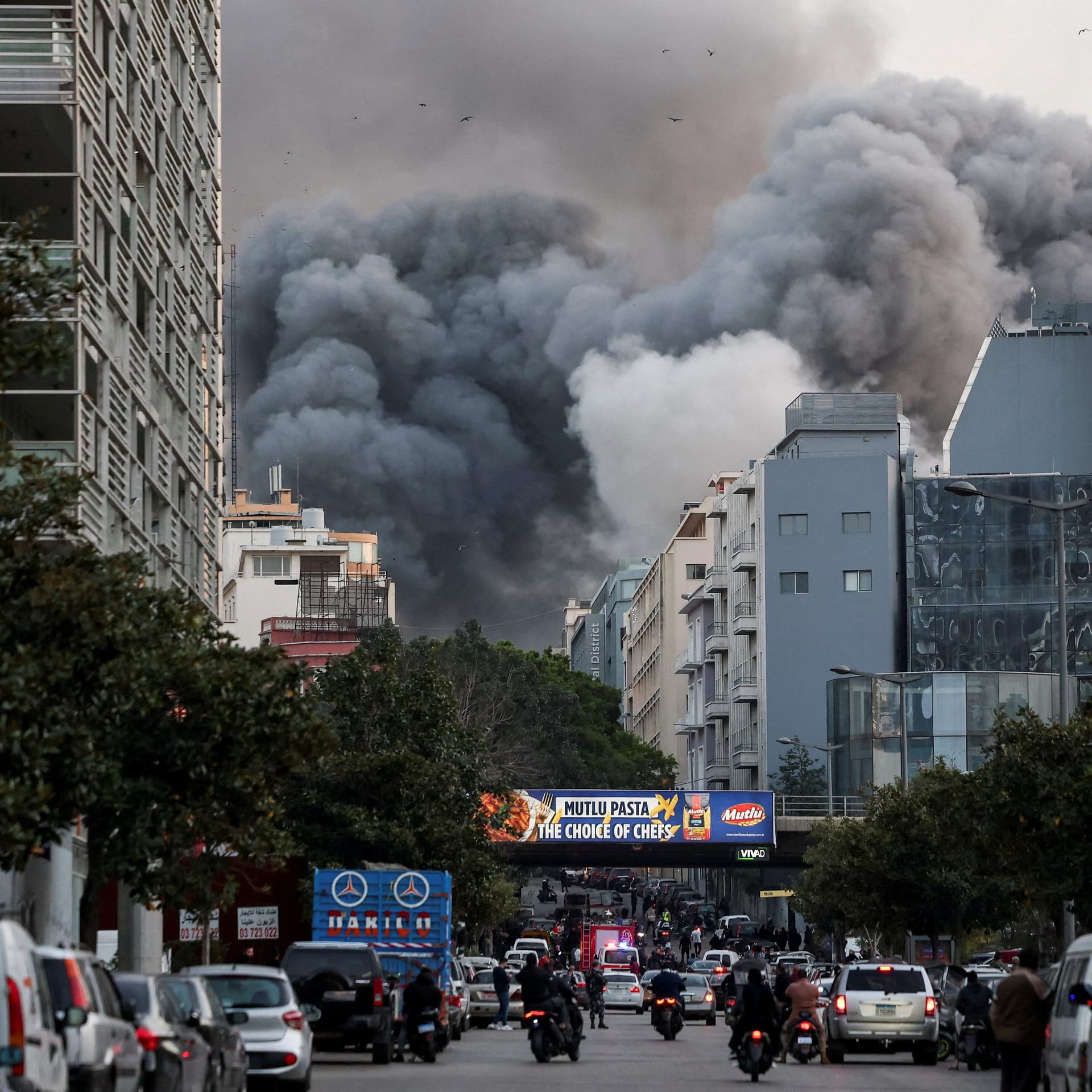
2:20I'm Hugo Bacheca. I am a Middle East correspondent based in Beirut, and I've been here since October 2023, so it's been very busy. What's life like in Beirut right now, Hugo? It's a city on edge. The streets are quieter. There's a lot of anxiety, a lot of uncertainty, because nobody knows what is going to happen. So earlier today, we had this attack that hit a building in central Beirut, and this building is just 10 minutes from my flat. So I was woken up by the sound of a huge explosion.
2:57The windows in my flat rattled. So this gives you a sense of how powerful this explosion was. And I think, you know, this is the uncertainty that we have at the moment, which is feeding the anxiety that people have, that nobody really knows what is going to happen. Hugo, you're joining us, as you say, from Beirut. and some listeners may be wondering what Lebanon has to do with the war in Iran, which we have been discussing day after day here on our show on The Global Story. Can you take us back to about two and a half weeks ago, the U.S. and Israel began a war with Iran and within days we started seeing reports of another front of this war in Lebanon.
3:38How did that happen? Yeah, I think the right way to look at this conflict is to understand that this is a long-running conflict between Israel and Hezbollah with lots of chapters. And this particular chapter started when Hezbollah launched rockets into Israel to respond to the killing of the Iranian supreme leader, Ayatollah Ali Khamenei. Hezbollah is obviously supported by Iran. It is financed, backed, armed by Iran. So there is a very strong link between Hezbollah and Iran. It was a very symbolic response by Hezbollah, but Israel used this attack as a justification to carry out large-scale attacks against Hezbollah.
4:21Because before this chapter, there was a ceasefire in Lebanon because of another conflict that happened here back in 2024. So for more than a year, Israel continued to carry out attacks almost every day. The Israelis were saying that Hezbollah was trying to rebuild its capabilities. Hezbollah was saying that Israel wasn't respecting, you know, this deal that he had signed. So I think for all of us here in Lebanon, for quite some time, there was the idea that another conflict between Israel and Hezbollah was inevitable. We've been seeing the coverage of the huge number of displaced people in Lebanon, around a million people or so, 20 % of the population, huge numbers of people.
5:03What are you seeing playing out in front of you? Yeah. So again, we're talking about, as you say, one million people who've been displaced. And this is a tiny country. So, you know, this has a massive impact all across the country because, A, you have the vast majority of these people are coming from Shia communities, which are the bulk of Hezbollah's support base. And, you know, to understand what happens in Lebanon, you need to understand that this is a country with deep sectarian divisions. So you have a Shia community, you have Sunni community, you have the Christians, they live separate in some places.
5:40And now we're seeing that Shia Muslims are being driven away from their communities and now being forced to seek refuge in other parts of the country. So this is creating sectarian divisions as well. If you go to Martyr Square, which is the main square here in central Beirut, you see many tents there with families with nowhere to go. There were some people sleeping on the Corniche, you know, by the Mediterranean Sea in central Beirut. You know, in the first stages of the war, people were sleeping in their cars because they believed that they would be allowed to go back to their homes. And a lot of people have been displaced, not for the first time.
6:15So you have people who perhaps had their houses destroyed back in 2024, had returned to their homes and now being forced to flee again. And obviously, there is the fear that this could lead to a deep humanitarian crisis. This is a country that's been in a state of permanent crisis for almost a decade. And I remember when I got here back in 2023, one of the first people I interviewed was a woman who said, I'm exhausted. because if you look at what's happened in this country, you had a huge economic crisis back in 2019. And that was followed by the port explosion in 2020, the pandemic, then a war.
6:52And it's been like this for many, many years. Well, Hugo, we've been hearing the last few days about an Israeli ground operation in southern Lebanon. What does that actually look like? What are they trying to achieve? Yeah, this is interesting because up until now, the Israelis are describing what is happening in the South as targeted, limited ground incursions, operations. I think we can describe it as being an invasion because Israeli troops are operating inside Lebanon. I think the fear here is that this could be the beginning of a large-scale ground invasion and perhaps an occupation of Southern Lebanon.
7:27We had another warning by the Israeli military urging residents of the South to leave those areas near the border. So roughly a fifth of the country is now under this evacuation warning by the Israeli military. And again, I think a lot of people are very concerned here that this is going to be different than 2024, that the Israelis are coming here, that they're going to stay because they think that they need to really destroy whatever is there of Hezbollah infrastructure and try to push Hezbollah away from the border. Hugo, you recently wrote a story with the headline that caught my attention.
8:03The headline said, battered and isolated, Hezbollah drags Lebanon into another war. And it was that word, that verb in particular that caught my attention, drags. It has seemed for a long time now that Hezbollah makes decisions that affect the entire Lebanese population at times more so perhaps even than the Lebanese government itself. Can you tell us about the origin of Hezbollah and how it initially emerged? So Hezbollah was created in Lebanon to fight the Israeli occupation of southern Lebanon during the Lebanese civil war back in the 80s. Tonight, Israeli heavy armor is once again pounding Palestinian positions in West Beirut, and some half a million civilians crouch in fear as the city crumbles around them.
8:53And that occupation happened because the Israelis were fighting Palestinian groups based in southern Lebanon. Large numbers of people in the Shia community were displaced in southern Lebanon because of the Israeli invasion. Shia villages in the south were destroyed. The Shias had long been underrepresented in politics here. So that's when Hezbollah emerges. They enjoy a lot of support, significant support in the Shia community, because back in the 80s and very similar situation to what we're seeing right now. It's this part of the war which has brought catastrophe on hundreds of thousands of civilians and the destruction has left thousands homeless.
9:33Food and water has been scarce now for five days. And from the very beginning Hezbollah has been financed, armed and trained by Iran and to this day the destruction of Israel remains one of Hezbollah's official goals.
9:52And so Israel occupied southern Lebanon in the 80s, and that occupation continued, my understanding is, for a number of years. Yeah, the Israelis only left southern Lebanon in 2000. This used to be an Israeli army garrison, but now guerrillas who fought the Israelis and their allies for nearly two decades are celebrating their departure. So you have the Lebanese civil war, and after 15 years of a brutal civil war, finally you had a deal. But the Israeli occupation continued up until the year 2000. The Lebanon pullout came without security guarantees for northern Israelis. It remains to be seen whether Israel's departure will diffuse the situation or bring the conflict right up to Israel's border.
10:37Hugo, we've been referring to Hezbollah as a military organization, one that you say some Lebanese see as a resistance group. It is also designated as a terrorist organization by countries like the United States and the United Kingdom. But it strikes me also that there is a political arm of Hezbollah. I mean, I remember years ago visiting Lebanon and seeing the Hezbollah flag. It is an organization that provides sort of political organizing and social services for a number of people. Is that not right? Yeah. In 1990, there was, you know, a deal that ended the civil war. And this deal stipulated that all militias in the country should be disarmed.
11:24But despite that, Hezbollah managed to remain armed. And also this deal consolidated the division of power here in Lebanon, which is based on sectarianism, which means that the president is always a Maronite Christian, the prime minister is always a Sunni Muslim, and the speaker of parliament is always from the Shia community. And on top of that, senior positions in the cabinet, in the government, are also based on sex. So this helps you understand why Hezbollah is part of the government. You know, the health and labor ministers come from Hezbollah. And also in the 90s, Hezbollah started its transformation, if you like, and it became a political party.
12:04And because of its strong support in the Shia community, it became an extremely powerful force. It has a significant parliamentary bloc. And they have been able to essentially dictate policies in this country. And they have been very clear in terms of telling people who oppose whatever they want to do, that they could suffer the consequences. So they would send armed men into the streets. They would sometimes be accused of killing their rivals and that anyone could try to stop them or put some barriers or obstacles into things they were trying to do, that there would be consequences for that. And that helps us understand why Hezbollah is so powerful and why it's been so difficult for the government to take decisions against it.
12:51So Hugo, you mentioned this multi-year operation in which Israel invaded southern Lebanon. This was in the 80s. It continued up until 2000. And then I recall in 2006, there was another ground operation the Israelis undertook in Lebanon. Can you remind us what started that? Yeah, so this was a war that was triggered by a deadly ambush of Israeli soldiers by Hezbollah. It happened, you know, on the border between the two countries. and there was a massive Israeli response. Israel attacked Hezbollah's military targets across the country, but also civilian infrastructure. And there was another ground invasion of Southern Lebanon by Israel.
13:34It was an extremely destructive, deadly conflict. And it ended after 34 days with a United Nations resolution called 1701, which demanded Hezbollah's disarmament. That obviously hasn't happened. But Hezbollah saw this conflict as a victory. And many believe that this was the moment that Hezbollah became more confident, more powerful and more confrontational. And they really consolidated that position as the most powerful force here in Lebanon. They built a formidable fighting force. They had sophisticated weapons. As that happened, those sectarian divisions that I mentioned earlier became deeper.
14:17So on one side, you have the Shia community supporting Hezbollah, saying that the state was unable to protect them and that Hezbollah is the only force capable to confront Israel. And on the other side, essentially everyone else accusing Hezbollah, as you say, of dragging Lebanon into unnecessary wars in their view, of putting Iran's interests above Lebanon's interests and causing a lot of suffering and destruction here. And this is, again, the debate that is playing out right now in this country. Well, Hugo, after that ceasefire, after the conflict with Israel in 2006, there's a truce, but it's kind of an uneasy truce, isn't it?
14:54Because over the years, I remember lots of flare-ups and incursions by Israeli forces and firing of rockets into Israel from Lebanon. But then after the October the 7th attacks by Hamas into Israel, Hezbollah starts firing a lot of rockets into Israel. What happens next? Why was this such a pivotal moment? Yeah, so this was a decision taken by Hezbollah, a decision that now even some of its supporters say was a miscalculation by Hezbollah. They decided to show solidarity with Palestinians in Gaza after Israel launched its destructive response to the Hamas attacks. So we had those attacks by Hezbollah for almost a year.
15:40This was a conflict that was largely contained to areas along the border. And then everything changed in September 2024. And I think a lot of people remember the pager attacks. It was something that was unthinkable when pages that were being used by Hezbollah members, not only fighters, but like teachers, nurses. I met a nurse who had a pager and the pager exploded as he was, you know, starting his shift at a hospital. And he lost, you know, three fingers in one of his hands. And some of the pages exploded when people were, you know, with their families in the supermarket driving. So that was the beginning of a larger conflict between Israel and Hezbollah.
16:23And a day later, walkie-talkies being used by Hezbollah members exploded. And I was reporting from the Dahir district when we heard a huge explosion. It was a walkie-talkie that had exploded right next to us. It was a funeral that was happening for one of the victims of the Pager attacks. And then the walkie-talkies exploded. that not only surprised everybody, but I think it was shocking for many people, not only Hezbollah supporters, but I think for a lot of people in Lebanon, because it really showed the level of penetration of Hezbollah and the intelligence that Israel had about essentially everything that was happening inside the group.
17:04And right after that... Good evening from Beirut, where just a few hours ago, huge plumes of smoke could be seen rising through the city. There was the killing of Hassan Nasrallah. Breaking overnight, the Israeli military has eliminated its most powerful target yet. Israel says longtime Hezbollah chief Hassan Nasrallah was killed in an airstrike in Beirut. This was the man that led Hezbollah for 30 years. And he was not only, you know, the secretary general, if you like, of Hezbollah, but he was somebody who was seen as a big figure. You know, people would hold posters with the pictures of Hassan Nasrallah with his face, you know, banners and, you know, and all the rest.
17:45And, you know, this marked the end of a era for Hezbollah because obviously his successor, Naim Qasem, isn't seen as popular or charismatic. And everything has changed now after his killing. And obviously, you know, Hezbollah is a diminished organization right now. And there has been a change in terms of how Hezbollah is seen domestically in Lebanon. I think before the war, people would criticize Hezbollah, but if you would go to Shia communities, people wouldn't be very vocal, even though they could oppose or be against some of Hezbollah's decisions, but they will never really express those views.
18:27And I felt last year, visiting some communities in the South, that there was changing. There was a lot of anger at the beginning of this conflict because even people inside the Shia community were blaming Hezbollah for dragging Lebanon into this conflict. So I was, you know, last year on the first anniversary of the ceasefire, we spent days in the south of the country going to those villages that had been completely destroyed near the border. In a deserted village called Iarun, we meet Nayef, one of its last residents. And I met a man who was one of the last, you know, residents, and I asked him...
19:07Aren't you afraid of being here? And he told me that he was very, very scared. We've got every reason to be afraid, because as you can see, no one else is here. You will live in a bit and we'll be left alone. There is a Hezbollah flag right next to your house. Do you think the Hezbollah must disarm
19:32I find it hard that they will give it up. But one also wants to live. This is no life. So that was then, and I'm curious if people's sentiment has changed now in just these last couple of weeks with the latest war, and particularly amongst some in the Shia community who might traditionally have been, you're saying supporters of Hezbollah. Yeah, I think at the very beginning, there was this widespread anger. And I was very surprised by how widespread this anger was, including in the Shia community. I think now, this is week three of the war, things are changing a little bit because there is a lot of anger directed at Hezbollah.
20:17But there's also growing anger directed at Israel because of the mass displacement of people, because of the destruction of infrastructure, because of the attacks that are happening. across the country. So I think maybe some of those people who were very angry at the beginning are now going back to the traditional positions of saying, well, look, Hezbollah, they are here to protect us because, you know, the aggressors are the Israelis. And this is the country that we need, you know, to confront.
20:57Given everything you said about that widespread Pager attack that killed so much of the Hezbollah leadership and the killing of Hezbollah's longtime leader, Hassan Nasrullah, I'm so confused as to how the organization then is able to continue to fight on with Israel as we're seeing right now. Because the perception broadly was that this was a totally crippled organization. Yes, and I think this is, you know, the big surprise here in this conflict. You know, talking to people who understand how Hezbollah works, they say, well, look, yes, they learned some of the lessons. They replaced some of those people who were killed.
21:35They learned from some of the mistakes and they returned to their roots, you know, being a smaller organization and really trying to learn from everything that's happened in the last two years or so. And I think this is the explanation as to why Hezbollah has been able to, you know, again, carry out these attacks and continue to exist as a fighting force. And that makes me wonder, well, where's the actual Lebanese government in all of this? The Lebanese government is in a very difficult position because Lebanon is not involved in this conflict. This is Hezbollah against Israel. So we had a new government last year and the new president, Josefon, has promised to disarm Hezbollah.
22:21The problem is that he said we cannot do it by force. It needs to be through a diplomatic process. Hezbollah agreed as part of the ceasefire deal to remove its fighters and its weapons from the south of the country, but has refused to discuss the future of its weapons elsewhere in the country. Hezbollah has not only a very strong presence in the south, but also in the east in the Beqar Valley, you know, lots of weapons, rockets, missiles and all the rest of it. And they say, we're not going to talk about it as long as Israel is attacking us. So it is a catch-22 situation. And the Lebanese president has been very concerned.
22:58And he's been saying to all those people who say, look, you need to send Lebanese soldiers to disarm Hezbollah. He says, look, we need to be very careful because of those sectarian divisions, we could risk sparking domestic unrest and the possibility of internal conflict. So it is a very difficult situation for the Lebanese authorities. In terms of the Israeli incursions into southern Lebanon, what's their end point? What's their aim? What are they trying to do ultimately? So what Israeli officials are saying is that this is about protecting communities in the north, and they want to push Hezbollah away from the border so they don't have the ability to continue to launch these rockets.
23:42I think the assumption is that they're going to try to create a so-called buffer zone along the border. And what they've been saying is that residents from those villages are not going to be able to return, at least for now. The Israelis say that Hezbollah uses civilian neighborhoods, civilian areas to embed its military infrastructure. So it is very likely that we're going to see widespread destruction in those communities, in those villages, because the Israelis are saying that we need to destroy what is there because this is being used by Hezbollah to attack Israel. But we simply don't know.
24:17And this is the fear of many of Hezbollah supporters. They say, well, look, what Israel is trying to do is to occupy parts of the country to expand Israeli territory. And as some others say, well, look, they're just trying to create this kind of security zone, buffer zone in the South. But there is a fear that this could be the beginning of a long-term operation here. But for the time being, it's not the stated Israeli aim to destroy Hezbollah entirely as we have seen them say about, for example, Hamas in the recent past or the Iranian government right now. Are they stopping short of saying that that's what they're trying to do for the time being?
24:57I think everybody agrees that it is impossible to destroy, you know, an organization like Hezbollah. And I hope I've been able to explain that Hezbollah is much more than a military organization. It is an ideology and you cannot destroy an ideology with bombs. There needs to be some kind of diplomatic effort to engage with Hezbollah so they can sit down and discuss the future of their weapons. Over the last four decades, Hezbollah and Israel have fought with each other many times. Is there anything you're seeing that suggests this time is really, really different than all the other times? I think what is different now is that there is the perception that this is not going to be quick.
25:40I think the Israelis are seeing this as a window of opportunity because they have full American support for this operation. So I think this is what is different. But it is very, very difficult to see this as the final war. The fear that many Lebanese have is that this war is going to continue for quite some time, that their country is going to be under occupation again, and there will be no solution to this problem and no decision about what is going to happen with Hezbollah's weapons.
Read the full transcript
26:20Well, Hugo, thank you so much for bringing your reporting and your insights to us. We really appreciate it. Thank you so much, Hugo. Thanks for having me.
26:34That was Hugo Bushega, the BBC's Middle East correspondent, speaking to us from Beirut. And that's it for today's episode, friends. And we've got a quick recommendation for you before we go. We here at The Global Story bring you one story every day about where the world and America meet. For the very latest news headlines, you can listen to our sister show, The Global News Podcast. You can find it wherever you listen. Our episode today was produced by Chris Benderev and Aron Keller. It was edited by James Shield and mixed by Travis Evans. Our digital producer is Matt Pintus. Our senior news editor is Chyna Collins.
27:10And I'm Tristan Redman. And I'm Asma Khaled. Thanks as always for listening, and we'll talk to you again soon. Cheerio.
From the publisher
Shortly after the US-Israeli war with Iran began, a second war broke out between Israel and Hezbollah in Lebanon.
Lebanese authorities say that more than 900 people, including at least 111 children, have been killed in Israeli attacks since 2 March. More than a million others have been forced to leave their homes.
On Wednesday, Israel widened its air strikes from the southern suburbs of Beirut into the city centre. And there are fears that what Israel has called a “limited” ground operation could lead to an occupation of the south. Israel says it is targeting not only Hezbollah fighters and leaders, but also businesses it claims are linked to the group and help finance its military operations. From his post in Beirut, BBC Middle East correspondent Hugo Bachega explains the long history of the conflict between Hezbollah and Israel, and we ask what could come next.
Producers: Chris Benderev and Aron Keller Sound engineer: Travis Evans Senior news editor: China Collins
Photo Credit: Smoke rises after an Israeli strike in central Beirut's Bachoura neighbourhood, following an escalation between Hezbollah and Israel, amid the US-Israeli conflict with Iran, in Beirut, Lebanon, 12 March, 2026. Creit: Claudia Greco/Reuters