
In short
How GLP-1 weight-loss drugs (e.g., Ozempic/Wegovy, Mounjaro/Zepbound) have shifted culture, politics, food industry practices, and access—plus risks of misuse and links to extreme thinness.
Guest backgrounds
Giles Yeo, professor of molecular neuroendocrinology at the University of Cambridge; studies how the brain controls food intake and the genetics of body weight. He also discusses his 24-year-old son Harry, who has used a GLP-1 since Jan 1, 2025.
Key claims
GLP-1s are broadly effective (about 15–25% weight loss) and originally targeted type 2 diabetes; they mimic gut hormones to increase insulin and reduce “food noise.” Cost and access are changing via initiatives like “TrumpRx” and price cuts. Pill forms (Wegovy approved Dec 2025 in the US) may expand access and reduce cold-chain barriers.
Notable examples
Super Bowl ads for GLP-1s; Weight Watchers pivoting to drug access after Oprah’s involvement; UK Gregg’s shrinking sausage rolls; Heston Blumenthal’s Fat Duck becoming “Thin Duck” with smaller portions; concerns about side effects (nausea, diarrhea/constipation) and that drugs can work even for underweight teens, raising eating-disorder risks.
Written by AI. May contain mistakes. Listen to the episode to check what was said.
Chapters
Tap a time to open that second in VOThe Rise of GLP-1s in American Culture
0:38 to 2:13
Exploration of how GLP-1 drugs are becoming mainstream, especially highlighted by Super Bowl ads.
“The other evening during the biggest night in American TV, the Super Bowl, this commercial popped up.”
Giles Yeo's Expertise in Weight Loss
2:13 to 3:21
Giles Yeo shares his background and insights on how these drugs are affecting lives.
“And today on The Global Story, how weight loss drugs are changing our world.”
Personal Story of GLP-1 Use
3:21 to 6:06
Giles discusses his son's experience with GLP-1s, including weight loss and diet changes.
“depending on which flavor of drug we're talking about, which would have been mind-boggling just six, seven years ago.”
Understanding GLP-1: The Science Behind It
6:06 to 8:50
An in-depth explanation of what GLP-1 is and how it works in the body.
“And so it has worked for him and he has had no side effects.”
History and Development of GLP-1 Drugs
8:50 to 12:54
A look into the discovery and evolution of GLP-1 drugs from the 1980s to present.
“Your brain thinks you have eaten more food than you actually have.”
Cultural Ripple Effects of GLP-1s
12:54 to 14:00
Discussion on how GLP-1 drugs are reshaping diet and weight loss culture, including examples like Weight Watchers.
“And then And Lilly then followed very soon after with their versions of their drugs.”
Oprah Winfrey and Weight Watchers' Shift
14:00 to 15:00
Explore the impact of Oprah Winfrey's involvement with Weight Watchers and the company's bankruptcy.
“Now, Weight Watchers are obviously a sort of group support way of actually trying to lose weight.”
Transitioning to Drug Culture
15:00 to 16:48
Weight Watchers' pivot from diet culture to incorporating weight loss drugs.
“But in effect, they then declared bankruptcy.”
The Changing Food Industry
16:48 to 18:31
Discussion on how the GLP-1 culture is influencing restaurants and grocery stores.
“There's a sort of bakery called Gregg's.”
Portion Sizes and Nutritional Density
18:31 to 20:26
Examining the shift in portion sizes and their nutritional quality in response to new drug trends.
“And I think that a lot of folks who have tried to prioritize a healthier lifestyle have for a long time argued that, you know, our portions here in the United States are sort of out of control.”
Show all 14 chapters
Side Effects of Weight Loss Drugs
20:26 to 21:15
Overview of common side effects of GLP-1 drugs and concerns about misuse.
“And together we're the hosts of the Global Story podcast from the BBC.”
Cultural Implications of GLP-1 Drugs
21:15 to 23:03
Exploring the intersection of weight loss drugs and societal perceptions of beauty.
“So I think the most common side effects are going to involve your gastrointestinal tract.”
Access and Affordability of GLP-1 Drugs
23:03 to 24:38
Discussing the implications of pill form GLP-1 drugs on access and affordability.
“Novo Nordisk has this version of a pill, and there's been a lot of buzz over Eli Lilly also working to get approval for a pill version of these drugs.”
Navigating the Future of Weight Loss
24:38 to 26:57
A reflection on the duality of weight loss drugs as beneficial yet potentially harmful.
“And I'm struck by the fact that on the one hand, these are drugs that are lifesaving for some people and that they are radically reshaping the lives of people who have been on diabetes, who may be obese.”
Transcript
Automatic transcript. May contain errors.0:00This BBC podcast is supported by ads outside the UK.
0:30Just tap into iHeart to start watching. And we hope you enjoy the show.
0:38The other evening during the biggest night in American TV, the Super Bowl, this commercial popped up. Big news, America. Well, Govi now comes in a pill. So a dose with obesity can lose weight and keep it all along with diet and exercise. Yes, thank you, DJ Khaled. It was an ad for a new weight loss pill. And it wasn't the only one of its kind. Throughout the evening, a flurry of ads from drug manufacturers and telehealth companies told the people at home watching to ask their doctor about revolutionary new weight loss drugs known as GLP-1s. Now, when something enters the territory of a Super Bowl commercial, that means it's really in the cultural zeitgeist.
1:19And these ads are not appearing in isolation. You will see dramatic reductions in the cost of popular weight loss drugs known as GLP-1s. Just the other day, the White House launched a new initiative called TrumpRx. It's a website that the president says will help Americans buy prescription drugs for a lower price. NovoNordisk will be slashing the price as an example of Ozempic. Now, there is a lot that is still unclear about the impact of this new government platform. But one thing that caught my eye is that the website includes offers for popular weight loss drugs like Ozempic and Wagovi. Nobody can even believe it.
1:59A 578 percent difference. Drugs that in just a few short years have become so commonplace, transforming the way we live, move and eat. From the BBC, I'm Asma Khaled. And today on The Global Story, how weight loss drugs are changing our world.
2:23My name is Giles Yeo, and I am a professor of molecular neuroendocrinology, which sounds very complex. No, I study how the brain controls food intake and the genetics of body weight at the University of Cambridge. These drugs have been around for a few years now, and they're rather popular here in the United States. I've seen some surveys that show about one in eight Americans are on a GLP-1. And we want to understand in our episode today how these drugs have changed our world. And so I want to begin there with you. I mean, you have been studying this all. What do you see as the most fundamental way these drugs have changed our lives?
2:59I think the most fundamental way these drugs have changed our lives is that for the first time, we have broadly safe, we can discuss side effects in a second, but broadly safe, broadly affordable to a large number of people with huge efficacy with regards to weight loss and type 2 diabetes. I mean, the weight loss we're looking now at these drugs are anywhere between 15 and 25 percent, depending on which flavor of drug we're talking about, which would have been mind-boggling just six, seven years ago. If you'd asked anybody working within the field, would we have had this kind of efficacy in the number of people?
3:39Absolutely not. Our producer mentioned that your son has taken one of these GLP-1s. Can you tell us about that at all, if you're comfortable with that? No, no, absolutely. So my son, Harry Yeo, and he's 24, first of all. And second, he gives me permission to talk about this. I'm not talking about this as a terrible parent behind his back. He's on a GLP-1 since the 1st of January, 2025. He had gone to college and gained a lot of weight. In a way, a lot of college kids do. You know, you leave the home where I would have usually done the cooking. Not being those home-cooked foods. Yeah, yeah, yeah.
4:09Yeah, Deliveroo suddenly exists. And he gained a lot of weight. My wife and I had obviously seen this and we're parents, so we're obviously concerned. We're not trying to fat shame him or anything like that. And so we talked to him about his health and what he could do. And anything we told him, it did not work. Not that he wasn't trying. It was just too difficult. It did not work. But anyway, he went on the drugs. So 1st of January, 2025, so a year and a month now. And he goes to college, to university in Wales. And so we, over New Year, We typically rent like a little vacation house there and we do some kind of hiking and walking and then drop them off back in university before we actually come back home.
4:47And I make the sandwiches, you know, like the little walking sandwiches. And we go over a little eight, on New Year's Day, we went for an eight mile walk. I remember this, but a little circle, eight mile walk. And we came back and he had just done the injection in the morning. All right. And we came back and there were still sandwiches rattling around the bag. And I asked him, I said, how many sandwiches did you eat? Curious, right? He goes, I forgot to eat the sandwiches. I only had that chocolate bar in the morning. What was he doing having a chocolate bar in the morning? That's a good question.
5:16But that's when I sat him down because I said, look, the problem is these drugs are powerful. They will suddenly make you feel full. Stop thinking about food. And so you can actually forget about food and not have a healthy diet at all. Like a chocolate bar is not an ideal, you know, daily. Yeah, that's when we sat him down and said, look, if you're going to think less about food, you're going to have to just mitigate against it. So I told him to just have a bag of frozen chicken breasts sort of in the freezer, some veg. I bought him an air fryer and just some spices. So I said, even when you get to six, seven o 'clock in the evening, suddenly you're hungry because you will get hungry eventually.
5:56If you haven't thought about food and you haven't gone to the grocery store, at least you got a chicken breast and some veg. and largely he tries to have a better diet. He has lost, so maybe 55 pounds now. And so it has worked for him and he has had no side effects. So for me and for him, this has been a very positive experience. Well, I want to talk more about the impacts of these drugs. But I think before we do that, Giles, it's worthwhile to actually understand what these drugs are. If you are taking a GLP-1, what will that do to your body? First of all, what is GLP-1? Why do we call them a GLP-1, right?
6:36GLP-1 is actually the name of a natural hormone in our body that is produced from our gut, from our intestines. So our intestines produce 20 different hormones, two of which are relevant to our conversation today. The first is GLP-1 and the second is GIP, G-I-P. Now, these drugs are modified versions of one or both of these hormones. These hormones are called incretin hormones. They're called incretin hormones because what they do is they enhance insulin secretion when you eat food. And so when you eat food and it passes through your gut, these hormones signal to the pancreas and enhance insulin secretion, helping you maintain blood glucose, which is why they were primarily originally used as a type 2 diabetes drug.
7:21But most gut hormones, 18 of the 20 gut hormones, make you feel fuller. Okay, so as you eat and food goes through your gastrointestinal tract, these hormones are produced, which let your brain know how much you're eating, what you're eating, and they tend to make you feel full. So GLP-1 and GYP, in its natural native form, that is their role, to enhance insulin secretion and to make you feel fuller. Now, the magic power that the drug companies have done to these drugs is to produce a version of these that stay in your blood for longer because the natural version of these hormones that are produced from the gut only have a half-life of two minutes because they're designed to be volatile.
8:02They're designed to reflect what you're currently eating. And once that bolus of food has kind of passed through, it's then designed to go back down again. It's designed to kind of pulse your insulin. And once it's taken up the glucose to go away again, right? But what these drug companies have done is sort of put molecular decorations on versions of these hormones. And so what you do is when you take them, they stick around the blood for longer. The half-life of these drugs are a week to 10 days, which is why - A week to 10 days compared to two minutes. Two minutes, exactly. And so they stick around the blood for longer, which means that you're able to use them as a type 2 diabetes drugs because for every given gram of food you eat, there's more insulin, sorting out your blood sugar.
8:46And because they stick around the blood for longer, they go to the brain, your brain feels fuller. Your brain thinks you have eaten more food than you actually have. I always hear people refer to this idea of silencing food noise. Is that in relation to what you're describing? Your brain feels fuller. That's exactly what a relation... Actually, back to my son, how he describes it, it's like going into a gas station with your tank half full. So in other words, he still wants to eat. Everyone gets hungry, right? But he only eats now two-thirds of what he used to eat. Giles, you mentioned that in the industry, these drugs, their development has been around for some years.
9:23We sort of in the broader popular culture have only begun to hear about them in the last few years. Where did GLP-1s come from? How were they originally discovered? They were discovered actually in 1986, around then, okay, plus or minus a few months from 1986, by a number of different people independently. it's sort of like a transatlantic story. So first of all, there are a number of scientists involved. There's someone called Joel Habner, who sadly just passed away just December, 2025. He had a lab in Boston in which he was trying to identify this weird hormone, which he ended up calling GLP-1 from anglerfish.
10:01Now, anglerfish are monkfish. We understand them as monkfish. And he was one of the first persons to purify this GLP-1 and find out that it enhances insulin secretion. So initially it was all about insulin. Now, he was joined at the time by two other people. There was a Canadian scientist called Dan Drucker, as well as another scientist called Svitlana Mostrov. That was the Boston team. Across the ocean in Copenhagen, there was another scientist called Jans Jules Holst. And he was doing exactly the same thing. The race was down to find this new hormone. So 1986, those scientists published GLP-1 to very little fanfare because it was kind of niche.
10:44It was a new hormone which influenced insulin. Now enter the two big players. Once again, still an American-Danish competition. And the Danish company is Novo Nordisk, and the American company is Eli Lilly. And so people then began to actually develop some kind of drug. Now, they could not get past the half-life. The half-life was the issue because it was only two minutes. And so things changed in late 90s from the venom of the Gila monster. Now, the Gila monster is a lizard that kind of is around the Arizona area. And as it turns out, the venom of the Gila monster contains a lizard GLP-1 that has a very long half-life.
11:24And so they sort of mimicked the Gila monster GLP-1 because it had this long half-life. They look at it molecularly, but it was a twice-daily injection initially. So Novo Notice was the first to develop an injectable for obesity and type 2 diabetes. It was a once-daily injection, but they now cracked it. And it was incremental tinkering with this. They went successfully from a once-daily to a once-weekly. Ozempic was the first one. Semaglutide is the chemical name. This was now 2017. 2017. So 2017. 2017 Ozempic. Was invented or put out on the market, 2017? Put out on the market for type 2 diabetes.
12:04Put out on the market. But once again, it's a little fanfare because this was now a type 2 diabetes drug. But what happened was that people began to realize that Ozempic was also very, very effective for weight loss. It was a side effect. Doctors began to prescribe Ozempic off-label for weight loss. Okay. So in other words, because a lot of people with type 2 diabetes also have obesity. You couldn't get it if you just had obesity, but no diabetes. Then the trials happened. And then in 2019, 2020 is when Wigovi launched. Now Wigovi is exactly the same drug as Ozempic, semaglutide, but with a different dosing schedule designed specifically for obesity.
12:50So it was Ozempic, Wigovi was that thing that actually pushed through the door. And then And Lilly then followed very soon after with their versions of their drugs. Their launch was something called terzepatide. That's the chemical name of the drug. And they marketed it as Munjaro and Zepbound. Munjaro is the type 2 diabetes version of the drug. Zepbound is the obesity version of the drug. So Giles, since these GLP-1s have been introduced and really taken off in our culture, We have seen them radically reshape our world in so many ways. And I want to talk through some of these ripple effects with you.
13:30Perhaps we could begin with one of the most obvious effects, and that is their impact on diet and weight loss culture. How have you seen these drugs change the conversation as it relates to diet and weight loss culture? So at the moment, the vast majority of these drugs are taken privately, which means that you've got to be able to afford the drugs. So diet culture is still there, okay? But diet culture tended always to be something that was discussed by the middle-class people anyway, and it has definitely taken over. In fact, Weight Watchers is a classic example. Now, Weight Watchers are obviously a sort of group support way of actually trying to lose weight.
14:07Their key spokesperson was Oprah Winfrey. I love bread. I love bread. That's the genius of this program. I lost 26 pounds, and I have eaten bread every single day. But Oprah then famously declared that she was actually on these drugs. I never dreamed that we would be talking about medicines that are providing hope for people like me who have struggled for years with being overweight or with obesity. She stepped down. Media mogul Oprah Winfrey is leaving the board of Weight Watchers. Why did you quit Weight Watchers? I resign. This quit sounds so bleh. And yet, is that what happened? I don't know if that was the tipping factor.
14:54And now the company has filed for Chapter 11 bankruptcy in a bid to shed its more than a billion dollar debt. But in effect, they then declared bankruptcy. Weight Watchers is trying to shift from diet culture and wellness culture into these drugs. Weight Watchers, which lost more than a million and a half members over the past two years, is now offering access to drugs like Wagovi, Saxenda and Contrape. You would almost argue that Weight Watchers was one of the first diet industry giants to sort of have to recognize the reality of the new world because we are in a new reality. So I guess the effect on the diet industry is that it has slightly polarized people.
15:33Vicky, you know, Weight Watchers is so much about their brand and this seems to be off brand in a way. Are they getting any backlash for this? Well, it's interesting. You know, some people are like, this is a shortcut. I did it the hard way. I counted the points. I did the exercising. Because there's still a substantial proportion of the world population that considers these drugs as cheating. OK, wait a minute. You're going to lose weight without suffering? You're going to lose weight without earning it? And this is a widely held opinion, I want to point out, in many different countries. In fact, so much so that the vast majority of countries' healthcare systems will not reimburse for the pure obesity version of these drugs.
16:14they'll reimburse the diabetes version of these drugs, Ozempic Monjaro, okay? Because I have diabetes, that is a true disease. This is what people think. But if you're trying to use Wigovi or Zepound, you have to pay out of pocket for it because they consider it, well, that's just cosmetic. Charles, I know you've done a lot of research over the years on the food industry. How are we watching restaurants or grocery stores' nutrition change as a result of this GLP-1 culture? It's huge. I mean, just from a, and I can speak for the UK because this is where I work. There's a sort of bakery called Gregg's.
16:50And they're one of the biggest in the UK, sort of like found in every corner shop. And they sell something called sausage rolls. It's just sausage wrapped in pastry. Okay. And, you know, it's delicious, but not great for you if you eat it every day. Okay. And this is something where you go, everyone, you know, can afford something that's cheap. They've had to reduce the size of their sausage rolls and use higher quality meat. So more protein, smaller size, to cater to GLP-1 users. On the completely the other end of the spectrum, there's someone here called Heston Blumenthal, famous celebrity chef, okay, in the UK, on one of these GLP-1 drugs as well.
17:27And he has a three Michelin star restaurant called the Fat Duck. You know, one of these 13, 17 course tasting menus that cost you an arm and a leg. He's realized that so many people, and these are rich people going to eat at his restaurants, he realized he has to cater to them. And so there was a joke article in The Guardian, one of the newspapers here called The Thin Duck. The fat duck has become the thin duck where he now offers exactly the same tasting menu, but two thirds portion size to cater for people on it. So you have on one end of the spectrum, the mass market sausage roll to your three-star Michelin restaurant, changing the way they market their food.
18:07And then now all the supermarkets here They now have aisles of food that cater for people on these drugs, either supplements, nutritionally dense foods, smaller portions. It's beginning to change the way we are shopping. But does that then filter down to everybody? I mean, you mentioned a restaurant serving a tasting menu with a portion that's about two thirds of the size that they normally would. Here in the United States, we are famous for some of our restaurants having very, very large portions. And I think that a lot of folks who have tried to prioritize a healthier lifestyle have for a long time argued that, you know, our portions here in the United States are sort of out of control.
18:47This needs to be changed. And so if these GLP-1 drugs are driving that change, are you seeing signs that it's filtering down and changing our relationship more broadly with food, whether or not you're on these drugs? Wouldn't it be ironic, okay, that we have spent the last 25 years trying to fight obesity by reducing portion sizes and getting fight back from the food lobby and things. But actually, there are these drugs which are going to force the change. Now, we haven't. Let's see. I think 2026, 2027 is going to be very informative. But with my ear to the ground, just looking at the changing landscape.
19:26It is all now about reducing the portion size, but within that portion, increasing the nutritional density. Charging is still the same, I want to point out. I don't think anyone's trying to charge less, but I just get the feeling that a sector of our food is going to be better for us because it's going to be smaller, but better. It's going to have more protein, more nutrients. At the moment, these trends are seen in people taking these drugs. And remember, the vast majority of people at the moment taking these drugs are privileged, relatively privileged, because in the United States, they'll have an insurance that will cover it.
20:01In the United Kingdom, they have to have the money to pay for it out of pocket. We'll see what happens when the price of these drugs drop further and more and more people go on them. Let's see what happens to the change in feeding behavior when a larger percentage of society are exposed to these drugs.
20:26Hi there, I'm Asma Khalid. And I'm Tristan Redmond. And together we're the hosts of the Global Story podcast from the BBC. For those of you who might be new to our show, we here at the Global Story dive deep every weekday on one big story at the intersection of where the world and America meet. And you can now watch the Global Story on the iHeart app. Catch every brand new episode every weekday. Just tap into iHeart to start watching. And we hope you enjoy the show.
20:58Joss, we've been talking a lot about the positive outcomes of these drugs. I have also heard, though, quite a bit about some of the side effects of these drugs. Can you walk us through what are the side effects from these drugs? And are there concerns about them being overused or abused by people who don't need to be on them? So I think the most common side effects are going to involve your gastrointestinal tract. So the most common side effect is nausea. The second one affects the other end of the tube. Either stuff is moving through your tube a little too quickly, so diarrhea, or constipation a little too slowly.
21:38And I'm talking probably 20 % of people will have some of these side effects. But my major concern is actually less about the side effects, but about the wrong people getting a hold of these drugs. And what do I mean by this? Where these drugs do not have a weight limit in which they start working. If you're a 300-pound man looking to lose 50 pounds, this drug's probably for you, all right? That's fine. The problem is these drugs will also work if you're a 16-year-old girl weighing 70 pounds. It doesn't say, oh, you're skinny. It's not going to work now. They will do what the biology of these hormones will do.
22:16They'll still stop you from eating. That is the real danger. So this drug occupies a really weird space in society and culture because it affects the way you look. How many drugs affect the way you look, okay, without surgery? So drastically. That's my biggest fear because if you've got an eating disorder, you are only 70 pounds, you'll kill yourself. And then that is when we'll get into serious problems. So that is my biggest concern, the wrong people getting hold of these drugs. Giles, you've referenced a few times that, you know, we have to wait and see what will happen with these drugs. And it strikes me that the story of GLP-1s is in some ways only just beginning in our culture.
22:57And one of the big recent developments is that you can now take this drug in pill form. Novo Nordisk has this version of a pill, and there's been a lot of buzz over Eli Lilly also working to get approval for a pill version of these drugs. Do I have that right, that Novo Nordisk, I mean, Wagovi is available in pill form. Is that correct? It is, yeah. FDA approved in December 2025. And we are waiting for approval in this country. Yeah, so I was just gonna ask, what does it mean for these drugs to be available in pill form? I mean, does it increase access, affordability? Both, both. I think it will increase access because they'll be cheaper because there is no delivery system that you have to create, the needles and things like that.
23:40So automatically be cheaper. And crucially, they don't have to be refrigerated. All the current injectables need to be in the fridge, which means that in order to deliver them, in order to store them, you need to have a cold chain, which is fine in the United States and Northern Europe and what have you, but it means accessibility to places which don't have refrigeration, for example, is nearly impossible. In pill form, they're easy to transport and don't have a cold chain. So accessibility, equitable accessibility, that suddenly opens up. The downside goes back to the right people getting it, right?
24:14As an injectable, it's more difficult to sort of get a black market version of it. As a pill, it's going to be a lot easier. So as we increase access, rightly so, right, to drive down prices so that more people who suffer can get the drug, then we need to make sure we tighten up on black market versions of these drugs, illicit version of these drugs, getting to the wrong people. We have talked throughout this conversation about ways in which these drugs are changing our culture. And I'm struck by the fact that on the one hand, these are drugs that are lifesaving for some people and that they are radically reshaping the lives of people who have been on diabetes, who may be obese.
Read the full transcript
24:59And on the other hand, I'm thinking about how we've seen this recent wave of culture articles, at least here in the United States, about the return of so-called heroin chic. I don't know if you're familiar with this, but the idea that there's been this resurgence of culture, right, that prioritizes extreme thinness. And I can't help but wonder if these phenomena are perhaps related. And I wonder, from your perspective, is the existence of drugs that make it so easy to lose weight further entrenching our culture of extreme thinness? And it just strikes me as being really different than some of the focus we saw over the last, you know, several prior years where there's this idea around body positivity and models of different sizes.
25:41And now we see a real cultural focus, at least here in the U.S., it feels, on extreme thinness. I think that we got to hold these two thoughts in our head, right? That these are powerful drugs that will help a lot of people. And I think that's going to be true. But we're humans. We like beautiful things. At the moment, beautiful is thin, sadly. And now we have a tool which could make us thin if you want to use it as a cosmetic drug. I'm not encouraging anything, but it can be used that way. And the reality is these drug companies do not want these drugs in the wrong hands either. Because if something bad happens, it's bad for business.
26:16just from a purely mercenary perspective. But I am already seeing, just on social media, when you go swipe, swipe, swipe, are people saying, why does this person look like that? He or she can afford the new drugs when they're just choosing to look like how they're looking. The only way that we're going to fight back against this are probably two ways. First of all, legislating who gets these drugs. And then the second one, more of a pipe dream. Maybe we need to reconsider what does beauty mean and disconnecting beauty from weight, but reconnecting weight to health.
26:55Well, Giles, thank you so much for taking the time to join us. I really appreciate it. Thank you so much. That was Giles Yeo, Professor of Molecular Neuroendocrinology at the University of Cambridge. And if you're looking to hear more from Giles about GLP-1s, check out his new podcast from BBC Radio 4. It's called The Hunger Game, the rise and rise of weight loss drugs. And that's it for today's show. A quick recommendation before we go. If you are looking for the latest news from around the world, then we recommend checking out our sister show called The Global News Podcast. You can find it wherever you listen to your favorite podcasts.
27:34Today's episode was produced by Zandra Ellen. It was edited by Bridget Harmein. It was mixed by Travis Evans. Our senior news editor is Chyna Collins. I'm Asma Khalid, and thanks as always for tuning in. We'll talk to you again tomorrow.
27:57Hi there, I'm Asma Khalid. And I'm Tristan Redmond, and together we're the hosts of the Global Story podcast from the BBC. For those of you who might be new to our show, we here at the Global Story dive deep every weekday on one big story at the intersection of where the world and America meet. And you can now watch the global story on the iHeart app. Catch every brand new episode every weekday. Just tap into iHeart to start watching. And we hope you enjoy the show.
From the publisher
During Sunday's Super Bowl in California, a flurry of ads from drug manufacturers and telehealth companies implored viewers at home to "ask their doctor” about a class of weight loss drugs, known as GLP-1s.
These medications — like Mounjaro and Wegovy — have become ubiquitous. In just a few short years, they’ve transformed the way we live, move, and eat, whether we take them or not. And access and demand are only increasing, as pill forms of the drugs come onto the market.
But where did they come from? And how are they reshaping our world? Today, we speak to Giles Yeo, a professor of molecular neuroendocrinology at the University of Cambridge, about the so-called weight loss revolution.
Producer: Xandra Ellin
Executive producer: Bridget Harney
Sound engineer: Travis Evans
Senior news editor: China Collins
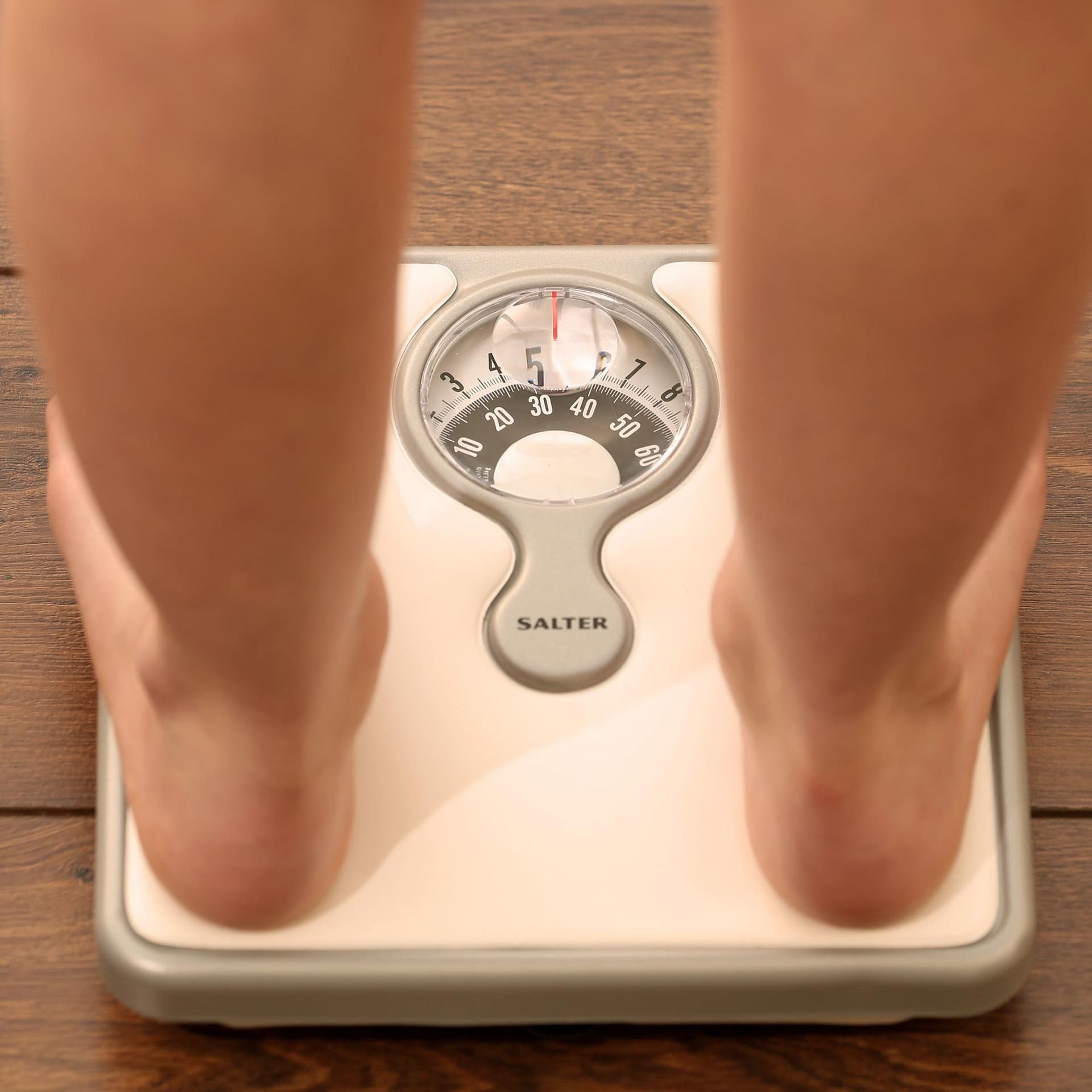
(Photo: Someone using a set of weighing scales. Chris Radburn/PA)