In short
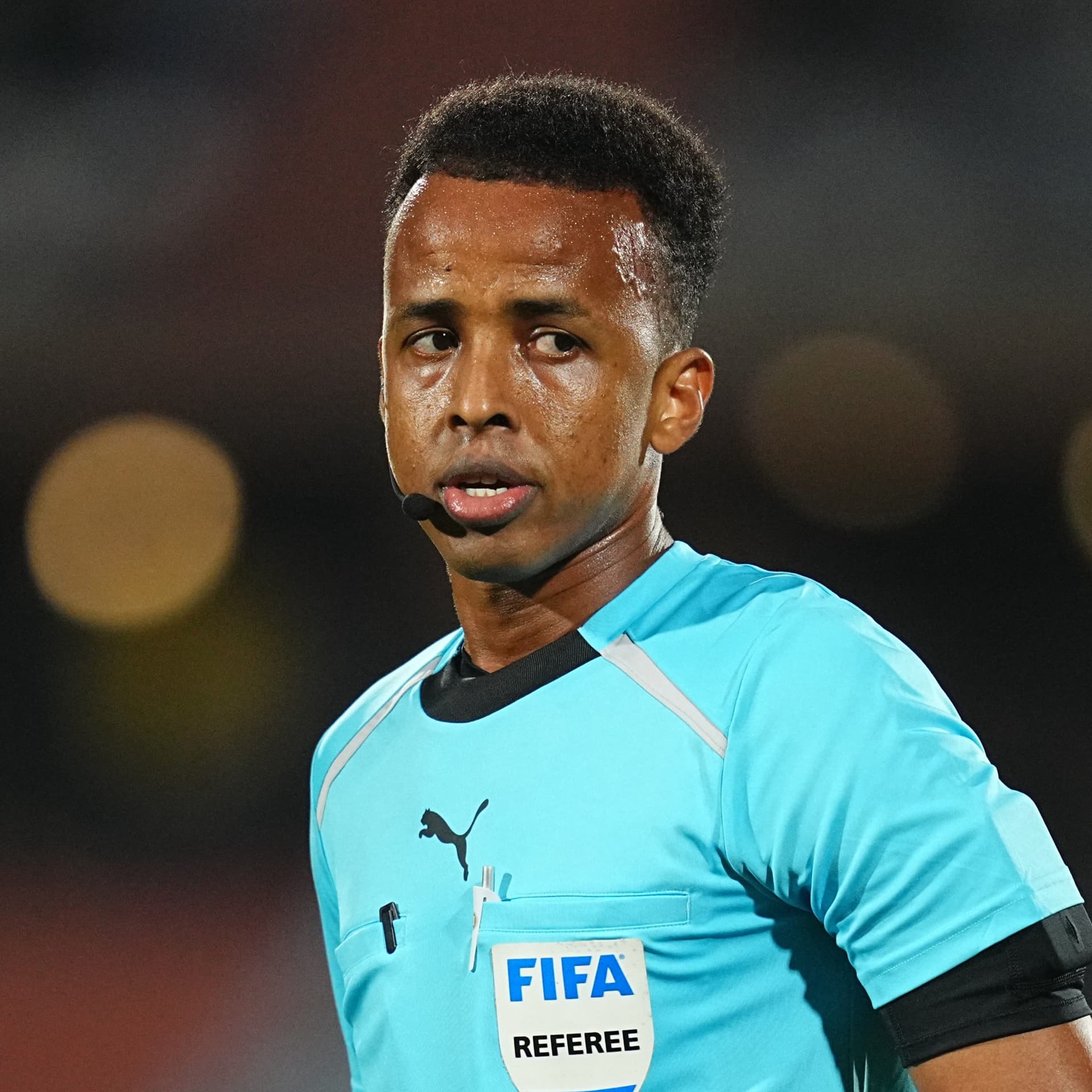
The episode discusses the U.S. barring Somali World Cup referee Omar Artan from entering the country, and the wider “African aftershocks” for fans and diplomacy. Artan, 34, grew up in Mogadishu, became a referee after an injury, was named CAF Men’s Referee of the Year (2025), officiated at the Africa Cup of Nations in Morocco, and was enlisted by FIFA in 2018; he was set to be the first Somali referee at the World Cup. U.S. officials questioned him at Miami on 6 June despite a valid visa and diplomatic passport, citing suspected association with terrorist organizations (including Al-Shabaab). Artan denies any knowledge; he was questioned for up to 11 hours and sent back via Istanbul. FIFA says Miami access is crucial for referees, so he was removed from the 52-referee list. Reception in Mogadishu included a hero’s welcome and a presidential meeting.
Guests
Charles Guitonga, BBC Africa reporter and host of BBC Focus on Africa. Key claims/examples: Africans feel unfairly blocked from travel (visa delays, expensive flights, $15,000 visa deposit waived for football proof), and broader Trump-era immigration rhetoric (e.g., “s-hole countries,” bans on visitors from Somalia/DRC) has heightened distrust; Kenya’s controversial U.S.-funded Ebola containment center and opaque U.S.-Africa immigration deals are cited as context.
Written by AI. May contain mistakes. Listen to the episode to check what was said.
Chapters
Tap a time to open that second in VOThe Controversy of Omar Artan
0:39 to 2:20
Discussion of Somali referee Omar Artan's barred entry to the US.
“And asking you to decide if they're good, bad or just another billionaire.”
Omar Artan's Journey to Refereeing
2:20 to 4:25
Exploring Artan's rise as a referee in Somali football.
“On today's episode, the case of the Somali referee and its African aftershocks.”
Challenges Faced by Omar Artan
4:25 to 6:04
Details of Artan's attempts to officiate at the World Cup and related challenges.
“So he has been officiating matches, including at the African Cup of Nations, a very big tournament that happened in Morocco towards the end of last year and the beginning of this year.”
Omar's Return to Somalia
6:04 to 8:10
The reception Omar Artan received upon returning to Somalia.
“But also, Somalia, you know, there's very strong football.”
FIFA's Response to the Situation
8:10 to 10:00
FIFA's comments regarding Artan's barred entry and future prospects.
“He's then put on a flight to Istanbul in Turkey and he's now back in Somalia.”
Reflections on Global Events and Access
10:00 to 14:00
Discussion on the implications of access and government control during global events.
“And therefore, it would mean that if you do not have access to that facility, then you cannot officiate in any of the other two countries where these matches are happening.”
Access Challenges for African Teams
14:00 to 18:22
Explore the difficulties faced by African teams and fans in accessing the World Cup.
“who to let in the country and who not to let in the country?”
Impact of Trump's Policies on African Relations
18:35 to 27:49
Discuss the broader implications of Trump's immigration policies on U.S.-Africa relations.
“Well, there is a wider context here as well, isn't there, Charles, in terms of how Donald Trump has managed the United States relations with the African continent.”
Fans' Perspectives on the World Cup
28:30 to 29:15
Fans share their experiences and thoughts on the World Cup in the US.
“Before we leave you, a little audio bonus.”
Transcript
Automatic transcript. May contain errors.0:00This BBC podcast is supported by ads outside the UK.
0:30business needs in one place, saving you time, headaches, and serious money. Stop paying for missing pieces. Go to odoo.com. That's O-D-O-O dot com to learn more.
1:00And asking you to decide if they're good, bad or just another billionaire. Good, bad billionaire from the BBC World Service. Listen now or search for Good, Bad, Billionaire wherever you get your BBC podcasts.
1:17A Somali referee called Omar Artan has been refused entry into the United States for the World Cup. US officials say it's because of a, quote, association with suspected members of terror organizations. Artan says he told officials that he doesn't know anything about any terror organizations. Somali and African fans aren't happy. This is the reason why World Cup exists. It doesn't encourage a citizen of every member state of the World Cup to be like Omar and have a dream like Omar. Is it the United States prerogative to decide who they let into their country? You don't know. Unfortunately, our world is a very aggressive world and security goes above everything.
2:08Does border security trump everything? Or might it be prudent to cultivate good relations with a continent of 1.5 billion people? From the BBC, I'm Tristan Redmond in London. On today's episode, the case of the Somali referee and its African aftershocks.
2:33Before we go any further, there isn't any swearing in this episode, but there is some language that not everyone will love. So take care while listening. I'm pleased to say that we are joined today from Nairobi by our good friend Charles Guitonga, who is a reporter for BBC Africa and the host of the BBC Focus on Africa podcast. Welcome back to the show, Charles. Hey, Tristan. Happy to be back. It's great to have you. This is a big, big Africa story. I want to kick off by saying Africa does not speak with one voice any more than Europeans as a continent speak with one voice. But if there's anyone who has a very strong overview of the ebb and flow of African opinion.
3:20Charles, it's you. So we're very pleased to have you here with us. The World Cup has kicked off on a somewhat controversial note. There are 10 African teams and there is a feeling amongst some Africans that African nations are being hard done by already. And we want to understand what the possible consequences of all this might be. Let's talk about what's happened this week to the Somali referee Omar Artan. Tell us about him. How well known is he on the African continent? So Omar Artan is one of what you'd say rising stars from a refereeing point of view in African football. He's only 34 years old.
4:01He's from Somalia, grew up in Mogadishu in Somalia. He was a footballer himself, but then had an injury at some point and he couldn't play and he was picked by his teammates to actually officiate a match. And that's how he started on his refereeing journey. He was named the 2025 African Football Men's Referee of the Year by the Confederation of African Football, CAF. So he has been officiating matches, including at the African Cup of Nations, a very big tournament that happened in Morocco towards the end of last year and the beginning of this year. And when the announcement was made earlier this year that he would be one of the referees at the World Cup in the US and Canada and Mexico, it was huge news for the African continent.
4:48Much bigger news for Somalia as a country who felt, you know, they may not have qualified to play at that level of football, but they will have a representation now by having a referee at the tournament. So he was said to be the first Somali referee at the World Cup. You know, the World Cup is the biggest competition in the world. I'm very much excited and for me it's an honour. He had told media that, you know, the ambition of every referee, including himself, was to be able to officiate at the World Cup. It was not an easy job. You have to continue and you have to fight if you want to go to a place like the World Cup.
5:25So he was set to leave, you know, his dream. Every referee in the world is looking for to go to the World Cup. So this was my big, big target. And I'm really excited that I finalised if to be selected to go there.
5:47I mean, Somalia is a country which has had many difficult decades this century and even before that. I mean, how did he actually establish himself in international refereeing? I mean, it can be no easy task when you come from a place which has been as war-torn as Somalia. Yeah, it's not easy. But also, Somalia, you know, there's very strong football. So in terms of him rising through that sort of domestic system of football in Somalia, that's how he's been able to grow at that. But then getting signed and recognised by CAF, for example, which is a continental football federation that adds a bit of to his credentials.
6:26And then in 2018, he was enlisted by FIFA as one of the referees. So he has been able to sort of rise above, you know, what many would expect of Somalia. And I think that's how very many people in Somalia, that's how they see him, you know, as someone who represents a hope for the country, that every time you hear the name of the country being mentioned, it's not about war and hunger and terrorism. But he was seen as someone who was able to redefine the image of the country and fly the flag of the country in a positive light. So he's selected as a FIFA World Cup referee, which has got to be a high point in any referee's career.
7:03He leaves Somalia. He flies to the United States. What actually happened leading up to the moment when he was refused entry into the US? Omar was traveling from Somalia to the US. He was on a diplomatic passport. He had a valid visa to the U.S. But when he arrives at Miami International Airport, that's on 6th June, he then is questioned by U.S. border officials, you know, about his origin, about what he knew, you know, about Somalia. He says he was questioned of a possible links to terrorist organizations, among them Al-Shabaab, which he told them that he had no knowledge of. And just for a bit of context there, Tristan, for anyone who might not have heard about Al-Shabaab, they are a terror organization.
7:50They are a recognized affiliate of the Al-Qaeda, you know, in East Africa. So they operate quite a lot in Somalia. And to this day, they still hold quite a bit of territory in parts of the country. So he denies any knowledge of them or any links to them. He actually told some media organizations that he was questioned for up to 11 hours at the airport. He's then put on a flight to Istanbul in Turkey and he's now back in Somalia. To what extent do we think it's unusual that he should have a visa at the moment he gets on his flight to travel to the United States, presumably issued by a U.S. embassy or the U.S.
8:30State Department, but then to find that visa revoked upon arrival on U.S. soil? That does seem unusual, doesn't it? It is quite unusual. And just to say a bit of what the U.S. State Department has since said about him not being able to access the U.S. is that upon further inspection by U.S. border and custom officials, they suspected association to members of a terrorist organization. right? But then it's something that we've questioned. In fact, my colleague here at Focus on Africa wrote to the U.S. State Department asking how it is possible that Omar secured a U.S. visa only to be revoked when he's at the airport and ready to enter the country.
9:15And their response was that it's a multi-layered process in terms of how you get to access the country. And so while he may have been given the visa, it does seem that through further inspection at the airport that they were able to find additional information. That's how they are calling it. That made it impossible for him to be granted entry into the country. Okay, but the World Cup isn't just happening in the United States. It's also happening in Canada and Mexico. Why couldn't he officiate in matches in those two countries instead of in the United States? So according to FIFA, the facility in Miami in the United States is very crucial for every referee that's, you know, working in this tournament.
10:00And therefore, it would mean that if you do not have access to that facility, then you cannot officiate in any of the other two countries where these matches are happening. Okay, so he's dropped altogether as an official for the World Cup. That's right. He returns to Somalia. He arrived back there on Wednesday. What was the reception like when he arrived back home? So when he comes back to Mogadishu on Wednesday, June 10th, he lands at the airport and he was given a hero's welcome. You might have seen some videos, Tristan, you know, on social media. Thousands of fans, some government officials, some football officials, they are on the tarmac, on the airport and they are recording on their smartphones.
10:48They are singing songs of praise to him. Some of them have placards with his picture printed on them. Some of them are waving the Somalia flag. He's also welcomed at the presidential palace by the president of Somalia, Hassan Sheikh Mohammed. And they have talks. And thereafter, there is a press conference by Omar himself. It was a really brief press conference, and most of it was done in his language, Somali. And he said that FIFA supported him, and they supported him well to reach to the point where it's reached. He said he was hopeful that, you know, that he would be able to officiate future World Cups.
11:36So there wasn't a sense of condemnation to FIFA or even to the US. He did not allow any questions from the media, so we did not get to hear a sense of what he thinks of these allegations by the US that he could be linked to members of terrorist organisations. Has he addressed those allegations in any shape or form since then? He hasn't. And, you know, colleagues at the BBC have since written to him and his team to try to get a reaction and a comment from him. And we are still waiting to hear back. What's FIFA saying at this point? Have they closed the door entirely on Artan taking part in the World Cup?
12:13So there was a press conference. A great pleasure for me to be here with you. Hello. In Mexico on Wednesday night by FIFA president Gianni Infantino. And he says... Of course it is unfortunate as well what happened to Omar, the referee from Somalia. But then again, he says they do not have control over everything. We try, we'll discuss, we'll speak, we'll see. They were not able and are not able to influence countries to admit people that they are uncomfortable with, even if it means it's one of their officials. So as far as this tournament goes, it's been dropped from the official list of the 52 referees that were meant to be participating in the Games.
13:00So he says it's hopeful that he will be able to do it at a future World Cup. Gianni Infantino in that press conference tells everyone to chill. Maybe sometimes it's good as well to just, you know, chill, relax. Our BBC colleague Dan Rowan actually questioned Gianni Infantino at that press conference. You yourself have said in the past how important it is to have freedom of movement at a global event like this. You've said how inclusive it is, how welcoming it is as well. Are you embarrassed, therefore, by what actually has come to pass? And then Infantino says, you know, in 2035, I think, we hope, the Women's World Cup will be in the UK, right?
13:48Still needs to be a decision, but looks like. would you find it normal that FIFA would dictate to the British government who to let in the country and who not to let in the country? I don't know. Maybe. Maybe you find it normal. I would like, personally. On the other side, the reality of the matter is that in every country there are governments. Try to get into the UK, into Germany, into Switzerland without a visa. Try to get a visa if you are from a certain country. It's not easy. That's what I want to say. That was Infantino's response to Dan Rowan. I want to take you back, though, Charles, to 2017.
14:42back when the USA 2026 World Cup project was just in the bid phase. And Infantino spoke about the issue of access during the first Trump term. He said, it's obvious when it comes to FIFA competitions, any team, including supporters and officials of that team who qualify for a World Cup, need to have access to the country. Otherwise, there is no World Cup. He seems to have changed his tune somewhat since 2017. How much reaction has there been from Africa on that particular question? Yeah, I mean, the reaction has been, you know, that of shock and disbelief. I think there had been a lot of expectation that FIFA would be able to do something about this case, that they would be able to somehow convince the U.S.
15:35that Omar can still get access to the country. And football is generally associated with, you know, unity, with inclusivity. And so there are many that feel that there is discrimination to some extent, especially because Omar is from, you know, Somalia, which is a country that has not had very good relations with the U.S. in the recent past. A lot of people have been watching, you know, President Trump's approach to immigration and especially to African migrants. And some people feel that if you are running FIFA and you are infantile, you probably do not have much influence on the policy, immigration policy of the US at this point.
16:15It's not just this referee, Artan, though, is it, from Somalia? And it's not just Somalia. There have been reports that fans and African media have also had trouble getting into the United States. What more can you tell us about that? The thing is, going to the U.S. for most Africans, under normal circumstances, even when there's no tournament happening, is already difficult.
16:40So there are long waiting periods on visas. There's a lot of interrogation of your documents and all of that. And so when now it comes to the World Cup, there was an expectation that, you know, that it would be made easier. There had been a deposit, a sort of a deposit that you make when you apply for a visa to go to the U.S. about$15 ,000. That was waived for fans that could prove that they were going to the U.S. to watch football. But then we've had reports of frustration, long waiting times. The tickets to the games themselves are quite expensive. Air tickets from African countries to the U.S.
17:18is quite a long flight, quite expensive as well. So there are so many inhibiting factors for most fans. Despite the fact that this World Cup is a big deal for Africa, because 10 African countries are participating, and that's the highest number to ever participate at this tournament, there's a feeling that Africans are not able to go, and all these roadblocks are making it quite impossible for anyone to be able to go and witness the tournament and cheer their teams as they play.
18:03Good, bad, bad.
18:21Good Bad Billionaire from the BBC World Service. Listen now or search for Good Bad Billionaire wherever you get your BBC podcasts.
18:35Well, there is a wider context here as well, isn't there, Charles, in terms of how Donald Trump has managed the United States relations with the African continent. And when we're thinking about that, it's impossible for us not to call back to Donald Trump's first term back in 2018 when he referred to some African countries. And I can't even say the word on the radio. He referred to some African countries as S-hole countries. What was the reaction when the president was reported to have said that from within Africa? Yeah. Tristan, I don't think people are forgotten or Africans are forgotten because it was a very shocking comment at the time, because you don't often hear presidents or even diplomats describe other countries using that kind of term, right?
19:33Even when there's a diplomatic tension, it's something that doesn't happen. And so I remember when this happened in 2018, it was at a time when President Trump was still, you know, new in office, you know, Many African countries were still trying to understand what kind of president he was going to be. There had been a hope perhaps that he would bring his business acumen and perceived success into politics and how he was going to manage the relationship between the U.S. and many African countries. So when that comment happened then, it was a reaction of shock and uproar. And I remember at the time the African Union even issued a statement condemning what President Trump is reported to have said.
20:16and they called it unfortunate. So actually you see it coming up once in a while on social media saying, remember, it is believed he called us this. And have you seen any concrete evidence eight years down the line of how any African countries might have subtly changed their approach to the United States, potentially influenced by that comment? So while the comment was condemned at the time, it did not seem to have significant impact on U.S.-African relations. We did not see any African governments take any action against the U.S. because of that. What we saw to the contrary was there were actually three African presidents that visited the White House during the first presidency of Trump.
21:01So in terms of what really defines whether the relationship between African countries and the U.S. is strong. It doesn't seem like much changed because of that comment. Well, let's fast forward, Charles, to Donald Trump's second term. At this point, he continues to have somewhat uneasy relations with some African countries. In June of last year, 2025, he banned visitors from 12 countries, including Somalia and the Democratic Republic of Congo, And then in December, referring to Somalis, he said, I don't want them in our country. I'll be honest with you. We're going to go the wrong way if we keep taking in garbage into our country, end quote.
21:51But then in the months leading up to the World Cup, it became clear that the United States would have to welcome people from some of those very countries that Donald Trump had been criticizing. Were people from those countries hopeful that the bad blood would be set aside for the tournament? There was definitely a hope, Tristan, because people would like to think that when it comes to football and at that level, even if there's a ban, then there's a special moment. You know, it's an opportunity for the entire world to get together. The DRC, for example, participating for the first time in over 50 years.
22:33A lot of investment has gone into this. So they would have felt that perhaps the U.S. would put the previous issues that they've had with citizens of that country just to allow them to enjoy the tournament, you know. And when it comes to Somalia, they are not playing at the World Cup. But when your country has produced a referee and only six countries have produced referees for this tournament, including Somalia, then that sort of becomes the individual and the person that you follow during this tournament. So it then would be disappointment when many of the fans are not able to travel, not just because of the ban, but just because of how expensive it would be.
23:13Some of the challenges, you know, getting visas, long waiting periods. And for the Democratic Republic of Congo, the Ebola outbreak. How does that play into all of this? The Ebola outbreak has definitely dampened the mood for DRC fans because, as I said, their team is playing for the first time in a really long time. The upside is that their team had been training in Belgium and Spain, which means they were unaffected by some of the travel restrictions that have come with this outbreak. But we've been hearing reports of, you know, sports officials from the country that would have wanted or that were meant and had planned to travel to work with a team, you know, during this time.
23:55And that will not be happening. And the U.S. has been very categorical in saying that they are doing everything to keep Ebola away from their borders. So there is a sense of disappointment in the country, but also there's a sense of perhaps understanding because Ebola, you know, comes with a lot of travel restrictions. But if you are a football fan in Kinshasa or somewhere in Goma, you just want to enjoy the football. You have to sort of cope with it and see what else you can do within the country. Well, I mean, the World Cup could be an absolutely huge moment for African football. There are 10 African qualifying teams more than ever before.
24:36Football is a huge deal in Africa. The African Cup of Nations recently had record breaking viewership figures. People in Africa are football obsessed. The fact that football and diplomacy are being mixed together to some extent here, how serious is that potentially for diplomatic relations between Africa and the United States? So just by observing recent events, it's easy to say that the spirit of football on the continent today is at its highest. But when it comes to talking about diplomacy and governments and all of that, there's a big difference between how Africans and football fans see this and how African governments perceive this.
25:24So the fans may be angry, the fans may be dissatisfied with how the World Cup and the events leading to this World Cup in terms of access, but their governments don't show that they are as uncomfortable as the people are. For example, Somalia, which has had its referee band, says they will seek diplomatic channels to engage the U.S. in Omar's case. You might have been hearing that Kenya is opening this U.S.-funded, you know, containment center for Ebola that is going to treat U.S. citizens that come from the DRCO or from the region. And that's been so controversial in Kenya. It's led to several protests.
26:03But at the same time, the Kenyan president, William Bruto, has defended that decision, saying that the U.S. is a very important partner for Kenya. And then the third thing I can think about, Tristan, is the fact that you have also been hearing and probably reporting about the third country deputies from the U.S. that have been brought, some of them, to African countries. And there are almost 10 African countries that have accepted those deputies, including the Central African Republic and Sierra Leone. And these are deals, immigration deals, that seem to lack transparency. People don't know how these deals happen.
Read the full transcript
26:39So just to say that just by observation and reading these events, you can see there's a big difference between how African governments approach the U.S. and how the people feel about the U.S.
26:57sometimes people feel that their consideration and their opinions are not exactly respected or even heard when it comes to these diplomatic and bilateral relations between whichever country it is and the U.S.
27:15Could it be, to quote Shakira, this time for Africa? Could there be an African team winning this year? It was definitely this time for Africa in 2010 when South Africa hosted the tournament. I think for this we'll just have to wait and see how far it goes. I mean, 10 teams participating, highest number ever to participate at the tournament. So the opportunity is bigger than it's ever been, but we can only wait and see.
27:43Okay, well, we hope you have a great tournament, Charles, and come and see us again soon, please. Thank you, thank you for having me.
27:54That was Charles Gatonga, senior journalist and host of the BBC's Focus on Africa podcast, speaking to us from Nairobi. Focus on Africa is about all the big topics and news from the African continent and always gives the best African perspectives on global news. So check it out, please, wherever you listen. Here on The Global Story, we serve you a main course from where the world and America meet. May we suggest a side dish of the very latest news headlines from around the world from our sister show, the Global News Podcast. We're taking orders wherever you get your podcasts. Before we leave you, a little audio bonus.
28:33The world is touching down in North America right now for some sort of a soccer tournament. Here are some of the fans. So welcome. Welcome to United States, welcome to Kansas. The pubs are brilliant, but I don't think anybody knows that there's a World Cup on it. I thought he would be really busy in it. Some of the Americans are not even thinking. They would say, what are you here for? Mexicans are amazing. The food are amazing. They are very friendly. I think the finliness of the people, they kind of match our energy. The tacos here are different from the tacos we're used to eating in South Africa.
29:07It's hot. It's more than hot. How hot is it? Too hot. Too hot. It's the hottest we've ever been. Come on, England! As always, our email, theglobalstoryatbbc.com. Don't be strangers. That's it for today's episode. It was produced by Sam Chantarassak and Kat Farnsworth. It was edited by Bridget Harney and mixed by Travis Evans. Our video producer is Matt Pintus, and our senior news editor is China Collins. I'm Tristan Redman. We'll be back again next week. Have a great weekend. Cheerio.
30:07Good, bad, billionaire. from the BBC World Service. Listen now or search for Good Bad Billionaire wherever you get your BBC podcasts.
From the publisher
The 2026 World Cup kicked off last night in Mexico, after a series of controversies in the lead up, including over visas for foreign teams, fans, media and officials hoping to go to the host countries: US, Canada and Mexico.
The latest scandal involves FIFA dropping Somali referee Omar Artan, after the US refused him entry. FIFA‘s president Gianni Infantino said “we don't control everything”, and asked critics to ‘chill’.
US Customs and Borders protection said in a statement that “derogatory information, including association with suspected members of terror organisations” was discovered after Omar Artan landed at Miami International Airport to attend the tournament. Artan says he told border officials he knows nothing about the Somali militant group Al Shabab.
Today, we speak to Charles Gitonga, senior journalist and host of the BBC’s Focus on Africa podcast, about how Africans are reacting to the news, and whether the controversies will have long-term consequences for US-Africa relations.
Producers: Sam Chantarasak and Cat Farnsworth Executive producer: Bridget Harney Video editor: Matt Pintus Mix: Travis Evans Senior News Editor: China Collins
Photo: Somali referee Omar Artan. Credit: Ulrik Pedersen/NurPhoto via Getty Images