
In short
Israel’s reported strike on senior Hamas leadership in Doha, Qatar, and how it may affect Gaza ceasefire talks and U.S.-Qatar relations.
Guests
Lise Doucette, BBC Middle East correspondent covering the region for 30+ years.
Key claims
The attack was unprecedented because Israel directly struck a U.S. partner at peace with Israel; Israel allegedly targeted Hamas negotiators meeting to discuss a Trump ceasefire proposal; the White House says it was notified by U.S. military “as it was happening,” not beforehand; international condemnation mounted (Macron, Spain, Germany, Ireland).
Notable examples
Trump’s Truth Social “last chance” proposal for returning about 20 living hostages; Qatar’s mediation role (U.S.-Taliban talks, hosting Taliban and Hamas offices); comparisons to prior negotiation disruptions after killings (e.g., Ismail Haniyeh, Iran talks).
Written by AI. May contain mistakes. Listen to the episode to check what was said.
Chapters
Tap a time to open that second in VOBreaking News: Israeli Strike in Qatar
2:24 to 4:25
Discussion on the Israeli military's unexpected strike in Doha.
“Few people who cover the Middle East could have ever imagined this situation.”
International Reactions to the Attack
4:25 to 5:49
Exploring global condemnation and reactions to Israel's actions.
“International condemnation of Israel's attack has been mounting all day.”
Significance of the Attack on Qatar
5:49 to 7:58
Analyzing why the attack on Qatar is unprecedented and significant.
“Because I think for people who may just be seeing the news alerts and the headlines, they might think, well, Israel has bombed a number of neighboring countries, a number of countries in the region recently.”
Ceasefire Negotiations and U.S. Response
7:58 to 10:14
Discussion on the ceasefire negotiations and the U.S. response to the attack.
“In exchange for that, there would be the beginning of discussions to end the war.”
Impact on U.S.-Qatar Relations
10:14 to 11:38
Examining the implications of the attack on U.S.-Qatar relations.
“What Caroline Leavitt is saying is that they were only notified as it was happening.”
Opportunity for Peace Amid Crisis
11:38 to 14:00
Discussing potential for peace resulting from the recent crisis.
“The president views Qatar as a strong ally and friend of the United States and feels very badly about the location of this attack.”
Trump's Proposal for Peace Amid Conflict
14:00 to 17:37
Discussion on President Trump's attempts to broker peace in Gaza following violence.
“Then he himself spoke to the prime minister, spoke to the emir, told them, according to this statement, that this would never happen again.”
Challenges to Ceasefire Negotiations
17:41 to 22:07
Exploration of the difficulties in achieving a ceasefire amid ongoing violence.
“Hamas negotiators were in the process of discussing the ceasefire deal that the Trump administration had put forth and was really advocating.”
Impact of Violence on Hostages and Civilians
22:07 to 25:41
Examining how military actions affect hostages and the civilian population in Gaza.
“All of the residents of Gaza City, hundreds of thousands, have been told to leave.”
Reactions to Recent Events and Future Implications
25:41 to 27:30
Discussion on reactions to the recent bombing and anticipated next steps in the conflict.
“on a day when the news is changing so rapidly and it's such a fast-breaking story.”
Transcript
Automatic transcript. May contain errors.0:00This BBC podcast is supported by ads outside the UK. If you are currently overpaying on software to run your business, remember this number, 10 ,000. That's the number of new businesses that join Odoo per month. Join Odoo today at odoo.com. That's O-D-O-O dot com. Decisions made in Washington can affect your portfolio every day. But what policy changes should investors be watching. Washington Wise is an original podcast from Charles Schwab that unpacks the stories making news in Washington right now and how they may affect your finances and portfolio. Listen at schwab.com slash Washington Wise.
0:44That's schwab.com slash Washington Wise. It's Tuesday, September 9th at 2.37pm on the East Coast. 7.37pm in the evening in London. And we were actually planning to bring you a totally different story today. This afternoon, we tore up that plan. We were sitting in the newsroom and we saw this story flash up on the TV screen. It's breaking news that we're just getting through from Doha. We just don't have many details. We have a couple more. And I stood up and I pointed at the screen and I said, that is our episode for tomorrow. Moments ago, the Israeli military saying that it conducted a strike against senior Hamas leadership, not in Gaza, but in the capital city of Doha and Qatar.
1:35Israel has bombed Qatar, a close friend of the United States, the principal negotiator in the Gaza war and a sovereign nation that is at peace with Israel. Benjamin Netanyahu's office posted on X that Israel took full responsibility for the attack. Israel said it was targeting Hamas members who were meeting in Qatar, and they were there to discuss a deal to bring the war in Gaza to an end. We still do not know exactly who was there and how many of those senior Hamas figures were killed. But what was unclear in the hours that followed was how and when the White House found out Israel was going to carry out this attack.
2:19From the BBC, I'm Asma Khaled. And I'm Tristan Redman. And today on The Global Story, has Israel destroyed the chances of a Gaza ceasefire deal?
2:44Few people who cover the Middle East could have ever imagined this situation. So to understand what it means, we sat down with the BBC's Lise Doucette. She's covered the region for more than 30 years. Lise, can you walk us through what's actually happened today with this bombing? So, I was listening to your sister program, NewsHour. I was walking on the street and I heard the breaking news during the program. saying this was about 2.30 in the afternoon British summertime. And there was a report that there were explosions in the capital of Qatar, in Doha. And soon then, all the reports came tumbling in, that Israel with missiles and drones had struck a residential area of Doha, where it seemed a meeting was taking place involving senior members of Hamas.
3:35They were said to be discussing the latest U.S. proposal for a ceasefire, which would bring Israeli hostages home. As we record, we're getting conflicting statements. Israeli media most of the day have been saying that several key figures, including the head of the Hamas negotiating team, have been killed. But Hamas saying no, they did not kill several of the senior leadership of Hamas, saying that they were lower level officials. So I think we may find out by the end of this podcast, but as we record, it's still not clear. But what is clear is that an attack has taken place. What was your reaction when you first heard this news?
4:13Shocked. It's a breathtaking moment. It's an unprecedented moment. The first time in decades that Israel has attacked, directly attacked a country which is not regarded as an enemy. International condemnation of Israel's attack has been mounting all day. There has been a cascade of condemnation. French President Emmanuel Macron said Israeli strikes in Qatar are unacceptable and war must under no circumstances spread in the region. I'm outside Downing Street where Prime Minister Keir Starmer has responded to those attacks with a statement saying, I condemn Israel's strikes on... We have heard from the Spanish government who strongly condemn...
4:53The German foreign ministry said the attack was unacceptable, violating Qatar's sovereignty. The same with Ireland, all those countries watching developments very closely indeed, as you can imagine. This attack today has underlined this, that Prime Minister Netanyahu believes he has a green light. And the fact that, as we record the information we have, is that he only informed the White House as it was happening, underlines his belief that he can get away with it. A green light for what, Lise? to, in this case, to attack a country which is such an important partner of the United States and which has been playing such a key role in trying to end the war.
5:36Because there are no direct talks between Israel and Damas, there can't be. So it is Qatar and Egypt and the United States who have been playing this mediating role. So let's talk a bit more about why you were so shocked. Because I think for people who may just be seeing the news alerts and the headlines, they might think, well, Israel has bombed a number of neighboring countries, a number of countries in the region recently. What's significant about today's strike? I think there was a sense in which there were certain red lines that would not be crossed, even though many have been crossed in the nearly two years now since this terrible Gaza war erupted.
6:23There are certain countries. Qatar has played a role for a very long time with what I suppose you could call a very maverick foreign policy. It has given asylum. It has allowed the establishment of political offices for the Taliban of Afghanistan when nobody else was talking to them. And Qatar then ended up playing an absolutely vital role in facilitating talks between the United States and the Taliban. Similarly, in Qatar, Hamas is living there, has offices there, which allows the United States to go there and talk to Hamas directly. So Qatar has always defended its foreign policy and saying that we play a useful role.
6:59Yes, we are giving refuge to people who are under sanctions, who are described as terrorists, but we believe that we can play an important role. And they do. And my understanding is the U.S. government has largely supported Qatar taking that role. Yes, but I think we have to underline that it is an... Israel is saying that it was a legitimate strike because it was targeting terrorists. And it is saying that it wants to send a signal that terrorists like Hamas, an organization which carried out the October 7th attacks, are safe nowhere. That the long arm of Israel will reach you wherever you are.
7:33And as we have found out today, that even means Doha, a capital which is playing a vital role in trying to end the war and has a very, very strong strategic, political, personal, financial, you name it, they have a relationship with the United States. You mentioned a bit ago this ceasefire deal. And there's been a lot of fits and starts in any prospects of a ceasefire negotiation. But what happened in the immediate days before this bombing around any potential for a ceasefire? There have been so much talk of many different deals, but the most recent one was President Trump posted on Truth Social that this was, he said, a warning to Hamas, this is your last chance, that he wants a deal where all of the remaining hostages alive, there's believed to be about 20 said to be alive, and then there are the remains of 20 something more.
8:27He wants them all returned. In exchange for that, there would be the beginning of discussions to end the war. There would be a guarantee from President Trump that there would be significant negotiations. There would be more aid going into the Gaza Strip. And indeed, the first reports we had of this strike today was that all these senior Hamas officials were meeting to discuss this latest U.S. proposal. Now, there is also a lot of discussion in Israeli media that this attack had been prepared, had been long in the making, that it was a moment of opportunity. Israeli intelligence said to them, they're all meeting, they're all in one place.
9:07If you want to get them, you have to go now. At this point, the details that we've begun to hear trickle out from the American side have come largely from the White House Press Secretary, Caroline Levitt. She briefed reporters just a bit ago before we hopped into this studio. And let's actually take a listen to what she had to say. OK, stand by. Gabe. Thank you, Caroline. Regarding the Israeli strike in Doha, how much time or how much of a heads up did the U.S. get and does the president support the strike? Sure. Well, I have a statement to read for all of you with respect to the Israeli strike in Doha.
9:40And here it is. This morning, the Trump administration was notified by the United States military that Israel was attacking Hamas, which very unfortunately was located in a section of Doha, the capital of Qatar. So let's stop there. We've been hearing all day from Israeli media that the United States had been notified of the attack, which then led to the discussion that, in fact, Israeli media said that the United States has given the green light for the attack. But it also signified that the United States did not stop the attack, which added to the unprecedented nature of it. What Caroline Leavitt is saying is that they were only notified as it was happening.
10:25So in other words, it was in the air, there was no way to stop it. And then let's listen to how the notification took place. This morning, the Trump administration was notified by the United States military that Israel was attacking Hamas, which very... On the basis of this statement, the notification did not come between Israel and the United States. It came from U.S. military officials notified the White House, which means they must have had intelligence. They must have seen it coming. They would be watching. Of course, the biggest U.S. military base in the region, the Al-Udeid base, is in Qatar.
11:03And that base is there. It's there, which is another reason why it was always believed that Israel would not strike Doha. It's kind of an insurance policy for the Qataris. Unilaterally bombing inside Qatar, a sovereign nation and close ally of the United States that is working very hard in bravely taking risks with us to broker peace, does not advance Israel or America's goals. However, eliminating Hamas, who have profited off the misery of those living in Gaza, is a worthy goal. President Trump immediately directed Special Envoy Whitcoff to inform the Qataris of the impending attack, which he did.
11:39The president views Qatar as a strong ally and friend of the United States and feels very badly about the location of this attack. This is a very embarrassing moment for President Trump. You cannot exaggerate how important the relationship is between the United States and Qatar. I was speaking to a senior diplomat over the weekend who told me just how much Qatar has been bending over backwards to deliver for President Trump. Our listeners may be familiar now with President Trump boasting that he's been ending a war every month in the six months since he came to power. Armenia, Azerbaijan, Qatar played a role.
12:20The deal in Africa, Qatar played a role. Ending the 12-day war between Iran and Israel, Qatar played a role. And of course, don't forget that huge palace in the sky, that luxury jet that Qatar made a gift of, which has been refitted as Air Force One. Qatar matters. It's a political, financial, strategic, and on top of it, a very important personal relationship. And so for this to be happening, that Israel is attacking, the Qataris are furious. And now what is President Trump going to do to amend it? Lisa, I don't know if you saw earlier this year, there's an interview done between Steve Witkoff, Trump's negotiator in the Middle East, and Tucker Carlson.
13:04I think in the case of the Qataris, they're criticized for not being well motivated. It's preposterous. They are well motivated. And in this interview, Steve Witkoff spends some time talking about how close he feels to the categories, how much he respects them, how important his relationship is with them and how important their role is in the region as a whole. They're a mediator. And by the way, they've mediated all over the world. No different than the Swiss and the Norwegians. They've mediated in Russia. They've mediated in Afghanistan. God bless them. I know. And they've done an effective job.
13:38They're good at it. So I am, how could I not collaborate with the mediator? In that context, is this attack against Qatar almost a personal affront to Steve Witkoff and by extension Donald Trump? Yes, you can feel that in the statement from the White House. This is embarrassment for President Trump, how quickly he, first of all, got his envoy to notify the Qataris of the attack. Then he himself spoke to the prime minister, spoke to the emir, told them, according to this statement, that this would never happen again. He relies on the Qataris for so much. President Trump wants all of the hostages in Gaza and the bodies of the dead released in this war to end now.
14:26President Trump also spoke to Prime Minister Netanyahu after the attack. The Prime Minister told President Trump that he wants to make peace and quickly. President Trump believes this unfortunate incident could serve as an opportunity for peace. Do you see it as an opportunity? This is a very interesting, those in mediation, they always try to see that there's some light that can come out of the dark, that within a crisis there could be an opportunity. And interesting that President Trump should mention this. But that line came after Prime Minister Netanyahu saying that he wants to make peace.
15:04He wants to, in fact, end the war. At the beginning of the war, I promised that Israel would reach those who perpetrated this horror. And today, Israel and I have kept that promise. But he has found this form of words that, for example, the military operation, which is expanding as we speak into the center of Gaza City, that was framed as not an intensification of the military campaign, but as a way to end the war. If President Trump's proposal is accepted, the war can end immediately. We can begin once again to pursue the expansion of peace in our region for the benefit of all. Prime Minister Netanyahu has been saying we must go quickly to negotiations to end the war.
15:53He keeps saying that, but his actions on the ground are really different. He is flying in the face of growing opposition from his current military chiefs, his former military chiefs, growing Israeli public opinion, the deepening agony of the families of the hostages saying it is time to end the war, not to expand the military operation, which the families, Israelis feel, put the hostages at risk, that Israeli military chiefs feel put the hostages at risk. But I want to close by directing my words to the people of Gaza. Don't be derailed by these murderous terrorists, by these killers. Stand up for your rights and for your future.
16:35Make peace with us. Accept President Trump's proposal. Don't worry. You can do it, and we can promise you a different future. But you've got to take these people out of the way. If you do, there is no limit to our common future. Thank you.
16:57Coming up, if you say you want to end the war, why would you bomb the negotiators?
17:18So it appears these...
17:35how to invest and manage money. Learn more at schwab.com. Hamas negotiators were in the process of discussing the ceasefire deal that the Trump administration had put forth and was really advocating. And then the Israeli government bombed the negotiators. Where does that leave any realistic plans for a ceasefire? I mean, I'm really struck by the fact of how do you really reach a successful negotiation if you kill the negotiators? First of all, there wasn't a lot of optimism that this latest proposal was going to succeed, although it has to be said that these negotiations have been going on for so long that Qatar and Egypt have been putting growing pressure on Hamas to do a deal.
18:21Now, this proposal would have been difficult for Hamas because, as terrible as it is to say, the hostages are their bargaining chip. If it gives all the hostages away, it has no way to put pressure on Israel as it sees it to end the war. and it wants an ironclad commitment that the war will end because it doesn't believe. And Prime Minister Netanyahu has shown no real indication. He talks about it, but on the ground that he wants to end the war. So this deal, like others before them, the general view, and I heard that from diplomats involved in the process, was that it wasn't likely that this deal was going to succeed.
18:57In fact, I did speak to a diplomat involved in the process and I said, well, why do you continue if you believe that Prime Minister Netanyahu and his supporters are going to push for as long as they can get to continue for what they see as a war to destroy Hamas, never mind that his military chief said as long as a year ago that they've achieved all their military objectives and the priority should be to end the war and bring the hostages home. Why do you continue? And they said, well, because maybe one day President Trump will wake up and say, right, I'm going to put pressure. I want the war to end and put real pressure on Prime Minister Netanyahu.
19:31So far, he hasn't done that. So that's number one. And number two, it is being said now, who's to say what will happen tomorrow, even in the next hour, that the attempt to kill Hamas negotiators in Doha has killed this process. Now, President Trump is saying that it could be an opportunity for peace. But right now, it seems very, very difficult. I think it will underline to everyone. Why? Because Qatar doesn't want to have this role anymore? You said it yourself. Does it send a signal that you are serious about negotiating if you kill the negotiators? The very same question you're asking now was asked when Ismail Haniyeh, the political leader, regarded, in a very hardline organization, was regarded as one of the so-called moderates, or those at least who were realizing that there had to be a negotiated way out for the hostages to come home for the war to end.
20:30And was killed by Israel. So the person who was at the table. People talked then about the end of negotiations. And I have to say that this is the same thing the Iranians talk about. Because when Israel attacked Iran in June, in the middle of June, the Iranians were in the middle of negotiations. And to this day, they are very bitter. They said, we were negotiating with the United States. We were supposed to meet U.S. negotiators, Steve Witkoff, in Oman on the Sunday and Israel attacked on the Friday. So there's a trend here that Israel attacks without reference to any kind of negotiating process.
21:11Now, at the very, very least, there's going to be a delay because, as we record, we don't know who's been killed. The first account said that all senior members of the negotiating team had been killed. What we're hearing now from Hamas and others is that, no, no, no, the son of Khalil al-Hayr, who was the chief negotiator, was killed, but not him directly. And again, speaking to diplomats involved in the process, they say that the Hamas leaders negotiating outside of Gaza have tended to be more flexible, more willing to understand the negotiating process, because, of course, they're in direct contact with the Egyptians, the Qataris, and in some cases, the Americans.
21:50The hardliners are in Gaza. And so if you wipe out the so-called moderates outside, or at least those who are willing to be more flexible, then you have to deal with more hardline officials who are in the Gaza Strip. Remember that as we speak, the offensive in Gaza City is ongoing. All of the residents of Gaza City, hundreds of thousands, have been told to leave. that is continuing. And we have to keep this in mind as we discuss. This is not happening in isolation. So when in the statement, President Trump is said to have heard from Prime Minister Netanyahu that he wants to get to peace and quickly, that means after the offensive.
22:35The greatest critics will say the objective is to destroy all of Gaza so that there's no part is habitable because the vast majority of Gaza is now in utter ruin. And what we're seeing every day is more and more of Gaza City is being destroyed. The apartment blocks which were brought down, which Israel described as terror towers, saying that Hamas was using them, we're still waiting for the proof of that. All those people are now homeless and they're being told to move south. And we heard again today from senior UN officials, as we've heard month after month that no place is safe. So Israel is saying we're going after Hamas, wherever they are, be it Gaza City, or indeed in Doha.
23:17Well, it's civilians in Gaza who are the people who most desperately need a ceasefire. How do you think they will react to what's happened in Qatar today? They're desperate for a ceasefire. Day in, day out, we hear about Palestinians in Gaza who have moved as many as 15 times in the nearly two years of war. They are living in tents. Generations of their family have been wiped out. And it's also the Israeli hostages. So today, when the news emerged of what had happened in Doha, the vast majority of, from what we understand, the vast majority of families of Israeli hostages believe that military action indeed puts the lives of their loved ones at risk.
23:58It was believed, and the story sometimes changes, but it was widely believed that some of the hostages, at least, were being held in Gaza City. There were some reports that they may have been moved south, but if they are moved, they are also under great, great duress. And the horrific videos that were released of them emaciated, skeletal, really at death's door, have intensified the agony of hostage families. So, Lise, we've heard quite a few times since October the 7th that such and such a development is going to change the way things work in the Middle East. You know, I'm thinking of Israel attacking Lebanon, Israel attacking Iran.
24:42That hasn't always turned out to be the case. Why is this moment right now such a finely poised moment? It's a very good question, because some might say that yet another red line has been crossed and nothing will change. But tomorrow we'll wake up and the offensive in Gaza City will continue. The UN will warn again about the number of Palestinians, particularly children, dying from hunger. There will be calls from Western capitals for a ceasefire. The hostage families will cry for this war to end and that everything has changed and nothing has changed. But let's see what President Trump does.
25:24He has hinted this could be an opportunity. Well, I think everyone is waiting to see not what President Trump says, but what he does.
25:38Well, thank you, Lise, so much. We're so appreciative of you just taking the time on a day when the news is changing so rapidly and it's such a fast-breaking story.
Read the full transcript
25:58Well, I'm not thrilled. I'm not thrilled about it. I don't have to do that. I'm just, I'm not thrilled about the whole situation. It's not a good situation. But I will say this, we want the hostages back. But we are not thrilled about the way that went down today. How do you think it's a surprise that to Israel's money? And it's, you were probably surprised by some of the things you've ever seen. I'm never surprised by anything, especially when it comes to the Middle East. How did you work about this? I'll be giving a full statement tomorrow, but I will tell you this. I was very unhappy about it.
26:36Very unhappy about every aspect. And we've got to get the hostages back. But I was very unhappy about the way that went down. Mr. President, when you plan to speak to Putin, I mean, you said soon. Is that going to happen this week? Yeah, it'll happen. We have that one and we have Gaza going on. We want to get them both solved. Ended. So Putin's going to have the call. What will happen this week? I think so. I think this week or early next week. Thank you. Thank you. Enjoy it.
27:06And we will, of course, be keeping you all updated on this fast-breaking story as it continues to develop. You can check BBC.com for the latest. And, of course, please keep listening to The Global Story. We'll be back again tomorrow.
27:28Thank you.
From the publisher
On Tuesday, Israel carried out a series of unexpected bombings, targeting senior Hamas leaders. The Israeli Defence Forces (IDF) said it was a "precise strike" on those responsible for the October 7 attacks, but the Qataris have called the strike a "blatant violation" of international law. Qatar has been mediating indirect negotiations between Israel and Hamas to end the conflict in Gaza. In the US, White House press secretary Karoline Leavitt said Trump was notified about plans of the strike ahead of time, but said, “Unilaterally bombing inside Qatar, a sovereign nation and close ally of the United States [...] does not advance Israel or America’s goals”. On today's Global Story, we talk to the BBC's Chief International Correspondent, Lyse Doucet, about the impact this could have on future peace talks. Producers: Hannah Moore and Valerio Esposito Executive producer: Annie Brown Mix: Travis Evans Senior news editor: China Collins
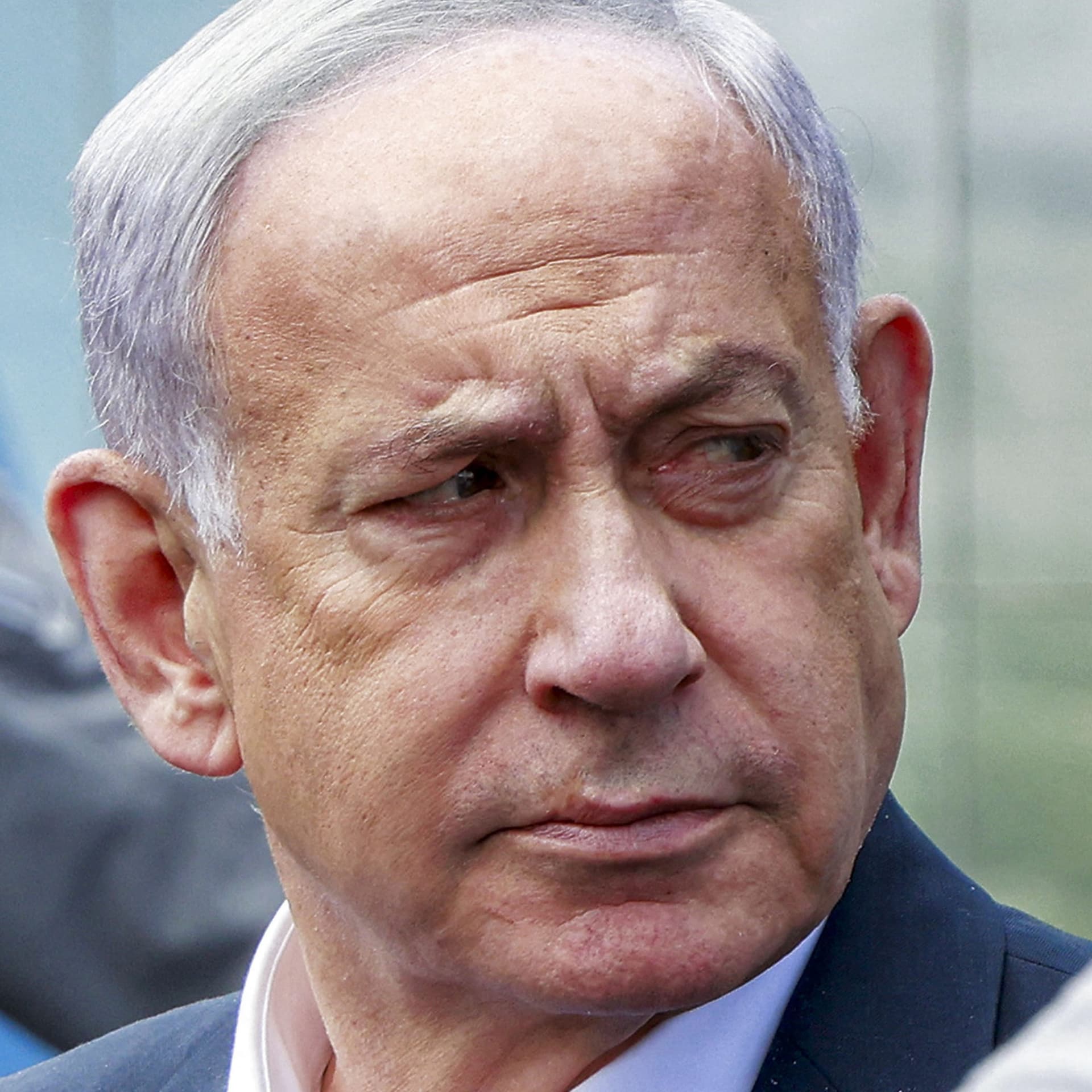
Image: Israel's Prime Minister Benjamin Netanyahu on Sept 8 2025. Menahem Kahana / AFP via Getty Images.