In short
The World Cup controversy over a “disappearing” red card—U.S. striker Folarin Balogun was sent off via VAR in the Bosnia match, then FIFA suspended the ban so he could play vs Belgium—sparking allegations of political interference involving Donald Trump and FIFA president Gianni Infantino.
Guest backgrounds
Dale Johnson, BBC Football Issues correspondent; Sam Knight, staff writer at The New Yorker who profiled Infantino.
Key claims
Trump says he called Infantino to overturn the “horrible” red-card decision; Infantino says the call didn’t affect the ruling and that FIFA disciplinary bodies are independent. FIFA used Article 27 to suspend disciplinary measures (1–4 years), unprecedented at a World Cup for a red-card ban. UEFA and others call it unprecedented and damaging to integrity.
Notable examples
VAR decision from Dallas; comparison to Cristiano Ronaldo’s reduced ban before the tournament; references to FIFA’s prior corruption era and Infantino’s commercial/expansion strategy.
Written by AI. May contain mistakes. Listen to the episode to check what was said.
Chapters
Tap a time to open that second in VOPolitical Interference in Football
0:38 to 2:36
Discussion of Donald Trump's involvement in the World Cup and the implications of political interference in sports.
“Team USA were thrashed by Belgium in the round of 16 and dumped out of their own tournament.”
Interview with Dale Johnson on Controversy
2:36 to 3:20
Dale Johnson explains the controversial incident involving Folarin Balogun and the VAR process.
“with the journalist Sam Knight from The New Yorker.”
Understanding Red Card Regulations
3:20 to 7:21
Exploration of red card rules, FIFA's disciplinary actions, and the unprecedented nature of Balogun's situation.
“Well, it's great to have you back with us, Dale.”
Global Reactions to FIFA's Decision
7:21 to 10:00
Reactions from UEFA and other political figures regarding FIFA's intervention in Balogun's red card.
“And have FIFA shown they're working for overturning the ban?”
The Impact of Political Influence on Refereeing
10:00 to 12:42
Discussion on how political influence could challenge the integrity of refereeing and decisions in football.
“It probably won't come as a surprise to too many people that UEFA was being critical of it.”
Gianni Infantino's FIFA Transformation
13:19 to 14:00
Insight into how Gianni Infantino has changed FIFA since taking over in 2016.
“Now, to make sense of all this, we wanted to understand how FIFA has changed as an organization under Gianni Infantino and how that's changing the sport that's followed by billions.”
FIFA's Corruption History and Infantino's Rise
14:00 to 16:39
Explore FIFA's past corruption and how Infantino transformed the organization.
“It was pretty much a synonym for a rotten, sort of foul organisation that sort of somehow ended up in charge of the world's most populous.”
Infantino's Leadership and Political Connections
16:40 to 19:45
Understand Infantino's management style and his relationships with political leaders.
“This is an organization which really exists in human form in one guy's Instagram account, more or less.”
Controversy Over Red Cards and Trump’s Influence
19:46 to 21:30
Discuss the implications of Trump's involvement in FIFA and its impact on the World Cup.
“You know, everyone was expecting something.”
Integrity of Football and Governance Flaws
21:31 to 24:34
Examine the challenges to the integrity of football and the issues in sports governance.
“They know it's not like this would be an unpredictable reaction that everyone would call into question the integrity of the tournament and is Trump calling in Fantino and kind of what does this mean about it?”
Transcript
Automatic transcript. May contain errors.0:00This BBC podcast is supported by ads outside the UK.
0:30Just tap into iHeart to start watching. And we hope you enjoy the show.
0:37Well, in the end, it didn't make a difference. Team USA were thrashed by Belgium in the round of 16 and dumped out of their own tournament. But what happened in the run-up to that match has shaken the World Cup and asked some big questions about the role of politics in the world of sport today. Take it back to Monday morning in the Oval Office, and the President of the United States is holding court on football. I understand sports really well, really well. And that wasn't a foul. In a nine-minute answer to a journalist, Donald Trump explains that he personally called Gianni Infantino the President of FIFA.
1:20You see, the U.S. team's star striker had been banned from that Belgium match for a red card. And Trump wanted that decision overthrown. That wasn't even an infraction. That was two guys running full speed that happened to crash into each other. Folloran Balogun was supposed to be ineligible for the match after he'd fouled a Bosnian player in the previous round of the tournament. I think the referee's call was horrible. The president says he's not that familiar with the rules of football. And he gave him a red card. I didn't know what that meant. I didn't think it meant much. And that he admires Gianni Infantino of FIFA.
1:56This man is a smart, tough man, Johnny Infantino. Infantino, who last year awarded Trump a FIFA Peace Prize, confirms he was called by the U.S. president, but says that call had nothing to do with the decision to reinstate Balogun. FIFA's judicial bodies are independent, he said. They operate autonomously. From the BBC, I'm Tristan Redmond in London. And today on The Global Story, Since when did heads of state have a say in the football side of the World Cup? And what does all this tell us about the future of the biggest sport on the planet?
2:35Later in this episode, we're going to get into what might be motivating Gianni Infantino and FIFA right now with the journalist Sam Knight from The New Yorker. I think that FIFA does have a profound tension at the heart of it, which is it is there to sort of regulate football and run competitions and sort of set good standards for the world's most popular sport, while at the same time it's a commercial organisation trying to maximise revenue at all times. And I think that those two goals are fundamentally in conflict. Before we go to Sam, though, we wanted to speak with Dale Johnson, the BBC's Football Issues correspondent, on how we got to this point.
3:20Well, it's great to have you back with us, Dale. Take us back to the beginning. What happened in the match between Bosnia and the United States that is now becoming so controversial? Yeah, so there was an incident with the United States striker Falarin Balogun, and he went into a challenge with one of the Bosnian players, Tarik Moharamovic. But when Balogun went in to make the challenge, his foot came down on the ankle of the opponent and that bent it right back. While the referee didn't give any type of card, any type of sanction on the pitch, it went to the Video Assistant Review, which is a referee in the hub, which is based in Dallas.
4:03And what they do is they look at any contentious key decisions, so we're talking goals, and in this case, red cards. They will take the description of what the referee says he's seen, they will check it with the TV pictures, and then they will make a judgment whether that referee has made a clear and obvious error in what they decided. And he directed the referee to go to the monitor and said that Spallaghan should be sent off for the challenge that he had made. One of the real problems, and this is a perfect example of it, is most decisions in football are subjective. They're down to interpretation, they're down to opinion, and that means that in many, many cases, no matter what the VAR decides, whether he sends the referee to the monitor or not, it will often be controversial.
4:47Well, subjective, they might be on the pitch, but the laws are written down. A red card means a player is expelled from the pitch. They're no longer allowed to participate in the match. What are the offences which rise to the level of a red card? Yeah, so there are many different things you can be sent off for. And in the case of Balogun, this was serious foul play. And that involves a challenge for the ball where you either use excessive force or you endanger the safety of an opponent. Now, the VAR has decided it's the latter because he wasn't in control of the way he went to challenge the Bosnia player and the fact that he came down and landed on his ankle and forced the ankle to buckle.
5:28The VAR looks at something like that as evidence of excessive force and that is why in law they decided it should be a red card. OK, so FIFA, which runs the World Cup, decides to suspend Balogun's one-match ban, which allowed him to carry on playing in the tournament. How did they explain that? So what FIFA has in its disciplinary code, it's item 27, and that basically gives it the right to suspend any disciplinary measure that's been put in place for a period of one to four years. So this is the type of thing you will find in the regulations of most governing bodies. It gives them the right to step in, really, and make changes where it sees fit.
6:08But if there is a statute which gives FIFA the power to do this, why is it controversial? It's controversial because it's never happened before. There have been many rehearsed red cards in World Cups and European Championships as well. But there has never been a situation whereby a governing body has invoked some type of regulation to allow this player to play in the next game. There's been 189 red cards in the World Cup up until this point. there's only two players who have not served a ban the other was in 1962 which was a brazilian player called garincha he was sent off in the semi-final and then eventually played in the final now we could talk for a long time about the circumstances behind that it's a long story but the short version is that there was lots of accusations of political interference in that decision which resulted in him playing but at that stage there was not actually a clause which meant a player was automatically banned from the next match.
7:08So Garencia was never actually suspended. In the case of Balogun, he was. As soon as he received that red card, he automatically would miss the next game. And that is the whole controversy of this situation. And have FIFA shown they're working for overturning the ban? How have they explained it? This is just it. They haven't said anything apart from citing Article 27 and the fact they've suspended this ban for the period of one year. Now, we have asked FIFA for more details, for explanations, for the rationale behind it. And at present, we've not received anything. All they've done is pointed to a decision they made in regards to Cristiano Ronaldo before the tournament.
7:48Cristiano Ronaldo, the Portuguese player? The Portuguese player, yes. He was sent off in the penultimate qualifying game for violent conduct when he elbowed an opponent. And that should come with a three-game ban. And that would have meant he missed Portugal's first two games in the World Cup. Now they showed Ronaldo some clemency and they just gave him one game ban and then suspended the next two. But we've seen this many times where players have been sent off in qualifying and there's been a bit of clemency to allow these players to play at the World Cup. Many cases of it. Not one example of it happening actually at a World Cup.
8:23There was a phone call between Infantino, Gianni Infantino, the head of FIFA and President Donald Trump. What actually happened in this phone call? How much do we know about it? There are many real issues to this. One of the key ones is the fact that it's effectively political interference in football. Now, you look at FIFA statutes for the way that the game is run. They have very specific terms in terms of member associations and the confederations, and it says there should be no political interference in decision-making at any point whatsoever. Now, if that's the case, then why should Donald Trump be allowed to ring up Gianni Infantino, the FIFA president, and ask him to overturn a suspension for his country's star player.
9:05The problem is, is that this tournament has been beset by this type of situation, the allegations of interference, the way Iran's been treated in terms of the fact that their team had to fly in and out of the US within 24 hours. You had the Somali referee Omar Ahtan, who was denied entry to the United States. And then the key one, which is still going on as well, Donald Trump being given the FIFA Peace Prize in December. There is currently a case being put to the FIFA Ethics Committee asking them to look into this because that also shows a lack of political neutrality from FIFA in giving Donald Trump a peace prize which was not decided by the FIFA Council.
9:45The FIFA Council is what controls the decision-making processes of FIFA. So the accusation is that Gianni Infantino did this himself rather than the FIFA Council. So this decision has been hugely controversial, hasn't it, Dale? What have people in the kind of football firmament been saying about it? It probably won't come as a surprise to too many people that UEFA was being critical of it. The governing body of European football, UEFA? Yes, but I don't think anyone expected that UEFA would be quite so strong in their criticism of FIFA and the decision to intervene in this red card. They have said that it's unprecedented, incomprehensible, unjustifiable.
10:24And they've also said that the decision brings into question the integrity of the game and the credibility of the competition. That's how they feel that this decision could lead to implications further down the line. The Belgian foreign minister, Maxime Prevost, he basically said that it's an incomprehensible decision himself. The Belgian foreign minister is getting involved. Yeah, exactly. And he says it's a blatant violation of the most basic rules of football. Well, it really struck me that we'd even heard from Seth Blatter, who's Gianni Infantino's predecessor as the head of FIFA. What did he say and how surprised were you that we're hearing from him?
11:01Well, I mean, I think we have to start by saying that Seth Blatter and Gianni Infantino aren't exactly the best of friends because Seth Blatter left FIFA in 2016 as part of a corruption scandal. And he was replaced by Gianni Infantino as the head of FIFA. and Sepp Blatter has been critical of Infantino and FIFA in its current guise on many occasions. Now, what Blatter has said today has been that the fact that there is political interference in the decision-making of a sporting body, it just does not make any sense. He's basically saying, where do we go from here if you're allowing a US president to ring up FIFA and say, hey guys, my player should be playing in this match, can you take his ban away?
11:46Dale, referees in football matches, they have to make snap decisions second by second. How could this impact the rest of the tournament and how referees conduct themselves? Well, one of the reasons why there is no appeals process to a red card is to support the integrity of the referee, to support the decision making. So we're not in a situation whereby players are getting red cards or they're getting yellow cards, which is a caution. and managers aren't taking that to the FIFA disciplinary committee and asking it to be overturned. Now, if you're saying that this one referee's decision, that is challengeable, then why is no other decision challengeable?
12:28Does it not bring into question any decision the referee might make? We're told in the laws of the game that a referee's decision is final. But now it seems with FIFA and its disciplinary code, the referee's decision might not be final when it comes to a red card involving a player from the host nation.
12:52Hi there, I'm Asma Khaled. And I'm Tristan Redmond. And together we're the hosts of the Global Story podcast from the BBC. For those of you who might be new to our show, we here at the Global Story dive deep every weekday on one big story at the intersection of where the world and America meet. And you can now watch the global story on the iHeart app. Catch every brand new episode every weekday. Just tap into iHeart to start watching. And we hope you enjoy the show.
13:25Now, to make sense of all this, we wanted to understand how FIFA has changed as an organization under Gianni Infantino and how that's changing the sport that's followed by billions. So we spoke with the New Yorkers, Sam Knight, who's written a fascinating profile of Infantino. Any sort of conversation about Infantino sort of has to look at him and FIFA, the FIFA that he took over in 2016, 10 years ago. And you sort of have to remember that the organisation that he took over was literally a byword for corruption. Do you know what I mean? It was pretty much a synonym for a rotten, sort of foul organisation that sort of somehow ended up in charge of the world's most populous.
14:13And there were convictions within the organisation, right? This is, you know, we've got people wearing wires for the FBI and, you know, I think it's about 40 people were indicted and most of them were found guilty. Lots of people went to prison. So this was a criminally out-of-control organization that kind of, when in the months before Infantino took over, could credibly have been shut down. It could have been shut down and prosecuted itself as, you know, sort of, it was considered for a moment to prosecute it under US racketeering charges, which is sort of what's used to take down organized crime and so on.
14:47So we have to acknowledge that FIFA, since he took over, is a much more professional, a much more functional, a much bigger organization. It's about twice the size as the one that Infantino took over. It's much more profitable. It's a behemoth. It's extremely successful. And I think the thing that you have to observe alongside that is that it's him that's done it. What's Infantino done to boost FIFA's income? I would say there's sort of two sort of complementary sides to Infantino. He's a lawyer. Before he ran FIFA, he ran the legal department at UEFA and became the general secretary there. During his and Michel Platini's leadership at UEFA, incomes tripled.
15:36You know, he is a very astute dealmaker who's always looking to sort of boost the bottom line to every tournament. They're upping the sponsorships. They're charging more for tickets. They're seeking more kind of commercial sponsorship. They're kind of developing the women's game. They're taking the game out of its traditional heartlands in kind of Europe or Latin America and spreading it around the world and chasing new audiences. He is someone who kind of sees a kind of limitless financial possibility for football, and he will relentlessly pursue that. So it's anything from suggesting that you have a World Cup every two years, expanding the number of teams that can take part from 32 to 48 for the first time in this tournament, taking the competition pretty brazenly to countries like Qatar and Saudi Arabia that can afford them and sort of maximise income for the organisation.
16:23And I think the one that probably everyone's familiar with from this World Cup is the ticket pricing. And for the first time at this World Cup, tickets are, you know, prices of$30 ,000 for the World Cup final or 10, 20 times the prices that they were at the last edition. The other thing that's very noticeable about Infantino's FIFA is that it is a cult of personality. This is an organization which really exists in human form in one guy's Instagram account, more or less. Like, if you want to know what's going on at FIFA, just follow Gnou and Ian Fantino on Instagram. He presents the trophies. He stands on the stage.
17:00You know, in the past, FIFA presidents didn't do this. They were more kind of backroom characters. Even though they were internationally known, they would not hog the limelight and want it to be about them in the way that FIFA is now. I remember just before the World Cup, they announced the 80 sort of referees and referees assistants who'd be working at the tournament. and you think, how would you illustrate a picture of a press announcement of 80 referees at the upcoming, oh, it's an enormous picture of Gianni Infantino. Of course it is. I mean, there's just an obsessional sort of desire to be at the centre of attention.
17:33And I think that he has, to some extent, mistaken football with himself. You know, he sort of sees himself as personally embodying this game, which actually we all love. In the profile that you've written of Infantino, One of the things that really struck me, Sam, was the way you describe the governance at the top of the organization and that it's now largely revolves around a lot of close personal contact between Infantino and heads of state presidents and prime ministers. But how do those relationships with heads of state materially affect the sport and the way that a competition like the World Cup is actually run?
18:19so again you have to sort of compare and contrast to a certain extent you know the world cup is the kind of the world's biggest sporting event countries have always been desperate to host it because they love it and political prestige and maybe they're going to make some money and it'll be good for the economy you know it's one of those global prizes and sort of has been for decades and decades. I think the thing that's changed is that if you imagine the sort of the head of the IOC, the International Olympic Committee, of course is going to be in town during the Paris Olympics and meeting the president of France and so on.
18:55But it's not a transactional deal between those two people. I think what's really changed under Infantino is this sense that that's where the power lies and that's where the deals get done and the hand gets shaken and then that's where stuff happens. I think before, maybe it was a performance, but I think it was actually true that the rest of the FIFA architecture, it's got this, it's got a Congress, it's got delegates, it's got committees, it's got, you know, confederation heads gathering in hotels to sort of debate things. And, you know, in the past, accept bribes and so on in order to reach conclusions.
19:32Now you have a real sense that the way the power functions at FIFA is between Infantino and kind of external political actors. And that's where the action happens. So it's all concentrated, it would appear, in the hands of one man at the top of the organization. Is that right? Yeah, and a very small team around him. Yeah, okay. And how does that then materially play into the situation that we have now, where have we bypassed the ruling bodies of football that would have previously had a say in this kind of decision-making over things like red cards and suspensions in a World Cup? I mean, in the months leading up to this World Cup, you'd sort of look at the sort of the elements of the cocktail in terms of Trump, in terms of Infantino, in terms of doing this across three nations, a huge geographical area, straight after the end of the European season.
20:20You know, everyone was expecting something. I'm not going to say to go wrong, but they were sort of saying you can't possibly have all these kind of elements together and just expect nothing to happen. And yet, I don't know if this is going to be the thing, but it's certainly a thing that no one saw coming that would be the star player for the USA, the kind of the golden hope of football administrators everywhere is that the US would finally become wonderful at international soccer and the sport would be taken to the heart of America and think of the entertainment and the billions that would be made there.
20:54The star striker for the USA team that's finally got its act together and seems like it's really good and could go really deep into this World Cup and be an actual genuine sporting contender, oh, it's going to miss their next match. And guess what? Trump doesn't like it. Infantino doesn't like it. And the problem melts away. So effectively, it's an incentive for FIFA to keep the, at least to help keep the United States in the competition because having continued US interest in the World Cup is important? Is that what you're saying? They know how this looks, is what I'm saying. They know it's not like this would be an unpredictable reaction that everyone would call into question the integrity of the tournament and is Trump calling in Fantino and kind of what does this mean about it?
21:44They know that we will be having this conversation. And so I think that's where you have to look at it as an expression of power and almost daring people to object. Donald Trump has confirmed that he called Gianni Infantino to ask him to review the, quote, horrible call from the referee on Balogun's red card. What do you make of that? Well, I mean, in a sense, it accords with everything that we know about the ongoing sort of relationship between Trump and Infantino. They're warm, they're close, They clearly kind of see that they can sort of do a lot for each other. On the one hand, it's totally natural that they would be sort of chatting regularly during the World Cup.
22:29So sort of nothing to see here in that respect. But, you know, Trump, as he always does, just sort of says the unsayable. I mean, it's just it's just unthinkable in any previous World Cup that you could have the head of state of a host nation calling the head of FIFA sort of to try and let one of his guys off the hook. You know, we'll never know the sort of the granular detail of it. But Infantino runs FIFA on, from all of my sort of reporting, would suggest in an extremely kind of micromanaged way. This is someone who's sort of involved in every detail of sort of, you know, parking for disabled fans or kind of transit to the stadium in Dallas.
23:07Everything's going across Infantino's desk. What does this mean for future World Cup, Sam, in terms of the precedent that it might set? And I should say that the Royal Belgian Football Association has now released a statement in which it said, regardless of the sporting outcome of this match, the RBFA, the federation, is deeply concerned by the course of events and will continue to fight in the coming hours, days and months in defense of the fundamental principles of ethics, fair competition and interests of football as a whole. I mean, this is really blowing up at this point, isn't it, Sam? Yeah, it's really fascinating.
23:47And it's going to be intriguing to sort of to watch how this plays out because it's just it just really isn't supposed to happen, isn't it? I mean, sport is where we escape from daily life and kind of enjoy it. But it's also a place of rules. You know, sports are made by rules and processes and referees. And we defer to those authorities. And when it turns out that you can pick up a phone and alter those rules to sort of to suit what you want to happen, it strikes people very deeply. And to say that this won't stand, and it'll be interesting to see in this World Cup, we're all talking about it, everyone's outraged by it.
24:24But does anything actually follow from that? Does anyone speak up for the integrity of football? Or does everyone sort of throw their hands up in the air and say that this is sort of slightly ghastly, but then carry on? If we zoom out a little bit and look at kind of global sport a bit more widely, I just wonder what you think of the idea that there might be an inherent flaw in sports governance. You know, whether it's FIFA with the World Cup or the International Olympic Committee with the Olympic Games, both of these organizations have a monopoly, essentially, on an enormous event. It's not like there's going to be a kind of competitor to the Olympic Games that just sort of springs up out of nowhere.
25:07And when there's no competition, the pressures on an organization to reform and change are limited. Is that just an inescapable reality of major global sporting events? I mean, governance sort of scholars and people at business schools sort of study this stuff up and down, particularly kind of sports governance organizations and say, are they inherently corrupt? Are they inherently problematic? Are they kind of unreformable? I think that FIFA does have a profound tension at the heart of it, which is it is there to sort of regulate football and run competitions and sort of set good standards for the world's most popular sport, while at the same time it's a commercial organisation trying to maximise revenue at all times.
25:57And I think that those two goals are fundamentally in conflict with each other. you can sort of try and design an organization or a kind of mechanism to sort of acknowledge those two forces sort of pulling in the same direction i also think that the political will to really challenge fifa or really challenge the international olympic committee if you sort of think of kind of world leaders and politicians and sort of what's on their desk at any given moment. They're like, am I going to really put my back out here to sort of be the man or the woman who sort of can't stand FIFA and is going to bang on about it all the time?
Read the full transcript
26:36So who's really going to spend their sort of political capital to take on one of these organizations and reform it and then find five, 10 years down the road, it's in a sort of slightly similar state or even worse than it was when you started tempering. Yeah, totally. The Olympics and the World Cup are supposed to be fun and nobody wants to be Mr. or Mrs. Boring who comes along and makes them less fun.
27:01Thank you so much, Sam. It's been really great to talk this through with you and I'm wishing you the very best of luck on your very arduous and hard deployment to New York City for the final of the World Cup to report on it. Good luck with that. Thank you. I'll try and get through it as best I can.
27:19That was Sam Knight, staff writer at The New Yorker. And earlier we heard from Dale Johnson, the BBC's football issues correspondent. Today's episode was produced by Hannah Moore and Zandra Ellen. It was mixed by Travis Evans. Our technical producers were David Evans and Johnny Hall. Our digital producer is Matt Pintus. Our senior news editor is China Collins. And I'm Tristan Redman. Thanks so much for listening. We'll be back again tomorrow. Cheerio.
28:00Hi there, I'm Asma Khalid. And I'm Tristan Redmond. And together we're the hosts of the Global Story podcast from the BBC. For those of you who might be new to our show, we here at the Global Story dive deep every weekday on one big story at the intersection of where the world and America meet. And you can now watch the global story on the iHeart app. Catch every brand new episode every weekday. Just tap into iHeart to start watching. And we hope you enjoy the show.
From the publisher
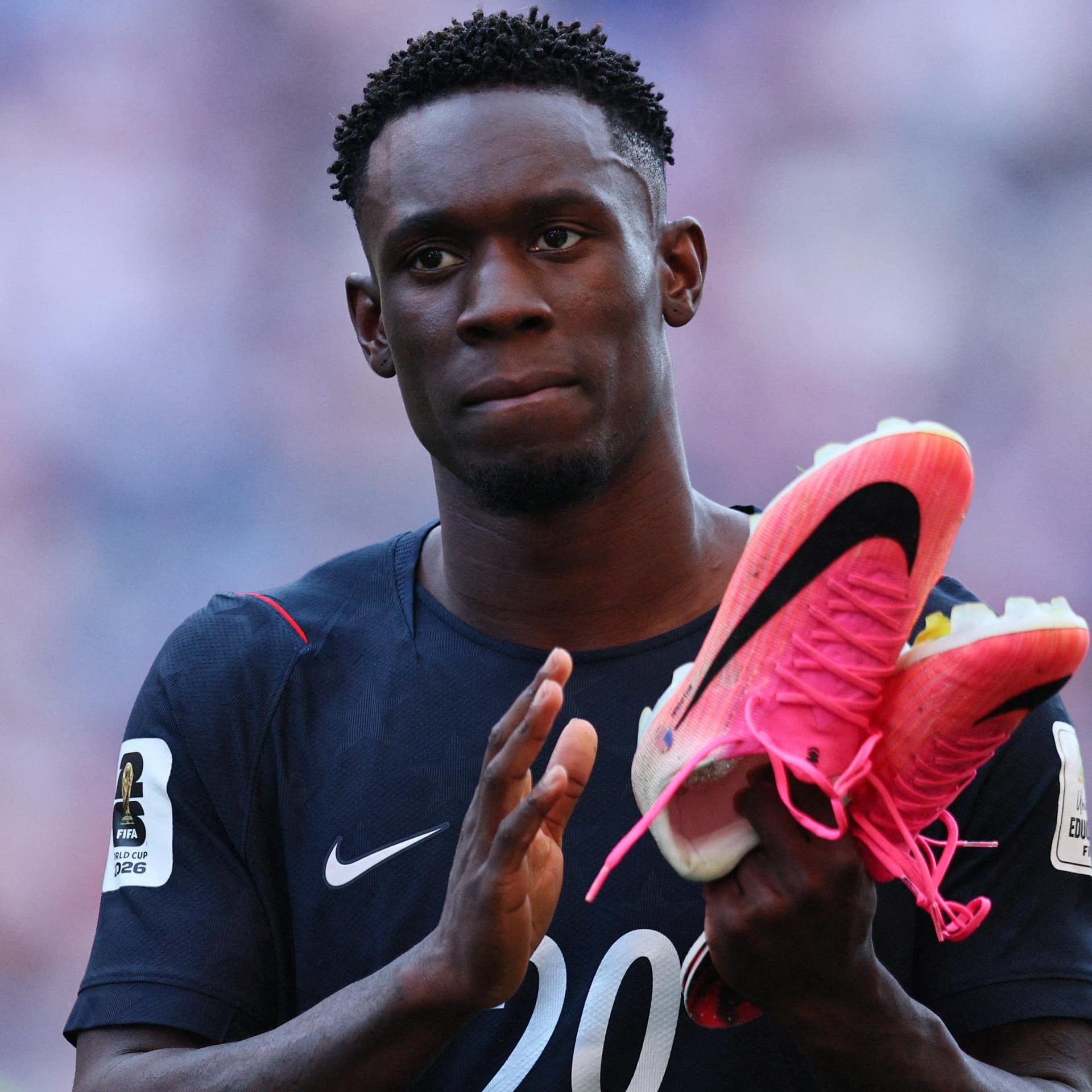
Donald Trump has revealed that he personally called Gianni Infantino, the head of Fifa, to ask him to review the red card given to United States' star player Folarin Balogun. The striker had been given a one-match ban after a hard tackle against Tarik Muharemovic of Bosnia-Herzegovina, but the punishment was suspended in time for the US to play their final 16 match against Belgium yesterday.
The decision has been widely condemned across the football world, with European footballing organisation UEFA, calling it, "unprecedented, incomprehensible and unjustifiable", and former Fifa president Sepp Blatter writing on X, “Redcards are not overturned by political phone calls… Football must never become a playground for political power.”Infantino has insisted the decision was made independently by Fifa’s “independent judicial bodies”.
On today’s show, Tristan is joined by BBC football issues correspondent Dale Johnson and New Yorker staff writer Sam Knight, to explain the scandal, and how Infantino’s governance of Fifa has brought football and politics closer together.
Producers: Hannah Moore and Xandra Ellin
Mix: Travis Evans
Video journalist: Matt Pintus
Senior news editor: China Collins
Photo: Folarin Balogun of the U.S. looks dejected as he applauds fans after the match following their elimination from the World Cup, July 6, 2026. Credit: IMAGN IMAGES via Reuters/Blake Dahlin