
In short
U.S.–Canada relations sour after the World Cup final: Trump blames Canadian wildfire management for U.S. air pollution, then imposes new 50% tariffs on Canadian goods. The episode explains what the tariffs target, why Canada’s PM Mark Carney responds cautiously, and how the dispute ties to USMCA renegotiation and broader U.S. pressure on Canada.
Guests
Jamie Poisson, Canadian journalist and host of CBC’s “Front Burner”/Daily News podcast.
Key claims
Tariffs are framed as retaliation for unequal treatment and wildfire smoke, but experts in the episode say the wildfire blame is “absurd” and climate change is the real driver. Canada wants USMCA/CUSMA renewal for stability, not yearly renegotiation, and has not yet used major retaliatory “cards” like potash.
Notable examples
Tariffs target dairy, alcohol, and autos-related items (plus goods like hockey sticks, cement, wigs, Christmas decorations). Carney says tariffs contravene USMCA; Ontario Premier Doug Ford highlights sending help during disasters while noting no U.S. offers came.
Written by AI. May contain mistakes. Listen to the episode to check what was said.
Chapters
Tap a time to open that second in VOWorld Cup Dynamics Between Leaders
0:18 to 0:55
Explore the cordial appearance of Trump and Canadian PM at the World Cup.
“There was a scene on Sunday at the World Cup final off the soccer field that caught our attention.”
Trump's Blunt Message to Canada
0:55 to 1:40
Discuss Trump's message about wildfires and tariffs to Canada.
“I told him, I mean, you've got to stop these fires from coming in and poisoning our air.”
Imposition of New Tariffs
1:40 to 2:24
Examine the reasons behind Trump's new tariffs on Canada.
“I host the CBC's Daily News podcast from Prudder.”
Tariff Targets and Canadian Response
2:24 to 3:40
Understand what goods are affected by tariffs and Canada's reaction.
“Canada has been very, very tough on us over the years, for many years, and no other president's done anything about it.”
USMCA Renewal and Canadian Negotiation
3:40 to 4:40
Analyze the challenges in renewing the USMCA trade deal.
“You know, they make 20 percent of our cars.”
Controversies in Trade Negotiations
4:40 to 6:00
Discuss the contentious nature of ongoing trade talks between Canada and the US.
“Prime Minister Mark Carney said that we are in a position to negotiate and we would like to move to more formal talks.”
Canadian Foreign Policy and Trade Relations
6:00 to 7:40
Explore Canada's foreign policy and its impact on US relations.
“From the Canadian perspective, there are a lot of people here that will argue that we have capitulated quite a lot.”
Experts' Views on the Trade Deal
7:40 to 9:00
Hear experts' opinions on the current trade deal between US and Canada.
“The supply chains are kind of interlinked between the U.S., Mexico and Canada.”
Impacts of Tariffs and Economic Concerns
9:00 to 10:10
Discuss the economic implications of the new tariffs on Canada.
“I think that what they really want is a renewal of CUSMA or USMCA.”
Canada's Strategic Options
10:10 to 12:10
Analyze Canada's potential strategies in response to US tariffs.
“One estimate I think I saw this morning was that this could affect$28 billion worth of goods across the country.”
Show all 17 chapters
Public Sentiment on Tariffs
12:10 to 13:20
Gather public opinions from Canadians regarding the tariffs.
“But it seems right now like they're taking a bit of a cautious approach.”
Long-Term Effects of Tariff Policies
13:20 to 14:00
Investigate the long-term effects of tariffs on US-Canada relations.
“What the tariffs say about the relationship between Canada and the U.S.”
Impact of Tariffs on Canada and the U.S.
14:00 to 16:40
Discussion on how recent tariffs and wildfires are affecting relations and economies.
“What are you hearing now from Canadians?”
Wildfire Management and Public Reaction
16:40 to 19:48
Examination of wildfire management in Canada and reactions to U.S. accusations.
“I live in Toronto, and last week, Toronto had the worst air quality in the world.”
Political Responses to Trump's Tariff Threats
19:48 to 21:44
Analysis of Canadian political responses to Trump's trade policies and tariffs.
“In fact, he was on CNN just the other day.”
Canadian Perspectives on U.S. Relations
21:44 to 23:49
Insight into how Canadians view their relationship with the U.S. amid tensions.
“I am somebody who is a former White House correspondent.”
Shifting Canadian Alliances in Global Context
23:49 to 26:20
Discussion on Canada's move towards diversifying international relationships.
“This year, 2026, that number had plummeted to 35 percent.”
Transcript
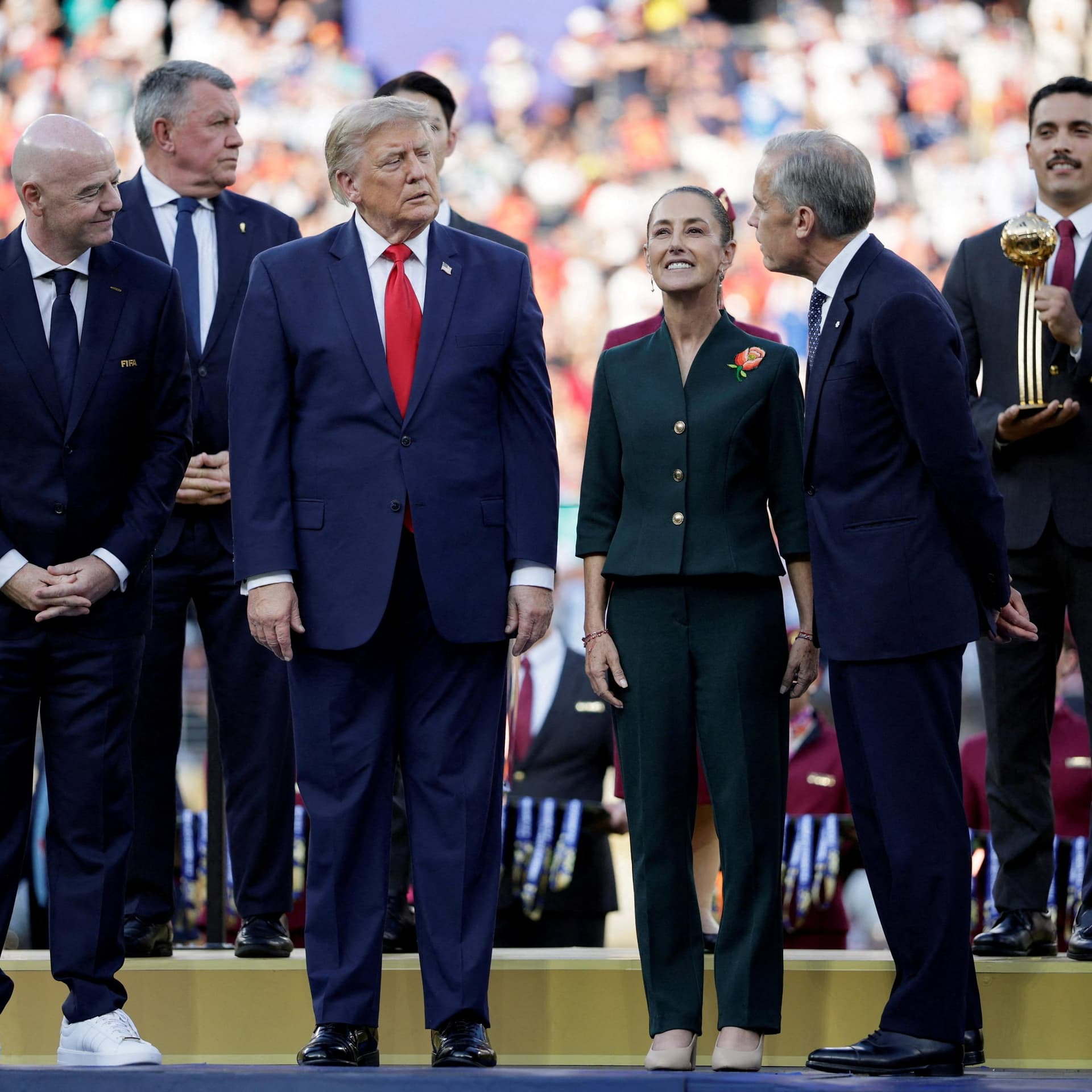
Automatic transcript. May contain errors.0:00This BBC podcast is supported by ads outside the UK. Odoo, providing tools for businesses across industries into one fully integrated platform. Whatever your business needs, Odoo is committed to providing it. Learn more at od00.com. There was a scene on Sunday at the World Cup final off the soccer field that caught our attention. The prime minister of Canada was watching the game from a glass-enclosed VIP box with President Trump. The two men seemed to have a cordial dynamic, at least when the cameras were on them. They were joined by the president of Mexico and the president of FIFA. They smiled, shook hands with the winning team.
0:42And for a few moments, everything seemed kind of OK between the U.S. and Canada. But after the match, Trump told reporters that he had delivered a blunt message to his Canadian counterpart. I told him, I mean, you've got to stop these fires from coming in and poisoning our air. Our air has been poisoned. Back in Canada, Carney told reporters he had made it very clear to Trump that his country is doing what it can. It's a complex issue. It's one we're managing. And then the situation got even more intense. A day after those smiles and handshakes at the World Cup final, the U.S. president slapped Canada with a bunch of new tariffs.
1:24Now, to be clear, Trump says the tariffs are not actually about the wildfires. So what are they about? And what does he actually want from Canada? From the BBC, I'm Asma Khalid in Washington, D.C. And today on The Global Story, why have these close allies turned into heated rivals?
1:54Jayme Poisson:My name is Jamie Poisson. I host the CBC's Daily News podcast from Prudder. Well, it's a treat to have you with us. And I'm really excited because I've heard so much about this beef between the United States and Canada from the perspective of Americans. And quite candidly, Jamie, I've heard a lot less about what Canadians are thinking in this moment. And I wanted to hear from a Canadian journalist. So I really appreciate you taking the time. Well, we have quite a perspective and it's very different from the U.S. perspective. So So thanks for letting me share it. Let's start with President Trump's announcement earlier this week in which he laid out these plans to impose 50 percent tariffs on a range of goods that are coming into the United States from Canada.
2:36Canada has been very, very tough on us over the years, for many years, and no other president's done anything about it. He said it was in response to unequal treatment. I mean, in all fairness to them, they need us to survive. Without us, there's no way they can survive. But they've been very, very tough over a period of the last 50 years. Jamie, what sorts of goods do these latest tariffs apply to? And what is the sense in Canada as to why he is doing this at this particular moment?
3:10Jayme Poisson:So it covers a lot of stuff. I saw one list with 500 things on it. 50 % tariffs, so that's pretty prohibitive. But essentially, these are three presidential decrees that came down. And one of the decrees was mainly targeting our dairy industry. We don't need anything they have. We don't need their dairy products. We have more than they have. A lot of our dairy is already closed off to the U.S. market. The other one is targeting alcohol. Our provinces took American booze off the shelves of our liquor stores after the first round of tariffs. Last year. Yep. And then the third is targeting autos.
3:44We don't need their cars. You know, they make 20 percent of our cars.
3:47Jayme Poisson:because the U.S. administration says that we are discriminating against U.S. auto parts. We don't need that. I'd rather make them in Detroit. And this one actually doesn't target auto parts. It targets a whole bunch of other stuff. Hockey sticks, cement, wigs, Christmas decorations. And I think the main idea here is they're saying, OK, you're going to discriminate against us. We're going to hit you with a bunch of other stuff. How has the Canadian Prime Minister, Mark Carney, responded to all of this? Yeah, I mean, so he released a pretty measured response that this is the latest in a string of escalations or unilateral actions from the United States to Canada that contravene USMCA.
4:31Yeah, we should just pause and explain that that is the big trade deal that was essentially agreed upon during President Trump's first term. Yeah. It's been up for renewal and the Trump administration recently said that they don't intend to renew the deal as it currently stands.
4:44Jayme Poisson:Yes, it's like lapsed that renewal. Prime Minister Mark Carney said that we are in a position to negotiate and we would like to move to more formal talks. But he hasn't announced that he's going to do any kind of countermeasures. Right now, he's just saying, you know, we're ready to proceed to negotiations. You know, JB, we've mentioned the talks a couple of times here. The talks Carney is referring to, they stem from that big trade deal, the United States-Mexico-Canada agreement, which, as I mentioned, was actually negotiated during Trump's first term in the White House. Yeah, he called it a great deal.
5:19Jayme Poisson:He did. He did. I remember there were remarks in I believe it was the Rose Garden. It was really heralded by his administration as a better agreement than the landmark deal that had been in place for many years prior, known as NAFTA. And I think what's interesting is in this moment, we are seeing the Trump administration decide not to renew the deal as it stands. And so, as you say, there's these ongoing talks around a new deal. Why, from Canada's perspective, have these talks been so contentious? If you try and read the tea leaves of the American administration, they think that Canada has been obstinate and that we haven't given up enough to kind of get to these negotiations.
6:03Jayme Poisson:You know, when they were putting these tariffs on us this week, the message from the White House was that Canada and China are the only two countries that haven't negotiated a deal with the United States after those initial rounds of tariffs. From the Canadian perspective, there are a lot of people here that will argue that we have capitulated quite a lot. We've rolled back taxes on some of the big tech giants. We've dropped counter tariffs quietly. you know, what does the United States really want from us? You know, they want us to open up the dairy industry. American dairy cannot be sold in Canada.
6:40Jayme Poisson:Yeah. And what is Canada's explanation for that? It's a way to kind of protect our own dairy industry. It's a system called supply management here. And proponents of it would argue that, you know, it's a way to keep prices stable for farmers here. It's a controversial policy in Canada, too. But the Trump administration hates it. You're saying when the Trump administration hates it, they want American dairy farmers to be able to sell their milk, their cheese, etc. into Canada. And right now, that's not possible. And in Canada, the current dairy laws, there's differences of opinion. There are some Canadians who do think that the market ought to be opened up.
7:22And you're saying, though, there are many who believe that the current system is fair to Canadian farmers.
7:27Jayme Poisson:Yes, exactly. That's one that they complain a lot about. Another is that they seem to want to be creating cars much more in the United States. Whereas right now, some car parts are made, you're saying, in Canada. The supply chains are kind of interlinked between the U.S., Mexico and Canada. It's an incredibly integrated system here. I think there's another thing going on here, too, which is that if you look at the foreign policy of this administration, it sees Canada as a kind of vassal state in North America. And I do not think that this administration likes some of what our government has been doing over the last year, going out and making deals with other countries, including China, including India, including Europe, on security issues, but also on trade.
8:12I think it's worth pointing out that there was recently some reporting in the Wall Street Journal that passed Prime Minister Mark Carney as this guy who's sort of leading this charge of middle powers to try and help reorient
8:28Jayme Poisson:middle powers in the world away from the United States. And so, you know, you've got to wonder if some of that is going on here as well. Before we move on, I think the foreign policy stuff is really interesting. I just want to make sure I understand something about the trade deal itself, because I have heard critics here in Washington say that both Mexico and Canada, to some degree, they don't think have fully upheld the terms of the existing deal. And so there is, in their view, room for improvement in the deal. Do you hear that in Canada as well? Or were they happy with the deal as it was? No, I think generally experts in Canada were pretty happy with the deal.
9:03Jayme Poisson:I think that what they really want is a renewal of CUSMA or USMCA. I should say, we call them different acronyms. We like CUSMA because it starts with Canada. And they like USMCA because it starts with the U.S. But they don't want this kind of yearly renegotiation, which puts CUSMA in a kind of, or USMCA in a kind of zombie position. That creates a lot of uncertainty because it can always change, right? They want to lock back into a long-term deal because that will create stability. So how has Canadian leadership been interpreting this latest move from the Trump administration? I mean, you alluded to hefty tariffs last year.
9:42This began many, many months ago. So is this latest announcement seen as, I don't know, a negotiation tactic? Is it seen as a serious economic problem, a bluff?
9:52Jayme Poisson:Yeah, I mean, I wonder if in some ways it could be seen as all three, right? Because I think it's widely being interpreted as a negotiation strategy to try and get Canada to the table and to try and get them to make some concessions. But it is also a very serious economic threat. One estimate I think I saw this morning was that this could affect$28 billion worth of goods across the country. So if these tariffs do take effect in 30 days, they could have serious repercussions here. And we should be clear, as you say, 30 days, because the executive order did not call for this to begin immediately, right?
10:28They called for this to begin in 30 days.
10:31Jayme Poisson:Which I think is why people are also interpreting this as a negotiation strategy, right? Because it's opened up a window. The clock is ticking down, even though Trump seems to blow past these deadlines. But immediately when these tariffs came down, you did see people talk about whether or not they were legal. because they're under this provision in this century-old law. It's like Section 338 of the Smoot-Hawley tariffs. I don't, if people have ever watched Ferris Bueller's Day Off, there's like that very famous scene from Ferris Bueller where he talks about the Smoot-Hawley tariff. And it's never actually been used before.
11:05Jayme Poisson:And it gives the president, as I understand it, this kind of authority to put tariffs on a country that they believe is discriminating against the United States. So people were like, well, are these even legal? But, I mean, I just got off the phone with an expert who thinks that these tariffs could be more legally sound or have a better chance of surviving a court challenge than the other tariffs that he had previously put on, those emergency tariffs that were slapped on us and just about everybody else at the Supreme Court later throughout. So I think that the Canadian government has no choice but to take this as a very serious economic threat as well.
11:44Jayme Poisson:You know, it is also possible that he's just kind of thrashing about here, that he's trying to bring us to the table and get some concessions. I would imagine that all of these scenarios are playing out right now. And I've seen people championing like various strategies from ignore this to give them something, put the booze back on the shelves to fight back. So it's not clear to me what the Carney government's going to do. But it seems right now like they're taking a bit of a cautious approach. Not putting any retaliatory tariffs in place on products coming in from the United States. No, not yet.
12:23Though that is an option that we have because there are some, pardon the pun, like actual Trump cards that Canada holds.
12:31Jayme Poisson:Potash, which the United States really needs for fertilizer to grow food. critical minerals and oil. But we haven't pulled any of those levers yet. And it's complicated because we're in a federation and the provinces would have a say over what we do with those products. But I mean, these are the big cards that the Canadians have not put in play. One of our BBC colleagues, Eloise, was out in Montreal the other day asking Canadians about this latest tariff threat. And she heard this. In one word, I would say that this tariff thing is ridiculous. It's frustrating, you know. Vaugeance. Disheartening.
13:12Everyone's affected by the tariffs. It's made the prices and supplies and material more unpredictable and more expensive. It will affect the common people, you know, like you, me, and everyone. What the tariffs say about the relationship between Canada and the U.S. is that it's definitely strained. I think it's really a relationship that is on the decline. Every decision being taken at the moment by our neighbors to the South is just sad for the entire world. Canada should not give up. We should continue to negotiate with the U.S. and try to, you know, maybe get some sense into them. When Trump announced tariffs back in February of 2025, it seemed at that time to provoke this big rally around the flag affecting Canada.
14:02What are you hearing now from Canadians?
14:04Jayme Poisson:You know, this kind of rise in Canadian nationalism, it ebbs and flows with the headlines, right? And so things kind of go back to a bit of normalcy. And then something new will happen and people kind of snap back to it. But at the same time, up until now, a lot of these tariffs have been exempt under KUSMA or thrown out. And so while certain sectors have been hit quite hard, steel and aluminum, softened lumber, we haven't really seen sort of catastrophic effects. I don't know how Canadians' attitudes might change if we started to see some real economic hits here. Because the truth is, is that the United States is the much bigger player here.
14:48Jayme Poisson:And these tariffs, of course, will hurt their economy too. But they can hurt us a lot more than we can hurt them.
14:59So even after President Trump announced this latest round of 50 percent tariffs, it does appear like he's not entirely done. On tariffs, you increased tariffs on Canada yesterday. Can you say if you still expect to impose tariffs on the wildfire problem? And can you say when you might impose 301? A lot of damage has been done. He was speaking to reporters at the White House on Tuesday, and he seemed to suggest that he's still considering tariffs against Canada for these massive wildfires. They're not managing their forests properly, and the wind has a tendency to blow right over New York City, right over.
15:37I'm sure so many listeners have seen photos of this all. If you have somehow not seen the photos, go look them up. They kind of look otherworldly, sort of yellow skies. Yeah. It's very serious what they're doing, and they don't seem to be able to do anything about it. If they manage their forests, they wouldn't have the fires. There were some reports that cities like Detroit and Chicago in the Midwest had some of the worst air quality in the world the other week. Well, it went good, but I told them, I mean, you've got to stop these fires from coming in and poisoning our air. Our air has been poisoned.
16:10And so what we've heard from President Trump is a frustration. Maybe they should pay us some damages or something or we should do some tariffs. He's made a number of comments over the last several days about these fires. I spoke to him about it. I said, you got to you got to get it stopped. It's really forest management and they should know how to do that. But my question to you, Jamie, is does President Trump have a point at all about Canada's fire management?
16:37Jayme Poisson:So you're right. It has been kind of apocalyptic here as well. I live in Toronto, and last week, Toronto had the worst air quality in the world. It was crazy. It was awful. And these fires up in northern Ontario have been devastating. First Nations communities have had to flee their homes. But this idea that it's Canada's fault that there's smoke in parts of the United States, according to experts I've spoken to, is absurd. I mean, first of all, there have also been fires in the United States that have been contributing to air quality. But also the reason that we are seeing the fires is the reason that most people probably think we are seeing the fires.
17:19Jayme Poisson:We are part of a warming climate. The real culprit here is climate change. Experts I talk to will point out the United States is an enormous contributor to that. I mean, you know, the reason that they ostensibly slapped the first round of tariffs on us, those emergency tariffs that were later struck down, was because fentanyl was pouring into the United States across our border. This is not backed up by any kind of data whatsoever. So I don't think it is a surprise to hear the president's comments, but I haven't spoken to anyone that feels that they're grounded in any kind of reality. Jimmy, do people in Canada feel like the wildfires are being handled sufficiently?
18:03And the reason I ask this is I remember a couple of years ago, I think it was in 2023, when there were these epic fires right across parts of Canada at that time period. And I recall reading some critiques in the United States about that response at the time where you had American firefighters going in to assist, saying that the way the response is handled is that it's by provinces and that there's not a sort of federalized forest management system.
18:27Jayme Poisson:I mean, I think for sure these latest fires, There has been like an enormous amount of critique levied against various governments for terrible warning systems and not helping with evacuations. I've heard for years people call for more of a centralized federal response to fire management. So right now is the fire management usually per province? And the feds come and help. I'm not an expert on this, but I think that this is becoming quite real for us now because every year the fires are just getting worse and worse. And I'm curious when we talk about the wildfires, how Canadian politicians have, if at all, responded to what we are hearing from this Trump White House.
19:12Jayme Poisson:I think it's generally being dismissed as kind of more absurd bluster from the president. We've been pretty used to the last several years being the target of whatever pet issue the president has, probably more so than in Europe. I guess our proximity has put us in the line of fire probably more than most. You know, we talked about Carney's response. The other person I've seen in some American networks over the last several months responding to Trump is the leader of Ontario, Doug Ford. In fact, he was on CNN just the other day. I know when neighbors need help, you go and support them, just like we did in Hurricane Helena.
19:56We sent over 50 utility linemen down there. He's someone, it seems, who has been really vocal. Anytime you need help, we will send the Ontario Corps down. We'll send our firefighters. We'll send our utility linemen down, which we have in the past. But not one single offer has come the other way. And in seeing his comments about the wildfires, it felt like a reminder that this is all just the latest chapter in an ongoing feud. When someone says, let's impose tariffs on foreign imports, it looks like they're doing the patriotic thing. In fact, last fall, we did an episode when Doug Ford ran an anti-tariff ad on U.S.
20:40television markets during the World Series. High tariffs inevitably lead to retaliation by foreign countries and the triggering of fierce trade wars. And it, you know, really caught a lot of people's attention.
Read the full transcript
20:53Jayme Poisson:So Doug Ford ran this ad. It was Ronald Reagan talking about the importance of free trade. and the Trump administration wanted us to pull it down. It didn't get pulled down right away. It ran during the World Series. I mean, our own prime minister has quipped that that was not helpful in the ongoing negotiations with the United States. But the Ford government has taken a kind of Captain Canada, you have to stand up to a bully kind of attitude. I mentioned before that one of the big irritants that the United States has is the auto industry. Now, that is largely in Ontario. So Premier Ford is really trying to protect and stand up for that industry, which is like directly under attack.
21:37Jayme Poisson:So he has different considerations than other premiers in the country. Jamie, I don't have a clear sense from here in Washington what Donald Trump actually wants from Canada. I don't think I'm alone. I am somebody who is a former White House correspondent. I have covered the Trump administration in the past. Nonetheless, it is not clear to me. I want to know from you what is the sense from Canadians of what their neighbors, the United States, the Trump administration, actually wants from them? I think we don't know either, right? Because it whipsaws so much. And I think that the moves Canada has been making to reorient ourselves, to go find relationships elsewhere, I think that that has angered them.
22:24Jayme Poisson:And I think that you get the sense from the American administration that they see Canada as like obstinate, that we're ungrateful, right? And I think that this goes back to the foreign policy that I was talking about earlier, this kind of Don Roe doctrine, where Canada has seen as, they don't say it outright, but the vibe is a vassal state and that the United States has dominance over the Western Hemisphere and that all of the countries in that hemisphere get certain benefits from being under the security umbrella of the United States, but also the United States is in charge. And what it is that they want from us that we are willing to give them is unclear, I think, to a lot of people in this country right now.
23:09Jayme Poisson:But I can say that public opinion is very firmly on the side of not cutting a bad deal for Canada and not capitulating to the United States. Those threats around annexation, they made people very angry here. I think in part because we've had this very kind of long friendship with the United States and it felt like it broke. And so I think that as a result of that, this current government has been given quite a long leash to try and negotiate the best possible deal without us giving up too much of our sovereignty to make our own decisions around who we do business with. I want to ask you about public opinion, because there was a poll that was published recently by the Pew Research Center of Canadian attitudes towards the United States, And it found that in 2022, 83 percent of Canadians saw the United States as a reliable partner.
24:09This year, 2026, that number had plummeted to 35 percent. Is Canada preparing for a world in which it no longer sees the United States as a reliable partner?
24:23Jayme Poisson:I think that Mark Carney won the election last year in part because this is exactly what he was saying. He campaigned on the fact that the old world order was over and that we were not going to return to it. And he ended up winning, I think, largely on that message and on his promise to take on the Trump administration. And so that shows that Canadians agreed with it then. And we're still seeing support for the moves that this government is making around the world to try and reorient us away from the United States. Deals in the Middle East, deals in China, deals with Europe, security deals with Europe.
25:06Jayme Poisson:I think Canadians know that you can never actually completely break that relationship. But I do not think there's a sense here that you can just go back and put the toothpaste back in the tube. It's kind of like when you're going through a breakup. You know, it's not like a full divorce. But as somebody said to me, you're like putting your car in your name. You know what I mean? You're trying to hedge against where you think this could be headed. I think there was this rupture when Trump was threatening to annex us and this realization in the country that we traded like 80-something percent of our goods with the United States, thinking nothing about it, that this was totally fine and that they're this completely reliable partner.
25:56Jayme Poisson:And these events have really led people to open their eyes and realize you cannot be that reliant on one partner. The country needs to make moves to be more resilient. If things improve, great. But I don't see a world in which things go back to the norm. Thank you so much, Jamie, for joining us on the show. Thanks so much for having me. It was great to talk to you. That was Jamie Poisson, host of the CBC's daily news podcast called Front Burner. And folks, that's it for our show today. A reminder that you can reach us at any time with questions or story ideas by emailing us. Our address is theglobalstory at bbc.com.
26:41And as you all may know, we here on The Global Story, we go deep every weekday on one big story that tells us something about where the world and America meet. If you're also looking for a way to catch up on the latest news headlines, then check out our sister show, The Global News Podcast. Our episode today was produced by Zandra Allen, Aaron Keller, and Hannah Moore. It was edited by Bridget Harney and mixed by Travis Evans. Our digital producer is Matt Pintus. Our senior news editor is Chyna Collins. And I'm Asma Khaled, finally back from vacation. It's great spending some time with you all.
27:15Thanks as always for listening, and we'll be back again tomorrow.
From the publisher
President Trump has announced a new round of tariffs against a range of Canadian goods, including hockey sticks and cement. Trump says the tariffs are in retaliation for what he called Canada’s “unequal treatment” of US cars, dairy and alcohol. But earlier in the week he also threatened retaliatory tariffs over Canada’s wildfire smoke which has been drifting into US cities.
We speak to Jayme Poisson - host of the CBC podcast ‘Frontburner’ - about what Trump actually wants from Canada, and whether Canadians are bracing for a world in which the US is no longer their closest ally.
Producers: Aron Keller, Xandra Ellin and Hannah Moore
Executive producer: Bridget Harney
Mix: Travis Evans
Senior news editor: China Collins
Photo: U.S. President Trump, Canadian Prime Minister Mark Carney, Mexico President Claudia Sheinbaum and FIFA dignitaries at the FIFA World Cup 2026 Final between Spain and Argentina at New York New Jersey Stadium. Credit: Reuters/ Evan Vucci.