
In short
Where the Trump administration’s Iran policy could go next amid escalating missile attacks, threats to strike energy infrastructure, and uncertain off-ramps.
Guests
Joe Inwood, BBC world news correspondent; covers global events and explains Middle East developments. Gonche Habibi Azad, BBC Persian forensic team; monitors Iranian media and has a background in tracking Iranian outlets and social media.
Key claims
Iran tried to launch missiles at the US-UK base on Diego Garcia (2,400 miles from Iran); one fell short and one was shot down. Iran also hit Dimona and Arad near Israel’s nuclear facility (missiles didn’t hit the facility). The US threatens destroying Iranian energy infrastructure; Iranians fear water and daily-life disruption and question legality. Off-ramps are unclear: “escalate to de-escalate” could involve limited force or capturing Khark Island, but boots-on-ground risks spiraling. “Walk away/declare victory” likely wouldn’t stop Iranian missile/shipping attacks.
Notable examples
Netanyahu visiting injured; claims of internet outages in Iran; references to “Venezuela model” regime change being unrealistic; protests after Iran’s crackdown and Trump’s earlier promises to support protesters.
Written by AI. May contain mistakes. Listen to the episode to check what was said.
Chapters
Tap a time to open that second in VOThe Escalation of Conflict in Iran
0:30 to 2:20
Discussion about the increasing tensions and military actions involving Iran.
“There are tons of people in the United States calling for an end to the war in Iran.”
Introducing the Guests
2:20 to 4:25
Guests Joe Inwood and Gonche Habibi Azad discuss their backgrounds and roles.
“And today on The Global Story, how does Donald Trump get out of this?”
Iranian Missile Threats
4:25 to 6:10
Examination of Iran's missile capabilities and recent attempted attacks.
“to launch two missiles at the US-UK base in Diego Garcia.”
Impact of Missile Attacks on Israel
6:10 to 8:35
Analysis of recent missile attacks in Israel and their implications.
“There's also been an attack on Israel, which seems to have caused more casualties on the Israeli side than any other reported attack that I can remember during the conflict.”
US Threats and Iranian Responses
8:35 to 11:09
Discussion on U.S. threats to Iranian infrastructure and Iranian counter-threats.
“Even some of these young people who are in support of the US and Israel bombing Iran, they were worried today.”
Potential Off-Ramps for Trump
11:09 to 13:55
Exploration of strategies Donald Trump could use to de-escalate tensions.
“The real weakness I think some of them are going to have, of course, is their desalination plants.”
Assessing the Aftermath of a U.S. Withdrawal from Iran
14:00 to 16:44
Explore the potential aftermath and reactions in Iran if the U.S. were to withdraw from the conflict.
“Well, at the opposite end of the spectrum, there is another option, which is declare victory and walk away, or at least try to just walk away.”
The Complexity of Iran's Power Structure
16:44 to 18:59
Understand the intricate power dynamics within Iran and the challenges of regime change.
“was the so-called Venezuela model of conflict in which the United States might go in, regime change, install a new person in Venezuela.”
Diverging Interests: U.S. and Israel in the Conflict
18:59 to 21:07
Discuss the different perspectives and goals of the U.S. and Israel regarding Iran.
“And the evidence is that the government and security apparatus is still intact and in place.”
Iranian Sentiments Amidst War
21:07 to 23:01
Examine how the war is affecting the Iranian populace and their feelings towards their government.
“potentially existential for the Israeli government.”
Show all 11 chapters
Consequences of U.S. Promises to Iran
23:01 to 25:53
Reflect on the implications of U.S. support for Iranian protestors and the potential betrayal involved.
“they had moved to other safer places in northern Iran near the Caspian Sea.”
Transcript
Automatic transcript. May contain errors.0:00This BBC podcast is supported by ads outside the UK.
0:30how to invest and manage money. Learn more at schwab.com. There are tons of people in the United States calling for an end to the war in Iran. Do you think Donald Trump has betrayed America first? I think that this war is something that he promised he wouldn't do. There's Tucker Carlson. All I've heard is tiresome fear-mongering about nuclear weapons, which Iran did not have. Or many of Trump's MAGA base. Being a conservative or being a Trump supporter or being part of MAGA does not mean you have to accept another Middle East war without questions. And anybody who tells you that can suck it. Or simply American voters who are worried about how much it could all cost them.
1:21And you voted for him how many times? Three times. That was my bad. Apparently I'm an idiot. The military operations seem to be increasing, not winding down. In the last few days, there have been missile strikes close to Israel's nuclear research centre, threats of attacks on energy infrastructure across the region. And for the first time, it's been suggested that even Europe could be threatened by Iranian missiles. Suffice it to say that if the Iranians could get missiles to get Diego Garcia, which is, what, two and a half thousand miles from Iran, they can get them towards Europe as well. This is a critical moment.
2:02The war could turn into a long, drawn-out conflict, or Donald Trump could dash for a quick exit, a move that would bring its own consequences. Today on the show, we're talking about where this could all go next. From the BBC, I'm Tristan Redmond in Paris. And today on The Global Story, how does Donald Trump get out of this?
2:31It's Sunday afternoon. We're joined by the BBC's Joe Inwood and BBC Persian's Gonche Habibi Azad. Delighted to have you both with us. You've been with us before on The Global Story, but could you introduce yourself once more for listeners, please? Lovely to be with you. So yeah, I'm Joe Inwood. I'm the BBC's world news correspondent. And my job is to try and digest all of the things that are happening at any point in the world. At the moment, a lot of that is focused, of course, on the Middle East. Goncha and I work together very often. I try and digest what's happening inside Iran and explain it.
3:06And I can only do that through the work that Goncha and her colleagues do. Thank you so much, Jo. And I'm Goncha Habib-Azad. And I work for BBC's Persian service in its forensic team. But I also come from a monitoring background in the BBC. and we monitored Iranian media on a daily basis from social media to Iranian outlets to Iranian safe TV everywhere. And I still do that. I think it's worth telling people there are huge numbers of different sections of the BBC, all these different teams working around the world, producing amazing work. And it's only through the sort of work that they do that the gobs on a stick like me that stand in front of the camera can be well informed.
3:44And I should say for our American listeners that a gob on a stick... Well, explain to us what a gob on a stick is, Joe. I'd like to think I'm not really. It's a slightly, a jokingly derogatory term for somebody that just pops up on television and gives you an opinion on something. Obviously, I do more than that, but that's... You're not a gob on a stick, Joe. You're much more than that. So good to have you with us. We're talking with you both on Sunday afternoon. As we're talking, the conflict in Iran seems to be getting broader and more complex by the day. what have been the major developments over the weekend which point to a sort of escalation?
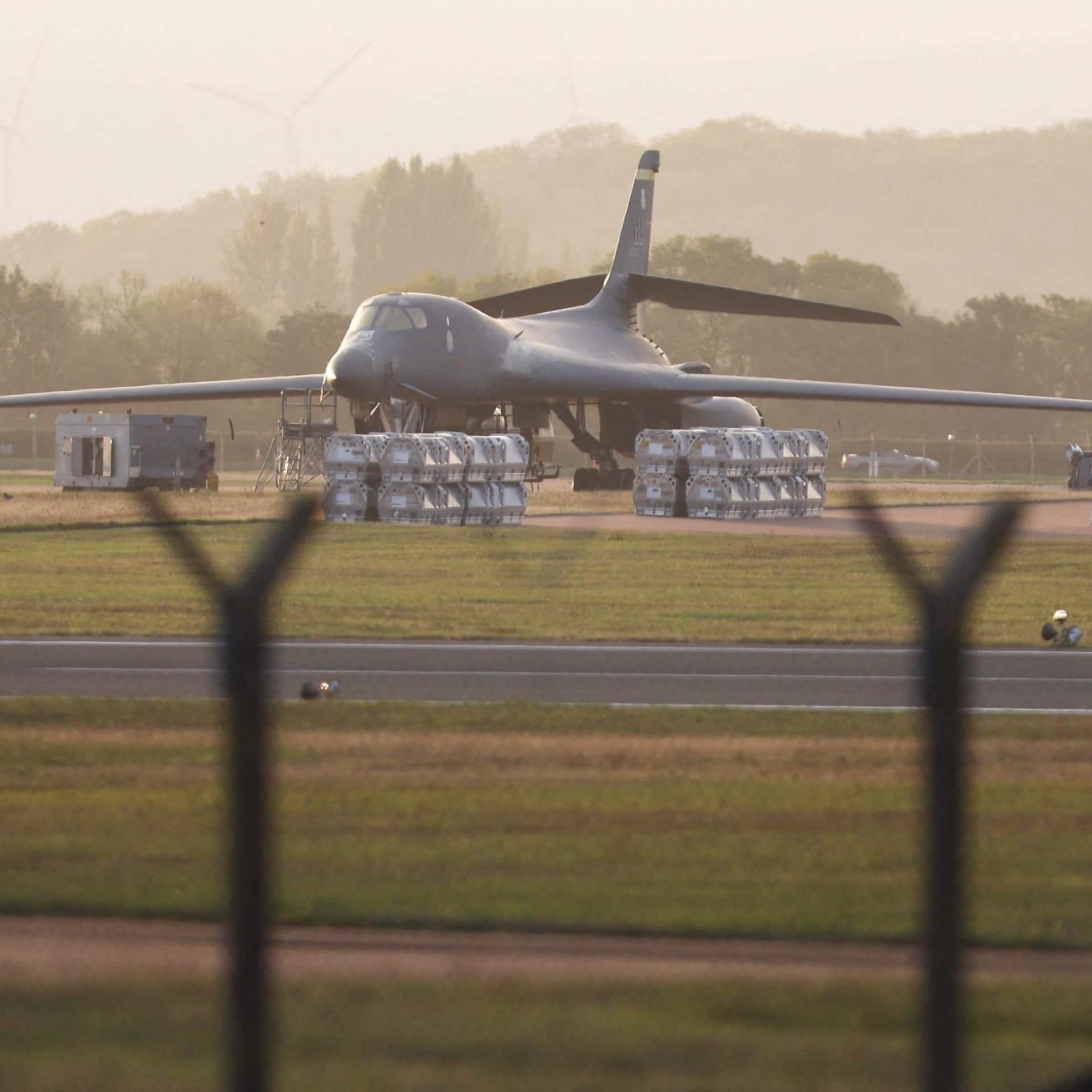
4:24The thing that we've really been focusing on here is the idea that the Iranians have at least tried to launch two missiles at the US-UK base in Diego Garcia. Now, to explain the geography of this for people, Diego Garcia is a part of the Chagos Islands. It's about 2 ,400 miles, nearly 4 ,000 kilometers south of the Iranian coast. Now, the reason this matters is not because they've targeted a military base. That would be seen as a legitimate target. It's the fact that the Iranians have at least tried to attack a base which is that far away. Now, the reason that matters is because previously it was thought that the Iranian ballistic missile capabilities was around 2 ,000 kilometers.
5:03The idea that they're even considering targeting something that's 4 ,000 kilometres away, well, suddenly that brings whole new areas of Europe, for example, into the potential strike range. Now, I think it's really important to say to people here, firstly, we don't know they could have got that far. A lot of the suggestion that they could has come from the Israelis, who I think many people say have a vested interest in trying to make Europe more involved in this war. And certainly the British government has been quite keen to damp down the potential threat to Europe. But this is a bit of a shift and it changes the conversation.
5:37somewhat, about how far this war could spread. What do we know, if anything, about what happened to this missile? Did it fall short? Was it shot down? Where did it end up? There were two missiles. One of them, we think, fell short. We don't know how far short, and that, again, is an important bit of information that we don't have. And the other one was shot down by American defences. So neither hit their target, but that still doesn't mean that people aren't a little concerned about this. The attempt at attacking the Chagos Islands isn't the only Iranian missile attack making headlines. There's also been an attack on Israel, which seems to have caused more casualties on the Israeli side than any other reported attack that I can remember during the conflict.
6:21What exactly happened, Joe? And how serious is this in terms of escalation? Yes, so over the weekend, we saw two Iranian missiles land in the towns of Dimona and Arad. Now, both of them are towns in the southern Negev desert, and crucially, they're quite close to Israel's main nuclear facility. Now, we should say, missiles did not hit the nuclear facility. It was eight miles away, at least. But they were considered to have been some of the most severe impacts that the Israelis have suffered so far. We've seen Benjamin Netanyahu, the Israeli prime minister there over the weekend, trying to speak to some of the injured, and he's been keen to emphasise the severity of the attacks and the condition that many of those injured are in.
7:03He said nobody was killed, but he said that was just because of luck. Now, I think it's really important, and we always should do, remind the listener and the reviewer of this, the death toll in Israel is nowhere close to as high as the death toll in Iran and Lebanon. There are many, many, many hundreds, more than thousands of civilians have been killed in both locations, it's believed. But from an Israeli perspective, This was one of the most difficult weekends they've endured. Well, there's been a lot more happening this weekend. There have been reports of a second U.S. Marine Corps unit getting closer to the Persian Gulf due to arrive soon.
7:37And then the big headline that many people will have seen is the U.S. threatening to destroy Iranian energy infrastructure. Gonche, what have you been hearing from inside Iran about that threat? And how big of an impact could that have on people if it happened? I try to talk to people on a daily basis inside Iran and amid the internet outage imposed by the government, some tech-savvy younger people manage to connect. So the glimpse that we are getting from Iran is from some Iranians opposed to the establishment, younger Iranians who don't have the issue of like having food on the table or like their house being destroyed or anything.
8:20They just want the internet. And that's what's something I've been getting. When I woke up in the morning, I sometimes asked them, how are you doing? How has your day been? What did you do like for Persian New Year? But today, when I woke up, everyone was like, did you see what Trump said? And they were saying that we are really anxious. We're really worried. Even some of these young people who are in support of the US and Israel bombing Iran, they were worried today. And one of them that I was talking to, she said that I jumped to take a shower after I heard the news. Because during the 12-day war with Israel, after that, apparently for three weeks, the water was completely cut off in her house.
9:00And she's worried that something like that might happen again. So if there were an attack on Iranian energy infrastructure, that could take down all sorts of basics like water. It could take out anything. It's not just going to be the energy. And also, some of the people that I've been speaking to, they felt disappointed by the US President Donald Trump because US President had said back during the protests recently in Iran against establishment that killed thousands that he was ready to help the protesters. And they're thinking that if he attacks the energy infrastructures, that's going to have massive impact on people.
9:39And I think it's probably also worth reminding people that and the judgment on this will not be definite, but there will be people that say that attacking energy infrastructure, especially if it's done not for military purposes, could be considered illegal under international law. There's certainly going to be questions asked over that. If you target energy infrastructure not to stop the military using that energy, but you do it for punitive reasons, there are going to be very, very serious questions asked about the legality, the justification of that act. What's the Iranian response to this threat of attacks on energy infrastructure being, Gonche?
10:16Iranian officials have also threatened that they're going to attack energy infrastructures and desalination points, practically any infrastructure related to Israel and the US in the region. But at the same time, the IRGC, which is Iran's Islamic Revolutionary Guard Court, their intelligence unit has said that it's going to take the war into another level. And that's how it's going to escalate if it happens. And I think it's worth reminding people that what we could see here, if this happens, is a vast escalation, a race to the bottom where the Gulf states and the key allies of the US have got as much, if not more, to lose than the Iranians.
10:59Of course, the Americans have got overwhelming firepower. They could do terrible damage to Iranian infrastructure. But the economic harm that could be done to the Gulf states and to their energy facilities is untold. The real weakness I think some of them are going to have, of course, is their desalination plants. Gonche mentioned. At the start of this conflict, there was a suggestion by the Iranians that one of their desalination plants had been targeted. if they started to and successfully hit desalination plants in the Middle East you are going to see populations there that are dependent I think some are up to 90 % dependent on them for their water for their fresh drinking water well that could be a race to the bottom for the entire region and take this to a whole new level beyond what we've seen already
12:06Escalation seems to be the order of the day, which stands in pretty stark contrast to what Donald Trump is saying, which is that he's looking for ways to wind up the conflict. So, Joe, if he wants an off-ramp, what are the possible off-ramps available to him? One of the things that people are talking about is the idea that if they want to bring this down, what you need to do is you need to force your enemy into a position where they feel they have to negotiate. That's where the phrase escalate to de-escalate comes from. What you do is rather than keep the continual pressure as it is, you do something which suddenly puts them on the back foot.
12:46Because at the moment, the Iranians are under severe pressure, no doubt, but they are firing missiles back. what they might be looking at doing is putting some sort of ground force in. I mean, there are the reports of US Marines, many thousands of them, on the way to the region. They could do something like, for example, Occupy Khark Island. Now, Khark Island is a key Iranian oil distribution, oil export island. It's right up at the north of the Persian Arabian Gulf. And the suggestion is that you capture that, and suddenly that gives you an economic lever over the regime, which previously you might not have had.
13:21that's an option but then it's very very foreseeable that that starts to escalate further and further and you lose control once you start to put boots on the ground the risk to you losing soldiers the risk to it spiraling increases exponentially i mean karg island is one option the other thing people talk about is trying to do something limited along the coast to try and get rid of the the naval threat but all of these will come with incredible risks and eventually it ends with marching your troops into Tehran, and that's just inconceivable. And so it's difficult to see what the escalate to de-escalate option would be, but the Americans haven't ruled it out.
14:02Well, at the opposite end of the spectrum, there is another option, which is declare victory and walk away, or at least try to just walk away. What would that actually look like? And, Gonche, in particular for people on the ground inside Iran, what would come next if that were to happen? Well, it's a very tricky situation right now to know what's even happening inside the country. When I see Iran's third supreme leader, all we have seen so far from him have been written messages so far. We haven't seen him since his succession early in March. and that has led to some people speculating about his whereabouts, what he's doing.
14:48Muhtab al-Khamenei, who is son of Iran's late Supreme Leader Ayatollah Ali Khamenei, has been a man in the shadows. He has been regarded as someone who has got influence over Iran's military IRGC in different parts, but we don't know much about him. And that has been the issue. But is it fair to say, Gontre, that the one thing that we do know from the regime is that they probably would not just end this conflict if the Americans said that they were walking away. My guess is probably the Iranians say, well, you're finished, but we're not. I think most analysts would feel that if the Americans walked away and if the Iranian regime is still in place, is still able to fire missiles, and still decides it would like to and disrupt shipping, well, there's very, very few people who could, with a straight face, call that a victory for the USA.
15:38You're saying that the risk is that the missile attacks from Iran could continue to happen, for example, on Gulf state neighbors and or Israel after the Americans had pulled out. Is that what you're saying? Well, why would they stop? Think about the damage done to Iran, to its infrastructure, to its people, the numbers who've been killed. Imagine the Americans say, we're done, we're walking away, we're declaring victory, why would the Iranians go, okay, fine, no problem at all? The thing the Iranians have said they want to achieve is to drive the Americans from the Middle East, to see all bases removed from the Middle East.
16:16Now, in war, both sides get a vote. And as long as the Iranians still have the capacity to fire missiles, and as we've seen over this weekend, they still have that capability, as long as they have that, they have got a vote. and my suspicion would be that the Americans could declare whatever they liked. The Iranians would still be able to vote and they would do it by targeting shipping, by carrying on their strikes if they wanted to. At the beginning of the war, one of the prognoses that you might hear from various different corners was the so-called Venezuela model of conflict in which the United States might go in, regime change, install a new person in Venezuela.
16:57it was Delce Rodriguez, who was seen as a US-friendly head of state. You don't hear so much about that possible solution anymore when it comes to Iran. Joe, is that dead and buried at this point as an end game? It's worth pointing out that in terms of what the end game was, it's always been a little, if not opaque from the United States, but a little confused, shall we say. Let's be honest, Donald Trump puts out many messages and we often get a slightly confused picture. I don't think Washington's thinking would have ever been that that was going to be possible, mainly because of the nature of the Iranian regime.
17:38It is very, very different from that in Venezuela, far less brittle, far more entrenched. There would never be a possibility that you'd get a compliant regime in Tehran. I mean, when Donald Trump said we should have a say in who the supreme leader is, that struck me as, if not said in jest, then fairly laughable. And I think it's fair to say, isn't it, Gonche, that anyone who tried to go along with what the United States wanted in Tehran would not survive very long at the hands of the IRGC. No, Iran's system of power is very complex. We have Iranian supreme leader as the head of the state. But at the same time, the IRGC is very powerful and they have hundreds of thousands of forces within the establishment and they are very much loyal to the system.
18:29We are seeing on state media that every night they're coming out to the streets of Tehran and other cities, those who are with the establishment to rally for them. And some of those that I've been talking to, they're scared because they're saying the establishment has got nothing to lose. So if we come out to the streets to protest, there is a chance that we are going to be killed. So it seems like even though the Iranian establishment has been severely weakened, they still have loads of supporters. And the evidence is that the government and security apparatus is still intact and in place. Is that right?
19:06That's the thing. Iran has lost several of its officials and military commanders but they have been saying repeatedly that for every person killed, we have got the replacement. And for the replacement that has been killed or will be killed, we have got another replacement. Joe, we haven't really talked yet about the other major protagonists in the conflict, which is Israel. Are we getting to the point now where Israel's view of the end point of the conflict and the United States are really starting to diverge? Yeah, I think it is worth pointing out. There are, of course, overlaps between what the US wants and the Israelis want.
19:43Both of them would, I'm sure, quite sincerely want the Iranians not to have a ballistic missile threat, the Iranians not to have a nuclear program. But the US has a much stronger vested interest in there not being long-term chaos around that region, around the Straits of Hormuz. You know, basically, the Americans are more concerned about the overspill to their Gulf Arab allies, for example. Now, I'm sure Israel might contest this, but lots of analysts say that the position of the Netanyahu government, for example, and I've heard quite a few people suggest this, that if it ended up with chaos, with destabilization in Iran, well, that actually isn't necessarily, from Israel's perspective, a disastrous outcome.
20:30For Israel, certainly they argue, many of them feel that Iran poses an existential threat to them. And that's why, from their point of view, Benjamin Netanyahu has wanted to have this war for decades. The Americans don't view Iran in exactly the same way. And so we are seeing that divergence. In short, in the long run, the Americans are not going to want to see the kind of destabilization we're currently seeing. The Israelis seem to be much more relaxed or certainly give the impression that their concern is in stopping what they see as the Iranian threat, really, whatever the cost. So this is a conflict which is potentially existential for the Iranian government, potentially existential for the Israeli government.
21:16What about for the United States and Donald Trump? For Donald Trump, politically existential is a really interesting question, Because for him to come to power, having said, if you elect Kamala Harris, there will be war with Iran, and now start what is widely seen as a war of choice, a war that many people think did not need to happen with Iran, and to go deeper and deeper into it, is causing real problems in his base. We've seen people like Megyn Kelly, the former Fox News presenter, Tucker Carlson, Joe Kent, who was his former top kind of security official, resigning and saying, I cannot in good conscience support this government.
21:54This war did not need to start. We are starting to see fractures within his coalition. And so Donald Trump, of course, is always going to have diehard supporters. He famously said that he could walk into Times Square, shoot somebody, and they'd still support him, I think was the approximate quote. There will be people that will always back him. But I think there's an increasing number that are starting to see this war as a betrayal of the things that he came to power promising to prevent. Well, Gonche, the moral case for starting the war against Iran was that it would be an opportunity to overthrow a government which had carried out a brutal crackdown on civilian protesters just a few months earlier on.
22:38Are people in Iran better off or worse off today than they were when the war started? Well, I can't say for sure how they are right now, but this is putting economic pressure on people as well. So many relied on the internet for making money in Iran. And now they don't have access to it. I heard that some people who went out of Tehran, which has seen the heaviest strikes, they had moved to other safer places in northern Iran near the Caspian Sea. But at the same time, they have to make money for their families. They have to bring bread to the tables. And they went back again because they couldn't afford to stay out for longer.
23:20But at the same time, I'm hearing some voices of younger people who are saying that right now we are better off without Iranian Supreme Leader Ayatollah Ali Khamenei, who was killed on the first day of strikes. Like when I was having a chat with them recently, one of them said that I'm really happy because, quote, evil king, unquote, was taken out. But we don't know where it's going to lead now with the third supreme leader. Is the grip going to be tightened or not? At the same time, some of these protesters, they were saying we can't take down the regime with our empty hands and we need someone from outside to help us out.
24:04But with what Donald Trump said about attacking energy infrastructures, they're not seeing that as help to them. And that is kind of like mixed emotion, mixed feelings, changing opinions. Every day I'm hearing something new from some of them. And you can't predict how the situation is going to be like when the war is over. To bring it back full circle, we talked about the way in which this conflict could end. and the just walking away and saying, declaring victory scenario, that would be seen, and I think understandably so, as an astonishing betrayal of the Iranian people. Because let's remember, Donald Trump, he has spoken about regime change, but he's spoken about regime change by calling on the courageous Iranian people to come to the street, take your destiny in your own hands.
24:53And I remember it when we were covering, Gonche and I were both covering the protests when they happened back in January, and they said, come to the streets, help is on its way. If at the end of all of this, of these numerous calls he's made to say to the Iranian people, risk your life, face down the guns, go to the streets, we're behind you. If at the end of all that, he's not behind them. He is declaring victory and left the Iranian regime in place. Well, that will be viewed, I think, as a betrayal on the same scale as that which George Bush I was accused of when he promised help to the Kurds and opponents of Saddam Hussein and then walked away and they were gassed in their thousands.
25:38I think it is a really serious moment because people will have already lost their lives coming onto the street as a consequence of him making that call. And the expectation would be that there was help genuinely coming And if that help has turned up and disappeared again, I think many people will find it hard to forgive that.
26:09Well, Gonshe and Joe, we're entering into the fourth week of this conflict. At the beginning, Donald Trump said that it would last something like four weeks. So this could be an absolutely critical week. and we really appreciate you taking the time to explain it all to us. Thank you. Always a pleasure to be with you. Thanks for having me.
26:33That was Gonche Habibi Azad from the BBC's Persian service and Joe Inwood, a world affairs correspondent here at the BBC. Today's episode was produced by Kat Farnsworth and Zandra Ellen. The studio engineer was Mike Regard, and it was mixed by Travis Evans. Our digital producer is Matt Pintus. Our senior news editor is China Collins. And I'm Tristan Redman. Thanks for listening. See you tomorrow. Cheerio.
From the publisher
As the US and Israel war with Iran enters its fourth week, there are growing number of people in the United States calling for it end. But the military operations are increasing, not winding down.
This is a critical moment where the war could turn into a long drawn-out conflict. Or it could be a moment where Donald Trump dashes for a quick exit.
The BBC’s world affairs correspondent Joe Inwood and the BBC’s Persian service’s Ghoncheh Habibiazad discuss with Tristan where this could all go next?
Producers: Cat Farnsworth and Xandra Ellin
Sound engineer: Travis Evans
Senior news editor: China Collins
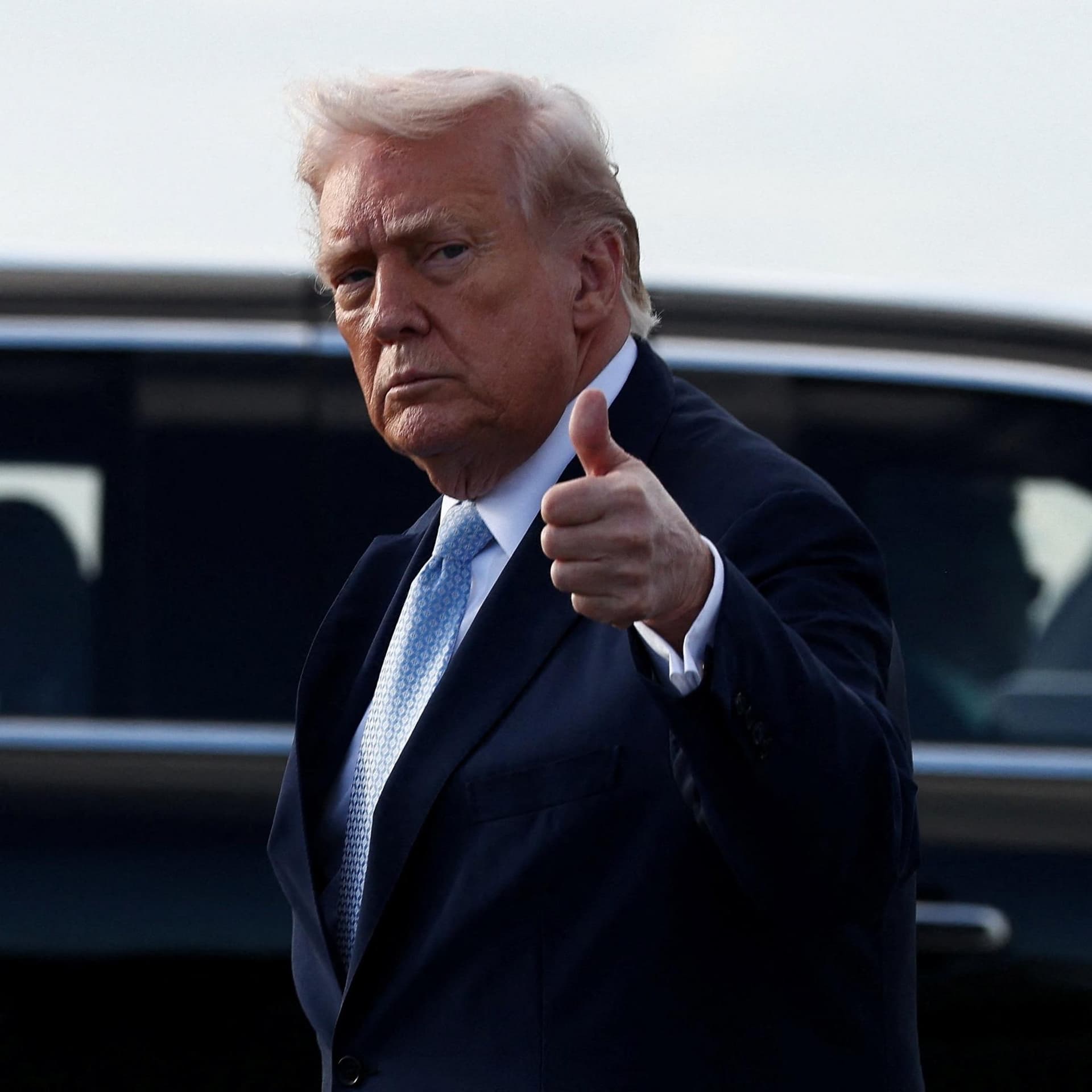
Photo: U.S. President Donald Trump gestures as he steps from Air Force One, March 20, 2026. Credit: Kevin Lamarque/Reuters