
In short
The death of U.S. Senator Lindsey Graham and what it signals about the future of U.S. foreign-policy hawks, especially on Ukraine and Iran.
Guests and backgrounds
Daniel Bush, BBC Washington correspondent covering the White House and foreign policy; previously a congressional reporter who covered Graham. Alex Holder, British documentary filmmaker who spent four and a half years following Graham for an upcoming documentary.
Key claims
Graham was a “hawk” who never saw war he didn’t like, closely influential with President Trump, and a major driver of support for Ukraine and regime-change pressure on Iran. His legacy may be contested as the Republican Party shifts toward anti-interventionism.
Notable examples
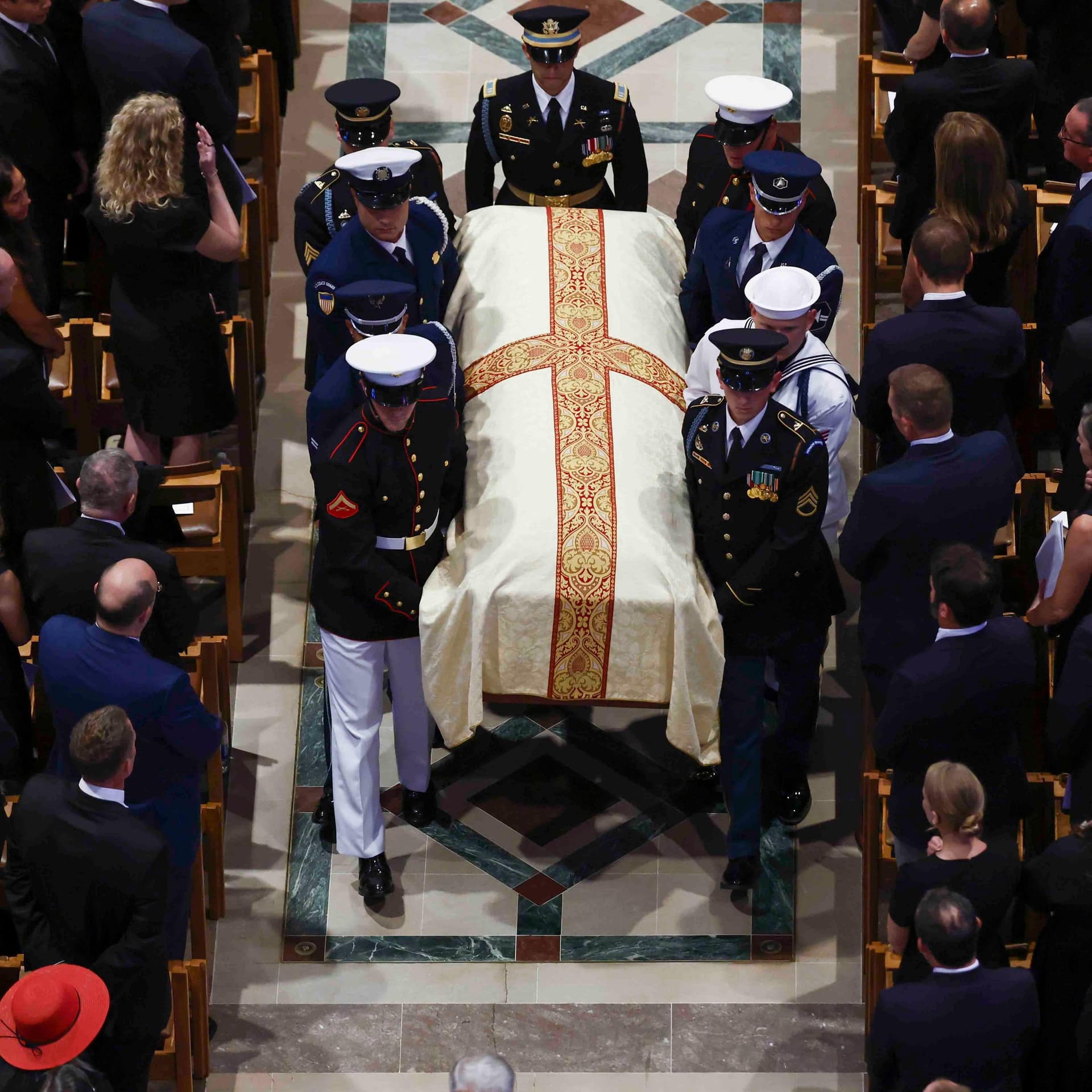
Graham’s funeral at Washington National Cathedral drew President Zelensky and Prime Minister Netanyahu; a Russia sanctions bill renamed for Graham passed the Senate with 86 votes; Holder describes Graham celebrating U.S.-Israel strikes on Iran as years of pushing culminating. Laura Loomer’s Ukraine trip is discussed as a possible “mantle” contender, though Trump’s Ukraine end-goal remains ending the war without continued large funding.
Written by AI. May contain mistakes. Listen to the episode to check what was said.
Chapters
Tap a time to open that second in VOLindsey Graham's Legacy
0:45 to 2:04
Discussion on Lindsey Graham's influence in U.S. foreign policy.
“And on Good Bad Billionaire, we're exploring the life and fortune of music megastar Sir Paul McCartney.”
Funeral Reflections on Graham
2:16 to 6:48
Insights from Daniel about Graham's funeral and its attendees.
“I mean, like, how long have we been pushing this?”
Documentary Insights on Graham
6:59 to 12:09
Alex Holder shares his experiences filming Lindsey Graham.
“We're going to step away from Daniel for a few minutes and we'll come back to him.”
Legislation Impacting Graham's Legacy
12:15 to 14:00
Discussion on the legislation influenced by Graham's policies.
“And on Good Bad Billionaire, we're exploring the life and fortune of music megastar Sir Paul McCartney.”
Legislation Impact on Russia's War Effort
14:00 to 15:00
Discusses the recent sanctions bill aimed at curbing Russian imports for war.
“off Russia's ability to import the technology it needs for its war effort?”
Bipartisan Support for Lindsey Graham
15:00 to 16:20
Highlights the Senate's bipartisan passage of a bill honoring Lindsey Graham's support for Ukraine.
“And we'll get into this maybe a little bit later in this conversation.”
Graham's Foreign Policy Legacy
16:20 to 17:50
Explores Graham's long-standing support for traditional U.S. foreign policy.
“Well, Graham came from a sort of what we would now call an old school model of politics, which is that your politics ends at the water's edge.”
The Current State of Republican Support for Ukraine
17:50 to 19:00
Analyzes the dwindling Republican support for U.S. aid to Ukraine post-Graham.
“And of course, one of the last things Lindsey Graham did before he passed away suddenly was a trip to Ukraine.”
Laura Loomer's Shift on Ukraine
19:00 to 21:00
Discusses Laura Loomer's unexpected support for Ukraine after her visit.
“there's a lot of uncertainty about whether that strain of Republican foreign policy still has a place in the current Republican Party and who might pick up the mantle.”
Loomer's Influence and Future in GOP
21:00 to 23:20
Speculates on Loomer's potential influence on GOP foreign policy and her statements in Ukraine.
“She visited a monastery that was hit by a Russian drone.”
Show all 11 chapters
Future of Republican Foreign Policy Debate
23:20 to 26:10
Considers the future candidates and factions within the Republican Party's foreign policy debate.
“and President Trump starting a war with Iran, intervening in Venezuela to remove the leader there, and obviously supporting Israel.”
Transcript
Automatic transcript. May contain errors.0:00Alex Holde:This BBC podcast is supported by ads outside the UK.
0:30Alex Holde:No bouncing between tabs. And best of all, no spreadsheets. Stop managing software and start managing your business with one unified system. Try for free today at odoo.com. That's O-D-O-O dot com. I'm Simon Jack. I'm Zing Zing. And on Good Bad Billionaire, we're exploring the life and fortune of music megastar Sir Paul McCartney. Macca. As one of the primary songwriters in The Beatles. And with an extensive solo career. His work generates vast and continuous royalty streams. But were song royalties alone enough to break the billion? And earn him the title of the first British billionaire rock star?
1:07Alex Holde:Find out in Good Bad Billionaire from the BBC World Service. Listen now, search for Good Bad Billionaire wherever you get your BBC podcasts.
1:20Alex Holde:He had unwavering faith in the righteousness of American power and prayer. He was extremely hawkish. I will tell you, he never saw war that he didn't like. That's President Trump paying tribute this week to the late Senator Lindsey Graham, as politicians and foreign leaders gathered in the National Cathedral here in Washington, D.C. for Graham's funeral after he unexpectedly died earlier this month. Lindsey Graham was a senator from South Carolina who had an outsized influence on President Trump and his foreign policy, a Republican from a different era. Some would say a dying breed in a modern MAGA movement, an outspoken supporter of Ukraine and Israel who backed regime change in Iran.
2:04Alex Holde:Coming up, we speak to our BBC Washington colleague about Graham's influence and also a documentary filmmaker who had unprecedented access to the senator at major foreign policy moments.
2:15Daniel Bush:Look what we've done here.
2:17Alex Holde:Like the start of the Iran war. I almost cried. I mean, like, how long have we been pushing this? I mean, you've been pushing this for years, right? Right, it's here. From the BBC, I'm Asma Khalid in Washington, D.C. And today on The Global Story, the death of Lindsey Graham and what it means for U.S. foreign policy.
2:42Alex Holde:Daniel Bush, welcome back to The Global Story. We've had you on before, but for those who may not know you, could we have you just ever so briefly introduce yourself?
2:51Daniel Bush:It would be my pleasure, Asma. I'm the Washington correspondent here at the BBC. I cover the White House, the administration, obviously a lot of foreign policy this year, and Trump's second term in office.
3:01Alex Holde:Yeah, and you've covered Congress as well in a previous iteration of your life.
3:04Daniel Bush:A previous life, campaign reporter, yep.
3:07Alex Holde:And you covered Lindsey Graham.
3:08Daniel Bush:I did, yes. When I was a congressional reporter, this was in Obama's second term. I had many conversations with the late senator on the Hill, and he was quite the character. Always happy to mix it up with reporters, knew what he was talking about, was a big, larger-than-life character on the Hill, certainly.
3:25Alex Holde:Daniel, I'm really grateful that you're able to spend some time with us because not only have you covered the late Senator Lindsey Graham in your life, you also were one of the pool reporters, which we should explain to people means that you're part of that tight little ring group of reporters that travels everywhere with the president on a given day, you know, sharing notes and tape with your fellow reporting colleagues. And this week, I would say, was a major moment for politicians, for diplomats, and even for world leaders. And that was on Tuesday when the late Senator Lindsey Graham's funeral was held.
4:03Alex Holde:You were there in the National Cathedral covering President Trump. What was the moment like?
4:10Daniel Bush:Well, it was really sort of almost a mini presidential funeral service in the sense that when heads of state pass away in the United States, you know, world leaders from around the globe show up in Washington to pay their respects. When senators pass away, however, that typically doesn't happen. And yet this week we saw two world leaders, President Zelensky of Ukraine and Prime Minister Netanyahu of Israel, making the trip all the way, halfway around the world, to be here in Washington to pay the respects for Lindsey Graham. Of course, the president himself, President Trump, was there.
4:43Alex Holde:Today we gather in the deepest gratitude and profoundest sorrow to honor a beloved friend, a devoted brother, a respected statesman, a giant of the United States Senate, and a true American original who left us much too soon. And that can only be the one and only Lindsey Graham.
5:11Daniel Bush:The vice president, a number of cabinet members, dozens of members of Congress, And all of that spoke to Lindsey Graham's reputation, his presence, his impact on Washington. He really was a senator that stood out from the crowd and was a very influential voice on foreign policy. And I think that's why we saw. And you heard that in the funeral, right?
5:32Alex Holde:In the eulogies that were delivered.
5:34Daniel Bush:Certainly. I mean, Sean Hannity, the Fox host, gave probably the longest eulogy at the funeral. He spoke a lot about foreign policy and Lindsey Graham's influence on Trump in particular when it comes to foreign policy. Lindsey, he was often unfairly characterized as a warmonger.
5:51Alex Holde:I've heard that false criticism a lot. It's not true. The truth was the opposite. Lindsey desperately wanted and talked to the president about a lasting peace in the Middle East. He wanted every region, every country in the region on that path to peace. That was Lindsey's dream.
6:12Daniel Bush:If people would only listen to what he had been saying. The president in his briefer eulogy for Lindsey Graham didn't get into specifics, but he did say that Lindsey Graham was a hawk who never saw a war he didn't like.
6:24Alex Holde:Only his true friends would understand that, but he wanted it for the good of our country. He felt in his bones that our destiny is to win and that his job was to do everything he could to ensure our enemies would lose.
6:37Daniel Bush:And so foreign policy sort of loomed over this moment. As Washington got together to remember Lindsey Graham's legacy and in particular his impact when it came to arguing for more support for Ukraine and his views on Iran.
6:59Alex Holde:We're going to step away from Daniel for a few minutes and we'll come back to him. But first, we want to understand more about Lindsey Graham and how he saw the world and his influence on President Trump's foreign policy. So we're going to turn to Alex Holder. He's a British documentary filmmaker who, for the last four and a half years, has been following Lindsey Graham around for an upcoming documentary. Alex, welcome to The Global Story. Thanks for taking the time and speaking to us. A pleasure. I do want to get a sense from you, Alex, of what Senator Graham was like. You spent a lot of time with him.
7:36Alex Holde:What was he like, in your view, as a person? He was a very complicated, very funny individual. He had a very close relationship with his staff, but he knew what he wanted and he knew what his goals were and he would do everything he could to achieve those goals. He treated politics as a game. And for him, it was about how to win that game, right? And so he was always thinking about the different pieces on the sort of chess ball that he had to move and to anticipate.
8:14Alex Holde:You know, you mentioned he knew what his goals were. Many of his goals were in the realm of the foreign policy. They were on the global stage. And you followed him during some really pivotal moments and saw, I would say, behind the scenes moments that so few of us get the chance to do. I myself am someone who's covered a lot of Washington politics. I've covered the White House. But I think what I was so struck by in seeing some of the footage from your documentary is these are really candid conversations that I don't know that we often get to see. There was this moment that you track when Lindsey Graham is celebrating the start of the Iran war.
8:51Daniel Bush:what we've done here.
8:52Alex Holde:Can you walk us through what that was like? You know, the strikes that the U.S. and Israel began on Iran were in late February. When was this footage taken? And where was this? What was the scene like? Yes, I mean, it was a few days after the sort of surprise attacks from the U.S. and Israel on Iran. And his reaction was, you know, beyond overjoyed that
9:15Daniel Bush:what he had been pushing for so long had finally happened in his mind. I almost cried.
9:21Alex Holde:I mean, like, how long have we been pushing this? I mean, you've been pushing this for years, right? Right. It's here. I'm talking to Trump, this boy. Well, he's Jack. It's the best thing I've ever done. He loves blowing stuff up. So for him, it was, you know, the culmination of years of pushing and trying to achieve this outcome. So he was overjoyed, absolutely. He couldn't believe that this had happened. There are a lot of people inside that didn't want to do it. So I've had my challenges. But President Trump, when he gets into the zone, he listens. He asks good questions. You know, no tweeting.
10:09Alex Holde:He hasn't tweeted much at all. No drama. He's been a great wartime president. I said last night that Trump and Bibi are like Roosevelt and Churchill. I mean, they're the right two guys to confront this evil. I would say that over the four and a half years, that was probably the most happy I'd ever seen him yet. I have one final question for you, and that is that Lindsey Graham, in some ways, when you look at the arc of American politics seems a bit like a relic. He was no doubt a leading voice on foreign policy in the Republican Party. You had been following him around, as you say, for the last four years.
10:55Alex Holde:But I wonder where his legacy, where his worldview sits at this moment. I mean, do you feel his story is done? I think that we will only know once these various issues that he was championing play out, right? I think that it's a bit too early to say.
11:14Alex Holde:I think one of the moments where I felt he was very concerned was how he was not getting the support he thought he should get from some of his colleagues, and that he was sort of a one-man band, on specifically the Ukraine issue and also on the Iran issue as well. And he felt he wasn't getting the support of his Republican colleagues. Exactly, exactly. And he found that difficult to comprehend. and that was pretty interesting to capture and to witness that. And I think it's still probably too early because so many of the things that he was pushing haven't yet come to a conclusion.
11:56Alex Holde:Well, thank you for sharing some of that with us and for sharing your insights. We appreciate it. Lovely speaking to you.
12:15Alex Holde:I'm Simon Jack. I'm Zing Zing. And on Good Bad Billionaire, we're exploring the life and fortune of music megastar Sir Paul McCartney. Macca. As one of the primary songwriters in The Beatles, and with an extensive solo career, his work generates vast and continuous royalty streams. But were song royalties alone enough to break the billion? And earn him the title of the first British billionaire rock star. Find out in Good, Bad Billionaire from the BBC World Service. Listen now, search for Good, Bad Billionaire wherever you get your BBC podcasts.
12:53Alex Holde:OK, so, Daniel, you cover Washington. And there was a particular piece of legislation that senators were voting on this week that, to me, is a sign of how Lindsey Graham and his influence on foreign policy continues, at least in this moment, to affect the administration and affect the Republican Party despite his death.
13:11Daniel Bush:Yeah, so this was an interesting moment. This is a Russia sanctions bill that Lindsey Graham had championed that would put more Western sanctions on Russian oil and gas and also countries that buy Russian oil. Correct, because Russia has continued to sell its energy around in the world, and that has helped fund their war effort. It also included sanctions on technology that Russia uses to produce weapons. This is an issue I've covered closely. You know, Russia imports a lot of parts, a lot of technology, microchips and other things, some of which is made inside the United States. That goes into drones, it goes into tanks, it goes into missiles, and this has been a huge priority for Ukraine.
13:53Daniel Bush:And in speaking with members of parliament in Ukraine, this is something they always bring up is why can't the U.S. and the West do more to cut off Russia's ability to import the technology it needs for its war effort? So this legislation would do that. It's impossible to fully cut off in a globalized economy where China has played a big role in allowing those imports to flow. But it would be a step towards making it a little bit harder for Russia to get the parts it needs for its war effort.
14:18Alex Holde:Am I correct in understanding that that there's been chatter on Capitol Hill for a really long time about the sanctions bill. And it only passed the Senate last night. Right.
Read the full transcript
14:29Daniel Bush:And was renamed. It was renamed after Lindsey Graham. You know, this was a moment where this passed with 86 votes in the Senate asthma, which, you know, it does not happen all that often. So a big sign of bipartisan support for this bill and for Lindsey Graham. It wasn't the final passage that could come pretty soon. But it was a moment where Democrats and Republicans came together in a way to honor Lindsey Graham, right, because he had been a champion of this. It passed. And it was notable also, Osmo, because there are fewer and fewer Ukraine champions in the Republican Party. And we'll get into this maybe a little bit later in this conversation.
15:04Daniel Bush:But, you know, especially when Trump took office for the second time, it solidified the anti-interventionist wing of the party as the core sort of ideological group within the Republican parties. There are a lot of MAGA supporters out there who do not want the United States entangled in foreign wars, do not want to see taxpayer dollars go to other countries. And there's a dwindling now group of Republicans in Congress. Lindsey Graham was one of the biggest members of this that said, we need to continue to approach foreign policy from a traditional sense of, you know, the U.S. helping out its allies around the world, even if there isn't an immediate benefit for America.
15:43Daniel Bush:And so Lindsey Graham was a champion of that with Ukraine, really pushed Donald Trump, you know, again and again and again, not to abandon Zelensky, not to abandon Kiev. And we saw this week Republicans and Democrats coming together and sort of honoring that vision.
15:57Alex Holde:I mean, I think it's worth pausing on this idea that Lindsey Graham was such a staunch advocate for Ukraine in its war against Russia, because, as you alluded to, this is not a position that's a given in the modern Republican Party. There are many, many Republicans who are skeptics of U.S. support for Ukraine. Can you help us understand why Graham emerged as such an ardent supporter of Ukraine?
16:23Daniel Bush:Well, Graham came from a sort of what we would now call an old school model of politics, which is that your politics ends at the water's edge. This idea that America has a unique role in the world as a supporter of human rights, a supporter of democracy, a supporter of its allies. And that's something that Mitch McConnell subscribed to and other Republicans that are now almost entirely not in Congress. I mean, they've been replaced by more conservative strain. It was a hawkest range, right? And it's also tied to the war in Iraq, right? A moment in time when Republicans pushed to build democracy abroad that was deeply criticized and it led to a complicated war effort that went on for years and years and years, right?
17:08Daniel Bush:So this is not uncontroversial, but this is the position that Lindsey Graham had for years. And again, that Mitch McConnell and other Republicans had that, you know, U.S. had a basic obligation to provide support for its allies abroad. And now there are fewer and fewer Republicans who share that view.
17:23Alex Holde:Is there anyone left in the Senate?
17:24Daniel Bush:Not a whole lot. There are some, but not a whole lot. And on the other side, you have, you know, your Marjorie Taylor Greene's, your vice president of the United States, J.D. Vance, who was on record before he became vice president, saying Ukraine is not our war and who was a vocal opponent at times of aid to Ukraine. So that is the ascendant wing of the party. But it speaks to Graham's stature in Washington and the Senate and in particular his close relationship to President Trump, that the sanctions bill was able to get through and more broadly that that sort of wing of the party that supports Ukraine has not completely gone away.
18:01Daniel Bush:And of course, one of the last things Lindsey Graham did before he passed away suddenly was a trip to Ukraine. Long time no see. Heavy news. Thank you very much. Happy to see you. How are you? Good. Older.
18:15Alex Holde:Older.
18:15Daniel Bush:Older, Ellen. But no wiser. Which was both symbolic to show his support as one of the more prominent members of the Senate for Ukraine, for Zelensky in particular, and then also to continue the work of the sanctions bill, the Patriot Missile Defense System. I'm pleased to announce, as of about 30 minutes ago, we've reached agreement with the White
18:38Alex Holde:House on a version of the Russian sanctions bill that they will support.
18:44Daniel Bush:It means it's going to become law. You know, the senator going to Ukraine sent a message to the rest of the world that there are still Republicans in Washington and still people close to President Trump who support Kyiv.
18:57Alex Holde:A question that has been on my mind is, with the death of Lindsey Graham, there's a lot of uncertainty about whether that strain of Republican foreign policy still has a place in the current Republican Party and who might pick up the mantle. And I noticed that in the last few days, Laura Loomer, who has been a known skeptic of the war in Ukraine, MAGA influencer, has been in Ukraine, championing Ukraine. And I have a couple of questions about that, but I think for the uninitiated, can you just ever so briefly explain who she is and what her role in the MAGA movement is?
19:43Daniel Bush:Sure. So she's one of a small group of very influential conservatives who have large online followings, who have become prominent members of the MAGA movement, who are also relatively close to the White House and to President Trump. We saw Loomer last year push for the president to make high profile firings and changes to his team at the White House. Those changes went through. Whether or not she deserves full credit is a matter of debate. But she's someone who has positioned herself as being close to President Trump and also having a loyal filing among MAGA supporters. And I should also note she is famous for being a conspiracy theorist in part, right?
20:23Daniel Bush:for championing a lot of conspiracy theories about American government, its role in the world, and so on.
20:29Alex Holde:And has made really vitriolic public statements about Muslims and Islam pretty routinely, I will say.
20:36Daniel Bush:Yes, and that's another part of this, is that there are several big conservative MAGA influencers online who have towed the line or crossed the line into some of the white nationalist rhetoric, and Loomer certainly tied to that.
20:51Alex Holde:So, Laura Loomer traveled to Ukraine. For years, I've been pretty anti-Ukraine.
20:58Daniel Bush:You know, it was a very politicized issue in American politics.
21:03Alex Holde:She visited a monastery that was hit by a Russian drone. She ate at a McDonald's at a burned-out building. I believe she visited a damaged power plant. People love being keyboard warriors and saying things are fake, but they should come themselves.
21:17Daniel Bush:I was once that person, too. But then I decided to come to a war zone and see things for myself.
21:23Alex Holde:And perhaps most notably, she interviewed Vladimir Zelensky, the president of Ukraine. You know, I'll admit I've said some pretty terrible things about Ukraine and terrible things about you as well. Openly on social media, I mocked you. I, you know, was part of the group of people in the United States who was very frustrated by the state of my country. And in the context of this all, she apologized for falling for what she described as Russian propaganda. I just wanted to share with you as somebody who was anti-Ukraine and who did consume a lot of Russian propaganda. I used to write articles for RT.
21:58Alex Holde:I wrote about five articles for RT and I regret doing so. And I've come to realize that I was bamboozled by Russian propaganda. And I came to believe a lot of untrue things about Ukraine. And in fact, send out a message online on X afterwards saying that she can, I'm going to quote her here, see why Lindsey Graham loved Ukraine so much. And she says, I see it now. How do you interpret what she's been up to in Ukraine? And do you see her as someone who might actually take on Lindsey Graham's mantle? And I ask that because she did an interview with Politico Playbook this week in which she suggested maybe that person has to be me.
22:38Alex Holde:And I think for anyone who sort of understood Laura Loomer's past foreign policy, it was a real sort of eyebrow raising moment.
22:45Daniel Bush:It was certainly a sort of shocking 180 that surprised everyone. The trip to Ukraine, all the rhetoric you just laid out was not something that I think anyone would have expected from Loomer. A couple of different ways to interpret it, to think about it. But one thing is to say that when it comes to President Trump's foreign policy in his second term, he has been squarely opposed to a lot of key parts of his constituency when it comes to these powerful, influential MAGA influencers who have made the argument for years that America should, again, disentangle itself from foreign conflict, be anti-interventionist, focus on economic issues here at home.
23:27Daniel Bush:and President Trump starting a war with Iran, intervening in Venezuela to remove the leader there, and obviously supporting Israel. All of those things have been diametrically opposed to key parts of his base, including Loomer. And that has been difficult for the president. And what we saw from Loomer was instead of continuing to move away from the president of foreign policy, continuing to drive a bigger and bigger wedge between Trump and parts of the MAGA base. She did this unexpected reversal and moved closer to him on foreign policy and said, well, actually, maybe we shouldn't fully abandon Ukraine.
24:04Daniel Bush:You know, actually, maybe there is something to...
24:07Alex Holde:But you seem to go further, I would say, than what I've heard from the president of the United States himself in the past.
24:11Daniel Bush:She did, and she certainly was advocating for more involvement in Ukraine than perhaps President Trump is comfortable with. So, you know, is she trying to push Trump in that direction? Is she trying to signal to her supporters, you know, I've been critical of Trump in the past in foreign policy, but maybe he was more right in the end than I was willing to admit. It's a little unclear. We can get in her head, certainly. You know, I do think it's important not to overstate her influence with Trump, because coming out of her visit to Ukraine, there's been a lot of speculation about, will she now convince President Trump to suddenly turn around and start giving Ukraine billions in funding?
24:47Daniel Bush:That's unlikely. President Trump has a pretty clear idea of what he wants to do with Ukraine, which is, you know, he wants an end to the war. He's unwilling to continue to fund the war effort in Ukraine. And that's about as far as he's willing to go. And is Loomer's one visit to Kiev going to change all that? Probably not.
25:07Alex Holde:Daniel, do you see Laura Loomer as being the sort of future Lindsey Graham on foreign policy? Even as I say that question out loud, I'm someone who has covered Washington for a while. I hear the inner skeptic in my own voice as I ask that question. But if it's not her, let's say, is there anyone really in the current Republican Party who has the ability to do what Lindsey Graham did in the Republican Party? Or is that part of the party just gone now?
25:41Daniel Bush:That's a$64 ,000 question that will be answered in the 2028 Republican primary race. That's when we're going to see this debate really take hold. But the sort of the avatars of this debate, at least right now, are probably going to be J.D. Vance and Marco Rubio. You know, the two people widely expected to be the front runners for the Republican presidential nomination should they both decide to run. J.D. Vance represents what had been the loomer wing, you know, of the party that was more anti-interventionist, more critical of U.S. aid abroad. Marco Rubio represents that dwindling Lindsey Graham wing of the party that by and large, you know, has held a more traditional approach, been more hawkish, right, about U.S.
26:23Daniel Bush:intervention abroad. You know, so Marco Rubio stands out.
26:27Alex Holde:Marco Rubio still does echo a lot of that.
26:30Daniel Bush:And there are some senators on the Republican side of the aisle still who hold fast to that idea.
26:40Daniel Bush:but again they're a diminishing group
26:46Daniel Bush:certainly the advance wing of the party is ascendant but that debate will play out because it's going to be an open primary there are going to be many republicans are going to run and certainly you know we can expect a few of them to be more in that traditional mode, make that argument, perhaps even specifically when it comes to Ukraine, argue that the U.S. should step up and do more. Will they end up winning that debate? Who knows?
27:22Alex Holde:It was a real pleasure speaking with you. Thanks for taking the time.
27:25Daniel Bush:Likewise.
27:34Alex Holde:That was the BBC's Washington correspondent, Daniel Bush. And earlier, we also heard from the documentary filmmaker, Alex Holder. And folks, that's it for our show today. As always, we love hearing from listeners. So drop us a note. You can send us your thoughts, your questions, and even sometimes your complaints. Our email address is theglobalstory at bbc.com. And reminder that here at The Global Story, we dive deep every weekday on one big story that tells us where the world and America meet. If you're also looking for a way to catch up on the latest news headlines, then we recommend checking out our sister show, the Global News Podcast.
28:09Alex Holde:Our show today was produced by Aaron Keller and Zandra Ellen. It was edited by Martine Powers and Sam Bonham and mixed by Travis Evans. Our digital producer is Matt Pintus. Our senior news editor is Chyna Collins. And I'm Asma Khaled. Thanks as always for spending some time with us and we'll talk to you again tomorrow.
28:44Alex Holde:I'm Simon Jack. I'm Zing Zing. And on Good Bad Billionaire, we're exploring the life and fortune of music megastar Sir Paul McCartney. Macca. As one of the primary songwriters in The Beatles and with an extensive solo career, His work generates vast and continuous royalty streams. But were song royalties alone enough to break the billion? And earn him the title of the first British billionaire rock star? Find out in Good Bad Billionaire from the BBC World Service. Listen now, search for Good Bad Billionaire wherever you get your BBC podcasts.
From the publisher
Senator Lindsey Graham spent decades as one of Washington’s most prominent foreign policy hawks - a fierce opponent of Russia, relentless advocate for Israel and supporter of Iranian regime change.
Graham’s funeral this week drew the likes of Ukrainian president Volodymyr Zelensky and Israeli Prime Minister Benjamin Netanyahu, and both men took the opportunity to meet with Donald Trump in an effort to keep the president invested in the wars that both their countries are fighting.
On today's episode, we speak to the BBC’s Washington Correspondent Daniel Bush and documentary filmmaker Alex Holder, who has rare access to Lindsey Graham to unpack how the late senator helped shape Trump’s foreign policy approach.
Producers: Aron Keller and Xandra Ellin
Executive producer: Sam Bonham
Mix: Travis Evans
Senior news editor: China Collins
Photo: Guests stand for during the funeral for US Senator Lindsey Graham at the Washington National Cathedral in Washington, DC USA, 28 July 2026. Credit: Will Oliver / EPA/Shutterstock