
In short
Whether the US might strike Iran, and what could happen afterward—ranging from regime change to prolonged escalation or chaos.
Guests
Frank Gardner, BBC security correspondent (and regular on the show). He analyzes US-Iran military options and regional risks.
Key claims
Trump prefers a nuclear deal (“no nuclear weapons”); Iran has enriched uranium from 3.67% to 60%, raising weapons-grade suspicions. If talks fail, a strike could be broader than the June 2024 US attack on three nuclear sites. Likeliest outcomes include a hard Iranian response and possible months-long standoff; regime survival could be challenged via Revolutionary Guards control.
Notable examples
US June 2024 bunker-busting strikes; Al-Udeid missile defense; US Navy fears of swarm tactics; USS Cole (2000) and USS Stark (1987) attacks; June 2024 “performative” Iranian retaliation.
Written by AI. May contain mistakes. Listen to the episode to check what was said.
Chapters
Tap a time to open that second in VOEscalating Tensions and Military Activity
0:38 to 2:05
Discussion on the military buildup by the U.S. and the potential for conflict with Iran.
“For weeks now, the world has been watching to see whether Donald Trump will order military strikes on Iran.”
Interview with Frank Gardner
2:05 to 3:00
Frank Gardner discusses the likelihood of a deal and the nuclear concerns with Iran.
“We're in Washington, D.C., and today on The Global Story.”
Potential Military Strikes Scenarios
3:00 to 5:06
Analysis of the different types of strikes the U.S. might consider against Iran.
“I think President Trump would much rather have a deal, but the bar for that is quite high.”
Consequences of Military Action
5:06 to 7:22
Discussion on the implications of a military strike on Iran and U.S. interests.
“But before we get there, I just want to ask you, what are your interpretations of the different types of strike we might see?”
Outcomes of Potential Iranian Government Response
7:22 to 9:50
Exploration of possible responses from Iran if the U.S. strikes occur.
“So he certainly doesn't want to get into that.”
Asymmetric Warfare Tactics and U.S. Vulnerabilities
9:50 to 14:00
Insight into Iran's military capabilities and potential strategies against the U.S.
“take over from the Ayatollahs, what would military rule potentially look like in Iran for Iranians?”
Iran's Military Capabilities and Past Incidents
14:00 to 17:46
Explore Iran's potential military capabilities and historical examples of attacks on US vessels.
“which is still a threat to that US naval force.”
Potential Outcomes of US Intervention in Iran
17:46 to 23:30
Discuss the risks and scenarios following a potential US military strike on Iran.
“And you can now watch the global story on the iHeart app.”
The Hope for Democratic Transition in Iran
23:30 to 25:51
Consider the possibility of a democratic transition in Iran following regime change.
“about a lot because it's part of the great mythology that we, I will say we collectively as Americans often tell ourselves about foreign escapades and interventions.”
Concerns Over a Potential War with Iran
25:51 to 26:59
Examine the fears and concerns regarding an unnecessary conflict with Iran.
“And I think my greatest concern is that we stumble into an unnecessary and an avoidable war.”
Transcript
Automatic transcript. May contain errors.0:00Frank Gardner:This BBC podcast is supported by ads outside the UK.
0:30Just tap into iHeart to start watching. And we hope you enjoy the show.
0:38Frank Gardner:For weeks now, the world has been watching to see whether Donald Trump will order military strikes on Iran. Yesterday, an Iranian drone was shot down as it approached an American aircraft carrier in the Arabian Sea. A U.S. military spokesman said the drone was approaching, quote, aggressively and with unclear intent. And this comes as the U.S. continues to build up a military presence in the region, and tensions are high between Washington and Tehran. And by the way, there's another beautiful armada floating beautifully toward Iran right now. So we'll see. Trump says he wants to do a deal with Iran.
1:19And in the last few days, there do seem to be signs of dialogue. The White House Special Envoy Steve Wyckoff is expected to meet with the Iranian foreign minister on Friday in Istanbul.
1:30Frank Gardner:But Trump has made his position clear. If no last-minute agreement is reached, he says he's ready to order U.S. forces into action. And hopefully we'll make a deal. If we do make a deal, that's good. If we don't make a deal, we'll see what happens. All this is happening in the context of recent protests in Iran, which were followed by a brutal crackdown that for now has left the leadership intact. But any U.S. strikes could potentially have major consequences for the survival of the current Iranian government, for Iran's people, for the wider region, and for the world. From the BBC, I'm Asma Khaled.
2:07Frank Gardner:And I'm Tristan Redman. We're in Washington, D.C., and today on The Global Story. Is the U.S. really planning to strike Iran? And what could happen if it does?
2:27Well, Frank, it's lovely to have you back on the show. My pleasure. And it's always interesting to talk about Iran, a country I've been lucky enough to go to a few times.
2:36Frank Gardner:Frank Gardner is the BBC's security correspondent, and he's also a regular here on our show. Now, a heads up that we spoke to him before that news broke on Tuesday that the US has shot down an Iranian drone. Now, after that incident, White House Press Secretary Carolyn Levitt said that negotiations between the US and Iran are still scheduled for later this week. And when we spoke to Frank, we began by asking him about the chances of a deal emerging from the talks. I think President Trump would much rather have a deal, but the bar for that is quite high. He's made it very clear on his Truth Social, in capital letters, no nuclear weapons.
3:14Now, Iran has never admitted that it has a nuclear weapons program. It has a civil nuclear program. But what is making everybody suspicious is that it has enriched its uranium way beyond the level at which you need it for civilian civil nuclear power. And that level is 3.67 percent. It's been enriching it up to 60 percent. And it's a relatively easy jump from there up to 90 plus percent for weapons grade highly enriched uranium. The Iranians say, look, we want to have a deal. We want to negotiate. But we want to do it with mutual respect, et cetera, et cetera. But the cynics would say, and in fact, actually most analysts would say that Iran has tended to negotiate to try and put off military action or put off sanctions.
4:02It's given just enough to be able to stave things off. So if he's going to have a deal, if that really is going to be the sticking point, then I think that that raises the prospect of some kind of a military strike, which will have an extremely uncertain outcome. Frank, ultimately, what do you see as the likelihood that Trump will carry out a strike? I think the factors that are coming to bear here are he doesn't want to look weak. You know, having marched his troops up to the top of the hill, so to speak, metaphorically, he can't march them back down again unless he's got a deal. So that's why he needs the Iranians to cooperate.
4:42He'd much rather have a deal. He wants to be able to walk away from this and say, there, I'm such a great dealmaker. look at this, I've taken away the threat of Iran ever producing a nuclear weapon without a shot being fired, and we can all go home for tea. I'm not sure it's going to be that simple. The Iranians don't appear to be in a mood to really compromise whatsoever.
5:02Frank Gardner:Frank, we want to move in a second to your analysis of what the different ways this could play out would be. But before we get there, I just want to ask you, what are your interpretations of the different types of strike we might see? So they could go for a sort of almost a performative, limited, targeted surgical strike.
5:27Now, that's not what Donald Trump has said is going to happen. He said, you know, if we do this, it's going to be bigger and much harder than the June attack last year. So you're saying it won't be like June is essentially what you're saying, most likely. That's what he's saying. So June was very, very, as far as the Americans are concerned, it was very precisely targeted on three nuclear sites using these special bunker-busting bombs that they had designed specially for this purpose to hit three sites in the Tans, Isfahan and Ferdau. And that was a sort of cost-free, a risk-free, well, it wasn't risk-free, but it was cost-free for the US.
6:06This would be much more widespread. So as well as taking out Iran's air defences, it will be taking out its coastal missile, battery storage sites, Revolutionary Guards Corps bases, besieged militia training camps. Question is, are they going to go after the, try and decapitate the leadership? Now, in the past, Donald Trump has said, we can get him if we want it, but I don't want that. I didn't order that. But we know where he is. We could get him. Or words to that effect.
6:35Frank Gardner:I guess the question a lot of people are wondering is, the Maduro commando raid was so successful that has Donald Trump got a taste for that type of operation or is this a different kettle of fish altogether? Is it far too risky and highly defended, that sort of thing? Yes and yes is the annoying answer. He most certainly does have a taste for it. I mean, look, he likes to go in quickly and keep it clean and come out and not get bogged down. And with Maduro, that was very quick. The OPSEC, the operational security on that was extraordinary that they were able to execute that so quickly. Iran would be very different because if you're going to actually try and have regime change, you're going to have to have boots on the ground.
7:23And that hasn't played well in, think of Iraq, think of Afghanistan, think of all the blood and treasure that's been spilled and America getting bogged down there for years and years and hundreds, if not thousands, of US servicemen and women losing their lives. So he certainly doesn't want to get into that. His MAGA base doesn't want him to get into that. Remember, they elected him as someone who did not get bogged down in these overseas adventures. So if he's going to do this strike, he's going to have to think of the exit. How does it end? And don't underestimate the Iranians' sort of ability to to withstand these things.
8:03They say, look, we've been here for thousands of years. We're not afraid of this. At least that's what the regime is saying. But, you know, the repercussions, we simply don't know which way this could go. Frank, we want to turn to the analysis you recently outlined of potential different scenarios. You wrote a piece online for the BBC where you spelled out potential scenarios for what might happen if the U.S. does indeed strike Iran. Can you walk us through them? And I want to begin by asking you, what do you see as the likeliest potential outcome? Do you know, if we were having this conversation last week, I would have said that the most likely outcome is that there is going to be a pretty serious, big, deep, profound strike.
8:45And it could shake the regime, the Islamic Republic regime, to its core, whereby it is potentially overthrown, not necessarily by the people, but by the Revolutionary Guards Corps. and the Ayatollah, the rule of the Ayatollahs is replaced by a military government formed essentially by the Revolutionary Guards Corps. But where we are today now, where there's a lot of talk of negotiation, where we seem to have rode back from immediate action, this could go on, by the way, for weeks. I went to a talk recently by a recently retired US admiral and he said, this could well last three to four weeks. And in the same way as in Venezuela, that big US carrier strike force loitered off the north coast of Venezuela for quite some time.
9:32It's there loitering in the background. If negotiations fail, then that is what's going to happen. So, you know, there's talks of negotiations. Donald Trump is saying, well, let's hope that they come to their senses. But that could change in an instant.
9:48Frank Gardner:Okay, so if the military were to take over from the Ayatollahs, what would military rule potentially look like in Iran for Iranians? Ah, goodness. I don't think it would necessarily be that different. But, you know, you've got to remember that the man at the top of the tree in Iran is old, he's frail. People have been talking about who's going to succeed him for quite some time. He's been running that country since, I I think it's 1989. I mean, he is completely unbending. He's totally inflexible. And he's loathed by many, many Iranians, but he still has his loyal supporters. So, you know, you've got a dangerous situation here, which is why there could be a military takeover to try and enforce law and order to stop it breaking down into chaos.
10:37Because you've got those who want to see an end to the rule of the Ayatollahs and those who've got a vested interest in it continuing.
10:43Frank Gardner:So it's kind of same government, just different people at the top. They're wearing military uniforms instead of religious robes. If that is what happens, yes, exactly. There is another outcome that you've written about, Frank, which is that the government of Ayatollah Khamenei holds strong and fights back very hard. What would that look like? That I think is extremely likely this time.
11:11Back in June last year, Iran did a performative retaliatory strike. It warned that it was going to hit the US Coalition Air Operations Centre at Al-Udeid Air Base in Qatar. And they gave plenty of warning. The Qataris knew it was happening. The Americans knew it was happening. They got the Patriots fired up and shot down the missiles. And it was pretty harmless. It was still alarming, but it was performative. This time it won't be anything like that. Even though Israel is not involved in this, but Israel did fight a 12-day war with Iran last year where they had an exchange of missiles. And this is dangerous for Israel because this is about air defence.
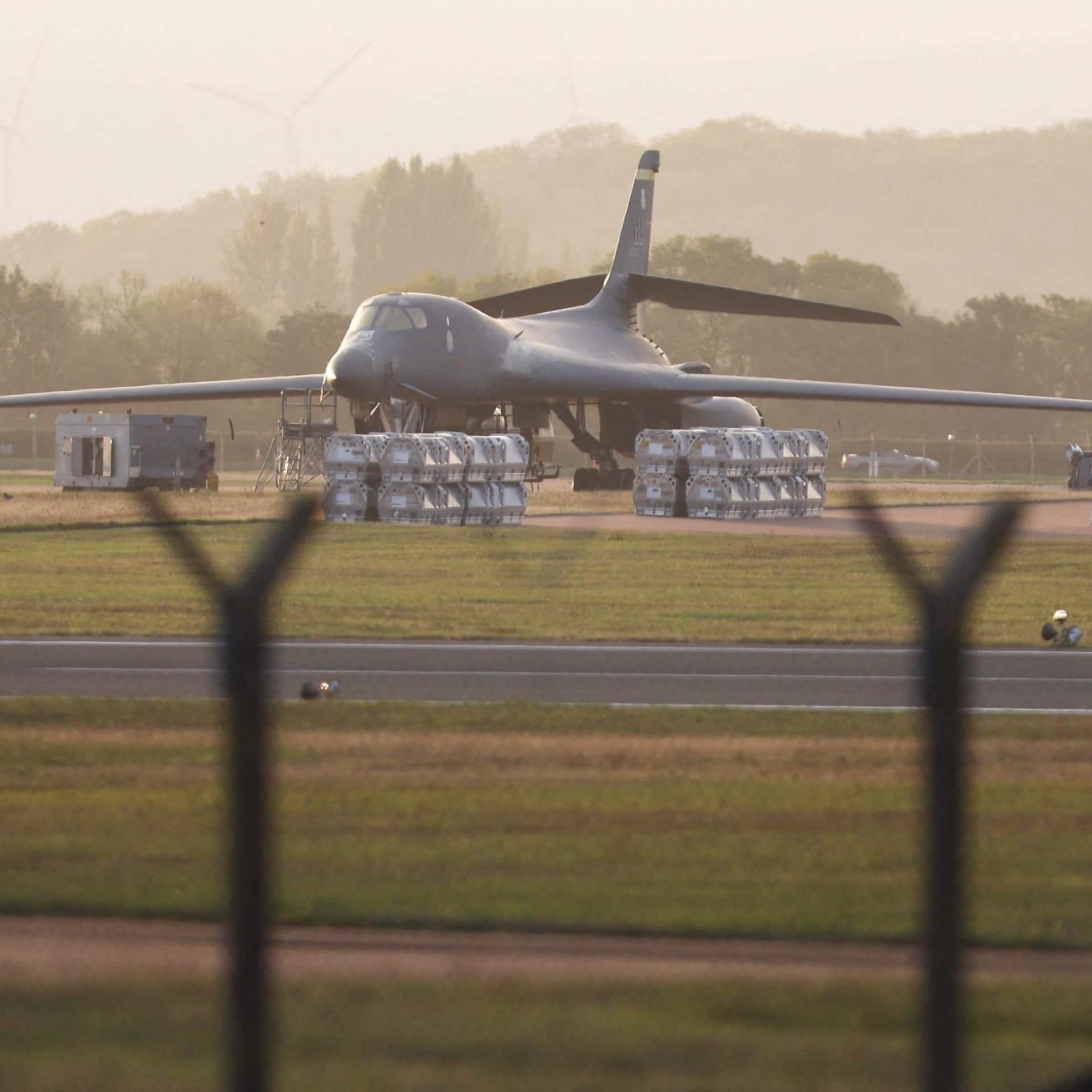
11:53And the Israelis will worry whether they've got enough missiles, things like THAAD, terminal, high-altitude air defence, whether they've got enough interceptors to be able to intercept the unknown number of ballistic missiles that Iran has managed to keep. And it could fire those missiles towards any number of US bases and US warships. They could also do something that the US Navy is quite worried about, which is swarm tactics. This is asymmetric warfare at its purest. The US has got this massively powerful armada, to use Trump's word for it, the USS Abraham Lincoln strike group with up to seven, maybe even eight guided missile destroyers.
12:40You've got a submarine, possibly more than that. You've got frigates and you've got air bases. It's a huge force. But what the Iranian Revolutionary Guards Corps Navy has practiced intensely is swarm tactics, whereby they would launch a huge number of drones and torpedo boats, fast missile torpedo boats, to try to overwhelm the close-in defenses of a US warship. Obviously, the prize for them is if they could sink the Abraham Lincoln.
13:15They've released a video, an AI video that they've put together, where it's a kind of mix of AI and some real footage, showing their navy and their sailors and their commandos in the Gulf. And in this video, there is a kind of AI-generated successful missile and drone attack on the USS Abraham Lincoln, which destroys it. And it ends with something like, we're going to get eaten with you.
13:49Now, it's a bit of Iranian revolutionary guard hubris because they are no match for the US Navy. But they have got ways to try and fight an asymmetric war which is still a threat to that US naval force. Is the Iranian military capable of doing that, you think? It has the resources to do that. I'm not sure they're capable of sinking the Abraham Lincoln, but they could theoretically, they could certainly cripple a US warship if they were able to deploy enough drones, enough torpedoes, enough attack boats. Yeah, they could. And there is a precedent for this. In October 2000, Al-Qaeda rammed a speedboat into the side of the USS Cole in Aden Harbour, and that killed 17 sailors, and it went limping back to Norfolk with a hole in its side.
14:37In 1987, an Iraqi jet during the Iran-Iraq war launched two Exocet missiles at the USS Stark, thinking it was an Iranian tanker, and that killed 37 US sailors. So they're not invincible. The US Navy would send up a wall of fire, but there's a lot of volume there that the Iranians have got, and a lot of these drones, and they've been practicing this. So that is a factor that the US is going to have to calculate as, you know, they are nervous about that.
15:08Frank Gardner:Frank, I have to ask because there have been a number of moments in the last year or so where the Iranians have launched attacks on Israel, either with missiles or with drones. And the Israeli defense has held strong. There have been missiles and drones that have got through, but the effects of the attack have been mitigated, certainly by Israeli air defenses. Is there a chance that Iran has so many missiles and drones left in its arsenal that it could take things up another level altogether? Or do we just not know? Again, yes and yes. I think there is a chance that they've got enough missiles to overwhelm, in some places, Israel's air defences, yes.
15:56But we actually don't know just how much they've got left. So the coast of Iran, the Iranians call the Gulf Khalidjifars, the Gulf of Persia. They get very upset if somebody calls it the Arabian Gulf. Arabs call it the Arabian Gulf. We have, these seem very much to echo some of the conversations that are happening here domestically.
16:14Frank Gardner:Yes, who knew that the names of gulfs could be so political all over the place? Exactly. Yeah. So I just call it the Gulf, you know, and take flack from both sides. But I've been to Hormuzgan province, which is the province that Bandar Abbas and their big naval base is on. And I've been to their port there and I've even stayed in their naval headquarters there. And the mountains rise up pretty quickly from the coast. And there are any number of caves and places that you can hide weapons in there. And one of the things that will be worrying the Americans is anti-ship missiles. If you remember way back in 2006, when Israel fought Hezbollah, that war was partly triggered by Hezbollah firing a Chinese-made, but Iranian-supplied, anti-ship missile that hit an Israeli warship way out in the Mediterranean.
17:08Now, I don't know exactly what the range of these things are, but they've got weaponry in those hills that could do damage. So that is a danger for the US flotilla that is offshore there.
17:45world and America meet.
17:47Frank Gardner:And you can now watch the global story on the iHeart app. Catch every brand new episode every weekday. Just tap into iHeart to start watching. And we hope you enjoy the show.
18:04Frank, can I move on to another scenario? There are a number of examples of military interventions that have led to dictatorships falling to subsequently then be replaced by chaos. I can think of Iraq, Libya, just as recent examples. Could that be another potential outcome of any potential U.S. strike on Iran? Well, I don't think it's inevitable that chaos would ensue, but that is probably the worst case scenario that the U.S. ends up tipping up the chessboard and walking away, leaving a country in absolute chaos. And we see a repetition of horror and terror and bloodshed that Iraq, Syria, Libya, and Yemen have all experienced in the wake of popular uprisings that have essentially failed to deliver peaceful democratic governance.
19:02But Iran is quite a sophisticated society. Iranians are sophisticated people. They are They're well-educated. They've got a huge interest in the outside world. It's not a hermit kingdom like North Korea. They travel. They've got relatives in Los Angeles and London and Paris. They are a sophisticated, intelligent population. Could we see a civil war in Iran, Frank? Well, I think you're going to have to ask an Iranian expert on that. I haven't spent enough time there recently to give you an up-to-date view on that. I'm going to put my hands up on that. What I would say is that Iran is a patchwork of a lot of different interests and ethnicities as well.
19:47You've got the Azerbaijanis, the Kurds, the Baluchis, the Turkmens, and not everybody by any means are devout Shia Muslims. You've got, I mean, small minorities, but Christians or Russians, Jews, and so on. It is a vast country with over 90 million people. It's huge. And the idea of those fissures that have been papered over by this regime breaking open is pretty worrying.
20:18Frank Gardner:Frank, we've been hearing reports in the last few weeks that the Saudis and the Qataris and the Israelis have been voices in Donald Trump's ear trying to walk him back from an attack on Iran because precisely of this fear that chaos could ensue. What are your contacts in the region telling you about this? Well, the Israelis are an interesting one here because the Israelis can't wait to see the back of the Islamic Republic. Israel had very good relations with the Shah of Iran. They had pretty much, they even had some military cooperation. And plenty people have said, look, there's no reason why Iranians and Israelis can't be friends.
20:59But Israel perceives the Islamic Republic to be an existential threat to its entire existence as a country, because the Islamic Republic keeps vowing that it would be a good thing to bring about the destruction of the state of Israel. It calls it the Zionist entity. So Israel is determined to eliminate that nuclear threat, but it would much rather that the entire Islamic Republic was gone to be replaced by a peaceful, democratic, outward-looking democracy.
21:33When I spoke to an Israeli official about a week ago, he said, we're staying out of this. We're staying right out of this. We're not involved. But there have since been high-level meetings in Washington between the US and Israel, Israeli officials, military officials, to discuss the situation in Iran. And I don't know what was said inside those walls. You know, it's not been made public. So we don't really know what is exactly going on there. There will be people saying, come on, let's finish this. You know, we did so well in June last year. Let's finish this. We can topple these people and remove this threat once and for all.
Read the full transcript
22:15There will be others saying, do you know what? We don't have the air defense for this. If Iran has got as many ballistic missiles as we fear they might have, they could absolutely deluge Tel Aviv.
22:29Now, I would say that for a long time, Israelis lived in fear of Hezbollah's missiles and rockets absolutely deluging Tel Aviv, which didn't happen. So it's possible that people have got an exaggerated idea of how much weaponry Iran has got left. As to the Gulf states, the Qataris, who host the biggest US base in the entire Middle East at a place called Al-Udeid, that is a very obvious target. The last thing the Qataris want is a load of Iranian missiles falling on their territory, which is why their prime minister and foreign minister, same person, has been in Tehran in the last two days trying to defuse this, trying to de-escalated.
23:11He's met the Iranians. He's tried to sort of talk them down and get them to compromise. He will have said, look, we deal with Trump. This is how you need to deal with him. Give him something. If you don't give him something, he's going to attack you. So once again, the Kateri is at the very center of the action, it would seem.
23:27Frank Gardner:Yes. Frank, the final outcome here that we want to ask you about is one that I've been thinking about a lot because it's part of the great mythology that we, I will say we collectively as Americans often tell ourselves about foreign escapades and interventions. And that is the idea that a U.S. strike could lead to a transition to democracy. Now, I am not so naive to think that that is necessarily going to happen. I realize it is arguably perhaps one of the least likely outcomes, but it's one that some would say is hopeful. Could it happen? What's the likelihood? It could. This is the dream. This is what millions of Iranians and people around the wider Middle East would like to see happen, that this barbaric, brutal, hideous regime that has imprisoned Iran's people for so many decades is replaced by something approaching democracy.
24:26Iran is a kind of sham democracy where they have elections, but actually the people don't get to choose. You know, only the supreme ruler ultimately and various other bodies loyal to him get to choose who the candidates are. It's like in Russia. It's a sort of pretend democracy, sort of sham elections. I mean, Iran is a success story that is waiting to happen. Iran has so much to offer the world. Quite apart from anything, it's energy. So its oil and its oil industry is in a terrible state. It's desperately in need of revamping. China, of course, is the big market for this. So if anybody's going to be investing, it's probably going to be China.
25:06But Iran is heavily sanctioned. The economy is in a dire state. People are struggling to make ends meet. And a very large number of people would like to see the back of this regime. Could it happen? Yes. Yes, but the tipping point during protests comes when large elements of the security forces either lay down their weapons and refuse to shoot protesters or actually go over to their side. And we haven't seen that happen. And it's possible that somebody who replaces me in this job is having this conversation with you in 10 years' time. That's a depressing thought. I think it's unlikely, but it's still possible.
25:50Frank Gardner:Well, Frank, what's your greatest concern at this point? Because it's a moment of some peril. It is, I think, a moment of peril. And I think my greatest concern is that we stumble into an unnecessary and an avoidable war. Now, it may be that Iran is simply not prepared to budge one bit. and Donald Trump decides there is no way he can send that armada home without losing face. And that's not something he's going to do. And we enter into a conflict, another Middle Eastern conflict, where we don't know how the end is going to be.
26:30One of the real nightmare scenarios here is that Iran retaliates and manages to sink or at least cripple a U.S. warship. and the US then reacts with enormous strength and power and then really the gloves are off and it hits Iran in a much bigger way than it would have done otherwise.
26:57Frank Gardner:Frank, thank you so much. You're very welcome. Thank you.
27:05Frank Gardner:That was the BBC's Frank Gardner And that's it for the global story for today. If you want the very latest breaking news from around the world, then look for our sister show, the global news podcast, wherever you get your podcasts. Our show today was produced by Viv Jones. It was edited by Bridget Harney. It was mixed by Travis Evans. Our senior news editor is China Collins. I'm Asma Khalid. And I'm Tristan Redman. And we'll talk to you again tomorrow. Cheerio.
27:40Frank Gardner:Hi there, I'm Asma Khalid. And I'm Tristan Redmond. And together we're the hosts of the Global Story podcast from the BBC. For those of you who might be new to our show, we here at the Global Story dive deep every weekday on one big story at the intersection of where the world and America meet. And you can now watch the Global Story on the iHeart app. Catch every brand new episode every weekday. Just tap into iHeart to start watching. and we hope you enjoy the show.
From the publisher
For three weeks, the world has been watching to see whether Donald Trump will order military strikes on Iran. The US military has been building up forces close to the Islamic Republic, including an aircraft carrier and several warships which President Trump has been calling an “armada.”
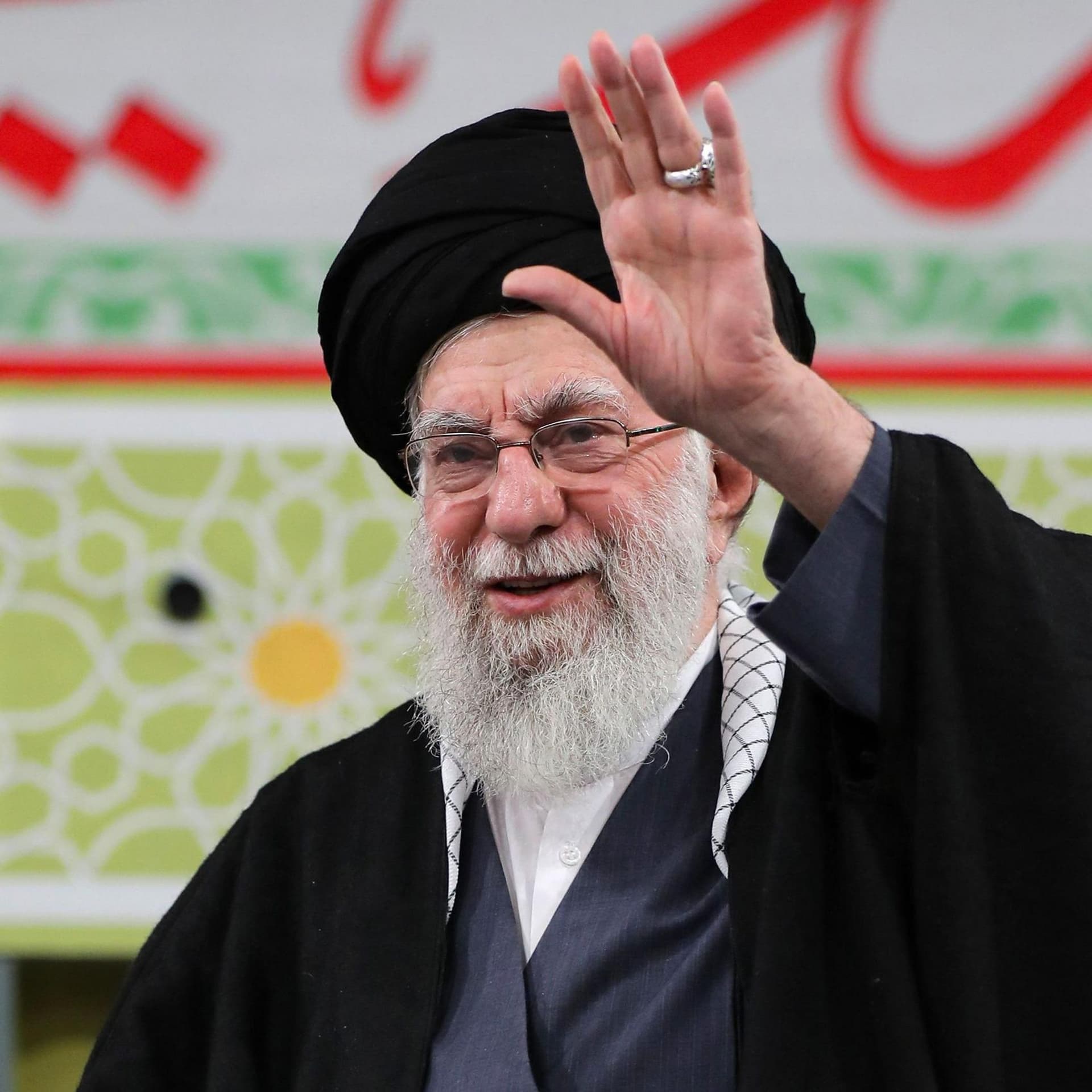
Trump says he wants to do a deal with Iran, and the two sides appear to be talking. White House special envoy Steve Witkoff is expected to meet with the Iranian Foreign Minister on Friday in Istanbul. But Trump has threatened that if no agreement is reached, he’s ready to order US forces into action. Frank Gardner, the BBC’s security correspondent, lays out what could happen if talks fail, and Trump decides to strike Iran. He describes several scenarios that might have major consequences for the Iranian leadership, its people, the wider region and the world. Producers: Viv Jones Executive producer: Bridget Harney Sound engineer: Travis Evans Senior news editor: China Collins (Photo: Iran's Supreme Leader Khamenei. Credit: Iran’s Supreme Leader Office/EPA/Shutterstock)