
In short
Iranians’ views and daily-life experience during the Iran war, including hopes for negotiations or regime change, economic strain, internet blackout, and reactions to Donald Trump’s rhetoric.
Guests
Lise Doucette, BBC chief international correspondent; reported from Tehran for about 10 days under restrictions (no BBC Persian use of her material). Hosts: Tristan Redman (London) and Asma Khalid (Washington, D.C.).
Key claims
Iranians live “from one day to the next” amid missile strikes on residential areas and a shaky ceasefire. Internet blackout and inflation are severe; economists cite ~70% inflation and job losses around a million. Women’s headscarf choices have shifted since 2022–23 protests, with some women not wearing scarves by choice. Some supporters want war to continue for regime change; others fear it and describe terror and family isolation.
Notable examples
Tehran cafes with young people; bread prices tripling; “lipstick effect” described by an architect; government-loyalist square debates over negotiating; graffiti “Trump’s help has arrived. Death to America”; a man saying Trump “destroyed the help” and calling it a “gift.”
Written by AI. May contain mistakes. Listen to the episode to check what was said.
Chapters
Tap a time to open that second in VOReporting from Tehran: Life Amidst War
0:30 to 0:48
Insights from Lise Doucette on the realities of life in Tehran during the war.
“And to think, that's just a small taste of what Schwab offers.”
Reporting from Tehran: Life Amidst War
2:18 to 4:12
Insights from Lise Doucette on the realities of life in Tehran during the war.
“Lise joined us in the studio after landing back in London.”
Economic Struggles and Daily Life
4:12 to 7:26
Discussion on the economic challenges faced by Iranians and their daily lives.
“I've always said that when in situations of war, in situations of life and death, people focus on life even more, that they embrace it.”
Public Sentiment and Government Control
7:26 to 11:30
Exploration of public sentiment on negotiations and government influence.
“Young people spoke to us about job losses, even by the government's conservative estimate.”
Women's Rights and Dress Code Changes
11:30 to 14:00
Analyzing the shift in women's rights and dress code in Iran.
“I wonder if you could tell us the story about the woman that you met, Fatima.”
Perspectives on Women's Dress Codes in Iran
14:00 to 16:44
Explore the evolving attitudes towards women's headscarves in Iran amidst changing societal norms.
“There are women who still wear the headscarf.”
Voices Supporting War for Regime Change
16:44 to 19:16
Hear from Iranians who believe war could lead to necessary political changes in their country.
“We heard this one man openly said, I want more war because I still believe that, yes, the war is not great, but it's better than the situation.”
The Impact of War on Civilian Life
19:16 to 20:36
Understand the human cost of war through the eyes of civilians who have faced destruction.
“Of course, on a short visit, you can't establish whether or not there was a military targets, but neighbors would come up to us and say, we've lived on this street for 25 years or we knew who was living there.”
Fragility of Ceasefire and Diplomatic Talks
20:36 to 23:23
Examine the current status of ceasefire negotiations between Iran and the U.S.
“But at the same time, someone else on the street brought us out trays of tea and biscuits, welcome to our street.”
Reactions to Trump's Rhetoric
23:23 to 25:59
Discover Iranian perspectives on inflammatory statements made by President Trump.
“So just before you left, back on the 7th of April, Trump threatened that, quote, a whole civilization will die tonight.”
Transcript
Automatic transcript. May contain errors.0:00This BBC podcast is supported by ads outside the UK.
0:30And to think, that's just a small taste of what Schwab offers. Because Schwab knows that when it comes to your finances, choice matters. No matter your goals, investing style, life stage or experience, Schwab has everything you need, all in one place, so you can invest your way. Visit schwab.com to learn more. If these days you have been struggling to keep up with the state of negotiations and ceasefires regarding the Iran war or the closures of the Strait of Hormuz, you're not alone. We're all hearing a lot of it. Iran wants to make a deal. What I don't like about Iran is they'll talk to me with such great respect and then they'll go on television.
1:15They'll say, we did not speak to the president. We did not. I just spoke to. we did not speak to the president. So they play games. I mean, the top people in that government are, to say the least, you know, they're insane in the brain. What we're not hearing a lot of is what Iranians are thinking and hoping for. Since the war in Iran began more than two months ago, Iranians have been under a near total internet blackout as hardliners have become more deeply entrenched in the country's leadership. Few Western journalists have been permitted to operate in the country. But in recent weeks, the BBC's chief international correspondent, Lise Doucette, has been reporting on the ground in Tehran.
2:01From the BBC, I'm Tristan Redman in London. And I'm Asma Khalid in Washington, D.C. And today on The Global Story, the view of the war from inside Iran.
2:17Lise. Let me get ready. You are ready to read the news. Okay, that's it. Hello, Tristan, really. Okay, you start. It's your program, not mine. Lise joined us in the studio after landing back in London. She had been reporting from Tehran in Iran on condition that none of her material is used on the BBC's Persian service. These restrictions apply to all international media organizations operating in Iran. I love that you feel so comfortable with us, Lise. So great to have you with us after, I mean, So few Western journalists have been in Iran. You were there for around 10 days. What's it like? Are there actually visible signs of the war that you're seeing all over the place?
2:57Now, I'm going to do a little correction because you are a global story. Because it's not just Western journalists going in. There's an Indian crew in there now before us. And there was a Japanese crew. There was, I think, a Brazilian crew. I got called by some Thai journalists. So I think it's international media. But there aren't many going in because the ceasefire is shaky. And I think the authorities are deciding they don't want too many journalists around. But there are times when we were on the ground where you'd see the shops were open, young Iranians were in the cafes and restaurants, people were celebrating birthdays.
3:36You could be forgiven for thinking, was there really a war? But then when you hear more about daily life, when you drive past, when you visit scenes where missiles slammed into residential areas, when missiles destroyed sites of the Islamic Revolutionary Guard Corps, we saw that on the 12 -hour drive in. So we saw the evidence of the weeks of targeting by Israel and the United States, both military targets, but there was also the civilian consequences as well. And Iranians are now still dealing with the impact of this war. But it sounds like overall there's a feeling of life goes on. I've always said that when in situations of war, in situations of life and death, people focus on life even more, that they embrace it.
4:29They embrace the small joys and just the day to day. And that was my overriding perspective, is that Iranians now are just living from one day to the next, knowing they are at the mercy of world powers. Most of all, President Trump, what Israel decides to do, what the region decides to do. And they are at the mercy of their leaders who have emerged from this war. and whatever President Trump says about regime change, it is the same people, different faces, but a more hardline, more militarized leadership in Iran. So Lisa, as you mentioned, you had this 12-hour journey in by land. You came in via a land border from Turkey.
5:12You then arrived in the capital city of Tehran. And regular listeners will know that this is a city that you have visited a number of times over the years. I want to know what surprised you the most about the ways in which people in Tehran are living now. It was a very different mood from when we were there in February. Tehran is a beautiful city, no matter who's in charge. It's still a city of gorgeous parks, of this great long street, one of the longest in the Middle East, Valle Yasser, with the plain trees rising above it, of stylish cafes. And I think cafes are cafes anyway. I was thinking of this, you know, even in London where students have no money.
5:54They're hanging out in cafes all day. They buy one cup of coffee. And it's the same in Iran. I mean, we were getting lunch one time. We were told, oh, this is a very popular cafe. And it was famous for great hummus and wonderful grilled sandwiches, great lattes. And it was a warm spring day. So the front of the cafe, the windows had been open. People had these seats, like in Paris, where you know well, where you look onto the streets and see people passing by. And I lost count of how many times I saw groups of young men and women in baggy jeans, body piercings, tattoos, hanging outside the cafes.
6:28I stopped to chat to three young people with a woman who had very short cropped hair, green turquoise glasses, really fashionable, wearing a bow tie. And she was there with her brother and their friend. And they were smoking Napoli cigarettes and chain smoking and moaning. They had no money, you know. And I just chatted with them, and it could be anywhere. But, of course, it's Iran. And as soon as we spoke to people, we heard about prices were going higher. It takes so much money for something like a bread like this, for 35, two months, about three months ago. Now it's three times more. People go through hell right now to be able to pay for a loaf of bread.
7:12And remember, we talk about single digit inflation in most Western countries. When we were there in February, it was a staggering 60 percent. Now economists are saying it's 70 percent. Even higher. Yes. Young people spoke to us about job losses, even by the government's conservative estimate. They say a million jobs were lost by the impact of the war and also the Internet blackout. It's so dire that even the government's communications minister called for the digital blackout to be lifted. It is being eased selectively and slowly. But the minister said that 10 million jobs were affected by Iranians needing to be connected.
7:56He talked about it as a right. And of course, there is this troubling contradiction that the officialdom, they use X and all the other social media platforms. They're constantly trolling President Trump. They have it. They have access to the internet. But the people of Iran don't. But the people don't. A broad majority of Iranians can only access the domestic internet. Lisa, you mentioned the economy. I know you were out on the streets. You were interviewing people. How much did you hear about that from people? So we went to one popular street in the center of the city to try to get a sense of what life was like now.
8:33It's a shopping street? It's a street like any street with ATMs at the banks, shoe shop, fast food outlets, cafes, of course, another shop selling household goods, groceries. One of the encounters which really stuck in my mind, because as I mentioned, I was very much taken by the way Iranians were living from one day to the next, because so much of their future is no longer in their own hands. There was a story on the BBC World Service recently talking about the lipstick effect, which is that we take joy in small things. So you put a bit of bright red lipstick on and you feel a little bit better.
9:15And so when this architect strode by, and I stopped him and I said, Do you work here in Tehran? Well, yes, I'm an architect, and also I teach. And he started talking to us, and he told us a bit about how he gets through the day. So we are just living everyday life, making things to enjoy, like, you know, they call it lipstick effect, that every day we go forward. So to make us happy for anything. But you could have a life outside of Iran if you wanted, but you stay. Why? Well, I just moved back one year ago. I lived in Berlin for 16 years. And I just moved back because I love Iran. And I thought, if I'm not here now, when should I be here?
10:00Another place, if I can mention, which really struck with me, the government had called on its supporters to take to the streets every night. Of course, it wants to send a signal that it has support. But the square, some of the major squares in the city do fill up every night. And some of them are government loyalists. And I was really surprised. We went to one square and it was like a town hall. And they were having heated discussions about whether they should negotiate or not. And one woman stood up. Negotiate with the Americans and the Israelis. Yes. So one woman stood up and she shouted at the moderator.
10:30In fact, she ended up going to the stage and grabbing the microphone because she said the old, the former Supreme Leader, he only went to negotiations because he had to. and you had this crowd of government supporters. It's better if negotiations don't happen. The war should continue until America and Israel are defeated. The women all dressed with black veils or conservative scarves, arguing about whether or not it was good to negotiate. Our enemies should know that we are here for our country and they should open their eyes to see here. Suddenly there was a roar as this whole parade of motorcycles went by with mullahs, like white and black turbans, had put on uniforms and they had rifles strapped across their chest.
11:17So you had mullahs on motorcycles parading past and, you know, you couldn't make it up. But this was the government starting to send a defiant message to the enemy. If you want war, bring it on. But we want to negotiate. We want to find a way out. I wonder if you could tell us the story about the woman that you met, Fatima. So here's a family going into the shopping mall. And your name is? Fatima. Fatima. What are you going to buy tonight? Nothing. We don't have any purpose about the exact... You had that discussion with about the fact that she wasn't wearing a headscarf, which I thought was fascinating.
11:56Can I ask you, you're not wearing a headscarf? Headscarf? No. No, I may, sometimes I wear. You have one around your neck. We are Muslim, but sometimes I wear and sometimes I don't wear. I mean, it's counterintuitive, isn't it? The question of the headscarf right now in Iran, whether people are wearing the headscarf or not wearing the headscarf. What did you find in Tehran when you were there? I've often said, Tristan, that every time there is an uprising, another round of protests, they leave their mark. And it was the protests of 2022 to 2023, whose rallying cry was women, life, freedom. Zan Azadi Zindigui.
12:46Was predominantly led by women, calling for greater freedoms for women. Protests have erupted in Iran in response to the death of a woman held in police custody by the morality section. It was triggered by a woman, Masa Amini, an Iranian Kurdish woman, taken in by the morality police because her clothes were not modest enough. Masa was arrested on September 13th when she was leaving a subway station in the capital, Tehran. And she died in custody, and that sparked this protest.
13:26During that protest, many women, those who want to, took off the headscarves and they didn't put them back on. And you really feel that quiet courage of women not wanting to go back.
13:43Now it's almost, I hesitate to use the word normal, but you see women of all ages not wearing the headscarf, not wearing what they call the manteau, which is the long coat. There are women who still wear the head-to-toe black veils. There are women who still wear the headscarf. But the point is that it's their choice. There is a feeling that this is permanent. But, of course, you never know in Iran. And I spoke to one Iranian scholar about it. And I said, well, how do you make sense of this? Because we had always said that one of the last things to go in the Islamic Republic would be the dress code for women.
14:23because it was a symbol of the Islamic revolution, women's honour and piety. And he said, well, you know, the people in charge realise that even if the women don't cover their hair, the regime's not going to come tumbling down. So women are daring to hope, although some of them I see still wear the scarf around their necks just in case. And of course, there are areas that if you go to the holy city of Mashhad and you go to shrines, of course, you're going to wear the headscarf. But a lot of women were choosing not to wear them. And while we're discussing this, Tristan, I should address, people sent me questions on social media saying, why is Lise Doucette wearing the headscarf when Iranian women are not?
15:02When we were out filming, recording, meeting people, sometimes myself and my producer, Charlotte Scar, didn't wear headscarves. But because it is still the law that if the authorities so decide, they can say, right, it's the law, you have to wear a headscarf. If not, we're going to detain you. So as a foreigner in Iran, it's a better choice for me to respect the law. So on air, I wore the headscarf. One of the people that you spoke to that really stuck out to me was a gentleman that you met in a square who was smoking a cigarette. Do you often come to this square? Yes, yes. It's a very nice, relaxed atmosphere.
15:42There's music. Yes, it's nice music, but these days... And he spoke to you about what he hoped for from the war. to regime change. War can help to change the regime, OK? War is better. And he said very openly that he wanted regime change. You don't worry that Iran will suffer a lot if the war continues? No. So war is better? War is better for us. Than this situation? Yes, yes. And I was very struck by that because I was surprised that someone was OK to say that publicly out loud to a foreign journalist. Were you surprised by that? We heard that as well in February. People would actually seek us out after the protests had been put down and said, we want you to hear our voice.
16:32We want to tell you. But this time as well, there were still people. And, you know, you always pause when people say to you, we want the war to continue. It's not something you expect to hear given the impact of the war. We heard this one man openly said, I want more war because I still believe that, yes, the war is not great, but it's better than the situation. We want regime change. And you do hear that from people. But in another square, not so far away, a short drive away, another man said to us, I want more war, but I want it because I want to defeat Israel and the United States. I want the U.S.
17:07to leave its military bases in the region. So I think we have to keep reminding ourselves that Iran is a country of 92 plus million people. There's going to be a churn of emotions. I mean, the story you're telling us, Lise, is of a place which seems a little bit more free than I would have expected. How free are people there? No, I would never describe it as free, although when we met the head of the Parliament's National Security and Foreign Policy Committee, he described Iran as the freest country in the world. I don't think Iranians would agree with that. Against the backdrop of this war, there have been mass arrests.
17:44The government doesn't hide it. It announces that it's arrested people accused of spying for the enemy. In other words, code words for Israel and the United States. And the hangings continue, the executions continue, and human rights groups have expressed concern. Some of them who have been hanged, all of them young, all of them, as far as we know, connected to the January protests. Many of them accused of spying for Israel, being part of Israel's intelligence agency Mossad. And these have been condemned by human rights groups worldwide. And not a week goes by without more reports from the government that people have been hanged.
18:24And this is obviously meant to send a very stark message to anyone who may consider going out into the streets again. Lisa, you describe two views of people who want the war to continue for very, very different reasons. I know you also heard from some of those who are tired of this and want the war to end and who are really nervous, it seems like, about how shaky this ceasefire looks. So many people did tell us about what it was like during the war. One young man said to me it was terrifying because of the internet blackout that they couldn't contact their families and their families were in different cities.
19:02He said we felt very alone. We visited streets where there were gaping holes because a whole building had been knocked down, left just as piles of rubble and twisted metal, chunks of concrete. Across the street, many more houses had been either been completely destroyed or the facades torn off. Of course, on a short visit, you can't establish whether or not there was a military targets, but neighbors would come up to us and say, we've lived on this street for 25 years or we knew who was living there. This is a residential area. And they were very, very angry. In fact, on one of the streets, there was graffiti on the wall next to that totally collapsed building.
19:42And it said, Trump's help has arrived. Death to America. And you'll remember that at the beginning of the protests, President Trump kept saying, I'm going to help the protesters. Help is on the way. And one man said to us rather sarcastically whose whole building was destroyed. One month ago, Trump destroyed the help of Iranian people. This is now this gift, yeah? A special gift. He said, well, what a gift the president has given for us.
20:16Visits like that where you're going to see the destruction, the impact of the war, speaking to people in the neighbourhood to find out why they thought that building was attacked. You also see glimpses of Iranian society. There was one visit on one street, one of those leafy residential areas in the centre of the city, where there was one man who didn't want us there, who tried to prevent us from filming, even though we had the permissions. But at the same time, someone else on the street brought us out trays of tea and biscuits, welcome to our street. So you saw these different sides of Iranian society.
20:55And of course, we have to be cognizant. It's a very sensitive time where emotions are still raw and people just don't know what's going to happen next.
21:11Well, Liz, when we talk about a ceasefire and negotiations, the ceasefire between the U.S. and Iran is looking increasingly fragile. I mean, here we are taping this on Tuesday morning. This is Tuesday, May 5th, and official talks have not resumed. What did Iranian government officials tell you? What is their desire, their desired outcome here? So we were there over that weekend where President Trump announced that J.D. Vance, the U.S. vice president, would be heading back to Pakistan. But in Tehran, there was no indication that Iran's delegation was going. We happened to be in the foreign ministry that afternoon, waiting to interview the foreign ministry spokesperson, Ismail Bagai.
22:00And they were locked in meetings, the foreign minister was in meetings for hours discussing with the Pakistani media, sending messages to the Americans. And it was very clear as far as we could see that Iran had not taken the decision yet to go for a second round of high level face to face talks. So when we finally, by the end of the day, did sit down with Ismail Baghaei, he basically set out why they still had not made a decision to go back to Islamabad for a second round of high level face-to-face talks with the U.S. Literally speaking, there have been many violations of ceasefire. You know that during the course of the past two days, they have attacked Iranian vessels.
22:47They have taken hostage our people on board vessel Tuska. And at the same time, they're continuing with their threats of genocide bombing our bridges and power plants. So this is not the behavior of a country that is really serious about a diplomatic process. Lise, when you were in Iran, what did the Iranians that you spoke to make of President Donald J. Trump? So just before you left, back on the 7th of April, Trump threatened that, quote, a whole civilization will die tonight. And then on Monday this week, he said in an interview with Fox News that he would blow, this is a quote, he would blow Iran off the face of the earth.
23:43Now, what did the Iranians that you spoke to make of that kind of rhetoric? What would anyone make of this rhetoric? scholars, human rights experts, you know, more than 100 of them signed a letter raising concerns about this kind of language, which was calling for a civilization to be destroyed. The harshest critics said it was genocidal language. Human rights experts said it was a violation of international humanitarian law. President Trump likes to say this is part of his negotiating tactics. His supporters will say, well, he, you know, he raises these maximalist pressure and then he gets other people to capitulate.
24:24But it's not working with Iran. Iranians were shocked. Even those who don't support the government in Tehran were saying, what do you mean? Our civilization is so deep. You're about to mark your 250 years of the United States. We've been around for thousands of years. And, you know, I was reminded of this when we were making this 12-hour drive from the Turkish border to Tehran. And we stopped just, you know, a roadside restaurant, a centuries-old caravanserai with these beautiful tiles and calligraphy and this traditional Iranian cuisine, just the beauty of the tiles, of the architecture, and just a place to eat while you're making a long drive.
25:10So there were many who were very shocked by it. we've never seen this kind of, I mean, it's always in every, I always said that in every war, war, conflicts, they always unfold on two levels. There's what happens on the ground. And then there's the narrative, the control of the narrative, the perceptions of what's happening. And often that can have a huge impact on the way the war evolves. And sometimes the way people think the war is going is more important than the way the war is actually going. But we've never seen a president like this, a leader, using this kind of language. You know, whatever happens in Iran doesn't stay in Iran.
25:49And I think it is quite staggering that in this, we are now dealing with a war, a conflict, was it only being held at bay by this fragile ceasefire. But its impact is so profound worldwide. And it's something that the whole world has a stake in what happens both in the Strait of Hormuz, but also in the negotiations between Iran and the United States.
Read the full transcript
26:18Thanks, Lise. It's such a pleasure to see you. And we don't often get the chance to talk to somebody who's just come back from Iran. Thank you, Lise. It's been so valuable to hear what people inside Iran are thinking. You know, no one can provide a full forensic account of what the people of Iran think of, but all we can provide is glimpses and snapshots, but hopefully that even small snapshots can tell us a lot more about the wider picture. So thanks so much for your interest.
26:50That was Lise Doucette, the BBC's chief international correspondent, recently back from nearly two weeks in Tehran. Now, we love to hear from you about your ideas and story requests. Any feedback on episodes you've heard, we can take it all. So if you want to get in touch, you can reach us on theglobalstory at bbc.com. And if you enjoyed today's episode, please take a second to rate us wherever you're listening. It really helps other people to find us. And those of you who are loyal listeners of our show know that here at The Global Story, every weekday, we dive deep on one story that looks at the intersection of where the world and America meet.
27:27If you're also looking for a way to catch up on the latest news from around the world, then we recommend checking out our sister show, The Global News Podcast. And that's it from us for today. The episode was produced by Kat Farnsworth and Aron Keller. It was edited by Richard Fenton-Smith and mixed by Travis Evans. Our studio managers were Ben Andrews and Jonathan Greer. Our senior news editor is Chyna Collins. And I'm Tristan Redman. And I'm Asma Khalid. We'll see you again tomorrow. Thanks for listening. Cheerio.
From the publisher
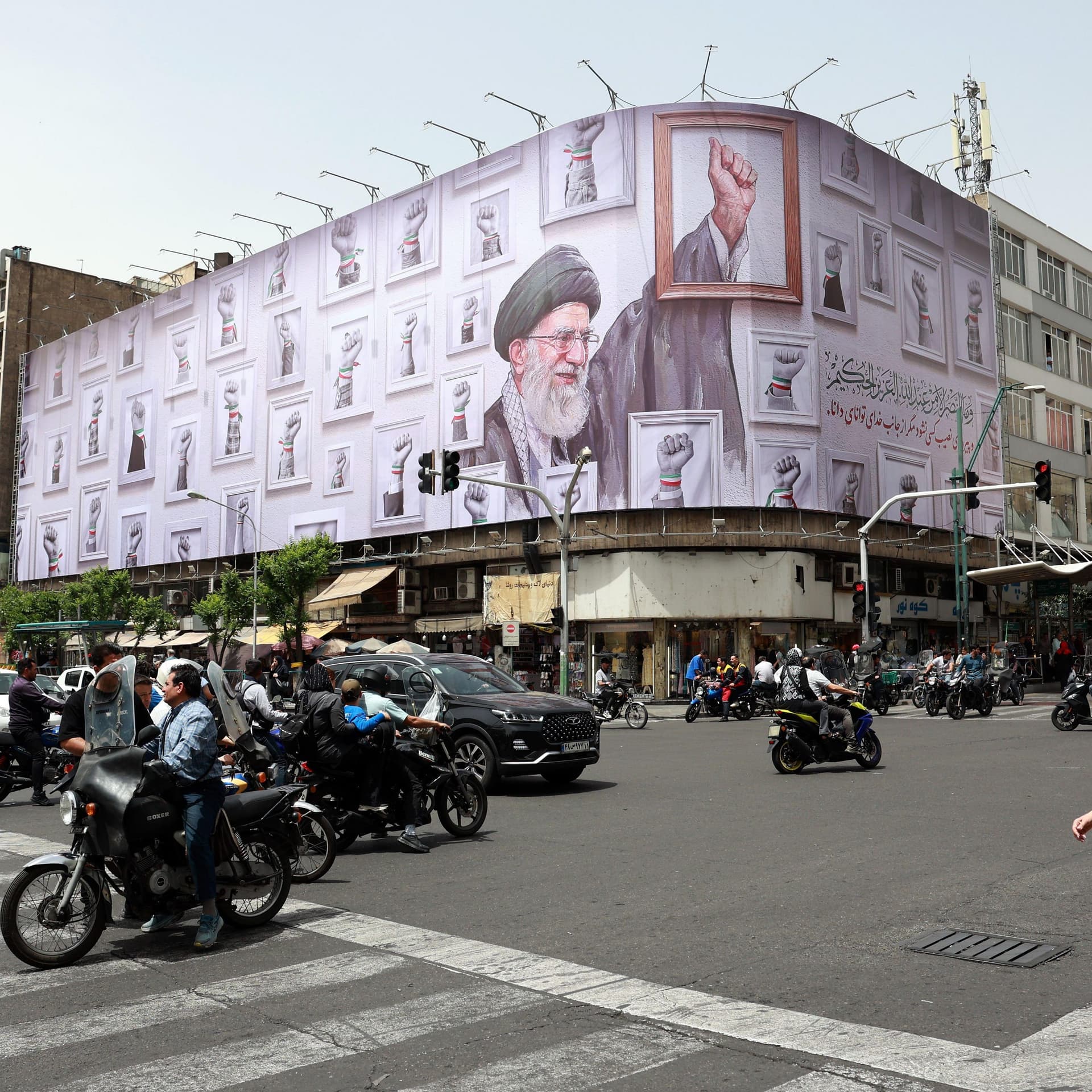
Iranians living in Tehran tell us what they think of the war and reveal how the conflict has affected their day to day lives. In recent days, attacks on ships in the Strait of Hormuz has raised fears that an already fragile ceasefire between the US and Iran could collapse. Donald Trump's "Project Freedom", which began on Monday, aims to use the US military to escort cargo ships out of Strait of Hormuz. Iran, however, insists that it controls the key waterway and has warned that it is “just getting started” in the Strait of Hormuz. This escalation of hostilities risks tipping the region back into full-scale war. As the conflict enters its third month with no clear end in sight, there has been mounting anxiety about what comes next. But what is the view inside Iran? In today’s episode we speak to the BBC’s Chief International Correspondent, Lyse Doucet who recently returned from a ten day trip to Tehran where she spoke to government officials and ordinary Iranians about their fears and expectations as this war continues. Producers: Cat Farnsworth and Aron Keller Executive Producer: Richard Fenton Smith Mix: Travis Evans Senior News Editor: China Collins Photo: Daily life in Tehran amid continued tensions over Strait of Hormuz. Credit: Abedin Taherkenareh/ EPA/Shutterstock.