
In short
How Elon Musk’s influence has shifted since a 2025 Trump cabinet meeting tied to the “Department of Government Efficiency” (DOGE), and what his ongoing legal fight with OpenAI means for AI control and power. It also examines Starlink’s global reach and Musk’s ability to enable or restrict internet access, plus his plan for up to one million satellites and “data centers in space.”
Guests
Lily Jamali, BBC North America technology correspondent; covered Musk v. Sam Altman in a California courtroom and reports on tech policy and AI.
Key claims
Musk left DOGE in May 2025 but remains influential; he is suing OpenAI over alleged nonprofit-to-profit “breach,” seeking $150B for OpenAI’s nonprofit and Altman’s removal; Starlink gives Musk life-or-death leverage in war/disaster zones; critics say this concentrates power.
Notable examples
Musk allegedly blocked Ukraine’s Starlink use in Crimea (2023) and later denied access to Russia; Starlink was temporarily made available in Venezuela after Trump’s dinner; probes in France/UK/US over X/Grok deepfakes (including Holocaust denial and sexual deepfakes).
Written by AI. May contain mistakes. Listen to the episode to check what was said.
Chapters
Tap a time to open that second in VOElon Musk's Role in Government
0:34 to 3:20
Discussion about Elon Musk's involvement in the Trump administration and the Doge initiative.
“So I'm going to ask if it's possible to have Elon get up first and talk about Doge, because it seems to be of great interest to everyone.”
The Current Lawsuit Against OpenAI
3:20 to 4:21
Overview of the lawsuit between Elon Musk and OpenAI's Sam Altman.
“Well, Asma, this is the tech trial of the century for us here on The Tech Beat.”
Musk's Claims Against OpenAI
4:21 to 6:04
Details about Musk's claims regarding OpenAI's shift from nonprofit to for-profit.
“And I know you have been in the courtroom in California covering it all.”
Trial Dynamics and Musk's Testimony
6:04 to 8:02
Insights into Musk's courtroom behavior and the trial atmosphere.
“It's worth noting here that Musk is actually working on his own AI startup, XAI, which is a competitor to OpenAI.”
Public Perception and Controversies
8:02 to 11:40
Exploration of public sentiment towards Musk and Altman during the trial.
“but I mean, just to start before Musk even took the stand, the judge pretty much dressed Musk down and said, listen, you've got to stop posting on social media about this case.”
International Legal Issues Surrounding Musk
11:40 to 14:00
Discussion on Musk's legal troubles in Europe related to XAI and Grok.
“She said something to the effect of, I know that in Elon Musk's case in particular, he is not well-liked.”
Musk's Censorship Controversy
14:00 to 14:16
Discussion on Musk's views regarding censorship and the authorities' motivations.
“Elon Musk's response has consistently been that authorities are looking for any excuse that they can for censorship.”
Introduction to Starlink
14:16 to 14:39
Overview of Elon Musk's satellite internet company, Starlink.
“And I think it's fair to say that a lot of people here in the United States might not feel like they have actually been exposed directly to Starlink beyond, say, Wi-Fi services on a flight.”
Starlink's Global Impact
14:39 to 16:30
Exploration of Starlink's functionality and its significance for users worldwide.
“So, as you said, it's a satellite internet company.”
Starlink in Crisis Situations
16:30 to 19:36
How Starlink has been utilized in war zones and disaster situations.
“I mean, Lily, that's what I find so fascinating about Starlink.”
Show all 14 chapters
Musk's Perception of Power
19:36 to 20:34
Discussion on Musk's self-image as a benefactor and the implications of his control.
“And I think, you know, it's interesting that you bring this up because during the Musk versus Altman trial that I've been covering, you kind of get this sense from Musk that, and I don't think this is new.”
Ambitious Satellite Expansion Plans
20:34 to 23:09
Details on Musk's plans to launch one million satellites and their potential role.
“and who gets to control this important technology is equally applicable to Starlink and the power to control human connectivity to the internet around the world.”
Competition in Satellite Internet
23:09 to 24:20
The competitive landscape of satellite internet, particularly with Amazon's involvement.
“That's one of those astronomically large numbers that's just hard to quantify.”
Musk's Accrued Power
24:20 to 25:24
Analyzing Musk's influence and the implications of his control over internet access.
“When we think about the arc of Musk's recent career, here in Washington, it centered a lot around politics.”
Transcript
Automatic transcript. May contain errors.0:00This BBC podcast is supported by ads outside the UK.
0:30learns how to invest and manage money. Learn more at schwab.com. So I'm going to ask if it's possible to have Elon get up first and talk about Doge, because it seems to be of great interest to everyone. That's President Trump speaking at the very first cabinet meeting of his second term, back in February of 2025. So Elon, if you could get up and explain where you are, how you're doing, and how much we're cutting, and it's an honor to have you. He's been a tremendously successful guy. I remember this meeting quite well, because I was actually there, in the room, as a journalist. These were the days when I used to cover the White House for NPR.
1:08Thank you, Mr. President. Well, I actually just call myself a couple of tech support here, because this is actually, as crazy as it sounds, that is almost a literal dispersion of the work that the Doge team is doing. At the time, you probably recall that Musk was designated a special government employee leading this Trump initiative called the Department of Government Efficiency, or Doge. And Musk had grand plans to slash government spending, promising to reduce the federal deficit. We do need to move quickly. If we're to achieve a trillion-dollar deficit reduction in financial year 2026, it requires saving$4 billion per day, every day, From now through the end of September.
1:56But we can do it, and we will put it. And sure, it was odd to hear from someone at a cabinet meeting who was technically not an official member of the cabinet. But that wasn't what really struck me about this moment. No, what struck me was the respect and deference that Musk commanded in that room. It's hard to remember now, but at the time, there was chatter in Washington about who was really running the show. And then, somewhat unceremoniously, Elon Musk was gone. I expect to remain a friend and an advisor. And certainly if there's anything the president wants me to do, I'm at the president's service.
2:34In May of last year, Musk left Doge, and though he's since remained an extremely high-profile figure, he's been laying somewhat low until the last few weeks, when his lawsuit against his former colleague, OpenAI founder Sam Altman, landed him back in the headlines. But just because we didn't see him doesn't mean he went away. In fact, in the years since his departure from the White House, while the public's attention was elsewhere, the world's richest man was quietly shoring up his control of space and the world's Internet. From the BBC, I'm Asma Khaled in Washington, D.C. And today on The Global Story, even though he's no longer in the heart of power in Washington, Is Elon Musk now more powerful than ever?
3:30Well, Asma, this is the tech trial of the century for us here on The Tech Beat. That's Lily Jamali, the BBC's North America technology correspondent. She's been in Oakland, California, covering this landmark trial between Elon Musk and Sam Altman, the CEO of OpenAI. And in order to get access to the courtroom, you either need to have had a media pass, which we do, or you got to get in line around five in the morning and just hope that you get a seat. Lily, in our episode today, we want to take the long view on what exactly Elon Musk has been up to since he left the White House about a year ago.
4:07And I don't think that we can have this conversation in this moment about Elon Musk without mentioning that he is currently suing the CEO of OpenAI, Sam Altman. That trial of those two tech titans is underway as we tape. And I know you have been in the courtroom in California covering it all. So let me just start there. What is this lawsuit actually about? Elon Musk and OpenAI CEO Sam Altman actually started OpenAI together with some others back in 2015. And it was a nonprofit, that was the vision for it, that was supposed to develop AI technology safely. And Musk gave a lot of the money for it starting.
4:49Is that right? That's exactly right. He ended up donating somewhere on the order of$38 million. And, you know, the idea behind this was to develop AI safely and to develop it for the benefit of humanity, a very lofty goal, but one that Musk thought was really important to have in sort of the founding rubric for the company. So now he says that Altman and Greg Brockman, who's the president of OpenAI, breached this nonprofit deal that they have, this nonprofit contract, and ended up enriching themselves along the way. So at a certain point, they decided to become a for-profit. It's a lot easier to collect money from investors that way.
5:33And boy, is it expensive to develop AI technology. And so in doing that, what Musk is saying is that the for-profit entity kind of superseded at a certain point the nonprofit that they had created together, the nonprofit that he had donated all this money to. That's his argument. On the other side, you have OpenAI and Altman and Brockman saying that this is really just sour grapes on Musk's part, that he is upset that he left OpenAI when he did in 2018. about four years later, they launched ChatGPT, which was this massive overnight success. It's worth noting here that Musk is actually working on his own AI startup, XAI, which is a competitor to OpenAI.
6:19And so that's another part of the company's argument is that he's just trying to kind of derail one of the top players while he's trying to get his own thing off the ground. And so what exactly does Elon Musk want? What is his end goal here? A couple of things. For one thing, he wants$150 billion. That money would not go to Elon Musk himself. It would go towards OpenAI's nonprofit entity. He wants Sam Altman out of the company as CEO. And he also is really pushing for an unwinding of all of these for-profit entities that have become a really key part of the company's ability to fund itself. So those are the three main things he's pushing for.
7:04I saw that Musk took the stand the other day. He was wearing a suit and tie, which, Lily, I will just say is a wardrobe choice that stood out to me. Elon Musk was a man I remember seeing as a White House correspondent in this casual attire in a cabinet meeting with a baseball cap on his head. So that stood out to me. Yeah, I mean, definitely the fact that he's in a suit and tie is a statement. He has to endear himself to this judge, Yvonne Gonzalez Rogers, who ultimately decides the fate of this case. There is a jury that's been impaneled of nine Northern California citizens, but they are in an advisory role.
7:42They will issue a verdict, but it is considered an advisory verdict that the judge will take into consideration. If she has a problem with it, she can make her own call. Overrule the jury's decision. Yeah, she will ultimately make the call. And, you know, there were a lot of memorable moments, but I mean, just to start before Musk even took the stand, the judge pretty much dressed Musk down and said, listen, you've got to stop posting on social media about this case. You're just making this complicated for all of us. Because going into the trial, Musk had been posting to his social media platform X about the case, disparaging Sam Altman and Greg Brockman, calling Sam Altman scam Altman and trying to make his case in the court of public opinion, so to speak.
8:35And she said, we just don't need those distractions outside of the courtroom. And she actually turned to Sam Altman at one point and said, would you also agree to stop posting about this case? What's Sam Altman posting about it? Because, well, Musk was saying, I'm just doing this because OpenAI is posting about this and it's me trying to defend myself. So you kind of had this little bit of a playground situation with these two boys who are a little trigger happy with the social media and the judge saying this has got us up. Both of them agreed to do so. And that was how we started the case. And Lily, you've been there in the courtroom.
9:12What's it been like? It is a packed courtroom. It's a media circus. You see high profile people, not just the parties to the case, but Ari Emanuel, the Hollywood super agent who is working with Musk's team, was sitting right in front of me. Interesting. On the second day of Musk's testimony. And it's really interesting that kind of hearing Musk articulate himself. I haven't actually been in a room with him in probably 10 years. And his public image has really changed during that time. Back then, I think he was truly revered as a technologist and somebody who really just had a much less polarizing public image than he does today.
9:52And seeing him there, having to answer questions, you know, in a trial that he himself initiated, but he had to answer some questions that I think were pretty uncomfortable. I think, you know, also really important is hearing details about his AI venture, XAI, which is now part of SpaceX, which developed that controversial AI chatbot Grok that's made a lot of negative headlines over the last few months for different reasons. He admitted on the stand under prodding from OpenAI's lead lawyer that he has used OpenAI's models to basically train his product. And I think that was an uncomfortable admission for him to make.
10:33So we're getting a little bit of a look under the hood at how he's doing his own startup, which is not a nonprofit, which is not known for safety guardrails. And so that is, I think, you know, being painted as pretty hypocritical by OpenAI's lawyers. In addition to journalists or just curious onlookers coming by, folks who work in tech? There are. I think there are people that want to pitch Elon Musk their startup. He was leaving the stand and actually walking out the courtroom I think it was on Thursday. There's also downstairs outside of the courthouse. There are these protesters who are doing performative art, impersonating Elon Musk and Sam Altman, putting up these very...
11:19Protesting both of them. Yeah, because frankly, they're not both beloved, if I can be so bold. They are both tech billionaires who are in control of this incredibly important technology to varying degrees. And that does not sit well with a lot of people. In fact, during jury selection, Judge Yvonne Gonzalez Rogers was pretty blunt about that. She said something to the effect of, I know that in Elon Musk's case in particular, he is not well-liked. And I don't, you know. The judge said that out loud. The judge said something to that effect that like acknowledging people don't like Elon Musk. And she said that it was OK for them not to like him as long as they could vow to be fair to him and the other parties in the case.
12:12OK. Lily, when I heard that Elon Musk was going to go to court in this lawsuit with OpenAI, I was actually in Europe. And there was a story circulating there that caught my attention. and that is that in late April, Musk was actually summoned to appear before prosecutors in France, but he did not show up. Did you recall this too? I just want to get clarity on what that was all about. It doesn't have anything to do with this case, but it is a sign of the times, right? So in Paris, authorities have been looking at how X's algorithm has been used to interfere in French politics. This is a probe that began early last year.
12:50And that investigation has now grown to include Grok, which, you know, you might remember earlier this year that Grok was being used by people to create these non-consensual sexual images of women and girls. And so now Grok is being probed in a number of jurisdictions. And yet Musk has really dug in his heels saying this Paris probe in particular is part of a political attack. This was a voluntary summons. He didn't show, but you have other investigations happening in the UK and in Europe. But it's also about political speech. Grok has been caught giving people, you know, just really unreal responses.
13:31Holocaust denial, right? Yeah, there's Holocaust denial. There is this Mecca Hitler incident from last year. And all of this is a product of the parameters that are being set by XAI. So it's not an accident. And so that's why, in addition to those probes happening in Europe, there are several dozen attorneys general here in the United States. These are U.S. states that are taking action against XAI after Grok was involved in generating all these sexualized deepfakes. Elon Musk's response has consistently been that authorities are looking for any excuse that they can for censorship. So, Lily, while the legal drama is certainly making headlines, perhaps the bigger story, the one that is albeit not being talked about as much, is Elon Musk's satellite internet company, Starlink.
14:29And I think it's fair to say that a lot of people here in the United States might not feel like they have actually been exposed directly to Starlink beyond, say, Wi-Fi services on a flight. So can you, at the outset, just explain what exactly Starlink is? So, as you said, it's a satellite internet company. It is a division of SpaceX, which is Musk's rocket company. And I would argue that Starlink might be the most important part of Elon Musk's empire, even though it doesn't get the coverage that various other parts like Tesla and SpaceX itself get. Over the last couple of years, Musk has launched thousands of satellites into what's known as low Earth orbit.
15:13There's something like 10 ,000 of them up there right now. And that's Basically the majority of satellites that are orbiting in that area at the moment. So he's the clear industry leader when it comes to satellites in low Earth orbit. He is the clear industry leader, exactly. And you can sometimes even spot them at night. They look kind of like a string of stars that are tethered together, shooting across the sky. That's Starlink. For the users of Starlink, they get these units, It's this kind of square device that comes, it's a flat antenna and you can get internet from anywhere using it. Starlink has been gaining traction, providing internet on airlines.
16:01It's also in places that are sort of considered underserved markets. So here in the US, that would be rural areas. It's sometimes one of those early services that are provided to people who have just been through a natural disaster where the traditional infrastructure around them has just been destroyed. And so it's out there, but maybe not everybody has heard of it. Right now, it is the largest satellite internet provider in the world with more than 10 million active users. 10 million active? Across 150 countries. 150 countries. Wow. I mean, Lily, that's what I find so fascinating about Starlink.
16:38I mean, while it may not be incredibly popular yet in the United States or Europe. It has become, it seems, so central to how so many people around the world do access the internet. You're not wrong about that, Asma. Starlink has been used in war zones. And I think that's a pretty important point to dwell on for a moment. It's actually that use in war zones that I think has generated the most international headlines around Starlink. So this sort of started towards the beginning of the war in Ukraine, not long after Russia invaded. Musk, back in 2023, refused to allow Ukraine to use Starlink for a surprise attack that they were wanting to launch against Russian forces in Crimea.
17:23The quick context there is that Russia seized Crimea from Ukraine back in 2014. They now claim it as their territory. Musk reportedly refused to allow the Ukrainians access because he was concerned that Russia would respond by using a nuclear weapon. And then more recently, Musk denied Russian forces access to Starlink after Ukraine's defense minister asked him to block them from using it. So now he's sort of on the other side, right? So at times over the course of the war, he has restricted Starlink's use, you're saying, both to Ukraine and to Russia. That is our understanding. It's also happening in other parts of the world.
18:06So earlier this year, Musk decided to make Starlink available to Venezuelans for a time after the U.S. captured Nicolas Maduro, the Venezuelan president. That was announced just after Musk had dinner with U.S. President Donald Trump. So there we see, you know, the potential influence of politics at play. He's also made it available in Iran after a prolonged Internet blackout by the regime there. But people use Starlink in Iran at their own risk. They can be imprisoned for using it or for even helping distribute it. So bottom line here is that Starlink is providing this vital service. But one man, this private citizen who, you know, sometimes makes questionable choices to a lot of people, is the one who gets to decide who gets access to the Internet and who doesn't.
18:54I understand, Lily, that critics of Musk will question the concentration of power, say, that Musk has, and the ability to turn on and turn off access. I'd also imagine, though, that Musk sees himself as someone who is also providing this altruistic service to people in times of need. I mean, you mentioned Iran. Iran has had an Internet blackout now for more than two months. And I know it's been extraordinarily difficult for Iranians to connect with people in the outside world. I mean, you could argue that that we here at the BBC rely on people who are at times are connecting via Starlink to be able to tell us what's going on inside the country over the last couple of months.
19:36That's right. And I think, you know, it's interesting that you bring this up because during the Musk versus Altman trial that I've been covering, you kind of get this sense from Musk that, and I don't think this is new. I've, again, been following him for a number of years now. But you get this sense from him that he thinks of himself as one of the good guys. And the judge at one point said to, I believe it was Musk's lawyer, because they were having this argument about whether the notion of human extinction brought about by AI, whether that could be part of the trial, were they going to let Musk talk about that?
20:11And, you know, she at one point said, you know, let's not assume that everybody wants Elon Musk controlling this kind of powerful technology. He might think he is a good steward, but a lot of people who watch him don't agree with that was the point that she was making. I think that that argument about AI and human extinction and who gets to control this important technology is equally applicable to Starlink and the power to control human connectivity to the internet around the world.
20:51Lily, earlier this year, Musk asked the U.S. government for permission to launch one million satellites into space. And on the surface, I thought, OK, it seems like he wants to expand access even further, right, to allow people to connect to the Internet. But the one thing that was very confusing to me about this announcement is that I read these satellites are envisioned in some ways to allow Starlink to create data centers in space. Can you explain that? That's right. Musk is launching new satellites into low Earth orbit all the time. It helps that he owns a rocket company, SpaceX, as he's doing this.
21:34But what he wants to do, seemingly, is to create this footprint. He already has a fairly sizable one, but to expand that footprint to grow to a million satellites as part of a plan to build these data centers in space. We learned about this plan from an announcement that Musk made back in March. The plan is to have SpaceX put these data centers into orbit around the world. They would use power from the sun. And, you know, Musk is kind of trying to sidestep one of the main constraints to developing AI and to having people use it here on Earth. And that is power, access to enough electricity. These are really energy intensive processes.
22:18So Musk has talked about how space has the advantage that it's always sunny. Okay. But has it tested? Like, do we know that a data center in space could actually work? We don't know that. There are a lot of things that could go wrong. We don't know if these data centers in space are cost effective. It could be incredibly expensive. So it's worth noting that this is all happening as SpaceX is preparing to IPO soon to publicly list with a valuation of more than a trillion dollars, possibly as much as two trillion. So that could be really important to helping him pay for this very ambitious idea.
22:57And then the other thing is that data centers need a lot of maintenance. So there's a question of how do you get people or, you know, adequate robots to continue that ongoing maintenance work that has to happen. Can we just talk about the sheer number of satellites that Musk is proposing putting into space one million. That's one of those astronomically large numbers that's just hard to quantify. What would it mean to have one million little satellites all floating in space around the Earth? Seems like a lot. So can you just give us a sense of the scale here? How large is this project? Yeah, well, I think the way to frame this is that you've heard of land grabs on Earth.
23:35Think of this as Musk potentially trying to create a land grab in space. So he wants to - A spacecraft. A spacecraft, flooding low Earth orbit with his own satellites at a time when there really aren't all that many viable competitors to stop him. One competitor is billionaire Jeff Bezos. Bezos is the founder of Amazon, of course, which has been working to build up its own satellite internet business. And it's made some interesting moves lately, including this acquisition of a company called Global Star in April. And in fact, Amazon has filed a formal objection with the Federal Communications Commission, the FCC, over what Musk is doing.
24:20When we think about the arc of Musk's recent career, here in Washington, it centered a lot around politics. And there was an active debate here in Washington about the power that Musk had. And now listening to you, it seems like after leaving that informal position in the Trump administration, after he, you know, largely faded to the background of some of the political discourse, that Musk has nonetheless actually accrued more power. You've described this unprecedented space grab. And it makes me wonder what exactly his endgame is here. It is absolutely arguable that he is more powerful than some heads of state in certain contexts.
25:13If you can provide or withhold internet service, that is raw power because it's something that supersedes government. It is a global resource in a way, and access to internet, frankly, can be a life or death thing. for those in a war zone or a disaster zone, their ability to communicate is squarely in Musk's hands. And we know that Musk is interested in power. And it's also important to recognize that he's been building this power infrastructure for years now, before Donald Trump. And he's going to be there after Donald Trump leaves office, and he's going to have a lot of money to play with in order to carry out these various ambitions that he has.
26:06And it arguably makes you similar, you're saying, to being a head of state, but perhaps more powerful because there are no term limits and your reach is global. Exactly. For Musk, he simply doesn't have those constraints on him. He is probably the most important figure in the tech industry and is making all kinds of choices that affect every single one of us.
26:35Well, Lily, thanks so much for joining us on The Global Story. Really appreciate it. Thanks for having me.
26:44That was Lily Jamali, the BBC's North America technology correspondent. And just a reminder, if you all have any questions or story ideas for us, we love hearing from listeners. You can send us a note at our email address, theglobalstory at bbc.com. And those of you all who are loyal listeners of our show know that here at The Global Story, we dive deep every weekday on one big story at the intersection of where the world and America meet. If you're also looking for a way to catch up on the latest news from around the world, then check out our sister show, The Global News Podcast. You can find it wherever you listen to your favorite shows.
27:20Our episode today was produced by Zandra Ellen and Valerio Esposito. It was edited by James Shield and mixed by Travis Evans. Our senior news editor is Chana Collins. Our digital producer is Matt Pintis. And I'm Asma Khalid. Thanks as always for joining us, and we'll talk to you again soon.
From the publisher
It’s been a year since billionaire tech entrepreneur Elon Musk left his informal position in President Trump’s White House in May 2025. But behind the scenes, Musk has been busy.
Musk has spent the last few weeks in a California courtroom, where he is suing his former business partner, OpenAI CEO Sam Altman. In January, Musk applied for permission with the US government to launch a million satellites into orbit, some of which he says will serve as solar AI data centres. And he is preparing to take his company SpaceX public, with an estimated valuation of over $1 trillion.
Though his political presence has waned, is it possible that Elon Musk is more powerful than ever? We speak to the BBC’s North America technology correspondent Lily Jamali about what the world’s richest man has been up to since leaving the White House.
Producers: Xandra Ellin and Valerio Esposito Executive producer: James Shield Mix: Travis Evans Senior news editor: China Collins
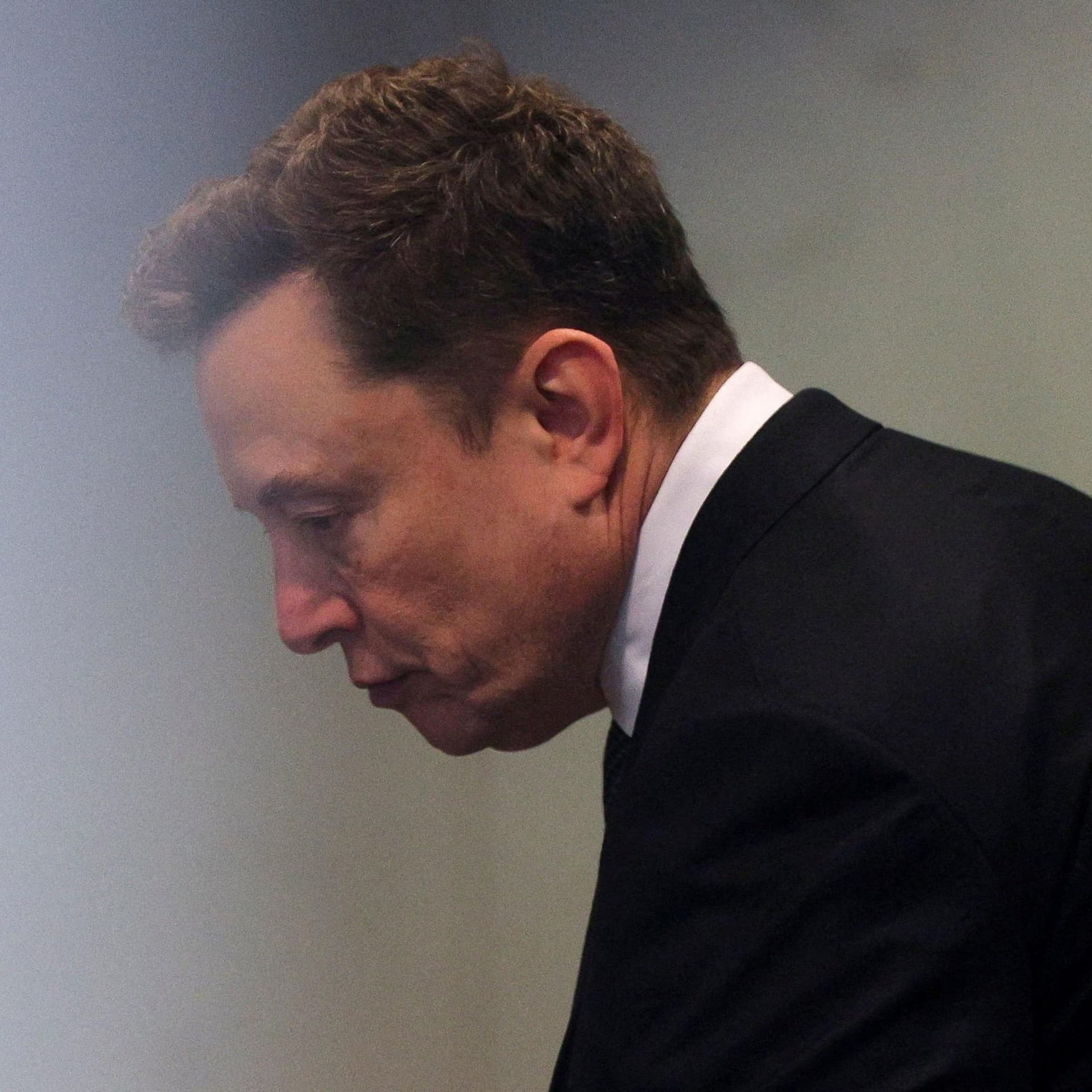
Photo: Elon Musk appears in the courthouse during the OpenAI trial. Credit: Reuters/Manuel Orbegozo