
In short
After consecutive U.S.-Israeli airstrikes on Iran, the episode asks “What next for Iran?” following the reported death of Supreme Leader Ayatollah Ali Khamenei and the uncertainty over who governs and whether the strikes aim to trigger regime change.
Guests
Caroline Hawley, BBC diplomatic correspondent; hosts Tristan Redmond (Paris) and Asma Khalid (Washington, D.C.).
Guest backgrounds
Hawley is a long-time Middle East reporter and diplomatic correspondent for the BBC.
Key claims
Khamenei ruled since 1989, backed proxy deterrence (Hezbollah, Hamas, Houthis) that was weakened after Oct 7/2023; his rule is remembered for repression and economic damage via sanctions. A temporary three-member council (including President Massoud Pezeshkian and judiciary chief) would manage succession while the regime seeks survival. Trump/Netanyahu want a “different setup” in Iran, but there’s no clear “day-after” plan; risks include fragmentation, refugees, and security forces not defecting.
Notable examples
reports of strikes hitting Revolutionary Guard facilities and air defenses; casualties including at a synagogue, an Iranian school, and U.S. service people; possible uprising parallels to Iraq 2003; mention of Reza Pahlavi’s potential role and the Strait of Hormuz shipping risk.
Written by AI. May contain mistakes. Listen to the episode to check what was said.
Chapters
Tap a time to open that second in VOEscalation of Conflict with Iran
1:11 to 3:55
A discussion on the recent military operations in Iran and U.S. involvement.
“There's been a third consecutive night of U.S.”
Examining the Timing of U.S. Action
3:55 to 7:48
Analysis of why the U.S. decided to strike Iran at this moment.
“There have been two carrier battle groups bearing down on Iran for a while now.”
Khamenei's Legacy and Governance
7:48 to 11:45
Exploration of Ayatollah Khamenei's rule and its impact on Iran.
“But it strikes me that President Trump is trying to carve out a somewhat different form of foreign intervention.”
Post-Khamenei Power Dynamics
11:45 to 14:01
Discussion on who is currently in charge in Iran and future implications.
“There are no opinion polls, are there, in Irouan.”
Regime Resilience and Succession in Iran
14:01 to 16:46
Explore the dynamics of the Iranian regime's survival amidst leadership changes.
“And don't forget that the regime has had a long time to think about this plan because they were expecting that the supreme leader could have been killed in June.”
Uprising Prospects and Historical Context
16:46 to 21:52
Discuss the potential for a popular uprising against the Iranian government.
“I mean, will Iranians rise up again as they did in January?”
Regional Stability and Economic Impact
21:52 to 23:57
Analyze the potential regional repercussions of the ongoing conflict in Iran.
“You've reported on the Middle East and so I want to understand from you what you see as the ripple effects.”
Consequences of Military Action in Iran
23:57 to 26:35
Examine the implications of U.S. and Israeli military actions in Iran.
“a look at the lives and fortunes of some of the world's richest people.”
Reflections on the Iranian People's Struggles
28:01 to 28:26
Discussion on the impact of current events on the Iranian population.
“Well, we will be keeping an eye and ear out on all of that.”
Transcript
Automatic transcript. May contain errors.0:00This BBC podcast is supported by ads outside the UK.
0:30Listen now or search for Good Bad Billionaire wherever you get your BBC podcasts.
1:00Catch every brand new episode every weekday. Just tap into iHeart to start watching. And we hope you enjoy the show.
1:11There's been a third consecutive night of U.S. and Israeli airstrikes on Iran. We have hit hundreds of targets in Iran, including Revolutionary Guard facilities, Iranian air defense systems. On Sunday afternoon, President Trump gave a video update in which he tried to project strength. They are the world's number one state sponsor of terror. We are the world's greatest and most powerful nation so we can do something about what they do. Ayatollah Ali Khamenei is dead, along with dozens of top Iranian leaders. There are casualties across the region, including reportedly at a synagogue in Israel, at a school in Iran and among U.S.
1:56service people. From the BBC, I'm Tristan Redmond in Paris. And I'm Asma Khalid in Washington, D.C. And today on The Global Story, after 36 years, Iran's supreme leader is gone. A complex military operation is underway. But what happens next?
2:20Tristan, you and I are talking on Sunday. It has been a whirlwind weekend. And so I think in order to understand what happens next in Iran, it is worth just pausing and understanding how this story unfolded. It was the wee hours in the middle of the night, Saturday, 2.30 a.m. Eastern time, when President Trump posted this video online. A short time ago, the United States military began major combat operations in Iran. We heard Trump refer to the fact that American casualties may take place. He said that often happens in war. That was a word that caught my ear because notably constitutionally here in the United States, the president has to go to Congress to get any authorization for war.
3:10And Trump had not done that in this case. He went on to explain his justification for why they felt they ought to do this in this moment. It has always been the policy of the United States, in particular, my administration, that this terrorist regime can never have a nuclear weapon. I'll say it again. They can never have a nuclear weapon. And he went on to talk about the fact that this bombing campaign was going to go on. People ought to shelter in their homes in Iran. But then When we are finished, take over your government. It will be yours to take. This will be probably your only chance for generations.
3:54Well, I want to ask you a little bit, if I can, from the European perspective about the timing of all of this, Asma, because, I mean, it was hardly a surprise. It's been building up for weeks. There have been two carrier battle groups bearing down on Iran for a while now. But why now, now? What was the reason for this particular moment? What are you hearing in D.C.? You're right, Tristan. The Trump administration had ordered the largest U.S. military buildup in the Middle East since the invasion of Iraq in 2003. But the why now is particularly confusing and disorienting because on Friday, we heard a key mediator in these talks, the Omani foreign minister, go on CBS, on an American TV network, and say that a deal was within reach.
4:41And then shortly afterwards, we, of course, saw the strikes begin. Now, we heard from Trump administration officials over the weekend who said that Iran was not serious about doing a deal. They said one major sticking point in these talks was that, in their view, Iran was not willing to talk at all about ballistic missiles. And technologically, Iran does not have the capability at this point for any ballistic missile to reach the United States. It is true that they could threaten, you know, U.S. military bases in the region. They could strike Israel. But the other question of the why now of this all is we heard from the president that Iran should never have a nuclear weapon.
5:20Well, last summer, after the 12-day war in which the U.S. and Israel struck a number of sites in Iran, you heard from Trump himself say that the U.S. had obliterated Iran's nuclear capacity. Yeah, it's hard for those two things to exist alongside each other at the same time, isn't it? Destroying Iran's nuclear capacities and at the same time, Iran being a clear and present danger in the here and now. So it's hard to make sense of them from where I'm sitting. So what we saw, Tristan, is at least here on East Coast time, the day began with that video message from the president. There were strikes in a number of cities in Iran.
5:58We saw the Iranians retaliate and go after targets in a number of Gulf countries in the region. And by the end of the day, here on Saturday, we saw the Israeli prime minister and the American president announce that the supreme leader of Iran, the Ayatollah, was dead. A man who had ruled over Iran for more than three decades.
6:28And then there was a confirmation from the Iranian government. There was this tearful announcement on Iranian state TV, which was just one of those moments that you'll remember for a very long time.
6:43My big question at this point, Asma, is what is the plan for after the fighting? A plan for filling a power vacuum. So have we got any idea what Washington is intending for Iran after the fighting stops? Tristan, that's a question many of us here in Washington are asking, in part because President Trump is someone who campaigned on no new wars. But it also strikes me that what exactly President Trump is doing here is very unclear. On Sunday, he gave an interview to The Atlantic magazine, and in it he said that Iranian leaders want to resume negotiations. Quote, they want to talk, and I have agreed to talk, and so I will be talking to them.
7:27But another really interesting thing that he said to The Atlantic, he sounded noncommittal about some sort of sustained bombing campaign that might support some sort of popular uprising in Iran. And I think there's no doubt that what happened over the weekend in Iran will remind many people of America's wars in Iraq, right? George W. Bush. But it strikes me that President Trump is trying to carve out a somewhat different form of foreign intervention. And that means no protracted campaign, no boots on the ground, an effort to have somewhat limited operations, and then essentially leaving it up to the people of the country to sort out what happens next.
8:09But in terms of what actually happens next in Iran, what happens next in the region, I have a lot of questions, and I don't have the answers to those questions. So I'm going to turn now to the BBC's diplomatic correspondent, Caroline Hawley. Caroline, thank you so much for joining us in the midst of what has been such a newsy couple of days here. Extraordinary events. We are watching history being made and we have no idea how it's all going to go, but you're very welcome. Iran's Supreme Leader, Ali Khamenei, was the longest serving leader that the Islamic Republic of Iran had had. He had ruled over Iran since 1989.
8:49I just would really like for you to give us a sense of who he was. How did he govern? What did he stand for? I think the longest serving ruler in the Middle East, actually, as well. So he came from a religious family, a fairly humble background. He was a hardline cleric, although he didn't have strong religious credentials. But he emerged as a consensus candidate after the death of the leader of the revolution that overthrew the Shah. I would say he stood for opposition and enmity and hostility towards the West, particularly the US and Israel. It was under him that he developed what was supposed to be a deterrent policy from attack by Israel.
9:44By supporting and arming proxies around the Middle East, we're talking about Hezbollah in Lebanon, Hamas, the Houthis in Yemen. But then what happened was in the aftermath of October the 7th and the 2023 attack on Israel, those proxies were essentially smashed. And so the deterrent no longer existed and Iran was weakened. Now, how will he be remembered inside Iran? Brutality, repression. He brutally repressed any dissent. The country's prisons under him were full of journalists, of anyone who dared to stand up to his rule. And the other thing that Iranians will remember him for, again, back to those proxies, spending so much money abroad and basically destroying the economy.
10:43And with his hardline stance, that brought sanctions. And ordinary Iranians suffered so much economically and politically. And by the end, there was just a yearning for freedom from him. And I've been speaking to Iranians based here in the UK who have family in Iran. Some are scared for their family. But there is this sort of absolute joy that one woman said this, the murderous Ayatollah has met his end. So you're describing a leader who governed with a sort of iron fist for over three decades, It's someone who, by the end of his time, you say, was enormously unpopular. And many people, you're saying, celebrating his demise.
11:41Did he nonetheless, though, have support, having governed for, you know, more than 30 years? There are no opinion polls, are there, in Irouan. It's a country where no opposition has been allowed to form. So we don't know exactly how much support he would have had. But certainly he had loyal supporters and the regime could and did bring them onto the streets. I've seen estimates of the regime having up to a million men in arms. so people that could fight and have fought for the regime. And we're talking here about Iran's Revolutionary Guard Corps, who are in a sense seen as the protectors of the Islamic Republic.
12:27And we're also talking about the Basij Militia, which is a paramilitary plainclothes militia force who were involved in suppressing those protests in January. How many people actually supported him? It's so hard to know, isn't it, in a country like Iran? So the Americans and the Israelis just didn't take out the Supreme Leader. There are a number of other high-ranking officials who have been killed. The BBC's United States partner here, CBS, which is reporting that around 40 officials were killed in the strikes. And that, again, is as of around 11.45 Eastern time here on Sunday. We've also heard the IDF name seven senior Iranian defense officials as among those killed.
13:09And I mentioned that all to ask, who is actually in charge in this moment? Who is in charge at the moment? Well, under the constitution, there will be a process to elect a new supreme leader. But for the moment, as I understand it, there's a three member temporary council that's in charge. and that involves President Massoud Pezeshkian. He was the heart surgeon turned politician who won elections as a reform candidate in July 2024. And then there's the judiciary chief. He's very hardline. He has spoken of tough punishment against people who were involved in those protests in January. There have been forced confessions, that kind of thing.
13:56And then there is another conservative cleric. So there is this three person body. And don't forget that the regime has had a long time to think about this plan because they were expecting that the supreme leader could have been killed in June. So it seems they're trying to project that the regime is very much in place. It is still there. It is still going to avenge what happened. It's still going to make the U.S. and Israel and the region suffer for what's happened. You mentioned a moment ago that the Iranian government had in many ways been preparing for this possibility, in part because of the 12-day war last summer, but also I've got to imagine in part because of the Ayatollah's age.
14:46He was 86 years old. And so that makes me wonder, you know, getting rid of the Ayatollah in and of itself, the Supreme Leader, doesn't seem like it'll actually end the regime. You would need essentially the entire structure to collapse. You would need to see the Iranian Revolutionary Guard Corps defect. And how likely is that? That's absolutely right. There is a very entrenched security and military apparatus. Succession has been spoken about for quite a long time. There was some suggestions that the Ayatollah's son, Mujtaba, may be being groomed for succession. But we don't know his fate. His wife was reportedly killed in a strike.
15:26But yes, absolutely right. It's an entrenched system. It has made clear that this is now about a battle for survival. Regime and their supporters want to save their own skins. and you would need people to defect. And there have, of course, been calls, including from Donald Trump, for the security services, the besieged militia to lay down their arms. I think one thing we should say at the moment is there is an internet blackout and there is so much we don't know about what is happening. And I think in the days ahead, there's always the fog of war, isn't there? But in this case, there's a blackout to contend with as well in terms of knowing exactly what's going on on the ground.
16:11You mentioned President Trump's comments about defections. When Trump announced this attack, he also called on the people of Iran to seize the moment and try to overthrow the Iranian regime. It is a message that the Israeli prime minister also echoed. We will create the conditions for the brave Iranian people to free themselves from the chains of tyranny. Therefore, I again turn to you, citizens of Iran. Do not miss the opportunity. What is the likelihood of an uprising, a popular uprising of some sort, actually toppling the Iranian government? I mean, will Iranians rise up again as they did in January?
16:53And what happened when they rose up? There were promises from Donald Trump that help was on its way and that help didn't materialize at the time. And thousands of people were killed. I've seen a figure of 25 ,000 injured. I've seen a figure of 50 ,000 people in jail. And the suggestion is, we'll do the bombing and then you do the taking over. And I think that's why it's such a difficult moment and why Iranians are sort of caught between hope. And, you know, in some cases, one Iranian woman told me she was absolutely ecstatic at the death of Ayatollah Khomeini, but also fear, fear of chaos. So this is just the start.
17:40It's so unpredictable. But another Iranian person said to me, tell me, give me one example of a military intervention like this that has ended up well for the people. and I thought... The United States doesn't have a great track record, yeah. Do you think of any? No, I couldn't think of anything. I mean, I was in Iraq before the invasion of 2003 and after it. And in that case, obviously, there'd been a huge buildup, but still there had been not the right planning for the day after. There was a plan and not the right planning, and in this case it's unclear if there's been any planning at all. But, you know, I was there in Baghdad and there were electricity workers and doctors and nurses and no one was paying the wages.
18:25And you could see things begin to fall apart in the very first days, even though many people were so relieved to see the back of Saddam Hussein because of all the brutality that he had meted out and all the suffering he'd brought on his people, just as Ayatollah Ali Khamenei has brought so much suffering to so many millions of Iranians. One person we've heard mentioned here in the United States who could try to take over leadership is Reza Pahlavi, the son of the last Shah. He's been living here in exile in the United States for decades. And during the protests in January in Iran, he was encouraging people to get out on the streets and fight the Iranian government.
19:10He wrote an op-ed in The Washington Post on Saturday, essentially declaring his readiness to lead a transitional government. Do people in Iran want him, though, to be their leader? And how plausible would it be that he could actually return to Iran? So Reza Pahlavi is the son of the former Shah. And the Shah of Iran was essentially the monarch. And he was overthrown in 1979 in the revolution that led to the formation of the Islamic Republic. It was a time in Iran when the country was open to the West, when there were social freedoms, but there were not political freedoms. And there was a secret police and opposition was crushed.
19:57And his unpopularity at the time led to his overthrow. What people will sort of people who are nostalgic for a return of the monarchy will remember a country that was strong economically, where women could wear whatever they wanted. And many young Iranians are just yearning for those kind of social freedoms. What we know, and this was what marked the recent protests out from previous protests, is, to my knowledge, for the very first time, you heard people saying, long live the Shah, calling for a restoration of the monarchy.
20:38You heard people chanting his name.
20:45I spoke to people who said they wanted to coalesce around someone. One person told me that their relative had said anybody but them, meaning they didn't like Reza Pahlavi. They were not a monarchist themselves, but anyone but the regime. So if they thought and they did think many, many people thought last month that this was their moment to finally overthrow the regime. And if that involved coalescing around Reza Pahlavi, they were willing to do that. As you said, he said many times that he's ready to lead a transition to a new Iran. He has again said that the Islamic Republic, in his word, is going to be consigned to the dustbin of history.
21:24I mean, frankly, we don't know what level of popularity he has inside the country. He has visited Israel and that will be controversial in Iran. and of course he has historical baggage because of his father and the unpopularity of his father who was overthrown in 1979 and conditions there, the lack of political freedoms essentially led to the revolution. Caroline, one key question as this conflict unfolds is how this could affect the region as a whole. You've reported on the Middle East and so I want to understand from you what you see as the ripple effects. We've already seen Iran launch a number of retaliatory strikes on Gulf countries.
22:08Can you help us understand the potential consequences in the region? We don't know how things are going to unfold, but certainly the Gulf countries were very concerned. They had hoped that war could be avoided. And of course, the Omanis were mediating. And there was supposed to be, in this coming week, technical talks in Vienna on Iran's nuclear program. And then came the strikes, which, you know, were billed by Donald Trump and the Israelis as preemptive strikes. But actually, what they preempted was more rounds of talking on the nuclear program that many of the Gulf countries had hoped would prevent what's going on now, which is obviously, you know, airspace closed, nationals sheltering in place concerns and this is the big one is if iran prevented ships going through the strait of hormuz that busy busy shipping lane just to the south of iran and that's where i believe it's 20 of oil and gas goes through this would have huge economic consequences not just for the region but beyond and then what is iran trying to do it seems that iran is trying to exact a very heavy kind of political cost and not just for the Americans and for Israel but also for Gulf countries possibly in the hope that they may say come on this is enough this is the destroying our economy we really want it to stop now but you know the impact is being felt right across the Gulf and and and the fear is that the ripple effects could be felt a lot wider as
23:57will.
24:18a look at the lives and fortunes of some of the world's richest people. And asking you to decide if they're good, bad, or just another billionaire. Good Bad Billionaire from the BBC World Service. Listen now or search for Good Bad Billionaire wherever you get your BBC podcasts.
24:35Hi there, I'm Asma Khalid. And I'm Tristan Redmond, and together we're the hosts of the Global Story podcast from the BBC. For those of you all who might be new to our show, We here at The Global Story dive deep every weekday on one big story at the intersection of where the world and America meet. And you can now watch The Global Story on the iHeart app. Catch every brand new episode every weekday. Just tap into iHeart to start watching. And we hope you enjoy the show.
25:07So as we're speaking, Caroline, the strikes are continuing. We've seen President Trump say that the bombings will continue, quote, uninterrupted throughout the week or as long as necessary. We've already talked earlier about the Trump dimension in this story. But these strikes are happening in coordination, in conjunction with the Israeli military. The United States and the Israelis are doing this together. So can you help us understand what exactly is Benjamin Netanyahu's reasoning? This is something that he's wanted for a very, very long time. He, for decades, he has seen Iran as the mortal enemy.
25:45He has feared what would happen if Iran got a nuclear weapon. And he has sought to get America to get involved. He's called on Iranians in the past to rise up against the regime. I mean, I think he wants a different setup in Iran, which would be more friendly to Israel and make Iran a different country. If indeed the current government of Iran implodes, what could happen? I mean, we've seen Trump and Netanyahu unleash this chaos without any clear, at least publicly announced, at least from President Trump's end, sense of what the day after plan looks like. you've covered the region for a number of years.
26:35And so I want to understand from you what you see as the most likely outcome unfolding. I mean, I know what everyone wants and Iranians want a democratic country where they have political freedoms, where they finally can speak their minds. But what are the risks? The risks certainly are of fragmentation. What are the fears in neighboring countries, large numbers of refugees? Because as we said earlier, there are so many men in arms in Iran who have fought or could pick up weapons for the Islamic regime. What happens to them? That's an absolutely key factor. They were called upon to defect during the January protests.
Read the full transcript
27:24They didn't. For many of them, it seems, may feel like a kind of battle for survival, an existential battle as it is for the regime itself. It wants to save its own skin. And you could argue why, if it was so keen to save its own skin, didn't it capitulate more, as Donald Trump put it, that they didn't make more concessions. But it seems that the regime had a sort of fear of appearing weak. So now it seems that the regime's primary objective is to stay in power. And I think the question is, at what cost to the Iranian people who have suffered so very much?
28:11Well, we will be keeping an eye and ear out on all of that. And Caroline, thank you so much for joining us. Thank you. You're welcome. them.
28:26That was Caroline Hawley, the BBC's diplomatic correspondent. And that's it for today's episode of The Global Story. The show was produced by Chris Benderev, Aaron Keller, and Hannah Moore. It was edited by Bridget Harney and mixed by Travis Evans. Our senior news editor is Chyna Collins. I'm Tristan Redman. And I'm Asma Khalid. Thanks as always for tuning in and we'll talk to you again tomorrow. Cheerio.
29:14A closer look at the lives and fortunes of some of the world's richest people. And asking you to decide if they're good, bad or just another billionaire. Good, bad, billionaire from the BBC World Service. Listen now or search for Good, Bad, Billionaire wherever you get your BBC podcasts.
From the publisher
This weekend, Iranian state media confirmed that Ayatollah Ali Khamenei, who ruled Iran with an iron fist for more than 30 years, had been killed in joint US-Israeli strikes. In Iran, his death was met with an outpouring of grief by his supporters, while many across the country and in the diaspora met the news with jubilation and a tentative sense of hope. But what happens now?
President Trump has urged Iranians to “seize control of your destiny, and to unleash the prosperous and glorious future that is close within your reach,” but how realistic are the prospects of them forming a new – and significantly different - government? And how will the weakened regime retaliate against the US and Israel’s strikes?
Caroline Hawley, Diplomatic Correspondent for the BBC, joins us to discuss.
Producers: Hannah Moore, Aron Keller and Chris Benderev
Executive producer: Bridget Harney
Mix: Travis Evans
Senior news editor: China Collins
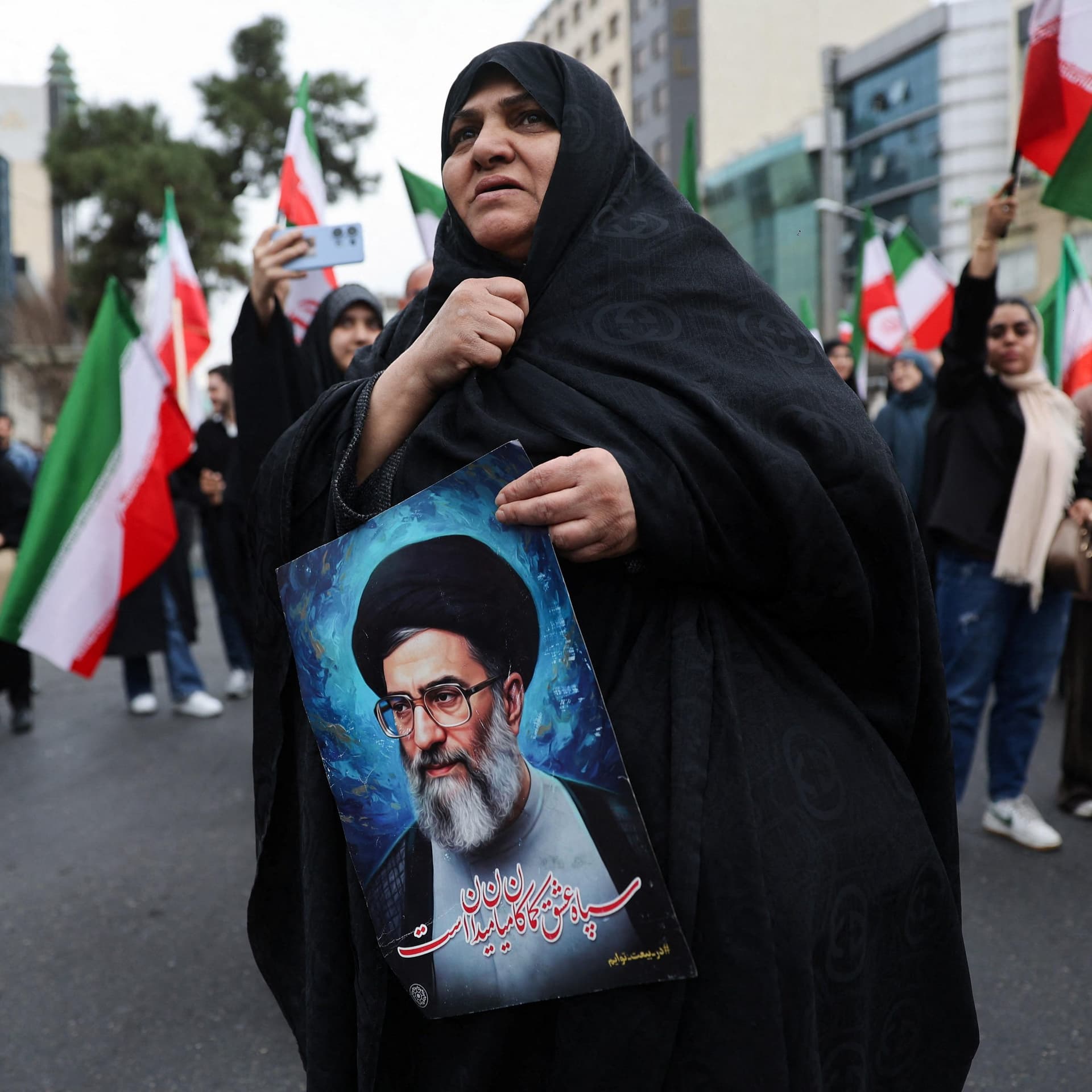
Photo: A woman holds an image of Iran's Supreme Leader Ayatollah Ali Khamenei in Tehran, Iran. Credit: Majid Asgaripour/WANA via Reuters.