In short
Life in Venezuela after Maduro’s ouster and what comes next, focusing on political prisoner releases, opposition divisions, and hopes/concerns about U.S. involvement in Venezuela’s oil industry.
Guests
Norberto Paredes, BBC Mundo journalist in Caracas; Roman Guenipa’s son (Juan Pablo Guenipa), opposition figure’s family member interviewed by Paredes; José Luzardo, 52-year-old chavista fisherman interviewed in Maracaibo.
Key claims
Only 150 political prisoners were released after Delcy Rodríguez announced releases of about 1,000; lack of transparency and continued imprisonment fuel anger and fear. Opposition is divided: some back Rodríguez as stabilizer, others see continuity with Maduro; people still fear speaking publicly. For many, daily survival and food costs matter more than politics. Oil is central: PDVSA decline traced to Chavez-era firing of ~22,000 workers after a 2002 coup attempt; Maracaibo output fell from ~3 million to ~0.5 million barrels/day. Some hope U.S. investment returns, but José Luzardo demands U.S. pay and says Venezuelans shouldn’t become a “colony.”
Notable examples
El Helicoide prison protests with families sleeping outside; arepa cost $10 vs near-$1 minimum wage; Maracaibo polluted lake with visible oil.
Written by AI. May contain mistakes. Listen to the episode to check what was said.
Chapters
Tap a time to open that second in VOThe Crisis in Venezuela
1:03 to 2:15
Overview of the political and economic turmoil in Venezuela under Maduro.
“For more than a decade, Nicolas Maduro ruled over Venezuela.”
Norberto Paredes Reports from Caracas
2:16 to 5:08
Journalist Norberto Paredes shares his experiences and observations from Venezuela.
“And I am right now in Caracas, Venezuela.”
Political Prisoners and Government Changes
5:09 to 8:13
Discussion on the release of political prisoners and the public's response.
“What really shocked me at the beginning was that people were just getting on with their lives as if nothing had happened.”
Family Stories of Political Prisoners
8:14 to 11:50
Interview with a family member of a political prisoner about their struggles.
“There were people there who hadn't seen their families for years, you know, they haven't heard from their family members for years.”
The Opposition's Current State
11:51 to 13:54
Analysis of the divided opposition and the political climate in Venezuela.
“I've been fighting for my father since he's in prison.”
Fear and Silence in Venezuela
14:00 to 15:11
Learn about the climate of fear suppressing political discussions in Venezuela.
“People are scared of talking about politics in the streets.”
The Oil Legacy of Maracaibo
15:38 to 17:41
Explore the historical significance of oil in shaping Maracaibo and Venezuela's economy.
“One of the things that has been so striking about the Trump administration's ambitions in Venezuela is that they have made it clear that oil is central to their intentions.”
Impact of Chavez's Policies on Employment
17:41 to 22:03
Understand the effects of Hugo Chavez's nationalization on oil workers and the economy.
“and amongst these people were many people in the oil company, Telvisa and about 22 ,000 people were fired at the time, 22 ,000 employees.”
Voices of Hope and Skepticism
22:03 to 25:43
Hear contrasting views among Venezuelans about U.S. involvement and future investments.
“For them, they're in such a bad situation that nothing can be worse than what they have now.”
Current Challenges for Venezuelans
25:43 to 27:25
Discover how Venezuelans are coping with daily life amidst political changes.
“I know it has only been just a few weeks since Maduro was ousted, but it seems like from your reporting, life hasn't changed substantially on the ground for many Venezuelans.”
Transcript
Automatic transcript. May contain errors.0:00This BBC podcast is supported by ads outside the UK.
0:30I don't know. It feels good to ride with help. It feels good to GEICO. Emergency roadside service is optional coverage. Hi there, I'm Asma Khalid. And I'm Tristan Redmond. And together we're the hosts of the Global Story podcast from the BBC.
0:43Norberto Paredes:For those of you who might be new to our show, we here at the Global Story dive deep every weekday on one big story at the intersection of where the world and America meet. And you can now watch the Global Story on the iHeart app. Catch every brand new episode every weekday. Just tap into iHeart to start watching. And we hope you enjoy the show.
1:08Norberto Paredes:For more than a decade, Nicolas Maduro ruled over Venezuela. And during those years, inflation skyrocketed. Political opponents were imprisoned. The situation was so volatile that an estimated 8 million Venezuelans fled their homeland. It's a stat that is staggering when you hear it out loud. And it underscores the sheer scale of the economic and political pain that many Venezuelans have felt in the last several years. But still, that doesn't necessarily mean Venezuelans wanted the U.S. president to swoop in and say he'll be running the show and selling their oil.
1:45Norberto Paredes:Frankly, over the last several weeks, we haven't actually heard a whole lot from Venezuelans themselves who are inside the country about what they want for their future. Most major news outlets don't have journalists on the ground in Venezuela. But here at the BBC, we do. From the BBC, I'm Asma Khalid in Washington, D.C. And today on The Global Story, we hear from inside Venezuela. What has life been like since Maduro was ousted?
2:21My name is Norberto Paredes. I am a journalist with BBC Mondo. That's the Spanish language service. And I am right now in Caracas, Venezuela. And, Noberto, you're Venezuelan, is that correct? Yes, I grew up in Caracas. And it is now, it is a very different city to the Caracas I was born in. I remember it was an international city. It was a very modern, vibrant city with many international companies. and, yeah, most of that has disappeared now because of the economic and political crisis. Noberto, when did you grow up in the country? What time period are you talking about? That was the 1990s, before Chavez.
3:09Before Hugo Chavez, who was the leader before Maduro, you're saying? Yes, exactly. They left in 2014. the political crisis had already started, but the country hadn't been hit economically yet. But I could see some signs, you know, there were already some shortages of some basic food items, and the inflation was getting higher and higher. And since then, I've been back three times. First in 2019, I came back to a country that I did not recognize. I want to turn to the first weekend of January of this year when Nicolas Maduro, the president at the time, he was captured by U.S. special forces. And at that time, you were outside of Venezuela.
4:01But can you tell us how you first heard about Maduro's capture? What did you hear from people inside of Venezuela at that moment in time? What were the messages that you were getting about that moment? I was in Miami and I started getting calls from my mom and my auntie and some friends as well, but like so many calls and I didn't know what was happening. And then I picked up one call and I have my cousin telling me, oh, they just hit the port she lives in, like Guayra, which was one of the cities that was hit. I didn't believe it because in Venezuela, there's loads of fake news because of this government crackdown.
4:43There's no Twitter. There's no reliable media. But then I started checking and I got the BBC app notification that Venezuela had been attacked by the U.S. And I was like, wow. You are one of the few journalists on the ground inside of Venezuela reporting out to the wider world. What were your first impressions when you arrived back in Venezuela?
5:17What really shocked me at the beginning was that people were just getting on with their lives as if nothing had happened. And I was surprised how calm the streets were. Everything was working. Everything was open. And the first thing I did was to eat some arepas, which is the local food. And what was the cost? We always hear so much about inflation in Venezuela. What was the cost? It was very high for a Venezuelan person, you know. It was$10 per arepa. Oh, one arepa was$10? It's crazy. Yeah, yeah. But the minimum wage in Venezuela is nearly a dollar. Oh, wow. And most Venezuelans manage to make between$60 and$70 per month.
6:08I went to a market, a local market here, and I was talking to some people there. And they were telling me stories about how they could afford to buy many more things in December than now. I saw a kilo of apples for$10,$11. So, Noberto, since you've been back, my understanding is one of the first places that you visited to report from is a prison. Why did you choose to go there? What people are very worried about now in Venezuela, apart from the economic and political situation, is the changes that are happening in the country. And one of those is that the government announced the release of political prisoners.
6:54There are about 1 ,000 political prisoners in Venezuela. And, you know, in Caracas, there is this massive building in the west of the city. It was built in the 1950s to be a very luxurious shopping center, but it became a prison under Maduro's regime. It's on top of a hill in Caracas, so you can see it from many places in western Caracas. It's called El Helicoide, and for many in the opposition, it's a symbol of repression. People fear that prison because the stories that have come out from there are terrible. So I went there, and there were protests there. There were family members.
7:42pushing for the new leader, Delce Rodriguez, who was the vice president under Maduro, to release these political prisoners? Yes, that was one of her first moves after the fall of Maduro. Was to announce that she would release some of these political prisoners. Yes, people are just waiting for news because Del C. Rodriguez made this announcement, but they didn't specify who was getting out. Only 150 have been released. There's no real transparency over this process. There were people there who hadn't seen their families for years, you know, they haven't heard from their family members for years.
8:23So they went there with a hope to see them.
8:30They were lighting candles. Some of them were praying.
8:38And some people are even sleeping there in front of the prison. You know, they take their little mattress and they sleep there. And at the beginning, they were very excited. Then the excitement became confusion. and lately they're just really sad. Did you speak to any of the relatives, any of the family members of people who are still being held in that prison? So tell me about your father. My father was in prison on May the 23rd of last year. Yes, I met with Roman Guenipa. He's the son of Pablo Guenipa, a very prominent opposition figure in Venezuela who was very close to Maria Corina Machado, the Nobel Peace Prize winner.
9:24He was one of the voices that were fighting against the government, against the fraud, because they took the elections. Juan Pablo Guinepe was a key figure in the presidential election in 2024. He was fundamental in collecting the electoral tallies that showed that Maduro hadn't won the election. We won the election, we had the proof, but they override that and they just invented a number and they took the presidency by force. After the election, there was a massive breakdown on the opposition and he had to go in hiding. But he was captured last May. And since then, I just had one visit. I just had the opportunity to see him once for about 20 minutes and then the visits just stopped.
10:15Where did you meet his son and what did he tell you? I met him in Caracas. His son is from Zulia State, that's a western state in Venezuela. He told me he flew as soon as he heard the news that the government was releasing some political prisoners. He told me that he took the first flight to Caracas. He was very excited to see his father. But then it didn't happen. He was still in prison. And, well, we're just waiting for them to release my father. And, you know, when I interviewed him in this house in Caracas, he was very emotional. He was about to cry because he told me that he was worried about his father.
11:00We cannot call him. We cannot speak to him. We cannot send letters. We cannot do anything. He also felt a bit angry and disappointed. He said that Gormé had lied about releasing all the political prisoners. When you are a political prisoner family, you have your routine, you have already made your arrangement to live a life with this reality. But then they tell you that they are going to release your family and this becomes your first priority, this becomes the first thing you want to attend. I came almost running to Caracas to find my father. I couldn't. And now you feel like defeated. So far, only 150 have been released.
11:47And Juan Pablo Guernica is not one of them. He just feels that his father is not going to be released anytime soon. I've been fighting for my father since he's in prison. And now I'm fighting for them to actually do what they say they're going to do. And, well, I just keep fighting. What did he say to you about the United States' intentions in Venezuela? At first, I want to thank President Trump, because the pressure that he's been enforcing is not like any other. He's been our greatest ally in this situation, and thanks to him, we are starting to see some light. He supports the pressure that the U.S.
12:29is putting on Venezuela, but he thinks that Trump doesn't know who he's dealing with. He said that President Trump should be careful with these demands and make sure that this actually happens. President Trump thinks this is going all right. It's not. We need everyone being released. We need everyone with their families. So my message to him is to not be fooled and to keep pressure because these guys are really evil. His dad was an opposition figure. And so I want to ask you about the state of the opposition in Venezuela now. It appears other than those hundred or so political prisoners you say that were released, the new leader of Venezuela, Adelce Rodriguez, that she is still pretty much in control.
13:13Has the state of the opposition movement changed at all since Maduro was ousted? Not really. I think the opposition now is in a very awkward position because the main leader is not in the country anymore. Maria Corina Machado is abroad and she's not allowed in the country. And the opposition is now divided between those who kind of support Trump's idea that it's good to have Delce Rodriguez there because she can stabilize the country. To stabilize the country. And those who think that she's just the same as Maduro. So there is some division in the opposition now. Is there a sense that people feel now that they can be open about their political opinions out in the streets?
14:03People are scared of talking about politics in the streets. They're scared. They're scared because they've seen how so many Venezuelans have been imprisoned for sending a WhatsApp message or posting something on Instagram. Every time I go to interview someone or I ask for an interview, people are hesitant about giving interviews. And some of them, they talk to me privately about what they thought or they didn't want to be filmed, they didn't want to be recorded because of this fear. So this is one of the difficult parts of reporting from Venezuela, that we want to give voice to those who don't have voice in Venezuela.
14:52But it's hard for us to find people who support the opposition who want to talk to us. So most of them do it anonymously.
15:11Hi there, I'm Asma Khaled. And I'm Tristan Redmond. And together we're the hosts of the Global Story podcast from the BBC.
15:18Norberto Paredes:For those of you who might be new to our show, we here at the Global Story dive deep every weekday on one big story at the intersection of where the world and America meet. And you can now watch the Global Story on the iHeart app. Catch every brand new episode every weekday. Just tap into iHeart to start watching. And we hope you enjoy the show.
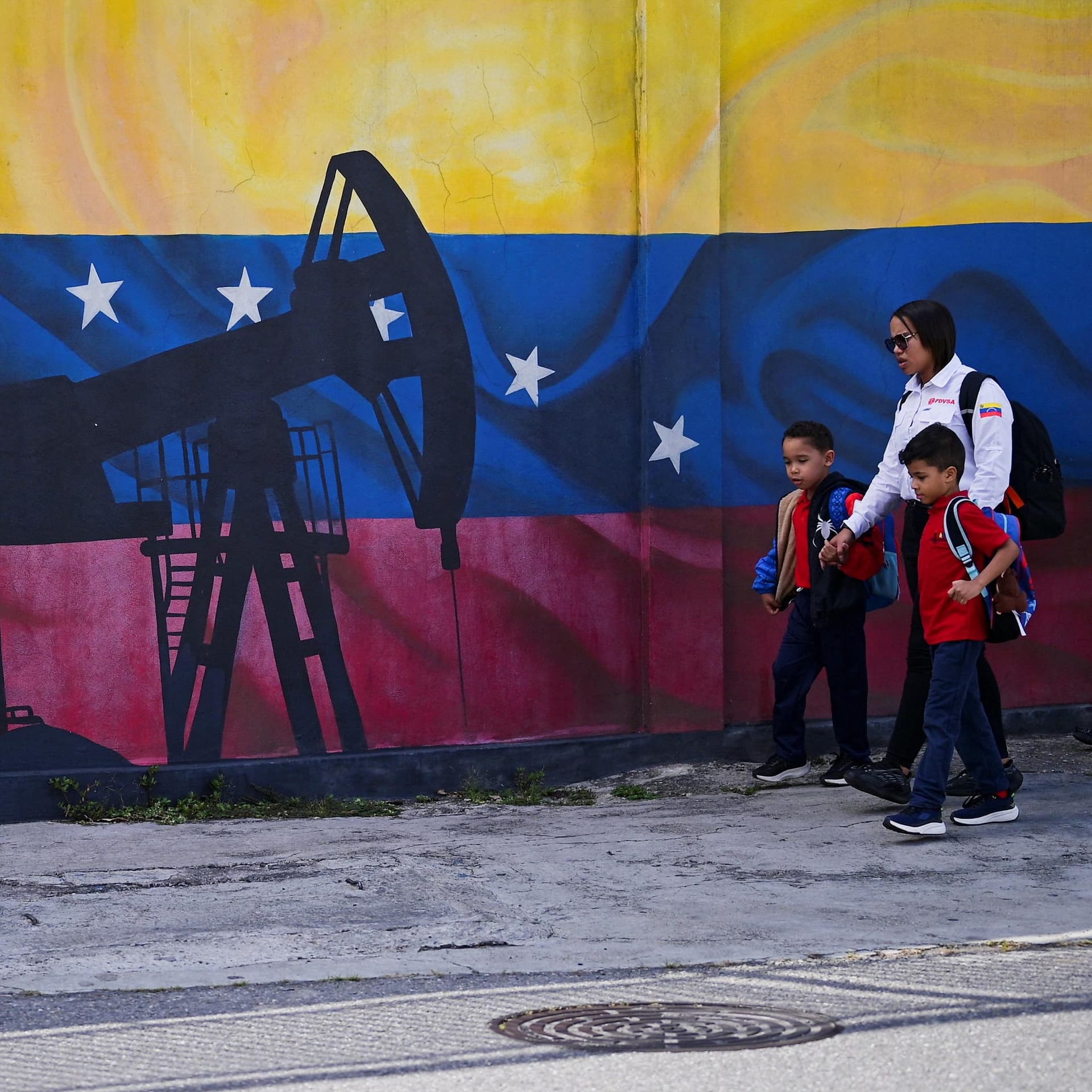
15:44One of the things that has been so striking about the Trump administration's ambitions in Venezuela is that they have made it clear that oil is central to their intentions. In fact, we've heard President Trump mention oil repeatedly and his ambitions for American oil companies to return to Venezuela. And I know that you have been out reporting in another part of the country outside of Caracas.
16:07Norberto Paredes:Can you tell me about your visit there?
16:14I went to Maracaibo. It is in the west of the country, neighboring Colombia. It's a famous city in Venezuela because of its history of oil and how oil was discovered there a century ago. You had Shell, you had ExxonMobil, Total, like any oil company you could name was there. This is a city that is massive.
16:43It's very hot and very humid because it's surrounded by a huge lake. The city is the second largest in Venezuela. It's very beautiful. It has many skyscrapers. People are the nicest. You can see it was a wealthy city. You can see nice architecture. You can see massive houses in some areas that are now run down. Many people have left these houses. They left the country. When did they leave? So the city started to change in the 70s with the nationalization of oil. and then again when Hugo Chavez came into power, he was a victim of a coup in 2002 and he then came back and he blamed many people for this coup and amongst these people were many people in the oil company, Telvisa and about 22 ,000 people were fired at the time, 22 ,000 employees.
17:56And that's the National Venezuelan Oil Company? Yes. And that, PDVSA used to be, I think, the largest state oil company in the world.
18:07Norberto Paredes:Okay, so to be clear here, you're saying that Hugo Chavez, who was the socialist president before Maduro, once he got back into power, he fired tens of thousands of workers from the state oil company known as PDVSA. he essentially takes it over. And this is all in retaliation for an attempt to overthrow him from power in 2002. And so that's when this oil company and Venezuela's oil industry broadly really begins to run into problems. How did this decline of the oil industry affect Maracaibo? This region used to produce almost 3 million barrels of oil per day. And it went from that to producing only half a million.
18:56And, you know, when you have an industry this big, many other industries benefit from it. You have many oil workers. You have companies that provide or work with Pell-Vesa. And all these companies slowly went bankrupt. The Venezuelan GDP fell by 80 % from 2013 to 2022. People started leaving the city. So it's a city and a region, you're saying, that has been hit particularly hard economically. Yes. And, Norberto, you spent several days there reporting, speaking to people. What did they tell you? I met with this very interesting person who used to work in the oil industry. He accepted to give us an interview, but he didn't want to give his name for fear of oppression.
19:50Okay.
19:51Norberto Paredes:And in that vein, we are not going to play his interview here for safety reasons. But can you tell us about your meeting with him and what he told you? I met him at his house and he was one of those people who were fired in 2002. and he described to me how he joined the company in the 90s. It was a very successful company. He told me he was very proud to work for it and he was making money to support his family and some other people as well with his salary. And then he got fired. He got fired. And he was very sad and upset because he told me how he doesn't know why he got fired. He just got a letter, as many other people, thousands of people.
20:46So he just got a letter, but you're suggesting almost that he views it as political interference. Yes. As to why he got fired, it was not an economic issue in his view. Yes, they were laid off because Chavez, according to historians, he replaced 22 ,000 workers for people close to him or close to his revolution and his beliefs. I see. And some people say that this was the beginning of the end for PDVSA. Because you fired 22 ,000 people and then you replaced them by other people who don't necessarily have the experience in the oil industry. Did he express any hopes about future American investment, as we hear from President Trump, about possibly changing the oil industry?
21:39Yes, he said that he was hopeful because he and many other people in Marcaibo and Zulia, they miss this past glory. They miss the investments. They miss the American companies. And do they trust the Americans, trust the Trump administration? I think many of them trust the Trump administration or the Americans more than they trust the government. For them, they're in such a bad situation that nothing can be worse than what they have now. So they are excited. You know, one thing in Maracaibo is that I interviewed many people who were against the government, but also some people who supported the government and criticized the American intervention and criticized Trump.
22:25But everyone was excited and hopeful that some investment was going to come to this city that has been hit hard by the crisis.
22:36Norberto Paredes:Did you also meet people who were skeptical of U.S. involvement in the region? And what did they tell you? Mi nombre es José Luzardo y tengo 52 años.
23:06right, there is, all of his family was sitting inside watching Delce Rodriguez giving a speech on TV. And I think this speaks a lot about how much Venezuelans are watching the news these days to see what happens and all the changes the country is experiencing.
Read the full transcript
23:32we went out fishing on the lake it's such a beautiful place but it's also very polluted you can see that from afar but if you get close enough you can see oil you can even touch the oil I even saw a dog that was coming out of the water and he had some spots of oil on his skin.
24:04But this fisherman was very interesting because he was a chavista who was a big supporter of Chavez and Maduro and he felt very strongly about what he saw on the 3rd of January. He asked for President Trump to free Maduro He said that he didn't believe that Maduro was involved in drug trafficking. He said that Venezuelans are peaceful people and he didn't understand why the United States have done something like this. He was a very funny character. He was saying this all in a very blunt way, but also in a very funny way and friendly way.
24:50So he was upset, it sounds, about the operation to capture Maduro. What did he tell you about now these plans we hear from the Trump administration to sell Venezuelan oil, to invest in the country's oil industry? What did he tell you on that front?
25:07So he said that he wanted investment, but that the U.S. had to pay for it. and the money should go to Venezuelans. And he says that the Venezuelan oil should be for Venezuelan people. So he's no opposed to Americans coming in and helping rebuild the industry if it generates money and employment. But he just doesn't agree with Venezuelans becoming a colony. Those are his words.
25:49I know it has only been just a few weeks since Maduro was ousted, but it seems like from your reporting, life hasn't changed substantially on the ground for many Venezuelans. Is that fair to say? I just want to understand what has changed for people over these last few weeks. Yes, you're right. Life hasn't changed that much.
26:15We are seeing some political changes like Deirdre Rodriguez replacing Maduro She has also released some people from prisons and she's made some government changes but life for Venezuelans is the same The outside world and Venezuelans outside of the country they are looking at what's happening in the country politically and wondering if major changes are really coming to Venezuela. But for people inside the country, that's one thing that I realized the minute I arrived, is that I think their main worry is their day-to-day living. Their concern about how they're going to get by, how they can afford to eat and live.
27:06Food is so expensive in Venezuela. So it's the economy and the cost of living what they are focused on. Politics and the leadership of the country is not the priority.
27:25Thank you so much for taking the time to speak with us. I'm so grateful to hear what life has been like inside of Venezuela. So thank you. Thank you for having me.
27:38Norberto Paredes:That was Noberto Perides, a correspondent with BBC Mundo, our Spanish language service. Noberto joined us from inside Venezuela. And after we spoke to him, there were additional reports that dozens more political prisoners have been released. But we believe that Ramon's father, Juan Pablo Guanipa, remains imprisoned. And that's it for the global story today. If you have any questions or ideas for us, we really enjoy hearing from listeners. So you can drop us an email at theglobalstory at bbc.com. And one quick note before we go, if you're looking for a way to catch up on the latest news from around the world, then we recommend checking out the BBC's Global News Podcast.
28:16Norberto Paredes:You can find it wherever you listen to podcasts. Today's episode was produced by Lucy Paul, Hannah Moore, and Sam Chatarasik. It was edited by Bridget Harney and mixed by Travis Evans. Our senior news editor is Chyna Collins. And I'm Asma Khalid. Thanks as always for listening, and we'll talk to you again tomorrow.
29:01Norberto Paredes:one big story at the intersection of where the world and America meet. And you can now watch the global story on the iHeart app. Catch every brand new episode every weekday. Just tap into iHeart to start watching. And we hope you enjoy the show.
From the publisher
When US Special Forces captured Venezuela’s former president Nicolás Maduro several weeks ago, many wondered whether his ouster would bring about further changes to the country. So, what has changed in Venezuela?
And while President Trump has made it clear he sees oil as a very important priority for the United States’s future relationship with Venezuela and increased American involvement in the country’s oil operations, how do Venezuelans feel about this prospect?
Our guest today, reporting from inside Venezuela, is BBC correspondent Norberto Paredes. How do Venezuelans feel about their country since Maduro’s departure?
Producers: Lucy Pawle, Sam Chantarasak and Hannah Moore
Executive producer: Bridget Harney
Sound engineer: Travis Evans
Senior news editor: China Collins
(Photo: People walk past a painting of an oil pump on Venezuela's national flag, in Caracas. Credit: Gaby Oráa/Reuters)