In short
Whether Vladimir Putin would accept a peace deal to stop fighting in Ukraine, and what Russia’s negotiating red lines and domestic pressures look like.
Guest backgrounds
Steve Rosenberg, BBC Russia editor based in Moscow for ~30 years; has done a Russian daily press review for about 10 years, focusing on newspapers’ limited-but-notable discussion compared with state TV.
Key claims
A leaked 28-point plan (late November) was widely seen as pro-Russia and likely originated largely from Russian demands; Europe rejected it. Russia publicly says Ukraine must hand over remaining Donbass territory, and that NATO membership is a core demand. Putin’s main question is whether a deal is “good enough” versus continuing battlefield momentum. Russia’s narrative reframes the war as “liberation” and shifts blame to NATO/Europe/UK.
Notable examples
Donbass territory concessions; claims about annexed regions (Donetsk, Luhansk, Zaporizhia, Kherson); Zelensky floating NATO/possible elections; Russian media “torpedo” framing of Europe/Brussels; sanctions and internet/mobile shutdowns affecting daily life.
Written by AI. May contain mistakes. Listen to the episode to check what was said.
Chapters
Tap a time to open that second in VOIntroduction to the Conflict
0:44 to 1:11
An overview of the ongoing conflict in Ukraine and the search for peace.
“And to think, that's just a small taste of what Schwab offers.”
Introduction to the Conflict
1:14 to 2:20
An overview of the ongoing conflict in Ukraine and the search for peace.
“President Donald Trump and his envoys are anxious for peace between Russia and Ukraine to be settled.”
Steve Rosenberg's Insights on Russian Media
2:20 to 3:37
Steve Rosenberg discusses the controlled media landscape in Russia.
“are we reaching the end of this conflict?”
Understanding Russian Public Opinion
3:37 to 4:49
Exploration of how public opinion is shaped in Russia regarding the war.
“despite that, the papers contain really interesting information and articles that show you the direction in which Russia is going.”
The 28-Point Peace Plan
4:49 to 6:05
Details and implications of the leaked 28-point peace plan.
“and also get a sense of the economic challenges that Russia is facing.”
Reactions to the Peace Plan
6:05 to 7:21
How the Kremlin and the public in Russia reacted to the 28-point plan.
“It was seen internationally as being pretty pro-Russian.”
Putin's Position and Strategy
7:21 to 10:08
Analysis of Putin's potential motives and strategic considerations regarding peace.
“And talk about Ukraine not being able to join NATO and even suggestion that NATO would have to promise not to expand anymore.”
Challenges to Ceasefire and Elections
10:08 to 14:01
Discussion on the conditions for ceasefire and elections in Ukraine.
“Vladimir Putin has been in power for a quarter of a century.”
Ceasefire and Elections in Ukraine
14:01 to 15:10
Explore the necessity of a ceasefire for Ukrainian elections and Russia's stance.
“So I don't think that's come as a huge surprise to the Russians.”
Putin's Territorial Demands
15:10 to 16:34
Discuss Putin's refusal to compromise on territorial control and his ongoing objectives.
“Are there any red lines that Vladimir Putin is prepared to make concessions on?”
Show all 16 chapters
Perceptions of War in Russia
16:34 to 18:34
Analyze how Russians perceive the war and the economic impact it has on daily life.
“Vladimir Putin is working very hard to reframe himself as a peacemaker.”
Daily Life Amidst War
18:34 to 20:28
Examine the daily inconveniences faced by Russians due to the ongoing conflict.
“And so it's become harder for Russians to pretend that this is just a TV war.”
Blame for Economic Hardships
20:28 to 21:48
Investigate who Russians blame for economic struggles and their attitude towards Putin.
“So you have this kind of double-headed eagle, like the Russian national symbol, the double-headed eagle.”
Public Sentiment Towards Putin
21:48 to 24:10
Discuss the evolving public sentiment towards Putin based on economic conditions.
“when the Soviet economy basically collapsed.”
Future Implications of Returned Soldiers
24:10 to 26:26
Speculate on the societal impacts of returning soldiers after the war concludes.
“Is there anything at all that he is willing to compromise on in the current peace negotiations?”
War Duration Comparison
26:26 to 27:08
Reflect on the length of Russia's war in Ukraine compared to historical conflicts.
“In early January, the special military operation Russia's war in Ukraine will have gone on longer than what's known here as the Great Patriotic War, how Russians refer to the Second World War, right?”
Transcript
Automatic transcript. May contain errors.0:00This BBC podcast is supported by ads outside the UK.
0:30No bouncing between tabs. And best of all, no spreadsheets. Stop managing software and start managing your business with one unified system. Try for free today at odoo.com. That's O-D-O-O dot com. Self-directed investing. Trading. Full-service wealth management. Automated investing. Financial planning. Thematic investing. Retirement planning. Phew. And to think, that's just a small taste of what Schwab offers. Because Schwab knows that when it comes to your finances, choice matters. No matter your goals, investing style, life stage or experience, Schwab has everything you need, all in one place, so you can invest your way.
1:11Visit schwab.com to learn more. President Donald Trump and his envoys are anxious for peace between Russia and Ukraine to be settled. Negotiations are continuing at a crawl, and Ukraine's President Vladimir Zelensky has been unwilling throughout the negotiating process to accept key elements of Trump's proposal. And I think we're closer now, and they will tell you that they're closer now. We had numerous conversations with President Putin of Russia, and I think we're closer now than we have been ever. Vladimir Putin is sphinx-like in Moscow. It's hard to read what he makes in the negotiations.
1:55Whether he wants to make a peace deal, or if he's content to continue the war while Russia has momentum on the battlefield. And from outside Russia, the views of ordinary Russians are equally hard to read. That's why today we're speaking to Steve Rosenberg, the BBC's Russia editor, to understand the view from Moscow. For the BBC, I'm Tristan Redman in London. And today on The Global Story, almost four years in, are we reaching the end of this conflict? and is there a deal Vladimir Putin would be willing to accept?
2:34I'm Steve Rosenberg. I'm the BBC's Russia editor based in Moscow and I've been living and working in Russia for the last 30 years or so. Long time. And for quite a chunk of that, you've been doing a daily press review of the Russian newspapers. How long have you been doing that press review for? About 10 years. Ten years. I haven't been doing it every day. I can't do it every day because it does take a long time. But yeah, I mean, it means getting up at five o 'clock in the morning, bleary eyed, coming into the office early. The papers are waiting downstairs by the security guard. Pick up the papers, take them upstairs and go through them and make notes, squiggles with a pen or sticky notes, post-it notes or whatever.
3:20then I try and make some sense of it and do a little review for social media. And I think it's really important. For one thing, it gets me to read the papers. And even though the media landscape in Russia is incredibly controlled now, much more than it was in the past, despite that, the papers contain really interesting information and articles that show you the direction in which Russia is going. And there's a little bit more freedom allowed, I think freedom for discussion allowed in the newspapers than, say, on Russian state television. Oh, that's interesting. How come? I think because TV is such a powerful tool for shaping public opinion.
4:01And therefore, the authorities are less keen to allow more discussion on TV. But the papers have a much smaller circulation. And I think that's, as a result, a little bit more discussion. I say a little bit more discussion. You won't find direct criticism of Vladimir Putin in any of the Russian papers now, whereas a few years ago you would find that. There were newspapers that were fiercely critical of Putin just going back four or five years ago. That's not the case now. And you won't find newspapers questioning whether Putin was right to launch the so-called special military operation, the four-scale invasion of Ukraine.
4:38That's why I think it's really interesting to follow what is being said, what's being written in the newspapers, to try to see the kind of discussions that may be taking place in the corridors of power and also get a sense of the economic challenges that Russia is facing. Because clearly, clearly sanctions have had an effect. And, you know, officials are openly admitting that the economy is having problems. Right now, we're potentially at a pivotal moment for the war that Russia is waging against Ukraine. So we really wanted to speak to you today to understand what the Russian view on what's going on is.
5:20In terms of the peace negotiations, the big news recently has been in late November, a 28-point peace plan was leaked to the press. I'm learning in just the last few minutes here that the president has approved a 28-point plan for peace between Russia and Ukraine. This 28-point plan is seen as a starting point for these ongoing negotiations. This plan would have potentially something for everyone. A 28-point peace plan sounds like a pretty dry affair, but if you read it, it's actually a pretty jaw-dropping proposal. A 28-point plan that reportedly contains major concessions for Ukraine. Vladimir Zelensky didn't sign off on it.
6:01And the early perception of it, at least in Europe, is that it very much favours Russia. It was seen internationally as being pretty pro-Russian. But how did this peace plan actually come about? Where did the proposal come from? Well, there's a lot of talk and suggestion that actually a lot of these, the points in the peace plan originated in Russia. We know that Steve Witkoff, Donald Trump's envoy, has had very close relations this year with Kirill Dimitrov, Vladimir Putin's envoy. They've had several meetings. And we know that Mr. Dimitrov was in Florida a few weeks back. And if you read that original 28-point peace plan, it really reads like a plan weighted heavily in favor of Russia.
6:51Some of the things it was talking about, that basically Ukraine would have to hand over the remaining territory in the Donbass region in eastern Ukraine, that Russia has been unable to seize militarily in four years of war. So territory that Ukraine still controls, Ukrainian territory, according to the plan, Ukraine would have to hand that over on a plate to Vladimir Putin. That's something that has been unacceptable to Kiev, a big red line. And talk about Ukraine not being able to join NATO and even suggestion that NATO would have to promise not to expand anymore. So there were lots of points in that plan that reflected Russian narratives and Russian demands that Moscow has voiced for some time now.
7:40Now, that plan has changed, we believe. There's been a lot of negotiations since, and there continues to be negotiation involving European leaders, involving Ukraine, involving America. Russia publicly is sticking to its demands that Ukraine has to hand over the remaining territory in the Donbass, that that is Russia's red line. Russia claims that that is now Russian territory because Russia claims to have annexed Donetsk and Lugansk regions, as well as Saporizhia and Kherson regions. But as far as Lugansk and Donetsk regions, the Donbass, Russia says that's our land now. We want the whole thing.
8:20Ukraine has to hand everything over. And the Ukrainians up to this point have not wanted to do that. When the 28-point peace plan was first published, how was it framed by the Kremlin and how was it received publicly in Russia? The 28-point plan was received positively. Vladimir Putin's first comments, I remember, he said, we've received the plan. It can form the basis for a final settlement. So publicly, the Russians didn't say, whoopee, this is perfect for us. We're about to sign on the dotted line. No, they said it could form the basis of a final agreement. I mean, just imagine, just imagine, Tristan, you're Vladimir Putin.
9:00You're sitting in the Kremlin, right? You've got your big map of the battlefield, you're being told by your generals that you're making progress and gaining territory. You're being told by your generals that there have been desertions from the Ukrainian army. You look across to America, you see Donald Trump in the White House, who is putting pressure not on you, but on President Zelensky, to get President Zelensky to agree to things that you're quite happy about. And when you hear, when he hears Donald Trump saying that the Ukrainian president was wrong to kind of fight a war with Russia, he will be smiling because, of course, it was Russia that invaded Ukraine.
9:43So for all those reasons, Vladimir Putin will have a lot to smile about. The big question is, is it good enough for Russia? Does Russia, does Vladimir Putin actually want to sign on the dotted line of any agreement now, or does he want to push on? Does he feel that he has the initiative on the battlefield? And is he ready to stop? I think that's the key question at the moment. Vladimir Putin has been in power for a quarter of a century. He's an experienced politician. I think the last thing the Russians would want to do is publicly crow too much. So that's why we heard them say that, well, not everything we like about the plan.
10:25There are some things that need discussion. Some of the Russian newspapers, they were crying. There was a sense of celebration in some of the pro-Kremlin newspapers. And subsequently, when the new US national security strategy was published, which again confirms that the United States under Donald Trump is taking a more sort of pro-Russian view, because the new national security strategy doesn't describe Russia as an enemy or a threat. So that went down very well in Moscow. And the Kremlin actually publicly said they quite appreciated this. Well, European leaders pretty firmly rejected that initial peace plan proposal.
11:07When they did, how was that received in Moscow? When you listen to Russian officials, when you listen to Russian state television, when you read the ultra pro-Kremlin newspapers here, The general line is, Donald Trump is doing his best, and it's nasty Europe and it's nasty Kiev who are doing all they can to scupper Donald Trump's peace plan. The verb you hear constantly here is torpedo. Brussels is trying to torpedo Donald Trump's peace plan. Britain is trying to torpedo America's attempts to end the war. It's European leaders like Viktor Orban of Hungary who are presented in a positive light here, people who are pushing for better relations with Russia.
11:51They are constantly quoted in the Russian media and shown as shining lights, as great examples of the kind of European leaders that Russia would prefer to deal with. Okay. So in the weeks since that 28-point plan sort of fell over as a proposal, what do we know about how discussions have evolved? Where is the plan now? Good question. I mean, there's been intensive diplomacy since then. Whenever Vladimir Putin's spokesman, Dmitry Peskov, has been asked about this, he says, well, we don't go in for megaphone diplomacy. That seems to be the watchword at the moment. Let's avoid megavone diplomacy.
12:34Let's let the talks go on in silence, in quiet, and see what happens. I think there's a sense in Moscow they don't want to scupper what they feel could be a successful negotiation as far as they're concerned. I think they feel that they may get, at the end of this, what they want. In other words, a deal that Vladimir Putin could present as a victory. Now, that doesn't mean that Vladimir Putin is ready to sign on the line at the moment. We simply don't know. But we know as we're recording this, that important talks are going on right now involving President Zelensky and European leaders and US officials.
13:16We hear that progress has been made. But as far as we know, the question of territory remains a big sticking point. On Sunday, Vladimir Zelensky suggested that Ukraine might be willing to give up on future NATO membership and that he could even call new presidential elections. How was that received in Russia? In terms of NATO, Russia says this is one of our main demands. This is why we started this operation in the first place, Russia says. I think that NATO membership for Ukraine had kind of been off the table in many senses. I mean, Donald Trump had made that pretty clear that he didn't want to see Ukraine in NATO.
14:01So I don't think that's come as a huge surprise to the Russians. In order for elections to take place in Ukraine, Ukrainian officials have said, well, naturally there needs to be a ceasefire. because the reason that presidential elections haven't taken place up to this point is that there's martial law. And under the Ukrainian constitution, you cannot have elections with martial law. And the reason there's martial law is because Russia invaded Ukraine. And so it's natural then to conclude, well, there needs to be a ceasefire. Fighting has to stop for elections to take place. So on the one hand, Russian officials say Zelensky is illegitimate.
14:45His term in office has expired. He doesn't want to have elections. Even Donald Trump has talked about the lack of democracy because President Zelensky hasn't been re-elected. But on the other hand, Russia is not saying, OK, we sign up to a ceasefire, fine, we'll stop fighting and you can have your election. Instead, the conclusion has been, no, that's a trap. So we're just going to carry on fighting. Are there any red lines that Vladimir Putin is prepared to make concessions on? I think for judging by what Vladimir Putin has said in recent days, he shows no sign of wanting to compromise on the question of territory.
15:25So he has been demanding that Ukraine basically hand over the rest of the Donbass. And if it doesn't do that of its own choice, he says Russia will eventually take that by force. I get the impression that for him, controlling the Donbass, in other words, Donetsk and Luhansk regions completely, is the minimum for him. Now, Ukraine would say, well, that's because he wants to use that as a base for a future invasion of Ukraine. I certainly get the sense that his aim, his objective hasn't changed. Four years ago, when he launched the full-scale invasion of Ukraine, this so-called special military operation, I think his aim was to force Ukraine back into Russia's orbit.
16:15And even if he decides to stop the war, I think that Russia's objective will be, through political means, at some point to see a more sympathetic government appear in Kiev. Steve, one of the things I find so fascinating about the negotiation as it stands now is that so much of it seems to hinge on perceptions of who is or isn't a peacemaker, in inverted commas. Vladimir Putin is working very hard to reframe himself as a peacemaker. But you have to underline as well that had Russia not invaded Ukraine in the first place, there would be no war in Ukraine. How have Putin's attempts to be seen as a peacemaker been received in Russia?
17:08Do people buy that view of him? This brings us back to the idea that we've been talking about for the last four years of parallel reality, an alternative reality that the Russian authorities have created. The way it's presented in Russia is this was not an aggression by Russia, that Russia is trying to liberate these areas of Ukraine and to save Russian speakers. And Russia presents itself as the victim, the victim of a war which Russia says was started not by Russia, but by NATO and by Europe and by Britain. So it turns everything upside down. There are people in Russia who accept that, right?
17:49And there are other people who perhaps don't believe it completely, and they realise there's nothing that they can do about the situation, and they just get on with their lives and wait for this nightmare to be over. And it is becoming more of a nightmare for more Russians.
18:11It's a huge nightmare for Ukrainians, of course, but more and more Russians are feeling the effects of four years of war. More and more Russians have sons and fathers and brothers and cousins who have been fighting in Ukraine, been killed or injured, seriously injured in Ukraine. And more and more Russians are feeling the economic effects of four years of sanctions. And so it's become harder for Russians to pretend that this is just a TV war.
18:47How is your average Russian feeling those effects economically on a day-to-day basis? How do things change for them? I think the first thing to say is this is not like the 1990s in Russia. I was here in the 1990s. It was a wild time, right? Millions of Russians fell into poverty almost overnight when the Soviet Union collapsed. You had hyperinflation. You had banking crisis in the 1990s. So it's not at that stage. You go into a Russian supermarket and the shelves are still very full. However, prices have risen very much, very quickly. Inflation has been a problem. It's slightly coming down, according to official figures now.
19:22But still, perhaps Russians can't afford the holidays that they used to. Perhaps they can't afford the car of choice that they wanted. You know, WhatsApp doesn't work very well now. It's being blocked. Oh, really? How come? Yeah, because what we're seeing, you know, while Russia is waging this war, it's also waging a war domestically, trying to establish state control over the internet and information. Also, mobile internet is being switched off for long periods in lots of different towns and cities across Russia. Well, the official reason is to make Russians safe, because drones, Ukrainian drones, use mobile internet, the Russians say, and therefore it's in the best interests of the Russian people that these switch-offs happen.
20:11But the result is it's becoming much more inconvenient for people, right? So this is one consequence of the war. Things are becoming more inconvenient for Russians. So even if you don't know anyone or have a loved one who's fighting in Ukraine, life is being affected by what's happening. So you have this kind of double-headed eagle, like the Russian national symbol, the double-headed eagle. I'm constantly reminded about this. And in this case, you've got one head saying, everything's going well for us on the battlefield, Russia's going to win. And the other head, which you see in the Russian paper saying, by the way, the economy is really in a bad state.
20:54When you speak to ordinary Russians, Steve, who do they blame for the state of the economy? Well, we speak to a lot of Russians in towns and cities across the country. I don't ask people, do you support the war or do you oppose the war? Because that would potentially put people in a difficult position. But I do ask people, what concerns do you have on a daily basis? And everyone says, we're worried about the war. Everybody says, we're worried about the economy. People don't say directly, we blame Vladimir Putin. But many people say, yeah, the economy is not what it was. It's become harder for us to afford A, B, C and D.
21:35We hope the war ends soon. Russians tend to blame local officials. They tend to blame the mayor or they tend to blame the governor of the region. And only when they stop being paid do they tend to point to the guy at the top. Gorbachev went from hero to zero. when the Soviet economy basically collapsed. Yeltsin went from hero to zero in the 1990s when the independent Russian economy collapsed. At the moment, Russians are getting pretty much their wages on time and their pensions on time. The attitude towards Vladimir Putin, I think, will change only if that situation changes. Do you have any sense of how well across Vladimir Putin is to public perceptions of the war.
22:23I mean, he famously lives a somewhat isolated existence in different presidential palaces. Is he getting an honest and transparent perspective of how the war is going and how it's being perceived within Russia? It's a really interesting question, because clearly the decision to launch this full-scale invasion of Ukraine was based on information that wasn't accurate. The picture he was being given four years ago about the strength of the forces in Ukraine and how Ukrainians would receive Russian soldiers turned out to be not accurate. It's gone on for four years. It's not clear what kind of information he's been given now.
23:07I think he claims from time to time that he does get out. I saw some comments he made just a few days ago suggesting that sometimes he does go out driving. I find this hard to imagine in the current circumstances that he does know what's going on around him and what's being said on the street. What's he supposed to do when he goes driving? Where does he go? There were no details. There were no details. But if you're Vladimir Putin and you've been in power for 25 years as president or prime minister, but basically running Russia for a quarter of a century, you would imagine that you would feel invincible, number one.
23:44Whether you feel close to your people is another matter entirely. You know, he lives a very different life from the lives of the Russian people. And he's so set on his goals when you think about how many Russian soldiers may have been killed in this. And for him, the victory is paramount. It's almost become existential for Vladimir Putin, I think, for his system. Is there anything at all that he is willing to compromise on in the current peace negotiations? Compromise is not a word that you normally associate with Vladimir Putin. At the moment, he's giving the impression that he can get what he wants, at the very least, the whole of the Donbass.
24:31We don't know what discussions are going on behind closed doors, but there is no sign, at least, from the Kremlin that it is prepared to compromise on that. Steve, it's December, so it's that time of year when foreign correspondents like yourself get asked what's going to happen next year. What's your prediction on the Russia beat for 2026, please? I think even if the war comes to an end, even if there is a peace agreement, domestically, we're going to see the screws being tightened even more. Because if large numbers of Russian troops come back from the front, imagine hundreds of thousands of traumatized Russian soldiers returning to towns, villages across Russia, that is going to put a lot of pressure on the country.
25:21And there's already a lot of concern amongst the Russian people. I think there was a survey recently where it suggested that around 40 % of Russians believe there will be increased crime and violence when soldiers come back. It's a huge problem, people suffering from PTSD. And already the Russian press is full of reports of Russian soldiers coming back from the front temporarily and crimes being committed. So I think we're going to see a difficult situation socially. I think we're going to see the authorities, because of that, wanting to increase their control. And also the search for enemies, both external and internal, will continue.
26:04That will become even more necessary, I think, for the Russian authorities. We see it now, the hunt for foreign agents, enemies of the people, the demonization of Europe, the EU, of NATO, that's not going to stop. I think the authorities here will require some kind of external and internal enemy to latch onto in order to guarantee its security, its own security, here at home. In early January, the special military operation Russia's war in Ukraine will have gone on longer than what's known here as the Great Patriotic War, how Russians refer to the Second World War, right? From 1941, when Hitler invaded the Soviet Union, to Victory Day in 1945.
26:53And that's quite an amazing fact. Because, as I say, this was supposed to have been a special military operation, just lasting a few days, a few weeks. and to think that it may be going on longer than the Second World War, as far as Russia is concerned. That's quite a sobering thought.
27:16Thank you, Steve. It's been such a pleasure to talk with you. We're so lucky to have you there for us in Moscow. Thanks very much, Tristan. Take care. That was the BBC's Russia editor, Steve Rosenberg. And that's it for The Global Story for today. This episode was produced by Valerio Esposito, Viv Jones and Zandra Ellen. It was edited by James Shield and engineered by Travis Evans. And I'm Tristan Redman. If you have thoughts or questions for us, we'd love to hear from you all. You can email us at theglobalstory at bbc.com. Thanks for listening. We're back tomorrow. Cheerio.
From the publisher
President Trump says a Ukraine peace deal is ‘closer than ever’ following talks in Berlin with European officials and a delegation from Ukraine. But is it?
As the fourth anniversary of Russia's full scale invasion approaches, no peace deal can be agreed without Vladimir Putin’s support. Can he be persuaded to accept anything short of a Russian victory? We speak to the BBC’s Russia editor, Steve Rosenberg.
Producer: Valerio Esposito, Viv Jones and Xandra Ellin
Executive producer: James Shield
Sound engineer: Travis Evans
Senior news editor: China Collins
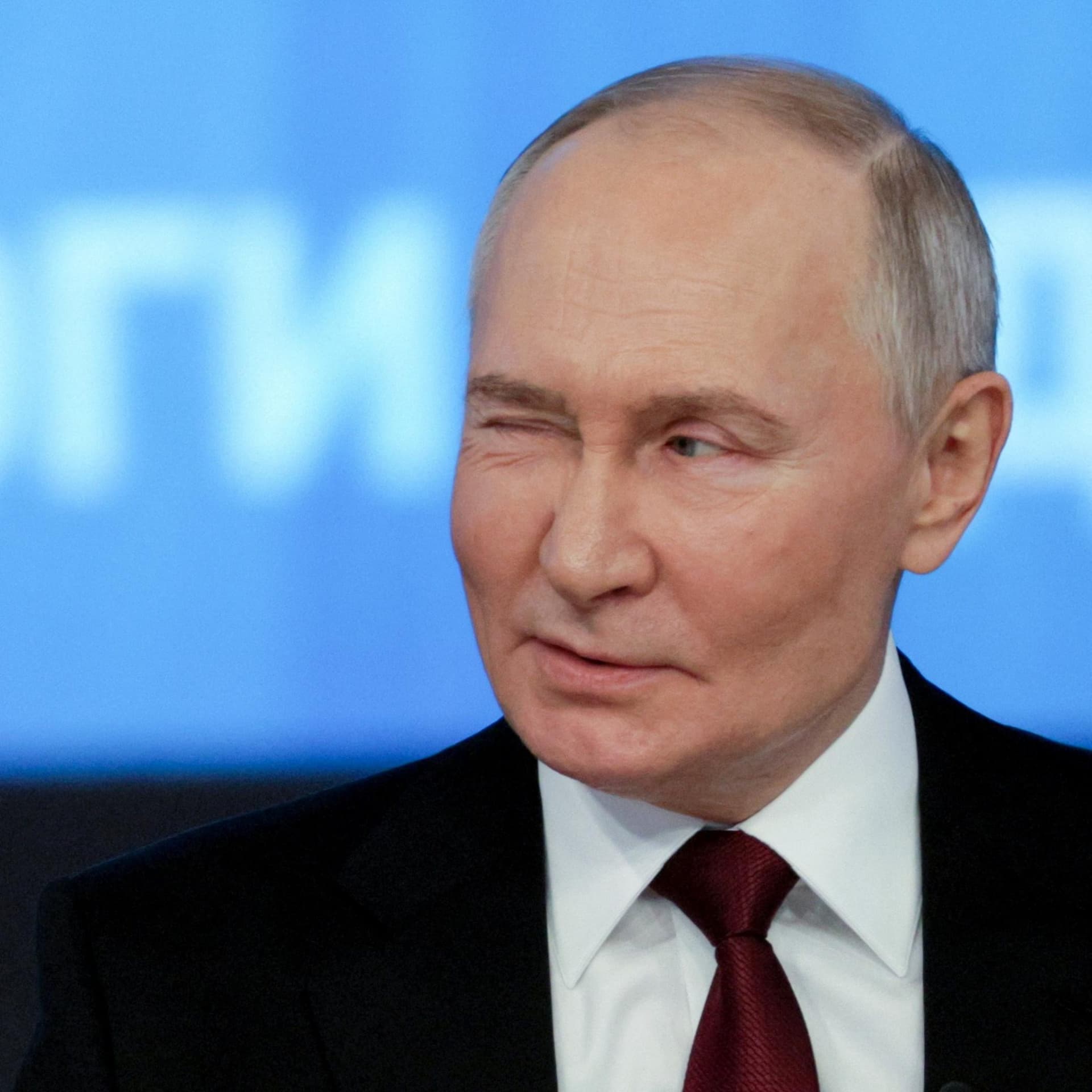
Photo: Russian President Vladimir Putin. Credit: Gavriil Grigorov/Sputnik/Reuters)