
In short
Whether the June “12-day war” involving Israel/US strikes destroyed Iran’s nuclear weapons program, and whether it sparked new freedoms in Iran.
Guest backgrounds
Parham Gubadi, senior reporter at BBC Persian; born in Iran, lived there 29 years. BBC Persian is officially banned in Iran; he reports from London, verifying footage via contacts and families. He says colleagues’ families face raids, passport confiscations, interrogation, and threats.
Key claims
Bombings damaged enrichment facilities but “know-how” remains; Iran has about 400kg of 60% enriched uranium, potentially enough for at least 10 bombs if further enriched. Iran blocks IAEA inspectors, citing distrust of Western-aligned neutrality. No regime change occurred; Iranian leaders reportedly survived a strike on a secret meeting. Iran’s hijab enforcement is less intensive, with periodic morality-police crackdowns.
Notable examples
2022 Mahsa Amini protests coverage; social-media scenes of Tehran without hijab; Iran’s alleged pause after striking a US base in Qatar; claims of “rave parties” and alcohol served before being shut down.
Written by AI. May contain mistakes. Listen to the episode to check what was said.
Chapters
Tap a time to open that second in VOOverview of BBC Persian
0:44 to 1:11
Tristan introduces Parham Gobadi and discusses the role of BBC Persian in reporting news from Iran.
“And to think, that's just a small taste of what Schwab offers.”
Overview of BBC Persian
2:24 to 3:50
Tristan introduces Parham Gobadi and discusses the role of BBC Persian in reporting news from Iran.
“And has it led to an unexpected wave of new freedoms for Iranians?”
Challenges of Reporting from Iran
3:50 to 6:25
Parham shares the difficulties faced by journalists covering stories in Iran from abroad.
“The government's decision to get the terrorist terrorist in Australia's territory.”
Impact of Protests on Journalists
6:25 to 8:15
Parham discusses emotional toll and responsibilities of reporting on protests in Iran.
“So we were feeding the English service as well, the news channel as well.”
Recap of the 12-Day War
8:15 to 11:15
Tristan and Parham discuss the events of the 12-day war and its implications for Iran's nuclear program.
“And when you establish that contact with family members, after a while, they think that you're their friend.”
Effectiveness of the Air Strikes
11:15 to 13:20
Parham evaluates the success of air strikes on Iran's nuclear capabilities and the aftermath.
“So Israel carries out strikes across Iran, including on Tehran.”
Future of Iran's Nuclear Program
13:20 to 14:01
Discussion about the current status and future trajectory of Iran's nuclear program post-conflict.
“So we know that the bombings damaged the Iranian nuclear facilities and Iranian enrichment facilities.”
Understanding Iran's Uranium Enrichment
14:01 to 15:46
Learn about Iran's uranium enrichment levels and their implications for nuclear weapons.
“Can you just explain to us, please, what these actual quantities of uranium mean?”
Historical Context of Weapons Inspections
15:47 to 17:03
Explore the historical parallels between Iraq and Iran regarding weapons inspection.
“They didn't allow UN inspectors at the time.”
The Goals Behind Military Actions
17:04 to 19:55
Discuss the motivations behind military actions against Iran, including regime change.
“So, Pam, Israel and the US were quite explicit that this war, the 12-day war, was about trying to do as much damage as possible to Iran's nuclear weapons program.”
Show all 13 chapters
Iran's Domestic Situation Post-War
19:56 to 22:47
Analyze the internal challenges and societal grievances facing Iran after the conflict.
“which is really difficult when you're being bombed.”
Cultural Shifts in Iran: Raves and Alcohol
22:48 to 24:31
Discover the cultural changes in Iran, including rave parties and alcohol consumption.
“I know that sounds bizarre, but nowadays cafes in Iran throw rave parties.”
The Hijab Debate and Societal Control
24:32 to 27:24
Examine the current state of hijab enforcement and societal liberalization in Iran.
“Well, I hope you, Panham, that you make it to a rave in Iran at some point soon.”
Transcript
Automatic transcript. May contain errors.0:00This BBC podcast is supported by ads outside the UK.
0:30No bouncing between tabs. And best of all, no spreadsheets. Stop managing software and start managing your business with one unified system. Try for free today at odoo.com. That's O-D-O-O dot com. Self-directed investing. Trading. Full-service wealth management. Automated investing. Financial planning. Thematic investing. Retirement planning. Phew. And to think, that's just a small taste of what Schwab offers. Because Schwab knows that when it comes to your finances, choice matters. No matter your goals, investing style, life stage or experience, Schwab has everything you need, all in one place, so you can invest your way.
1:11Visit schwab.com to learn more. My co-host Asma Khaled's been on a much-deserved Thanksgiving break, but before she left, in one of our team meetings, she asked this question. Remember the moment the US bombed Iran? What happened next? Well, today we're going to try and answer that. The bombing was back in June, almost six months ago, and it was a perilous moment. It happened at the end of the so-called 12-day war between Israel and Iran, and there were fears that it could lead to a war that could spread throughout the Middle East and even destabilize the world. Thankfully, that didn't happen, and the Iran story slipped off the international headlines.
1:55But then, recently, social media started filling up with this.
2:05Scenes of people partying on the streets of Tehran. Women without hijabs mixing with men. The sort of thing that we're told is fiercely repressed in Iran. So how did we get from that to this? From the BBC, I'm Tristan Redman in London. And today on The Global Story, did the so-called 12-day war succeed in destroying Iran's nuclear weapons program? And has it led to an unexpected wave of new freedoms for Iranians?
2:43Hello. Come on in. So this is BBC Persians' studio. This is for the news bulletins, this part. So that's where I sit in a few hours. You might not know that here at the BBC, we don't just do news in English. We currently operate in 43 different languages. So this is the control room. So they're from the Global Story podcast. Hello. For today's episode, we're joined by Parham Gobadi, senior reporter with the BBC's Persian language service. Parham is showing me around their studios. One hour. The whole channel is on air 24 hours a day. Yes, the whole channel is on air. BBC Persian serves Iranians around the world, and they have a huge following.
3:2523 million people on Instagram alone. Yeah, these are the amazing people who do all the magic.
3:35They're about to go live. I'm getting mic'd up right now. I've learned to do it myself. Hello, Galerie. Can you hear me? Nice. I can hear you too. OK, I'm ready. Bye, sir. Four, three, two, one. The government's decision to get the terrorist terrorist in Australia's territory. Iran says that the enemy is against the enemy.
4:06Paham, thank you so much for joining us. Can you introduce yourself, please, for us? Thanks for having me. It's Parhan Qabadi. I work for the BBC Persian. I'm a senior reporter and I was born in Iran and lived there for 29 years. What's the status of the BBC inside Iran? So whenever something big happens, usually people turn to BBC because they know that ultimately this is the most trusted channel that they can get their news from that is impartial. How easily can you operate inside Iran? Well, we cannot go to Iran. We cannot operate in Iran. People usually watch us on satellite and most of the Iranians have satellite dishes on their rooftops so they can easily watch us.
4:49Or Instagram is filtered, for example, in Iran. But 85 % of Iranians use VPN to, you know, to access the free world and the internet. But are you saying that the BBC is officially banned inside Iran? It is officially banned and we are not allowed to go back. I mean, we can go back, but we're going to get arrested probably at the airport. Okay, but what does that mean then for you personally as a journalist and for your family? So it's not easy to cover a story when you're far, but we've managed to do it so far. For example, back in 2022, when Masa Amini, the Kurdish Iranian girl who died in police custody because of hijab.
5:26Masa Amini died after being detained by morality police for allegedly breaking the strict law requiring women to cover their hair with a hijab or headscarf. Nationwide protests were happening in Iran. The government is cracking down on demonstrators following nearly a week of mass protests over the death of 22-year-old Masa Amini. Street protests in Iran over the death of a woman in custody have spread to more towns and cities. We were not there, so we managed to verify all the footage that we were getting. I was personally speaking to many of the victims because many people were killed as a result of the police crackdown.
6:07So what we did, we contacted the family members of the people who were killed. And then we, for example, asked for death certificates so we can verify the death of a protester. And we talked to different family members to corroborate the information. It wasn't easy, but we managed to do it. And we covered it not only in Persian, but also in English as well. So we were feeding the English service as well, the news channel as well. Do you have relatives inside Iran? And what are the consequences for them of you working for this organization? So if you'd rather not talk about it. No, no, sorry. My colleagues and I, we pay a high price for just covering the news and doing our job.
6:45Our family members are interrogated in Iran. There are examples that some family members, for example, their house was raided, their passports were confiscated. And some of our colleagues, I cannot mention the names, but some of our colleagues do not even feel safe here in the UK and in London and in Europe as well, because there are death threats and, you know, there's threat against them in the West as well. Oh, wow. So that's something you're conscious of every single day when you're here in London. Yeah. And, you know, you have trainings like to be careful when you leave the house to look here and there.
7:19But, you know, it's not something that you normally do. So it takes some time to get used to it. How does that manifest itself, though, on a day to day basis when you're in London? You're feeling that you're not entirely secure when you're here. I can give you one example. Sometimes you find yourself waking up in the middle of the night from nightmares and checking the windows, checking the doors to see everything is locked. So, you know, at first you think that, you know, it's easy. I can manage that. I knew what I'm getting involved in. But then when it happens to you, you realize that it's not that easy.
7:53And apart from that, I remember during those protests in Iran, because the protests were over a year, they were taking place and there were many young people getting killed. I know the emotional trauma that my colleagues underwent was also tremendous that, you know, dealing with family members of those who were killed, who lost a loved one. And when you establish that contact with family members, after a while, they think that you're their friend. They think that you are their, sometimes their therapist. So I would get messages 3 a.m. in the morning, 4 a.m. in the morning of grieving family members, mothers, fathers.
8:31And that is tremendously difficult.
8:39Parham is a great person to talk to about what's been going on in Iran in the six months since those US and Israeli attacks because he covered the war as it unfolded. The Iranian government today doesn't recognize Israel's right to exist. Israel says Tehran's aggressive stance towards it and its nuclear program in particular makes it an existential threat. That's something that Benjamin Netanyahu has been talking about for a long time. Iran has always said that its nuclear program is entirely peaceful, and it's never sought to develop a nuclear weapon. If you think back to that moment in May, June, Israel had had a string of high-profile, successful military operations around the Middle East.
9:21And Netanyahu clearly decided that the time was right to strike Iran. So it started on June 13th, and it came as a huge blow to Iranians, because Israelis managed to assassinate Iranian top generals, those who were in charge. All the top commanders, all the military decision makers, were killed in the first few minutes and hours of the war. We start with the breaking news at this hour, as Israel has carried out strikes on Iran's nuclear program. And then the Israeli fighter jets started bombing Iran. Breaking news out of Iran at the moment. Explosions have been heard in the capital. Video on social media and geolocated by CNN shows smoke billowing into the sky in densely populated areas of the city.
10:15Civilians are being urged to seek shelter with the Iranian government using mosques, metro stations, schools and other buildings. What was it like personally for you sitting here in London watching Iran being bombed? Unbelievable, because I was born in the 80s, early 80s. So I clearly remember the Iran-Iraq war. I remember the time that Tehran was bombed by Iraqi fighter jets. But the younger generation, they haven't seen this. So it was shocking to them. And it was surreal. It was surreal to see that overnight something like that is happening in your country. And my dad, like any other Persian dad who's stubborn, he would refuse to leave the town and go to other cities.
11:01Most of the Iranians' diaspora are living abroad. They had the same issue. They were asking their parents to leave Tehran and they just wouldn't. They would say that we'd rather stay and die in our own house than just go around in other cities and ask people to stay at their place. So it was difficult. Okay. So Israel carries out strikes across Iran, including on Tehran. and Iran fires missiles back in retaliation, then what happens? So Iran had three uranium enrichment facilities, one in Isfahan, one in Natanz. But Fordow is the main one that is really deep underground. It's fortified. So it's a key installation for the nuclear program.
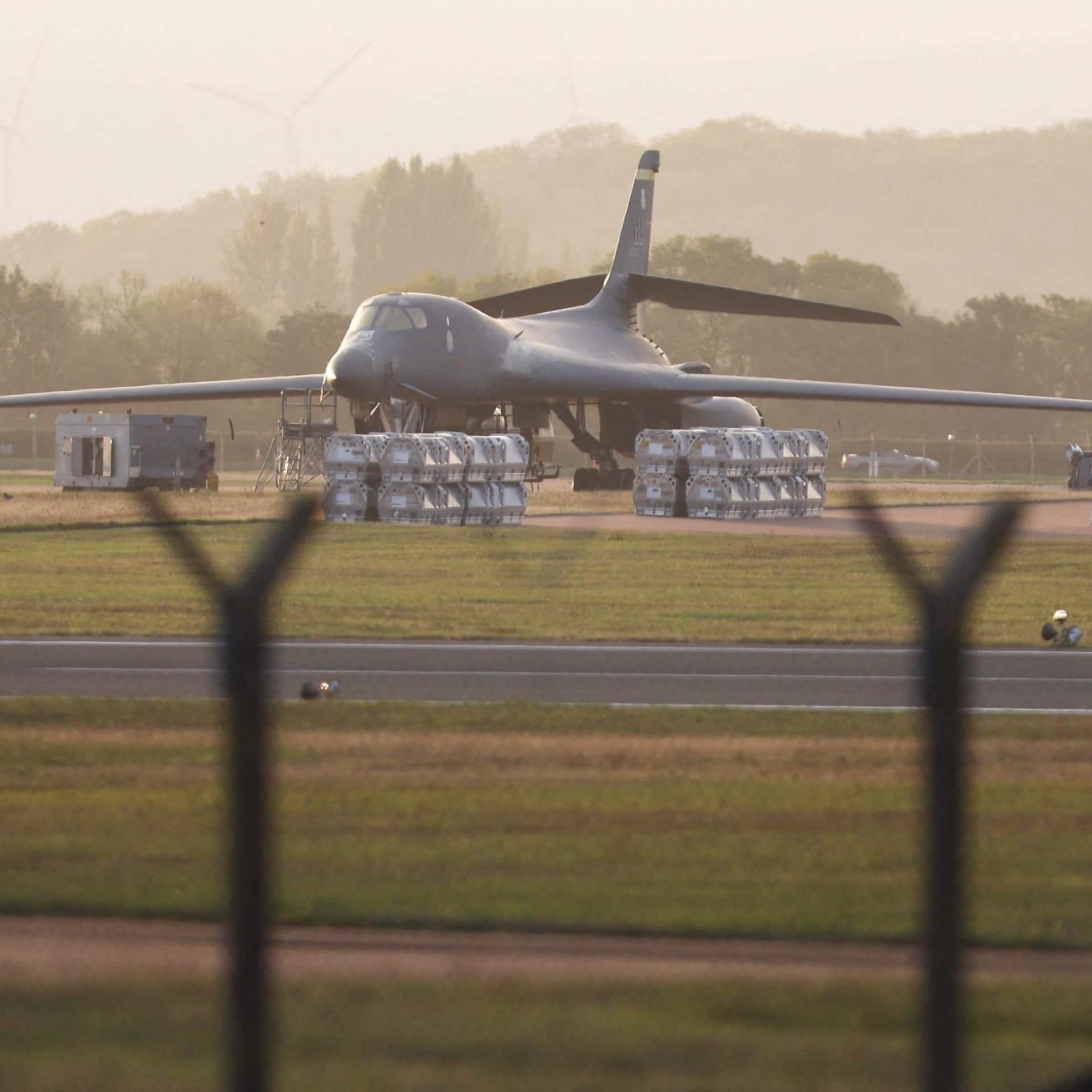
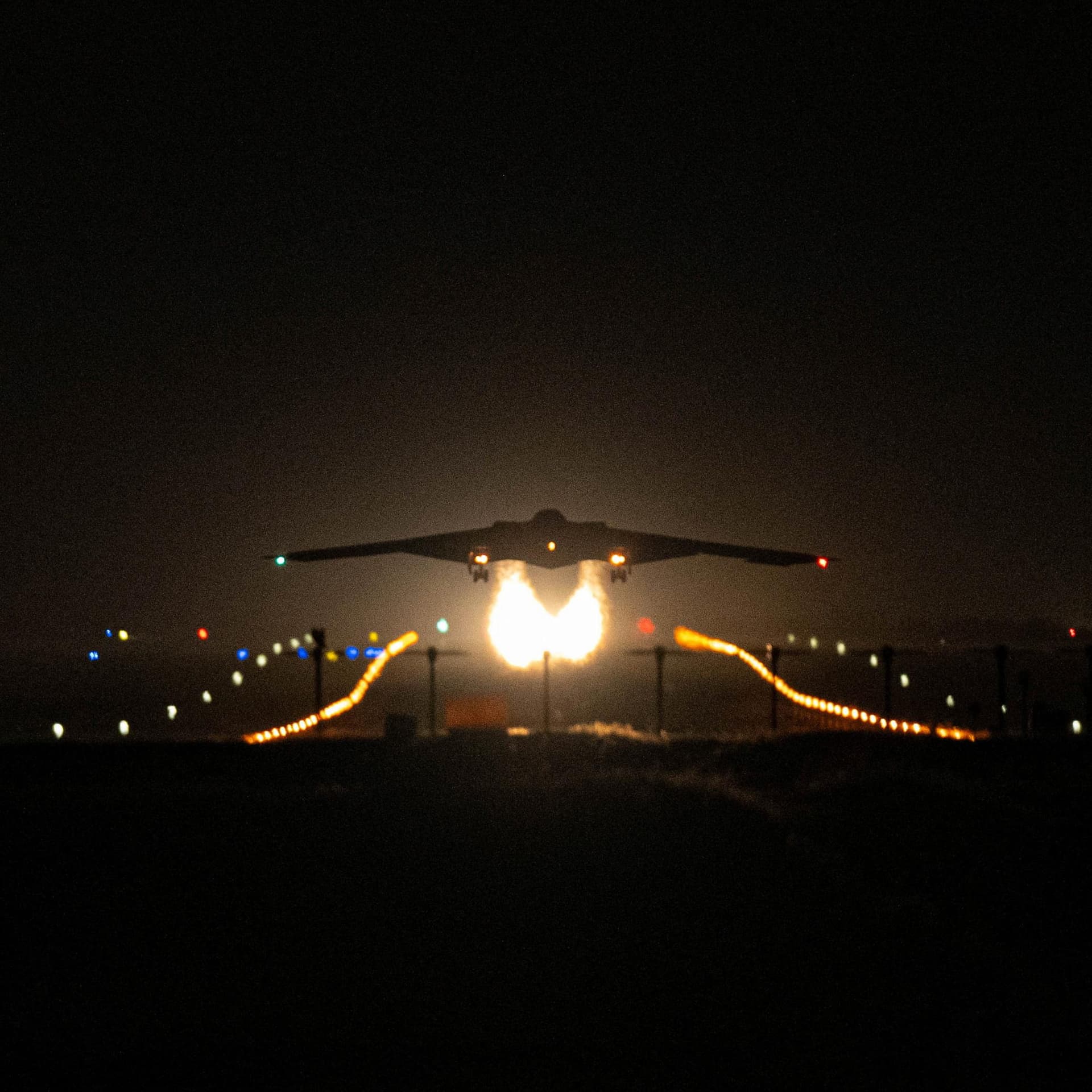
11:40Exactly. And Israelis knew that they cannot take out Fordow facilities by themselves. So they needed American help and they needed American B-2 bombers. They asked apparently Americans to help them and they dropped bunker buster bombs. American stealth bombers and submarines launched a massive coordinated attack targeting three key nuclear sites. Direct involvement of the US in military confrontation with Iran takes the Middle East into uncharted and very unpredictable territory. There's no military in the world that could have done what we did tonight, not even close. There has never been a military that could do what took place just a little while ago.
12:23How does Iran respond to this attack from the U.S.? So Iran, it surprised many people because Iran attacked al-Odeid, American base in Qatar. Qatar has always been friendly with Iran. So it surprised many people that Iranians launched an attack against an American base in Qatar. So the day after that, apparently Americans asked Israelis to stop the conflict and there was a ceasefire. So we cannot even say there was a ceasefire. There is actually a pause because there was nothing written down. There's no ceasefire between the countries, but the war stopped and it's on a pause. And that's why many people are worried, you know, it can happen again.
13:03OK, so this ceasefire came into effect because of a request from the United States. I'd like to break down with you, please, Parham, whether or not the stated, the principal stated aim of this conflict was actually successful. Did the war destroy the nuclear capacities of Iran? So we know that the bombings damaged the Iranian nuclear facilities and Iranian enrichment facilities. That's a fact. What's important is that the know-how is not destroyed. And that's what the Americans know and Israelis know as well. Yes, there are many nuclear scientists who were assassinated, but there are many more as well.
13:41There are so many things we don't know because there are over 400 kilograms of 60 % enriched uranium in the hands of Iranians. Now, Iranians don't say whether they were stored in Fordo so they cannot access it, or whether they managed to take them out and store them elsewhere so they have access to those 400 kilograms. We don't know that. Can you just explain to us, please, what these actual quantities of uranium mean? How much is needed to produce a nuclear weapon? Iran has enriched uranium to 60 % and we need almost 90 % purity in order to make nuclear bomb. And even with this 60 % and with this amount of uranium, they should be able to build 10, at least 10 nuclear bombs.
14:25From 400 kilograms of uranium if it's further enriched. That's correct. Okay. Do we have any indication in the aftermath of these bombings that the Iranian government is either accelerating its nuclear program or dialing it back? That's the main issue right now because we don't know anything and the world doesn't know anything. So Iran, after the war, does not allow IAEA's, International Atomic Energy Agency's inspectors, to enter Iran and to do their job. The other thing is that a few days ago, IAEA passed a resolution against Iran and they were asking for two things. One, access to the sites so inspectors can check the sites.
15:06And the other thing is that Iran reports to the IAEA what they're doing exactly. And Iran is not cooperating right now. What are the reasons that Iran gives for not allowing them in? So Iran is suspicious of IAEA. Many Iranian officials have expressed their frustration with the IAEA and they kind of think that IAEA is working with the Western governments. They accuse it of an estionage saying that they're using our intelligence to give it to the Western countries to target us. Okay. Essentially, the line is we will accept weapons inspectors if we consider them to be neutral arbiters and we do not consider these weapons inspectors to be neutral arbiters.
15:46Yeah. Now, if you allow me, I want to make a historical analogy with Iraq, because Iraq did the same thing. They didn't allow UN inspectors at the time. You're talking about in 2003. Before 2003, they stopped for a few years. They didn't allow UN inspectors to go inside Iraq and to see what they're doing. So what happened was that CIA, in this famous report now, National Intelligence Estimate, they thought that they are rebuilding their nuclear activities. Some of those information later on were proven to be forgeries and from false informants, and they were refuted. But what happened was that when the world is in the dark, they don't know what you're doing.
16:27It's risky.
16:34History doesn't necessarily repeat itself, but we can learn from history that when Western governments and when the world is in the dark about what you're doing, they can draw wrong conclusions and they can have wrong estimates that can further escalate the tension between the two countries and the multiple countries or lead to a war.
17:03All right. So, Pam, Israel and the US were quite explicit that this war, the 12-day war, was about trying to do as much damage as possible to Iran's nuclear weapons program. But during the war, there were some analysts who were also wondering whether there wasn't another aim here, and that's so-called regime change. Benjamin Netanyahu said in an interview during the war that quote-unquote regime change was not a goal of the war, but could be an outcome. Tonight I wish to speak to you, the proud people of Iran. On the first day of the war, Netanyahu made this speech. The time has come for you to unite around your flag and your historic legacy by standing up for your freedom from an evil and oppressive regime.
17:51It has never been weaker. This is your opportunity to stand up and let your voices be heard. And then just after the U.S. bombing of Iran, Donald Trump posted on Truth Social, He said, it's not politically correct to use the term regime change, but if the current Iranian regime is unable to make Iran great again, all caps, why wouldn't there be regime change? And then he also posted, we know exactly where the so-called supreme leader is hiding. He's an easy target, but he's safe there. We are not going to take him out, kill in brackets, at least not for now. But we don't want missiles shot at civilians or American soldiers.
18:30Our patience is wearing thin. Thank you for your attention to this matter. Although the very next day, he did say something quite different to reporters. Do you want to see regime change in Iran? No. If there was, there was. But no, I don't want to. I'd like to see everything calm down as quickly as possible. Regime change takes chaos. And ideally, we don't want to see so much chaos. But we didn't see regime change. People didn't rise up in Iran. The top leadership of Iran was not killed by missile strikes. What actually happened on the ground in Iran after this war? Later on, after a few months, we realized when Iranian President Masoud Pazeshkian first expressed it, that in a meeting they had in the mountain, like underneath a mountain in Tehran, the head of three branches, the head of the judiciary, the head of the parliament and Iranian president had a meeting and other senior officials had a meeting in the mountain.
19:23And Israelis managed to realize that and they bombed it. So all three of them could have been killed. And this is what they are saying. They could have been killed in an instant. They say miraculously they managed to escape and survive. So if the three head of the branches in Iran were killed, would Iranian regime be toppled? Would it create chaos in Iran? We don't know. We don't know that. But Israelis were hoping that Iranian people would also participate in this. What Israelis expected was that Iranians would go on the street and, you know, rise up and protests would take place, which is really difficult when you're being bombed.
20:04You go on the street and protest as well. So I don't think it was really that realistic to expect something like that. It does not mean that Iranians do not have grievances. It doesn't mean that Iranians, you know, are happy with this regime that they didn't come on the street, as the Iranian leader is claiming. They say that Iranian people showed that they're, you know, they support us. It's not like that. Iranians, you know, have serious grievances. The society in Iran right now is a powder keg because of so many problems happening at the same time. Like last week, Tehran was one of the most polluted cities in the world.
20:41Jungles are burning in Iran. Tehran is dealing with a severe lack of water. All the dams have been dried out. People do not have enough electricity at night. So, you know, there are multiple things happening at the same time. But are these separate things from the actual war itself? These are separate contexts. Separate contexts. But it shows that there are many things that Iranians are furious about. And it's a powder kick. And at any time, there can be another round of nationwide protests in Iran. OK, so the Iranian government fears a possible second conflict that could exacerbate the domestic situation for them.
21:19Is that fair to say? So Iranians fear two things tremendously. One is a foreign invasion and another round of conflict with Israelis and Americans. But at the same time, Iranian government is really worried that people are going to come on the streets. They take it to the streets and they protest. And this time around, are they going to be able to topple the regime or not? What are they doing to guard against that possibility that they fear? Not much. Well, because it's coming from decades of mismanagement, it's really difficult to control that. Like, it's really difficult to find an instant solution for this mismanagement of water resources in Iran right now.
22:04It's really difficult to find a solution for the air pollution instantly. So what they've done so far is they've opened up a little bit. And it seems that after the war, the officials, at least some of them, have realized if there is going to be another war, we need to keep people on our side. So at least some part of this establishment has realized that you need to give more freedom to people. Let them breathe a little bit. So in case of an emergency, you have them on your side. At least some part of the establishment has realized that. But there are some hardline elements inside the country who oppose that.
22:40So every once in a while, you see that they are closing down restaurants because they're serving alcohol. They are closing down cafes because they throw rave parties.
22:56I know that sounds bizarre, but nowadays cafes in Iran throw rave parties. So it's like coffee rave festival thing in Iran. Are they good fun, those things? I think so. I mean, I like raves. So when I see it from, and it's mind-blowing to me, believe me, the last time I was in Iran was 14 years ago, and see the women walk on the streets of Iran without hijab, see that there are rave parties at cafes, see that restaurants are openly serving alcohol. Oh, wow, okay. Yeah, and I mean, not openly, I mean, they're serving alcohol. The government knows that. So you see some reports from Revolutionary Guard News Agency going to say that they're serving alcohol.
23:38The next day they get closed down. But it's really interesting. So many Iranian business owners are using that as a marketing strategy. So they know that if they throw this and it goes viral, they're going to get closed down. But it's going to make them famous. So they're going to have a lot of customers. So they throw a rave party. They serve alcohol. They get closed down. They become famous. And, you know, they open up again after a while.
Read the full transcript
24:05Okay, I mean, it sounds like there's a real liberalization of society from what you're describing. Yeah, yes and no, because there are still hardline elements who oppose that, and they try to stop that from happening. So we don't know how far the Iranian regime is willing to go. Are they willing to legalize, for example, serving alcohol in Iran? Are they willing to give up on compulsory hijab altogether? We don't know that yet. Okay. Well, I hope you, Panham, that you make it to a rave in Iran at some point soon. I have to say, I do like some electronic music, and two of my favorite electronic music producers are Iranian.
24:44There we go. Deep Dish. Maybe once we should go together. Are you familiar with Deep Dish? No. Oh, fantastic. I'm sorry. Okay, well, I mean, the issue that we hear a lot about abroad is the hijab in Iran. You know, is it being enforced as a rule? Is it being liberalized? What's the current situation with that? So hijab, you see many women who are not observing hijab, but they haven't legalized it. But at the same time, they are not enforcing it the way they used to do it in the past. So you don't see as many morality police understand. Every once in a while, they deploy them for a week and then they disappear.
25:23So to me, it appears as if they're trying to keep their fan base happy because their fan base are extremely religious people. Every once in a while, they deploy some police officers on the street, but they know that in the long run, they're not doing anything meaningful to stop it. I wonder if I can draw a historical comparison. Sure. Mikhail Gorbachev, famously in the Soviet Union in the mid to late 80s, he instituted policies of liberalization in the belief that he was giving people what they wanted and that the government would be able to keep a lid on things and the USSR would remain intact.
26:01Mikhail Gorbachev, as it turns out, was wrong. The Soviet Union collapsed. Is that a fair comparison to what might be happening in Iran right now? The liberalization of society. Can the government keep controlling it? or do you think it might lead to something bigger? That was really important what you said because that's exactly what the hardliners are saying. They're saying that if we allow women to remove their hijab, they're not going to stop there. They're going to ask for legalization of alcohol, for example, later on. But the reason they're not doing it is that, like I said, they have this margin of the society that is pious, extremely religious people.
26:40They are the people who are willing to take up arms and kill protesters, okay? And there are not many people. So Iranian regime knows that this is their fan base. They need to keep this section of the society happy. If I allow women not to wear hijab, if I legalize drinking alcohol, then I'm going to lose my fan base. Then if there is a protest, who is going to defend me? So they're really in a difficult position.
27:11And, you know, Middle East is full of surprises. Nobody expected Bashar al-Assad to fall within a daze. Nobody expected Taliban to take over in a matter of days. All those things happened in a matter of days. So you never know. Like I said, Iranian society at the moment, regardless of Israel, it's a powder kick because of so many environmental, social and economic pressures that people are undergoing. So there can be another round of protests that the regime cannot handle and cannot crack down.
27:48Okay, thank you, Parham. It's been a total pleasure to talk with you. Pleasure is mine.
27:55That was Parham Gubadi from the BBC's Persian service. And that's it for today's show, friends. It was produced by Viv Jones and Valerio Esposito. The executive producer was James Shield, and it was mixed by Travis Evans. Our studio manager is Mike Regard, and our senior news editor is China Collins. And I'm Tristan Redman. Today, we answered Asma's question about Iran. If you have any story ideas you'd like us to take on for you, send us an email, theglobalstory at bbc.com. If you're enjoying the show, please rate us wherever you're listening. It helps others find us. We'll be back tomorrow. Cheerio.
28:35Thank you.
From the publisher
Last June, Israel and the United States carried out coordinated strikes on nuclear and military sites across Iran in what became known as the 12-day war. The aim was clear: destroy Iran’s nuclear-enrichment facilities amid warnings that Tehran was dangerously close to developing a nuclear weapon. But conflicting reports in the immediate aftermath left the public uncertain about how effective the operation really was. Six months after the bombings, we speak with Parham Ghobadi, senior reporter for BBC Persian, about what the war actually achieved, the current state of Iran’s nuclear programme, and what daily life inside Iran looks like today. Producer: Viv Jones and Valerio Esposito Executive producer: James Shield Sound engineer: Travis Evans Senior news editor: China Collins (Photo: A US Air Force B-2 Spirit stealth bomber. Credit: US Air Force)