In short
The episode examines what happens next after a Trump administration–described “sophisticated military raid” captured Venezuela’s deposed president Nicolás Maduro and his wife, with Maduro expected to appear in a New York court. It traces U.S.–Venezuela escalation, debates motives (drugs vs oil vs regime change), and weighs legality and possible outcomes.
Guests and backgrounds
Tristan Redman (BBC, London) and Asma Khalid (BBC, Washington, D.C.) host. Ione Wells (BBC South America correspondent) reports on Venezuelans’ reactions and political dynamics. Mark Weller (Cambridge international law professor) comments on legality.
Key claims
Maduro’s allies still control the military, judiciary, and security; public celebration is muted inside Venezuela. Delcy Rodríguez (Maduro ally, former vice president and oil/finance minister) is interim leader; Trump suggests she could work with the U.S. Maria Karina Machado (Nobel Peace Prize winner) is praised by the opposition but allegedly lacks domestic support. U.S. frames the raid as law enforcement, but Weller says there’s no legal authority to arrest foreign suspects on foreign territory using force.
Notable examples
2013 Maduro succession of Hugo Chávez; 2020 U.S. narco-terrorism charges; 2003 Iraq CPA comparison; Caracas diaspora celebrations vs private fear; UN Security Council emergency meeting; parallels to Iraq/Libya and potential precedents for Ukraine, Taiwan, and Greenland.
Written by AI. May contain mistakes. Listen to the episode to check what was said.
Chapters
Tap a time to open that second in VOTimeline of U.S.-Venezuela Relations
0:44 to 1:10
Exploring the historical context of U.S. involvement in Venezuela.
“And to think, that's just a small taste of what Schwab offers.”
Timeline of U.S.-Venezuela Relations
2:17 to 3:19
Exploring the historical context of U.S. involvement in Venezuela.
“I mean, so much for a quiet return to business as usual.”
Trump's Claims and Political Reactions
3:19 to 4:44
Discussion on Trump's claims regarding U.S. governance in Venezuela.
“That's when Nicolas Maduro came to power.”
Venezuelan Perspectives on U.S. Actions
4:44 to 6:03
Insights from Venezuelans on the recent U.S. intervention and its implications.
“We had this press conference by Donald Trump in Mar-a-Lago standing in front of Pete Hegseth, Marco Rubio and Stephen Miller.”
Future Prospects for Venezuela
6:03 to 7:54
Discussion on what the future might hold for Venezuela post-Maduro.
“And the first bit of tape is from a supporter of the Maduro government who is against the US intervention.”
Public Sentiment and Diaspora Reactions
7:54 to 9:08
Exploring the reactions of the Venezuelan diaspora and sentiments in Venezuela.
“I mean, do you remember, for example, the scenes of the Saddam Hussein statue being torn down in Baghdad in 2003?”
Key Figures in Venezuelan Politics
9:08 to 13:20
Understanding the roles of Delce Rodriguez and Maria Karina Machado.
“And if it did, that may be a major moment.”
Conclusion and Future Considerations
13:20 to 14:01
Wrapping up thoughts on the implications of U.S. actions in Venezuela.
“by some of the US's allies, for example.”
Opposition Dynamics in Venezuela
14:01 to 16:47
Explore the role of the opposition and key figures in Venezuela's political landscape.
“She's kind of seen as the real figurehead that has led protests and counter movements to President Maduro over the last couple of years in particular.”
US Intervention and Drug Trafficking Allegations
16:47 to 22:50
Discuss the US's rationale behind its focus on Venezuela concerning drug trafficking and its political implications.
“They later published 83 % of them online, which showed, according to these tallies that they had, that Maduro had only got 30 % of the vote and that their candidate, Edmundo Gonzalez, had got about 67 % of the vote.”
Show all 15 chapters
The Monroe Doctrine and Regional Reactions
22:50 to 26:54
Examine the historical context of US intervention and its reception in Latin America today.
“There is a long history of the United States and its interventions in the Western Hemisphere, in Latin America.”
Legal Implications of US Actions
26:54 to 28:01
Question the legality of US actions in Venezuela and insights from legal experts.
“That was Ioni Wells, the BBC's South America correspondent.”
Arrest Operation in Venezuela
28:01 to 28:34
Discussion on the nature of the operation in Venezuela and its implications.
“He was arrested on the ground in Venezuela by FBI agents, read his rights, and removed from the country.”
Legal Perspectives on U.S. Actions
28:34 to 29:53
Analysis of the legality of the U.S. operation in Venezuela with insights from an international law professor.
“He's a professor of international law at Cambridge University in the UK.”
Potential Global Precedents
29:53 to 31:09
Exploration of how the U.S. intervention in Venezuela may set dangerous precedents for other international conflicts.
“And I'm fascinated by what kind of precedent this might set in other cases around the world.”
Transcript
Automatic transcript. May contain errors.0:00This BBC podcast is supported by ads outside the UK.
0:30No bouncing between tabs. And best of all, no spreadsheets. Stop managing software and start managing your business with one unified system. Try for free today at odoo.com. That's O-D-O-O dot com. Self-directed investing. Trading. Full-service wealth management. Automated investing. Financial planning. Thematic investing. Retirement planning. Phew. And to think, that's just a small taste of what Schwab offers. Because Schwab knows that when it comes to your finances, choice matters no matter your goals investing style life stage or experience schwab has everything you need all in one place so you can invest your way visit schwab.com to learn more so we are going to run the country until such time as we can do a safe proper and judicious transition and it has to be judicious because that's what we're all about In the unlikely event that you didn't already know, according to the American president, the United States is now running not just the United States, but now Venezuela too.
1:41That's a country of 30 million people. But what does all this actually mean? And having spent several months on this show trying to unpick what was motivating Donald Trump's interest in Venezuela, is it drugs, is it oil, is it toppling a dictator? do we finally have an answer? From the BBC, I'm Tristan Redman in London. And I'm Asma Khalid in Washington, D.C. And today on The Global Story, what's next for Venezuela?
2:16Happy New Year, everyone. Happy New Year, Asma. Happy New Year to you. I mean, so much for a quiet return to business as usual. It's definitely not that. A busy weekend, a busy news weekend. And so here we are. And at the time of recording this on Sunday afternoon, we are seeing news that Venezuela's deposed president, Nicolas Maduro, is going to appear in court in New York as soon as Monday. This, of course, follows the major news over the weekend in which Maduro and his wife were captured in what the Trump administration has described as a sophisticated military raid. Okay, so if you are a listener of this show, you will know that since September, back when U.S.
3:01strikes on alleged drug boats began, we have devoted quite a bit of time to covering Venezuela. But the story between the United States and Venezuela goes back much earlier than that. So we wanted to start off by taking you through a timeline of how we got to where we are today. Asma, why don't you kick us off? Yeah, so let's start in 2013. That's when Nicolas Maduro came to power. He was the handpicked successor of Venezuela's former left-wing president, Hugo Chavez. And over the years, the U.S. relationship with Venezuela has been rocky. It deteriorated so much so that in 2020, during President Trump's first term, the United States charged Maduro, along with 14 members of his inner circle, they accused him of narco-terrorism.
3:47And the United States offered a multi-million dollar reward for any information leading to his capture. And Donald Trump's first administration didn't recognize Maduro as a legitimate president of Venezuela. International observers have said that recent elections in the country have not been free and fair. But when Trump returned to the White House last year, he stepped up the pressure even more. That's right. It has been a steady escalation. You mentioned the boat strikes. We began seeing those in September. And then in the following month, in October, President Trump said he authorized the CIA to conduct covert operations inside Venezuela.
4:27In November, the United States designated what it called the Cartel de los Soles, which Maduro denies being the head of as a foreign terrorist organization. So at this point, all this pressure is building up and it culminated in what we saw this weekend. We had this press conference by Donald Trump in Mar-a-Lago standing in front of Pete Hegseth, Marco Rubio and Stephen Miller. What's the group you mentioned that would run Venezuela? Well, it's largely going to be for a period of time. The people that are standing right behind me, we're going to be running it. We're going to be bringing it back.
5:03I was driving, running errands on Saturday and listening to this entire press conference. And I came back and could not get out of my car because I was just floored. When President Trump said, we, the United States, are going to run Venezuela, I had this moment of what on earth is going on? There's a lot of shocking moments when you cover politics. This is high on the list. What was your reaction, Tristan? Well, I think the first thing I thought of really was Iraq in 2003. I guess that was the last time that the United States made an attempt at running another country. They set up this organization called the CPA, the Coalition Provisional Authority, and it failed.
5:46It was something of a disaster. And one of the reasons for that disaster was because Iraqis were written out of the story. They weren't involved in their own governance. So I really wanted to know what Venezuelans today make of what has just happened in their country. So actually the BBC has been speaking to Venezuelans in Caracas and we have two bits of tape which paint a picture. And the first bit of tape is from a supporter of the Maduro government who is against the US intervention. So he wants to go for Greenland. He wants to go for Panama. He wants to take the Gulf of Mexico. go. He wants to come and invade Venezuela.
6:23So I believe that that attitude is stepping stones to the final steps of an empire that's in the falls. They don't care if a million Venezuelans die. They just want their oil. Then on the other hand, the BBC NewsHour program on the World Service has spoken to another resident of Caracas who was welcoming of Maduro's ousting, but kind of has mixed feelings about how it happened. And she doesn't want Maduro's vice president, Delcey Rodriguez, who's now the interim president, to be in charge of the country either. This is not the right way for a political transition to happen. But obviously something needed to break the stagnation.
7:01And so what's going to happen next? We have to wait and watch. But obviously we want this government to be over. So we wanted to find out more about what could happen in Venezuela next. And so we spoke to the BBC's South America correspondent, Ione Wells. The scenes that we saw unfold over the weekend have left Venezuela in this kind of limbo at the moment. Of course, President Maduro is in US custody, but at the moment, the Venezuelan government, minus him, is still in charge. And that's left these kind of mixed feelings because some, I think, assumed that if Maduro was gone, that that would lead to some sort of plan for a transition or perhaps even the opposition having a pathway to get into power.
7:47I think now there's a lot of people wondering, well, what on earth is next? And a lot of fear and apprehension about that too. Have there been any reports at all? I mean, do you remember, for example, the scenes of the Saddam Hussein statue being torn down in Baghdad in 2003? Have there been any reports of anything like that happening in Caracas? There have been some pro-Maduro gatherings in Caracas that have taken place. From what I'm hearing, there is certainly a lot of private celebration among those who didn't like President Maduro, hoping that this maybe means a change from what they saw as an authoritarian and increasingly oppressive government.
8:25Public displays, though, I think are still perceived as very risky in the country. And it comes back to the fact that I said that at the moment, despite President Donald Trump's claims that the U.S. is now going to run Venezuela, Maduro's allies are still in charge. Many of his closest allies are still running the country, the military, the judicial system, all still very much loyal to him and the government. And, you know, after the 2024 elections, which I reported on in Caracas, the police, the armed forces, security services heavily cracked down on dissent. People were detained, were questioned for, you know, sometimes even sharing anti-government sentiments on social media.
9:04So I think there's a lot of fear about expressing that publicly. That could change. And if it did, that may be a major moment. But for now, I think people are sort of being private where they are celebrating this. That's striking to hear you say. I mean, we've seen huge celebrations. It looks very celebratory environments amongst the Venezuelan community, say in Florida, here in the United States. But you're saying that sentiment, at least publicly, isn't being shown in the streets of Venezuela. Yeah, it's absolutely right. There have been scenes from across the Venezuelan diaspora, both in the US, but also in Europe.
9:37My family is still in Venezuela, and I've been looking forward to this day for so many years. Thank you, President Trump. I'm so, so happy because now Venezuela is free. Scenes of people crying, celebrating, waving Venezuelan flags in the streets, people joyful at the news, and that's in part because much of that diaspora are people critical of Maduro. They are people who chose to leave and to migrate to other places, either because of repression or because of the economic situation in the country. You know, I think even more so perhaps than the Venezuelans in the country, that is a group of people who are, I think, very much celebrating this news.
10:17Ioni, a moment ago, you referenced that Donald Trump had said that the U.S. is now going to run Venezuela. It's a comment that caught a lot of us here in the United States off guard when he made these remarks on Saturday. So I think there's a lot of questions about what it means that the U.S. is going to run the country. At the moment, we see the former vice president of Venezuela, who is now the interim leader. What do we know about who this person is and the conversations she has had with the Trump administration? Delce Rodriguez is very much a Maduro ally. She was his vice president. Her brother, Jorge, is head of the National Assembly, which is very much aligned to Maduro.
10:58It's why he can basically pass whatever law he wants in the country. He's got a loyal Congress, so to speak. She's the daughter of a left-wing guerrilla fighter. She has been not just the vice president of the country, but also the finance minister and the oil minister. She's been in charge of the oil industry. That's been in her portfolio since 2024. So she's been a really key figure in Maduro's government. And what is interesting is the contradiction that we've heard between what she has said since this happened and what US President Donald Trump has said about her. She has said that Maduro must be released and that the Venezuelan government is going to defend itself.
11:35If there's something that the Venezuelan people and this country have very clear is that we will never again be slaves, is that we will never again be a colony of any empire of whatever kind. Donald Trump, though, suggested that she would potentially be open to working with the US government, that she has spoken with Marco Rubio, that she has what it takes, in Trump's words, to make Venezuela great again, suggesting that perhaps she will work with the US to encourage more US oil investment, for example, in Venezuela. This contradiction is pretty extraordinary. And it is hard to know. And I should say it's very difficult to verify the facts here because we don't know whether behind the scenes there is kind of conversations or negotiations that have been going on between her and the U.S.
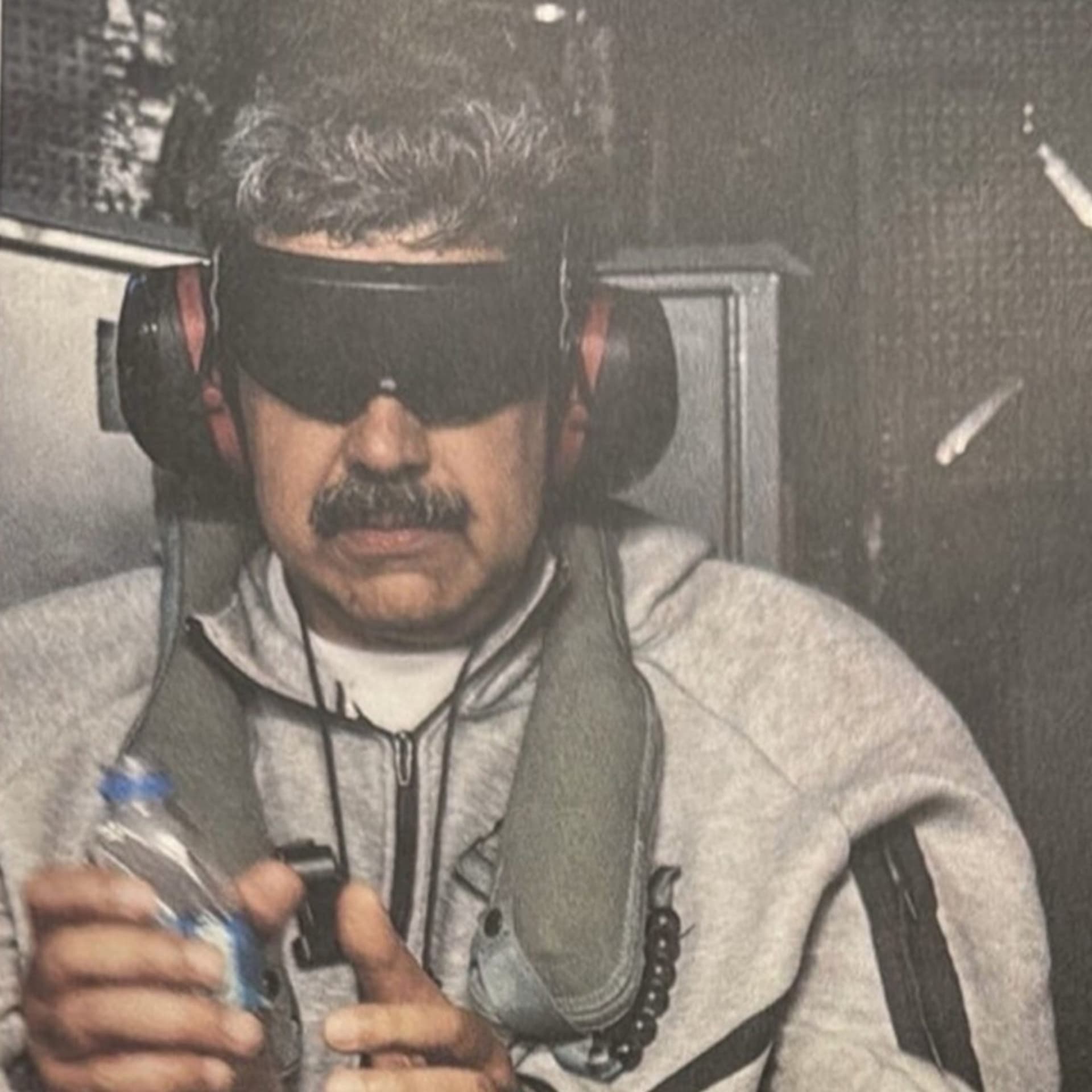
12:21government. Or, and this is another theory, you know, is it the case that, for example, the U.S. government feels that it can, quote unquote, run Venezuela, not through the traditional sense of having boots on the ground there, but kind of psychologically? because people like Delce Rodriguez, but also other allies of President Maduro who are still running the country, they have seen this image dangled in front of them of Maduro being dragged off to custody in the US, blindfolded. And I think many of them will be really acutely aware that if they don't do as the US wants them to, they could be next.
12:57Because the events that we saw on Saturday with these US strikes in Caracas, but also the forced removal of President Maduro was a show of force by the US, that they can essentially do what they want. They can out force the Venezuelan defence systems. That, on a separate note, may well be heavily challenged by international lawyers, by some of the US's allies, for example. But I think from Venezuela's perspective, as I say, some of Maduro's allies might be thinking, well, you know, they aren't fans of Donald Trump. They heavily oppose what he's been doing. But can they really afford to say no to him if he's threatening potential further strikes.
13:37I mean, this is all the more extraordinary because there is an opposition leader in Venezuela and she's not nobody. Maria Karina Machado, who just won the Nobel Peace Prize, the Nobel Peace Prize that Donald Trump was kind of hoping for himself, it would appear. Who is Maria Karina Machado and why is the US not working with her? She has been the opposition leader for many years. She's kind of seen as the real figurehead that has led protests and counter movements to President Maduro over the last couple of years in particular. Now, she was banned from running in the last election in 2024. So in her place, the opposition put forward Edmundo Gonzalez, the opposition candidate.
14:18But ever since, she has been heavily campaigning, including in hiding since that election took place on behalf of the opposition and against President Maduro. She's been shoring up support from the US. I absolutely support President Trump's strategy and we the Venezuelan people are very grateful to him and to his administration because they believe he is a champion of freedom in this hemisphere. Consistently asking the US for its support for the opposition's cause. He finally has put Venezuela in where it should be in terms of a priority for the United States national security. She had welcomed the US intervention, saying that it was a day of freedom for Venezuela, saying that Edmundo Gonzalez should now assume the presidency.
15:07And I think many thought, given her close alliance and her praise of Donald Trump, that he would essentially want to allow her or indeed her movement to assume power in Venezuela if ever Maduro was toppled. That hasn't happened. And in fact, when Trump was asked about her, he quite directly snubbed her and basically said she doesn't have the support in the country to rule. I think it would be very tough for her to be the leader if she doesn't have the support within or the respect within the country. She's a very nice woman, but she doesn't have the respect to be the leader. And is that accurate, Ione, that she doesn't have the support or the respect, as President Trump said, in Venezuela to actually govern at this moment?
15:47Well, she is somebody who, yes, is controversial within the opposition. There are some people who don't like, for example, how close she has been to Donald Trump or her vocal support for him and the US government. But on the whole, she is very much seen by those who are critical as Maduro as their best hope. She's been seen as this figure who has inspired hope, inspired opposition rallies. She's been seen as incredibly brave in the way that she has put her face to a lot of the opposition movement over the last couple of years. And of course, she won the Nobel Peace Prize. So internationally, she has been recognized for her work in fighting for democracy in the country.
16:29And I think the opposition would argue that they do have legitimacy. After the last election in 2024, the government-controlled electoral council announced that Nicolas Maduro had won that election. The opposition, though, put loads of their teams around the country gathering those tallies from the electronic voting machines. They later published 83 % of them online, which showed, according to these tallies that they had, that Maduro had only got 30 % of the vote and that their candidate, Edmundo Gonzalez, had got about 67 % of the vote. So they would argue that they do have legitimacy, they do have a mandate in the country.
17:07And I think we will see increasing disquiet from opposition voices, both those in the US, but also those still in the country or in exile in other places, if there isn't some kind of pathway that emerges for either fresh elections or a chance for them to claim that mandate. Tony, Asma and I have done a few episodes and spent quite a bit of time trying to unpick why the Trump administration has become so focused on Venezuela over the last few months, certainly since September. We've been told by Washington over many months that Venezuela is a threat to the United States because of drugs. How convincing to you now is that as an explanation for everything we've seen?
17:53Because, you know, on the one hand, Maduro has been indicted now in the United States on drugs and weapons charges. But on the other hand, if he really were head of a drugs cartel, a cartel is not just a one person operation. You know, where does that leave the so-called fight against drugs in Venezuela if they've just taken one person or two people, if you count his wife? How much water does it carry this idea that this is all about drugs? Nicolas Maduro denies heading a criminal trafficking organisation or being involved in drug trafficking and says that his government is doing a lot to try and crack down on it.
18:31It's worth saying that the cartel that he is alleged by the US to run is this cartel called Cartel de los Soles, which isn't really a cartel in the traditional sense. It's essentially a name that the U.S. gives to what they describe as a group of individuals who are in and around government and the military who are involved in trafficking, particularly cocaine, to the United States as well as other illicit activities. Now, many sort of question this definition or question the existence of a cartel in the traditional sense here. But certainly if the US is indicting Maduro on those charges, it could well be that they could use the same justification by default to also try and target other members of his inner circle, whether that be in government or in the military, in fact.
19:22But I think one thing that is just worth sort of recapping as well, when we talk about drug trafficking in Venezuela, is Venezuela has never been a drug trafficking hotspot in the way that other parts of the region are. There are far more drugs that enter the U.S. from Mexico, including fentanyl, the driver of most drug deaths in the U.S., but also Colombia, even Brazil, Ecuador, other big drug trafficking hubs. Venezuela does have some drug trafficking there, but it isn't by any means the biggest source of it. And I think as a result, there are many analysts in the region who feel like if this was really just about drug trafficking, then why go after Venezuela?
20:02Why not go after other countries in the region where there are much more clearly defined drug trafficking networks and cartels operating there? So if the motive of drug trafficking doesn't necessarily hold a lot of water, I mean, it seems increasingly clear that there may be other ambitions that the Trump administration has in Venezuela. And we heard the president over the weekend, President Trump, speak rather bluntly about the United States' mission to sell Venezuelan oil. How does that factor into this all? And who's in charge of Venezuelan oil now? Well, at the moment, Venezuelan oil is still very much, on the whole, nationalized.
20:42It's something that the government is in control of, although there is a US company that already operates in Venezuela, Chevron, who have maintained a license to operate there, even though most Venezuelan oil is sanctioned by the US. But Chevron has continued to operate there. That's a US company. It has continued to essentially pay the Venezuelan government for its rights to be there by providing oil to the state oil company as well. The implication, though, by Donald Trump was that he wants this moment to be the start of a transition whereby U.S. companies can now operate in Venezuela again.
21:14And this is attractive to Donald Trump because the country has the biggest known oil reserves in the world. And Donald Trump has accused Venezuela of stealing U.S. oil. Now, I think what he means by that is he's referencing that under Maduro's predecessor, Hugo Chavez, there was a period where having had some US companies contracted to work there, the industry was nationalized. Many of those contracts suddenly were renegotiated and some of the companies ended up leaving. Many of them felt like they were shortchanged, that they didn't get the total that they were meant to be compensated for having to cut those contracts short.
21:56However, as I say, Venezuela would dispute that that amounts to stealing and would actually say that the US is now trying to steal its oil. But I think there is really this question of whether as well US companies will want to invest immediately given the political, social, economic risks at the moment associated with Venezuela.
22:23Ione, there's another factor at play here, which is the so-called Don Roe doctrine that we've heard Donald Trump talking about. They now call it the Don Road Doctrine. I don't know. It's Monroe Doctrine. We sort of forgot about it. It was very important, but we forgot about it. We don't forget about it anymore. Under our new national security strategy, American dominance in the Western Hemisphere will never be questioned again. There is a long history of the United States and its interventions in the Western Hemisphere, in Latin America. How is that being received right now in Latin America? I think that history is exactly why even some of Maduro's biggest critics in the region, and by that I mean not just people in Venezuela, but also people who were not fans of Maduro in Brazil, in Colombia, in Argentina, and other parts of the region.
23:17I think why there is still a nervousness about the means by which this has come about among some of those people is that they have very recent memories of US intervention in the region and how that can sometimes go wrong. The US, for example, backed many military coups throughout the 20th century in places like Brazil, Argentina, Chile, some of which led to very brutal dictatorships of their own. Now, that being said, there are some Venezuelan opposition figures, for example, who felt that this was necessary, that this was essentially a last resort after other means had been tried. Elections had been tried and not held fairly.
23:57But I think there is certainly a nervousness about the US exerting this kind of military control and attempted regime change of another nation. You have to look at other parts of the world too, places like Libya, Iraq, about the state in which those countries were left after other countries tried to impose regime change and questions about will this cause its own form of destabilization now going forward. Asimil, I wanted to ask you to maybe game out what might happen next. So what's the worst possible scenario for Venezuelans and for Donald Trump here? I think the worst case scenario is that this destabilizes the country further.
24:39There are examples, as recent history would show, that regime change imposed by another country is rarely as simple as Donald Trump is making out. And there is a question now of how, if a transition is going to happen, how that happens and how you avoid political infighting, a dissent into chaos in the country, even a kind of form of civil war where criminal groups take advantage of that as well, as would potentially be the case in the region. We know that, for example, some of the Colombian guerrilla groups who are involved with drug trafficking and other criminal activities are active in Venezuela too.
25:15And I think Donald Trump is placing a bet here on this essentially sort of restoring order. If it goes the other way, this could be intensely risky for him politically too. Well, can I ask you about the flip side then of that question, Ioni? Is there a situation in where you see this possibly ending well for Venezuela in, say, a year's time? And the reason I ask that in particular is here in the United States, there were a lot of echoes to what we saw over the weekend to what occurred under George H.W. Bush's time, which is when the United States invaded Panama. He was ousted. He was accused of drug trafficking charges.
25:55He left the country and ultimately Panama over the long run became a far more stable partner in the region. What I would say is with Venezuela, it is really, really hard, more so I find than anywhere else in the region, to predict where it could go next. Does this bring a peaceful transition eventually? And if so, on whose terms? Many diplomatic figures around the world said to me before this took place that even if the opposition took power, this would not be as simple as some are making it out to be.
26:32Venezuela is still divided. There is a lot of political instability there. There are still some Maduro loyalists, as I say, right now in government, in the military, who will be worried about their own futures. There are still criminal organisations operating in and around Venezuela. The opposition itself is divided about what their strategy should be. So there isn't, I should say, a sort of obvious path forward. And I think that uncertainty is causing a lot of people to feel very unsettled about what's next. Well, thank you for your time, Ioni. Thank you for having me.
Read the full transcript
27:09That was Ioni Wells, the BBC's South America correspondent. And to be honest, I guess I'm still slightly scratching my head over here about what the legality of all of this is. Like, I mean, can you just go into another country in helicopters, grab another head of state, whether they're legitimately elected or not, and then take them back to your own country and put them on trial? Very valid questions, Tristan. And I will say that the Trump administration sees this all as being legal. You heard the secretary of state refer to this as a law enforcement action taken to capture an indicted drug trafficker.
27:49So their view is that this was criminal law. And you hear them rebuff the argument that it's anything more. In fact, take a listen to the Secretary of State, Marco Rubio. He was on ABC News on Sunday. This was not an invasion. We didn't occupy a country. This was an arrest operation. This was a law enforcement operation. He was arrested on the ground in Venezuela by FBI agents, read his rights, and removed from the country. I encourage everyone, I know it's Sunday, people are busy, but the indictments have now been unsealed. People should read this indictment. The administration will certainly face questions from Democratic lawmakers about doing this all without any congressional authorization.
28:28Then, of course, there's the big questions about what this means for the international community and international law. So I called up Mark Weller. He's a professor of international law at Cambridge University in the UK. And I directly asked him, is this legal? There is no legal authority to arrest foreign suspects on foreign territory. and there certainly is no legal authority to do so through the massive application of military force. So the fact that the U.S. is claiming that this is merely, in a way, domestic U.S. law enforcement is not really a legal justification of any kind. It is, in legal terms, a use of force which is prohibited by Article 2, Paragraph 4 of the UN Charter, which is one of the most basic building blocks of world order.
29:15Some states have endorsed this operation, which is really quite dangerous because it sets this as a possible precedent for the future. We'll have to see how the UN Security Council meeting on Monday will go, whether states will be more united in condemning this operation. But it looks like the U.S. will have a number of allies who will actually defend this operation. Although legally speaking, there are no real grants to do so. You heard him there mention the United Nations. And I want to point out that later today, the UN Security Council is holding an emergency meeting about the situation in Venezuela.
29:52The meeting was requested by Colombia and backed by Russia and China as well. Well, he also mentions precedent. And I'm fascinated by what kind of precedent this might set in other cases around the world. And I'm thinking of three examples in particular. So first of all, there's Ukraine. So could this American intervention in Venezuela be used as an after the fact justification of a Russian invasion of Ukraine that took place in 2022? although Russia has actually condemned, ironically, the US intervention in Venezuela as, quote, an act of armed aggression. Then there's the case of Taiwan. Could China use what's just happened to Venezuela as a potential justification for a re-annexation of Taiwan?
30:39And finally, there's Greenland, which Donald Trump has obviously made no secrets of his desire to acquire.
30:49He has been talking on Sunday with The Atlantic magazine and he said, we do need Greenland, absolutely. And he said that Greenland is, quote, surrounded by Russian and Chinese ships. So who knows if Venezuela may lead, in fact, to something else happening in Greenland. Who knows?
31:16That's it for the global story for today. Today's episode was produced by Sam Chantarassak and Aaron Keller. It was edited by James Shield and mixed by Travis Evans. Our senior news editor is Chyna Collins. And I'm Tristan Redman. And I'm Asma Khalid. We'll talk to you again tomorrow. Cheerio.
31:46Thank you.
From the publisher
The Venezuelan president Nicolás Maduro and his wife Cilia Flores are due to appear in a federal Manhattan court on Monday, after the United States captured them in a military operation in Venezuela.
President Trump says the US will run Venezuela “until such time as we can do a safe, proper and judicious transition”. But Maduro’s allies – including its new interim president – remain in charge.
We speak to Ione Wells, the BBC’s South America correspondent, about what might happen in the coming weeks and months.
Producers: Sam Chantarasak and Aron Keller
Executive producer: James Shield
Mix: Travis Evans
Senior news editor: China Collins
Photo: Nicolás Maduro in an image distributed by President Trump which he said was taken on board the USS Iwo Jima.