
In short
How a Gaza ceasefire was reached despite Hamas not yet disarming, and what could happen in later phases.
Guests
Lise Doucette, BBC chief international correspondent (based in Jerusalem for this recording; reports on Gaza from outside because Israel restricts entry).
Key claims
The deal’s momentum came from multiple “turning points,” including Israel’s failed assassination attempt on Hamas leadership in Qatar (Doha), Trump’s diplomacy with Arab and Islamic leaders at the UN General Assembly, and a White House apology to Qatar that Netanyahu read from a script. The ceasefire deal was announced after intense US pressure, including Trump calling negotiations at Sharm el-Sheikh multiple times. Hamas agreed to release hostages and avoid governance, but sidestepped the disarmament question; phase two is uncertain and could stall over troop withdrawal, a Palestinian state, and a “Board of Peace” structure.
Notable examples
Hostages being reunited; Palestinian prisoners released; aid trucks entering Gaza; Hostages Square protests in Tel Aviv (“now or never”); Hamas’s statement offering hostage releases and technocratic governance while avoiding “guns” details.
Written by AI. May contain mistakes. Listen to the episode to check what was said.
Chapters
Tap a time to open that second in VOOverview of the Ceasefire Situation
0:44 to 1:49
Discussion on the fragile peace between Israelis and Palestinians and immediate developments.
“teens can gain hands-on investing experience and build positive money habits.”
Key Players in the Ceasefire Deal
1:49 to 2:30
Exploration of Trump's involvement and the role of his team in brokering the ceasefire.
“And it's come together astonishingly quickly.”
Turning Points in the Conflict
2:30 to 3:39
Discussion of significant events leading to the ceasefire deal, including the bombing of Qatar.
“And today on The Global Story, how did the Gaza ceasefire deal get done?”
The UN General Assembly's Role
3:39 to 6:47
Insights into how the UN General Assembly contributed to securing the ceasefire.
“If I could begin by saying, Justin, it's so good to join you.”
Netanyahu's Surprising Shift
6:47 to 9:32
Analysis of Netanyahu's public apology to Qatar and its implications for the ceasefire deal.
“Can you explain to us, please, what happened in New York to secure the deal or to go some way to securing the deal?”
Public Pressure and Hostage Situations
9:32 to 14:00
How public opinion in Israel and the situation of hostages influenced the ceasefire negotiations.
“and why it's been so significant for striking this deal that we're seeing now?”
Hostages Square: Public Sentiment and Trump’s Role
14:00 to 16:58
Explore the rising public support in Israel for ending the war and Trump's response to it.
“You are our hope, but you were there and now you're in their home.”
Jared Kushner's Involvement in Negotiations
16:58 to 19:09
Understand Jared Kushner's re-emergence and his role in the ceasefire negotiations.
“part of what's called the Abraham Accords, normalizing relations between Israel and the Arab world that President Trump has repeatedly made it clear.”
Hamas's Position and Strategy
19:09 to 21:33
Delve into Hamas's response to the ceasefire and their shifting strategy amidst pressures.
“In those days when we were waiting for Hamas's formal response, all of the reports said that the hardline commanders of Hamas on the ground in Gaza were going to reject it, that they would not accept this.”
The Complexities of Disarmament Talks
21:33 to 23:29
Examine the challenges surrounding disarming Hamas and their future governance role.
“Well, yes, I mean, phase one is happening and the so-called phase two, however, as you say, is a lot more sketchy and uncertain.”
Show all 11 chapters
Journalism Challenges and Reporting from Gaza
23:29 to 26:04
Learn about the difficulties faced by journalists reporting on the Gaza situation.
“So there's going to be a lot of arguing about that, a lot of arguing about how far and how fast Israel will pull back its troops.”
Transcript
Automatic transcript. May contain errors.0:00This BBC podcast is supported by ads outside the UK.
0:30No bouncing between tabs. And best of all, no spreadsheets. Stop managing software and start managing your business with one unified system. Try for free today at odoo.com. That's O-D-O-O dot com. With the new Schwab Teen Investor Account, teens can gain hands-on investing experience and build positive money habits. It's an account co-owned by you and your teen, so you can monitor and engage with the account while your teen learns how to invest and manage money. Learn more at schwab.com. Sometimes the news moves so quickly that you're left wondering, how did that happen and why now? I'm recording this on Sunday night, so things could change by the time you hear this.
1:13But as of right now, Israelis and Palestinians have just spent the weekend celebrating a fragile peace. Aid trucks are rolling into Gaza. Nowhere near enough, says UNICEF, but more than before. Thousands of displaced Palestinian people are returning to a flattened Gaza city. And on Monday, Israeli hostages are being reunited with their families and hundreds of Palestinian prisoners are being released. All of this is happening because of a ceasefire deal brokered by Donald Trump and his administration. Trump's in Israel taking a victory lap. And it's come together astonishingly quickly. Trump, his son-in-law Jared Kushner, and his Middle East envoy and best friend Steve Witkoff are from the world of New York real estate.
2:03And Kushner says they got the deal done because, in his words, they're deal guys. But what exactly did these self-described deal guys do behind the scenes to make it happen? And after decades of conflict and two previous ceasefires that fell apart within days, Is Hamas really about to put down its weapons and have no role in Gaza's future? From the BBC, I'm Tristan Redman. And today on The Global Story, how did the Gaza ceasefire deal get done? And what might happen next? I'll be talking to the BBC's chief international correspondent, Lise Doucette.
2:51Hello, Lise. It's Tristan here in Paris. Where are you, Lise? I'm in Jerusalem. Okay, well, Lise, we're speaking on Sunday afternoon. It's 6pm in Israel, where you are. Yeah. Every time we speak at the moment, Lise, it seems to be a crucial turning point for the war in Gaza. We spoke to you just after the bombing of Qatar by Israel. We spoke to you from New York when you were at the UN General Assembly. And just before Benjamin Netanyahu visited the White House and was forced to apologize to Qatar for having bombed it. And now you're speaking to us as the final hostages are about to return to Israel.
3:29We'd love it if you could help us to join the dots up between all these events and explain to us how these moments have led us to a ceasefire deal. Let's start with the bombing of Qatar. Why was that so important? If I could begin by saying, Justin, it's so good to join you. And I think our listeners will think, my goodness, this is really literally the twists and turns of peacemaking and without any idea as to where it's going to spiral. And fortunately, this time, it has spiraled towards the point we are now, which is the last of the Israeli hostages are about to come home. Palestinian prisoners are about to be reunited with their loved ones.
4:12And there is a ceasefire in Gaza. So an extraordinary moment. But to go back to your point, there were indeed many turning points. And that time when we spoke just hours after the reports came through that Israel had bombed Doha, the capital of the Gulf state of Qatar. Breaking news that we're just getting through from Doha. Video posted online shows large blooms of smoke. Several explosions were heard. Israel confirmed it had struck inside Qatar itself, targeting senior Hamas leadership, said to be discussing ceasefire negotiations. When we spoke, we weren't sure how many had been killed. There were reports that several of the top leadership of Hamas had been killed.
5:03It turned out the assassination attempt didn't succeed. And I remember you asking me, why does it matter so much? Well, Qatar was furious. Even President Trump was furious. I was very unhappy about it. Very unhappy about every aspect. It seems to have been a wake-up call. But I was very unhappy about the way that went down. I know from having reported on President Trump's first foreign visit in this term when he went to, I was in Riyadh, and then there was Qatar, and then there was Abu Dhabi. At the end of every day, he announced every day a new city, a trillion dollars in deals. He marveled at the glittering palaces, at his close personal relationships and being Trump, how tall and handsome all the leaders were.
5:52He does not want to lose this. And suddenly, they were furious with him, because not just Qatar was asking questions, Other countries, Egypt, for example, was saying, well, will Hamas be bombed here when they come to Egypt? There was a nervousness which shot across the region. And President Trump knew he had to do something to stop it. And that was early September. By mid-September, that was followed up by another turning point, that meeting on the sidelines of the UN in New York. between President Trump and the wide range of not just Arab leaders, but also leaders from the Islamic world, everywhere from Pakistan to Indonesia.
6:37Yes, absolutely. I mean, it seems like the UN General Assembly was an absolutely crucial moment of diplomacy that has gone a long way to securing this deal that we're seeing now. Can you explain to us, please, what happened in New York to secure the deal or to go some way to securing the deal? Well, let me just make a little sidebar here. Just weeks before this, I had seen a very senior official from the Gulf and I said, who has President Trump's ear? Because sadly, in the world in which we live, it is all about getting President Trump's ear. And this person said, no one, no one has President Trump's ear.
7:14He is so busy going from one war to the next. And when it came to Gaza, he just kept repeating what Prime Minister Netanyahu was saying, which is basically, we need to put military pressure on Hamas. And, of course, referencing, as he should, just the horrific events of October the 7th. So then back to mid-September and President Trump, after what happened with Qatar, is now listening to leaders who are telling him, you can be the leader to make peace. you have to find a way not just to bring an end to this war, but find a new way, a new peace and security framework for the Middle East. And a few days after that, there is an annual reception by the United Arab Emirates.
7:58And while I can't say to you who said what, the place was buzzing. There they said, I heard statements like, I have never been more confident that this is the moment when the war is finally going to end. Plus, they were pointing to President Trump's public statement that he would not allow Prime Minister Netanyahu, Israel, to annex the occupied West Bank. Did you promise leaders this week that you would not allow Israel to annex the West Bank? I will not allow Israel to annex the West Bank. No, I will not allow it. It's not going to happen. Did you speak with Netanyahu about this? Yeah, but I'm not going to allow it, whether I spoke to him or not.
8:40I did. But I'm not allowing Israel to annex the West Bank. There's been enough. It's time to stop now. OK. So senior foreign ministers, Arab foreign ministers said to me, see, he's done it. He's already taken that step. And I said, well, how can you be confident that he'll take another even bigger step and end the Gaza war? And they just said, wait, it will happen. Well, a few days after this, we published an episode with you, Lise, in which we were talking about Benjamin Netanyahu and his great skill at getting what he wants from U.S. presidents because he was going in to meet Donald Trump at the White House.
9:22Now, full disclosure, it turns out that we got it slightly wrong because Benjamin Netanyahu didn't get exactly what he wanted. In fact, it was Donald Trump who got what he wanted. Could you explain to us what happened that day at the White House and why it's been so significant for striking this deal that we're seeing now? Another absolutely pivotal moment, a moment that took everyone by surprise. I think it has to be said, most of all, Prime Minister Netanyahu of Israel. And I'm sure many of our listeners have seen the photograph and it can only be described as humiliating. There he is, President Trump, sitting in that now famous chair next to that fireplace.
10:05And Prime Minister Netanyahu has the headset and he is apologizing to Qatar for attacking their country and saying that it won't happen again. So Prime Minister Netanyahu, not only did he have to climb down, he had to climb down in public. I mean, the photograph is absolutely extraordinary. I mean, you've got Donald Trump looking sort of quite ashen-faced, and he's actually holding the phone. I know. And Netanyahu is reading from a script, it looks like. This is it. From what we understand, it was written for him by the White House in consultation with the Qataris, and he read it out. And of course, that was criticized in Israel by the far right wing ministers in Prime Minister Netanyahu's cabinet.
10:53But this is an example of what the critics have said since the war began, including during President Biden's term. They kept saying that only the United States has the ability to bring this war to an end because they provide the weapons. They provide the financial support. They provide the moral backing. they have Israel's back on every front. And President Biden, while he did suspend weapons at one point, and he just said some fairly, mildly critical things in public, and then they became a bit more critical as the war went on. And we heard that even more critical things were said behind the scenes.
11:31But he never wielded the full power of the United States. And after, not just after that moment, that extraordinary moment in the White House, but the fact that the deal was announced at the end of September, historians in the United States, former State Department officials, people may have heard Aaron David Miller talking on the BBC, and he worked with both Republican and Democratic presidents. So he's been around being part of peacemaking efforts for decades. The extraordinary will that he brought to bear, unprecedented on the part of any American president in terms of pressing an Israeli prime minister and providing a, you've had this in advance, we've taken your concerns into account, but you will comply.
12:21And Netanyahu did. He didn't want this agreement. He said he has never, ever seen that the power of the office of the U.S. president being used in this way against such a strategic ally, Israel. That moment in the Oval Office, is that the moment that Trump said to Netanyahu, sign the deal? I think there were three, and historians may find other moments, but for the purposes of this conversation, as we discussed, there was the Qatar bombing. Then there was that face-to-face meeting, which cemented the message from the Arab and Islamic world. The apology to Qatar, which put the whole world, and most of all Israel and Prime Minister Netanyahu on notice.
13:08But something else was happening as well. Imagine if today were the day that 48 hostages came home, if today were the day the war ended. President Trump, this is your moment. President Trump was also focusing on public opinion in Israel, and most of all, to the views of the hostage families. What stands in the way right now is delay and political maneuvering from our own government. We have to negotiate, immediately have to negotiate peace. We've got to get the hostages back. We want all 20 back. He'd always talked about bringing the hostages home and how he would talk about how moved he was when he would speak to some of the families because they would often go and see him.
13:57My family and I, myself, we believe you've been sent by God through Israel. You are our hope, but you were there and now you're in their home. Yeah. So you didn't think until I came along, you didn't think you were going to get out? No. The opinion polls in Israel were steadily rising in support of ending the war. Days ago, and you may have seen it on President Trump's social media postings, a photograph of Hostages Square in Tel Aviv, packed with people, and one of their slogans, now or never. That was a photograph aimed at President Trump. He saw it, he heard them, and he listened. And I have to say that I spent the last few days, most of the hours of the day, in Hostages Square, and this is what they said.
14:49We have been trying to get the attention of world leaders and most about President Trump. And finally, we got it. And I think whatever you say about President Trump, he does seem to care. You know, when he talks about being a peacemaker, he doesn't get into the complexities or the details. He says, I want the fighting to stop. Those pictures are horrible. And similarly, I want the hostages to come home.
15:23Well, you've been in Hostage Square. Another person who's been in Tel Aviv's Hostage Square in the last 24 hours is Jared Kushner, Donald Trump's son-in-law. He's kind of reappeared back on the scene, having taken a step back from his White House role. How has he been involved in getting this deal off the line? What's he been doing? Yes, he only emerged recently and then came to play a central role in those days of negotiations in Sharm el-Sheikh, the Egyptian Red Sea resort, which clinched the deal. He went alongside Steve Witkoff. And so suddenly people are saying, oh, Jared Kushner is now playing an ever more important role.
16:07But when he took to the stage and addressed that huge crowd full of love for President Trump. I agree with you. Thank you, Witkoff. He talked about what an experience it has been working with Steve Witkoff. I've had the great honour for the last 10 months of working with Steve very closely, even more so in the last month. It seemed to suggest that he was working behind the scenes with him before he suddenly started featuring more in the narrative in the media about what was happening in the war. So Jared Kushner was absolutely front and center in President Trump's first term. He had been the point person on President Trump's plan to develop Gaza into, even then they were calling it a Dubai or a Singapore, part of what's called the Abraham Accords, normalizing relations between Israel and the Arab world that President Trump has repeatedly made it clear.
17:06He wants to enlarge that, bring in more, more states. And month on month, he has come back to play a part in new plans for the future of the Gaza Strip. There was a meeting in the White House involving Jared Kushner, Tony Blair, former prime minister, who, as we know now, is set to play a central role post-war, and President Trump. Because Jared Kushner had worked very closely with Tony Blair over the years. And then, of course, now, as I mentioned, he's been at the negotiating table as well. Well, also at the table, obviously, has been Hamas. They have said that they are up for the deal. They haven't mentioned, though, the part of Donald Trump's original plan that says that they would have to disarm and withdraw from any future in governing Gaza.
17:58What are you hearing about what Hamas are going to do next? All of what we discussed, Tristam, was also being observed by Hamas. And it's being reported by officials who should know that when they saw that apology in the White House, they realized this is a president who means business, who is willing to exert pressure. And then when the deal was announced over the clear, despite his public announcements, clear objections of Prime Minister Netanyahu and many in his cabinet, they saw another sign that he was committed. And then during the negotiations, even though he was not there in person, he called Sharm el-Sheikh at least three times.
18:45So everyone knew that he was watching. And this combined with the pressure from Arab mediators, Qatar, Egypt, the Turkish intelligence chief who convinced Hamas that holding the hostages had become a liability, that they should now use them. And it's a terrible thing to say, but use them as leverage to get what they want in this process. In those days when we were waiting for Hamas's formal response, all of the reports said that the hardline commanders of Hamas on the ground in Gaza were going to reject it, that they would not accept this. And then suddenly, this statement came out, which underlined the huge pressure that had been put on Hamas, its readiness to take a gamble, because they didn't have the guarantees that they've been asking for all along.
19:38And they don't have them to this day, the guarantees that Israel will fully pull its troops out of the Gaza Strip, the guarantee that there will be a Palestinian state. But they are so convinced that this process is different this time, that the U.S. president has and will use the leverage that he has, that they've decided to take a risk. And that statement from Hamas was extraordinary, Tristan, because we now see one leader after another, no matter what part of the world they come from, when they go to sit beside President Trump in the White House, They flatter him. Even Hamas, in their statement, they only focused on where they agreed with President Trump.
20:24We will release all of the hostages living and dead. We will not be part of any governance in Gaza. It will be a technocratic government. They thanked world and Arab leaders, and they thanked President Trump. And then they skated over the issue. They talked about a Palestinian national consensus about the interests of the Palestinian people, which is code for, will we give up our guns? What kind of future role will we play? What happens when there's a Palestinian state? All of that, they sidestepped. And similarly, just to add, while Prime Minister Netanyahu smiled and agreed with President Trump when he was next to him in the White House, when he came out of the White House, he did a little video clip and he said, we will not withdraw all of our troops from Gaza and I do not accept a Palestinian state.
21:18So on the two sides, they have publicly said, we're behind you, President Trump. Well done on your 20 point plan. Let's get this going. The first phase of the deal, the rest of it is still very, very much not resolved. Now, the toughest of issues are still on the table. Well, yes, I mean, phase one is happening and the so-called phase two, however, as you say, is a lot more sketchy and uncertain. Is it possible that the process will continue into phase two or could it get stuck? It definitely will stall. The big question is, will it fall apart? There is a structure in place. There's this so-called Board of Peace headed by President Trump.
22:03Tony Blair is part of it. And the vice president of the Palestinian Authority, Hussein Sheikh, went to see former Prime Minister Blair in the Jordanian capital, Amman, and said, we are ready to work with him. But we want the Palestinian Authority, of course, to play a part. The Israelis, Prime Minister Netanyahu and his allies say, no, no, no Palestinian Authority. They're just as bad as Hamas. There is real reservations, though, about this board of peace. We've seen other names, but not Palestinian names, and it's been rejected, most of all by the groups like Hamas, but also by leading Palestinians and many in the Arab world who say this smacks of colonialism.
22:39But that is a structure that's supposed to oversee it, meant to ensure, like the monitoring mechanism, that the aid gets in, that the plans for reconstruction start, that the discussions go on about putting in place this technocratic government so they can run the Gaza Strip. So there is a process, but will Hamas agree to give up its guns? People say, well, maybe there could be a compromise. They'll give up their heavy weapons, but they can't give up their small arms because, A, it's not just Israel. They're coming under attack by rival clans, some of whom, it has to be said, are armed by Israel.
23:16Some even created by Israel during the war as an alternative to Hamas. So they have to protect themselves, and they call themselves the Islamic resistance. So it's part of their gun. The identity is of a gun. And they say, well, we'll give them up when there is a Palestinian state. So there's going to be a lot of arguing about that, a lot of arguing about how far and how fast Israel will pull back its troops. So this will take a long time. And then, of course, goes into the next year where Israel has to hold elections sometime next year. Therefore, there'll be another new level of issues and consequences which will form part of this process.
23:54Lise, you've been reporting on this story for two years from outside of Gaza because Israel is not allowing international journalists into the Gaza Strip. Do you think you'll be able to get into Gaza anytime soon? Well, today I was stopped in the hotel by a journalist and they said, are you going to wait around until the gates open? And I said, I was a bit confused. I said, what gate? And they said, the gate into Gaza. I said, oh, is it opening? and this journalist said, well, we think we must at some point. They can't keep it closed forever. And I said, well, they have kept it closed for two years.
24:29And the journalist said, well, but there's no Israeli bombing now. They can't say that it's dangerous, but there is unexploded ordinance and a lot of reconstruction work to do. So we just don't know. What we do see is that more journalists are going in on Israeli embeds. I think the last one was Friday. day. Israel has said that they're going to do more of these embeds, which, of course, are carefully controlled. Most of them. I haven't heard of one where they can actually talk to Palestinians in Gaza. So I think whether or not there was only one time I could be wrong, but one time since President Trump came to office where he vaguely said that the journalists should be allowed in.
25:09But maybe maybe the journalists, like everyone else, will be doing their best to get the attention and President Trump. I want to let you go, Lise, because you've got a lot of demands on you today. But just one last question from me. Palestinian journalists inside Gaza have done enormously important work for the last two years. They've shown the world what's been happening in the Gaza Strip, and they've done so, you know, against all odds. How difficult have you found it reporting on this war from outside of Gaza? How different is it to reporting on all the other wars that you've reported on in your career?
25:46It's nothing less than heroic what the journalists of Gaza have done. And yet a record number, more than any other war the world has known, the journalists have been killed, and almost all of them, by Israeli fire. And for the rest of us, for international journalists, because I think in the best of times, what you want is for journalists who are based in a country to work alongside journalists who come in because that's the beauty of journalism, that we all work together. The journalists on the ground who will always know far more than we do. The journalists who bring resources and a different kind of expertise, different eyes on the story.
26:28Because, Tristan, for all of the strengths and the power of social media which allow us to see, to hear, even to feel what is happening. There is no replacement for on the ground, in the heat and the dust, face-to-face journalism, that you can check what is happening. That really is the gold standard of journalism. Well, thank you so much, Lise. Thank you. Thank you so much.
27:00That was the BBC's Lise Doucette, our chief international correspondent. And that's it for the Global Story for today. If you're enjoying the show, please rate us and leave us a review wherever you're listening. Today's episode was made by Lucy Paul, Sam Chantaracac, and James Shield. It was engineered by Travis Evans. The senior news editor is China Collins. And I'm Tristan Redman. Thanks for listening. Cheerio.
From the publisher
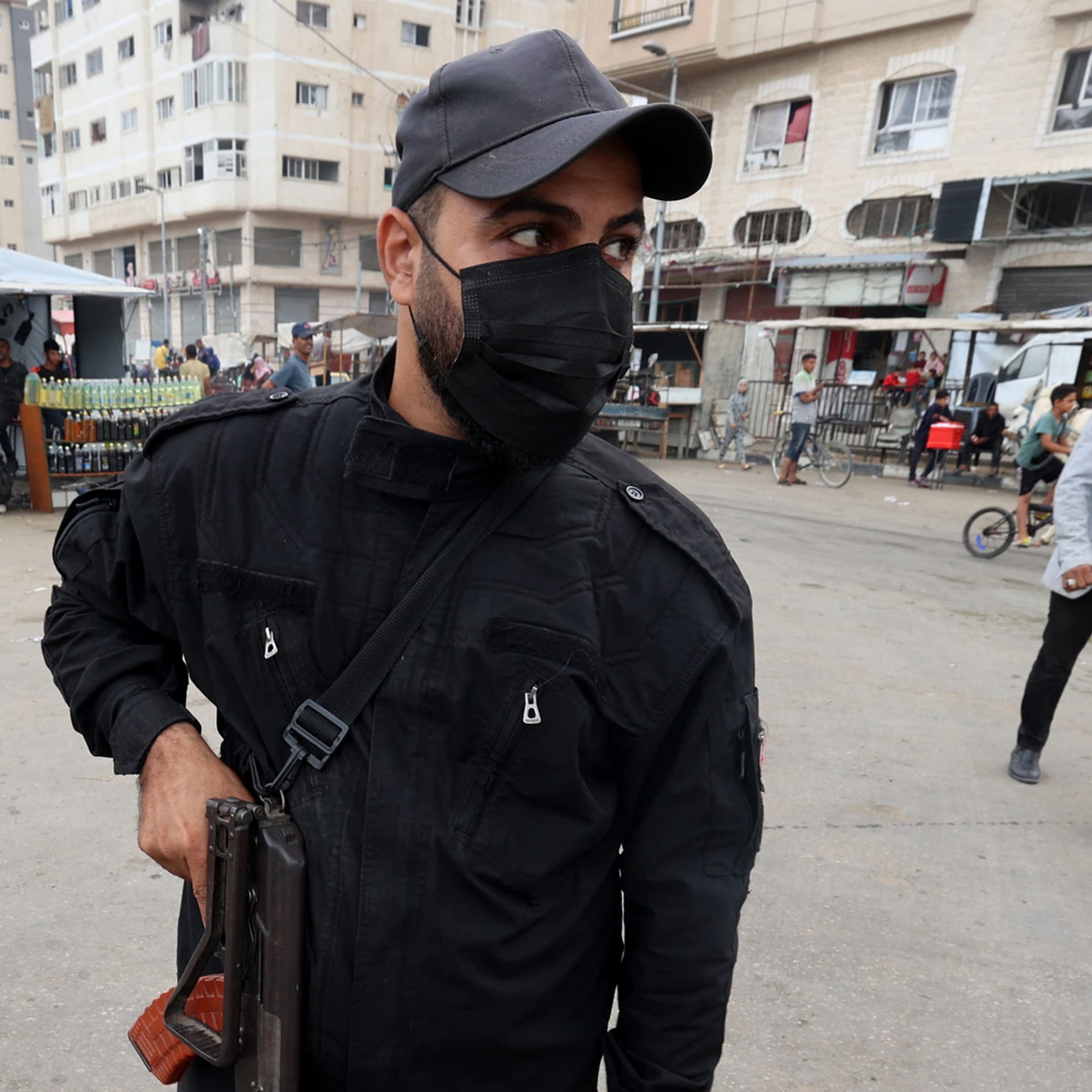
Donald Trump is in Israel today on a victory lap after securing what he claims is the beginning of lasting peace in the Middle East. The Gaza ceasefire – and with it, the release of Israeli hostages and Palestinian prisoners – follows weeks of intense talks brokered by American negotiators. Some of the hostage families have credited the US president with achieving the ceasefire, but his team has more experience in the New York real estate world than in diplomacy. So how exactly did they achieve a deal? And will Hamas really agree to its next phase – disarming and having no role in Gaza’s future? Guest: Lyse Doucet, chief international correspondent. Producers: Lucy Pawle and Sam Chantarasak. Executive producer: James Shield. Mix: Travis Evans. Senior news editor: China Collins. Image: A member of the internal security forces loyal to the Palestinian group Hamas, mans a checkpoint in the Gaza Strip. Photo by Eyad BABA / AFP via Getty Images.