
In short
The episode examines why the Trump administration authorized CIA “covert lethal action” in Venezuela amid repeated U.S. strikes on suspected drug-smuggling boats in the Caribbean, and whether this is a war on drugs or aimed at regime change against Nicolas Maduro.
Guests
Will Grant, BBC reporter; he lived in Venezuela (2007–2011) and has long covered Latin America/Central America, with expertise on Venezuela.
Key claims
Trump/Rubio accuse Maduro of leading narco-terror groups (including “Cartel de los Soles”) and cite two reasons for action: Venezuelan prisons emptied into the U.S. and drug flows via sea routes. Rubio says Maduro isn’t a legitimate president and that drug gangs are foreign terrorist organizations, enabling unilateral action. Grant argues the fentanyl threat is mainly Mexico-linked, so Venezuela-focused boat killings may be about messaging and pressuring Maduro, not the main U.S. drug threat.
Notable examples
Sept 2 U.S. strike killing 11 on a speedboat; repeated vessel attacks since early September. 2020 U.S. indictment and bounty escalation ($50m) for Maduro. “Narco-nephews” DEA sting in Haiti involving Maduro’s adopted sons. Maduro’s televised response rejecting war.
Written by AI. May contain mistakes. Listen to the episode to check what was said.
Chapters
Tap a time to open that second in VOBackground on Venezuela's Situation
0:30 to 0:45
Discussion about the strikes on boats and their implications.
“Because Schwab knows that when it comes to your finances, choice matters.”
Background on Venezuela's Situation
0:48 to 1:00
Discussion about the strikes on boats and their implications.
Background on Venezuela's Situation
2:01 to 3:39
Discussion about the strikes on boats and their implications.
“And Will, I know you've covered Latin America, Central America for years.”
The Trump Administration's Justification
3:39 to 5:30
Examination of the rationale behind the CIA's actions in Venezuela.
“There was no evidence shown by the US, by the administration, of exactly who was on that boat and why they considered themselves justified in essentially blowing it out of the water.”
War on Drugs: New Approaches
5:30 to 7:37
Analysis of the U.S. approach to drug trafficking and its changes under Trump.
“and what justification they use for doing this?”
Maduro's Role in Drug Trafficking
7:37 to 9:11
Investigation into Maduro's alleged connections to drug cartels.
“narco-terrorists, as the State Department has been referring to them, and therefore we are justified in taking these actions against them.”
Evidence Against Maduro
9:11 to 14:00
Discussion of the evidence linking Maduro to drug trafficking and the implications.
“So to follow the logic of this story you're telling, if the main threat to the United States in terms of drugs, the US is concerned about is fentanyl.”
The Narco-Nephews and Venezuelan Corruption
14:00 to 14:51
Discussion on the narco-nephews and the connections to drug trafficking in Venezuela.
“The first combatant and the narco-nephews.”
Indictments and Bounty on Maduro
14:51 to 16:32
Exploration of the indictment against Maduro and the bounty placed on him by the US government.
“Yeah, undercover drug enforcement agent.”
Calculating Risks in Maduro's Inner Circle
16:32 to 18:18
Analysis of the motivations and risks for those within Maduro's inner circle.
“It's more than was requested or was offered for the capture of Osama bin Laden.”
Show all 15 chapters
Trump's Escalation Against Maduro
18:18 to 19:40
Discussion on Trump's authorization of CIA operations in Venezuela and its implications.
“And I guess that is the calculation that has forever been taken in these sorts of extraordinary situations.”
Trump's Remarks on Assassination Authority
19:40 to 21:39
Analysis of Trump's comments regarding the CIA's operations and potential actions against Maduro.
“We've seen President Trump acknowledging that he is authorizing lethal covert operations inside of Venezuela.”
Historical Context of CIA Operations
21:39 to 22:55
Context on the CIA's historical involvement in Latin America and the risks of current actions.
“Of course, his reaction is going to be, well, that's security reasons.”
Military Buildup and Venezuelan Response
22:55 to 24:22
Overview of US military preparations and Maduro's response to the escalating tensions.
“There's nobody, and we're watching, we're watching.”
Maduro's Public Denial of War
24:22 to 25:55
Discussion of Maduro's statements against war and his fears regarding US actions.
“the idea that they have been given the green light to look at covert operations that they can carry out, but also that Mr Trump has talked about controlling the land now.”
Transcript
Automatic transcript. May contain errors.0:00This BBC podcast is supported by ads outside the UK.
0:30Schwab offers. Because Schwab knows that when it comes to your finances, choice matters. No matter your goals, investing style, life stage or experience, Schwab has everything you need, all in one place, so you can invest your way. Visit schwab.com to learn more.
1:00Will Grant:lethal actions in Venezuela. To put that in normal speak, covert lethal action means killing people on Venezuelan soil. A couple of hours later, a reporter at the White House asked President Trump about this all. Mr. President, thank you. I'm curious, why did you authorize the CIA to go into Venezuela? And the president did not deny it. I authorized for two reasons, really. Number one, they have emptied their prisons into the United States of America. And he made his case for why. And the other thing are drugs. We have a lot of drugs coming in from Venezuela. And a lot of the Venezuelan drugs come in through the sea.
1:36So you get to see that.
1:37Will Grant:And then on Thursday evening, there were reports that the U.S. had struck yet another vessel in the Caribbean Sea. It's the sixth time that a boat has been attacked since the beginning of September. The Trump administration has been targeting these boats, claiming that they're drug smugglers. From the BBC, I'm Tristan Redman. And I'm Asma Khalid in Washington, D.C. And today on The Global Story, we speak to the BBC's Will Grant about whether all this beef with Venezuela is part of a new war on drugs or an effort at regime change.
2:20Will Grant:Thanks so much for coming on the show. First time guest. It's a pleasure. Yeah, it's a pleasure to join you. Yeah, thanks for coming, Will. And Will, I know you've covered Latin America, Central America for years. Can you just put us into context? I know you have a lot of expertise specifically around Venezuela. Yeah, I lived in Venezuela from about 2007 to 2011. And I went back repeatedly for a while as well. I feel like I've always been across and very aware of the goings on in Venezuela, such an important country to the region. And its story really has sort of had this huge impact over the past few decades.
3:00Will Grant:There have been some major developments this week with the story between the United States and Venezuela. But I want to start on September 2nd. That is when the Trump administration announced that the U.S. government had blown up the first boat off the coast of Venezuela. Can you take us back to that strike? Well, it came as quite a surprise, I think, that the U.S. military had hit a speedboat going through international waters off the coast of Venezuela. Eleven people were killed in that instance, and President Trump was quick to say that they were carrying drugs, huge amounts of drugs, he said, up towards the United States, basically through the Caribbean.
3:43There was no evidence shown by the US, by the administration, of exactly who was on that boat and why they considered themselves justified in essentially blowing it out of the water. Let me say this, the United States has long, for many, many years, established intelligence that allow us to interdict and stop drug boats. The next day, Marco Rubio, Secretary of State, was very definitive about it all, saying that ultimately it made no point to simply interdict drug traffickers at sea anymore. We did that. And it doesn't work. What will stop them is when you blow them up, when you get rid of them.
4:25He said, we're not going to sit back anymore and watch these people sail up and down the Caribbean like a cruise ship. What will stop them is when you blow them up. What they are, they are narco-terrorist organizations. So instead of interdicting it on the president's orders, he blew it up. And it'll happen again. Maybe it's happening right now. I don't know. But the point is... And it continued to sort of drip feed, really, every couple of weeks since then.
4:48Will Grant:You mentioned these images, Will, and I will say when I first heard about these strikes, it was through President Trump's own social media account. He posts these images almost look like I mean, this sounds callous to say to some degree, but it sounded it looked almost like a video game. Right. Like you see this tiny little boat bobbing along and suddenly there's this explosion. what we are hearing from the Trump administration is allegation that these people are drug traffickers. And the normal course would be you might arrest somebody. There are these allegations. You try them. They go through some sort of procedure judiciously.
5:22Will Grant:I haven't seen a situation where you unilaterally blow up a boat. Can you help us understand from your vantage point why the Trump administration is doing this and what justification they use for doing this? So in essence, the Trump administration accuses the Venezuelan president, Nicolas Maduro, of, in their words, being one of the largest narco traffickers in the world. And they have placed a$50 million bounty for the arrest of Nicolas Maduro. Marco Rubio, Secretary of State, has recently said that, as he put it, Maduro is not the president of Venezuela and his regime is not the legitimate government.
5:59reference there to last year's election that is widely considered that he lost, has been decried as neither free nor fair by the international community, and the widespread accusation that Mr. Maduro stole that election. But Mr. Rubio continued, he's the head of the Cartel de los Soles, a narco-terror organization that's taking control of a country. The Cartel de los Soles refers to a supposed cartel made up of military chiefs and sort of members of the top brass who supposedly are moving, you know, tens of tons of cocaine into the United States or at least out through Venezuelan ports.
6:37Will Grant:So these are the things we're hearing from the Trump administration about why they're striking these boats. Are those things actually true? I remember seeing early on in the Trump administration, this was in February, I believe, President Trump designated drug gangs as foreign terrorist organizations. And that was something I had not seen before. I wondered what the significance of doing that was. It feels like there's this new war on drugs. It's very different than the war on drugs I remember growing up with in the 80s, which was very domestic. This feels like a war on drugs outside. And I wanted to understand what the significance is of designating drug gangs as being members of terrorist organizations.
7:19I think from the administration's point of view, it gives them greater powers to act in the ways that we've seen them acting off the waters of Venezuela, i.e. take unilateral actions, because they say this is foreign terror, this is terrorist organizations, narco-terrorists, as the State Department has been referring to them, and therefore we are justified in taking these actions against them. But also I think it's worth pointing out that And primarily the drug that is trafficked through Venezuela is cocaine. And obviously the war on drugs, as it were, in the United States, in recent years at least, has been primarily about fentanyl.
8:06Fentanyl is not, in case there's any doubt in anybody's mind, manufactured or trafficked out of Venezuela. It is a Mexican-produced drug using precursor chemicals from China, which is then brought into the United States. If, as it was so clear from the campaign, President Trump's focus is on stemming the flow of fentanyl, then Venezuela essentially has nothing to do with that. Certainly there is drug trafficking in Venezuela, but it is not the degree of trafficking of cocaine seen in other parts of the world. we know that somewhere in the region of 75 % of the cocaine that's trafficked north actually travels via the Pacific coast, not the Caribbean.
8:51So that's worth bearing in mind.
8:53Will Grant:I did not know that. If he's more interested in general in preventing drugs coming into the United States, yeah, Venezuela has a role in the traffic of drugs, absolutely. But so too does Ecuador to a much bigger extent. And of course, Colombia, Peru, et cetera, et cetera, et cetera. So to follow the logic of this story you're telling, if the main threat to the United States in terms of drugs, the US is concerned about is fentanyl. It's not coming from Venezuela. And what's coming from Venezuela is cocaine. Then making blowing boats out of the Gulf of Mexico, a cornerstone of your anti-drugs policy isn't actually about the drugs threat.
9:33It's about something else. Is that what you're saying? Potentially. I think what this does is send a message. And I think that is really what the White House is up to here. Now, it sends a message to a variety of people. One is to drug traffickers. And it's that if you run the gauntlet of speedboats through the Caribbean waters, you may well be bombed out of existence. If those people happened to be smuggling migrants, again, if you're people trafficking, the United States is prepared to blow boats out of the water. That, I think, is a significant development. But one of those messages is to Nicolas Maduro.
10:19In essence, I think he wants to see Nicolas Maduro in a courtroom in Miami or in New York. And of course, there are precedents for this. I think Donald Trump knows that his base in Florida, among the Venezuelan Americans and the Cuban Americans, will herald him as a hero if he forces out Nicolas Maduro from power. It is absolutely a priority for Secretary of State Marco Rubio, one of the loudest and most vocal anti-Maduro voices in the United States over the past two, three decades.
10:55Will Grant:How would you describe the relationship during President Trump's first term? Because it seems like the relationship has really gone sour now. It wasn't great during President Trump's first term, but it also wasn't at this level. It wasn't at this level. I distinctly remember President Trump saying of Nicolas Maduro with sort of begrudging respect that he was a tough cookie, that it'd been much harder to shift than he'd imagined. Trump often respects tough guys. He does. He has a sort of affinity with strong men and certainly there's plenty of those in Latin America. So then what's his beef specifically with Maduro?
11:31Well, Maduro is ideologically a thousand miles, at least on paper, to what...
11:38Will Grant:Communist, you're saying. Certainly socialist, trained in Cuba, allied with Cuba and Nicaragua. Some of the ideology of places like Venezuela has diluted over time. And what really matters to the powers now is holding on to power. It's less about left and right and more about autocratic control these days, but completely diametrically opposed to those voices that Mr. Trump is hearing out of Miami and out of Florida. So, you know, it's no surprise that he's not able to create a relationship with Nicolas Maduro and the benefits in terms of being the man who removed him, both for Marco Rubio, if he has presidential aspirations himself one day, and certainly for Donald Trump, if he manages to make this happen during the next three, four years of his second term, are huge.
12:27Will Grant:Well, Will, in terms of the personal beef that President Trump has with Nicolas Maduro, you know, we have been talking a lot about drug trafficking. And it is worth pointing out that But back in 2020, the Justice Department indicted Maduro and other top Venezuelan officials on drug trafficking and narcoterrorism charges. They offered a huge reward for their capture. I mean, is it true that Maduro is leading a drug cartel? Washington and the Trump administration certainly push the idea that he is in charge of the Cater de los Soles, that his family is involved in this and that his inner circle and top brass are involved, deeply involved in drug trafficking.
13:11Well, there is evidence, for example, from the fact that his nephews, now that is his wife, Celia Flores, known in, or at least she likes to be known as the first combatant rather than the first lady. Her adopted sons, her late sister's sons, so Nicolas Maduro's adopted sons, essentially, were arrested in a DEA sting operation in Haiti. where they thought they were meeting Honduran drug traffickers, but who were undercover DEA agents. They were then taken to the United States. They were processed, indicted, and so on. Now, Maduro's nephews, if you like, the narco-nephews, as they're known. The first combatant and the narco-nephews.
14:04These are very catchy monikers. They're good, aren't they? Those folks were saying that they were doing this because their family name meant they were untouchable in Venezuela, that they could use planes that wouldn't be tracked because of who they are, because of their family connections. They considered themselves absolutely untouchable. I mean, there's a lot going on here. So in answer to Asma's question, is he the head of a cartel? We have a kind of exhibit A here where his adopted sons have been arrested in Haiti in a sting operation for trying to sell, stop me if I'm getting any of this wrong, trying to sell drugs to a Honduran drug trafficker.
14:50A DEA agent. Okay. Yeah, undercover drug enforcement agent. So, I mean, it's not like there's no evidence that he is associated with a drug cartel.
15:00Will Grant:Yeah, I mean, and ultimately, Will, he was indicted in a court in New York, I believe? That's right. That indictment is based on the fact that, you know, this is the argument, that it goes beyond just turning a blind eye to corruption, beyond just ignoring the fact that the military is allowing drugs, diamonds, gold, licensed, basically illegal fuel to cross Venezuela's borders and out into the world, that in fact, Nicolas Maduro leads an organization that is doing that actively and he's doing that knowingly. Whether or not you believe that might just be down to your own political persuasions.
15:43Those who are sympathetic to the Venezuelan government say this is typical of Washington just setting up a pretext in order to remove him from power, say he's a drug trafficker and so on. But, you know, the narco-nephews affair, the narco-sobrinos as they're known, certainly puts drug smuggling into the first family in Venezuela. That much is clear. His argument is that nothing could be further from the truth, that he is not a drug trafficker, he's never been a drug trafficker, that it's all just a pretext to remove him from power. Yeah.
16:15Will Grant:And I remember after that indictment, there was a bounty put on Maduro's head, which is kind of a wild thing. It's not every day you see the U.S. government put a bounty on the head of another head of state. And the Trump administration even recently increased that reward. $50 million. $50 million. It's more than was requested or was offered for the capture of Osama bin Laden. It's a huge number. The theory, I guess, being that it might be just enough money to persuade somebody in the top brass to somehow kidnap him, get him out of the country and hand him over to the US authorities. Much, much easier said than done.
16:57He is protected by an absolute ring of steel and they trust very, very few people by this stage. There will be members of the Venezuelan military who fear ending up in The Hague. So the calculation that somebody around him is going to flip and do the dirty work for Washington, it's potentially a long shot, but I think that's what the$50 million is about. I mean, the temptation to flip on him and betray him to the United States must be huge for some people in his close circle. But how is all of this? There's one point on that, though. $50 million isn't that much money. Go on. $50 million is not that much money when you consider that somebody in Hugo Chavez's inner circle was able to take a billion dollars from the state coffers.
17:47That was his bodyguard. His nurse took the best part of a billion. Like, you can become very, very wealthy through corruption in an oil-rich state. That's nothing new. If you have the kind of access to Nicolas Maduro where you could somehow make that happen and therefore receive the 50 million, is it worth doing that? Or are you better off with the status quo in Caracas where you're protected, you're wealthy, you just have to stay loyal? And I guess that is the calculation that has forever been taken in these sorts of extraordinary situations. who actually has access to Nicolas Maduro, who could lead to that reward, while he, of course, himself is able to just paint it as just evidence that they want to bring him down at any cost.
18:52Is Maduro scared? I don't know about scared. Deeply concerned, I think, would be one way of putting it. I think they will be very, very concerned about how this is ramping up week by week by week. As Donald Trump himself put it, he's a tough cookie. He does not get dislodged easily, otherwise he'd have fallen by now. And plenty of people thought he would never last this long. He has not been easy to dislodge either by popular protests on the streets, by hundreds of thousands, millions of young people leaving. He's not been dislodged by the military turning on him. He's not been dislodged by an election.
19:29You know, he has staying power.
19:31Will Grant:And to this point, though, this week we saw news that the Trump administration seems willing to go further than it has before in its fight against Maduro. We've seen President Trump acknowledging that he is authorizing lethal covert operations inside of Venezuela. That would seem like big news. And Will, what first crossed your mind when you heard that? Yeah, I mean, it does feel like an escalation, doesn't it? Like anything goes, ultimately, when it comes to this sort of battle of wills between Donald Trump and Nicolas Maduro. Now, there is a long and very sullied and very checkered history of CIA involvement in Latin America.
20:14And so the use of covert operations by the CIA in and of itself is nothing new. To have it come out as it's happening, or seemingly in real time, is surprising, is, as I say, mildly sort of shocking in a way to hear it being expressed so blatantly and so openly in the 21st century in 2025. But at the same time, it's hard at this stage to know if these are genuine escalations or simply more an extension of a kind of political theater, a war of words which is going on, which obviously has had military action in terms of these alleged drug boats, but as yet hasn't gone that next stage.
20:57Will Grant:Well, there's one moment in particular I want to play you from the president's remarks yesterday. He was explicitly asked by a reporter about taking out the Venezuelan president. Does the CIA have authority to take out Maduro? Oh, I don't want to answer a question like that. That's a ridiculous question for me to be given. Not really a ridiculous question, but wouldn't it be a ridiculous question for me to answer? And so President Trump did not say yes, but he also didn't say no either. I also found it interesting that he dodged that particular question. It was very, very pointed. Are they authorized to kill or assassinate or take out Nicolas Maduro?
21:39Of course, his reaction is going to be, well, that's security reasons. I'm not going to be able to discuss operational details with the likes of you. But as you say, there's no outright denial. I think if they have been given the green light, and he seemed to indicate that they have been, to investigate ways in which they can act against Nicolas Maduro, we know from experience, and I'm trying to be careful with my words here, but we know from experience in Latin America that all these options will at the very least be on the table. And the way I understand these things is that they draw up ideas, they draw up operational possibilities and put them in front of their bosses, essentially, and decide what worked, what would be too risky and what could be done.
22:33Whether or not that translates to actually plotting is another question. But look, when it comes to talking about Washington's history in the region, when it comes to talking about the CIA's involvement in some very ignominious moments in Latin American history, we definitely can't rule anything out. I can tell you, we've taken care of the sea. There's nobody, and we're watching, we're watching. And if we see it, we'll save it.
22:59Will Grant:Another thing that was striking to me in the president's comments was that he justified these extrajudicial killings that have been happening with these strikes on vessels in the Caribbean Sea. But it never worked. It never worked when, you know, when you did it in a very politically correct manner. By saying that the old way of doing this, with having the Coast Guard stop them, investigate, that that politically correct way of doing things, in his words, had not been effective. We've almost totally stopped it by sea. Now we'll stop it by land. You then heard the president talk about this fight moving on to the next phase, this fight moving on to Venezuelan soil.
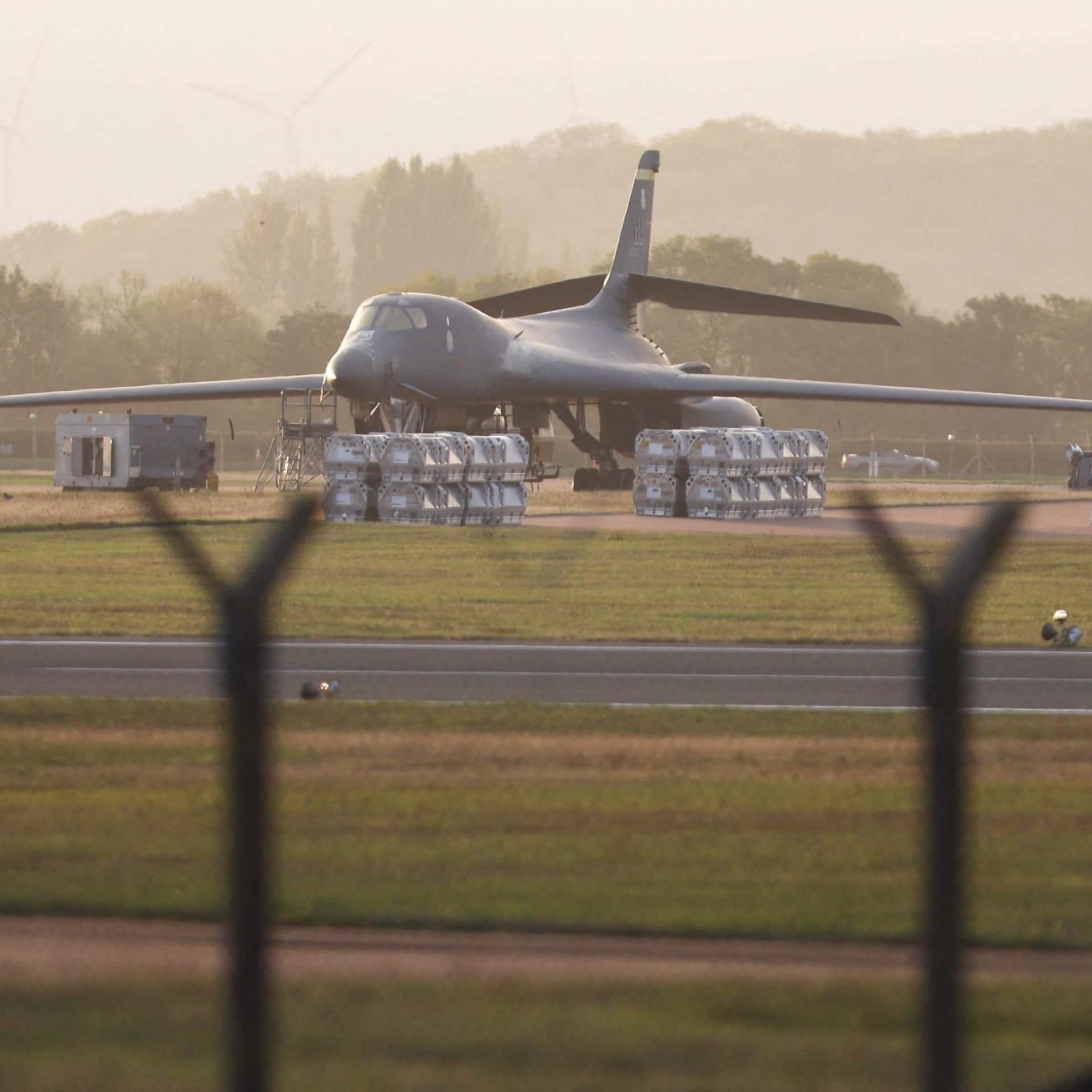
23:38On cartels, are you considering options, are you considering strikes on land? Well, I don't want to tell you exactly, but we are certainly looking at land now because we've got the sea very well under control. That's why I say it begins to feel like genuine escalation now. The military buildup on the US side in the Caribbean that's involving amphibious vessels, that's involving warships, there's potentially 10 ,000 troops being readied and prepared on the US side. On the Venezuelan side, where obviously nerves are jangling, Nicolas Maduro has set these civilian militias to work to start training and practicing with guns.
Read the full transcript
24:16You've got these images of retirees holding weapons and learning to shoot. If you add some of these latest elements, first off, the mention of the CIA, the idea that they have been given the green light to look at covert operations that they can carry out, but also that Mr Trump has talked about controlling the land now. What would that look, What would that mean for Venezuelans in coastal villages all along the Caribbean coastline, right in the eye of the storm? Are they worried? You know, so the tension, the drip, drip, drip of this tension building for ordinary Venezuelans and then...
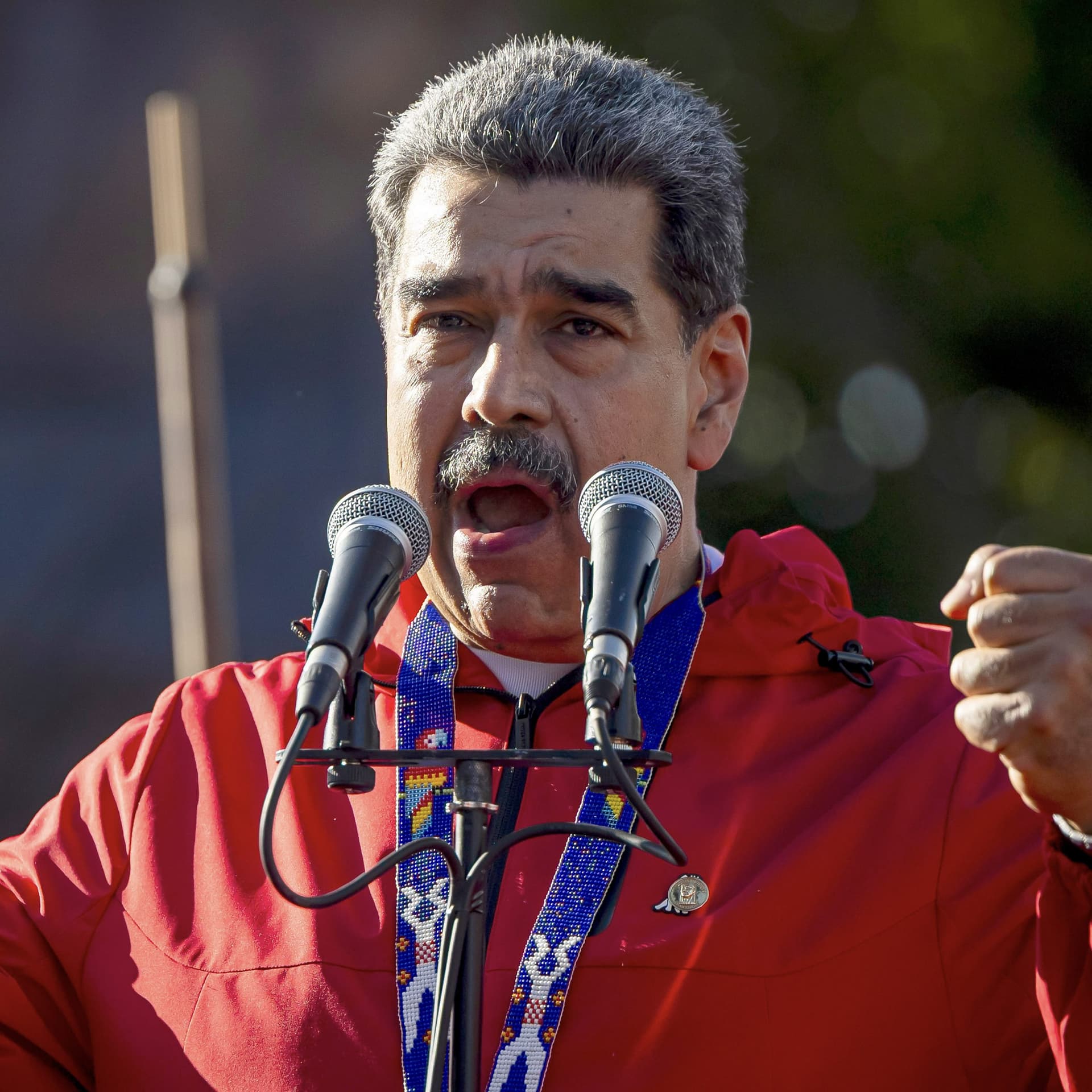
25:03We saw this response from Nicolas Maduro live on national television where he was saying, even in English. We don't want war in the Caribbean. No, not war. Just pits. Not war. Just pits on the people in the United States. Please. Please, please, please.
25:31I mean, what else is he going to say? It's beginning to look like he genuinely now fears that this could be carried out, that his own life is in danger and that certainly remaining in power is in jeopardy. I mean, it is extraordinary, in a sense, to be talking about these things.
25:55But when you're already striking vessels in the Caribbean Sea and then not showing evidence that they were drug vessels, when you're not sharing that with the other side of the aisle in Congress, when you're not making it clear that this is intrinsically vital to the well-being and the security of the United States, then there's plenty, in a sense, that can go wrong. Will karma heads prevail? Obviously, one hopes, particularly for the people of Venezuela, who are absolutely caught in the middle of this very, very big political chess game.
26:35Will Grant:That was the BBC's Will Grant joining us from Mexico City. If you all appreciated today's episode, please take a minute and rate our show wherever you listen to podcasts. It helps other people find the show. Today's episode was produced by Viv Jones and Valerio Esposito. It was edited by Annie Brown. Engineered by Travis Evans. Our senior news editor is Chyna Collins. And that is it for today's show. We hope you all have a lovely weekend and we'll catch you again on Monday. You
From the publisher
On Wednesday, President Trump confirmed that he has authorised the CIA to take covert lethal action in Venezuela. The revelation came off the back of a series of US strikes on Venezuelan boats accused of transporting drugs in the Caribbean Sea, which resulted in the death of 27 people in what some human rights experts are calling "extrajudicial executions". The US military operation has the region on edge, leaving analysts wondering whether this is just part of a new war on drugs, or a push to bring down the Maduro regime. The BBC's Will Grant briefs us on these latest developments, and the CIA's history in Latin America.
Producers: Viv Jones and Valerio Esposito
Editor: Annie Brown and James Shield
Sound engineer: Travis Evans
Senior news editor: China Collins
Image: Miguel Gutierrez/Shutterstock