In short
The episode explains why Hungary’s April 12 parliamentary election is pivotal for Donald Trump and the broader European far-right.
Guests
Katja Adler, BBC Europe editor (and former host), reports EU politics from the European Parliament; she interviews Tristan Redman.
Key claims
leaked calls allegedly show Orban’s foreign minister Peter Szijjártó discussing cooperation with Russia’s Sergei Lavrov, raising fears of EU-level Russian influence; Orban’s campaign is supported by Trump-aligned U.S. figures, including Marco Rubio and a Trump endorsement video at CPAC Hungary, plus Rob Schneider appearing in Orban’s X video.
Notable examples
Orban’s “European Populist Playbook” style—media control, pressure on NGOs, cronies in state institutions—plus EU fund withholding since 2022 over rule-of-law concerns; Orban blocking Ukraine sanctions and a 90bn euro Ukraine loan. Opposition leader Peter Magyar faces allegations of a potential sex-tape scandal and claims of Russian agents aiding Orban.
Written by AI. May contain mistakes. Listen to the episode to check what was said.
Chapters
Tap a time to open that second in VOHungary's Political Landscape
0:30 to 0:45
Analyzing the challenges facing Viktor Orban in the upcoming elections.
“Because Schwab knows that when it comes to your finances, choice matters.”
Hungary's Political Landscape
0:48 to 2:41
Analyzing the challenges facing Viktor Orban in the upcoming elections.
“After 16 years as Prime Minister, Viktor Orban, the man who wrote the European Populist Playbook, is facing what could be his most dangerous challenge yet.”
Foreign Influences and Support
2:41 to 4:50
Discussion on international figures supporting Orban, including Trump.
“And today on The Global Story, how did the small nation of Hungary become such a pivotal place?”
The Orban Playbook
4:50 to 7:12
Exploring the strategies used by Orban and their implications.
“Alice Weidel here of the AFD, the far-right party of Germany.”
EU Relations and Challenges
7:12 to 10:48
Understanding Orban's contentious relationship with the EU.
“Well, all of this was followed up by praise from the Trump administration.”
The Rise of Peter Magyar
10:48 to 14:00
Examining the significance of Orban's main opponent in the elections.
“from Hungary that Hungary depends on since 2022, because it says that this is not a proper, open, free and fair democracy.”
Peter Magyar: Rising Opposition to Orban
14:00 to 16:40
Learn about Peter Magyar's political rise and his potential impact on the upcoming elections in Hungary.
“But not having access to those funds is hurting.”
The Spicy Campaign and Accusations
16:40 to 19:50
Discover the controversial elements of the Hungarian election campaign, including allegations of a sex tape and foreign interference.
“We do know that the election, if the polls are right, is going to be very, very closely fought.”
Orban's Relationship with Russia
19:50 to 22:25
Explore Viktor Orban's pragmatic approach to Russia and its implications for Hungarian politics.
“So, yeah, it's become quite nasty and personal.”
Influence of the Trump Administration
22:25 to 25:00
Analyze the potential impact of Donald Trump's support for Orban and the involvement of US politicians in Hungarian elections.
“I just had the opportunity to meet with Carol.”
Show all 11 chapters
Potential Consequences of the Election
25:00 to 26:05
Examine the significance of a potential Orban loss and its broader implications for European politics.
“because it seemed very likely last time that Viktor Orban was going to lose, and he didn't.”
Transcript
Automatic transcript. May contain errors.0:00This BBC podcast is supported by ads outside the UK.
0:30Schwab offers. Because Schwab knows that when it comes to your finances, choice matters. No matter your goals, investing style, life stage or experience, Schwab has everything you need, all in one place, so you can invest your way. Visit schwab.com to learn more.
1:00After 16 years as Prime Minister, Viktor Orban, the man who wrote the European Populist Playbook, is facing what could be his most dangerous challenge yet. The Americans, the EU and the Russians, they're all looking on with huge interest. Hello? Hello, Sergei, this is Peter speaking. Yes, Peter, are you in St Petersburg? Where are you? I landed in Budapest already. In this leaked phone call released by a group of investigative reporters in Europe on Tuesday, Orbán's foreign minister, Peter Siato, is heard chatting with his Russian counterpart, Sergei Lavrov. Nice way to put it. And fair, and fair.
1:42And fair, and fair. To sound close, there's a suggestion that the Hungarian is prepared to help Russia out inside the EU. We highly appreciate your support and your fight for equality in our field. Sayato says there's nothing unusual in any of this, and that his phone's been illegally wiretapped. But the possible coziness with Russia will heighten already sky-high sensitivities in this campaign, one that's already seen allegations of election interference, blackmail, and even one report that the Russians had offered to stage an assassination attempt. In the crucial final days before the election, J.D.
2:27Vance is expected to take time out of the Iran talks to visit Budapest to endorse Orban. Even in Washington, this election is a big deal. From the BBC, I'm Tristan Redman. And today on The Global Story, how did the small nation of Hungary become such a pivotal place? And would a defeat for Viktor Orban signal the decline of the populist right worldwide?
2:57Hello, Katja. It's Tristan in Paris. Hello, Tristan in Paris. Are you Katja in Brussels? I'm Katja in Brussels. You'll be happy to know, yeah. Katja Adler is the BBC's Europe editor, and she also used to be the host of this podcast. You can often find Katja at the European Parliament, reporting on everything EU and European politics related. but we're speaking to her today before she heads to Budapest to cover these Hungarian parliamentary elections on the 12th of April. I'm weirdly fascinated by Hungarian politics. The Hungarian cake. I love Hungarian cake. Oh my God. What's the star Hungarian cake?
3:35A poppy seed cake. I love Budapest. I love Hungary, full stop, I have to say. But the cake is magnificent. So that's part of my joy of going. So Katya, this election is a big one. There's a lot going on. There's a possible sex tape, which may or may not rear its head. And there's even been a Hollywood D-lister popping up in Budapest. And we're going to get into all of this. But first of all, Katya, we'd like to share with you a video from mid-January that the current Prime Minister, Victor Orban, posted on X. Could you just talk us through it? Hi, this is Rob Schneider. Dear France in Hungary.
4:18So what we have here is Viktor Orban posting a video where you see the great and the good of the right and far right, largely in Europe, but also beyond. Hungary, under the continued leadership of Viktor Orban, has the opportunity to be a pillar. We've got former Polish President Morawiecki sharing this idea of an anti-immigration stance, a pro-Christian stance, very Eurosceptic.
4:51Alice Weidel here of the AFD, the far-right party of Germany.
5:02Giorgio Meloni, Italy's prime minister.
5:08We have a guest-starring appearance of Javier Millet of Argentina, a real close ally of Donald Trump's, for example. Security cannot be taken for granted. It must be one, and I think Viktor Orban has all those qualities. He has the tenacity, the courage. Interestingly, here you also have Benjamin Netanyahu. We even have Rob Schneider there. And also to encourage all Hungarians to continue to move forward to protect your great culture. He is a U.S. comedian. God bless you all.
5:46And all of these figures saying, vote for Viktor Orban. He stands for the right values and he is absolutely necessary to lead Hungary. Viva Viktor. Viva Hungary. Vamos, amigos. So it's sort of support for Viktor Orban ahead of his election and trying to show that although he has many opponents within the European Union, this then was a video for him saying, look, I have loads of friends, loads of supporters, leaders of political parties and big figures in Europe and beyond. And beyond, especially in the United States as well. But before we get to the US side of support for Orban, can we just take a second to talk about Rob Schneider in this video alongside all these world leaders and wannabe world leaders?
6:35What's he doing there? Honestly, Tristan, I can't even answer that. I can't tell you. I don't know. I can't answer it either. I find it very curious. I'll just be completely honest. And I think it's really important when journalists are honest. It's not something that I've delved into. do. It's something when I saw the video, my eyebrow raised about as high as I can get it to raise. But I found it a very curious inclusion. But there he is. Perhaps you could look into it when you go to Hungary for the election. I'd be thrilled if you did. Not sure I'll be top of my election priority list, Tristan.
7:08Somewhere in there, I might have a chance to get into it in between mouthfuls of cake. Yeah. Thank you, Katja. Well, all of this was followed up by praise from the Trump administration. Marco Rubio visited Hungary in February and he said, President Trump is deeply committed to your success because your success is our success. Then last month, President Trump himself appeared in a video shown ahead of Orban's keynote speech at the CPAC Hungary conference, which is a kind of conservative action committee conference which happens regularly in Hungary. I also want to send my best wishes to Prime Minister Viktor Orban, who I am endorsing, As you know, I am endorsing his election, which is coming up pretty soon.
7:50He has my complete and total endorsement as a matter of fact. What does it mean that all these figures on the right are so explicitly endorsing Victor Orban? Why is it that they are all coming out in support of him? So I think with Marco Rubio, the US Secretary of State, there was a particular message sent, actually, because when did he go? So Marco Rubio had just been to the Munich Security Conference. This is why we do not want our allies to be shackled by guilt and shame. We want allies who are proud of their culture and of their heritage. And he gave a gentle-ish speech to the Europeans there.
8:29For we in America have no interest in being polite and orderly caretakers of the West's managed decline. With a very clear message, we see you as our allies, but only if you adhere to our value system. Now, who adheres to the Trump value system? Victor Orban. What are we talking about there? Traditional family values, they would say, Christian values. So when they say his success, as in Viktor Orban's success at the ballot box will be our success, that is seen as a success for their vision for Europe. And it is a vision that Viktor Orban shares that in his 16 years in government, but particularly in the last years, he has been outspoken about.
9:14You know, it's also curbing woke expression, as they would see in society, you know, getting control in academic institutions over NGOs and so on and so on and so on. That is the Orban playbook. And it is a playbook that he would say inspired Donald Trump in his re-election campaign. And certainly Donald Trump mentioned Viktor Orban on that re-election campaign. I mean, I remember thinking at the time, why are you mentioning Hungary? I mean, Hungary is this tiny, tiny European country. And yet Viktor Orban punches above his weight on the world stage in the eyes of Donald Trump, but also here in Europe.
9:51And the reason you saw all of those right wing figures in his video is for the same reason. You mentioned the Orban playbook. What are the elements of the Orban playbook which other leaders in Europe have adopted or would like to adopt if they get into power? He has large control, not total, large control over the media in Hungary. He has clamped down on left-leaning, or woke as he would see it, non-governmental organisations. His, you could use the word cronies, it's a very loaded phrase, but let's say people close to Orban have been given big positions in big state institutions, whether it's in academia, whether it's in the largest energy group, the judiciary.
10:39That's something that Brussels, that the European Union criticises often about Hungary and says it's not a free, open judiciary. And so that's actually why the EU has held back funds from Hungary that Hungary depends on since 2022, because it says that this is not a proper, open, free and fair democracy. The rule of law is not here. But it is a playbook that parties to the right of the right across Europe think, no, it makes sense to us. It's still a democracy, still have freedom of speech, we wouldn't be able to say, I mean, Orban says this, the fact that the opposition is doing so well in the polls right now, about 10 points ahead of his party for these elections, is proof that Hungary is still in a vibrant democracy, he would say.
11:24But it is a playbook that others have mimicked and looked at, and that Orban likes to say that Donald Trump also used part of his style and his aims, you know, when he was looking for re-election now. Well, I want to ask you in a second about Viktor Orban's principal opponent in this election, Peter Magyar. But before we get on to Peter Magyar, you can't really understand Orban's opposition to Peter Magyar without understanding the way Orban operates within the European Union. So can you talk us through what his relationship is with the EU leaders in Brussels? He often turns up at these summits and there is a lot of butting of heads.
12:03There is. His relationship with the EU is bad and it's got worse over the years. He will criticise Brussels. He will accuse Brussels as a shorthand for the EU of trying to hamper Hungarian sovereignty, of imposing wokeness on Hungary and acting against Hungary's interest in trying to get migrants to enter Hungary. And what it means is that when the European Union tries to take collective action, such as relocating migrants, Hungary is always right there amongst the countries that say, no, we're not taking it. When it comes to Ukraine, he has blocked successive sanctions packages against Russia.
12:50In the end, he has sort of given in over that. But he is seen as a blocker. And most importantly for Ukraine, blocking a 90 billion euro. So that's about$100 billion, US dollars, loan package for Ukraine, which is seen as so crucial. And people are outraged. They are sickened. So what have they done? Well, Brussels says it's taken very strong action in that it's withheld funds, funds that Hungary relies on, agricultural funds and more, since 2022. because when it comes to Russia-Ukraine, there is a general acceptance amongst European Union countries that this is an existential war. But the fact that Viktor Orban takes such a different position in this is really detrimental to Hungary's relationship.
13:41But it's also hurting him now, Tristan and I would argue, because of the lack of EU funds. That's part of the reason we see Hungary's economy doing really badly. Inflation is high. Voters are suffering. So it's kind of ricocheted against Viktor Orban in the end. It was useful to be against Brussels. Right now, I'm not saying that everybody in Hungary is pro-EU. That's not what I'm talking about. But not having access to those funds is hurting. Orban's been around for a very long time. I mean, he's been a fixture on the political scene in Hungary since the fall of the Iron Curtain in the late 80s.
14:14But here he is with a very credible opponent in the election. The polls suggest that they're neck and neck. if Peter Magyar isn't actually ahead. When did you first come across this character, Peter Magyar? Well, I think he generally rose to prominence with the 2024 European parliamentary elections and his party did very well. And again, using the shorthand for the EU Brussels was cock-a-hoop because they thought, right here, there is an incredible opposition to Viktor Orban. So I think that's when he rose to prominence. I think that those in the know are keen. They'd never say this officially, of course, ever.
14:59They're enthusiastic about the idea that polls are suggesting that Viktor Orban might lose the election. However, there are lots of howevers. Peter Magyar used to be in Viktor Orban's party. So we're not looking at a totally different political frame of mind. He is in that big group inside the European Parliament, the Conservatives, but he probably fits very much to the right of that group. So we don't really know how much his policies will differ once he's in government, because if you have a look at how his party votes in the European Parliament, when it comes to migration, when it comes to these hot button issues in Hungary, they tend to vote with Viktor Orban's party.
15:42and otherwise they'll often abstain. So might they be different when they get into government? We don't know that. They promise, at least on a foreign policy point of view and from Brussels' point of view, to be interested in working with the European Union, interested also in working with the United States, but not to change the policy towards Ukraine. So what will that mean exactly? And definitely in Kiev, if not in Brussels as well, people are kind of wondering, OK, even if you move the bloc or in chief, Is this going to be a mini blocker? Or, you know, who is Peter Magyar really going to be if he becomes Hungary's next prime minister?
16:36So we don't know yet that much about Peter Magyar's politics. We do know that the election, if the polls are right, is going to be very, very closely fought. It's also been quite a spicy campaign. What can you tell us about the spicy parts of it? Yeah, I noticed your eyes glittering at the beginning of this podcast when you talked. What was the first thing you said? I'm thinking about the future of European politics and you're thinking about sex tapes, Tristan. I don't know what that says about you. But yes, so Peter Maggio, who's the leader of the opposition, who polls tip to win, he said that there was possibly a sex tape out there.
17:15Peter Magyar says the alleged video would show him in a consensual encounter with a former girlfriend at a private party back in August. Magyar says a sex tape the government plans to release is real, but is being politically weaponised. The sex tape incident highlights how aggressive a campaign could get. Fidesz, the party of Viktor Orban, said they didn't know anything about it, and we haven't seen this. I don't know if you've seen it, Tristan. It has not appeared yet. It has not appeared, but that was brought up. But it's a pretty nasty campaign as well. And Peter Magyar certainly made an accusation at a big rally that there were sort of top Russian agents that were helping run the Orban campaign.
17:55And actually, I'd like to just pause there, if you don't mind, Tristan, just to say something about Orban and Russia, because I think this is key. He is seen as the closest to Russia, but it would be wrong to say that he had been voted many times because he's seen as close to Vladimir Putin. That is not the case. That is not what Hungarians would vote for. The way he sells it at home is that it's a pragmatic relationship with Russia. Why would you have a relationship? Well, because Russia is the place to get cheap energy from and Hungarians would like access to cheap energy because they'd like to pay less.
18:31So it's less, I love Russia, and more Russia is a very useful partner for Hungary. Viktor Orban's also painted Russia as a reliable partner, unlike Europe that has strings attached. He's not passionate about Russia. He plays that very, very carefully. But his critics say he is in Russia's pocket.
18:53We're taking a closer look at a scandal that's rocked the EU involving the Hungarian foreign minister. The core of it is allegations, very serious allegations, that Hungary shared private EU information with Russia. The Washington Post reported that Peter Siarto regularly shared sensitive information with his counterpart in Russia, Sergei Lavrov. It's got to that extent that we have certain meetings inside the EU where other countries will say, let's not include the Hungarians because they're worried about leakage. The Polish Prime Minister Donald Tusk, the behavior of the Hungarian foreign minister is, quote, a disgrace.
19:29Certainly this revelation plays into one of Magyar's primary campaign narratives. And all of this has been refuted. Initially, the Hungarian foreign minister, Ciarto, said that this was all fake. And then Ciarto changed the tune to say, well, this is normal because we speak to many countries and that is a part of diplomacy. So, yeah, it's become quite nasty and personal. And yeah, and the allegations of this sex tape as well. Well, in defence of the suggestion that I might be sensationalist, which I only half reject. I was only teasing. Well, so I would say that there is a case that the spicy sensationalist aspects of this election campaign are actually germane to the coherence of the future of European politics, because these suggestions that Russia interferes in elections, as some people have suggested is the case in Hungary, is going to become a regular occurrence in European politics.
20:35What would you say to that? Those allegations are nothing new, the idea of Russia misinformation or disinformation. and sometimes there's been proof that's been presented by European governments and in other cases it's allegations made and assumptions made because the way that Russia operates is plausible deniability. We do know, I don't think this is a big secret or is it a scandalous or an outrageous thing to say, that Russia is involved in what we call hybrid warfare. So that is not getting the guns out and it's not getting the tanks out, but it can be sabotage, subterfuge, espionage or disinformation, misinformation.
21:17So I think there is nothing new about that. Is it paranoia? Part of it is paranoia. But paranoia, you could argue, is a very useful weapon as well for Russia if it wants to destabilise, which it seems to want to, and reduce coherence amongst European Union countries. Interestingly, critics of the Trump administration would say exactly the same thing, that China, Washington under Donald Trump and Russia seek to weaken ties between European countries because they're more easy to manipulate if they are separated rather than working as a force together. What we do see with the Trump administration that you can point to directly is direct interference in European politics.
22:04You quoted Donald Trump yourself speaking out in favor of Viktor Orban. Good evening. I am so excited to be with all of you tonight. Last year, when there was a presidential election in Poland, he had his homeland defense secretary fly over to Poland to speak out in favor of the Trump friendly candidate. I just had the opportunity to meet with Carol. And listen, he needs to be the next president of Poland. Do you understand me? And I mean Trump-friendly. So in the crowd, people were wearing their MAGA hats and so on and so forth. So Viktor Orban, one of the greats, one of the true greats. Steve Bannon, who is very vocal in European politics, has spoken out in favor of Viktor Orban and his playbook and why his victory will be so important.
22:54Running again, I think the election's in April, and he's been there 16 years. And who is expected to come to Hungary just before the election? J.D. Vance.
23:08Well, let's talk about J.D. Vance's expected visit to Hungary in the final week of the campaign. To use an expression that we hear on the internet a lot, I'm old enough to remember when a US president came to a European country just before a crucial election and made a comment about that upcoming election and was roundly criticized for it. I'm referring to Barack Obama coming to Britain just before the Brexit referendum. Here we have a US vice president who's expected to appear in a European nation just before this election. Do you think this endorsement from J.D. Vance could actually sway things one way or the other in Hungary?
23:52So I think it's unlikely to sway it because Marco Rubio made his big visit in February and that didn't put the numbers more in favour of Viktor Orban. There were some polls that suggested there was a slight lessening of support for his Fidesz party, whether that was linked to the Rubio visit or not, we don't know. It definitely didn't give him a boost. And I think we have figures across Europe at the moment who were very pro-Trump, look no further than the United Kingdom and Reform Party leader Nigel Farage, who are now distancing themselves from the US president. arguably not because of their own personal beliefs who knows but definitely because public opinion polls indicate very strongly that the european public across the board does not approve of the attacks on iran and so when big figures in the trump administration stand so close to victor orban is that going to help persuade people who are currently not going to vote for him to vote for him.
24:53It seems unlikely. In the case of Hungary, be careful at looking at these polls, because it seemed very likely last time that Viktor Orban was going to lose, and he didn't. But I would say this is an election that is very closely watched across Europe, in the United States, and beyond. We can't call it right now. Can we game out a little bit the possible consequences of either permutation of the election. So if Orbán were to lose, how big of a deal would that be? If Viktor Orbán loses this election, it will be massive.
25:37Because it's 16 years of Viktor Orbán. It's 16 years of Viktor Orbán's self-declared illiberal democracy, shining a light for other similar-minded parties and hopefuls within Europe of what they can achieve and what they could do to get to power to stay in power. It will send a message. Will it be the end of policymakers across Europe worrying about what they see as anti-democratic forces on the far right and the far left in Europe? Will it stop concerns about Eurosceptic nationalist parties wanting to kind of break the European Union from within? Absolutely not. I always say, when things seem black and white, there's something wrong there because life is shades of grey.
Read the full transcript
26:32Thank you so much. It's been great to talk this all through with you. Thanks very much. It was lovely to talk to you. Thanks for having me on.
26:45That was Katja Adler, the BBC's Europe editor. And if you have any thoughts or feelings about what you've heard today, you can email us on theglobalstory at bbc.com. We always love hearing from listeners. And if you want to catch up on the latest news from around the world, then look out for our sister show, the global news podcast, wherever you listen. And that's it from us for today. The producers were Valerio Esposito and Sam Chantarassac. The show was edited by James Shield and mixed by René Park. Our senior news editor is China Collins. Our studio manager was David Evans. And I'm Tristan Redmond.
27:21Thanks so much for listening. We'll be back again tomorrow. Cheerio.
27:41Thank you.
From the publisher
After 16 years as prime minister of Hungary, Viktor Orbán – often credited with shaping the populist playbook – could be voted out in next week’s parliamentary elections. It could be one of the most consequential contests of 2026.
Among claims of Russian interference, staged assassination attempts and threats to release a sex tape, the campaign has taken a series of dramatic and unexpected turns.
Ahead of an expected visit by US Vice President JD Vance, we ask the BBC’s Europe editor, Katya Adler, how such a small country became a pivotal geopolitical battleground - and whether a defeat for Orbán could signal a shift for the populist right worldwide.
Producers: Samantha Chantarasak and Valerio Esposito
Executive producer: James Shield
Mix: Renee Park
Senior news editor: China Collins
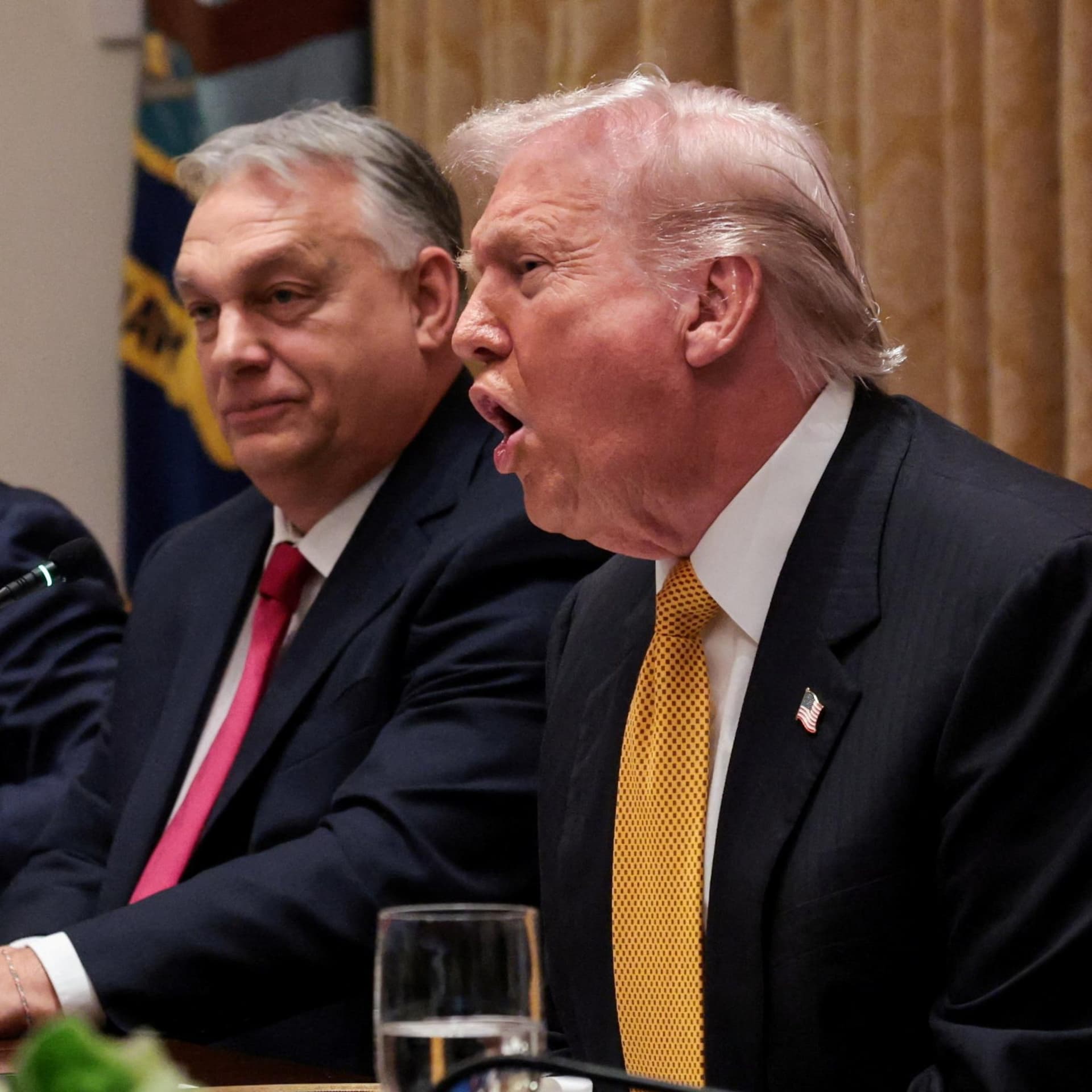
Photo: US President Trump meets with Hungary's Prime Minister Orbán at the White House. Credit: Jonathan Ernst/Reuters.