In short
The Chagos Islands dispute—why Donald Trump keeps criticizing the UK’s plan to transfer sovereignty to Mauritius while preserving US access to the Diego Garcia military base, and how this ties to US-Iran tensions.
Guest backgrounds
James Landale, BBC diplomatic correspondent covering international affairs for many years. (Referenced: Ben Judah, former adviser to David Lammy, quoted from The Times.)
Key claims
Chagos Islands are UK-owned but Mauritius claims ownership; the ICJ (2019) said continued UK occupation is illegal (non-binding advisory opinion), and the UN General Assembly backed it. The UK-Mauritius deal would transfer sovereignty but lease Diego Garcia back for 99 years; ratification is pending. Trump’s stance shifted from initially supportive to opposing, linking the issue to potential US military action against Iran and criticizing Keir Starmer as “uncooperative.”
Notable examples
Diego Garcia’s US-run base (UK owns real estate; US pays running costs), critics’ concerns about nuclear weapons and possible Chinese influence, and the episode’s update after US/Israel began bombing Iran—Britain initially cautious about legality, then allowing use of bases for defensive strikes.
Written by AI. May contain mistakes. Listen to the episode to check what was said.
Chapters
Tap a time to open that second in VOIntroduction to Good, Bad Billionaire
0:18 to 0:53
Introduction to the podcast segment discussing wealthy individuals.
“Look at the lives and fortunes of some of the world's richest people.”
Historical Context of the Chagos Islands
1:58 to 4:19
Examining the historical ownership and significance of the Chagos Islands.
“And today on The Global Story, what exactly happens on the Chagos Islands that makes them so important to the American president?”
U.S. Military Presence on Diego Garcia
4:19 to 8:34
Discussion on the establishment of a military base on Diego Garcia and its implications.
“and what Donald Trump ultimately wants to do.”
The UK-Mauritius Deal Explained
8:34 to 9:21
Details about the treaty between the UK and Mauritius regarding the Chagos Islands.
“And what that does is that clears away all the legal threat.”
Political Reactions to the Deal
9:21 to 10:10
Analyzing the political reactions to the UK-Mauritius deal and its implications.
“The deal was supported there by the British government.”
Importance of Diego Garcia to U.S. Strategy
10:10 to 11:58
Exploring why Diego Garcia is critical for U.S. military strategy and operations.
“Well, the initial reaction was, OK, this is what the Brits want to do, we seem pretty happy.”
Capabilities of the Military Base
11:58 to 14:00
Discussing the capabilities and significance of the military base on Diego Garcia.
“And together we host Good Bad Billionaire.”
Strategic Significance of the Chagos Islands
14:00 to 14:58
Learn about the military and strategic importance of the Chagos Islands for the US.
“So there's a straightforward, you know, you can get planes there and deploy them from there that you can't do elsewhere.”
Trump's Evolving Stance on Chagos
15:00 to 18:06
Explore how President Trump's position on the sovereignty of the Chagos Islands has changed over time.
“Trump himself only started raising concerns about this deal this January.”
International Law and Geopolitical Risks
18:06 to 19:48
Understand the implications of international law on the sovereignty of the Chagos Islands and its geopolitical consequences.
“James, I think it is a fair assumption that President Trump has expansionist ambitions.”
Show all 13 chapters
Voices of the Chagossians
19:48 to 21:50
Hear about the perspectives and desires of the Chagossian people regarding their homeland.
“then potentially you could get maybe a research base set up by the Chinese, and then maybe a listening station, all with just a few hundred miles of a massive American air base.”
UK's Response to Military Conflict and Diego Garcia
22:01 to 25:51
Learn about the UK's cautious response to military actions involving Iran and its implications for Diego Garcia.
“A lot has happened since that conversation with James a couple of weeks ago, mainly that the U.S., alongside Israel, did in fact start bombing Iran.”
Contrasting Leadership: Trump vs. Starmer
25:51 to 27:20
Examine the stark differences in worldview and leadership styles between Donald Trump and Keir Starmer.
“I don't think you could find two people more different in their way that they view the world and the way that power should be deployed.”
Transcript
Automatic transcript. May contain errors.0:00This BBC podcast is supported by ads outside the UK. Odoo, providing tools for businesses across industries into one fully integrated platform. Whatever your business needs, Odoo is committed to providing it. Learn more at odoo.com.
0:33Look at the lives and fortunes of some of the world's richest people. And asking you to decide if they're good, bad, or just another billionaire. Good, bad billionaire from the BBC World Service. Listen now or search for Good, Bad, Billionaire wherever you get your BBC podcasts.
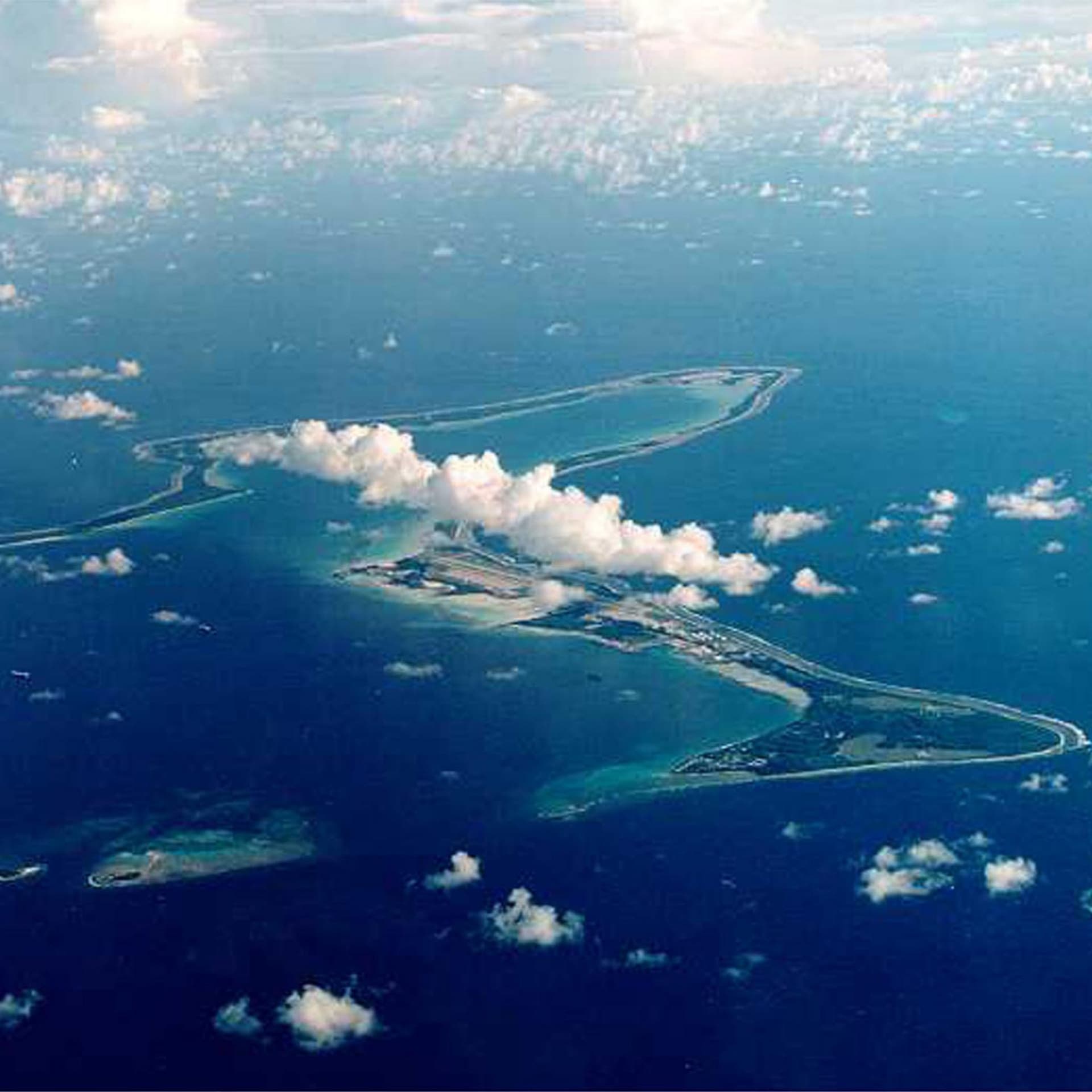
0:53At the White House recently, President Trump gave an assessment of how America's allies have responded to the US-Israel war in Iran. He had praise for some, but vented his frustration with others, notably the U.K. and its prime minister, Keir Starmer. This is not the age of Churchill. I will say the U.K. has been very, very uncooperative. His criticism seemed to center around an island. With that stupid island that they have, that they gave away and took a hundred-year lease. So what is this island that Donald Trump keeps talking about? And what's it got to do with Iran? Well, this island is one of a group of about 60 known as the Chagos Islands in the middle of the Indian Ocean.
1:44Tropical, beautiful, mysterious. So mysterious that one person who knows what really goes on there said that if you did too, it would give you vertigo. From the BBC, I'm Asma Khaled in Washington, D.C. And today on The Global Story, what exactly happens on the Chagos Islands that makes them so important to the American president? And why are they at the center of an ever-growing diplomatic rift?
2:17The idea to do an episode about the Chagos Islands initially came to us from two listeners, William and John. And the first part of this interview was recorded a couple of weeks ago before the United States and Israel started the war with Iran. We, in fact, had initially planned to run this episode on Monday, March 2nd. But as you all know, the war in Iran started that prior weekend. So we will be coming back for an update later in this episode. My name is James Landale. I am the BBC's diplomatic correspondent, which means I cover foreign affairs and international affairs. Well, it's in that vein that we wanted to have you on the show today because you've been covering international diplomacy for many years here at the BBC.
2:58We wanted to understand what's actually going on with the Chagos Islands, a place that I confess I knew very little about prior to the President of the United States chiming into this conversation. So, James, could you sum up the recent diplomatic row for our audience? What is the crux of this about? Okay, so the Chagels Islands are a bunch of islands in the middle of the Indian Ocean, and they are owned by the United Kingdom. They're British. Or are they? Because not everybody agrees with that statement. The Mauritians, an island further to the south, they believe that they own these islands and have been making the case for that for some time in the international courts.
3:39Now, the reason that Donald Trump is interested is because these islands contain a real issue of US national security. And Donald Trump has said different things at different times. But at the moment, he opposes a deal that the Brits have done with the Mauritians to hand sovereignty and control of these islands from the UK over to Mauritius. And that's where this dispute comes from. Got it. And that deal is now on hold, my understanding is, there in the United Kingdom. I think it's on hold until the United Kingdom can work out precisely what the position of the United States is and what Donald Trump ultimately wants to do.
4:21So take us back to where the story began for our purposes, which is when and how the UK came to own the Chagos Islands. Well, the reason the UK has the Chagos Islands is because we won in the Napoleonic Wars.
4:39We defeated Napoleon's forces. The British Navy seized various French possessions in the Indian Ocean. So from 1810, they were in British hands all the way until the 1960s, when Mauritius got its independence, along with so many other former colonies around the world. but when independence came the deal was this that britain would hand over sovereignty to mauritius it would gain its independence but it would carve off these chagos islands and turn them into a separate entity called the british indian ocean territory and the british kept control and Mauritius was paid a substantial sum of money by the Brits in compensation for taking the Chagos Islands.
5:36So then, how do you go to a moment in which the United States first becomes involved with these islands? Well, here we get into slightly murky history, but the broad consensus is that the United States was heavily involved from the start because the Americans had, as the British did, a desire to use these islands for a particular purpose. So they said, right, okay, we will keep these islands. And on the biggest one, an island called Diego Garcia, we'll build ourselves a military base, which they built during the late 60s and early 70s. But, and here's the rub, during that process, they forcibly evicted several thousand Chagossians, people who actually lived on those islands, and they were moved either to Mauritius or to the Seychelles, an island nearby, or some of them came to the UK where there are still several thousands living in southern England.
6:29And to be clear, this is a US military base that was built in the 1960s? It is technically a British base. The Brits own the real estate, but the Americans pay for the running costs. So technically UK ownership, but Diego Gusset is largely an American-run base. OK, so if one of the Chagos Islands, Diego Garcia that you mentioned, has been used as a military base for the last several decades, why is the UK on track to give these islands up? because the island of Mauritius has long argued that the deal it signed up to in the 1960s was unfair and that actually the Chagos Islands are legally owned by Mauritius they argue and they have taken that case to the international courts and in 2019 the United Nations highest court the International Court of Justice ruled in a non-binding advisory opinion that the continued British occupation of those islands was illegal, and they ordered the UK to hand it back to Mauritius.
7:34That opinion was then supported by a full vote at the United Nations General Assembly. And since then, the British government has negotiated a treaty with Mauritius to hand sovereignty over. And that has now been agreed between both countries, but it hasn't been ratified in the British Parliament yet. So it hasn't actually come into force yet. So in October of 2024, the British government officially agreed to hand these islands back to Mauritius. And James, can you walk us through what's actually in this deal between the UK and Mauritius? So as you say, the deal was that the UK would hand the Chagos Islands back to Mauritius.
8:16But, and here's the key but, the UK would lease back the Diego Garcia military base for 99 years. In practical terms, nothing would change, apart from, you know, Mauritius would technically be in charge of these islands. But the deal was the Brits keep control because they get a lease on the military base. And what that does is that clears away all the legal threat. And in return, the UK will pay Mauritius a substantial amount of money. When that deal is announced, remind us how the United States reacted. I will say I don't remember it being a major storyline here in the US, But there was a little sort of statement, it seems, of support from the Biden administration.
8:58Yes, the Biden administration wanted this deal. They are the ones who encouraged the Brits to start the negotiations. When the deal was finally agreed, the Americans poured over that deal with a toothpick and they came out the other side saying, yeah, OK, we, the U.S., are happy with that. And this seems to work. So as we said, this is happening in October of 2024. It is just ahead of the U.S. presidential election. The deal was supported there by the British government. It seemed to have support here by the American government as well. Why not just ratify it at that moment? Two factors. One was that one or two Republican politicians had cast the odd doubt about the deal, had raised the odd question.
9:45And secondly, an election was imminent in the United States, and the Brits did not want to sign off on something that would then be opposed by the next administration. Then the election took place and at that point there were some sort of feelers put out to the incoming administration to get a sense of what they were thinking. When the Trump administration has a chance to assess the situation, how did they initially react? Well, the initial reaction was, OK, this is what the Brits want to do, we seem pretty happy. And we'll also be talking about that today with the prime minister. Yeah, I mean, we've...
10:21And if you remember, in an early meeting between Prime Minister Keir Starmer and the president of the White House, it came up. Keir Starmer has signed a deal to give away the Chegel asylum to Mauritius. Will you approve that deal? Well, we're going to have some discussions about that very soon, and I have a feeling it's going to work out very well. They're talking about a very long-term, powerful lease, a very strong lease. about 140 years, actually. That's a long time. And I think we'll be inclined to go along with your country. Yeah, I think it's a little bit early. We have to be given the details, but it doesn't sound bad.
11:00Yeah, please. Mr. President, you obviously... So, James, help me understand why the President of the United States is so interested and so involved in a very small island that is very far away from the United States? The answer to that question is because this is not just any old military base. This is a supremely important military facility for the United States. It's a unique facility, a unique asset. And I think that's why Donald Trump has got involved. He has a lot of people in the US military security defence world who will be telling him just how important this island is.
11:58Hi, I'm Simon Jack. I'm Zing Zing. And together we host Good Bad Billionaire. The podcast exploring how some of the wealthiest people on the planet made their money. And we are back with a new season. From sporting superstars to music moguls and celebrity CEOs. We'll be taking a closer look at the lives and fortunes of some of the world's richest people. And asking you to decide if they're good, bad or just another billionaire. Good, bad billionaire from the BBC World Service. Listen now or search for Good, Bad, Billionaire wherever you get your BBC podcasts.
12:34I want to ask you more about the military significance of Diego Garcia, because one of our producers pointed out that Ben Judah, former advisor to the former Foreign Secretary David Lammy, said in the Times of London, I'm going to quote him here, he said, once you've been briefed, even partially, on what it does, the information gives you vertigo. That suggests there's a lot going on there. Are we talking nuclear weapons? Well, there's a huge amount that goes on there that we simply don't know because it's a military base and everything about it is classified. Whether or not there are nuclear weapons stored there or not, I do not know.
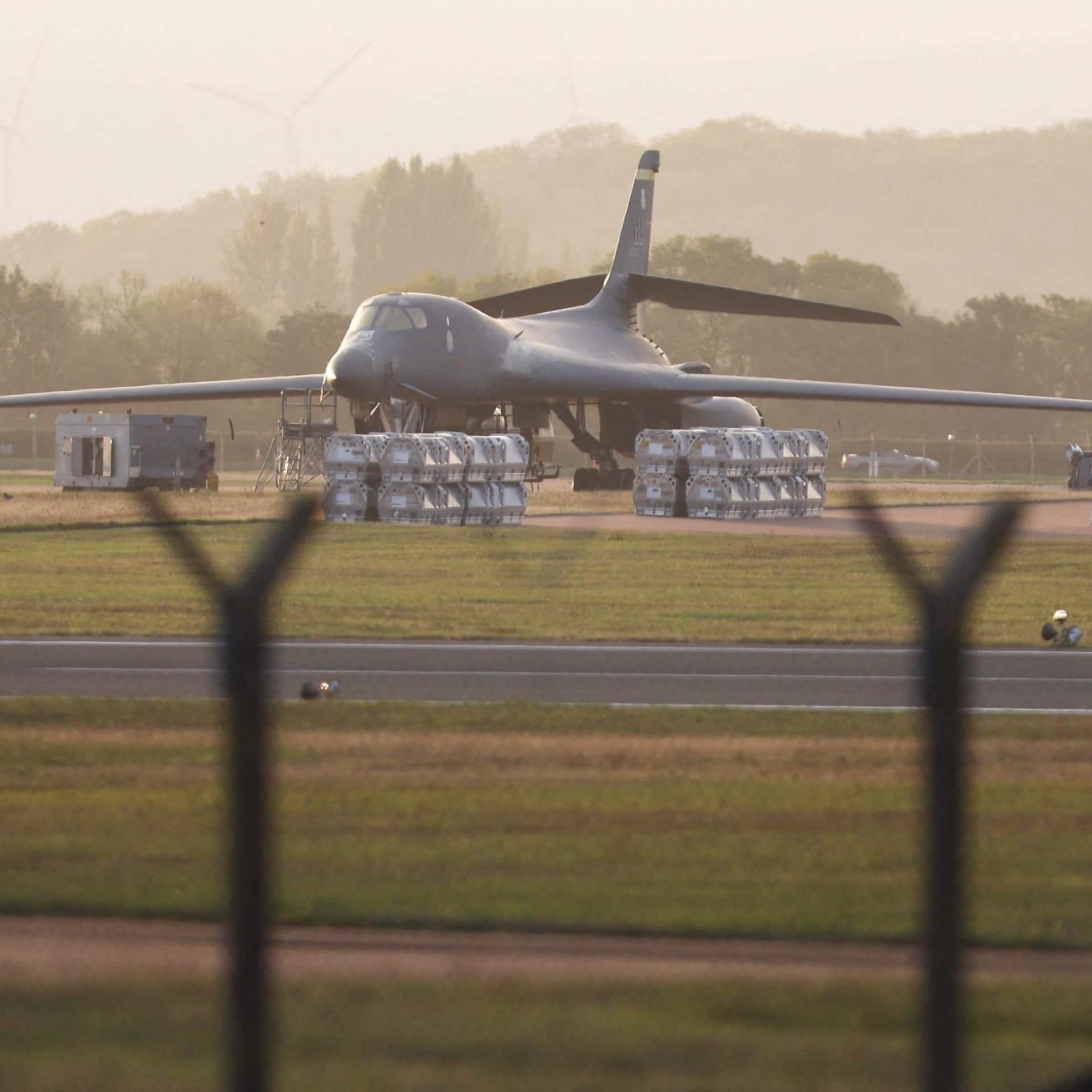
13:12But I do know that some critics of this deal have said that if the Brits hand over sovereignty, then the Mauritians could potentially ban the storage of nuclear weapons. The assumption is that there's a possibility that nuclear weapons have been stored there. What specifically happens at this military base? So first of all, it's like a sort of an immobile, enormous aircraft carrier in the middle of the Indian Ocean, a place where you can land big, long-range bombers. The kind of bombers that the United States, Donald Trump, sent to bomb Iran last June, you can't land those on an aircraft carrier.
13:49If you can have those bombers based on Diego Garcia with its long airstrip, you can have American bombers deploy their weapons and their bombs throughout this part of the world, the Middle East, parts of Asia. So there's a straightforward, you know, you can get planes there and deploy them from there that you can't do elsewhere. Secondly, it is a deep water port. So a massive maritime hub for American naval and other shipping to go in there. They can refuel, they can get more weapons. So it has a huge use from that point of view. It is also a surveillance station. This is a place littered with satellites and all the rest of it, signals intelligence gathering.
14:34during the wars in Afghanistan and Iraq. Diego Garcia was a place from which America deployed a lot of its forces into the region. And strategically, militarily, what it does is it gives the United States a stepping stone to the Indo-Pacific. Okay, James, I have a clearer sense now of the Chagos Islands' significance from a national security perspective. But I still want to sit with you a bit on the politics of this all because President Trump himself only started raising concerns about this deal this January. Can you walk us through how his position has evolved? Well, as we said at the beginning of last year, he signaled that, you know, he was fairly relaxed about it.
15:17But then, as you say, in January of this year, I've just seen a truth social post posted two minutes ago from the president. We got one of the first truth social posts where he criticized the deal. Shockingly, our brilliant NATO ally, the United Kingdom, is currently planning to give away the island Diego Garcia for the site of a vital US military base to Mauritius and to do so for no reason whatsoever. There is no doubt that China and Russia... Now, the key thing to understand is when this happened. This happened during the controversy over his desire to take control of Greenland. And now at that time, the Brits, along with other European nations in NATO, were all saying, no, you cannot do that.
16:02So there was a sense this was Donald Trump using the Chagos Islands issue as a way of lashing out. Then, of course, what happened was a lot of worried telephone calls between the UK and the United States. And then Donald Trump stuck out another post on Truth Social at the beginning of February saying, I've had some conversations and I think this is, quote, the best deal that Keir Starmer could make. He spoke with Prime Minister Starmer directly. He understands Prime Minister Starmer's position and he supports it. But as the president reiterated in that statement, of course, the United States reserves the right to protect our assets.
16:38We still have a military base. So that was Donald Trump sort of back on the even keel. But then within just a couple of weeks, Donald Trump issued another social media post in which he again criticised the Brits, saying you can't rely on a lease. He does not seem to be supportive. Doesn't like leases. But crucially, what he does is this, is for the first time, he links the Chagos Islands to his desire to threaten Iran militarily. And the president says, and I'm quoting here, should Iran decide not to make a deal, it may be necessary for the United States to use Diego Garcia and the airfield located in Fairford.
17:19that's in the UK, in order to eradicate a potential attack by a highly unstable and dangerous regime, an attack that would potentially be made on the United Kingdom. And it subsequently emerged that the Brits had been voicing concerns to the Americans about the legality of any attack on Iran. And the Brits had said, we don't think that attacking Iran now would be seen as self-defense. And therefore, we're not sure that the United States can use Diego Garcia to launch an attack. So because of the disagreement over the legality of attacking Iran, again, Donald Trump changed his position on the transfer of sovereignty of these islands to Mauritius.
18:06James, I think it is a fair assumption that President Trump has expansionist ambitions. You know, many people might have glossed over initially the headlines when they saw the Chagos Islands thinking, oh, you know, yet another territory. He's had his eye on Greenland. Perhaps this is a similar story. And I will say I am kind of intrigued that he was ever supportive initially of this deal. Can you help us understand why perhaps he might have initially been supportive of the deal? The rationale for the deal is this, that if international law says that the UK is illegally occupying these islands, and potentially there is a risk that an advisory opinion becomes a legally binding one, at that point, the UK becomes illegal occupiers of land.
18:58And at that point, potentially, it becomes really hard to resupply this island. It's possible that the contractors stop coming. For the Brits, there's a geopolitical risk. If the UK is seen to be an illegal occupier of what is effectively a slice of Africa, that damages UK relations with many African countries, with countries across the global south or the developing world. It also makes it really hard for the UK to say to Russia, it is wrong for you to illegally occupy parts of Ukraine. So it's a moral argument you're saying in part. There's a moral argument that the Brits are involved with as well.
19:38Then there's the risk of if there's a legal uncertainty about it. At that point, Mauritius says, you know what, we're not getting a deal. We're not getting cash. We're going to look to China. But if there were no deal, so the argument goes, you could get a Chinese fishing fleet. then potentially you could get maybe a research base set up by the Chinese, and then maybe a listening station, all with just a few hundred miles of a massive American air base. But at the moment, as part of the British deal, there's a buffer zone around all of these islands that prevents the Chinese forming any kind of establishment there.
20:14The only person on this planet who thinks this is a good idea besides Prime Minister Starmer is Xi Jinping of China. The critics, of which there are many, say that instead of actually retaining some control over what goes on under this deal, you are essentially opening the door to greater Chinese involvement because of past Mauritian engagement with the Chinese. Once Mauritius owns the islands, I can guarantee you that China is going to put the pressure on Mauritius to allow China to force inspections of military equipment on all of the Chagos Islands, including Diego Garcia. You alluded to this earlier, James, that there were people who were living on the Chagos Island, on Diego Garcia.
21:10They were forcibly removed. What do the exiled people who used to live on the islands, what do they think about all of this? What do they want? They have different opinions. They do not have a united voice on this. Some of them want the islands to remain British. Others do not. But what has, I think, does unite them is a sense that they haven't really been listened to as part of this process. They sell us like a vegetable in a supermarket. We don't even get to choose what we want. We don't get a say about our future. And that's just wrong in this day and age. That should never have happened. And I think that sense of injustice that has been perpetrated against the Chagossians is one that will continue regardless of who technically has sovereignty over this island.
22:01A lot has happened since that conversation with James a couple of weeks ago, mainly that the U.S., alongside Israel, did in fact start bombing Iran. So this week, I called James back, and I began by asking him about the U.K.'s response to the war and what it means for Diego Garcia. Well, the British response to the plan and the actual attack by the United States and Israel on Iran was initially very, very cautious. There were many people within the British government who considered that to be against international law. They did not participate, and they did not want the United States to use British bases to launch any kind of attacks.
22:42So in the initial phase, the U.S. was not allowed to use U.K. air bases for those long-range bombers. You say initially, so that changed over time. Well, it changed almost immediately because once the Israeli and U.S. attack began, so too came the Iranian response. The Iranian response involved threats to U.K. nationals in the Gulf and elsewhere. And at that point, the British government said, right, we believe it is legally acceptable under international law to allow our bases to be used to make defensive strikes against places where Iran's ballistic missiles are launched from targets like that.
23:29And the British government said, right, in that context, if the United States wishes to use UK bases, i.e. Diego Garcia, they can do so. So do you have confirmation? Has Diego Garcia been used now in this war? Well, we don't know yet. It's possible, but at the moment, we don't know definitively. So despite this change of heart, change of policy that the British Prime Minister had, it appears that the American president, Donald Trump, has not been impressed by the UK's actions thus far in this war. And he's certainly not been impressed, it seems, with the British Prime Minister. Yeah, no, Donald Trump has expressed his substantial displeasure with the British Prime Minister, Keir Starmer, saying he's no Winston Churchill, a reference to the famous British wartime leader.
24:16You know, he became aware that the British weren't allowing the use specifically of Diego Garcia. You know, he dismissed it as that stupid island. And then after that, the president on the 7th of March put out a post saying that the United Kingdom, our once great ally, maybe the greatest of them all, is finally giving serious thoughts to sending two aircraft carriers to the Middle East. And that's OK, Prime Minister Starmer. We don't need them any longer. But we will remember we don't need people that join wars after we've already won. James, how do you see the war in Iran affecting the future of a deal over Diego Garcia?
24:54And the reason I ask you this is because it is notable that Trump's first criticism of the UK about Iran specifically mentioned, quote, that stupid island. As we know, Donald Trump has blown hot and cold on this deal. Clearly, the inability to use Diego Garcia at the beginning of this conflict probably has further hardened his opposition to the deal. The ratification of this deal between the UK and Mauritius is on a pause until the UK can get some greater clarification from the Americans over this. I don't think they're going to get any clarification from the Americans until the Iran conflict has come to some kind of resolution or at least has diminished in its intensity.
25:34How has all of this affected the relationship between Starmer and Trump? And I'm curious to understand from you what it tells you about the differences in how these two leaders see the world, how they see power, how they might see international law. I don't think you could find two people more different in their way that they view the world and the way that power should be deployed. Donald Trump believes in the use of power simply on the basis of the United States national interest. He is very dismissive of international law. By contrast, Sakhir Starmer is a lawyer. He is somebody who has spent his life involved in upholding the law and made it very, very clear that he believes that international law does still play a role.
26:26I think what we've seen with both Iran and with the Chagos Islands is essentially a pinch point for the UK because it's forced them to make a decision between these two competing ideas. On the one hand, you have this idea, this thesis, that the world is now decided by powerful men at Mar-a-Lago or the Kremlin or inside the Inner Sanctum in Beijing, in contrast to the old idea that we resolved our differences collectively through international law and the United Nations. and I think what the Chagos Islands has done and also to some respect the issue of Iran is it's forced the British government to kind of make a choice that it perhaps didn't really want to do.
27:11The problem is as it's learned it's hard being on the fence because it can be quite painful. At some point it's going to have to make an absolute decision about whether it goes ahead with us.
27:28James, thanks so much for joining us again on the show. Really appreciate it. Thank you so much.
Read the full transcript
27:39That was James Landale, the BBC's diplomatic correspondent. And folks, that's it for the global story today. By the way, if you have any questions or story ideas for us, please email us. We love to hear from listeners. And you know that, especially after today's show. So you can drop us a note at theglobalstory at bbc.com. And one quick recommendation before we wrap up. If you're looking for a way to catch up on the latest news from around the world, then check out our sister show, the BBC's Global News Podcast. You can find it wherever you listen to your favorite shows. Today's episode was produced by Lucy Paul.
28:14It was edited by James Shield and mixed by Travis Evans. Our senior news editor is Chyna Collins. And I'm Asma Khalid. Thanks as always for listening and we'll talk to you again tomorrow.
28:50you to decide if they're good, bad, or just another billionaire. Good Bad Billionaire from the BBC World Service. Listen now or search for Good Bad Billionaire wherever you get your BBC podcasts.
From the publisher
At a recent White House event, President Trump assessed how America’s allies have responded to the US-Israel war in Iran. He praised some, but was angry with others, notably Britain and its prime minister Keir Starmer. His anger with the UK seemed to centre around a British-owned island in the Indian Ocean, which he referred to as “that stupid island”.
The island is one of about 60, known as the Chagos Islands. Tropical, remote, and very mysterious. So mysterious that one person who knows what goes on there said that if you did too, it would give you vertigo.
The BBC’s diplomatic correspondent James Landale joins us to discuss what happens on the Chagos Islands that makes them so important to President Trump. What have they got to do with Iran, and why are they at the centre of an ever-growing diplomatic row?
Producer: Lucy Pawle
Executive producer: James Shield
Sound engineer: Travis Evans
Senior news editor: China Collins
Photo: File photo of Diego Garcia, the largest island in the Chagos archipelago and site of a major United States military base in the middle of the Indian Ocean. Credit: Reuters