
In short
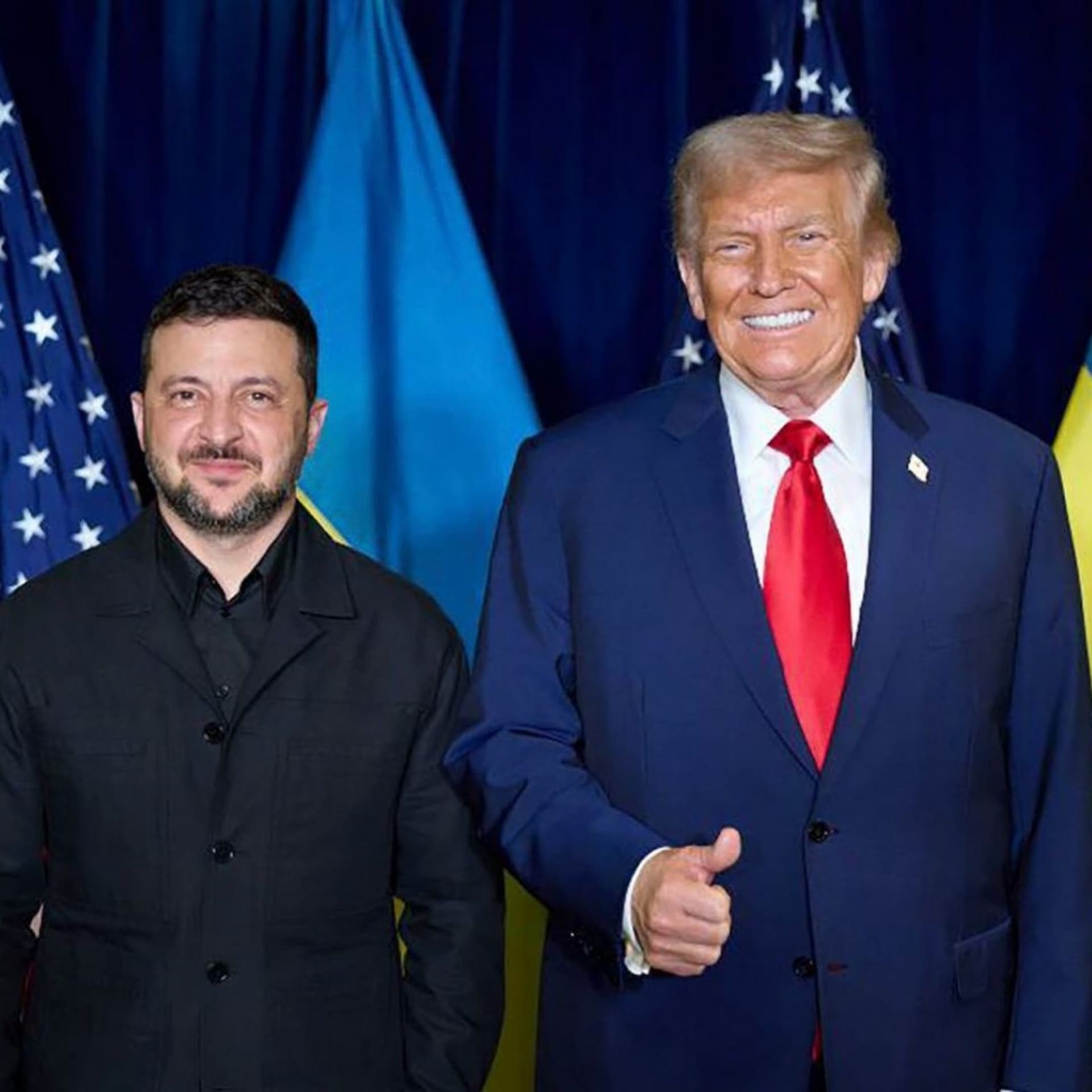
The episode examines why Donald Trump, after meeting Volodymyr Zelensky at the UN in New York, posted that Ukraine (with EU support) could “fight and win all of Ukraine back” in its “original form.”
Guests
Vitaly Shevchenko, BBC Monitoring’s Russia editor (tracks Russian media) and Ukrainian.
Key claims
Shevchenko says Trump’s rhetoric is often contradictory and doesn’t signal he will “get tough” on Russia; Ukraine’s leadership treats “land swaps” as unacceptable and wants Russia out, not territory kept. Zelensky praised the post as a “big shift,” but Shevchenko argues details on US security guarantees remain unclear.
Notable examples
Russia’s drones/fighter jets entering NATO airspace (Poland, Romania, Estonia, Baltic/Germany); Zelensky’s UN remarks about Trump being “saved by God”; and Trump’s UN talk about EU/NATO buying Russian fuel and potential tariffs.
Written by AI. May contain mistakes. Listen to the episode to check what was said.
Chapters
Tap a time to open that second in VOZelensky's UN Speech and Trump's Statement
0:00 to 0:37
Analyzing Trump's unexpected statement about Ukraine's potential victory.
“This BBC podcast is supported by ads outside the UK.”
Zelensky's UN Speech and Trump's Statement
2:30 to 3:54
Analyzing Trump's unexpected statement about Ukraine's potential victory.
“Secretary-General, distinguished leaders.”
Insights from BBC's Vitaly Shevchenko
3:54 to 5:34
Vitaly shares his perspective on Trump's comments and the situation in Ukraine.
“He's the Russia editor at BBC Monitoring, which is kind of like the eyes and ears agency of the BBC.”
Trump's Credibility and Ukraine's Territorial Integrity
5:34 to 7:51
Discussion on Trump's credibility regarding Ukraine's territorial claims.
“Why would Trump suddenly think that Kyiv can win all of Ukraine back in its original form?”
Zelensky's Reactions and Future Guarantees
7:51 to 9:21
Zelensky's response to Trump's statements and future security guarantees from the U.S.
“How exactly is Ukraine supposed to kick the Russians out of places like Crimea and Donbass, where they've been entrenched since 2014?”
The Evolving Dynamics of Trump's Policy on Ukraine
9:21 to 14:00
Exploring Trump's shifting stance on Russia and Ukraine throughout the conflict.
“Sometimes you hear that they're making unexpected advances.”
Putin and Trump's Meeting: Uncertainty and Reactions
14:00 to 16:22
Explore the aftermath of the Putin-Trump summit and its implications for Ukraine.
“15th of August, it happened less than a week after being announced, which posed all sorts of logistical difficulties for us reporters.”
Russia's Escalation: Drones and Airspace Violations
16:23 to 19:18
Discuss Russia's recent military actions in NATO airspace and their motivations.
“If there was something to be proud of from the Ukrainian point of view or even the American point of view, they would have announced it loudly.”
Trump's Stance on NATO and Russia's Threats
19:19 to 22:52
Analyze Trump's comments on NATO's response to Russian aircraft incidents.
“encourages that feeling of uncertainty and fear of escalation.”
Economic Factors Influencing the War in Ukraine
22:53 to 25:54
Investigate the economic ties between Russia, China, and India affecting the war.
“and he said at the UN on Tuesday that he had learned two weeks ago that EU members, NATO members, are still buying Russian fuels, Russian oil.”
Show all 11 chapters
Prospects for Trump's Policy Changes
25:55 to 26:59
Evaluate whether Trump might change his approach to the Ukraine conflict.
“I mean, another bit of received wisdom, I don't know if it's true or not.”
Transcript
Automatic transcript. May contain errors.0:00This BBC podcast is supported by ads outside the UK.
0:30business needs in one place, saving you time, headaches, and serious money. Stop paying for missing pieces. Go to odoo.com. That's O-D-O-O.com to learn more. Self-directed investing, trading, full-service wealth management, automated investing, financial planning, thematic investing, retirement planning. Phew. And to think, that's just a small taste of what Schwab offers. because Schwab knows that when it comes to your finances, choice matters. No matter your goals, investing style, life stage or experience, Schwab has everything you need, all in one place, so you can invest your way. Visit schwab.com to learn more.
1:14If you were listening to yesterday's episode of The Global Story, you'll have heard this moment. When did he say that? Hold on, when did he say that? Asma, my co-host, had called me from the United Nations General Assembly meeting in New York. Where is this? Hold on. When Sam, one of our producers, spotted a post from Donald Trump on Truth Social, his social media platform. Trump has said that. I think Ukraine, with the support of the EU, is in a position to fight and win all of Ukraine back. Oh, wow. In its original form. Trump was saying that Ukraine could fully win the war, win back all its territory.
1:53I don't know that I've ever heard him say that before. That's a bit of a 180, isn't it? Huge if true. I mean, he wrote it on his own social media account. This feels like a major shift from where he was before. It's the kind of post that likely got military and diplomatic and economic analysts from governments all around the world in a spin, trying to figure out what's changed.
2:24From the BBC, I'm Tristan Redman. And today on The Global Story, why does Trump suddenly think that Ukraine could win the war?
2:41Thank you, Mr. Secretary-General, distinguished leaders. On Wednesday, Vladimir Zelensky spoke at the UN, and pretty early in the speech, he said Donald Trump had been saved by God. Yesterday, President Trump stood right here in this hall, and God saved him from a murder attempt during the campaign. When I was watching him speak, I felt like maybe Zelensky was showing us the argument he'd used to win Trump over. The facts are simple. Stopping this war now is cheaper than building underground kindergartens or massive bunkers for critical infrastructure later. Stopping Russia now is cheaper than wondering who will be the force to create a simple drone carrying a nuclear warhead.
3:33People are waiting for action. Thank you so much. Slava Ukraini. The US-Ukraine relationship seems to have been reinvigorated in New York this week. It's less clear why that is. So today we're speaking to the BBC's Vitaly Shevchenko to find out. We good? I think we should just stop. All right, great, let's do it. He's the Russia editor at BBC Monitoring, which is kind of like the eyes and ears agency of the BBC. They keep across media coverage coming from inside Russia. And Vitaly's also Ukrainian.
4:06Vitaly Shevchenko:And I am from Zaporizhia, which is in southeastern Ukraine. The Ukrainian president and Donald Trump had a private meeting at the UN General Assembly in New York on Tuesday. There was a photo op at the beginning of it, which was the only bit that we saw. And then after the meeting, Donald Trump put out this quite long and rambling truth social post. We probably don't need to hear all of it, but could you just give us the highlights, please, Vitaly? OK, after getting to know and fully understand the Ukraine-Russia military and economic situation, and after seeing the economic trouble it is causing Russia, I think Ukraine, with the support of the European Union, is in a position to fight and win, in capital letters, win all of Ukraine back in its original form.
4:57Vitaly Shevchenko:Why not? Russia has been fighting aimlessly for three and a half years a war that should have taken a real military power less than a week to win. This is not distinguishing Russia. In fact, it is very much making them look like a paper tiger. Putin and Russia are in big economic trouble, and this is the time for Ukraine to act. In any event, I wish both countries well. We will continue to supply weapons to NATO, for NATO to do what they want with them. Good luck to all. Thank you, Vitaly. That was read with great feeling. Why would Trump suddenly think that Kyiv can win all of Ukraine back in its original form?
5:43I don't know.
5:45Vitaly Shevchenko:Sometimes, Tristan, at this stage, I wonder if we should pay much attention to what is being said, in particular by Donald Trump. Because he's said so much, a lot of it is contradictory, confused, erratic even. But this particular statement may be Donald Trump's most positive thing he said about Ukraine, the most critical of Russia. But I don't see any indications that this time around Donald Trump is prepared to finally get tough on Russia and Vladimir Putin should get concerned. I'm not seeing it. OK, so you're saying take with a pinch of salt. The bit that really stood out to me was when he says Ukraine would be able to take back their country in its original form.
6:37And who knows, maybe even go further than that. There's been a certain amount of discussion in negotiations or talks between Zelensky and Putin and Trump on separate occasions about potential land swaps. Is there a possibility that what Trump is saying here is that Ukraine could potentially keep part of Russia as part of a peace deal? But Ukraine doesn't want any part of Russia.
7:05Vitaly Shevchenko:This is a point that Zelensky has been making all along. We're only doing it to, as he says, bring the war home to Russia, and secondly, to distract Russian resources from the fighting in Ukraine. Looking at what Ukrainians are saying, nobody says, oh, Korsko, Belgrade belongs to Ukraine, we're keeping it. No, no, no. What they're saying is get out of our country and just leave us alone. Nobody's trying to capture any parts of Russia. So what Donald Trump is saying is difficult to rationalize and explain, as well as the part where he doesn't actually say how exactly Ukraine will be able to recapture all of its territory.
7:55Vitaly Shevchenko:How exactly is Ukraine supposed to kick the Russians out of places like Crimea and Donbass, where they've been entrenched since 2014? 11 years. But President Zelensky in New York on Tuesday certainly seemed to be spinning it as though he was taking him quite seriously. Can you talk us through what happened next, please? So after his meeting with Donald Trump, Woldemir Zelensky spoke to reporters. Trump is a game changer. Mr. President, just tell us how significant is this post by the president? How significant is Where is his waiting? It's a big shift by President Trump. This post of Trump, it's a big shift.
8:37It's a big shift. It's very positive.
8:39Vitaly Shevchenko:And of course, he was asked, okay, what kind of security guarantees is Washington prepared to give Ukraine? And this is also the question that I asked Zelensky back in August after the summit meeting in Washington. Just like in August, they stumble around. He also said, I don't want to lie. I don't have specific details. And that, I think, is a crucial part of his answer. Despite all the changes in rhetoric, nobody actually knows what Washington is prepared to do. The kind of coverage we see from the Ukrainian frontline, it's quite difficult to decipher. Sometimes you hear that Ukrainian forces are at breaking point.
9:24Sometimes you hear that they're making unexpected advances. What's your understanding of what's actually happening at the front line?
9:33Vitaly Shevchenko:The Russians are slowly making progress. It's costly. It's bloody. It's excruciatingly painful for both sides, but they are moving forward. I've been looking at my home region of Zaporizhia. The city of Zafrasia, which is controlled by the Ukrainians still, hundreds of thousands of people still living there, it's been coming under relentless Russian attacks, glide bombs, drones in broad daylight. That's a new thing. All right. So if what we've seen in New York this week is more about rhetoric in your view, I just want to unpack a little bit how we got to this moment, because Trump's attitude towards Ukraine and Russia has kind of flip flopped several times over the course of the year.
10:28We all remember back in February, there was this very heated Oval Office meeting between Trump and Zelensky. They had this big falling out. But then over the summer, Trump started to be much more critical of Russia. We're not happy with Putin. I'm not happy with Putin. I can tell you that much right now because he's killing a lot of people. He's very nice all the time, but it turns out to be meaningless. And in July, he threatened to place sanctions on Vladimir Putin.
11:02The kind of blow by blow of Donald Trump's flip flops on Ukraine over the last six months have sometimes hard to keep track of. But one of the things that I feel is that there is a trend, which is he does seem to have softened somewhat in his feelings towards Ukraine. I remember almost around the same time in mid-July as he threatened these sanctions against Russia, Donald Trump made this late night phone call to our colleague in Washington, Gary O'Donohue. Mr. President. Hi, Gary. How are you? I'm very well, sir. Thank you very much for sparing some time. Good. You covered us very fairly. Appreciate it.
11:40You've said you were four times close to a deal with Putin. Yeah, I thought I had a deal four times. Are you done with him? I mean, I know that sounds a simplistic thing. No, I'm not done, but I'm disappointed in him. But I'm not done with him, but I'm disappointed in him. We had a deal done four times and then you go home and you see he just attacked a nursing home or something in Kiev. I said, what the hell was that all about? Do you trust him? I trust almost nobody, to be honest with you. When he said those things to Gary O'Donoghue, what was your reaction to them? Did you take them at face value?
12:20Vitaly Shevchenko:The people who've engaged with Donald Trump more meaningfully than I have, they tend to think that he genuinely wants this to be over. Quite how, that's where opinions differ. Our colleague from BBC Ukrainian, Miroslava Petsa, who's asked him a few questions and he asked her a few questions about her own family. White shirt. Oh, she's all excited. So, BBC News Ukrainian. Where are you from? I'm from Ukraine. So my question to you is whether or not the U.S. is ready to sell anti-air missile systems Patriot to Ukraine. We know that Russia has been pounding Ukraine really heavily right now. Are you living yourself now in Ukraine?
13:09My husband is there. Wow. I can see you're very, you know, it's amazing. And me with the kids, I mean, also actually, because he wanted me to be... Is your husband a soldier now? He's. He's there now? Yeah. Well, that's rough stuff, right?
13:24Vitaly Shevchenko:What is doubtful is that he has the determination, possibly the skill, to resolve this in a way that would be fair. That's a very good question. And I wish you a lot of luck. I mean, I can see it's very upsetting to you. There was some concern in some quarters that Donald Trump would do a kind of maybe a cozy deal with Vladimir Putin and sell Ukraine down the river. He hasn't done that. Do Ukrainians take some solace from that? Oh, yes, that would have been the worst case scenario. I remember going to Alaska to report from that summit between Donald Trump and Vladimir Putin. 15th of August, it happened less than a week after being announced, which posed all sorts of logistical difficulties for us reporters.
14:13Vitaly Shevchenko:But we got there, and the feeling of expectation was muted. Nobody seriously believed that Vladimir Putin was prepared to stop fighting unless he got some sort of unbelievable offer from Donald Trump. It was entirely possible that the two of them would get together, strike a deal, and then tell Zelensky accept it or face a complete end to assistance from the United States. That didn't happen. And I remember that news conference after the summit in Alaska. It was so weird. The two of them, the two presidents, they didn't really say anything about what exactly they discussed, what exactly they agreed.
14:56Vitaly Shevchenko:And I thought, okay, this is slightly unexpected. But from the Ukrainians' point of view, this is better than being sold down the river. What was amazing, though, is the mood music and the red carpet welcome and how Vladimir Putin got into Donald Trump's limousine. And that sent all sorts of messages that amazed Ukrainians in a bad way. It was a meeting between two friends as if everything was forgotten and forgiven. and all the atrocities committed by the Russian forces in Ukraine. It was as if, you know, two presidents meeting to discuss important business, not the worst war in Europe since the Second World War.
15:41Vitaly Shevchenko:Then it was announced that there would be this extraordinary meeting of European and NATO officials and Woldova Zelensky in Washington the following Monday. And it looked as though European officials were rushing to Washington to stop Donald Trump from agreeing to whatever Vladimir Putin told him in Alaska. We still had no idea what it was, but the haste with which that summit in Washington was arranged suggested that there was so much concern among European leaders that they thought, you know what, we need to be there and support Vladimir Zelensky. If there was something to be proud of from the Ukrainian point of view or even the American point of view, they would have announced it loudly.
16:32Vitaly Shevchenko:They didn't. So looking back at those two summits in Alaska and D.C., all I think they've created is uncertainty about exactly what was discussed. And guess who loves uncertainty? It's Vladimir Putin.
16:52Vitaly Shevchenko:This only encourages Vladimir Putin to continue trying to find out what he can get away with and continue testing NATO's resolve.
17:12Up next, why is Russia flying drones and fighter jets into NATO airspace?
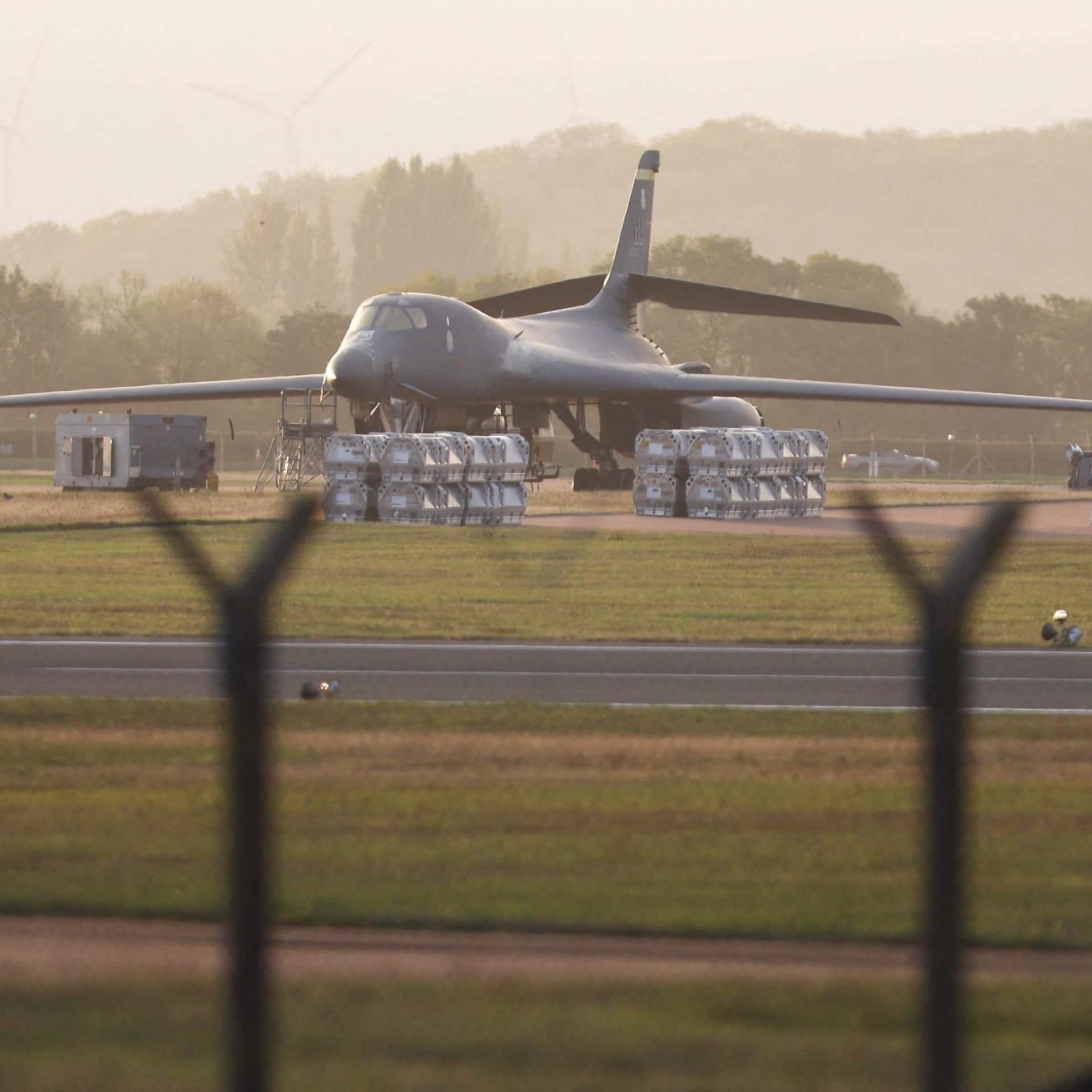
17:24so vitaly in the last few weeks russia has been stepping things up they've been flying drones over nato airspace i'll just remind you of the different things that have happened on september the 10th there were russian drones over polish airspace they had to be shot down by nato jets then on the 13th of september russian drone was detected in romanian airspace on the 19th three Russian fighter jets, not drones, entered Estonian airspace. And then on the 21st, a Russian plane was spotted above the Baltic Sea and Germany scrambled jets to intercept it. So there's this feeling that this is becoming a very regular occurrence.
18:04Why is Vladimir Putin doing this?
18:06Vitaly Shevchenko:Because why not? He still has this original goal of destroying Ukraine's sovereignty and basically confronting the West. And the West has not given them much reason to rethink that strategy. Of course, he's going to keep on pushing and pushing and pushing. His or the Kremlin's statements about all these drones and fighter jets, they only foster and stimulate this uncertainty. Could have been us, could have been somebody else, who knows? For example, the defense ministry statement about the drones, it didn't explicitly deny that they did it. They said they didn't have any targets to hit in Poland, which leaves open the possibility of that, oh, we could have sent reconnaissance drones, could have sent decoy drones, could have been us, but we're not saying.
18:59Vitaly Shevchenko:When the Kremlin spokesman, Dmitry Peskov, spoke about the allegations from Estonia that Russian fighter jets entered its airspace, he said Russian forces always strictly follow international rules and that applies to overflight rules as well. So the Kremlin skillfully encourages that feeling of uncertainty and fear of escalation. NATO so far has been terrified of escalating because who knows what Vladimir Putin will do because he is not afraid to escalate at all. Well, I want to ask you about that because on Tuesday in New York, Donald Trump was asked exactly this question by a reporter. Mr. President, do you think that NATO countries should shoot down Russian aircraft if they enter their airspace?
19:53Yes, I do. Yes, I do. What do you think Russia, what do you think Vladimir Putin would do in the event that a Russian aircraft was shot down over NATO airspace? I don't think they'll do much, to be honest.
20:08Vitaly Shevchenko:Turkey shot down Russian aircraft in November 2015 and nothing happened. Could you tell us about that? What happened? It was during the hot phase of the war in Syria, and when they saw two Russian fighter jets apparently approaching their airspace, they gave 10 warnings over a space of five minutes. And the moment they entered Turkish airspace, one of those planes was shot down after spending all of 17 seconds over Turkey. Mm-hmm. Estonia, those three MiGs spent 12 minutes in Estonian airspace. So that gives you an idea of how wary NATO is of confronting Russia for fear of, oh, Russia will escalate.
20:57But Turkey is a NATO member, and they shot down a Russian plane in 2015, and World War III did not begin.
21:04Vitaly Shevchenko:Exactly. The difference is that Turkey has its own fighter jets. Estonia doesn't. That's why it had to rely on whoever NATO sends to help out.
21:20Vitaliy, I want to ask you about Moscow's response to what Trump said. Because if you go back to your beautifully read Truth Social piece, Trump said that Russia was a paper tiger. And Dmitry Peskov, who is Vladimir Putin's spokesman, responded saying... Russia is no tiger, Russia is no tiger. That Russia was a bear, not a tiger, and there is no such thing as a paper bear. Indeed.
21:49Vitaly Shevchenko:Dmitry Peskov disagreed with Donald Trump, but he disagreed with Trump kindly and politely. He still said that we're thankful for Donald Trump for leading efforts aimed at achieving peace. So it's a completely different tone from the one adopted by the Kremlin towards so-called unfriendly nations that the Kremlin thinks are unfriendly towards Russia. So the moral of the story is that the Kremlin is still keen to try and keep Donald Trump on their side, trying not to annoy him too much. And they're generally determined to stay friendly towards him. The financial aspect of this is clearly a big thing.
Read the full transcript
22:36In that Truth Social post, Donald Trump mentions money, economics or finances six times. Has somebody told Donald Trump that Russia can't afford to sustain the war? Is that what's going on here?
22:51Vitaly Shevchenko:Maybe. And if we look at his rhetoric, it's changed. It continues to change. and he said at the UN on Tuesday that he had learned two weeks ago that EU members, NATO members, are still buying Russian fuels, Russian oil. And he said he's fully prepared to impose crippling tariffs, as he said, on Russia, but only after others stop buying Russian oil. So how did the US president not realize that there are many European Union countries? How did he not read my article that I wrote for the BBC website back in May? You should send it to him, Vitaly. Yes. The thrust of that article is that a third of Russia's state revenue comes from the sale of fossil fuels.
23:42Vitaly Shevchenko:More than 60 % of its exports are hydrocarbons. and even the countries that have sanctioned Russia, they're still buying a lot of oil and gas from Russia. The received wisdom is that Ukraine is at breaking point in the war and can't go on for much longer. What about Russia? How long can Russia last in the war? It depends on support from countries like China. China is buying a huge chunk of Russian crude oil together with India. They're buying almost all of it. If they keep on doing it, Russia will have a steady source of income to keep its war machine going. Without it, I have no doubt that the war would end.
24:33Vitaly Shevchenko:At one point, Trump said, unless Russia stops fighting, I'm going to impose 100 % tariff on India and China because, and anybody else who's still buying Russian oil because it funds the Russian war machine, which is correct. Instead, Donald Trump imposed a 25 % tariff on India, but not China. And between the two of them, India and China are buying almost all of Russian crude oil. So will Donald Trump risk huge costs that will have to be borne by consumers worldwide, including in America, because of Ukraine? I've not seen that determination on his part. And all of that is an invitation for Vladimir Putin to continue attacking and also to escalate.
25:25Vitaly Shevchenko:Russian economy seems to be at this moment of time stable enough. They're churning out those drones and missiles. The whole country is in the war footing, unlike Ukraine's allies. So, you know, Vladimir Putin doesn't have to worry about elections. It's all about this war. Unless there's a change, unless Russia's allies change their policies, Russia will keep on going. Well, if Donald Trump changes his policy, I mean, is there a world in which Donald Trump might choose to end the war quickly? I mean, another bit of received wisdom, I don't know if it's true or not. There was this theory that when Joe Biden was president, he had the option if he wanted to, to end the war by, you know, opening the floodgates on the types of weapons that the United States was providing to Ukraine.
26:16And then the whole thing could be over in weeks. given what we've seen in New York this week, is it possible that Donald Trump might be coming around to this idea? I don't see any signs of that. What I see is that do no harm to Russia
26:36Vitaly Shevchenko:seems to be the cornerstone of Donald Trump's policy.
26:45Vitaly Shevchenko:Time and again, despite all the statements he's made about Russia and Ukraine, it seems as though he's hitting some sort of a wall that's stopping him from taking action. And I really don't see any reason for us to think that, oh, this time around he'll do something. I'm just not seeing it.
27:16Thanks, Vitaly. Thank you.
27:26That was Vitaly Shevchenko, Russia editor with BBC Monitoring. That's it from us from The Global Story for today. Speak to you tomorrow. Cheerio. Thank you.
From the publisher
On Tuesday night, Donald Trump signalled a drastic U-turn in his position on Ukraine, claiming in a Truth Social post that Kyiv could win the war against Russia, and take back all the land it has lost. The Kremlin was quick to dismiss his assertion, saying it has, “no alternative” but to continue its offensive.
So, is this just another rhetorical turn from the US president, or has something materially changed in Ukraine’s favour? Vitaly Shevchenko, Russia editor for BBC Monitoring, joins us to discuss.
Producers: Hannah Moore and Valerio Esposito Executive producer: James Shield Mix: Travis Evans Senior news editor: China Collins