In short
How K-beauty became a global, government-backed soft-power export, and what it means for beauty standards and self-worth.
Guests
Elise Hu, former NPR reporter and Seoul correspondent (also hosts TED Talks Daily). She reported on politics and culture in South Korea and wrote Flawless Lessons in Looks and Culture from the K-Beauty Capital.
Key claims
The “glass skin/dewy skin” look is tied to Korean cultural ideals and a highly competitive beauty-medical ecosystem. South Korea’s government subsidizes export-focused beauty companies; K-culture funding expanded after the 1990s economic crisis, with K-beauty pushed after K-pop/viral moments (notably 2011). The U.S. caught on around 2015; today TikTok drives a “second wave.” Domestic demand is “savvy,” so products must work.
Notable examples
snail mucin serum; sheet masks and foot peels; Laneige lip sleeping mask (sold “one every three seconds”); 53% of college-aged women having procedures; South Korea surpassing France as #2 beauty exporter; BTS/UN and Gangnam Style as global catalysts.
Written by AI. May contain mistakes. Listen to the episode to check what was said.
Chapters
Tap a time to open that second in VOThe Rise of K-Beauty
0:30 to 0:48
Exploring the growing presence of Korean beauty products globally.
“And to think, that's just a small taste of what Schwab offers.”
The Rise of K-Beauty
0:52 to 2:07
Exploring the growing presence of Korean beauty products globally.
“There's this super popular cosmetic store that's near the BBC offices here in DC that I have unfortunately spent a little too much time and money in over the years.”
Elise Hu's Experience
2:07 to 3:39
Discussion on Elise Hu's background and insights on K-beauty.
“So as some of you all probably know, in a former life, I used to work for NPR, National Public Radio.”
Cultural Perspectives on Appearance
3:39 to 5:25
Reflections on societal views of beauty in South Korea.
“But for me, I didn't just want to write about the business of beauty.”
The Allure of K-Beauty Products
5:25 to 8:07
A discussion on the popular K-beauty products and trends.
“It wasn't until after my time abroad and after there were massive women's rights rallies in Seoul during my time there.”
Commercial Journey of K-Beauty
8:07 to 10:31
Exploring the commercialization and evolution of K-beauty.
“You know, South Korea can get quite frigid.”
K-Beauty as Soft Power
10:31 to 14:00
Examining K-beauty's role as a government-supported soft power strategy.
“And there's a lot of Neo-Confucian ideals baked into that.”
The Rise of K-Beauty: A Cultural Strategy
14:00 to 18:02
Explore how K-Beauty became a global phenomenon through government support and cultural trends.
“And so Korea really stepped on the gas when it came to the production of culture.”
The Impact of Social Media on K-Beauty
18:02 to 21:19
Discuss the role of TikTok and influencers in the resurgence of K-Beauty popularity.
“Like this year was a huge year for Korean culture because of K-pop Demon Hunters and Squid Game.”
K-Beauty's Effectiveness and Market Trends
21:19 to 23:49
Analyze the effectiveness of K-Beauty products and the rapid production capabilities in Korea.
“I mean, I guess part of me is wondering this in particular because you mentioned there were decades in which Koreans themselves were not utilizing these products.”
Show all 11 chapters
Cultural Reflections: Beauty Standards and Identity
23:49 to 26:31
Examine how K-Beauty influences perceptions of Asian identity and beauty standards in America.
“I want to ask you about what K-Beauty's popularity has meant for you, yourself, as a mom.”
Transcript
Automatic transcript. May contain errors.0:00This BBC podcast is supported by ads outside the UK.
0:30And to think, that's just a small taste of what Schwab offers. Because Schwab knows that when it comes to your finances, choice matters. No matter your goals, investing style, life stage or experience, Schwab has everything you need, all in one place, so you can invest your way. Visit schwab.com to learn more. There's this super popular cosmetic store that's near the BBC offices here in DC that I have unfortunately spent a little too much time and money in over the years. And one thing I've noticed is that there are so many Korean skincare products. I'm not talking about just a little dedicated section.
1:11I'm talking about shelves and shelves of sheet masks, moisturizers, serums, all promising to give you that iconic, pore-free, glassy skin look that has become so synonymous with K-beauty. This whole K-beauty scene has been trendy for a while. I'm sure you know that. But what we're seeing now is a supercharged K-beauty boom. And it's all part of a soft power push from the Korean government. As of this year, the United States now imports more cosmetics from South Korea than any other country. Globally, South Korea is exporting more than$10 billion of beauty products a year. And all of this has had me wondering, how exactly did Korean beauty become such a global money-making phenomenon?
2:03From the BBC, I'm Asma Khaled in Washington, D.C. And today on The Global Story, what idea of beauty are we buying?
2:21So as some of you all probably know, in a former life, I used to work for NPR, National Public Radio. And one of my old colleagues there was Elise Hu. She now hosts the TED Talks Daily Podcast, so you all might know her from that. But for years, she was a reporter in Seoul, South Korea. She did loads of important reporting about the politics and the policies in the region. But she also had some fascinating coverage about culture, and in particular, K-beauty. In fact, she's even written a book about it. And so as we were thinking about this episode, I thought, well, hey, Elise is the perfect person to chat to about this.
2:56I was sent to Seoul to open NPR's first Northeast Asia Bureau, which covered both Koreas, North Korea, South Korea, and Japan, in the beginning of 2015, so now 10 years ago. And that was at the sort of height or the peak of the first K-beauty wave. This is when K-beauty was becoming really understood and of interest abroad in the United States. And that happened to coincide with my time in South Korea when a lot of folks were coming over to Seoul to try and fill giant suitcases worth of skincare and makeup products to bring back home to China or bring back home to the UK or the United States. But for me, I didn't just want to write about the business of beauty.
3:43What was really nagging at me was just how much appearance seemed to matter in South Korea, especially for somebody I had grown up in Texas and towards the end of my high school years did some modeling. And so I remember this real eye of judgment about my appearance when I was very young. And I kind of like put that away. You know, I didn't really think about it that much as I became a journalist and came up. But in Seoul, this was a place where people seemed to have license to really make comments, open comments about my appearance constantly, usually focusing on something that was wrong with it.
4:21You know, I had two kids when I was there. So when I was postpartum, people made open comments about my weight and said things like, oh, you can get this shrink wrap or what do you want to do about that to lose weight after a baby? I'm 5 '9". I'm already kind of a tall, big person. And when I moved down the streets, like in certain parts of town, especially the ones that catered to Americans, people would just yell. Like storekeepers would actually yell. Kun Saiji, Kun Saiji, which is big size, big size. It's like, we have clothes for you, you giant. So I had never. So in theory, it was meant to be helpful.
5:01It was just verbalized. It sounds like in a really different way. Right. Socially, culturally. I imagine anybody here in the U.S. Yes, I had never been made more aware of my appearance and how I appeared to other people. And most of the time, this wasn't like worthy of deeper reporting. It was just like, wow, I'm a real fish out of water. It wasn't until after my time abroad and after there were massive women's rights rallies in Seoul during my time there. And a lot of the women were actually fighting for their bodily liberation in the form of being able to express their appearance however they wanted.
5:40That I really thought, you know, this is unfinished business. I really need to look deeper into it. And then I spent more time reporting and mixed that with some of my reflections for my book that became Flawless Lessons in Looks and Culture from the K-Beauty Capital, which explores all of these things. So let's talk more about K-Beauty. When people talk about K-Beauty products, what's the look you would say they are aiming for? It's hyper feminine. It is that dewy skin, that glass skin. We hear about glass skin, porelessness. just having sort of photo-ready skin without makeup, right? It's all about having a beautiful, flawless canvas before any makeup is even applied.
6:24And is this meant exclusively for women or is the popularity of it, does it also extend to men? It absolutely extends to men. South Korean men are the biggest purchasers of skincare and hair products per capita among male populations in the world. There were lots of men that I interviewed in South Korea who got their faces waxed instead of shaved because they didn't want to have stubble or even the appearance, you know, of hair growing on their face. But also it's the most sophisticated aesthetic market in the world. It's the place where not only are there thousands and thousands of skincare and cosmetics brands that are competing against one another, there's also med spas and cosmetic surgery clinics and cosmetic surgeons who have been around for decades perfecting and innovating various procedures.
7:17Medical tourism is really big in Seoul where people from all over the world go to Seoul to seek out skin treatments and procedures. Korean Health Ministry data shows that 53 percent of college-aged women in South Korea have undergone some sort of procedure. This is college-aged women. That's more than half the population. Or half the population of women, I should say. It is the cosmetic surgery capital of the world. If you're talking about cosmetic surgeons per capita, it has four times more cosmetic surgeons per capita than the United States. And because there is such supply, you can get these procedures at a fraction of what it would cost in Beverly Hills.
8:00So we're going to talk a lot more about the popularity of these products as an export from South Korea. But before we do that, I just want to have you tell us a little bit about your time period living in the country and when you decided, OK, I'm going to try some of these products for myself. Yes. So I moved there in the winter of 2015. It was pretty cold and dry. You know, South Korea can get quite frigid. There's always snow on the mountains that are in the center of the city even. And I remember little daggers in my face when the wind blew and I was moving down the streets. And so it was quite cold.
8:39My skin actually needed some TLC, probably some hydration. And then I was aware, obviously, at least in a broad sense of the K-beauty craze. Before I even left, before I even deployed from Washington, D.C. to Seoul, I had so many friends say, oh, my gosh, well, when you come back, make sure to bring me back sheet masks. Make sure to bring me back foot peels. Oh, the snail mucin is really big and snail mucin. Snail mucin. I think we need to take a moment and pause and just explain what that is. That was so hot. It's a skin softening serum and it contains... Made from snail? Snail secretion, yes.
9:17That can help really improve your damaged skin barrier, they say, and offer a lot of hydration. And so that was one of the first products I tried. I did a lot of sheet masks, foot peels. Both myself and my husband tried a lot of foot peels and he was like, Oh, my gosh. My feet are as smooth as a baby's bottom because you wear these little booties, these plastic booties that have a lot of goop inside them for a certain amount of time. I don't know, 30 minutes or something like that. Take it off. And then the next day or so, your dead skin from your feet starts sloughing off. So you tried these products and presumably at that point they were already very popular within South Korea.
9:57Absolutely. And way more popular domestically than they were abroad. So if you were sort of an in-the-know skincare person outside of Korea, you knew about Korean brands. But in Korea, Korean women especially are very sophisticated when it came to which products were working, which products their friends really swore by, what their moms have passed down as ingredients that were effective. And so Korean women will tell you, like, taking care of your skin, preventing sun damage has been something that has been passed down generationally. Like that it was very important to care for your skin. And there's a lot of Neo-Confucian ideals baked into that.
10:36You know, it's about almost respecting your elders and respecting your ancestors and the hair that they gave you and the skin that they gave you and to not really mess with it too much by making sure that you take care of it and maintain, you know, what your ancestors gave you. But when did the commercialization of K-beauty products really begin? There was always a small K-beauty industry after the Korean War. So obviously Korea was ravaged by two wars back to back. after being colonized. So in the beginning of the 20th century, it was colonized by Japan until World War II, after which South Korea then entered a period of occupation before the Korean War, the Korean War, which then in the 1950s split North Korea from South Korea.
11:26And post-Korean War, South Korea had some emerging domestic hair care and skin care companies. One of the big ones today, Amore Pacific, started around then during this post-war period. And they were doing fine domestically, you know, but a lot of Koreans who could afford it still sought French products and American products. So if you ask Koreans who had relatives in Korea in the 1970s and 80s, they would tell you they were asking for Estee Lauder and other quote-unquote foreign products to be brought into Korea. So instead of this mewling K-Beauty out of Korea, which is what we're seeing now, you actually had a mewling of Clinique and Estee Lauder into, or Pond's cold cream, into South Korea because still the products outside of the borders were considered more desirator.
12:25And so when did that shift take place? around the turn of the century, really with the growth of K-culture. In the 1990s, Korea really needed to diversify its economy. It became one of the top economies in the world. I think in the 1990s, it was the 10th or 11th largest economy in the world at that time. Already, it had shipping, it had manufacturing, it had cars and electronics that we know of, Hyundai, LG, Samsung. But the president in the 1990s, Kim Dae-jung, read a report. There was a government report that showed that if South Korea was able to make a movie on the scale of Jurassic Park, that the revenue from those ticket sales and that box office and just the cultural long tail of it would equal the production and manufacturing of 1.5 million Korean cars.
13:24So that culture essentially was a huge potential market for not only the Korean economy, but also Korean coolness.
13:39After that government report, the government decided to pour more money into cultural industries. And then in 1997, there was the Asian financial crisis, which then led Korea to essentially go bankrupt and need to be bailed out by the IMF, the International Monetary Fund. And so Korea really stepped on the gas when it came to the production of culture. so it sounds like what you're saying is that the k-wave we are all so familiar with around the globe was a deliberate government-backed strategy it was a soft power strategy and k-beauty is part of that strategy k-beauty is a consequence it's like a consequence okay yeah it's a externality that they didn't expect to be as big.
14:34Now, K-Beauty is very supported by the government. And there's a lot of companies and brands who, if they want to be successful as an export-focused K-Beauty industry, they get subsidized. They don't have to pay their corporate taxes back home. Interesting. But in the very beginning of this soft power strategy, they did not include K-Beauty as one of the dimensions. It wasn't until they saw that there was like, oh, this unexpected outcome that people also want to buy the lipstick that our K-pop idols are wearing that, oh, we should really push the lipstick and push the companies behind the lipstick and the BB creams and this and that.
15:15So 2011 was a seminal year for Korean culture because that was the year Versailles Gangnam style. Oh, I remember. Yes. Went global. Oh my God, was this that long ago? That also blows my mind that that was that many years ago. I know. What is time? I know. So that was a year it went huge. And then there was more and more interest in K-culture from places like North America and South America and Europe. But it was already, K-beauty was already of interest in China, for example, before that. When would you say the United States really caught on to the trend? 2015. 2015. It happened to really coincide with my deployment abroad.
15:56A lot of Korean-American brands, like people who were in the know, influential Koreans in America, were bringing K-beauty to American audiences. So this is the time where Soko Glam, which was led by Charlotte Cho and Peach and Lily, they were blogging about it. They were opening up e-commerce shops where you could buy products that were from Korea and get them sent to your home. So all of this was happening around the same time, partially because of the growth of K-pop. BTS was kind of coming on. The boy band. Yes. The biggest band in the world. Yes. You know, I confess I wasn't so familiar with them, but then they came to the White House briefing room one day when I was covering the White House.
16:42And it was a huge moment. And there were many people there just purely to see BTS at the White House. Oh, girl, when BTS spoke at the UN, it broke the UN's streaming server. Like, yeah. And so that was all around the same time. And now here we are in 2025 and we're seeing what's considered the K-beauty second wave, the second wave of K-beauty because it's so big on TikTok. And there's so many things when we talk about skin and beauty standards today here in the United States that are sort of natural for us to talk about that originated in K-beauty. So when we talk about glass skin, when we talk about dewy skin, when we talk about sheet masks, pimple patches, steps of skincare, that all culturally originated out of K-beauty.
17:30It just doesn't really get as much credit because we're sort of used to it now.
17:49How much has this all taken off since when you first moved to South Korea, which was 10 years ago in 2015? And what's the reason for this new boost in popularity? I think the new boost is largely driven by TikTok and culture, right? Like this year was a huge year for Korean culture because of K-pop Demon Hunters and Squid Game. We saw cosmetic exports. I pulled this for you. South Korean cosmetic exports in the first half of 2025 jumped 15 percent. And that's largely because of the growth and interest in the United States and in Europe. And that is something rather unexpected. I thought that Korean beauty had kind of hit a certain plateau and was just going to hum along and be popular.
18:37But instead, it's gotten more popular. You have more and more brands like store brands, Costco, for example, in the United States, Ulta, Sephora, that are bringing in more Korean lines than they ever had before. They had Korean lines already, but now they're expanding. You also have Korean stores themselves, like the equivalent. Are they opening up now, actual Korean beauty stores? That's interesting because I had not seen that before. And in fact, I was going to say, I nearly, when we went to South Korea with President Biden on one of those big foreign junket trips, I ran out to go grab a bunch of Korean beauty products and like nearly missed the press bus because I was like, I must get these products.
19:18So I did not know of that. I've seen them certainly in Sephora and whatnot. Right. But there's now standalone shops. There is going to be an Olive Young opening in 2026. Olive Young is like the Sephora of Korea. I think there's a lot of excitement around this industry. It remains popular. I don't think it ever fully went away. It's just having this other boost that folks are getting really excited about. You know, we've been talking about beauty and culture during this conversation, but you were a longtime correspondent in South Korea, also covering the politics, the government, the policies, all of that.
19:55And so I am very curious how you view this K-beauty trend as offering a potential soft power boost to the Korean government. What does it mean for the Korean government? Well, first, it helps the bottom line in a big way. Because in 2025, South Korea surpassed France as the world's second largest beauty exporter. So cosmetics and skincare exporter. before it was the U.S., France, then South Korea. For a long time, the South Korean government had set as a goal, we want to be bigger. We want to see if by 25, I think, we could actually achieve this goal of being the biggest, or the second biggest exporter in the world.
20:38And they did it. And so that is huge for the bottom line and like the maintaining and the growing of an economy that's largely export related. When it comes to culture, you know, Now, we have seen Parasite win Oscars. Korean stars are sought after all over the world. The way Korean fashion comes out of Seoul Fashion Week is also kind of followed and of more interest. It's considered worthy of a lot of attention. And then K-Beauty is obviously a big part of that. I've really got to ask, though, as we talk about these products, Elise, how actually effective they are and whether they are indeed a fat.
21:20I mean, I guess part of me is wondering this in particular because you mentioned there were decades in which Koreans themselves were not utilizing these products. They were instead turning, say, to French beauty products. So how effective are they? The effective products are clearly effective because they're still selling and they work. So what we do know about the Korean domestic market before a lot of these products go abroad is that domestic shoppers are incredibly savvy. And so they will not stick with products that they do not feel are effective for them. And so a really great example of that right now is the lip sleeping mask, the ubiquitous lip sleeping mask out of Laneige.
22:00Yes, I actually have it. Yes, I have used it. I can bring it up, but I won't. They sell Laneige, which is a line from Amore Pacific, Korea's largest skincare and makeup conglomerate. They sell one lip sleeping mask every three seconds. It is such a huge product in the U.S. and globally because people tried it, they swear by it, and they tell other people. So do you think there really is this growth around the idea of effectiveness? Because there's a part of me that wonders whether these products are also taking off because of Instagram influencers or TikTok influencers and to what degree they really are genuinely the best products in the market.
22:43There obviously is trend culture involved. And South Korean skincare products are able to come to market so quickly because it's almost like fast fashion. It's all happening in one giant manufacturing center called an OEM. And so you, Asma, could have a concept and say, I want to come out with my own line of lip balms. and you can go to them and essentially have a mock-up for what you want the packaging to look like oh i would like my lip balm to be like brand x's lip balm whatever and then they can kind of model and so much is manufactured in south korea that that brand x that you're trying to emulate might be manufactured in the same place and for a pretty low price you can say like all right manufacture 2 000 units or 20 000 units of asma lip balm and they can just do that within weeks just from your concept and your drawing and take it to market.
23:37And so it allows for new emerging brands to just test their products out on the market pretty quickly. Then when it doesn't work, stuff gets pulled right off the shelves very quickly, like within months. I want to ask you about what K-Beauty's popularity has meant for you, yourself, as a mom. You know, I think in some ways, I will say from my vantage point, it has certainly made the idea of being cool as an Asian feel really differently than when I was growing up. I mean, you just look at how many people dressed up as, say, K-pop demon hunters for Halloween. How do you feel that Americans aspiring to Asian beauty standards has changed the idea of being an Asian American in the United States?
24:21And I found it really affirming to be out trick-or-treating with my kids at Halloween and see so many little girls dressing up as Rumi from K-pop Demon Hunters. I loved it. I had a real sense growing up of being an outsider or part of an out group and then wanting to assimilate to dominant culture, which for me in St. Louis and then Texas was whiteness, right? And white European beauty ideals, which of course I would never be able to achieve because look at me, I'm an Asian person. And now you have a lot of the mixing and remixing of beauty standards all over the world such that there are more global ideals.
24:58And I think there is something really promising about that because I feel my three daughters who are now eight and 10 and 13 don't they aren't ashamed of their Asian-ness. They have dark hair and they have Asian features, whereas I certainly was because I didn't look like everybody else and I wanted to. And, you know, when you're little, you just want to fit in. But the fact that girls and women still have to place so much attention and value on our appearance at all, and that is tied into our feelings of worthiness, is obviously problematic. And I worry about skincare culture and beauty culture indoctrinating girls at such young ages, right?
25:44At first, it's really fun. And it's great to like get to paint my kindergartner at the time's fingernails and have her paint her grandfather's fingernails. I have a little scene in the book about that. But then it begins to really operate on this notion that there is something about us that needs to be fixed, right? And my teenager, now I have a seventh grader who sometimes is like, oh, I don't want to go to school. I look so bad today. And I really worry about that because I experienced that also that was sort of irrespective of race or any of these differences. It was just that feeling that our appearance matters and it can stop us from raising our hands at school or going for that job or taking that seat at the table.
26:30And so that's where I think we really need to interrogate and break down this notion that our worthiness is tied to our external appearance. Well, Elise, thank you so much. It's so nice to reconnect with you and get a chance to talk. It's been ages. Yeah, it has. And it's just been a delight to be able to gab about all this with you. Thanks for having me on. That was Elise Hu. She's the author of the book, Flawless Lessons in Looks and Culture from the K-Beauty Capital. She also hosts the TED Talks Daily Podcast. This episode was produced by Hannah Moore. It was edited by Bridget Harney and engineered by Marty Peralta.
27:13Our senior news editor is Chyna Collins. By the way, if you have any questions or suggestions for us, we love hearing from you all. So drop us a message at theglobalstoryatbbc.com. Thanks as always for listening, and we'll talk to you again on Monday.
Read the full transcript
27:42Thank you.
From the publisher
The promise of pore-free, glassy, youthful-looking skin has made Korean beauty products a global phenomenon. Americans spent as much $1.7bn (£1.3bn) on K-beauty in 2024, according to industry estimates, and the US now imports more cosmetics from South Korea than any other country.
How did the South Korean government help K-beauty ride the soft power wave that has also brought us TV shows like KPop Demon Hunters, and pop groups such as Blackpink and BTS? And what are the risks of buying into the ‘perfect’ beauty ideals that the industry promotes?
Today, we speak to Elise Hu, the host of TED Daily Talks host and author of Flawless: Lessons in Looks and Culture from the K-Beauty Capital.
Producer: Hannah Moore
Executive producer: Bridget Harney
Sound engineer: Marty Peralta
Senior news editor: China Collins
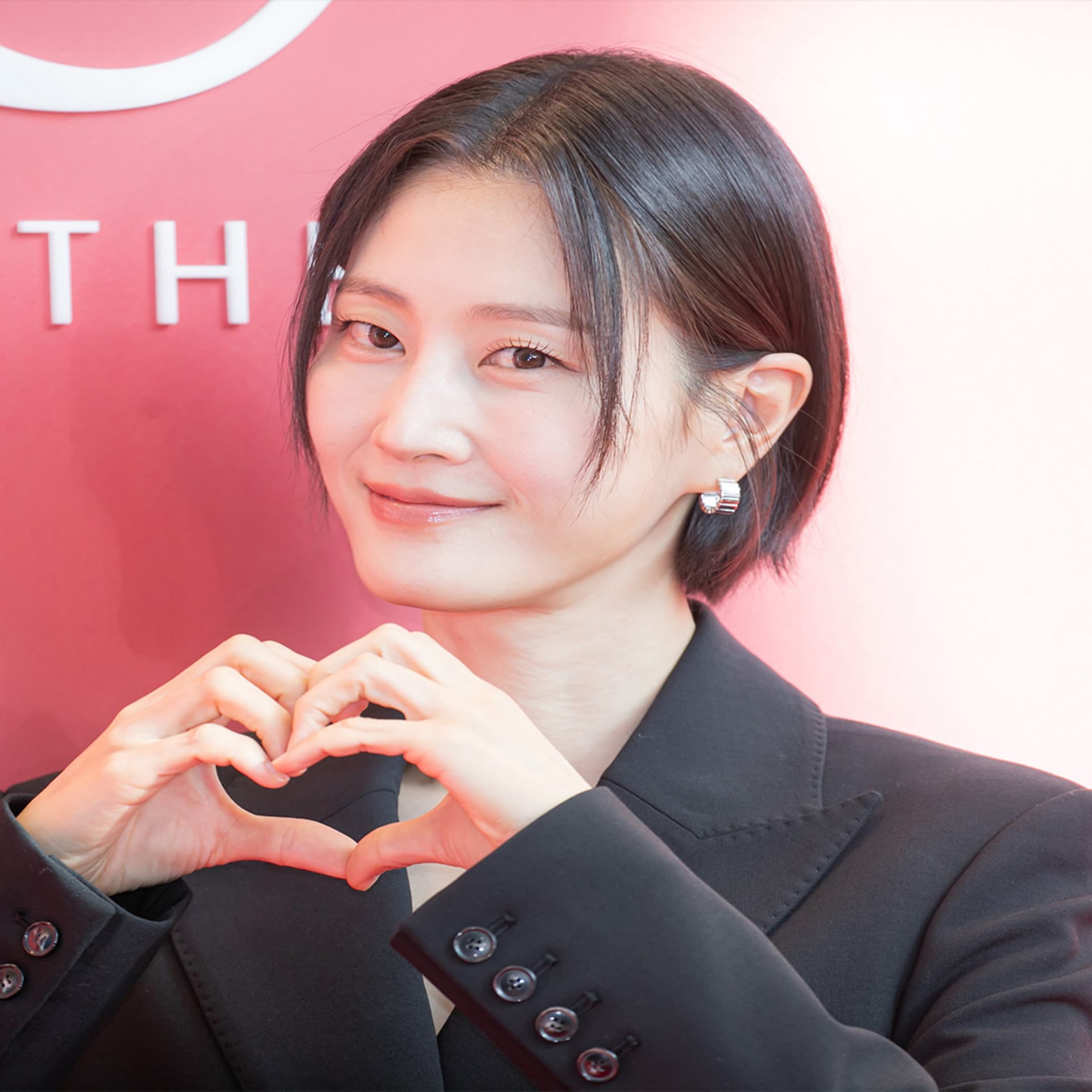
(Photo: Model Lee Hyun-yi attends the photocall event celebrating the launch of AHC’s new product at the FKI Tower Conference Center in Yeouido, Yeongdeungpo-gu. Credit: iMBC/Imazins/Getty Images)